IELTS: Lesson 3 – ‘May the force be with you.’

Monday 14th January 2019

Tonight’s lesson focuses on reading and listening, quite passive activities so, to offset this, I’ll do some warm up exercises that will be (hopefully) relevant, interesting and stimulating.

The first exercise needs to be quite light and easy. Students arrive at various times and I don’t want the task interrupted, nor have to keep explaining for latecomers. At the same time, it is not fair that those who are punctual should have some unproductive ‘downtime’.

Yesterday was ‘one of those days’ – nothing seemed to go right but I’ll take my own advise and try to turn the lemons into lemonade: I’ll use it as a learning exercise.

I’ll board some information and then show the students a slide of various pictures and see if they can construct an interesting, flowing narrative. Later in the lesson, I’ll have a task where they have to build longer sentences utilising discourse markers, adjectives and adverbs, so this will give me a general view of their capabilities.

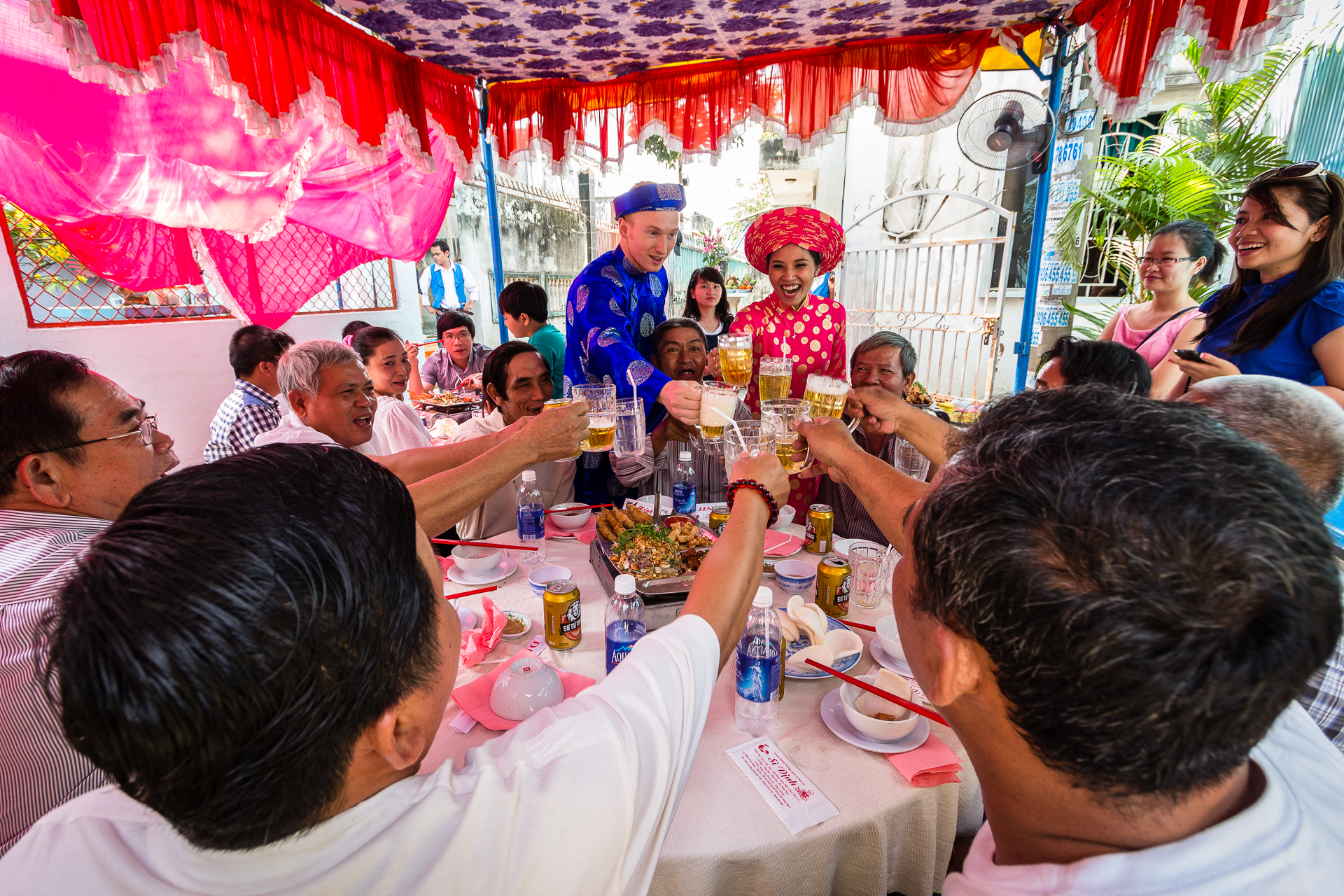
The narrative: 6.50 leave for work 7.40 – 9.40 Young Learners class (21 students) 10.10 arrive home 10.11 – 14.30 wedding party across the street 10.30 – 12.00 prepare work online 17.00 – 21.30 another wedding party but much louder, more drunken karaoke singers 18.00 go for coffee BUT 23.30 Tottenham Vs Manchester United (0 – 1) so ‘All’s well that ends well.’

Vocabulary: cancellation / hyper-active / irritating / excruciating /connection / deafening / anti-smoking / culture shock / a real handful / “A plague on both your houses !”





After, we’ll do a sentence-building exercise. I’ll show how to turn a basic sentence into something more elaborate:

Make longer, more interesting sentences:

I like music but I don’t like karaoke.

Although I love both listening to and playing music, I absolutely detest karaoke because I hear it so frequently in my neighbourhood and I find it abhorrent.

Expand these basic sentences:

I have been to Paris but not Berlin.

She liked the film so she read the book.

His girlfriend asked him to stop playing video games but he didn’t listen and she left him.

The last exercise will lead into the book work, (where students have to look at pictures of various people, some world famous, other not so) and attempt to deduce the reason for their fame. I’ll show six photos of famous Vietnamese, from history, sports and the arts. The students should be warmed up by now and be willing to discuss with partners or in groups who the people are, why they are famous, dates, any information.

Non-Vietnamese may not know many but they may be surprised by the last (a clue there) photo; they may know her without knowing it.

This should stimulate some good discussion especially in a mixed-age class. The first four are historical figures, and it’s fairly obvious what kind of person the fifth man is, and why he’s famous. The last figure could stump the students, but if they look at her, maybe they can guess what field she’s in; the way she looks, the manner in which she holds her head.

The answers are:

Võ Nguyên Giáp (General who defeated the French in 1954) Trung Sisters (defeated the Chinese around 40 AD / CE) Lê Lợi ( 15th C emperor) Võ Thị Sáu (Student activist against the French) Hoang Xuan Vinh (First Vietnamese to win Gold at the Olympics)
Ngô Thanh Vân (Model & actress – she was in ‘The Last Jedi’)

Veronica Ngo is Gunner Paige in THE LAST JEDI.
(Ngô Thanh Vân)

NOTE: Võ Thị Sáu could be a controversial figure and living in Vietnam, one has to be sensitive and delicate about certain subjects. I include her because she is a famous Vietnamese woman, with streets named after her.

Tonight’s reading exercise is practising scanning or skimming through a text, to help develop speed reading, finding pertinent information in a limited amount of time. There will be a block of text and students are given 90 seconds or 2 minutes to find the answers to some questions.

The secret is, of course, to read the questions first then just look for the answers, skimming over unnecessary text, in the same way as a listening test requires reading the questions, only listening for those answers.

After break, the lesson changes gear into listening. Many students find this the hardest part, and each track may need to be played several times. I usually play the entire text once through, then repeat but in short segments.

The last half-hour needs to be a ‘wind-down’ section. As they have focused on reading and listening, the activities should be active and fun. A general knowledge test can be entertaining, the class put into groups and points awarded. Depending on the mood of the class, we could try a B2B game – one student has to guess either a famous person or describe a photo or video clip from clues given by the team-mates. A time limit could be set to make it more dramatic.

It is good to see the students leave smiling and exhilarated from the games as opposed to shoulders hunched and shattered expressions from a grammar-overload. The students, like the Force, awaken !






IELTS 4/5: Speaking Class

7th January 2019

The class will focus on speaking, pronunciation and present simple/continuous grammar. I aim to get the students speaking as much as possible with as many different people as possible. I intend to kick off with a warm-up exercise, something light while late students arrive.

I’ll show some new compound nouns to do with shopping

window

binge

bulk

impulse

dumpster diving

After defining, and demonstrating the pronunciation, I will ask the students to match with the following photos:

Did the lady go out to buy this top or did she decide only when she was in the store ?

And after some binge or impulse shopping, this could be the reaction:

To encourage students to speak, I’ll ask them what they think is happening in the photos, then elicit more and more information. Describe how people look, what they are doing (to link with the present continuous grammar), why they are doing it and how they feel about the types of shopping.

This can be an activity for the whole class to join in, relax the students and let them feel confident to shout out answers. We’ll then turn to working in pairs. I’ll show four slides and ask the pairs to tell me the story:

DISCLAIMER: THIS IS A STOCK PHOTO FROM GOOGLE IMAGES (NOT ONE OF MY STUDENTS !)

I’ll ask two or three pairs, but the basic story is quite straightforward. To make it more relevant to IELTS, we’ll see how we can develop a basic sentence into a more elaborate, interesting one, using adjectives and adverbs.

Many students, when describing a photo, will use pronouns – “She is asleep.” This should be replaced by naming the subject, (a girl) then giving more information (age, clothes, surroundings, appearance etc) and by employing discourse markers to link the ideas into longer, IELTS-friendly sentences.

An example would be: A young girl with long, brown hair is sleeping at her school desk. She appears to be a public school student due to her uniform of white blouse and blue skirt. Furthermore, she sits in an old chair with a thin wooden desk, typical of schools. Additionally, she has a black ribbon in her hair but her face is covered by her arms. It can clearly be seen that other students are also finding it hard to stay awake.

After this activity, we’ll move onto an IELTS-style speaking test. In pairs, preferably new couples, they can act out a Part One test. Here, the examiner will spend four to five minutes asking basic questions of the student, subjects such as where are you from, interests, job, studies, family etc. However, these are just leading questions, there is no interaction.

The examiner will be looking for answers that are relevant, neither too short nor too long, use correct grammar, employ good vocabulary and are given in well-structured sentences.

After this, it’ll be a case of ‘hitting the books‘. Students need to realise that in many cases, a teacher’s hands are tied – we have to teach certain pages or subjects and it can’t always be entertaining or wildly interesting … but we can try. One reason why teaching is so exhausting is that the class depends on the energy radiating from the teacher (who may well feel under par) even when we are confronted by bored faces, unmotivated students, loud yawns, mournful sighs and obsessive, repetitive, pleading looks at the clock … which never seems to move.

To end, I may try a ‘Family Fortunes’ (FF) game or eyewitness. I’ll show two slides of faces, give them two minutes then ask them to describe what they have seen, as if giving a report to the police. It’s interesting to see what students find as important. It can also be fun to use a famous person in the ‘line up’; in Vietnam, I use the singer / TV personality Hari Won.

Hari Won

At the end of the lesson, the students should have learnt: new vocabulary, which words are stressed in normal conversation, should feel comfortable using present simple or continuous … and have spent most of the lesson speaking and listening to each other.

Please Note: All photos are taken from Google Images or free photo sites, and are used for educational purposes only. No copyright infringement or offense is intended. If I have used your photo or image, and you wish me to remove it, just ask. This site is not monetized, I run it on my own dollar. Thank you

IELTS 5 (reading & listening)

31st December 2018

First IELTS class at my new centre, and if you’ve read my previous post, you’ll know my previous experiences with IELTS have been less than glorious. However, I was optimistic about this class; I would only be teaching reading, listening and speaking. No more having to read (often poorly-written) essays about graphs or charts.

One of my first students said she was, “Very excited.” I thought she meant about the lesson – but no, she was excited about New Year’s Eve and what she would be doing after class. Oh well … nevermind.

I thought it would be good to immediately get the students mixing and talking to each other, get them up from their seats, so I prepared a questionnaire. They had to interview different classmates and learn a little about them

Gather information about your classmates

QuestionNameResponse
Why are you studying IELTS ?

Where would you most like to visit and why ?
Would you like to live abroad ?


What is the hardest thing about learning English ?
How do you solve this ?


How often do you use English ?
Do you need English at work ?
Do you write, read or speak English everyday ?


What do you like most about western culture or
countries ?


What idioms do you know ? 
Which are your favourites ?
Do you understand why people use these idioms ?


This lead into the idiom it’s raining cats and dogs which most students had heard (it means raining heavily).

Today’s reading and listening was based on types of housing and areas. I boarded some extra terms:

gritty / industrial

quite / safe / residential

boring / peaceful / suburban

bustling / vibrant / city centre

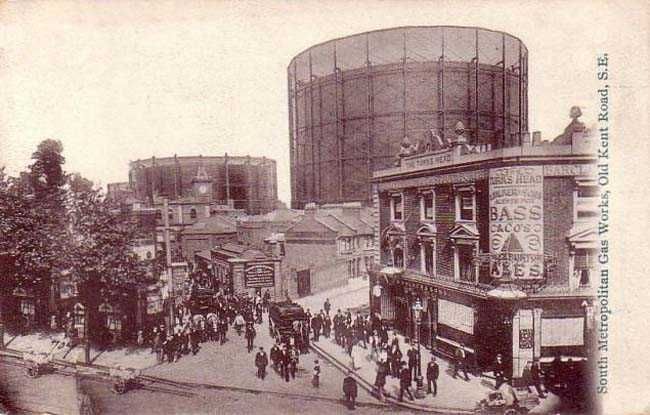
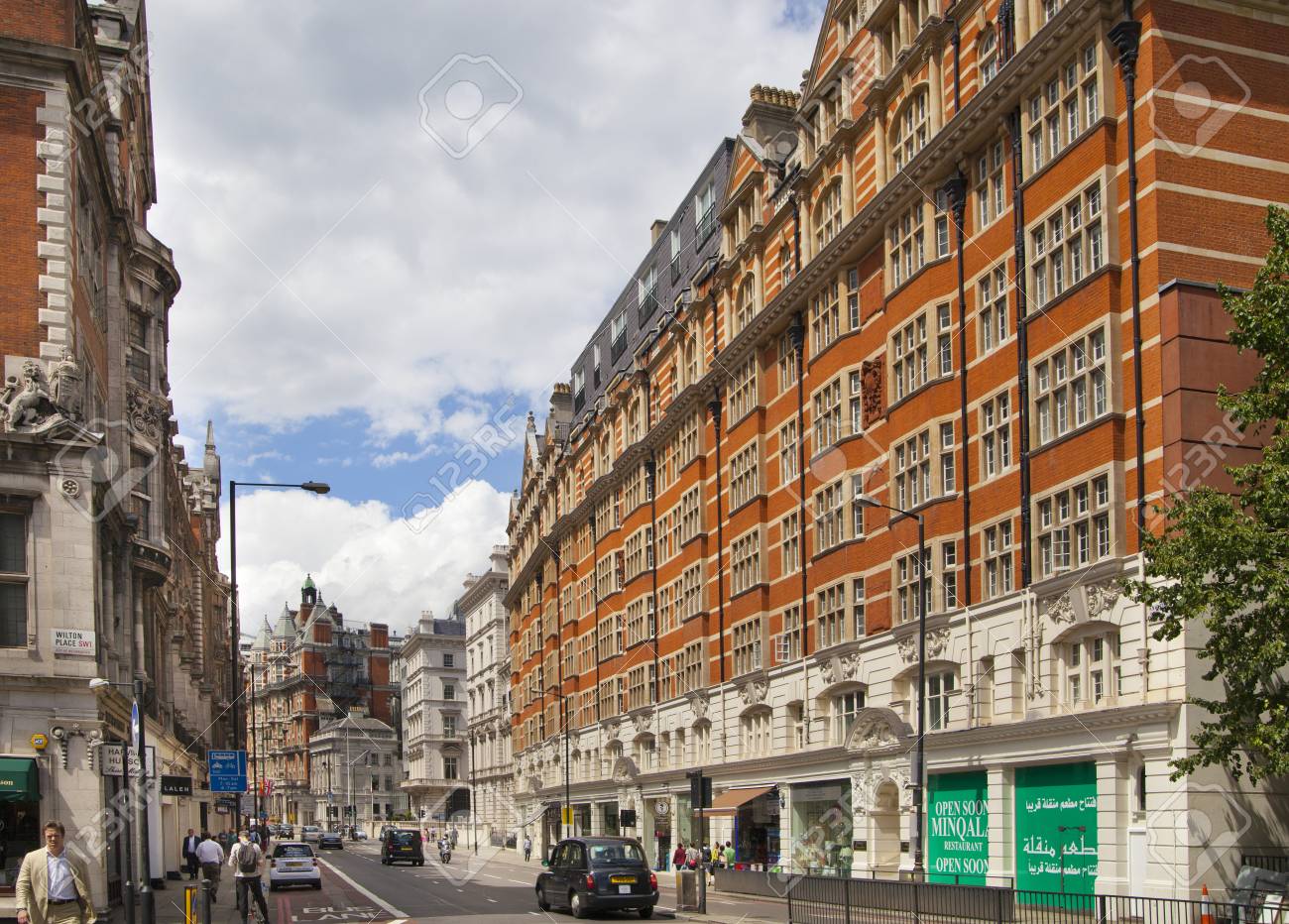
Which would you apply to these:

All photos are from the UK

New vocabulary introduced included:

apparently – something you believe to be true

conversely – the opposite, on the other hand, however

bear with me – please wait a very short time

Pronunciation focused on dates – the difference between 3rd, 13th and 30th.

Grammar was adjective-noun phrases – such as a stressful journey, a peaceful holiday, delicious food, expensive watch etc.

Friends (men): Teaching personality adjectives and occupations

28th December 2018

I use this sheet for many classes, usually for personality adjectives, as well as occupations. It’s adapted from a class I took at International House, London.

For higher level classes, you could also use this to illustrate the adage ‘don’t judge a book by its cover.’

The students have to guess the personality of my friends, just by looking at them; their expressions, posture, dress sense, hair style etc. Then they have to try to guess the occupation.

This is a great way to introduce new vocabulary and job titles. Additionally, students can learn that many adjectives are not necessarily positive or negative, for example ‘serious’. Being serious could be very positive (in a professional context) but negative in other situations.

I’ve put some sample adjectives and jobs after the last photo, as well as the answers to their current occupations.

Peter
David
Alex
Victor
Simon

Personality adjectives:

aggressive / arrogant / calm / funny (haha) / funny (crazy) / generous / honest / humorous / kind / mean / modest / polite / quiet / reliable / rude / selfish / serious / thoughtless / trustworthy /

Occupations:

estate agent / plumber / DJ / mechanic / bouncer / surgeon / accountant / actor / cook or chef / Uber or GrabBike driver / insurance agent / bank clerk / detective / businessperson / barista / lawyer / shop manager / unemployed / slacker

IELTS STUDENTS:

Use this as a basic for building complex sentences

EXAMPLE: In my opinion, Peter, who is the first gentleman, has a white-collar job, such as banking, insurance or management. I say this because of the way he’s dressed, a suit and tie. Furthermore, he is extremely well groomed by which I mean his hair is very neat as well as being clean-shaven. He appears very diligent. I’m positive he works hard, sometimes burning the candle at both ends.

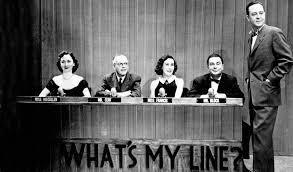
TV Trivia: What's My Line? | 50+ World

Peter is unemployed. He has an MA in Business Studies and is currently looking for work, so he is sending out his CV and photo.

David is a DJ

Alex is an actor. He is also a Buddhist so normally has shaven hair. However, he is very big and strong, so he gets cast as gangsters or bad men, despite being very gentle and soft-spoken in real life.

Victor is a self-employed plumber.

Simon is a doctor. He is highly professional and serious, but is seen here on holiday, after a few sangrias (wine cocktails). Someone took a photo with a flash, so his eyes look wide and big.