IELTS: hometowns & neighbourhoods. Speaking Test Part Two practice.

4th April 2022

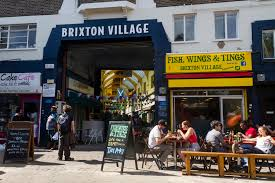
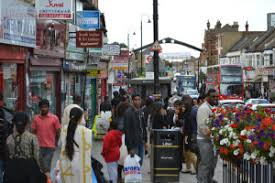
Some London neighbourhoods
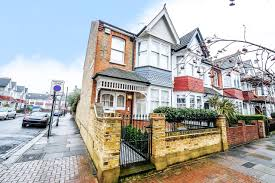
A typical, run of the mill IELTS question will be about your hometown or about your neighbourhood.

N.B. neighbourhood means the area in which you live; neighbours are the people living next or close to you.

First, some new vocabulary. I will expect you to learn these, to have them down pat:

gritty / industrial

quite / safe / residential

boring / peaceful / suburban

bustling / vibrant / city centre / lively / a happening place

apparently – something you believe to be true

conversely – the opposite, on the other hand, however

actually – saying something that is surprising or is the truth

New idioms

bear with me – please wait a very short time

bit of a sore point – something that makes you sad or angry

like a madhouse – a place or area that is crazy, too noisy, too busy etc

run of the mill – ordinary, typical, unusual, boring

you take your life in your hands – doing something that is extremely dangerous

NOW … your turn

Tell me about your neighbourhood

Remember, give me a great introduction, have a positive point, a negative point and a short conclusion. You should be able to speak for two minutes without pause or repetition

Tips: Use some of the adjectives listed above to describe the area.

Say what amenities you have close by; shops, restaurants, entertainment, transport links etc.

Try to tell an anecdote – a short true story about something that happened to you.

Real estate news: Outstanding Housing Projects Of Kien A Investors
An apartment block in the Cat Lai area of Sai Gon. Artist’s impression.
HCM city aims to reduce seaport traffic jams
The reality of living in Cat Lai, one of the busiest ports in south east Asia

Well, that question is a bit of a sore point with me because I live in a terribly noisy gritty industrial area. My apartment is near the Cat Lai port which is one of the busiest in Vietnam. Consequently, we have containers driving past, day and night which, as you can imagine, creates so much pollution.

However, allow me to talk about the good points. Firstly, it is significantly cheaper than, say, District 1 or 3, as it is quite far from the centre. The shops also tend to be on the cheap side. Additionally we have some street markets where I can pick up some very cheap food and fresh fish. We are well-served with several convenience stores although, in my opinion, Family Mart charges an arm and a leg.

Conversely, my friends avoid visiting me because it is so dangerous to ride a motorbike here, we really take our lives in our hands every time we go out. Furthermore, I love fresh air so I open my windows, but I have to dust and clean every day because so much dirt accumulates. Finally, we have open-air karaoke nearly every night and street wedding parties most weekends which means loud and terrible singing. It’s like a madhouse, I really detest this horrible noise.

I am lucky with my neighbours, who are all so friendly, and the apartment is really spacious. Having said that, the area is so bad that as soon as possible, I will leave and find somewhere cleaner and safer.

Landmark 81 in Sai Gon

Please Note: All photos are taken from Google Images or free photo sites, and are used for educational purposes only. No copyright infringement or offense is intended. If I have used your photo or image, and you wish me to remove it, just ask. This site is not monetized, I run it on my own dollar. Thank you.

Animals: idioms, phrases and interesting facts A – D

3rd April 2022

Albatross:

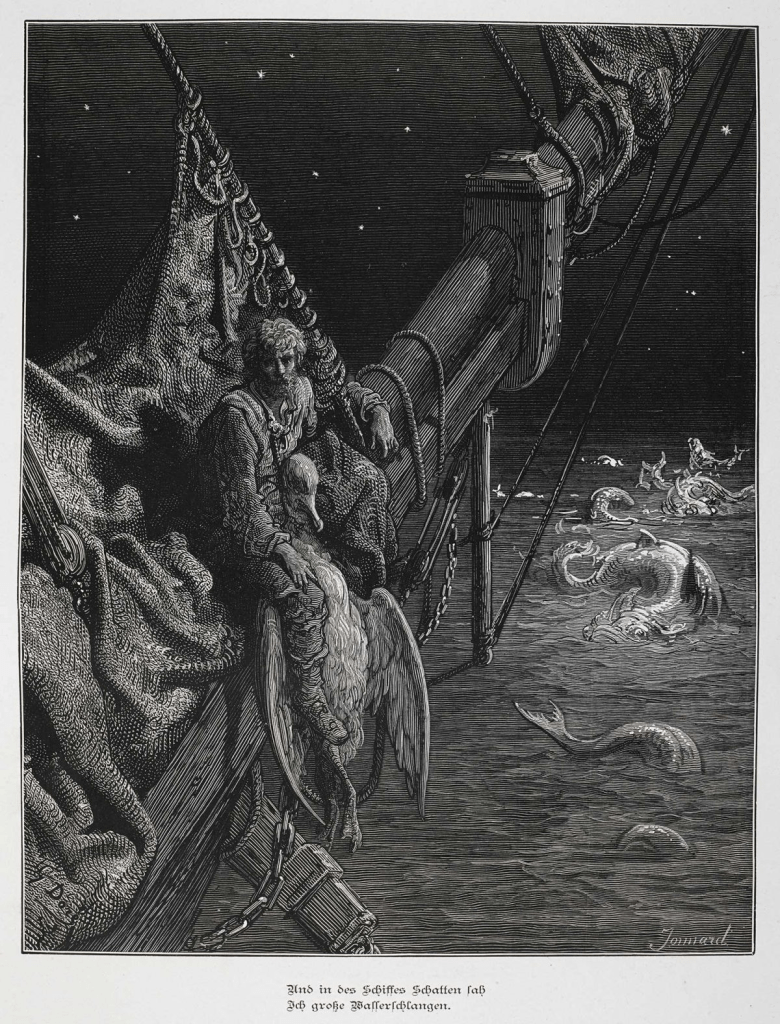
An albatross around your neck

Meaning: A burden or something unpleasant that stays with you

“He wrote that tweet when he was angry, and everybody saw it. It’s like an albatross around his neck now.”

The phrase comes from the Samuel Taylor Coleridge poem, ‘The Rime of the Ancient Mariner’, where a sailor shoots an albatross, a symbol of good luck, and is forced to wear the dead bird around his neck.

Ants:

To have ants in your pants

Meaning: Always moving around, not sitting still

“Keep still ! Do you have ants in your pants ?”

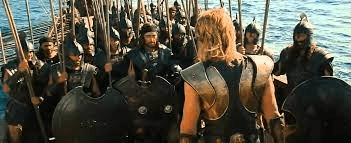
In Greek, ants are myrmex. The soldiers who followed the hero Achilles were referred to as Myrmidons. One origin myth is that ants survived a plague, and the god Zeus turned these into people. Even today, ants have been found to be extremely resistant to nuclear radiation.

Achilles addresses his myrmidons

Bears:

Bear with me

Meaning: Please wait a very short time

“Let me check for you. Bear with me a minute.”

In some Native American cultures, the bear is a symbol of a teacher

Birds

Birds of a feather flock together

Meaning: People tend to stay with or befriend people with similar interests or habits

“The naughty students all sit together. Birds of a feather !”

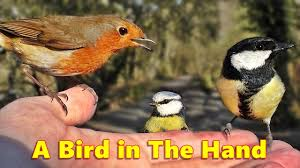
A bird in the hand is worth two in the bush

Meaning: It is better to have something definite than something better but uncertain

“Should I buy these now or wait until next week when they may be cheaper ?” “Buy now. A bird in the hand.”

The European bird Robin Redbreast actually has an orange chest, but the word ‘orange’ didn’t exist in English until the 16th Century, by which time the bird was already known as ‘redbreast’.

Cats:

To let the cat out of the bag

Meaning: to tell a secret

“John told me. He let the cat out of the bag.”

No room to swing a cat

Meaning: Very limited space. However, the ‘cat’ here is a whip used by the navy, a cat o’ nine tails.

Cats were sacred to the Egyptian god Bast (or Bastet), so killing one was extremely unlucky. Cats helped kill rodents, who would eat the grain, and were therefore treated with the highest respect.

Chicken

Don’t be chicken

Meaning: Do not be afraid

“Come on, let’s watch this horror film. Don’t be a chicken !”

Chicken Little

Meaning: A person who is alarmist, who always predicts that bad things will happen

“Jane says we should cancel the picnic because it may rain, but she’s such a Chicken Little.”

Chickens, who originate from southeast Asia, have remarkable memories. They have been found to identify over 100 other chickens just by their faces.

Dog

The tail wagging the dog

Meaning: The person or people in control are actually being forced to do something they don’t want.

“Your students tell you what they are going to do ? That’s the tail wagging the dog.”

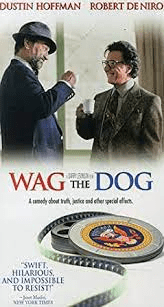
1997 film which takes its title from an expression

Donkey

Talking the hind legs off a donkey

Meaning: Someone who can talk and talk, extremely loquacious

“He could talk the hind legs off a donkey.”

Donkeys are mentioned over 140 times in the NIV of The Bible. They are seen as symbols of peace and servitude. An ass is a wild donkey. A donkey is the ‘star’ of Robert Bresson’s 1966 film ‘Au Hasard Balthazar’.

Please Note: All photos are taken from Google Images or free photo sites, and are used for educational purposes only. No copyright infringement or offense is intended. If I have used your photo or image, and you wish me to remove it, just ask. This site is not monetized, I run it on my own dollar. Thank you.
IELTS: speaking, writing, thinking the IELTS way

29th March 2022

Complex sentences, which use relative pronouns and subordinate clauses, are imperative in attaining a respectable IELTS score.

You will, no doubt, experience a feeling of triumph once you have mastered this technique which, I admit, does require extra effort on your part but will, without a shadow of a doubt, enable you to attain the score for which you are aiming.

And now, without further ado, let’s kick off. First, a warm-up. Of today’s three highlighted expressions, which would you use:

1 when you are certain or 100% sure about something

2 to start immediately, with no more interruptions

3 to express great happiness when you have achieved or won something

Answers at end of blog

Here are some standard IELTS-type questions, followed by a typical answer and then, by way of comparison, an extended response to demonstrate improvements.

1 Tell me about your hometown

2 How often do you go online ?

3 What jobs will be important in your country in the future ?

4 Tell me about a time you received good news

An average answer, which would probably result in a middle score, around 4 – 5 would be, to take one example, (Number 2):

I go online every day because I need the internet to help me study. I use the internet to check new words in English. I go online for information for my work.

What do you notice about this ? Firstly, what are the mistakes ?

The candidate answers the question immediately; a sentence leading into the response will make for a longer answer.

The second sentence is acceptable for providing more information although I advise students to be careful in case they start deviating from the subject.

Lastly, the third sentence just repeats what has already been said, even using the same phrase “I go online“, and then explaining the reason for using the internet NOT how often it is used.

Here’s a different way of answering

Well, that’s interesting because I have internet access at school, at home and on my phone so I would say I’m absolutely online every day. How much time I spend online varies from day to day, but I am probably online about three hours daily, sometimes more if I have a project or if I’m playing a cool game.

See how this answer only uses two sentences , but is far superior. Let’s break down how it earns points.

Initially, we have a short introduction and then the question is answered directly in the first, extended sentence.

Secondly, the opening sentence includes a list of three, so this is a chance to practise speech rhythm (one, two and three) – remember, you get points by HOW you say something as well as what you say.

Thirdly, the answer uses three everyday adverbs (highlighted); ‘so‘ can also be used as an adverb, but here it is a conjunction (a word such as ‘and’, ‘but’, etc).

Additionally, the sentences employs an expression, “from day to day,” which examiners like to hear, as it shows familiarity with vernacular language.

Lastly, the candidate explains the reasons for being online, and how it affects the time spent on the internet.

Now … your turn 

Try to answer the same question, following this pattern.

Now … let’s move on.

Question 1: Tell me about your hometown.

This time, I will give you facts and you arrange in an answer.

My hometown is Da Nang. Fifth largest city in Viet Nam. Is in Central Vietnam. Near historic town Hoi An. Important port. Many tourists. Has a cable car and a dragon bridge. Famous for its beach.

Thank you for letting me introduce to you my hometown which is Da Nang, one of the biggest cities in Vietnam, although it is much smaller than Ha Noi or Sai Gon. My hometown is in the middle, sorry, I mean in central Viet Nam, and had many tourists. They come to see many things such as the Dragon Bridge, go on the cable car or for swimming. Also, Da Nang is very near many famous place such as Hoi An. As it is on the coast, my hometown is also a busy port.

Check for

Introduction

Information in first sentence

Discourse marker ‘although

Correcting a mistake in line 3

A list of three items in lines 4 and 5

Can you spot two grammatical errors ?

Change of sentence structure in the last line: instead of saying,

“My hometown is also a busy port because it is on the coast,”

I started with the end of that sentence (“it is on the coast,”) and replaced ‘because’ with ‘as’ (though because would also be all right to use).

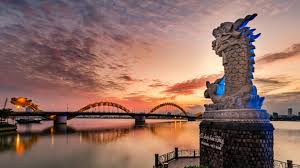
Dragon Bridge at Da Nang. Bye bye – see you next blog

Answers:

1 = without a shadow of a doubt

2 = without further ado

3 = feeling of triumph

Please Note: All photos are taken from Google Images or free photo sites, and are used for educational purposes only. No copyright infringement or offense is intended. If I have used your photo or image, and you wish me to remove it, just ask. This site is not monetized, I run it on my own dollar. Thank you.
Young Teens. Totem poles – history and meaning.

26th March 2022

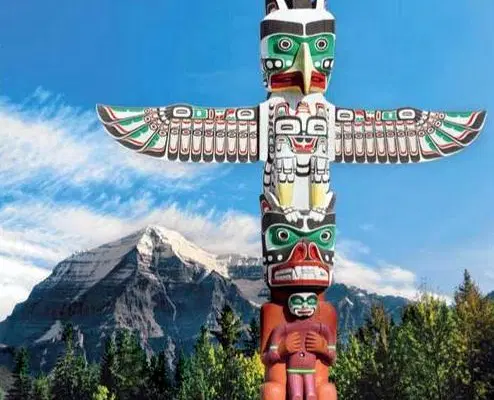
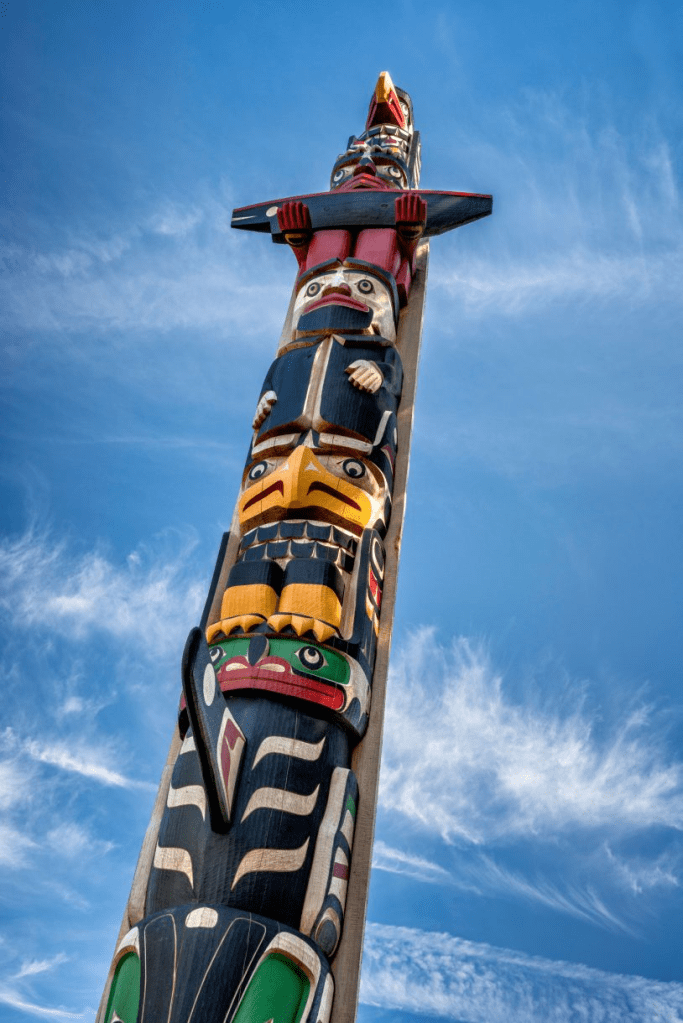
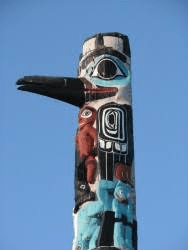
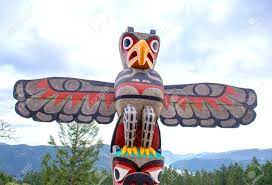
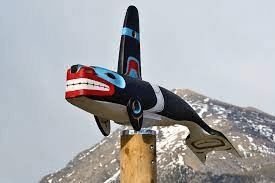
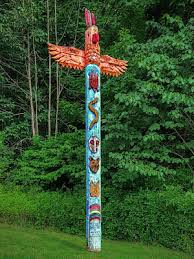
Totem poles, which are large carved and painted logs, were created by Native Americans in western Canada and the north-west of the USA.

How many animals can you see ?

As you can see, they can be very beautiful, colourful and mysterious. Totem poles are usually made from only one piece of wood, mostly from the cedar tree.

Unfortunately the rainy climate destroys the paint, so most totem poles only last about 70 years.

How tall can they be ?

The tallest one still standing is Kalama, Washington, at 140 feet tall. However, that wasn’t made by a Native American.

In Alert Bay, British Columbia, a pole is 173 feet but that is constructed from two pieces of wood.

The thickest totem pole is in Duncan, British Columbia, at over 6 feet in diameter.

Centennial Pole from 1988, in Duncan, British Columbia.

What are they for ?

Totem poles can stand outside a home, and tell the story of that family. Some are used as grave markers. The word totem means a guardian or ancestor. They are respected by the family.

The interesting figures on the poles tell stories, and each animal has a meaning.

How to read a totem pole

You can see many animals carved here:

The thunderbird is a mythical creature. The bird is said to control the weather, and it represents power.

The raven is a symbol of the Creator.

The eagle means peace and friendship.

The whale shows strength.

The snake means change, and maybe also medicine and good harvest (because snakes shed their skins).

The wolf means loyalty and family (because wolves live in packs).

The beaver means determination and creativity (because they are amazing builders).

Finally, the bear represents strength and authority but also motherhood and teaching.

Project

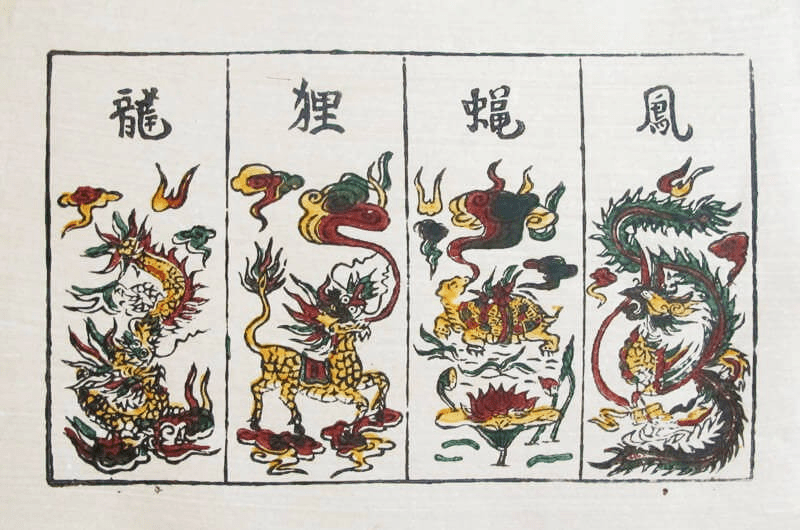
What animals would you use in your country ?

Do you have any legendary or mythical creatures ?

What do these animals mean ?

Which animals are lucky ?

Four mythical creatures of Viet Nam

Sources:

https://www.britannica.com/art/totem-pole

https://www.wonderopolis.org/wonder/what-is-a-totem-pole

https://www.scribd.com/article/449477475/What-Are-Totem-Poles

https://www.countrylife.co.uk/travel/curious-questions-whats-worlds-largest-totem-pole-202800

Please Note: All photos are taken from Google Images or free photo sites, and are used for educational purposes only. No copyright infringement or offense is intended. If I have used your photo or image, and you wish me to remove it, just ask. This site is not monetized, I run it on my own dollar. Thank you.
IELTS: Talking Pictures. Describe a favourite film

16th March 2022

Zhang Zihi in the visually stunning film ‘Hero’
Exquisite cinematography in ‘Raise The Red Lantern’ with Gong Li

A typical IELTS question

Talk about a film you like. Why do you like it, and what is the story ?

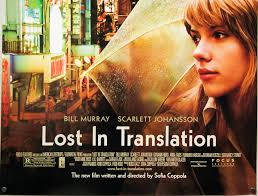
The film I would choose is ‘Lost In Translation‘ starring Scarlett Johannsson

STRUCTURE:

Short introduction – do not answer the question immediately

Organised structure – one point per paragraph

A change of attitude – a critical view

Short conclusion

LOOK OUR FOR

Low-frequency words

Complex sentences – combining two or more bits of information in the same sentence.

Discourse markers – words to link ideas together

Adverbs and less common adjectives

So, without further ado, the question:

Talk about a film you like. Why do you like it, and what is the story ?

INTRODUCTION – talk about cinema or films in general DON’T immediately talk about your favourite film.

Watching films and going to the cinema is one of my passions, so choosing just one film is going to be terribly difficult, not to say impossible. However, if I have to select one film, it would be ‘Lost in Translation’, with Scarlett Johannsson.

First paragraph. Information about the film and the main characters.

The film, directed by Sophia Coppola, daughter of Francis Ford Coppola, was made in 2003, and takes place in Tokyo. A young newly-married girl, named Charlotte, is alone in her hotel because her husband is constantly out working. Staying at the same hotel is a middle-aged, world-weary American actor, Bob Harris, in Japan to make a commercial for Japanese whiskey.

Second paragraph. The plot: what happens and why.

Both characters appear to be suffering from culture shock and seem afraid to leave the security of the hotel. For example, despite seeming to be impressed by all the neon and energy of the city, Bob spends his night in the hotel bar with other tourists, while Charlotte reads and listens to music in her room.

Third paragraph. Develop the plot.

They meet in the hotel where, age difference notwithstanding, they seem to get on extremely well, extremely quickly. Furthermore, they give each other energy and courage to venture outside. We learn that Bob is less than happy in his current life, while it becomes apparent that Charlotte is doubting her own marriage. At one point it look like they will get together, hook up. However, Bob decides to go back to the USA leaving Charlotte, but not before they share an embrace on the street in which Bob whispers something in her ear. We, that is the audience, do not get to hear what he said; we have to speculate.

Fourth paragraph: Something negative for balance.

Some people could be irritated that the final words are a mystery, other could be somewhat disappointed by this love story that never happens. This negativity is like a black cloud on an otherwise bright, sunny day. The film is quite melancholic as we are left to wonder what might have been.

Conclusion: A short summary.

‘Lost in Translation’ is described as a romantic-comedy-drama. The characters are totally believable and likeable, while, technically, the cinematography is stunning. Furthermore, in my view, it is a charming, heart-warming, and life-affirming albeit bitter-sweet movie.

An iconic shot from the opening of the film

NOW … YOUR TURN

LIGHTS, CAMERA, ACTION !

Please Note: All photos are taken from Google Images or free photo sites, and are used for educational purposes only. No copyright infringement or offense is intended. If I have used your photo or image, and you wish me to remove it, just ask. This site is not monetized, I run it on my own dollar. Thank you.

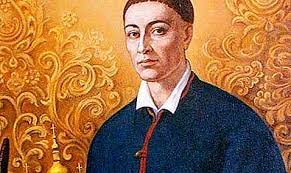
Ukrainian Artists #6: Gregory Skovoroda

14th March 2022

A poet, teacher and composer, Gregory Skovoroda is most famous in the field of philosophy, even earning the sobriquet of the ‘Ukrainian Socrates’.
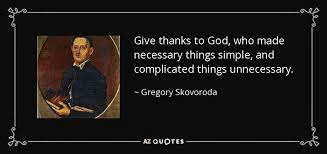
Skovoroda was born on 3rd December 1772. His musical talents were discovered early in life, and he joined the imperial choir performing in Moscow, St Petersburg and in the Hungarian Empire. The love of travelling never left, and he spend the last part of his life walking around Ukraine, rarely staying in one place too long. Skovoroda adopted a simple, hermit-like existence, writing and studying.

A good video introduction may be found on YouTube. Skovoroda’s writings are described as “simple and straightforward.”

Themes of moralising, the inner struggle between good and evil permeate his metaphysical philosophy.

A piece of music attributed to Skovoroda may be accessed here:

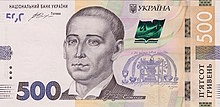
Skovoroda died on 9th November 1794. In 2006, his image was placed on a Ukrainian bank note.

Ukrainian Artists #5: Taras Shevchenko

12th March 2022

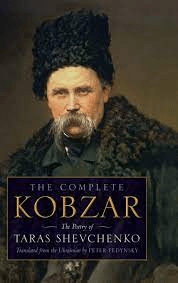
Considered the national poet, Taras Shevchenko was born in 1814 in central Ukraine. He was born into serfdom, not becoming free until 1838 when some friends were able to purchase his freedom.

Shevchenko wrote novel and dramas, as well as being an artist, but is best known for his poetry. His first collection, Kobzar, was published in 1840. A contemporary poet referred to the collection as “a new world of poetry … (an) artistic expression not previously known in Ukrainian writing.” (Ivan Franko).

Haidamky, an epic poem, followed in 1841. By now, he was living in St Petersburg, but made several trips to Ukraine in the 1840s, capturing the scenes in oil and watercolour.

Kateryna, 1842. National Museum, Kyiv

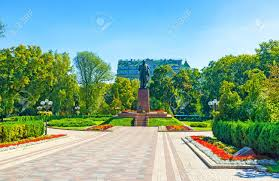
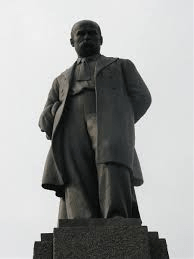
Shevchenko was arrested in 1847 after Tsar Nicholas I read the poem Dream, which he found offensive. The poet was forced to march from St Petersburg to Orsk near the Ural Mountains. He was later sent to a severe penal settlement before being released in 1857. The years of exile and imprisonment contributed to his death in 1861, just days before the emancipation of serfs was announced. He is buried in Ukraine at Taras Hill, neat the Dnipro River.

Will and Testament

When I die bury me
in the middle of the steppe
of my Ukraine. So I can seize
broad the broadback field and
Dnipro, twisting, so
I can see and hear it roar,
roaring, carrying 

thieves’ blood
to the ocean. Then I’ll toss
the fields and mountains and me
and burn them all like prayers.
I won’t know God till then.

Stash me away then stand,
split your chains and spatter
the soil with blood and fury,
having your body back. Now

in our vast family, the free
one, the new one,
don’t forget to remember me
in good-willed words,
a word unangered,
quiet.

December 25, 1845, Pereyaslav, Ukraine

Scources:

Wikipedia: https://en.wikipedia.org/wiki/Taras_Shevchenko#Artwork

Asymptote: https://www.asymptotejournal.com/poetry/taras-shevchenko-five-poems/

Ukrainian Artists #4: Alexander Dovzhenko

6th March 2022

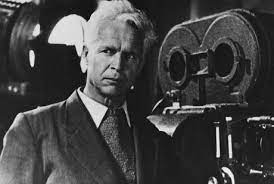
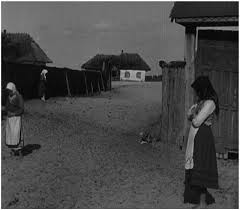
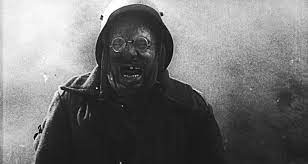
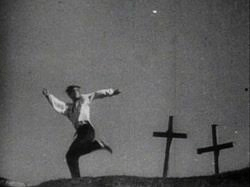
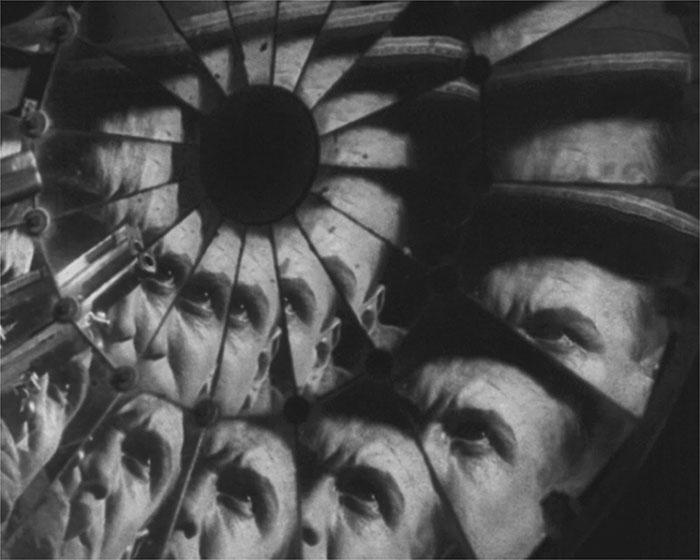
Alexander Dovzhenko is, along with Sergie Eisenstein, Dziga Vertov & Vsevolod Pudovkin, one of the great silent filmmakers from the Soviet era.

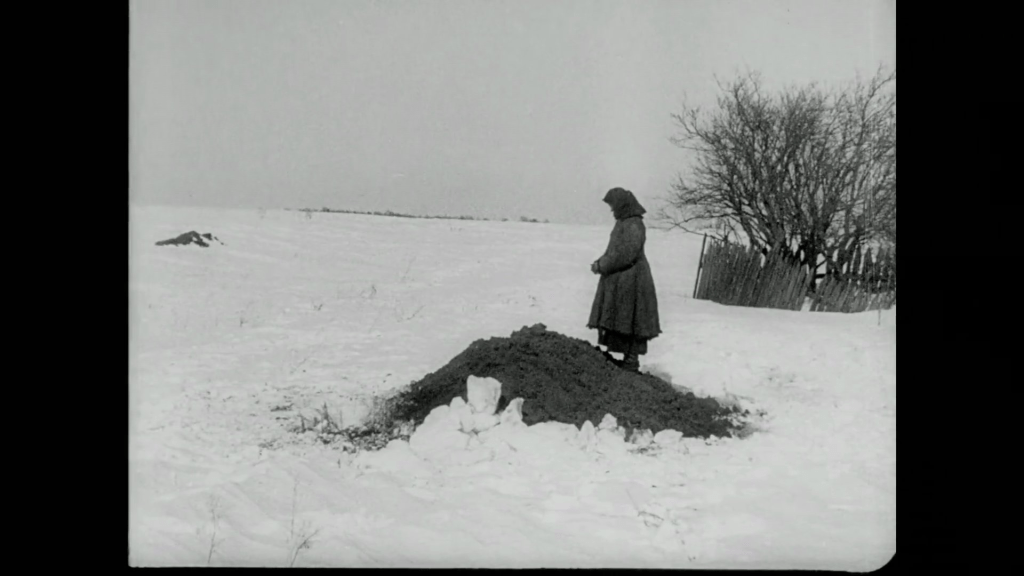
Dovzhenko was born in Ukraine on 10th September 1894, and began his cinema career in 1926. He is most famous for his ‘Ukraine Trilogy‘, the final part of which, ‘Earth‘, is regarded as one of the greatest silent films ever made.

Alexander Dovzhenko
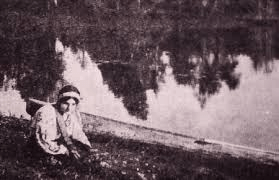
Zvenigora 1928
Zvenigora 1928

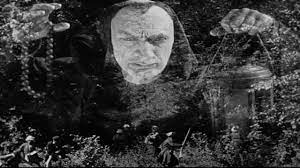
Dovzhenko’s films are characterised by elements of avant garde, camera tricks, slow motion and unsettling framing, most notably in the incredible cinematography of ‘Arsenal‘. “Sequences of invigorating speed and motion are contrasted with images of deathly stillness.” (BFI.org.uk)

Arsenal 1929
Arsenal 1929
Arsenal 1929
Earth 1930
Earth 1930

Further information may be found on:

https://www.sensesofcinema.com/2018/great-directors/dovzhenko-alexander/

http://www.encyclopediaofukraine.com/display.asp?linkpath=pages%5CD%5CO%5CDovzhenkoOleksander.htm

https://www2.bfi.org.uk/films-tv-people/4ce2b6ee4d030

Ukrainian Artists #3: Modern authors

5th March 2022

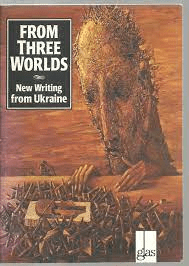
Here is a short list of modern Ukrainian writers that are achieving wider recognition. Before that, I can recommend an anthology called ‘From Three Worlds: new Ukrainian writing’ from 1996.

You may recognise the cover art, by Ivan Marchuk https://thaypaulsnotes.com/2022/03/03/ukrainian-artists-1-ivan-marchuk/

The collection has short fiction and poems by, among others, Vololdymyr Dibrova, Oksana Zabuzhko and Bohdan Zholdak.

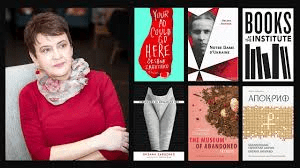
Oksana Zabuzhko

One of my favourites was a tale entitled ‘To Find Yourself in a Garden‘ by Halyna Pahutiak (born 1958 in the Lviv region, graduated from Kyiv). She has published four books of prose, as well as a novella, ‘The Sun‘.

In 2021, three Ukrainian writers were shortlisted for the EBRD Literary Prize: Andrey Kurkov, Andriy Lyubka, and Oksana Zabuzhko for ‘You Ad Could Go Here‘.

Andriy Lyubka

‘Carbide’ has been describes as a tragicomedy, the story of an alcoholic teacher who decides to build a tunnel and smuggle the Ukrainian population into the EU. I have not read this novel, but it is certainly on my ‘to read’ list.

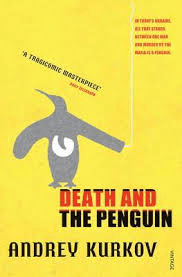
Finally, there is Andrey Kurkov

‘Grey Bees’ is set in the ‘grey zone’ between Ukraine and Russia. The story’s protagonist moves to the Crimea, which was annexed by Russia in 2014.

For further information, have a look at this lithub website: https://lithub.com/love-ukraine-as-you-would-the-sun-10-ukrainian-books-worth-reading-in-english/

Happy Reading

приємного читання

Ukrainian Artists #2 Tania D’Avignon

4th March 2022

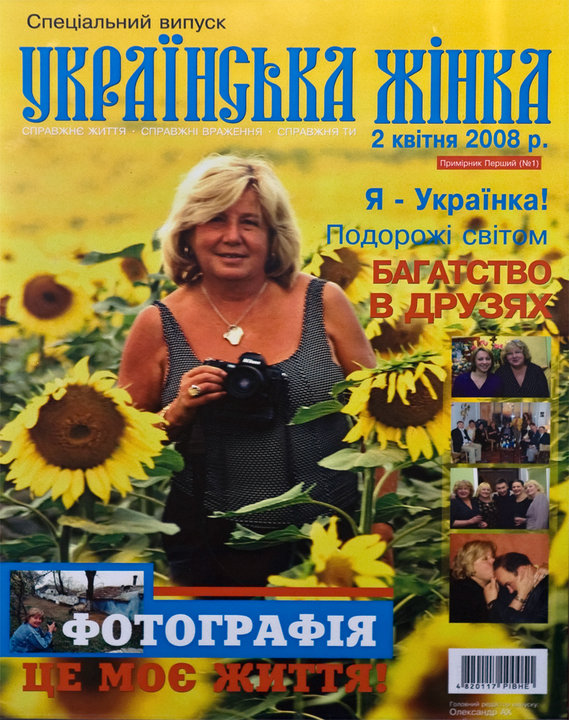
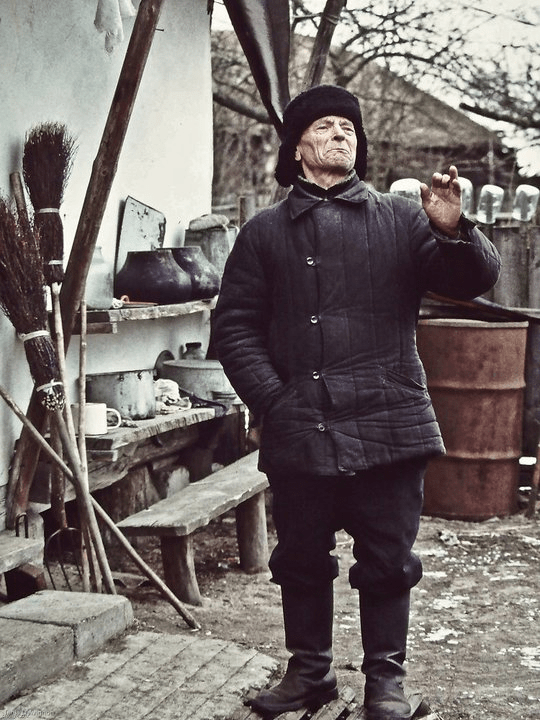
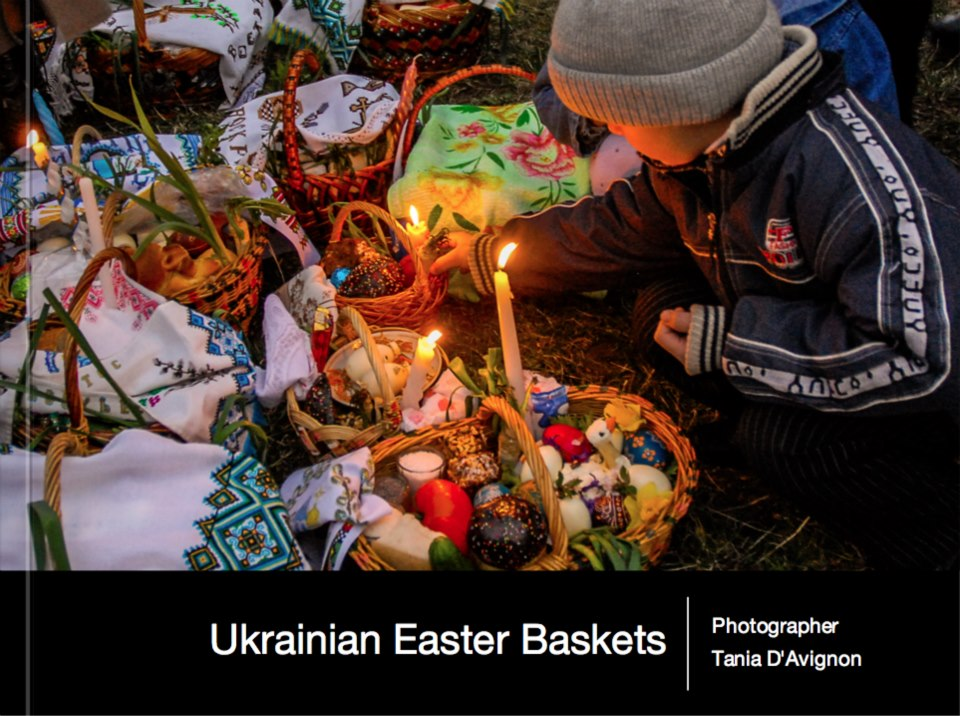
Born in Lviv, Tania D’Avignon emigrated with her parents to the USA in 1949. She has worked on several National geographic projects, and her art has been reproduced in books in Europe, Ukraine and the States. Tania has exhibited in many USA and Canadian cities, as well as Ukraine and Poland.

You will find more of her work on her Facebook page: https://www.facebook.com/FOTOGRAFINIA/photos

Here are a few examples:

From the album ‘Chernobyl Legacy’
The Zone, Chernobyl