A selection of photos found on web searches. No copyright infringement is intended.
adoreness.com
Model Pattie Boyd from vogue.com
Britt Ekland from outdressing.comImage from elle.com
theatreoffashion.com
time.com
adoreness.com
itsacharminglife.com
Please Note: All photos are taken from Google Images or free photo sites, and are used for educational purposes only. No copyright infringement or offense is intended. If I have used your photo or image, and you wish me to remove it, just ask. This site is not monetized, I run it on my own dollar. Thank you.
The suffix –ist is used to create an agent noun — a noun that denotes someone or something that does something. Two suffixes more commonly used to create agent nouns are –er and –or, as in worker, bookseller, beginner, visitor, creator, and accelerator.
amelioration
The development of a more favorable meaning for a word. Take, for example, quell. In current usage, banks move to “quell inflation.” Governments issue proclamations to “quell fears”.
In Old English poetry, on the other hand, when a warrior “quelled” his opponent, he killed him.
Semantic amelioration is not as common as semantic deterioration, in which a formerly inoffensive word acquires a negative meaning.
anarthrous
As a grammatical term, it means, “used without the article.”
From ‘Daily Writing Tips’
When commenting on the opening sentence of Dan Brown’s The DaVinci Code, Geoffrey Pullum called it an “anarthrous occupational nominal premodifier.”
Renowned curator Jacques Saunière staggered through the vaulted archway of the museum’s Grand Gallery.
Pullum said that the construction is “reasonable” in a newspaper, but has the “wrong feel and style for a novel.” Had Brown written, “The renowned curator Jacques Sauniére,” the sentence would have escaped criticism.
apposition
Commas with appositives
An appositive is a noun or noun element that follows another noun and serves to identify it further. The nouns are said to be “in apposition.”
An appositive phrase usually follows the word it explains or identifies, but it may also precede it.
The term derives from a Latin compound meaning, “to set beside or near.” Nouns in apposition are set beside one another. When one of the nouns simply restates the other one, commas are needed to set it off.
Andrew Johnson, the seventeenth US president, ranks among the three worst presidents of the United States.
The phrase “the seventeenth US president” is just another way of saying “Andrew Johnson.” It provides additional information, but leaving it out would not change the meaning of the sentence. The additional information is non-essential, so it is set off with commas.
Take another example:
My English teacher says that Fitzgerald’s novel The Great Gatsby is overrated.
Here, The Great Gatsby is in apposition to novel. Because Fitzgerald wrote more than one novel, the specific title is essential information. It cannot be omitted without obscuring the meaning of the sentence. The teacher does not necessarily think that the author’s other novels are overrated. No commas are needed when the additional information is essential.
In the following sentence the nouns in apposition restate the nouns that precede them. Because the information they provide is non-essential, commas are needed to set them off:
As a team, we send our thoughts and deepest sympathies to Peter’s wife, Jill, and his children, Mark and Hilary.
False Titles
A common type of apposition found principally in journalistic writing is the “false title.” This is a descriptive phrase placed before a noun, but used as if it were a title.
Novelist John le Carré has set himself up as the psycho-analyst of the cold war.—Time
Cellist Joshua Gordon, in the slow movement, showed off his rich, lyrical tone. Buffalo News
This construction is known as “a Time-style adjective” because it’s thought that Time magazine either began the practice or popularized it.
diaeresis
From Wikipedia, the free encyclopedia
The diaeresis diacritic indicates that two adjoining letters that would normally form a digraph and be pronounced as one sound, are instead to be read as separate vowels in two syllables. For example, in the spelling ‘coöperate’, the diaeresis reminds the reader that the word has four syllables co-op-er-ate, not three, ‘*coop-er-ate’. In British English this usage has been considered obsolete for many years, and in US English, although it persisted for longer, it is now considered archaic as well. However, we still see it in words such as naïve.
endonym and exonym
From Wikipedia, the free encyclopedia
An endonym (from Greek: éndon, ‘inner’ + ónoma, ‘name’; also known as autonym) is a common, internalname for a geographical place, group of people, individual person, language or dialect, meaning that it is used inside that particular place, group, or linguistic community in question; it is their self-designated name for themselves, their homeland, or their language.
An exonym (from Greek: éxō, ‘outer’ + ónoma, ‘name’; also known as xenonym) is a common, externalname for a geographical place, group of people, individual person, language or dialect, meaning that it is used only outside that particular place, group, or linguistic community.[1] Exonyms exist not only for historico-geographical reasons, but also in consideration of difficulties when pronouncing foreign words.[1]
The Premier League, also known exonymously as the English Premier League or the EPL is the top level of the English football league system.
Please Note: All photos are taken from Google Images or free photo sites, and are used for educational purposes only. No copyright infringement or offense is intended. If I have used your photo or image, and you wish me to remove it, just ask. This site is not monetized, I run it on my own dollar. Thank you.
Let’s kick off with an adjective review. What adjectives have you been taught recently ? I’ll give you a clue with the first letter:
f (means to be cheeky, a little impolite but in a funny way)
u (not usual, someone acting unlike their normal self)
p (very relevant, of interest at this time)
This is a test to see who has been making notes in class, and who has been coasting.
Hhhmmmm … this is not going to be a piece of cake
The answers are facetious, uncharacteristically & pertinent. For those that didn’t know, you now have to use them in a sentence. It may be one complex sentence, which would really impress me, or three basic sentences. What are you waiting for ?
If you learn English you will increase your job ____________
Nowadays, most young people are _____________ _________________ . They are able to use programs such as Word, ___________ & ________
When selecting a university, you may have to be ______________ in case you don’t get into your first choice.
Getting a great, well-paying job is essential if you want a high ________________________ .
One student moved to Boston where the temperature can drop to below freezing. He’s really having ________ to the new culture.
My actor friend is busy 24/7, attending parties, setting up meeting, pitching ideas and Tweeting. That guy is constantly ______________ .
Phew ! Thay Paul is a Tiger Teacher
Class Game
Split class into two teams.
One team selects an idiom and the other team has to use it, correctly of course, in a sentence.
EXAMPLE:
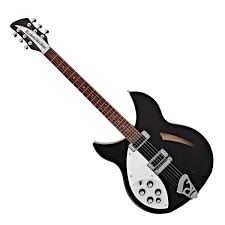
I would love this guitar, a left-handed Rickenbacker which is a famous American company with a very distinctive look and sound yet, to my dismay, it costs ______________________
Idioms from Semester 2
Another string to (your) bow – a new skill or learning experience
bear with me – please wait a very short time (usually spoken as opposed to written)
bit of a sore point – something that makes you sad or angry
down in the dumps – depressed, unhappy, feeling gloomy
hit the ground running – to start something immediately and with all your energy
like a madhouse – a place or area that is crazy, too noisy, too busy etc
run of the mill – ordinary, typical, normal, usual, boring
up in arms – to be very angry about something, to protest strongly
you take your life in your hands – doing something that is extremely dangerous
Idioms from Semester 1
Which you should all know by heart and be able to reel off at the drop of a hat.
it’s raining cats and dogs
it costs an arm and a leg
piece of cake
I’m burning the candle at both ends
once in a blue moon
pass with flying colours
Remember these old chestnuts ?
without further ado // tricks up your sleeve // ace the test
pass with flying colours // do yourself proud //
you are in the driver seat(or you are in the driving seat) //
Please Note: All photos are taken from Google Images or free photo sites, and are used for educational purposes only. No copyright infringement or offense is intended. If I have used your photo or image, and you wish me to remove it, just ask. This site is not monetized, I run it on my own dollar. Thank you.
My Princess requested some extra help with reading and gleaning information from text. Therefore, I prepared this little exercise about a Truly unique musical icon, David Bowie.
David Bowie was born David Robert Jones in Brixton, South London, England, on January 8, 1947. Bowie’s first hit was the song ‘Space Oddity’ in 1969. The original pop chameleon, Bowie became a fantastical sci-fi character for his breakout Ziggy Stardust album. He later co-wrote ‘Fame’ with Carlos Alomar and John Lennon, which became his first American No. 1 single in 1975. An accomplished actor, Bowie starred in The Man Who Fell to Earth in 1976. He was inducted into the Rock and Roll Hall of Fame in 1996. Shortly after releasing his final album, ‘Black Star’, Bowie died from cancer on January 10, 2016.
Black Star
Ziggy Stardust
Questions
1. When was David Bowie born ?
2. What was his first hit ?
3. What was the name of his breakout album (LP) ?
4. With whom did he co-write ‘Fame’ ?
5. What film did he star in ?
6. When was he inducted into the Rock ‘n’ Roll Hall of Fame ?
7. When did David pass away ?
8. What was his last LP ?
Now … IELTS language
Your turn to be a chameleon. Change this run of the mill passage into a piece of text worthy of an IELTS student.
Today, David Bowie’s music is (everywhere) (but) this wasn’t always the case. When he was (beginning phrasal verb) he was not successful, and he felt (sad – use an idiom). People only heard his music on the radio (rarely – use an idiom). However, by (not giving up) he finally archived fame.
He worked incredibly hard (idiom) and played concerts across the USA. He (idiom) by acting in a big movie in 1976. Unfortunately, the Rock ‘n’ Roll lifestyle was (bad) to his health, so he decided to (idiom), stop his bad habits, and move to Berlin, Germany.
Today, Bowie memorabilia can (idiom); for example, a lock of his hair sells for over £12, 000. That is out of this world !
Bye bye from David Bowie
Please Note: All photos are taken from Google Images or free photo sites, and are used for educational purposes only. No copyright infringement or offense is intended. If I have used your photo or image, and you wish me to remove it, just ask. This site is not monetized, I run it on my own dollar. Thank you.
Part 3 of the speaking test can be tremendously daunting. However, with some tricks up your sleeve, you will be able to ace the test, pass with flying colours and do yourself proud.
Right off the bat, relax … be cool. You merely have to:
1) demonstrate you understand the question
2) demonstrate you have IELTS-standard language to respond
3) reply based on either your opinion or experience. YOU DECIDE
As per usual, let’s kick off with a killer introduction
Prepare some expressions so you can adapt them for the specific question. To refresh your memory:
Well, that’s a very complicated question …
What a hard question, I may have to think about this
I’m not sure I know how to answer that because I don’t have enough information, however …
Next stage is to explain how you’re going to answer:
in my experience
allow me to tell you what I do
I can’t speak about other people, but I …
Finally you answer, only now, YOU are in control, you are in the driver’s seat.
Respond in a way that will earn you points. We want to hear low-frequency words, idioms, phrasal verbs, vernacular (“big time !”).
Furthermore, frame your answers in complex sentences, use body language and intonation and stress.
If you can illustrate your response with an anecdote, all the better.
Examples
What do you think schools will be like in the future ?
This type of question invites you to give YOUR thoughts (“In my opinion,” etc)
Well, I’m currently in my last year of high school, so this is a very pertinent question for me. Naturally, I can’t foresee the future however, I could offer some predictions though, of course, this is just my opinion.
To start with, I can only speak about …… (say your country) as I don’t know enough about the educational systems in other countries.
For me, I feel that technology will play a greater part in schools, such as using the internet, working on tablets and joining online groups. Personally, I’m in a small Facebook group to help with learning English and I find it tremendously helpful and rewarding.
On the other hand, this can be extremely expensive. Providing tablets for a whole school will cost an arm and a leg, so maybe this will only occur in private schools. Furthermore, as the population increases, there will be many more students. This could lead, inevitably, to larger class sizes.
I really hope our system continues to improve although we have to be realistic; higher standards means higher costs … but I feel it will be worth the expense.
Now, that was quite a long reply but let’s break it down:
The first paragraph personalises the question, as well as adapting an introduction expression.
The second explains how you are going to answer.
The third states your main point. Moreover, it includes an anecdote (this doesn’t have to be true).
The fourth gives an opposing view – thus affording you the chance to use a discourse marker, to alter your body language and intonation, and to throw in an idiom for good measure. Also, some L-FWs, which are always impressive (if used correctly).
The final paragraph is to conclude and is, as you can clearly see, purely personal. Did you also notice the poetic repetition ? Allow me to point it out – “Higher standards means higher costs.”
Piece of cake, right ?
See you in the next blog
Please Note: All photos are taken from Google Images or free photo sites, and are used for educational purposes only. No copyright infringement or offense is intended. If I have used your photo or image, and you wish me to remove it, just ask. This site is not monetized, I run it on my own dollar. Thank you.
Apart from idioms, phrasal verbs and low-frequency words (LFW), IELTS students need a collection of expressions and collocations to spice up their English.
With that in mind, here are some notes from the previous lesson, along with revision exercises and a splattering of vibrant vocabulary.
As for speaking tests, I listened to eight students last week and only heard one complex sentence. Now, it wasn’t one of my classes; my students know exactly what I will do if they don’t speak in IELTS-style sentences:
I just jammed around with two key words: ‘heart’ & ‘gold’.
Exercise 1: define these expressions & idioms
HEART
a heart of gold
a heart to heart
hand on heart
heart-felt greetings
heartbreaking
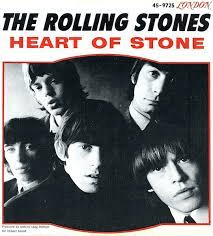
a heart of stone
GOLD
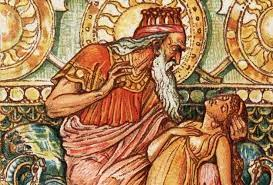
King Midas
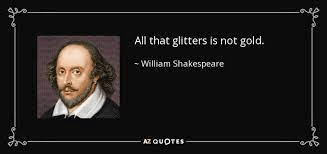
The bard of Stratford
a heart of gold (yes, again, it’s called practice)
as good as gold
the golden touch
golden handshake
silence is golden (especially when one works in Vietnam)
Exercise 2: use these expressions & idiomsin an IELTS style, employing complex sentence(s).
EXAMPLE: My mother, who works incredibly long shifts at the hospital, has a heart of gold. Even when she is exhausted, she always finds time for me.
facetious // uncharacteristically // overheads // euphemism // lingua franca // prima donna
shaking in my boots // going to powder my nose // going to see a man about a dog // footloose and fancy free
Please Note: All photos are taken from Google Images or free photo sites, and are used for educational purposes only. No copyright infringement or offense is intended. If I have used your photo or image, and you wish me to remove it, just ask. This site is not monetized, I run it on my own dollar. Thank you.
visually stunning / mouth-watering / a waste of money / spectacular / you get what you pay for / significantly / somewhat / according to / how can I put it ? / unforgettable / traditional / breathtaking / unique / once in a lifetime experience / never to be forgotten /
Exercise 1: write a narrative
My old friend was visiting Bangkok and, as Thailand is close to Vietnam, I decided to take a short holiday and meet up with him.
The students must flesh out the notes, using adjectives, discourse markers, adverbs and interesting expressions. Additionally, I need to hear a structured speech, using ‘signpost language’ such as:
To begin with / firstly
After that / secondly / following that /
Then / afterwards / another memorable moment was
For me the highlight was /
In conclusion / to sum up / all in all
Along with this, the voice must depict excitement or disappointment, indicate what is factual and what is an opinion.
Ready ? Let’s go !
I flew with …
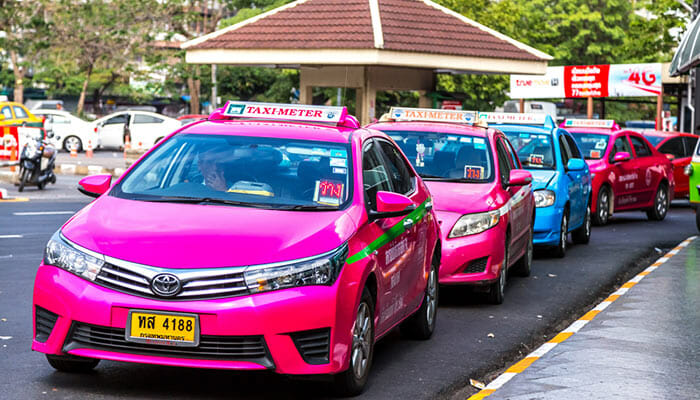
Then took the BTS Skytrain
Then a …
To my hotel. I travelled alone, however I planned to meet up with …
The highlights of the trip undoubtedly:
Not forgetting the …
And Thailand is famous for the friendliness of its people…
The only black cloud was how short the break was, and having to go …
All good things must end. It was an amazing trip and the fact that I could meet an old friend made it even more memorable. I hope we can repeat the experience, sooner rather than later.
Exercise 2:talk about your dream holiday
Tip: choose a place you can discuss at length, somewhere that offers many attractions.
I choose Hoi An
Recently, I have been burning the candle at both ends, studying hard for tests so I feel ready for a well-earned break. I don’t need to travel abroad asVietnam has many beautiful places and of these, my choice would be the unique town of Hoi An.
Firstly, Hoi An is a historical city with a wonderful Japanese bridge and lovely old shops. At night, the shops use romantic lanterns.It really is a once in a lifetime experience to see such a romantic and majestic sight.
Hoi An is close to Da Nang, which has breathtaking beaches. Living in the city, I only get to swim in the sea once in a blue moon. There are so many things to see and do in the local area apartfrom sunbathing and, naturally, mouth-watering, incredibly fresh seafood is ubiquitous and doesn’t cost an arm and a leg. As for the travel details, I can fly there easily and quickly from Sai Gon. I can be there in next to no time.
Having said that, Hoi An is very small and can be extremely crowded in summer. Prices could reflect this, and a good hotel room may be astronomical in the tourist season. Additionally, it is good to be prepared for scams and being overcharged. Unfortunately, this can bea reality of travelling.
All in all, Hoi An is a very special place to visitbecause it is a town of Vietnamese culture, and unlike anywhere else. It is a never to be forgotten experience so if you go, make sure you take many photos to help you preserve the memory.
Please Note: All photos are taken from Google Images or free photo sites, and are used for educational purposes only. No copyright infringement or offense is intended. If I have used your photo or image, and you wish me to remove it, just ask. This site is not monetized, I run it on my own dollar. Thank you.
Comes from a song written by Robert Charles Guidry, and released in 1955. The lines are:
“See you later, alligator, after while, crocodile.”
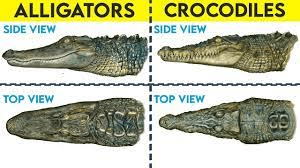
Crocodiles are bigger and more aggressive than alligators. A crocodile’s snout is V-shaped, an alligator’s is U-shaped. Viewed from the front, a crocodile will display both sets of teeth while the alligator only shows the top row.
Crocodiles
Crocodile tears
Meaning: shedding fake tears
“He acted like he was sad but they were just crocodile tears.”
Bats
Blind as a bat
Meaning: to have very bad eyesight
“I can’t see without my glasses, I’m blind as a bat.”
Bats, actually, are not blind but have very sensitive vision, especially for seeing in the dark. However, bats use a form of sonar called echolocation to search for food, and to help with navigation. They do this by producing sound waves above the range of human hearing. Additionally, the belief that bats always turn left when flying out of a cave is simply not true.
Buffalo
To be buffaloed
Meaning: to be confused, puzzled, or tricked by someone. This, I believe, is an idiom from the USA although I have never come across it, either in life or in the media.
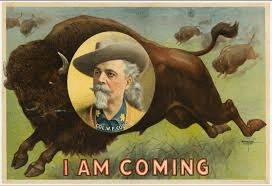
Buffalos are native to Africa and Asia, bison in the USA and Europe. Although related, they are different species. Buffalo Bill, a soldier, hunter and showman, should really have been named Bison Bill
Butterfly
The butterfly effect
Meaning: a small, insignificant action can have enormous consequences. Based on Chaos Theory; if a butterfly flaps its wing in Brazil, will it cause a hurricane in Japan ?
The link between butterflies and Chaos Theory is actually based on the patterns made on paper when recording data:
Camels
The straw that broke the camel’s back
Meaning: a small but final event that causes someone to react strongly
“My boss kept making me overtime, but when he told me I had to work on my free day, I quit ! It was the straw that broke the camel’s back.”
A perennial question in my Young Learners’ class is “What does a camel store in its hump ?” the answer being fat (not water). Furthermore, camels have three sets of eyelashes. However it is perhaps not so widely known that camel milk is incredibly healthy.
Cows
Until the cows come home
Meaning: some thing that will take a long time, last a long time, or will never happen
“Steven owes me money but I’ll be waiting until the cows come home before he pays me.”
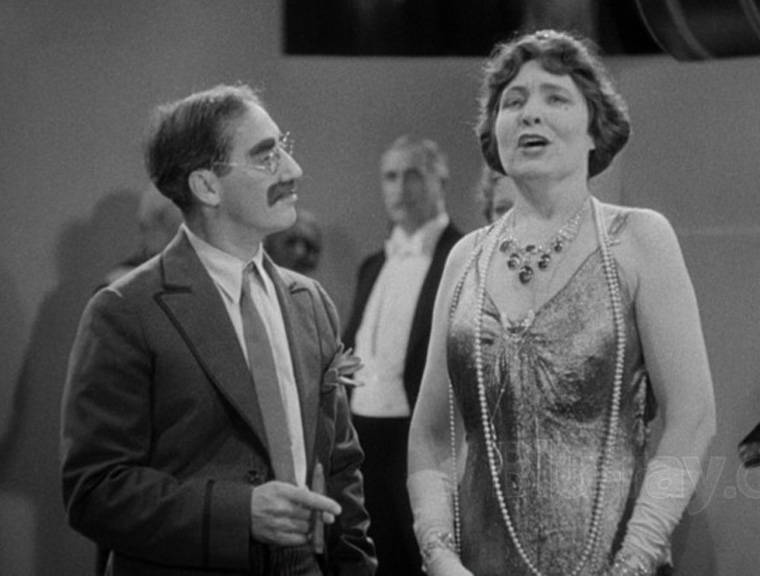
In the Marx Brothers film ‘Duck Soup’ (1933) Groucho declares, “I could dance with you ’til the cows come home. On second thoughts, I’d rather dance with the cows ’til you come home.”
Cows have 32 teeth but lack upper front ones. They have great memories and sense organs, being able to smell something up to six miles away.
Deer
Like a deer caught in the headlights
Meaning: paralysed with fear, unable to move. Totally shocked or surprised and unable to speak or react.
“When his mum caught him at the mall instead of being at school he was like a deer caught in the headlights.”
The Chinese water deer is the only species of deer not to have antlers. Deers, apart from having a great sense of smell and hearing, have a wide field of vision due to their eyes being on the side of their heads.
Ducks
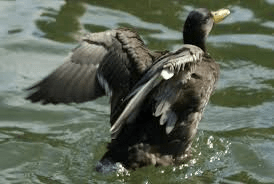
Water off a duck’s back
Meaning: something done or said that has no effect
“She kept insulting her boyfriend about his laziness and being a slob but it was all water off a duck’s back.”
See you later, alligator !
Please Note: All photos are taken from Google Images or free photo sites, and are used for educational purposes only. No copyright infringement or offense is intended. If I have used your photo or image, and you wish me to remove it, just ask. This site is not monetized, I run it on my own dollar. Thank you.
A typical, run of the mill IELTS question will be about your hometown or about your neighbourhood.
N.B. neighbourhood means the area in which you live; neighbours are the people living next or close to you.
First, some new vocabulary. I will expect you to learn these, to have them down pat:
gritty / industrial
quite / safe / residential
boring / peaceful / suburban
bustling / vibrant / city centre / lively / a happening place
apparently – something you believe to be true
conversely – the opposite, on the other hand, however
actually – saying something that is surprising or is the truth
New idioms
bear with me – please wait a very short time
bit of a sore point – something that makes you sad or angry
like a madhouse – a place or area that is crazy, too noisy, too busy etc
run of the mill – ordinary, typical, unusual, boring
you take your life in your hands – doing something that is extremely dangerous
NOW … your turn
Tell me about your neighbourhood
Remember, give me a great introduction, have a positive point, a negative point and a short conclusion. You should be able to speak for two minutes without pause or repetition
Tips: Use some of the adjectives listed above to describe the area.
Say what amenities you have close by; shops, restaurants, entertainment, transport links etc.
Try to tell an anecdote – a short true story about something that happened to you.
An apartment block in the Cat Lai area of Sai Gon. Artist’s impression.
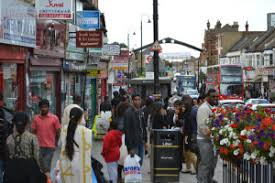
The reality of living in Cat Lai, one of the busiest ports in south east Asia
Well, that question is a bit of a sore point with me because I live in a terribly noisy gritty industrial area. My apartment is near the Cat Lai port which is one of the busiest in Vietnam. Consequently, we have containers driving past, day and night which, as you can imagine, creates so much pollution.
However, allow me to talk about the good points. Firstly, it is significantly cheaper than, say, District 1 or 3, as it is quite far from the centre. The shops also tend to be on the cheap side. Additionally we have some street markets where I can pick up some very cheap food and fresh fish. We are well-served with several convenience stores although, in my opinion, Family Mart charges an arm and a leg.
Conversely, my friends avoid visiting me because it is so dangerous to ride a motorbike here, we really take our lives in our hands every time we go out. Furthermore, I love fresh air so I open my windows, but I have to dust and clean every day because so much dirt accumulates. Finally, we have open-air karaoke nearly every night and street wedding parties most weekends which means loud and terrible singing. It’s like a madhouse, I really detest this horrible noise.
I am lucky with my neighbours, who are all so friendly, and the apartment is really spacious. Having said that, the area is so bad that as soon as possible, I will leave and find somewhere cleaner and safer.
Landmark 81 in Sai Gon
Please Note: All photos are taken from Google Images or free photo sites, and are used for educational purposes only. No copyright infringement or offense is intended. If I have used your photo or image, and you wish me to remove it, just ask. This site is not monetized, I run it on my own dollar. Thank you.
Meaning: A burden or something unpleasant that stays with you
“He wrote that tweet when he was angry, and everybody saw it. It’s like an albatross around his neck now.”
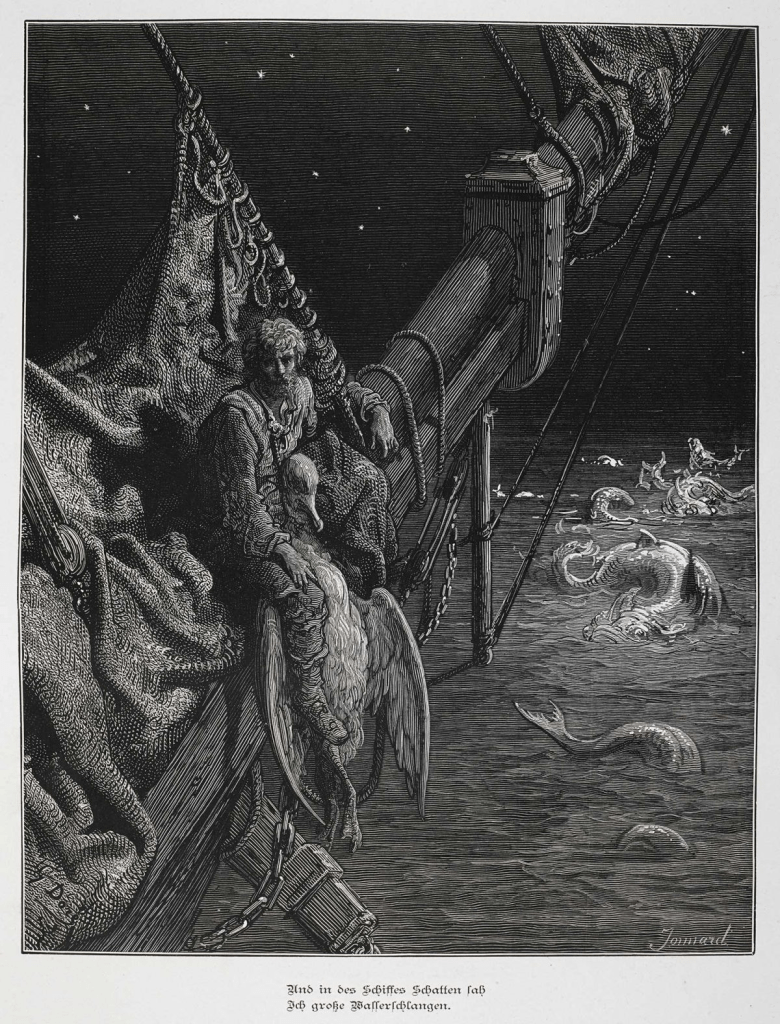
The phrase comes from the Samuel Taylor Coleridge poem, ‘The Rime of the Ancient Mariner’, where a sailor shoots an albatross, a symbol of good luck, and is forced to wear the dead bird around his neck.
Ants:
To have ants in your pants
Meaning: Always moving around, not sitting still
“Keep still ! Do you have ants in your pants ?”
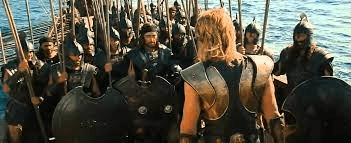
In Greek, ants are myrmex. The soldiers who followed the hero Achilles were referred to as Myrmidons. One origin myth is that ants survived a plague, and the god Zeus turned these into people. Even today, ants have been found to be extremely resistant to nuclear radiation.
Achilles addresses his myrmidons
Bears:
Bear with me
Meaning: Please wait a very short time
“Let me check for you. Bear with me a minute.”
In some Native American cultures, the bear is a symbol of a teacher
Birds
Birds of a feather flock together
Meaning: People tend to stay with or befriend people with similar interests or habits
“The naughty students all sit together. Birds of a feather !”
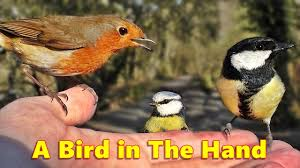
A bird in the hand is worth two in the bush
Meaning: It is better to have something definite than something better but uncertain
“Should I buy these now or wait until next week when they may be cheaper ?” “Buy now. A bird in the hand.”
The European bird Robin Redbreast actually has an orange chest, but the word ‘orange’ didn’t exist in English until the 16th Century, by which time the bird was already known as ‘redbreast’.
Cats:
To let the cat out of the bag
Meaning: to tell a secret
“John told me. He let the cat out of the bag.”
No room to swing a cat
Meaning: Very limited space. However, the ‘cat’ here is a whip used by the navy, a cat o’ nine tails.
Cats were sacred to the Egyptian god Bast (or Bastet), so killing one was extremely unlucky. Cats helped kill rodents, who would eat the grain, and were therefore treated with the highest respect.
Chicken
Don’t be chicken
Meaning: Do not be afraid
“Come on, let’s watch this horror film. Don’t be a chicken !”
Chicken Little
Meaning: A person who is alarmist, who always predicts that bad things will happen
“Jane says we should cancel the picnic because it may rain, but she’s such a Chicken Little.”
Chickens, who originate from southeast Asia, have remarkable memories. They have been found to identify over 100 other chickens just by their faces.
Dog
The tail wagging the dog
Meaning: The person or people in control are actually being forced to do something they don’t want.
“Your students tell you what they are going to do ? That’s the tail wagging the dog.”
1997 film which takes its title from an expression
Donkey
Talking the hind legs off a donkey
Meaning: Someone who can talk and talk, extremely loquacious
“He could talk the hind legs off a donkey.”
Donkeys are mentioned over 140 times in the NIV of The Bible. They are seen as symbols of peace and servitude. An ass is a wild donkey. A donkey is the ‘star’ of Robert Bresson’s 1966 film ‘Au Hasard Balthazar’.
Please Note: All photos are taken from Google Images or free photo sites, and are used for educational purposes only. No copyright infringement or offense is intended. If I have used your photo or image, and you wish me to remove it, just ask. This site is not monetized, I run it on my own dollar. Thank you.






















































 Thay Paul's Notes