A new class, new students, so let’s hit the ground running, get the students mixing, talking to each other and up from their seats. I prepared a questionnaire. They have to interview different classmates and learn a little about them
Gather information about your classmates
Question
Name
Response
Why are you studying IELTS ?
Where would you most like to visit and why ? Would you like to live abroad ?
What is the hardest thing about learning English ? How do you solve this ?
How often do you use English ?
Do you read, write or speak at school or at work ?
What do you most like about western culture or countries ?
What idioms do you know ?
This lead into the idiom it’s raining cats and dogs which most students had heard (it means raining heavily).
Today’s lesson is based on types of housing and areas; some extra terms:
gritty / industrial
quite / safe / residential
boring / peaceful / suburban
bustling / vibrant / city centre
Which would you apply to these:
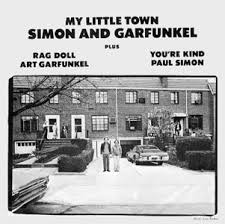
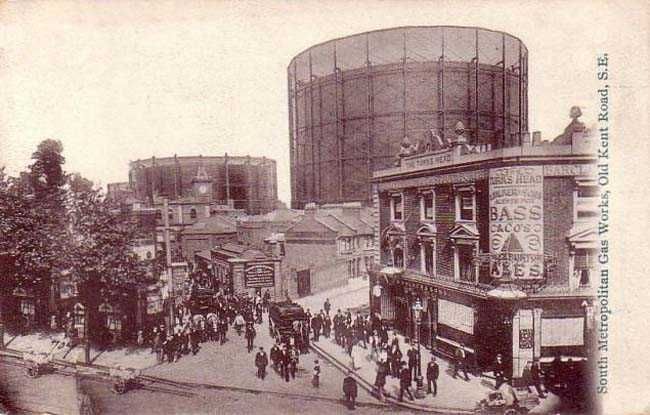
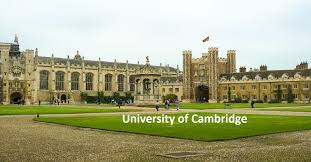
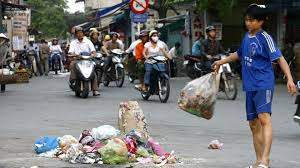
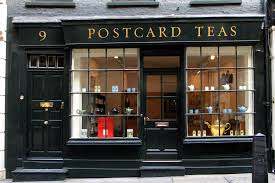
All photos are from the UK
Ask each other about your hometown or your neighbourhood.
This town (town) is coming like a ghost town All the clubs have been closed down This place (town) is coming like a ghost town Bands won’t play no more Too much fighting on the dance floor
Do you remember the good old days before the ghost town? We danced and sang, and the music played in a de boomtown
This town (town) is coming like a ghost town Why must the youth fight against themselves? Government leaving the youth on the shelf This place (town) is coming like a ghost town No job to be found in this country Can’t go on no more The people getting angry
This town is coming like a ghost town This town is coming like a ghost town This town is coming like a ghost town This town is coming like a ghost town
Songwriters: Jerry Dammers
Exercise 3: What do you know about The Specials. Here’s some facts. Arrange them in the form of an IELTS-standard paragraph.
The Specials were formed in Coventry, in the British Midlands.
Formed in 1977. They had two main singers, Terry Hall and Neville Staple.
Their music is a mix of punk and reggae.
They had a number 1 song in 1980.
‘Ghost Town’ was also a number 1. It was released in 1981. This song is about the recession in the UK. Many people had no work, no money and no hope.
The Specials broke up (disbanded) in 1984 but later reformed. They still perform together.
Next blog will focus on pronunciation. To my classroom students, be prepared for a lot more speaking and practising so, yes ! You DO have to say it again … and again …
Well living in a big city, I have a wide choice of food, including American and European cuisine. Fast food restaurants are ubiquitous so I have eaten, for example, burgers, KFC and pizza, which is my favourite.
In my opinion, younger people like western food. I often hang out with my friends at a mall and then grab a bite. It can be quite quick and very tasty. The restaurants are fun because they are colourful, have music and many happy people.
Having said that, fast food, especially burgers and fried chicken, is very unhealthy. There isn’t much salad. My mother, who is a great cook, doesn’t want me eating this food but I feel that it is OK if I only eat it occasionally.
Another point is the price. As a student, I think pizza costs an arm and a leg. It is so expensive compared to local street food. When I eat at, say, Pizza Hut, I usually order the sea food because it’s, I guess, better for me that the four-meat special !
Naturally there is a lot of western food that is mouth-watering and nutritious. Unfortunately, I haven’t tried much although I did go to an Italian restaurant once, when my uncle, who lives in Ha Noi, came to visit. I had spaghetti and meat balls, with a beautiful fresh salad and … allow me to add … a small glass of red wine. I would love to eat more western food, especially in a nice restaurant but that only happens once in blue moon.
More sample answers in the next blog. Happy eating
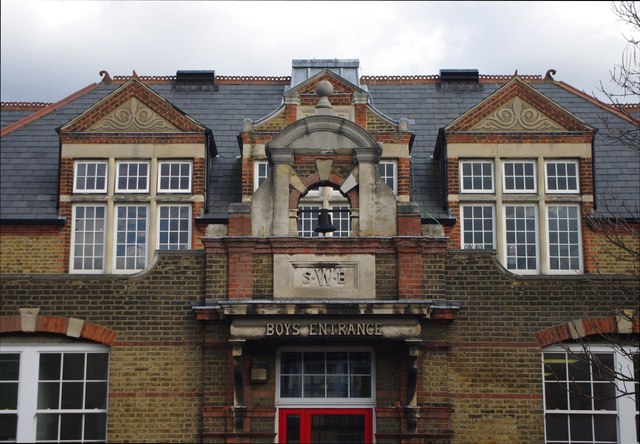
The Bash Street Kids … from ‘The Beano’ which is a famous comic from the UK, first issued in 1938.
Tonight we have a listening lesson which, although tremendously important, not to say imperative, can be somewhat tedious for the students.
One factor is the vocabulary. If students don’t know some of the words, they will not be able to answer some of the questions; that stands to reason.
that stands to reason = it is obvious, it is common sense, it can be understood. I live in Vietnam but only speak a little Vietnamese. It stands to reason that if I spoke Vietnamese, I would be more independent.
Therefore, allow me to explain a little about the UK educational system while, at the same time, pre-teaching some new vocabulary.
First up, we have Kindergarten or nursery:
As you can see, the age for Kindergarten is 3 – 5. It can be free, or parents can choose to send their children to a private Kindergarten or nursery.
Maybe the word Kindergarten looks a little strange in an English lesson – quite right, it is, in fact, a borrowed word from German. If you have seen my other IELTS posts, you may have come across ‘prima donna‘, which is a borrowed word from Italian. If you can use borrowed words in your IELTS tests, it will surely impress the examiner.
Next, we have primary school for children of 5 to 11. When I was at school, it was broken down into Infants and Juniors. Infants school was two years, then we moved up into a new building, attending four years of Junior school. This was a mixed school by which I mean boys and girls were in the same class.
Woodside Primary school in north-east London
Following on from Primary school we have, quite logically, Secondary school:
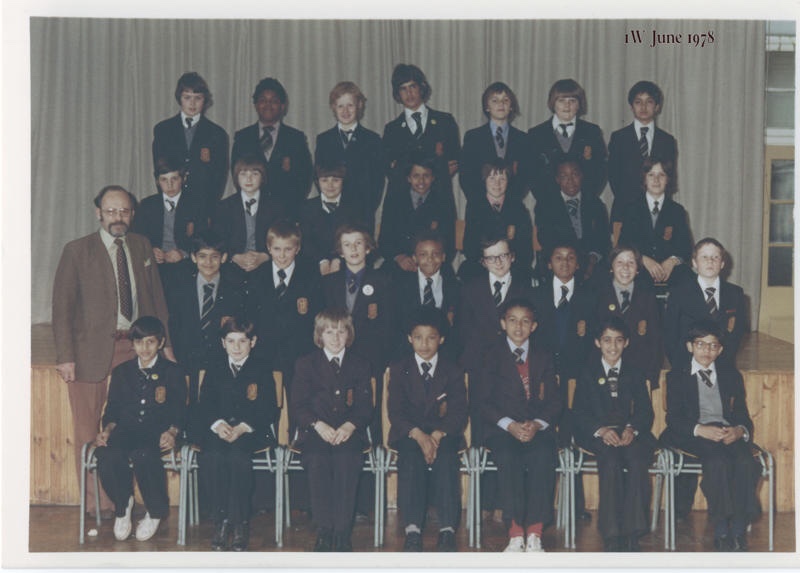
A typical class photo from the late 1970s. As you can clearly see, this is a single-sex school. Furthermore, the pupils had to wear school uniform of trousers, blazer and school tie.
Pupils spent three years here, from ages 11 – 14 at Junior High, after which they progressed to Senior High:
Pupils have to attend school until they are 16; it is compulsory.
You must then do one of the following until you’re 18:
stay in full-time education, for example at a college
Pupils can either stay at school and enter the VI (Sixth) Form, or go to a Further Education College which differ in that they offer a much wider selection of options such as vocational courses which are more practical and can help students train for a specific job. VI Forms, on the other hand, are academic (theory), preparing students for university.
The VI Form is usually in the same building as the Senior High, so pupils are familiar with the teachers and students. Going to a new college, meeting new staff and students means that time is needed to settle in or settle down.
Qualifications are imperative these days, so many students want to go to University.
Finally, we have Adult Education which, as the name implies, is for adults who wish to further their job prospects, or simply learn for their own pleasure. As many people are working, these type of education often takes place in the evening or at weekends.
New Vocabulary:
term – part of the teaching year for example First Term is from September to December
it’s a pity – it is sad or it is unfortunate
Fresher’s Week – a week for new students (Freshmen in USA) to get to know what their college has to offer, such as clubs and events.
GCSEexams – tremendously important exams taken at age 15 or 16. Good results mean the student can to VI Form or have to re-sit the exam.
tertiary – means the third – after Primary (first) & Secondary (second), tertiary refers to Higher Education, taken after the age of 18.
NVQ National Vocational Qualification – this is more practical as opposed to academic, designed to teach skills needed for a particular job:
An NVQ card stating that the holder has passed exams to work in the construction industry
BA or BSc – (Bachelor of Art or Science) degrees in the arts or science. Usually attained after a three-year course. The next step is a MA (Master’s Degree) and then a PhD.
internship – gaining real-life experience by working for a company, often for low or even no pay.
Graduate Fair – a chance for students to think about what career to follow, or what company to join. They can speak to people who represent organisations:
One of my classes have their speaking test next week therefore, this is their last chance to practise, to demonstrate they know what they need to do to pass with flying colours.
Some tips to assist
An introduction:
That’s a very interesting question
Well, there is so much to say about that subject, where shall I start ?
It’s funny you put that question to me because earlier today I was just thinking about …
Well, that’s a great question
As a young Vietnamese (add your own nationality), I …
Opinion questions:
If you have a question with the following wording:
“What do you think ?”
You can use opinion phrases. We do not want facts, but want to hear if you are able to understand what is required by the question, and if you are able to articulate your thoughts.
In my opinion // From my perspective //personally // In my view / For me // From my point of view
Finally, there will probably be a chance to demonstrate your knowledge of adjectives and adverbs.
You may encounter a question such as:
What qualities are needed to be a good police officer ?
very / extremely / amazingly / unbelievably / quite / rather / undeniably / remarkably / totally / absolutely /
Combine into a complex sentence with discourse markers and relative pronouns and clauses. If possible, paraphrase key words (here I substitute ‘attributes’ for ‘qualities’).
EXAMPLE
A police officer, in my opinion, needs to have many attributes such as being extremely brave and caring although they will also need to be totally healthy as well as being strong and undeniably energetic. Working for the police, which can be a very dangerous job, is not my cup of tea. Having said that, I really admire the honesty and loyalty of these amazing people.
Now … your turn
What qualities are needed to be a … ?
Sports person / Film star / Doctor / Musician / Mother
Last week, I asked a typical warm up question, “What did you do today ?”
Remember, when we ask questions we are just giving you a chance to show off and practice your English, so be creative. However, even if you can’t think on your feet, you can make even the most prosaic day more interesting. Allow me to demonstrate:
Today I met my friend and we went to see a movie. After that we had coffee and had some street food.
OK, we can easily make that more appropriate for IELTS.
Firstly, an introduction. Then … details, tell me about the film, about your friend, about the coffee shop and about the food … there is SO MUCH to talk about. Write a longer answer, I’ll give you three minutes.
EXAMPLE
I didn’t go to school (work) today so I had some free time
I met my friend Nancy who I have known for over five years
I had a date with my friend who is from USA
We were at the mall and decided to take in a movie
We were in the mood for a film
We had our heart set on seeing ‘Parasite’ which is Korean film that has won many awards
After, we needed some coffee so we headed for the nearest coffee shop, which was Highlands Coffee. The prices are sky-high however the coffee is delicious. Additionally, there is free Wi-fi.
Later on, we grabbed some coffee at one of the ubiquitous coffee shops. I had a large cappuccino which cost an arm and a leg, however it really woke me up.
It was late, so we felt quite hungry. There is a lot of affordable and delicious street food. I had some chicken and rice and my friend, who is vegetarian, had rice, eggs and salad.
After the movie, we were hungry but the food at the mall is not very exciting and the prices are sky-high, so we went for some street food which is ubiquitous in this city.
Now … you turn
What will you do on your next free day ?
Remember … this is future tense and you can express the uncertainty in your answer.
Target language:
I’d love to … / I’m planning to / I have my heart set on … /
I’m not absolutely sure yet, but I plan to … / I wish that I could …
I’ll probably … / I keep telling myself that I will finally …
Use at least one of the above expressions.
Use relative pronouns to give more information.
See if you can add an idiom (or two).
EXAMPLE
I really need a free day because I’ve been burning the candle at both ends this week.
I’m not absolutely sure yet, but I plan to meet up with some friends and just hang out. We have all been so busy, we haven’t seen each other for ages. (for a long time).
As you may know, I’m a vegetarian. However, all my friends love fast food especially burgers and fries. We often go to Lotteria which, I believe, started in Japan, and now they are ubiquitous in Sai Gon and easily seen with their bright red stores and big white ‘L’ logo. Despite not eating meat, I can order a fish burger but, in my opinion, the food is not exactly mouth-watering and the service can be rather slow.
Afterwards, I’ll probably go home as I have my heart set on playing a new computer game that my friend, Tony, lent me. Tony, who is actually from Ha Noi, is a real computer geek, he loves gaming, maybe too much. As for me, I get a little bored after an hour so then it’s time to put my nose to the grindstone and hit the books (study) again. “The roots of education are bitter, but the fruit is sweet.” That quote, from the Greek philosopher Aristotle, inspires me to work harder, even if sometimes the work is quite tedious.
Enjoy your free day
For my students with a speaking test soon … Best of British !
If you are using these in class, the teacher will help you with pronunciation.
Remember: your IELTS score will also depend on how clearly you speak, your rhythm and correct use of intonation and stress. Therefore listen to native-speakers, copy and practice.
Enjoy your drink … this one’s on me
This one’s on me // Let me think about it // It doesn’t matter // Thanks for coming
I don’t believe a word of it // I’ll be with you in a minute // I see what you mean
It was lovely to see you // I don’t get the point // As I was saying
You look great today // I’ll be making a move then // Just looking, thanks
I’ll be making a move then … bye
Match the phrase(s) with the situation
[answers at end of exercise]
Saying goodbye after meeting an old friend
Compliment someone
You are asked a question but need time to consider
Someone tells you a story – you think it is false.
Friends drinking in a pub / bar
You go into a shop but not necessarily to buy anything
A customer arrives but you are busyfor that moment.
You don’t understand what someone is trying to prove
You understand what someone thinks (but not necessarily agree with)
There is a small problem / Someone upsets you but you want to make it OK
To continue with a conversation that was interrupted.
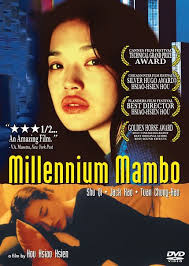
Ms Shu Qi – you look great today !
It was lovely to see you 2. You look great today 3. Let me think about it 4. I don’t believe a word of it 5. This one’s on me [I will pay for this drink] 6. Just looking, thanks 7. I’ll be with you in a minute 8. I don’t get the point 9. I see what you mean 10. It doesn’t matter 11. As I was saying
Expressing likes and dislikes
Like:
I absolutely love … I’m crazy about …
I (really) like I’m into // I’m a big fan of …
I’m quite keen on
I haven’t heard (seen/read) this before, but I think it’s great
No strong opinion:
I have mixed feelings about ….
I don’t really have any strong views / feelings either way
Yesterday I blogged a database of idioms, collocations and negotiation language. That is just the tip of the iceberg. If you have looked at English-language study books, you will, no doubt, have seen several dictionaries solely devoted to idioms; we use them so often, and there are so many.
For my IELTS students, I have repeatedly taught half a dozen (six) in order for the students to incorporate them into their natural speech … without idiomatic language, you will not break past the 5 score (taken along with grammar, vocabulary and intonation, naturally).
Therefore, for Top Cat students, or anyone looking to learn some more, this blog is for you.
Expressions or idioms
Ring any bells ? // do you remember //
More or less // not exactly but approximately
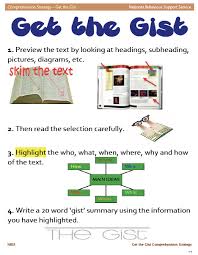
Get the gist // do you understand the main point ?
Right up your street // this is something you will really like
Rabbit, Rabbiting on // UK slang, especially in London … talking too much
Piece of cake // no problem, very easy, sure
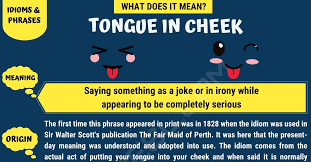
Tongue in cheek // not being serious about something
Now … how you use them:
Student A: Hello, we met last year at Julie’s party.
Student B: Sorry, that doesn’t ring any bells (I don’t remember).
Student A: Are you ready to go ?
Student B: Go where ?
Student C: Cake, food, drink, singing, dancing … ring any bells ?
Student D: Oh, Tony’s birthday party. Sorry, I forgot.
Student A: Are you ready for the test ?
Student B: Yes, more or less.
Student C: I’ll wait for you.
Student D: I won’t be long, I’m more or less finished.
Student A: Do you have to read all the document ?
Student B: No, just to get the gist.
Student A: You should listen to this CD, it’s right up your street.
Student B: Oh, French piano music, I love it. That’s right up my street.
Student A: What did your girlfriend want ?
Student B: She was rabbiting on about something to do with her clothes, I wasn’t really listening.
Teacher A: Hey ! Miss Mary … stop talking. You’re a little rabbit !
Student A: Can you drive me home ?
Student B: Sure, piece of cake.
John’s new business shirt
Student A: Have you seen John’s new shirt ? It’s so elegant.
Student B: Are you serious ? It’s terrible.
Student A: I know ! I was being tongue in cheek.
Now … your turn.
Add the correct idiom [answers at end of blog]
1) Shall we see the new action film ? It sounds ______________
2) Are you still talking ? You are such a __________
3) She said I was the best student but I think she was being ___
4) You said you would bring something … cheese, tomato, garlic bread ____________ ?
5) The IELTS speaking test was a ________ after reading Thay Paul’s blogs (I hope).
6) Student A: Did you understand the project ? Did you ________ of the idea ?
Student B: Well, ______________ but not every single detail.
This film, starring Shu Qi looks right up my street.
Right up your street 2. rabbit 3. tongue in cheek 4. ring any bells 5. piece of cake 6. get the gist / more or less.
A database of common UK & USA expressions, phrases and idioms for students who want to learn more, in order to increase their command of and respect for the English language. I have provided my IELTS students with half a dozen (a dozen = 12, therefore half a dozen = 6. Having said that, a ‘baker’s dozen’ = 13 … welcome to English !) idioms, but this blog is aimed at students who are willing to go above the barest minimum.
We kick off (start) with expressions and idioms, as they are tremendous fun, then move on to collocations. How words fit together is a powerful tool in learning English … huge chunks of texts suddenly group themselves into small word blocks, enabling you to predict what will be said (especially useful in listening exercises).
Finally, we wrap up with some negotiation phrases. In the next blog, I’ll give you a chance to use these in sentences, but for now, familiarise yourself with a handful of new expressions … it could be right up your street.
Alice Sara Ott – German-Japanese pianist. I recommended her to a musician friend and he said it was right up his street.
Expressions / idioms
Ring any bells ? // do you remember //
More or less // not exactly but approximately
Get the gist // do you understand the main point ?
Right up your street // this is something you will really like
Rabbiting on // UK slang, especially in London … talking too much
Piece of cake // no problem, very easy, sure
Tongue in cheek // not being serious about something
“I think Donald Trump is the greatest US President …” Do you think President Obama would say this and be serious ?
Keep your hand in // to practise something so you don’t forget how it’s done
Bucket down / raining cats and dogs // raining very heavily
Have a go / give it a bash / give it a shot // to try something
Call it a day // to stop work and go home early
Go ahead // sure, do it
Under one roof // everything in one place
Through thick and thin // together in good times and bad times.
To spill the beans // to tell a secret, or to share some private information
I should cocoa // UK slang, old-fashioned = I really don’t believe it or you
kick-off // A sports expression from football – means to start
tied up / snowed under / rushed off our feet / flat out / up to my eyes // very busy
daylight robbery // much too expensive, very over-priced.
on your bike // go away !
to throw a wobbly // to become angry and shout and curse
Bang up to date // totally modern and new or completed all your work on schedule
otherwise engaged // busy – a polite way of saying ‘go away’
I know where you’re coming from // I understand what you are saying and how you think
to get hold of someone // try to make contact with someone by phone, in person, email etc
speak of the Devil // to talk about something and then they appear
to be into something // to really enjoy or like something or someone
to put something over someone / to pull the pull over someone’s eyes // try to trick or cheat someone
There’ll be Hell to pay // you will be in BIG trouble !
Hell breaks loose // people will be very angry and upset
I’ll give you a bell / a shout // I will call you on the phone
Knock off / to finish work
knock it off // stop doing that !
That’s proper loud // UK slang ‘proper’ meaning very – that’s very loud
Well chuffed // extremely happy
come again ? / You what ? // UK slang for say it again, please
What do you reckon ? // What do you think of something ?
Collocations
To run a business
To conduct / carry out a survey
Can I have a word with you / a quick word
Do you have minute ?
Voting with their feet
Can I put you on hold ? / to be put on hold / Hold the line
A victory for common sense
I’m none the wiser
On the button / on the money
get the hang of it
scraping the barrel
Negotiation Language
I fail to see the relevance
I don’t see how that applies
That’s as maybe
I don’t get/see your point / I think you are missing the point
Some lessons can be rather hard-going, too much IELTS listening or speaking practice so, to mix things up, I use some little diversions to cleanse the palate.
[Today, I will not explain every new phrase – look them up yourselves, write them down and USE them and USE them and USE them !]
Therefore, here’s a little activity I used last week. It’s a hit song from the early 1980s, in fact, it was massive ! The song is an example of Synth pop which is pop music played, or predominantly played, on keyboards or synthesisers. Synth pop, which dominated the charts during my teen years, was not really my cup of tea, I was more into jangly guitar bands such as The Beatles, The Byrds and, in the 1980s, we had The Smiths.
Having said that, I really liked this hit by the band Human League who came from Sheffield which is in the north of England. The single was tremendously successful, staying at number 1 for five weeks in the UK as well as reaching the top of the US charts although for just three weeks which is still an amazing achievement.
Without further ado, the activity: What is happening in this video. Secondly, what is the story – can you understand what the man says and then, can you understand the woman’s reply ?
Try answering these questions:
What job did the woman have ?
How long did it take for the women to become a big star ?
Is the man leaving the woman ?
Does the woman still love the man ?
What does the woman want to do ?
And now, the full lyrics:
You were workin’ as a waitress in a cocktail bar When I met you I picked you out, I shook you up and turned you around Turned you into someone new Now five years later on, you’ve got the world at your feet Success has been so easy for you But don’t forget, it’s me who put you where you are now And I can put you back down too
Don’t, don’t you want me? You know I can’t believe it when I hear that you won’t see me Don’t, don’t you want me? You know I don’t believe you when you say that you don’t need me It’s much too late to find You think you’ve changed your mind You’d better change it back or we will both be sorry
Don’t you want me, baby? Don’t you want me? Oh Don’t you want me, baby? Don’t you want me? Oh
I was working as a waitress in a cocktail bar That much is true But even then, I knew I’d find a much better place Either with or without you The five years we have had have been such good times I still love you But now, I think it’s time I live my life on my own I guess it’s just what I must do
Don’t, don’t you want me? You know I can’t believe it when I hear that you won’t see me Don’t, don’t you want me? You know I don’t believe you when you say that you don’t need me It’s much too late to find You think you’ve changed your mind You’d better change it back or we will both be sorry
Don’t you want me, baby? Don’t you want me? Oh Don’t you want me, baby? Don’t you want me? Oh
Don’t you want me, baby? Don’t you want me? Oh Don’t you want me, baby? Don’t you want me? Oh Don’t you want me, baby? Don’t you want me? Oh Don’t you want me, baby? Don’t you want me? Oh Don’t you want me, baby? Don’t you want me? Oh Don’t you want me, baby? Don’t you want me? Oh Don’t you want me, baby?
DISCLAIMER: THIS IS FOR EDUCATIONAL PURPOSES ONLY. THIS BLOG ISN’T MONETISED IN ANY WAY. THE VIDEO AND LYRICS ARE TAKEN FROM THE INTERNET. NO COPYRIGHT VIOLATION IS INTENDED, AND I WILL REMOVE THE BLOG UPON REQUEST WITHOUT PREJUDICE.
THANK YOU TO THE SONGWRITERS, THE BAND AND THE PUBLISHERS






























 Thay Paul's Notes