IELTS: Sisyphus as metaphor

10th May 2022

Last week I held an IELTS Speaking Test. Only one student hit 7.5 although, in fairness, I was probably on the generous side in awarding the student such an admirable score.
Or, to be precise, learn from their mistakes.

I can break them down into three main areas:

coherence

vocabulary

complex sentences

Kicking off with coherence; it doesn’t matter how fluent you are, unless you answer the question, you will loose marks.

The test allows us to assess your understanding of both question and task. An example: one question was

What is the most popular activity in your country ?

ASIDE: I’ve told students until I’m blue in the face, never repeat, “In (my) country,” but since when do teenage students ever actually listen ?

The question asks for ONE activity; several students talked about two or three. This is not answering the question.

Anyone who’s studied at University will know how imperative it is to follow instructions.

COMIC RELIEF: One student, from a previous test, replied that the most common activity, “In my country,” was brushing teeth, and that foreigners do this every day, but Vietnamese only do this once or twice a week. Said student had to continue for two minutes. Needless to say, there were no flying colours.

More disturbing was the lack of IELTS vocabulary. You have been told time and again what that means, and I can’t keep hitting my head against a brick wall.

And so to work … get out your notebooks (those that actually bother bringing notebooks to class), look up previous lessons and write down:

TEN L-FWs

FIVE less common idioms

FIVE everyday expressions

TEN phrasal verbs

TEN basic collocations

I have taught you these ad infinitum. If you are struggling with this exercise, you will probably only get a 5 for the Lexical Recourses section.

Lastly, the old chestnut, complex sentences.
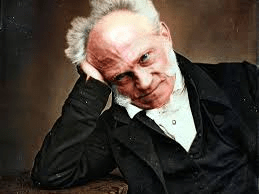
I had nine students, each with about ten minutes of speaking time. How many complex sentences do you think I heard ?


Yes, Steve …
That’s right … ZERO

EXERCISES: Use at least two L-FWs, one idiom and other IELTS elements

(and if you think it’s funny to ask what I mean, after all this time, by ‘IELTS elements’, just get up and leave the class).

Speak for one minute about:

one of your cousins // your favourite gift // sports // your best memory from childhood // best films // problems in your city // typical local food.

Part Two: Critical Thinking

“Oh, teacher, I’m tired and feel lazy.”

Work in teams. Watch the following short clip about the ancient Greek king, Sisyphus:

Characters from Greek and Roman mythology permeate western culture, and references and allusions are ubiquitous.

You may watch the video again, writing down new words. There is a lot of background (in which you may encounter a character from ‘The Avengers’ movies), but the main feature starts around the 4:00 mark.

Your task is to relate this story to modern life. Choose a person you know, or something from your own experience. You may even project your thoughts about the future, once you have left education and joined the workforce.

To assist you, some pertinent L-FWs and idioms:

futile (adj) futility (noun) / absurd / pointless / meaningless / contemptable / repetitive / a metaphor

a total waste of time / flogging a dead horse

sick to the back teeth / day in, day out

cannot make a silk purse out of a sow’s ear

talking until (pronoun) blue in the face / the grind

putting an old head on young shoulders

Look up the meanings yourself. Your teacher won’t be with you to give you the answers in life. Think for yourself.
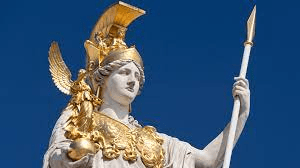
Athene, Goddess of wisdom

Please Note: All photos are taken from Google Images or free photo sites, and are used for educational purposes only. No copyright infringement or offense is intended. If I have used your photo or image, and you wish me to remove it, just ask. This site is not monetized, I run it on my own dollar. Thank you.

Speaking Practice: ‘Read All About It !’

2nd November 2020

The best way to improve your pronunciation is, obviously, to listen and then to copy.

Practice, practice, practice

IELTS students in particular need to demonstrate a variety of speaking skills: intonation, stress, chunking, elongating words for emphasis, not to mention body language, eye-contact and gestures.

Therefore, without further ado, here’s a number of clips for you to practice, and don’t forget … have fun !

First off the bat, President Obama speaking in Florida, October 2020: https://www.youtube.com/watch?v=3UoPB7SvCGk&t=364s

I want you to focus on the speech from 05:44 – 06:15

“I just want you to know it, it’s a good idea to have an answer to this question … it’s a good idea if you’re running for re-election to say, ‘Here’s what I want to accomplish.’ What did Trump say ? He got mad and walked out of the interview. He thought the questions were too tough. Too tough ! Miami, listen, if he can’t answer a tough question like, ‘What would you like to do in your second term ?’ then it’s our job to make sure he doesn’t get a second term.”

From a linguistic point of view, notice the differences between British and US English, words such as ‘interview’. Notice how President Obama paces himself … leaving space between sentences, how he stresses certain phrases (“Too tough !“). Finally, listen to the ‘music’ of the last sentence. His voice is building up to a climatic, “Doesn’t get …” which is an incredibly powerful way of speaking.

Now, let’s have a speech from President Trump: https://www.youtube.com/watch?v=RVG1uR9wr-A

I want you to focus this time from 00:53 – 01:20

“…and ensure more products are stamped with that beautiful phrase: ‘Made in the USA.’ And next year will be the greatest economic year in the history of our country … under my leadership our economy grew at the fastest rate ever recorded, 33.1%, just announced. We created a record 11.4 million jobs in the last five months …”

Naturally, not everybody agrees with President Trump, nor his style of debating. Here’s how Vice-President Joe Biden reacted to being constantly interrupted:

https://www.youtube.com/watch?v=C7Gw–6t3s4

Watch from 0:40 – 0:44

“Will you shut up, man !”

Time to bring it closer to (my) home, and British politics. You saw how polished and professional President Obama was … but that is not always the case. Here is former Labour (left wing) politician, Diane Abbot who was famous, or infamous, for making mistakes in the media.

In this clip, the politician is forced to listen to a recording of a radio interview where she couldn’t answer the question. This can make you cringe.

https://www.youtube.com/watch?v=cYZ262b7wBI

Watch from 0:37 – 1:18

The question was how much would 10 000 extra police officers cost ?

“Well, if we recruit the 10 000 police men and women over a four-year period, we believe it will be about £300 000 …”

Interviewer speaks

“Haha, no, I mean, sorry, they will cost … they will, it will cost … um about … about £80 million … yeah !”

Now, the British Parliament may be regarded as an icon of modern democracy and free speech but it can get out of hand. Politicians, like children, can be noisy and in need of discipline. A strong presence is required to maintain order. Here’s Mr John Bercow, former Speaker of the House reprimanding a politician:

https://www.dailymail.co.uk/video/news/video-2002454/Video-John-Bercow-couldt-flying-flamingo-view-is.html

Here Is Why Brexit Has Been Delayed

“If you don’t like it, you’re perfectly entitled to your view, I couldn’t give a flying flamingo what your view is.”

Let’s wrap up with New Zealand’s Prime Minister Jacinda Arden:

https://www.youtube.com/watch?v=AN7ojP2Q6kY

From 0:34 – 0:46. PM Arden is talking about winning the election and the votes or ‘seats’ that she needed in order to secure victory.

“We have seen that support in both urban areas and in rural areas, and seats we may have hoped for but in those equally we may not have expected.”

To the ‘students’ that talk during my class, here’s a word from Vice-President Biden:

Will You Shut Up Man | Know Your Meme

Thanks, Joe.