
12th July 2020
Various exercises for you to practise grammar, both past simple and past continuous. Answer follow the photos.
Past Tense exercises
Past simple: most common way of talking about the past.
Regular verbs just add –ed e.g. walk = walked / look = looked / play = played
Past continuous: was / were + verbing e.g. I was playing / We were looking
Irregular verbs not used in past continuous e.g. we were seeing a film OR we saw a film NOT we were sawing a film.
Present perfect– talk about an action that happened in the past
subj + have/has + verb3 (past participle).
Past perfect – talking about two actions, both in the past, one before the other
e.g. I had listened to the CD before I saw the band play live.
Subj + had + verb3
The verb ‘to be’
I am / I was // you are / you were // he, she, it is / was // they, we are / were
Past tense / Shakespeare exercise
Change these lines into the past:
1 In Act One, Romeo ….. (is) in love with _________
2 Benvolio ……… (try – past continuous) to stop the fight.
3 The Prince ………. (demand – past perfect) to see Capulet before seeing Montague.
4 Romeo, Mercutio & Benvolio ……. (are) in the street talking.
5 The two families …… …. (be, present continuous) been fighting for years.
6 Romeo ….. (ask) the Nurse who Juliet is.
7 Mercutio & Benvolio …… (do, not) know Romeo was in love with Juliet.
8 The famous ‘balcony’ scene … (take) place in Act 2.
9 The Friar ……. ……. (go, past perfect) out collecting flowers.
10 At the end of Act 2, Romeo and Juliet …… (are) married.
ANSWERS
1) was (Rosaline) 2) was trying 3) had demanded 4) were 5) have been 6) asked 7) did not (didn’t) 8) took 9) had gone 10) were
Past tense exercise
Change the verb form – can be:
past simple (think about regular & irregular verbs)
past continuous (verb + ing)
present perfect (subject + have/has + verb3)
past perfect (subject + had + verb3)
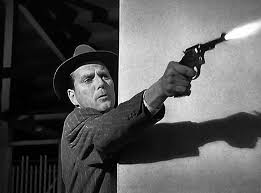
It is …. a hot, Sai Gon night. The wind blow …….. up from the river, but the humidity drive ….. me crazy. Sweat pour ……… down my back.
I were walk …………. by the Old Town, lanterns were light ……. and sway ….. in the breeze. I … visit …….. an old friend before I decide ………. to take this long, steamy walk. I …. live ……….. here over two years, but everyday, I am almost
kill ……. by crazy motorbikes. I need …. .. a coffee and see …… a cafe over the road. As I were cross ……………….. the street, a motorbike race …….. towards me. If I ……. jump ……… aside, he would …present perfect…. hit …. me. But that were …… his idea.
He turn ….. around and pull …… out a gun, aim …… and fire ……… . I ……. ……….(be) present perfect shot at more times than I care to remember, I know …….. the score; duck and run. I run …… .I ………did, (negative) have time to think. I can … think later – if I am still alive. I make …. it into the coffee shop, and were look ……. out the window across the street.
The shooter were dress …… all in black and keep …… his helmet on. He were walk …………. this way. Quickly, I look ……. around. Were there another exit ? Can …. I escape by a back door ? Yes ! I ……. be (past perfect) ……here…before. I remember ………. a fire exit on the first floor. I leap …… for the stairs, just as the shooter were about to open the door.
Answers: was / blew / drove / poured // was walking / lit / swayed / visitid / decided / lived // killed / needed / saw / was crossing / raced / jumped / have hit / was // turned / pulled / aimed / fired / I have been shot at / knew / ran / didn’t / could / was / made / looked // was dressed / kept / was walking / looked / was / Could / had been / remembered / lept
Here are 7 verbs in the PRESENT. Choose the correct verb AND use it in the correct tense.
teach / live / go / see / drink / am / have
Harry (1) …….. drinking tea yesterday, when he (2) ……. an idea. I haven’t (3) …….. my neighbours how to drink tea. I am sure they will be happy. They have not (4) …… to the UK yet. I have (5) …. in many cities in England. Now I am in Viet Nam. I have (6) …. many wonderful sights, but I have never (7) …… a cup of good, English tea.

Answers: 1) was 2) had 3) taught 4) been 5) lived 6) seen 7) drunk
Put the present tense verbs into past continuous
EXAMPLE Linh drinks tea – Linh was drinking tea
1 Tina watches TV
2 Sam shouts, ‘Oh, no!’
3 My father plays football
4 Bella designs a beautiful dress
5 The cat sings karaoke all night long !
6 Paul listens to The Beatles
7 Anna buys an Apple.
Answers: 1) was watching 2) was shouting 3) was playing 4) was designing 5) was singing 6) was listening 7) was buying
75 % of verbs are REGULAR – just add -ed to form past tense
visit visited // watch watched // talk talked // walk walked
BUT
Others are IRREGULAR – you just have to learn them !
Go – went // see – saw // is – was // sleep – slept // spend – spent
Put the verbs into the simple past:
- Last year I (go) …………to England on holiday.
- It (be) ……..fantastic.
- I (visit)…… lots of interesting places. I (be) ….. with two friends of mine .
- In the mornings we (walk)…… in the streets of London.
- In the evenings we (go) ….. to pubs.
- The weather (be) …… remarkably pleasant. (nice)
- We (watch) …… a great Korean film.
- But we (see) …… some beautiful rainbows.
- Where (spend / you) ……. your last holiday?

Answers: 1) went 2) was 3) visited & went 4) walked 5) went 6) was 7) watched 8) saw 9) did you spend ?
Grammar exercise simple past tense form of the verb.
1. I …………………………. him yesterday.
a) saw b) was seeing c) had seen
2. I ………………………. his letter yesterday.
a) received b) was receiving c) had received
3. She ……………………….. school last year.
a) will leave b) leave c) left
4. Last night I …………………………….. sleep well.
a) don’t b) didn’t c) hadn’t
5. He ……………………………. asleep while he was driving.
a) fell b) falls c) was falling
6. I ………………………… a new bicycle last week.
a) bought b) had bought c) have bought
7. We ………………………….. our breakfast half an hour ago.
a) finished b) have finished c) had finished
8. When I was in the US, I …………………………….. Chicago, Boston and California.
a) visited b) was visiting c) would visit
9. I …………………………….. an old classmate of mine at the library.
a) had seen b) was seeing c) saw
10. She ………………yesterday that she would not go.
a) says b) said c) had said

Answers: 1) a 2) a 3) c 4) b 5) a 6) a 7) a 8) a 9) c 10) b
Put into simple past
Last year I (go) went to England on holiday.
- It (be) fantastic.
- I (visit) lots of interesting places. I (be) with two friends of mine .
- In the mornings we (walk) in the streets of London.
- In the evenings we (go) to pubs.
- They (hear) strange music.
- It (not / rain) a lot.
- But we (buy) some beautiful clothes.
- How much money (spend / you) in the shops ?
Answers: 1) was 2) visited & was 3) walked 4) went 5) heard 6) did not [didn’t] 7) bought 8) did you spend

The verb changes form in the PAST tense. Regular verbs add -ed, but many verbs are irregular e.g.
walk = walked / jump = jumped push = pushed (regular verbs)
begin began // bring brought // find found // come came // do did //
drink drank // eat ate // get got // make made // speak spoke
A good list is here:
http://www.gingersoftware.com/content/grammar-rules/verbs/list-of-irregular-verbs/




 Thay Paul's Notes