Classical Music: where to start ? Part 6

19th April 2026

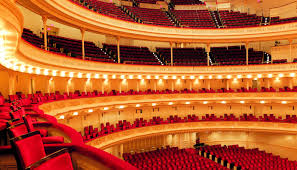
Carnegie Hall, New York, considered the first classical venue in the ‘New World’

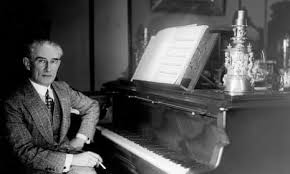
To start, a beautiful piece performed by a beautiful artist. Maurice Ravel’s (France 1875 – 1937) solo piano piece is from 1899.

From France to Spain, a composition by Joaquín Rodrigo (Spain 1901 – 1999). Here, Flamenco legend Paco de Lucía performs this exemplary guitar concerto.

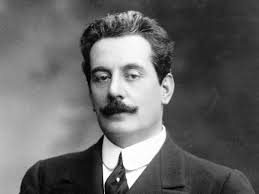
“Let no one sleep” is the translation of ‘Nessun Dorma!‘, an aria from Giacomo Puccini’s (Italy 1858 – 1924) opera ‘Turandot‘. As with Mozart’s Requiem, Turandot was unfinished at the time of the composer’s death.

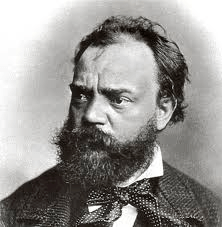
Now we leave Europe, the Old World, with Antonín Dvořák (Czech 1841 – 1904) for the 4th Movement of his 9th Symphony, written in New York, 1893.

Please Note: All photos are taken from Google Images or free photo sites, and are used for educational purposes only. No copyright infringement or offense is intended. If I have used your photo or image, and you wish me to remove it, just ask. This site is not monetized, I run it on my own dollar. Thank you.

Classical Music: where to start ? Part 5

5th April 2026

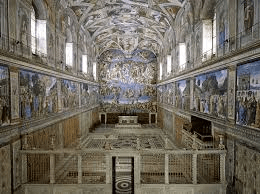
Sistine Chapel, Vatican City

Some Renaissance flute music to start, from Erasmus Widmann (Germany 1572 – 1634). I know very little about this composer, I discovered him serendipitously whilst searching for some Mediaeval music. Helena is from a collection of Galliards (lively dances).

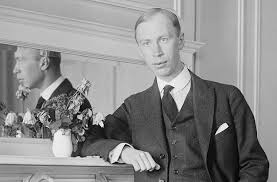
Now to the ballet, and Sergei Prokofiev (Russia 1891 – 1953) with his iconic Dance of the Knights.

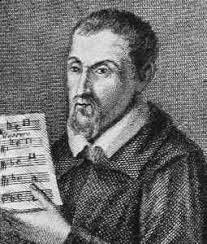
Gregorio Allegri (Italy 1582 – 1652) composed his Miserere circa 1638, and legend states that it was performed exclusively at the Sistine Chapel, and then only during Holy Week (in April). Now, this has been refuted, other copies were available outside the Vatican, and other performances took place, even in London.

A further legend has it that a young Mozart heard the piece once, possibly twice, and transcribed the entire work, note perfect. Again, this is questioned by historians but it remains a wonderful story and, as the film says, “When the legend becomes fact, print the legend.” [1]

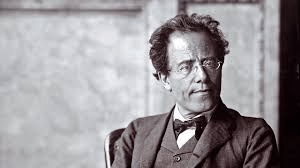
Gustav Mahler (Austro-Bohemia 1860 – 1911) mostly wrote symphonies, and song-cycles. His symphonies are often large-scale; his 8th Symphony had over 1 000 performers on its premiere.

The famous Adagietto is delicate, mystical and hauntingly beautiful. As mentioned in the previous blog, I hear a distinct influence from Beethoven’s final String Quartet in F Major Op 135.

[1] From the John Ford film ‘The Man who Shot Liberty Valance’ 1962.

Please Note: All photos are taken from Google Images or free photo sites, and are used for educational purposes only. No copyright infringement or offense is intended. If I have used your photo or image, and you wish me to remove it, just ask. This site is not monetized, I run it on my own dollar. Thank you.
Classical Music: where to start ? Part 4 … Vienna!

29th March 2026

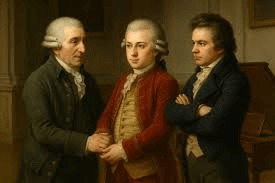
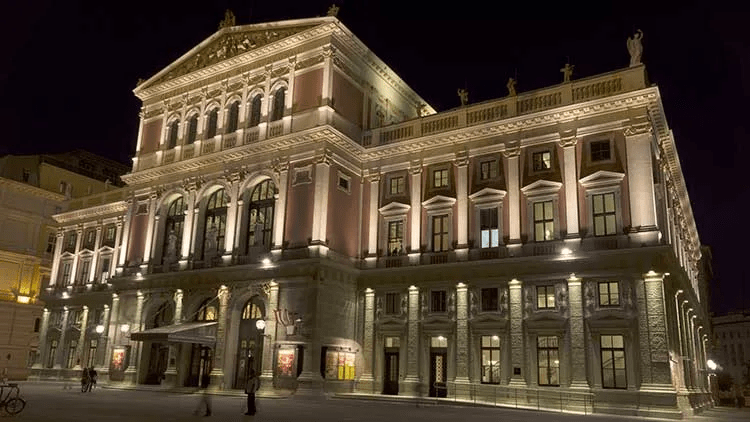
By Part Four, we have to introduce either Mozart or Beethoven, so why not introduce both. Vienna is a city resonating with music, coffee and culture, as well as being home to one of the world’s top orchestras, the Weiner Philharmoniker.

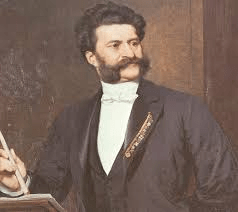
Let’s start with the aforementioned orchestra, performing the overture to Die Fladermaus by Johann Strauss II (Austria 1825 – 1899) at a traditional New Year’s Concert.

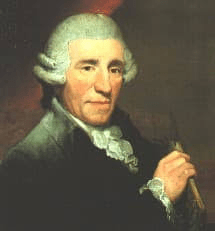
Joseph Haydn (Austria 1731 – 1809) has been called the “Father of the Symphony”, and can be seen as a link between Bach, Mozart and Beethoven. Here is the Adagio from his Cello Concerto in D Major.

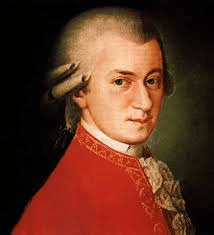
Wolfgang Amadeus Mozart (Austria 1756 – 1791) began composing at the age of five. Requiem, his last composition, has been the subject of speculation and scandal, and is one of art’s famous unfinished works. The magnificent opening movement is Introitus.

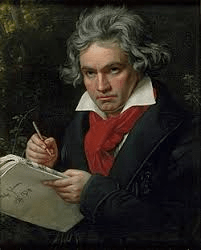
From Mozart’s last work, to that of Ludwig van Beethoven’s (Germany 1770 – 1827). Mahler was certainly influenced by Beethoven, and this movement reminds me of Mahler’s Adagietto from the 5th Symphony … but that is for next week.

Please Note: All photos are taken from Google Images or free photo sites, and are used for educational purposes only. No copyright infringement or offense is intended. If I have used your photo or image, and you wish me to remove it, just ask. This site is not monetized, I run it on my own dollar. Thank you.
Classical Music: where to start ? Part 3

22nd March 2026

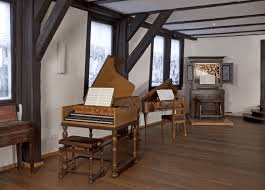
Bachhaus Eisenach, Germany

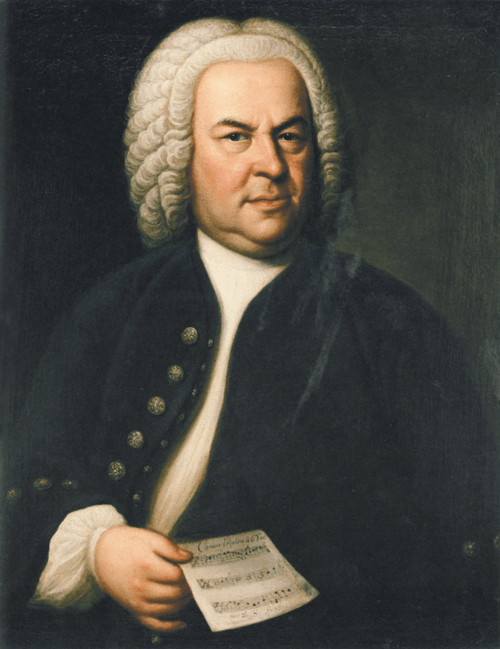
Starting with a titan of Classical Music – Johann Sebastian Bach (Germany 1685 – 1750).

From such a wide and canonical repertoire, I’ve selected something a little different; a sonata extract but played on a traditional Swedish instrument, the nyckelharpa. Andante indicates a moderate tempo, a walking pace.

The next selection is the Intermezzo from Cavalleria Rusticana, a one-act opera, a contrast to Wagner’s gargantuan musical dramas. Pietro Mascagni (Italy 1863 – 1945) composed this major work in 1890.

Zbigniew Preisner (Poland born 1955) is closely associated with Polish film director Krysztof Kieślowski for whom he composed several soundtracks (notably the ‘Three Colours’ trilogy).

Requiem for my Friend from 1998 is a tribute to the director.

The first time I heard our final selection, I thought it was from a film soundtrack, possibly a Michael Nyman piece. I was therefore very surprised to discover that it was 200 years old.

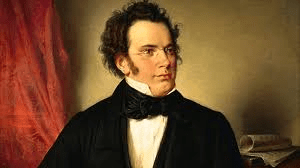
The Piano Trio No. 2 was one of Franz Schubert’s (Germany 1797 – 1828) last compositions. I’ve selected the second movement, another Andante, inspired by a traditional Swedish folk song.

Please Note: All photos are taken from Google Images or free photo sites, and are used for educational purposes only. No copyright infringement or offense is intended. If I have used your photo or image, and you wish me to remove it, just ask. This site is not monetized, I run it on my own dollar. Thank you.
Classical Music: where to start ? Part 2

15th March 2026

The Vienna State Opera

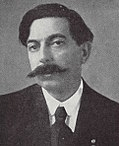
Part Two starts with a guitar transcription of a piano suite by Enrique Granados (Spain 1867 – 1916), Spanish Dances, Number 2 ‘Oriental’ Op 37.

I usually hear this played by two guitarists, but I was very impressed by this solo performance by Sawa Yamamoto.

The second piece is a sinfonia, an instrumental introduction to an opera or oratorio. The composer is the German-born George Fridrick Handel (1685 – 1759), who became a naturalised British subject.

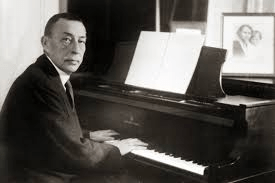
Vespers are evening prayers, held at sunset. One of my favourites is from Sergei Rachmaninoff (Russia 1873 – 1943). Here we have number VII Hexapsalmos from his Vespers Op 37.

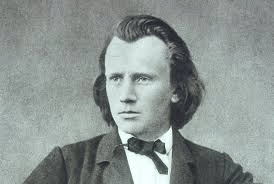
Listening to a whole symphony can be a tad challenging, so here is one short section from Brahms (Germany 1833 – 1897), the third movement from his 3rd Symphony

Please Note: All photos are taken from Google Images or free photo sites, and are used for educational purposes only. No copyright infringement or offense is intended. If I have used your photo or image, and you wish me to remove it, just ask. This site is not monetized, I run it on my own dollar. Thank you.

Classical Music: where to start ? Part 1

8th March 2026

So many composers, so many works, so many forms. Finding an entry into the world of Classical music can be daunting; symphonies, concertos, sonatas, requiems, arias, overtures, tone poems …

So, a series of selected pieces, introducing some of my favourite compositions.

To start, a sonata for oboe and piano by Francis Poulenc (France 1899 – 1963). Poulenc was a member of Les Six, a group of modernist composers in the 1920s.

A sonata has been described as an inward-looking piece, a main instrument supported usually (but not always) by a piano.

In contrast, Richard Wagner (Germany 1813 – 1883) wrote monumental operas which he termed music dramas. As some performances can last over five-hours, I recommend the instrumental prelude to Die Meistersinger von Nürnberg.

For some vocal music, I suggest Hildegard of Bingen (Germany 1098 – 1179).

Finally, one of my favourite composers, Ralph Vaughan William (UK 1872 – 1958). The Tallis Fantasia, my introduction to RVW’s music, is for string orchestra, and in one single movement.

Please Note: All photos are taken from Google Images or free photo sites, and are used for educational purposes only. No copyright infringement or offense is intended. If I have used your photo or image, and you wish me to remove it, just ask. This site is not monetized, I run it on my own dollar. Thank you.
Tony Bennett R.I.P.
8th August 2023

Time to say goodbye to another musical legend, this time singer Tony Bennett who sang Jazz and American standards.

Tony was the last of the singers to have emerged after World War II, singers such as Frank Sinatra, Dean Martin, Mel Tormé, Sammy Davis Jr.

Music changed from Swing Jazz to Cool Jazz, Blues to R ‘n’ B, while Rock ‘n’ Roll, Pop and Rock music emerged. Yet, they still kept their careers and popularity.

I saw Mr Bennett at the 1998 Copenhagen Jazz Festival. At one point, Tony asked for the microphones to be turned off, and he sang to the crowd unamplified.

The following year, I saw him again perform a short set at a London department store where he was signing copies of his autobiography.

Here’s Tony’s signature tune – ‘I Left my Heart in San Francisco’

Tony Bennett 3rd August 1926 – 21st July 2023