Classroom Games.

I’ll be using abbreviations throughout these blogs so for clarity, here’s a short run-down of the most common ones:

Back to Board (B2B). Any activity where a student can’t see what is behind them, but has to guess or deduce from clues by the other students. It could be the name of a famous person, or a small YouTube clip. I often show a funny film and drill students how to describe what they see using the subject – verb – object formula. 

Call My Bluff (CMB). Based on the British TV show, students are put into groups and given a list of higher-level words. Each word has three definitions, two false, one true. The students have to read out the word, maybe varying the pronunciation each time, state the type of word (noun, verb etc) and a definition. The other team has to guess the correct answer. This can be a fun way to introduce new vocabulary.

Family Fortunes (FF). This works well with larger classes. Students are put into small groups and given a board and marker. The teacher then asks for four answers to a general question. The students ‘win’ imaginary money for each answer that matches the teacher’s four. Example: I have been to four places in Viet Nam, not counting HCM City. What are those four places ? Other good questions are my four favourite Vietnamese dishes, four things I like (and dislike) in VN and favourite types of films or music.

Snakes and ladders (SNL). Based on the popular children’s board game, ideally, space permitting, I use the floor of the classroom. With markers (NOT permanent markers, mind you), the students mark out a board, a large square. On some squares there is a red dot meaning go back 2 spaces, or a blue square, go forward 1 or 2 squares. One square is ‘haha’ – the player has to return to their original place. In a big enough room, I use students who begin at opposite corners, and have to complete one circuit to win. I ask questions which any one in the team can answer – or you could ask students individually – and then they roll a die. In a smaller room, I just make the game on the whiteboard. This can be very exciting and it’s a good idea to establish the rules first i.e. is it first past the end square OR exact number to finish. This game can sometimes be too popular and become too boisterous.

Stop the bus (STB).  This is a simple question and answer games, used to warm up or wind down classes. The teacher asks a question, the students shout out the answer, but first have to shout, “Stop the bus !” If they answer without the STB, no points are awarded. The game can be slightly varied, using different nouns e.g. Stop the Taxi, Stop the Grabbike or even, with a lively class, make them get up and sing, “Stop in the name of love.”

Word Battleship (WB). I often use this as a warm-up exercise. On the board draw a 4×4 grid, labeled A – D and 1 – 4. Assign different scores to each square on a separate sheet. Ask sixteen questions (can be general knowledge or a review of recent lessons, grammar, vocabulary). If the student gets the answer right, they can choose a square and you write in the number. I usually have 5 as the lowest, then 10, 20, 50 and one 100-pointer. To engage all students, you could ask them questions individually.

Word cards. I got this from an IELTS website. Make a list of recently – learnt words and expressions. The number and complexity will depend on the level of the class, but at least five or six but no more than ten. Print out and cut into individual word units. Put them in a small container. The students are placed in small groups and given the container with words. Each student has to speak on a basic theme using as many words or cards, as possible, within a set time. They can spread the words in front of them and drop them back into the container once they have been uttered.

Adult Class level 3 (1)

Tues 27thNovember 2018

First class at new centre so I arrived very early; needed to get class notes, and get organised. Logged into computer with new password and … not recognised. My TQM (manager)  had to reset the password to default.

This was an adult pre-intermediate class and the first lesson is always important. The class is quite big, 22 students, some in their 40s, some teens but mostly early 20s. The atmosphere was good upon entering the class, students seemed friendly and polite.

We kicked off with a quick welcome, just name and then asking the students where they thought I was from. “Australia,” cried one. Couldn’t be further away. Sounds of laughter and of ice-braking. One of the younger students recognised the British accent, then London was pinpointed as my hometown. 

This lead to …

First activity, STB about UK. What was the second biggest city ? Name of the famous clock, name of 007 (also a way to drill the notoriously absent final-s of James),

Traditional food (“fish & chip,”; again -s drill). Combining ice-breaking games with some pronunciation / grammar drills.

This lead to …

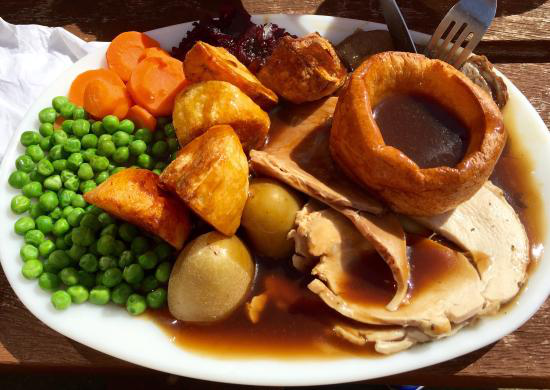
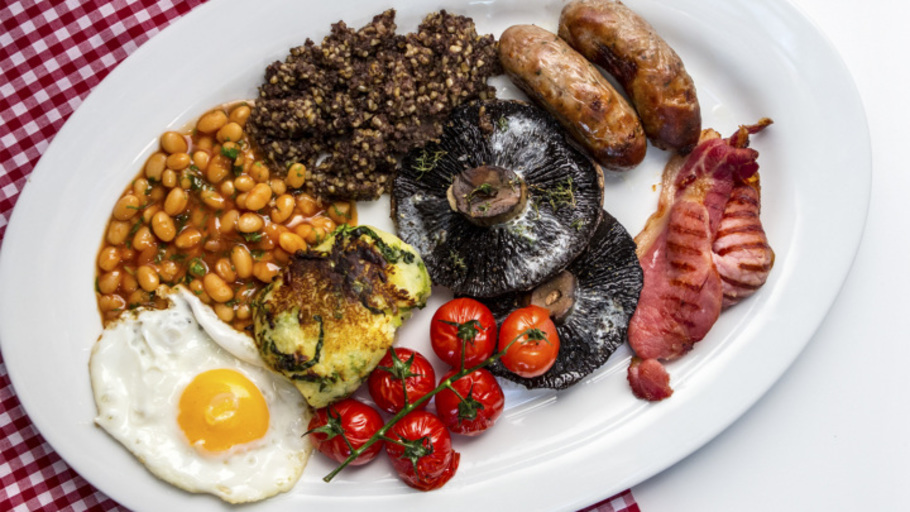
First partner work. I projected a document with four different examples of British food and four titles. Students had to match the title and image, with some pre-teaching. The activity:

Describing the food: could they name the food ? What did they think of it (elicit as many adjectives as possible) ? Was it healthy ? Why not ?

Trying to encourage all students to contribute, feel easy and comfortable and to demonstrate their knowledge.

About forty minutes into the lesson, the book work began. Immediate check about phrasal verbs as first activity mentioned ‘eating out’.

This lead to …

Phrasal verbs pertaining to eating

dig in

check out – check it out

pick up the cheque / bill

There was a main listening section, so I looked through the text and selected some words that could be problematic

unusual      for instance      partly       attracted     ingredients        typical

Then using these in sentences: What do you need to make pho ? Those are the ingredients. What do you do every day ? That is a typical day. Viet Nam has great food, for instance pho, bun bo Hue, Mi Quang. What is the most unusual food you know ?

Today will be partly cloudy. The smell of the cooking attracted the people.

There has to be a lot of time for the students to speak with each other. Sometimes working in pairs, sometimes in small groups. Make sure the students have the vocabulary to do the activity, know what they have to do and feel motivated.

Grammar was present simple and present continuous.

I live in HCM I am living in HCM

Pronunciation:the stress on negative  words

I like tea, she doesn’tlike coffee.

Intonation: rising voice on questions