7th July 2026

The tenth and final part of this introduction yet so many composers, performers, conductors and orchestras unmentioned … maybe in future posts.
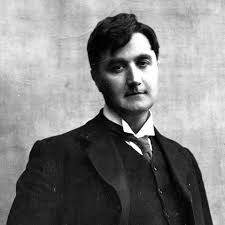
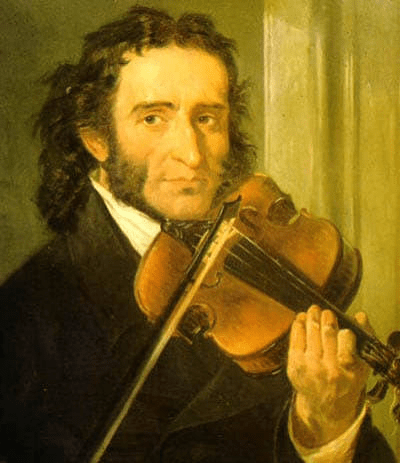
Until then, our last chapter is very special and starts with violin virtuoso Niccolò Paganini (Italy 1782 – 1840), a musician so dazzling and gifted, claims were made that he had made a deal with the Devil. Practising twelve hours a day since childhood may be a more reasonable reason.
The famous Caprice 24 is here performed by the Russian-American violinist Alexander Markov.
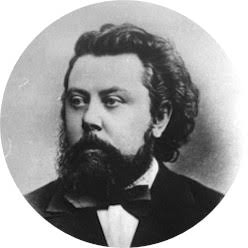
We have already met Modest Mussorgsky (Russia 1839 – 1881) in Part 9 {https://thaypaulsnotes.com/2026/06/08/classical-music-where-to-start-part-9/} with his Picture at an Exhibition. Here is a remarkable solo guitar performance by the Japanese Kazuhito Yamashita.
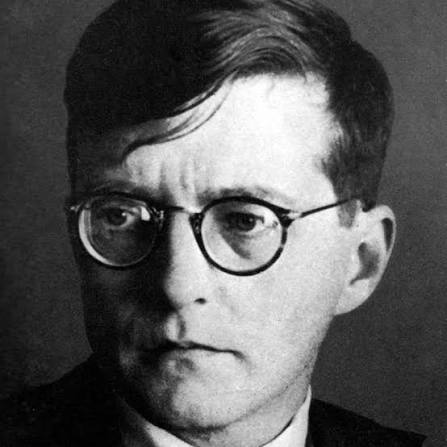
Staying in Russia we have Waltz No 2 by Dmitri Shostakovich (Russia 1906 – 1975). The composer had to work under the censorship of the USSR, and later developed motor neuron disease causing weakness of the limbs.
The waltz is performed here by three-year-old Joelle Poon from Hong Kong.
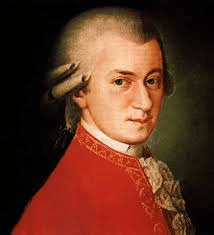
Returning also to Mozart (Austria 1756 – 1791), we have the popular piano piece Rondo alla Turca better known as the Turkish March.
The version here is by the Canadian pianist Glenn Gould, a very polarising figure in Classical Music due to his individual interpretations and idiosyncrasies. Instead of using the piece to display speed and virtuosity, Gould plays it slower more in keeping, he believed, with Mozart’s intensions.
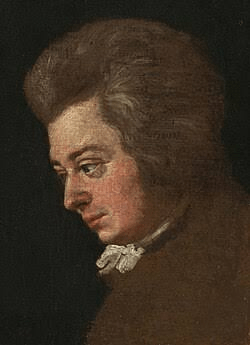
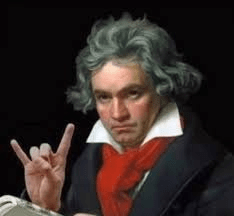
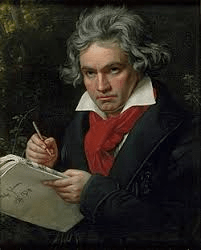
Finally, the finale to one of the greatest symphonies, the Ninth by Ludwig van Beethoven (Germany 1770 – 1827). Beethoven ends with vocalists and choir singing text from Schiller’s An die Freude (Ode to Joy).
The symphony was first performed in Vienna on 7th May 1824. Incredibly, Beethoven was completely deaf by this time, and could hear neither the music nor the applause.
Let’s end this ten-part introduction with text from the performance:
“Oh friends, no more of these sounds!
Let us sing more cheerful songs,
More full of joy!”

Please Note: All photos are taken from Google Images or free photo sites, and are used for educational purposes only. No copyright infringement or offense is intended. If I have used your photo or image, and you wish me to remove it, just ask. This site is not monetized, I run it on my own dollar. Thank you.