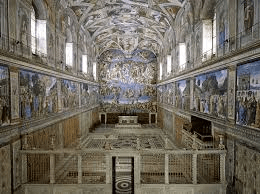
Classical Music: where to start ? Part 5

5th April 2026

Sistine Chapel, Vatican City

Some Renaissance flute music to start, from Erasmus Widmann (Germany 1572 – 1634). I know very little about this composer, I discovered him serendipitously whilst searching for some Mediaeval music. Helena is from a collection of Galliards (lively dances).

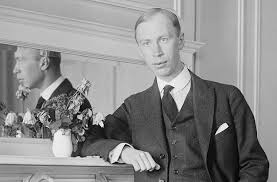
Now to the ballet, and Sergei Prokofiev (Russia 1891 – 1953) with his iconic Dance of the Knights.
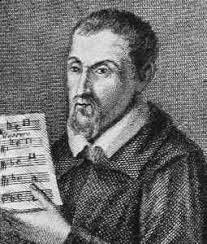
Gregorio Allegri (Italy 1582 – 1652) composed his Miserere circa 1638, and legend states that it was performed exclusively at the Sistine Chapel, and then only during Holy Week (in April). Now, this has been refuted, other copies were available outside the Vatican, and other performances took place, even in London.

A further legend has it that a young Mozart heard the piece once, possibly twice, and transcribed the entire work, note perfect. Again, this is questioned by historians but it remains a wonderful story and, as the film says, “When the legend becomes fact, print the legend.” [1]
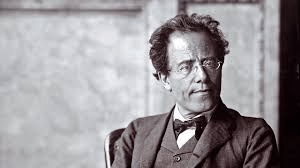
Gustav Mahler (Austro-Bohemia 1860 – 1911) mostly wrote symphonies, and song-cycles. His symphonies are often large-scale; his 8th Symphony had over 1 000 performers on its premiere.

The famous Adagietto is delicate, mystical and hauntingly beautiful. As mentioned in the previous blog, I hear a distinct influence from Beethoven’s final String Quartet in F Major Op 135.
[1] From the John Ford film ‘The Man who Shot Liberty Valance’ 1962.

Please Note: All photos are taken from Google Images or free photo sites, and are used for educational purposes only. No copyright infringement or offense is intended. If I have used your photo or image, and you wish me to remove it, just ask. This site is not monetized, I run it on my own dollar. Thank you.

Love and Chaos Part 7(A) Stefan 1

26th May 2021

Berlin Philharmonic Orchestra – suemtravels
Berlin Philharmonic. Google Images

Part Seven

Berlin. Spring 1995

Just being a conductor wasn’t enough for Stefan; he wanted to be a great conductor, one of the all-time greats.

While other boys had pictures of German football teams or American movie starlets on their walls, Stefan had carefully cut-out photos of Toscanini, Böhm, Furtwängler & Claudio Abbado.

All his studies were focused towards this irresistible aim, augmented by lessons in composition. Rounding out his education, he played both cello and piano, and was reasonably knowledgeable about most instruments of the orchestra.

In the last year of music college, Stefan, for his final exam, was given a selection of pieces from which to choose. He smiled at the first piece on the list: Elgar’s ‘Cello Concerto’.

Stefan had an affinity with Twentieth Century music, and the cello, so what could be better ? Not only would he pass, for that wasn’t in question, but he would excel, win first prize and be offered further studies with a master and get offered a small, yet prestigious appointment.

The reality was somewhat different.

Stefan didn’t win the first prize; he wasn’t even mentioned for a commendation. He passed, but without merit. One examiner concluded that his conducting was ‘workman-like’. The orchestra knew when to start and when to stop, but those parametres notwithstanding, they did what they wanted, indifferent to the increasingly desperate swirls of the baton.

The general consensus was that he lacked colour and command. And presence. No amount of teaching could impart that. He may acquit himself adequately in a minor regional, that is to say, amateur orchestra, but no sign of future greatness was detected. That was the official verdict, and Stefan, sensitive and withdrawn, lacked the temperament to go against his teachers. They had spoken, he had acquiesced.

By the spring of 1995, Stefan had envisioned having an apartment in Charlottenburg and a pied a terre in Mitte, of being the youngest conductor of the world’s finest orchestras, and signed to a prestigious record label.

By the spring of 1995, Stefan was sharing a small flat in Kreuzberg with a childhood friend from Heidelberg. The conducting was never going to happen, nor was he even going to play in the most modest of orchestras. Over the coming months, he failed every audition, while he couldn’t get anyone interested in even looking at his own compositions. Finally, by his own estimation, getting as low as a musician could go, he would advertise his services as piano teacher.

However, he also made a commitment to perform whenever and wherever, be it pianist, cellist or, “Even the damn viola.” As such, and cellists being rare among the squat bars and underground art centres, Stefan had been invited to play at several events, approaching each performance with professionalism and vigour, despite the inexplicable nonsense he had to endure. He mostly received bemused apathy, occasionally laughter.

Stefan had to rethink his future, entirely. It had to be in music, for he had no training or passion for anything else, and he knew he had something to offer. He just didn’t know what, or how to access it.

But, for the moment, it was impossible for him to think. His dream had been shattered.