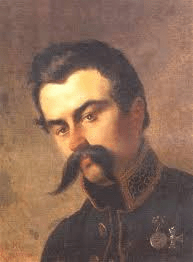
Considered the national poet, Taras Shevchenko was born in 1814 in central Ukraine. He was born into serfdom, not becoming free until 1838 when some friends were able to purchase his freedom.
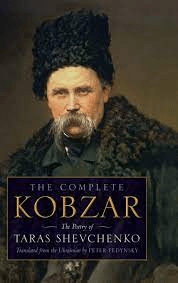
Shevchenko wrote novel and dramas, as well as being an artist, but is best known for his poetry. His first collection, Kobzar, was published in 1840. A contemporary poet referred to the collection as “a new world of poetry … (an) artistic expression not previously known in Ukrainian writing.” (Ivan Franko).
Haidamky, an epic poem, followed in 1841. By now, he was living in St Petersburg, but made several trips to Ukraine in the 1840s, capturing the scenes in oil and watercolour.
Kateryna, 1842. National Museum, Kyiv
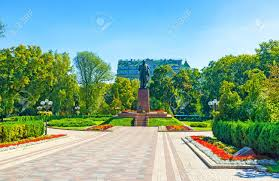
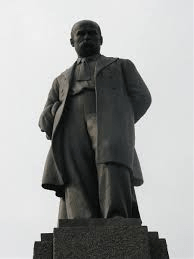
Shevchenko was arrested in 1847 after Tsar Nicholas I read the poem Dream, which he found offensive. The poet was forced to march from St Petersburg to Orsk near the Ural Mountains. He was later sent to a severe penal settlement before being released in 1857. The years of exile and imprisonment contributed to his death in 1861, just days before the emancipation of serfs was announced. He is buried in Ukraine at Taras Hill, neat the Dnipro River.
Will and Testament
When I die bury me in the middle of the steppe of my Ukraine. So I can seize broad the broadback field and Dnipro, twisting, so I can see and hear it roar, roaring, carrying
thieves’ blood to the ocean. Then I’ll toss the fields and mountains and me and burn them all like prayers. I won’t know God till then.
Stash me away then stand, split your chains and spatter the soil with blood and fury, having your body back. Now
in our vast family, the free one, the new one, don’t forget to remember me in good-willed words, a word unangered, quiet.
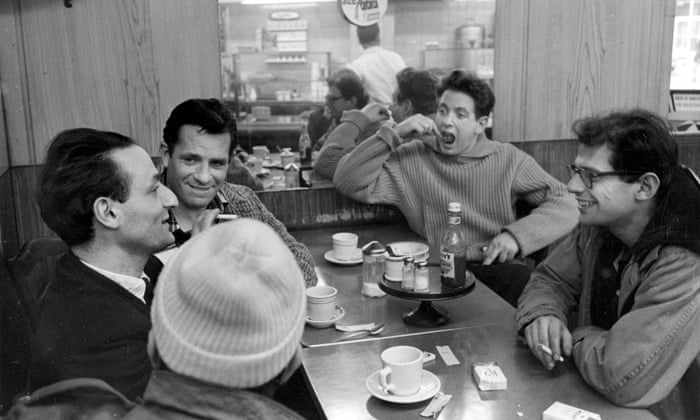
Members of the ‘Beat Generation’ hanging out & chewing the fat in New York, 1950s. Allen Ginsberg, whose poem ‘Howl’ ends this blog, is on the right, smoking a cigarette.
A major issue I encounter with ESL students is pronunciation and associated features such as intonation, stress, rhythm and pacing. Therefore, I decided to select some English-language poems for practice in class, while online students can find a multitude of YouTube videos of poems being recited by professional actors. I shall add some links at the end of the blog.
Now, without further ado, poetry.
Poetry can take many forms, not just writing; poetry in cinema, in dance, in speech … in life.
Let’s take a look at the first poem, ‘Dreams’ from 1922.
Recite the poem slowly and clearly. In the first line, stress ‘fast‘ and ‘dreams‘.
Secondly, listen for the rhyming pattern in lines 2 & 4: ‘die’ rhymes with ‘fly’, while verse 2 rhymes ‘go’ with ‘snow.’
Regarding ‘colour’, which tone of voice to use, decide if this is a positive or negative poem. Discuss in class what you think and give reasons.
Remember, art (painting, cinema, literature etc) is subjective; each person is allowed to have their own opinion. Develop speaking skills to enable you to support your views (give reasons).
Stop all the clocks, cut off the telephone, Prevent the dog from barking with a juicy bone, Silence the pianos and with muffled drum Bring out the coffin, let the mourners come.
Let aeroplanes circle moaning overhead Scribbling on the sky the message ‘He is Dead’. Put crepe bows round the white necks of the public doves, Let the traffic policemen wear black cotton gloves.
He was my North, my South, my East and West, My working week and my Sunday rest, My noon, my midnight, my talk, my song; I thought that love would last forever: I was wrong.
The stars are not wanted now; put out every one, Pack up the moon and dismantle the sun, Pour away the ocean and sweep up the wood; For nothing now can ever come to any good.
A highly emotional rendition, one person expressing their feelings over a loved-one’s death.
Let’s continue with a nonsense poem by Edward Lear from 1876:
Who, or why, or which, or what, Is the Akond of SWAT?
Is he tall or short, or dark or fair? Does he sit on a stool or a sofa or a chair, or SQUAT, The Akond of Swat?
Is he wise or foolish, young or old? Does he drink his soup and his coffee cold, or HOT, The Akond of Swat?
Does he sing or whistle, jabber or talk, And when riding abroad does he gallop or walk or TROT, The Akond of Swat?
Does he wear a turban, a fez, or a hat? Does he sleep on a mattress, a bed, or a mat, or COT, The Akond of Swat?
A great poem to demonstrate rhythm as well as ‘floating opposites’ e.g. young & old, hot & cold, not forgetting synonyms such as talk & jabber. Now, for really advanced beatniks, try the beginning of the famous, indeed infamous, poem ‘Howl’
I saw the best minds of my generation destroyed by madness, starving hysterical naked, dragging themselves through the negro streets at dawn looking for an angry fix, angelheaded hipsters burning for the ancient heavenly connection to the starry dynamo in the machinery of night, who poverty and tatters and hollow-eyed and high sat up smoking in the supernatural darkness of cold-water flats floating across the tops of cities contemplating jazz, …
The poem, along with a recitation by the poet, may be accessed here:




 Thay Paul's Notes