An exercise for students to use critical thinking, and to practise speaking.
First we shall let the students work in pairs, discussing today’s question:
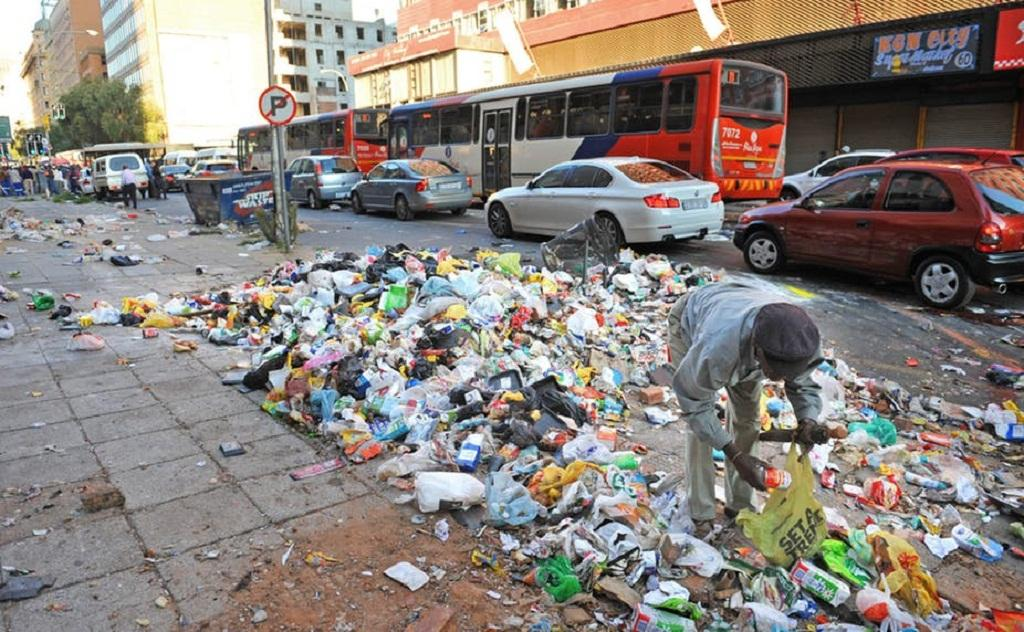
What’s the problem with your city … and what’s the solution ?
Let’s kick off with some useful vocabulary
pollution
litter
noise
traffic congestion
You may start like this:
I live in Sai Gon (Ho Chi Minh City). The city is very large and busy, and has many great places. However, it also has many problems.
Then talk about pollution (air and water),
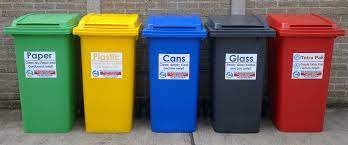
litter (paper, plastic, food, bottles, cans etc)
noise (karaoke, motorbikes, street vendors, building work)
traffic (is it fun or safe to drive ?)
Remember to use amazing adjective as well as linking words to give longer, better answers.
Now for some solutions
How can we make rivers cleaner ?
How can we make the roads less congested ?
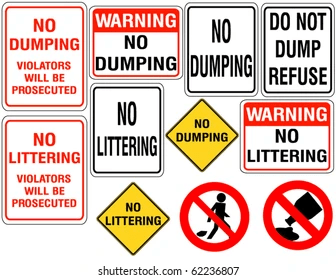
How can we stop people littering ?
How can we reduce noise pollution ?
Please Note: All photos are taken from Google Images or free photo sites, and are used for educational purposes only. No copyright infringement or offense is intended. If I have used your photo or image, and you wish me to remove it, just ask. This site is not monetized, I run it on my own dollar. Thank you.
How would you describe this lady ? Where is she ? What is the day like ? How adjectives add information and colour to speech and writing.
Making lemonade out of lemons – this is an expression which means making something good happen out of something bad. Allow me to elaborate – I was taking a Level 1 adult-talking class. The work is all prepared for me, with powerpoint slides and recordings, as well as print-outs. However, the theme was quite advanced for this level. The subject was economics, vocabulary included such gems as ‘manufacturing’ and ‘exports’. All very interesting, but far above the resources of a beginners’ class. And then the students arrived … after a few introductory questions, it became clear that I would have to abandon the lesson and somehow improvise a class at beginner level.
As the class consisted of young ladies, I chose hair and clothes … and how to use adjectives to build up setences.
It is understandable that students focus more on learning nouns and verbs, with just a smattering of common adjectives. However, I think it’s a good idea that students learn and be encouraged to use two or three adjectives from an early stage, so it becomes a natural part of their English (as well as boosting their scores in oral tests).
So, back to my class; three young ladies with very limited English but, fortuitously, also with three different hairstyles.
Let’s start very simply; Ms Kim (this is a Google image, not my real student) has long hair. OK, but we can add more … what colour is it … is it straight or wavy ? Finally, let’s be polite and complimentary … Ms Kim has beautiful long wavy brown hair.
The students may have to learn hairstyles or shapes (wavy, pony-tail, bangs, pleated), and students should learn a small number of new words every lesson. It helps if they can see them in the class and then use them in controlled speaking.
So, without much effort, their sentence length had doubled. Next to Ms Kim was Ms My
Once the students had a word bank and some practice, they were able to describe Ms My as having a beautiful long black ponytail, or beautiful long black straight hair, tied into a ponytail. Fortunately Ms Anh has a different style.
But now, it was clear my students were comfortable with ‘beautiful’ so time for some synonyms – stunning, gorgeous, eye-catching. Ms Anh has medium-length hair or, as I insist on a full sentence:
Ms Anh has gorgeous medium-length brown hair. But we can go further – let’s compare Ms Anh’s hair with Ms Kim – both have brown hair, yet different shades. Thus we introduce dark and light:
Ms Anh has eye-catching medium-length dark-brown hair.
It’s also very rewarding to hear students start building sentences after struggling to say three or four words just five minutes earlier. And so, we continue … let’s turn to jewellery using the students themselves as examples; someone will have earrings (studs or long), another will have a neckless, a bracelet, rings etc. I ask Ms Anh to show her ring … it is gold, while Ms My has a silver one. Or, at least silver-coloured !
Then we turn to clothes, and first elicit different types of material and patterns:
silk // cotton // denim // leather //
plain // floral // striped // checked
So now, when they see a picture like this, the students will be able to describe the lady’s hair, jewellery and clothes and by extension, the room in which she is situated.
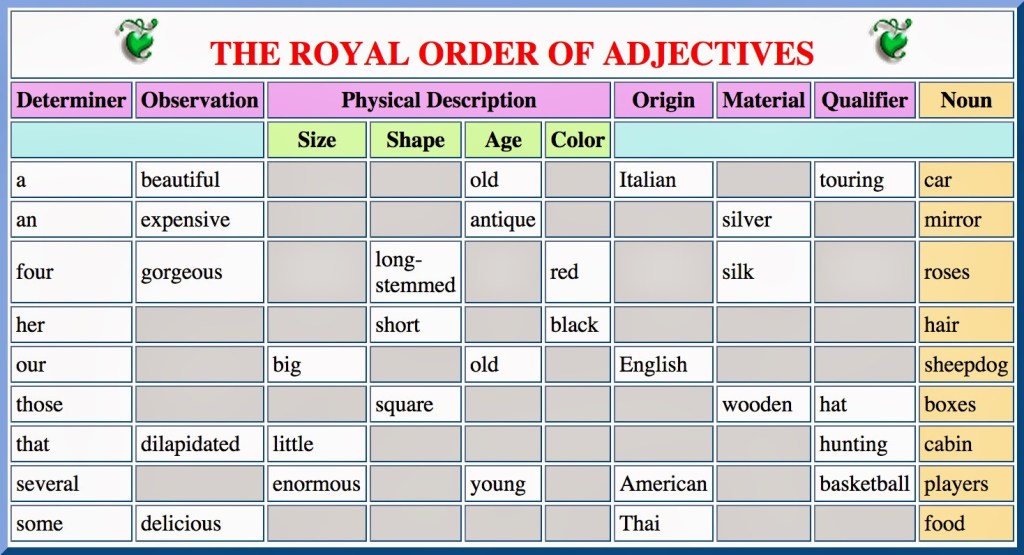
In terms of grammar, there is an order of adjectives, though I would not introduce this too early on. Instead, I would stress the opinion word is first, while size is before colour (eye-catching short light-blue skirt).
Now, let’s return to the first picture, a young friend of mine whom we shall call Ms Ngoc. Students can work together and give me as much information as they can. This includes her hair, clothes but also what she looks like, where she is and what time of day. Furthermore, how does the weather look ? How does she look ?
Finally, a good activity is to board some common adjectives and have the students give the opposites or antonyms:
This is continued in subsequent lessons, so students become used to incorporating two or maybe three adjectives in sentences. And them or course … we have adverbs … but that is another story !














 Thay Paul's Notes