What is different about helping verbs can and like & want ?
Can uses verb 1, but like & want use infinite (to + verb 1)
Now … Your turn
Write 3 sentences using can, like & want.
Remember:
can + verb 1 // like + infinite // want + infinite
Only good grammar can defeat Thanos …
Good Luck !
Please Note: All photos are taken from Google Images or free photo sites, and are used for educational purposes only. No copyright infringement or offense is intended. If I have used your photo or image, and you wish me to remove it, just ask. This site is not monetized, I run it on my own dollar. Thank you.
Furthermore, she loves to wear Givenchy perfume but I prefer to spend my hard-earned* on Dior.
In the modern parlance, ‘Did you see what I did there ?’ I followed four auxiliary verbs (‘hate,’ ‘love,’ ‘like’ & ‘prefer’) with infinite verbs. I sense that I’ve already lost the interest of 90% of my readers with these grammar terms, but hold your horses and I’ll explain, I’ll ‘cut the crap‘, if you will.
OK, breaks down like this: an auxiliary verb is a ‘helping’ verb; we need more information to understand what the speaker means e.g.
I want … (what do you want ?) // He needs … (what does he need ?) // She loves … // We want … etc
An infinite verb simply means a verb in no tense (past, present or future). It is simply formed thus:
to + base verb
Examples: to eat / to go / to study / to procrastinate
Infinite has no tense, by which I mean it is incorrect to say,
“Last night I to see a film,” (past tense)
“She to go home,” (present) or
“Tomorrow he will to take a test.” (future tense).
We can combine an auxiliaryverb with an infiniteverb, as demonstrated in the heading and subsequent paragraph.
Occasionally, a student may question my use of grammar, or mention that they have been told a different rule, to wit, last night a student informed me that, according to a different teacher, auxiliary verbs such as ‘like,’ ‘love.’ ‘hate,’ HAVE TO BE followed by a continuous verb:
I hate shopping NOT I hate to shop
He loves watching films NOT He loves to watch films
We like drinking wine after work NOT We like to drink wine after work
To Quote Dr Johnson:
“I refute it thus,” :
I like to play guitar / I hate to hear karaoke / I love to listen to my friend Pete’s online radio show
We can use hate, like, love and prefer with an –ing form or with a to-infinitive:
I hate to see food being thrown away.
I love going to the cinema.
I prefer listening to the news on radio than watching it on TV.
He prefers not to wear a tie to work.
In American English, the forms with to-infinitive are much more common than the –ing form.
There is a very small difference in meaning between the two forms. The -ing form emphasises the action or experience. The to-infinitive gives more emphasis to the results of the action or event. We often use the –ing form to suggest enjoyment (or lack of it), and the to-infinitive form to express habits or preferences.
So there you have it, straight from the horse’s mouth.
What can we learn from this ? Well, teachers are only human (mostly) and can make mistakes. Teachers who are not native-speakers often teach from books that may simplify grammar and may, inadvertently, be incorrect in their assertions. The books may be outdated; they may even be wrong.
Just because something is written in a book, doesn’t mean it’s true.
Check for yourself, be proactive in your learning; if you have internet access, check reputable websites.
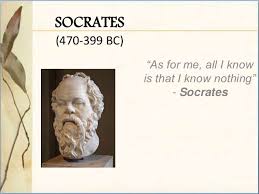
Furthermore even native-speakers can make mistakes and I’ll be the first to admit this (even if I don’t have the wisdom of Socrates, not by a long chalk).













 Thay Paul's Notes