Love and Chaos Part 6 (D) Three English Portraits

9th May 2021

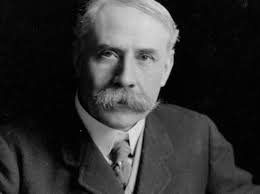
Sir Edward Elgar OM, GCVO
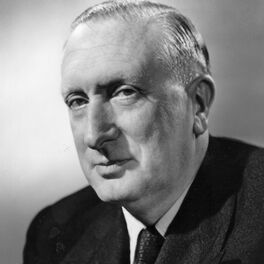
William Walton: albums, songs, playlists | Listen on Deezer
Sir William Walton OM
Ralph Vaughan Williams - Ralph Vaughan Williams - Wikipedia
Ralph Vaughan Williams OM

The ‘Enigma Variations’ of 1899 heralded the arrival of Edward Elgar, a young English composer who would not only surpass his teachers and rivals, but would restore international acclaim to British music. He was the greatest native composer since Purcell.

He overcame prejudice against his humble background, and his own discomfort in society as, for twenty years, he composed symphonies, oratorios and concertos that rank among the major works of Twentieth Century Music.

However, the sonic assault of his ‘Cello Concerto’ of 1919 was to be his last masterpiece. Shortly after, his wife died and he withdrew from public life, convinced that his art was old-fashioned, in comparison to the Modernist compositions coming from over The Channel.

That Elgar could be a part of the establishment, yet also a ‘down to earth’, ‘man of the people’ is attested to in the following anecdote.

William Walton, as a young music student, met the elder composer, and was so overawed by being in the presence of so great a man, that he was unable to speak. Elgar immediately put him at ease, by asking him if he knew who had won that afternoon’s big horse race.

Walton was befriended and encouraged by Siegfried Sassoon and The Sitwells, and wrote a musical interpretation of Edith Sitwell’s ‘Facades’. There was a society performance where the music played while the poetess recited through a megaphone.

In November 1935, the year after Elgar’s death, Walton’s First Symphony was finally premiered, ‘finally’ as it was started in England in 1932 and was scheduled to make its first appearance the following year.

It is dedicated to Baroness Imma von Doernberg, a young widow the composer had met in 1929.

By 1931, The Composer and The Baroness were living together in Switzerland, though Walton later returned to England and began work on the symphony.

Work on it was interrupted as Walton returned to Switzerland to be with the Baroness who had fallen ill, and they continued their often tempestuous relationship.

Aside from these personal problems, Walton was also lacking inspiration and canvassed his friends’ opinions as how to finish the symphony.

The on-off relationship finally ended in 1934, when the Baroness left The Composer for a Hungarian Doctor.

The symphony is regarded as an important addition to the canon of British music. It begins very softly, as if arriving through an early morning, country mist, before erupting into moments of intense drama, and sensual beauty.

Walton was still a relative newcomer to the music scene, when his First Symphony was being composed, whereas Vaughan Williams was a ‘grand old man’ when he began composing his Sixth Symphony.

This remarkable composition has all the energy and iconoclastic disregard of a young composer, anxious to make his mark by flaunting all conventions.

Three movements run as one, the quiet moments being just as uncomfortable as the loud, with their sense of foreboding. Yet it is the fourth movement that sets the symphony apart and on which its reputation rests: the entire section is played pianissimo. An early critic wrote of the finale as,

“… devoid of all warmth and life, a hopeless wandering through a dead world … “.

The Composer denied it had anything to do with the battlefields of Europe, the death camps of Poland, the post-atomic cityscape of Hiroshima.

Adapting folk melodies of one’s own country is known as Nationalism in music. Hearing that Ralph Vaughan Williams was a ‘Nationalist’ composer, the Hamburg University offered him an honorary degree in 1938. After much debate, he decided to accept, using the occasion to send a letter stating,

“I am strongly opposed to the present government in Germany, especially with regards to its treatment of artists and scholars … and my first instinct is to refuse … “

Hitler banned the music of Vaughan Williams later that same year.

IELTS Mindset 1, lesson 6 Review

21st April 2021

Today is Hung King Festival, a free day in Viet Nam

Hung King Festival | All about Hung King Temple Festival 2021
Hung King Festival (Kings’ Day) Viet Nam (Google Images)

“The holiday is dedicated to the memory of the Hung line of kings who ruled Vietnam as priestly kings for over 2,500 years up until around 250 B.C. These kings are counted as the nation’s ancient founders.” Read more on:

https://publicholidays.vn/hung-kings-commemoration-day/

New Vocabulary

Cheap as chips … very inexpensive (UK expression)

Elaborate (verb) … tell more, expand on your answer

Significant (adj) significance (noun) significantly (adv) … very important or different from the rest. Special, notable.

Simile … to compare something e.g. he drinks like a fish, she eats like a pig, our campus is like a bloody madhouse.

White collar job … professional, desk job or requires mental skills e.g. lawyer, doctor, office worker, teacher

Blue collar job … manual work, although these jobs can also need a professional qualification, and can be extremely well-paid.

May be an image of 4 people and people smiling
Good old boys from Atlanta, Georgia back in the day. Three have blue collar jobs, one is white collar … can you guess which ?

Now, on with the show. Last night was based around the typical IELTS question, “Tell me about your family,” and its derivatives. I tell classes until I’m blue in the face, just saying, “I live with my mum, my dad and my sister,” is not a great IELTS answer, not to mention being tedious in the extreme.

The students mulled it over and came up with the reasonable response that there really was nothing else to say. Au contraire (on the contrary) there is so much to say, and every journey, as my Duchess knows, starts with a single step to wit, a great introduction.

The students, somewhat perplexed, offered:

Well, I don’t know how to give an interesting answer because I just live with my mum, dad and brother …

Even that would qualify as an introduction, but how about:

Allow me to introduce my family to you. Firstly there is …

Here’s where relative clauses really come into their own. Basically, every time you mention a subject, a noun, elaborate; tell the examiner more about said subject.

May be an image of 3 people
Hold your horses, Thay Paul. Will you give me an example ? Photo in Manila.

Oh, you know I will. Let’s start with the matriarch, Mommie dearest. You could say:

My mother has a heart of gold

…then explain why

… she’s always thinking of other people before herself, as well as listening to all my problems and trying to help me with everything.

On the other hand, your mother may want you to excel at everything …

Although I love her dearly, my mother is what they call a Tiger Mum by which I mean she always makes me study, do homework and learn piano. I really burn the candle at both ends and sometimes it can be too much for me.

Now, let’s turn to pater, Daddy;

My father, on the other hand, is firm but fair …

My father has a white collar job. He works long hours to provide for his family, he really has his nose to the grindstone …

He’s a little loud and on holidays, he loves singing karaoke with his friends, who are all blue collar workers, and he drinks like a fish.

Now, a borrowed word to describe sister …

My sister, who is younger than me, is such a prima donna, always (doing what ?) …

Conversely:

My sister is so sweet, she’s like a little angel, and she loves playing with our puppy who is just six weeks old.

How about brother ?

My brother really looks out for me, giving me advice and guidance. I totally look up to him.

On the other hand …

My brother is an absolute slacker, lazy beyond belief. He never helps in the house, or cleans his room. He does his homework once in a blue moon, preferring to play stupid computer games instead.

How was that ? Happy now ?

No photo description available.
Yes, that’s a great help, Khob khun (khap/ka). Two Thai friends in London.

Now … Your Turn

Last night you encountered these adjectives and occupations:

aggressive / arrogant / calm / funny (haha) / funny (crazy) / generous / honest / humorous / kind / mean / modest / polite / quiet / reliable / rude / selfish / serious / thoughtless / trustworthy /

estate agent / plumber / DJ / mechanic / bouncer / surgeon / accountant / actor / cook or chef / removal man / insurance agent / bank clerk / detective / businessperson / barista / lawyer / slacker shop manager / unemployed /

Exercise 1: Write and then present your own IELTS-style answer to the question, “Tell me who you live with ?” Use new words as well as your own ideas.

Here’s some help, should you require it:

Allow me to introduce my family to you. Firstly there is my mother who … (where is she from OR what is her job OR what is she like, by which I mean physically or in terms of personality ?).

My father, on the other hand, is …

As for my younger sister, I worry about her because she …

Now, let’s mix it up a little … say you live with an aunt, a grandparent, a cousin … impress me; I know you can do it.

For more about introductions, check out this blog: https://thaypaulsnotes.com/2021/01/28/ielts-please-allow-me-to-introduce-myself/

For last night’s lesson blog, click here: https://thaypaulsnotes.com/2021/04/20/ielts-mindset-1-lesson-6-speaking-speaking-and-more-speaking/

See you next week

Hung King Festival | All about Hung King Temple Festival 2021
Google images