By Part Four, we have to introduce either Mozart or Beethoven, so why not introduce both. Vienna is a city resonating with music, coffee and culture, as well as being home to one of the world’s top orchestras, the Weiner Philharmoniker.
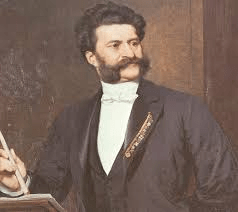
Let’s start with the aforementioned orchestra, performing the overture to Die Fladermaus by Johann Strauss II (Austria 1825 – 1899) at a traditional New Year’s Concert.
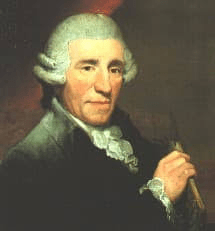
Joseph Haydn (Austria 1731 – 1809) has been called the “Father of the Symphony”, and can be seen as a link between Bach, Mozart and Beethoven. Here is the Adagio from his Cello Concerto in D Major.
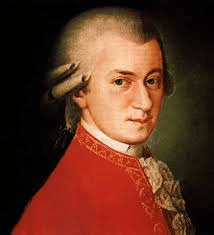
Wolfgang Amadeus Mozart (Austria 1756 – 1791) began composing at the age of five. Requiem, his last composition, has been the subject of speculation and scandal, and is one of art’s famous unfinished works. The magnificent opening movement is Introitus.
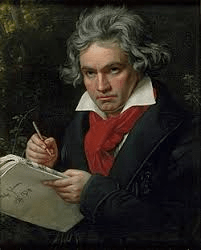
From Mozart’s last work, to that of Ludwig van Beethoven’s (Germany 1770 – 1827). Mahler was certainly influenced by Beethoven, and this movement reminds me of Mahler’s Adagietto from the 5th Symphony … but that is for next week.
Please Note: All photos are taken from Google Images or free photo sites, and are used for educational purposes only. No copyright infringement or offense is intended. If I have used your photo or image, and you wish me to remove it, just ask. This site is not monetized, I run it on my own dollar. Thank you.
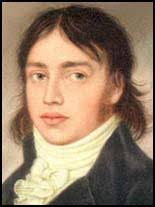
Samuel Taylor Coleridge awoke from a dream with the words of Kubla Khan flowing, demanding to be transcribed and he immediately collected his ink and paper, no less his thoughts, which were racing through those ancient, mythical, mysterious lands.
His hand, desperate to record those indescribably, wondrous images, not knowing where they would lead him, his mind, knowing he mustn’t a moment waste, compelled him to write, write, write …
And then the wretched Man from Purlock.
A matter of pressing business, must be attended to, forthwith. Coleridge tried to dissuade him, entreating him to return at a later time, but requests and pleas wouldn’t move this persistent Man from Purlock. He decreed that Pleasure Domes, stately or otherwise, could wait, they would still be there after satisfactory conclusion of matter at hand, which must be gone into with the greatest care.
Still The Poet attempted swift conclusion of conversation, but unlike the distorted, other-world time of the vision, the minutes now dragged heavy-weighted, Xanadu receding, shapes blurring, demands to be left in peace to regain the inspiration holding no truck with this intractable Man from Purlock.
And when finally The Poet could return to his desk and thoughts, try as he might, no further impression was vouchsafed him. The poem remained unfinished.
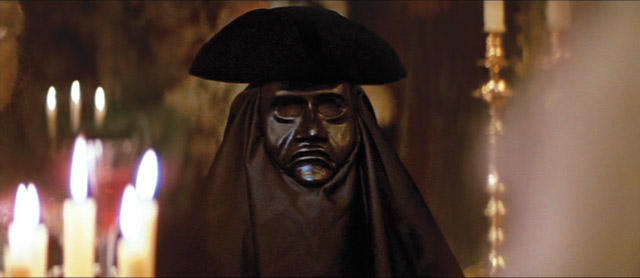
From the film ‘Amadeus’ by Milos Foreman 1984
Wolfgang Amadeus Mozart increasingly felt unable to trust a soul. His genius which had promised so much, had proved to be a curse, a Faustian pact that was rapidly drawing to its inevitable, diabolical finale.
He had hoped the spirituality of his music would elevate him and his audience. Instead he was rooted amongst worldly pettiness, of insidious jealousy and bitter hatred. Far from reaching the Parthenon of the gods, he would sink as surely as his Don Giovanni.
There was no doubt that there was a conspiracy against him. Would he meet his end by swift blade, or slow poison, left to die like a dog.
Just as he was obsessing over such thoughts, he was startled by a heavy pounding of his door. Opening, he was confronted by a tall, dark, masked man who held out the commission.
Mozart was to write a Requiem.
Not only would he die, they would humiliate him, make him know exactly what fate had in store. And in such a fitting way, make him compose music for his own death.
For there was no question. Death had paid him a visit and Mozart knew it wouldn’t be long before they were to meet again.
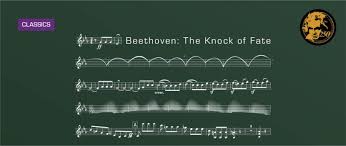
Ludwig van Beethoven, it is said, was starting work on his fifth symphony, when his landlady knocked on his door, one, two three, four, which gave him the immortal opening that heralded the piece and which, many years later, was broadcast over occupied Europe, four notes that proclaimed that the Allies were on their way, the darkness was over.

 Thay Paul's Notes