Recently, I finished an anthology of Modern Chinese short stories namely ‘The Picador Book of Contemporary Chinese Fiction.’
The collection, first published in 1998, is one of the best I’ve ever read; all stories are worth reading and many are excellent.
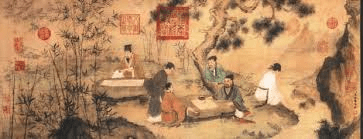
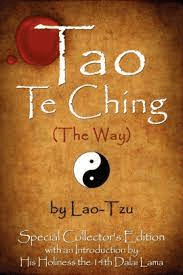
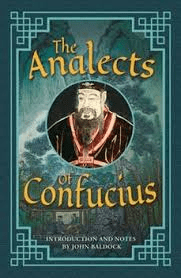
My experience of Chinese Literature has been mainly limited to the Classics: Confucius, Lao Tzu and poetry from various dynasties, so this is a great introduction to contemporary fiction.
A 2004 collection by China’s first Noble Laurate
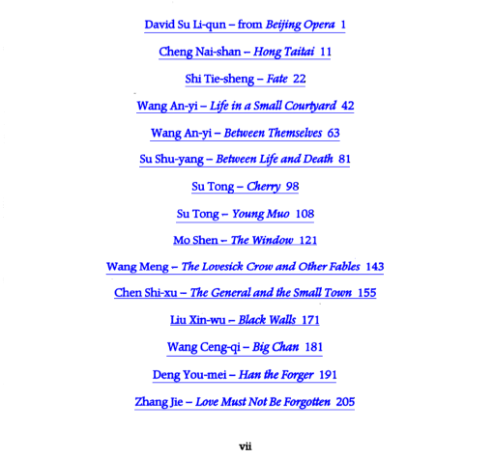
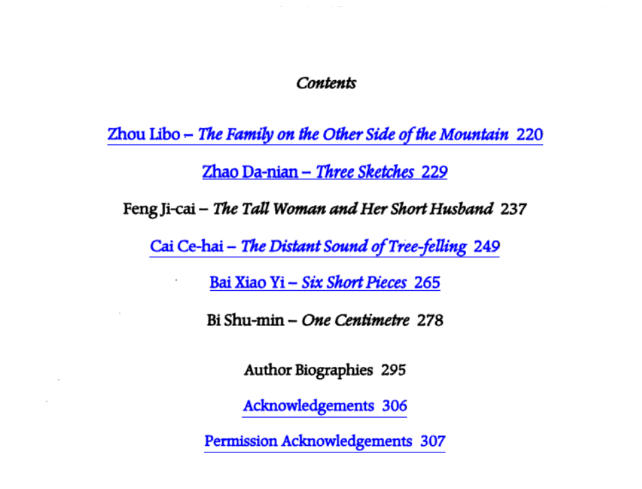
The Picador anthology has the following contents:
Western readers may be aware of Su Tong as he wrote ‘Raise the Red Lantern’, which was filmed by Zhang Yi-mou in 1991.
If you can find a copy I hope you enjoy it as much as I did.
The tip of the tip of the iceberg; a handful of books that I would like to read over the next year or so. All depends on time, energy and availability. Be that as it may, here’s a short selection:
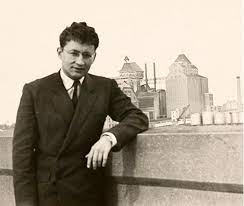
Guy Debord (1931 – 1994, France)
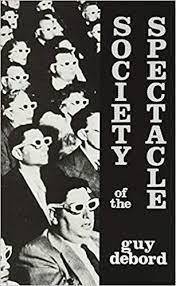
First up, the French artist and philosopher Debord who was part of the Situationist International (a group of intellectuals and artists) from the late 1950s to the early 1970s. His most famous work is from 1967, ‘Society of the Spectacle’ which analyses aspects of post-war society from a Marxist viewpoint (of course, the book is much more complex than that, but I want to keep this blog short and concise).
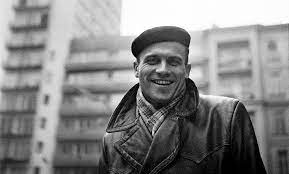
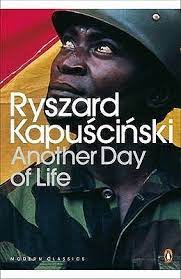
Ryszard Kapuściński (1932 – 2007, Poland)
A poet and journalist, Kapuściński was considered for a Noble Prize. ‘Another day of Life’ from 1976 is an account of the civil war in Angola.
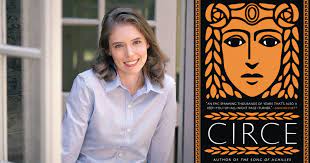
Madeline Miller (Born 1978, USA)
I read the Classics at University, and still love the myths of Ancient Greece and Rome. ‘Circe’ from 2018, is regarded in some circles as one of the best books of the 2010 – 2020 decade, and has been described as a feminist retelling of Homer’s ‘Odyssey’.
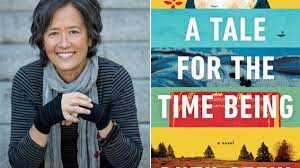
Ruth Ozeki (Born 1956, USA)
I read about this book while searching for Post-Post-Modern fiction (i.e. who are the present-day equivalents of David Foster Wallace, Dave Eggers et al). This novel sounds extremely interesting, telling the story of a teenage girl in Japan who keeps a diary which is eventually found by a Japanese-American writer in the USA, washed ashore in the aftermath of a tsunami.
Oswald Spengler (1880 – 1936, Germany)
I did start this massive two-volume history of the world (published in 1918 & 1922) many years ago back in London, a short loan from the local library but wasn’t able to finish it in time. Maybe this is one for retirement; a comfy chair, some tea and no screaming students. Sounds like Paradise.
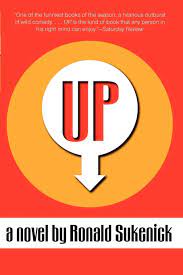
Ronald Sukenick (1932 – 2004, USA)
An author of whom I’ve only recently become aware, Sukenick began writing in the late 1960s, mixing cultural theory, fiction and metafiction. One review states that his writing was Post-Modernist before the term had been invented. ‘Up’, published in 1968 challenges or even rejects conventional fiction writing. If you like Kurt Vonnegut, Joseph Heller & Vladimir Nabokov, this could be for you.
Being able to use complex sentences, effortlessly, is vital in attaining a respectable IELTS score. With that in mind, this blog is to help students practise.
Quite simply, give more information about your subject.
To form a complex sentence, we simply need to combine two pieces of information in one sentence, linked by a relative pronoun.
As with all grammar exercises, it makes far more sense to show than tell:
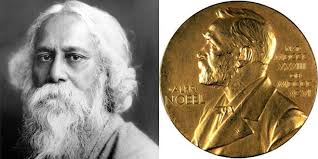
This is Rabindranath Tagore. He was a poet. He was born in Kolkata, India. He won the Noble Prize for literature in 1913.
So, we have several pieces of information. Let’s start by making a long but simple sentence:
Rabindranath Tagore won the Noble Prize for literature in 1913.
As you see, we start with the subject (Rabindranath Tagore) therefore we don’t need the pronoun ‘he’ in this new sentence.
To make this sentence complex, we just add a further piece of information about the subject, by using a relative pronoun:
who = for a person // which for a thing // where = for a place // whose = possession
The name is clearly not English, so let’s talk about his background:
Rabindranath Tagore, who was born in Kolkata, won the Noble Prize for literature in 1913.
Rabindranath Tagore won the Noble Prize for literature in 1913 is our main clause (clause being part of a sentence containing a subject and a verb).
who was born in Kolkata gives extra information but it makes no sense on its own. Therefore, it needs the main sentence to give it meaning. In grammar, this is known as a subordinate clause.
Now – we could develop this further:
Rabindranath Tagore, who was born in Kolkata which is in India, won the Noble Prize for literature in 1913.
The first subject was Rabindranath Tagore, so we used ‘who’ to give more information.
The second subject was the city, Kolkata ‘which’ is in India.
Yes, confusion ! Kolkata is a place so why use ‘which’ and not ‘where’ ?
Good question; it depends on the clause:
Kolkata which is inIndia
India is not a person, therefore we treat it as a thing and use ‘which’. Again, show don’t tell:
London, where I was born, is the capital of the UK. [object is ‘I’, a person, so we use ‘where‘.]
London, which is the capital of the UK, is where I was born. [object is ‘capital’, not a person, so we use ‘which‘]
Let’s get back to our Indian poet. The third subject is the Noble Prize … you could add more information here (awarded every year in Sweden).
Naturally, one could write endlessly, constantly adding more information about subjects but, for this exercise, just focus on a main clause and a subordinate clause.
NOW … Your turn
Subject (comma) + relative pronoun + (comma) main clause starting with a verb:
Rabindranath Tagore, who was born in Kolkata, won the Noble Prize for literature in 1913.
Make complex sentences:
Stockholm. Capital city of Sweden. Is very expensive. Is very cold in winter.
Louise Glück. Born in 1943. Born in New York, USA. Won Noble Prize for Literature in 2020. She is a poet.
Starbucks is a coffee chain. Company founded in 1971. Company started in Seattle in north-west USA. Starbucks is the world’s largest coffeehouse chain (information from Wikipedia).
Seattle is in USA. Seattle is famous for Grunge music. Many bands such as Nirvana, Pearl Jam and Soundgarden came from Seattle.
Mozart. A famous composer. Born in Austria. Died in 1791. Buried in a common grave.
Vincom Centre. In District 1 by Hotel Continental. Largest shopping mall in Sai Gon. Has many international brands such as Hugo Boss and Ralph Lauren.
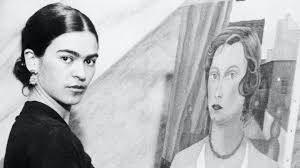
Frida Kahlo was an artist. She was born in Mexico. She was born in 1907. She painted many portraits and self-portraits.
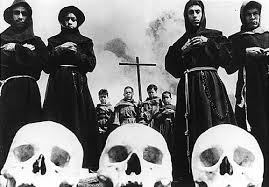
Sergei Eisenstein is a famous film director. He was born in Latvia (then part of Russia). In 1930 he began a film in Mexico. It is about the Day of the Dead festival. This festival is every year at the beginning of November.
Louise Glück – Noble Prize winner 2020NirvanaFrida KahloDay of the Dead, Mexico. Film by Sergei Eisenstein.





 Thay Paul's Notes