We use present simple [verb 0 or base verb] to talk about things that we do all the time, to talk about things that do not change often in our life.
EXAMPLE:
I live in London / I study English / I work in a hospital / I am a student /
You eat vegetarian food, you don’t eat meat / He plays football /
She plays tennis / We go to the beach on holiday
The present continuous is for things we are doing NOW
EXAMPLE:
I live in London [present simple] = I am living in London
We form the present continuous by:
Subject + verb ‘to be’ + verbing
I am eating // You are drinking // He is watching // She is studying // It is working//
Ms Quyen is laughing // We are dancing //
They are playing.
NOW … your turn
Change present simple into present continuous
1. I swim 2. You buy pizza 3. He plays tennis
4. She learns science 5. We talk quietly
6. They visit Wales
Answers:
I am swimming // You are buying pizza //
He is playing tennis // She is learning science //
We are talking quietly // They are visiting wales.
Renoir ‘Luncheon of the Boating Party’ 1881
Time to use English ! Look at the painting and tell me what you see … use present continuous and amazing adjectives.
EXAMPLE: The tall, strong man with a yellow hat is standing by the gate.
What are these people doing ?
Please Note: All photos are taken from Google Images or free photo sites, and are used for educational purposes only. No copyright infringement or offense is intended. If I have used your photo or image, and you wish me to remove it, just ask. This site is not monetized, I run it on my own dollar. Thank you.
I begin by eliciting class rules then a good old STB, replacing ‘bus’ with ‘taxi’. What do they know about UK ?
This leads to …
Try the birthday horseshoe game: here, one part of the room represents January, the opposite, December. The students must stand in a horse-shoe shape, according to when their birthday falls.
This leads to …
A run & write activity. I write incorrect sentences on the board. Split class into teams), and one member must rewrite the sentence correctly:
What are your name ?
I eats fruit
How old is you ?
What is your hobbies
He like swim
What you do think
There isn’t a chocolate
Why is your friend
Today’s theme is Free Time. The warm-ups should review previous lessons and
This lead to …
Word Bomb – Hobbies – what do they do in their free time ?
Listen out for mistakes, encourage full sentences and drill collocations
(Play sports / do homework / make models / go swimming)
Students can mime an activity, and drill full collocation:
play piano play table tennis listen to music read a book go swimming
Then use the Mingle – interview sheet. This will get the class up and active before break time, and after sitting through book work and listening exercises. The exercise can also encourage students to introduce themselves:
Find 3 people who:
Name
Hobby
Play an instrument
Draw or paint
Read books
Watch films
Learn English
Have a pet What pet ?
Pronunciation – phonemes
ɑ ɔː əʊ
Point to the correct phoneme
In teams, read out:
model disco show on door go walk
Players must identify the correct phoneme
Pre-teaching: Match the words with the meanings
describe planned, in order, not a mess
imagine having to do too many things
typical feeling you have too much work
pressure normal, usual
organised to tell what something looks or like
community to think about something
stressed the place or area where you live
Please Note: All photos are taken from Google Images or free photo sites, and are used for educational purposes only. No copyright infringement or offense is intended. If I have used your photo or image, and you wish me to remove it, just ask. This site is not monetized, I run it on my own dollar. Thank you.
Our plan for the next semester is to develop speaking skills – presentation and delivery – as well as, naturally, increasing vocabulary, colocations, phrases, idioms … in short, the whole nine yards.
New idioms
I don’t want to overburden the class with too many idioms, so these are what we’ll be using over this semester. That means using them repeatedly until they become second nature and the students, of whom I am very fond, will have another string to their bow … oh, heck – ANOTHER idiom !
Another string to (your) bow – a new skill or learning experience
bear with me – please wait a very short time (usually spoken as opposed to written)
bit of a sore point – something that makes you sad or angry
down in the dumps – depressed, unhappy, feeling gloomy
hit the ground running – to start something immediately and with all your energy
like a madhouse – a place or area that is crazy, too noisy, too busy etc
run of the mill – ordinary, typical, normal, usual, boring
up in arms – to be very angry about something, to protest strongly
you take your life in your hands – doing something that is extremely dangerous
NOW … your turn … what idioms fits ?
At breaktimes, all the younglings come pouring out of their classes, screaming their little heads off …
it’s ___________________________________
Students are unhappy about tuition fees
They are _____________
She can speak five languages, do karate and is now learning violin
She has added __________________________
She thought the novel would be extremely exciting.
Unfortunately, for her, it’s just a ___________________ story.
Some areas of downtown are no-go areas.
You really _________________________________________ if you go after dark and alone.
Poor Buster is so funny, yet he always looks _______________________
Oh, dear …
This beautiful young lady seems to be upset about something.
Possibly something the man said is a ______________________ with her ?
We’re going to have a tremendous success with our new product which we shall be launching in Europe, the US and parts of Asia.
We’re really going to ________________________________
Excuse me, I have to take this call _______________________
Part two:
How would you describe these neighbourhoods ? I want full sentences, as complex as you can make them, bursting with idioms, expressions and Low-Frequency Words. Give your opinions – would you like to go there, or even live there ? Explain your rationale.
Manchester, north-west England
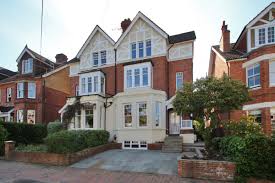
Tunbridge Wells, south of London
Birmingham in the British Midlands
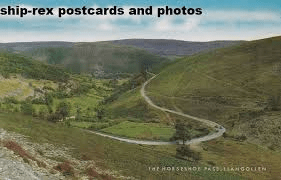
Rural Wales
Edinburgh, capital of Scotland, during the festival
Part three:
Practice making complex sentences, with two clauses at least, from these simple sentences.
Example:
Johnny always went to the cinema when he was a child.
As a child, Johnny always went to the cinema.
GRAMMAR NOTE – the first word after the supporting clause has to be the subject.
We always played games when we had Mr Tony as our teacher.
He speaks English well although his written work is rather poor.
The Who were formed in west London in the early 1960s. They are a very famous, influential bands despite never having a Number 1 hit single.
My neighbour only works in a convenience store. She thinks she is a big star. She is constantly taking selfies.
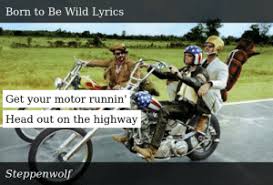
And … to end, let’s start copying some classic movie scenes:




















 Thay Paul's Notes