Our plan for the next semester is to develop speaking skills – presentation and delivery – as well as, naturally, increasing vocabulary, colocations, phrases, idioms … in short, the whole nine yards.
New idioms
I don’t want to overburden the class with too many idioms, so these are what we’ll be using over this semester. That means using them repeatedly until they become second nature and the students, of whom I am very fond, will have another string to their bow … oh, heck – ANOTHER idiom !
Another string to (your) bow – a new skill or learning experience
bear with me – please wait a very short time (usually spoken as opposed to written)
bit of a sore point – something that makes you sad or angry
down in the dumps – depressed, unhappy, feeling gloomy
hit the ground running – to start something immediately and with all your energy
like a madhouse – a place or area that is crazy, too noisy, too busy etc
run of the mill – ordinary, typical, normal, usual, boring
up in arms – to be very angry about something, to protest strongly
you take your life in your hands – doing something that is extremely dangerous
NOW … your turn … what idioms fits ?
At breaktimes, all the younglings come pouring out of their classes, screaming their little heads off …
it’s ___________________________________
Students are unhappy about tuition fees
They are _____________
She can speak five languages, do karate and is now learning violin
She has added __________________________
She thought the novel would be extremely exciting.
Unfortunately, for her, it’s just a ___________________ story.
Some areas of downtown are no-go areas.
You really _________________________________________ if you go after dark and alone.
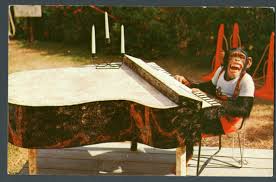
Poor Buster is so funny, yet he always looks _______________________
Oh, dear …
This beautiful young lady seems to be upset about something.
Possibly something the man said is a ______________________ with her ?
We’re going to have a tremendous success with our new product which we shall be launching in Europe, the US and parts of Asia.
We’re really going to ________________________________
Excuse me, I have to take this call _______________________
Part two:
How would you describe these neighbourhoods ? I want full sentences, as complex as you can make them, bursting with idioms, expressions and Low-Frequency Words. Give your opinions – would you like to go there, or even live there ? Explain your rationale.
Manchester, north-west England
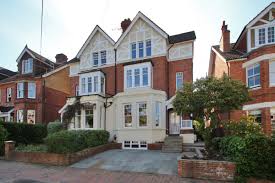
Tunbridge Wells, south of London
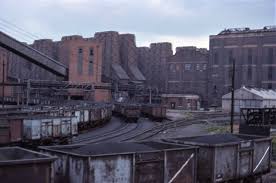
Birmingham in the British Midlands
Rural Wales
Edinburgh, capital of Scotland, during the festival
Part three:
Practice making complex sentences, with two clauses at least, from these simple sentences.
Example:
Johnny always went to the cinema when he was a child.
As a child, Johnny always went to the cinema.
GRAMMAR NOTE – the first word after the supporting clause has to be the subject.
We always played games when we had Mr Tony as our teacher.
He speaks English well although his written work is rather poor.
The Who were formed in west London in the early 1960s. They are a very famous, influential bands despite never having a Number 1 hit single.
My neighbour only works in a convenience store. She thinks she is a big star. She is constantly taking selfies.
And … to end, let’s start copying some classic movie scenes:
This town (town) is coming like a ghost town All the clubs have been closed down This place (town) is coming like a ghost town Bands won’t play no more Too much fighting on the dance floor
Do you remember the good old days before the ghost town? We danced and sang, and the music played in a de boomtown
This town (town) is coming like a ghost town Why must the youth fight against themselves? Government leaving the youth on the shelf This place (town) is coming like a ghost town No job to be found in this country Can’t go on no more The people getting angry
This town is coming like a ghost town This town is coming like a ghost town This town is coming like a ghost town This town is coming like a ghost town
Songwriters: Jerry Dammers
Exercise 3: What do you know about The Specials. Here’s some facts. Arrange them in the form of an IELTS-standard paragraph.
The Specials were formed in Coventry, in the British Midlands.
Formed in 1977. They had two main singers, Terry Hall and Neville Staple.
Their music is a mix of punk and reggae.
They had a number 1 song in 1980.
‘Ghost Town’ was also a number 1. It was released in 1981. This song is about the recession in the UK. Many people had no work, no money and no hope.
The Specials broke up (disbanded) in 1984 but later reformed. They still perform together.
Next blog will focus on pronunciation. To my classroom students, be prepared for a lot more speaking and practising so, yes ! You DO have to say it again … and again …
Sometimes students arrive at class after a long day, bereft of energy and motivation. In such situations, it’s best to hit the ground running, get them talking and ready for a lesson. This needs to be done before they pull out their mobiles and start concentrating on their cyberlife … after which time, they are lost to reality.
Therefore, before they can hit that ‘Post’ button, pair them up and make them ask each other various questions, demanding that the answers be as complex as possible, incorporating big words (‘Low-Frequency Words’), discourse markers and relative pronouns, along with appropriate expressions.
Example: Where would you most like to visit ?
Bad answer: Nowhere. Bad answer: New York.
Better answer:
Introduce your answer THEN state the location THEN explain why.
Ah, that’s an interesting question because I really need a holiday. However travelling now is not a good idea because of the COVID 19 which is an extremely serious pandemic. So, I have to think about after, when it is safe to go on holiday.
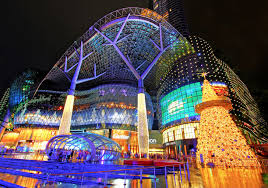
I have always wanted to visit Singapore, because it looks so clean and modern and, not forgetting, so many shopping malls. I love shopping, it is my passion. I would buy so many things such as clothes, makeup and presents for my family.
IELTS students should be able to add a number of idiomatic language to really spice up their presentation. I would expect to hear:
cost(s) an arm and a leg / prices (can be \ are) sky high / mouth-watering / world famous / ubiquitous / pristine / that’s a bit of a sore point (because we CAN’T travel) / such a wide array / shop till (I \ you) drop / overwhelming / spoilt for choice / retail therapy
Remember … there are some affordable shopping areas in Singapore although they tend to be away from the city centre but well worth a visit.
NOW … your turn
Questionnaire / Discussion
What kind of music do you like ? (do you play or listen ?)
Can you name any plays by Shakespeare ? (if not what writer do you like ?)
What time do you usually get up ? (weekdays and weekends)
How do you relax ? (do you have time or do you study, have family, work overtime ?)
Can you play a musical instrument ? (would you like to ? Why ?)
What skill(s) would you like to acquire ? (be creative here – what stops you learning ?)
What is the best thing about Sai Gon ? (or YOUR city)
However, this is not a one-way street. The person asking is expected to make small talk, to elicit – to encourage – the speaker to open up and expand on their answers.
Use small talk phrases such as:
Really ? That’s interesting // Tell me more // Why do you say that ? // Oh, me too // What do (did) you like best // Where is that (exactly) ? // I’ve heard about that // I haven’t heard about that, can you explain // Why do you say that ? // Oh, I get it // I’m not sure I follow.
And if your partner is stonewalling you (not talking), here’s a great idiom:
Fjord in Norway, north EuropeShopping mall in SingaporeDisneyland, USASt Petersburg, Russia
Name
Which site do you want to visit most
Why ?
What is the weather like there (use adverbs)
What can you do there ?
What could be a problem ?
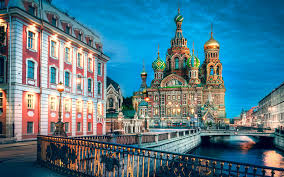
I would like to visit all the sites. However, if I have to choose one, I will visit St Petersburg in Russia.
St Petersburg is a very beautiful city, with many amazing buildings. The city is very famous, and I have read about it in many books.
I think the weather is quite hot in summer, and also it stays very light, even at night. However, it can be extremely cold in winter.
St Petersburg has so many museums and galleries. I want to see all of them. Also it would be fun to walk around and take many photos.
I don’t speak Russian so that could be a problem if people can’t speak English. Also, it may be extremely cold, so I will need a lot of thick clothes. Finally, I will need to buy some Russian money.
A major problem for students is pronunciation and also, in some classes, it can be rather tricky to get the students talking. Obviously, many learners are scared of mispronouncing and ‘losing face’ by their mistake.
This activity helps with both issues.
Arrange the class in small groups and hand each member an card. The students have to read out the information, while the other write down what they hear. Many of my students feel that work is something to be done as quickly as possible, but that will not work in this situation.
Instead, the other team members will need to check what is being said. This encourages slow, clear and careful pronunciation. To assist, use expressions such as:
Can you speak slower, please.
Would you mind speaking slower, please.
How do you spell that ?
Could you repeat that, please.
Sorry, I didn’t catch the phone number.
Let me confirm …
Is that ‘b’ as in blue or ‘p’ as in pink ?
Teachers: adapt to suit the level of your class. Add email address, specific requests etc
NB: all images are taken from Google searches, (including ‘royalty-free images’) and the information is purely fictitious. As I have readers from around the world, I wish to reflect this diversity in the photos.
These blogs are for education use, and are not monetised. No copyright infringement or personal offense is intended at all.
If I have included your image, please accept my sincere apologies, and I shall remove the picture.
IELTS Mindset 1.Speaking lesson U2 – Places and buildings
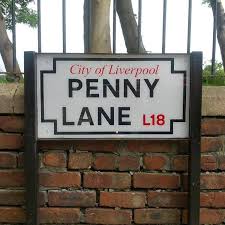
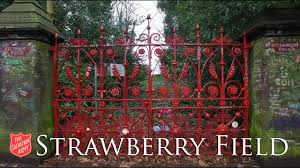
English language, British culture – let’s kick off with two iconic parts of Liverpool, immortalised by The Beatles:
In case you are unaware of these classic songs, here’s ‘Penny Lane’, a song from 1967 which, amazingly, only reached Number 2 in the pop charts: https://www.youtube.com/watch?v=S-rB0pHI9fU
How much can you understand ?
A typical, run of the mill IELTS question will be about your hometown or about your neighbourhood.
First, some new vocabulary. I will expect you to learn these:
gritty / industrial
quite / safe / residential
boring / peaceful / suburban
bustling / vibrant / city centre
apparently – something you believe to be true
conversely – the opposite, on the other hand, however
actually – saying something that is surprising or is the truth
New idioms
bear with me – please wait a very short time
bit of a sore point – something that makes you sad or angry
like a madhouse – a place or area that is crazy, too noisy, too busy etc
run of the mill – ordinary, typical, unusual, boring
you take your life in your hands – doing something that is extremely dangerous
NOW … your turn
Tell me about your neighbourhood
Remember, give me a great introduction, have a positive point, a negative point and a short conclusion.
Use some of the new vocabulary
An apartment block in the Cat Lai area of Sai Gon. Artist’s impression.
The reality of living in Cat Lai, one of the busiest ports in south east Asia
Well, that question is a bit of a sore point with me because I live in a terribly noisy gritty industrial area. My apartment is near the Cat Lai port which is one of the busiest in Vietnam. Consequently, we have containers driving past, day and night which, as you can imagine, creates so much pollution.
However, allow me to talk about the good points. Firstly, it is significantly cheaper than, say, District 1 or 3, as it is quite far to the centre. The shops, also, tend to be on the cheap side. Additionally we have some street markets where I can pick up some very cheap food and fresh fish. We are well-served with several convenience stores although, in my opinion, Family Mart charges an arm and a leg.
Conversely, my friends avoid visiting me because it is so dangerous to ride a motorbike here, we really take our lives in our hands every time we go out. Furthermore, I love fresh air so I open my windows, yet I have to dust and clean every day because so much dirt comes in. Finally, we have open-air karaoke nearly every night and street wedding parties most weekends which means loud and terrible singing. It’s like a madhouse, I really detest this horrible noise.
I am lucky with my neighbours, and the apartment is really spacious. Having said that, the area is so bad that as soon as possible, I will leave and find somewhere cleaner and safer.
Objectives: review recent vocabulary, encourage more student-to-student talking, develop sentence building skills, practice the third person form with ‘he’ & ‘she.’
It’s early Sunday morning, so time to wake with Mr James Brown. Younglings … how do you feel ?
Tell me about these people. He is or she is …
She is ……….He is ……
He is very …..
She is very ….
The top cats are able to form basic sentences such as:
I can run however I can’t fly
New vocabulary included the five sense
s _ _ // h – – – // s – – – – // t – – – – // t o – – – //
Warm Up: What can he or she do ?
Ask your partner what he or she can do
What can you do ? What can’t you do ?
Here, my wonderful TA will ask me, then tell the class, in order to model how to answer
Ask Thay Paul – what can you do ?
I can play guitar however I can’t play piano
Tell the class:
He can play guitar however he can’t play piano
Next – using the new vocabulary in a sentence form. What can he or she do and what can’t they do ?
Example:
She can see a butterfly however she can’t hear a butterfly.
She can touch a butterfly however she can’t taste a butterfly.
She can __________ a pizza however she can’t __________ a pizza
He can ________ a guitar __________________________














































 Thay Paul's Notes