15th May 2022
Really appreciated.

15th May 2022
Really appreciated.

13th May 2022

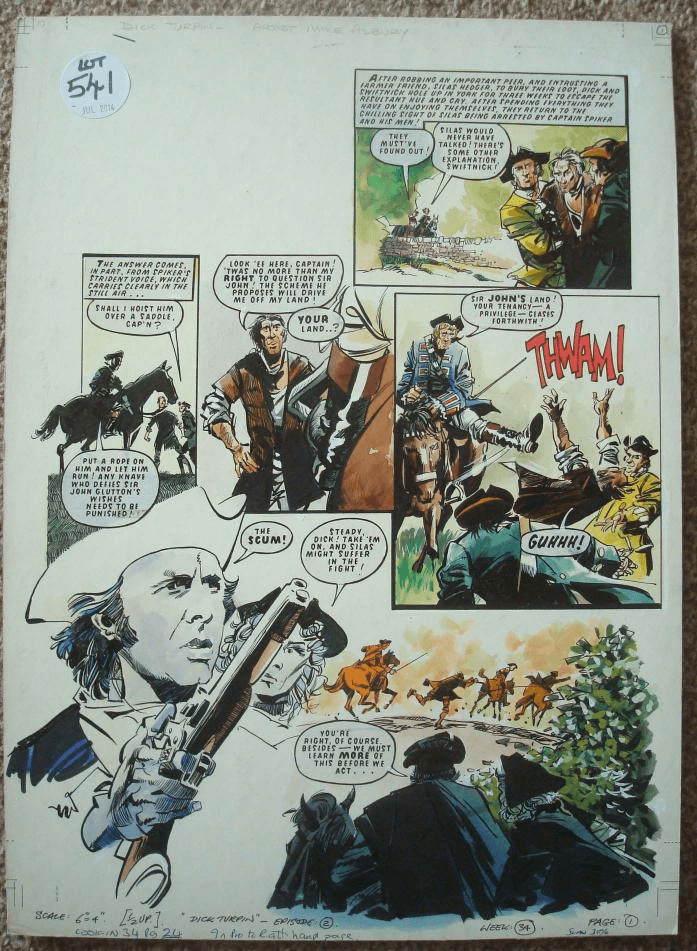
You have read about three famous people from British history.
Question 1: Who are they ?


Here is a short video about Robin Hood.
Watch it twice, the second time write down any words you don’t know. I want at least five words.
Question 2: Returning to our three famous people, who was real, who was based on a real ruler and who is maybe only a legend?
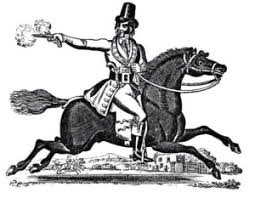
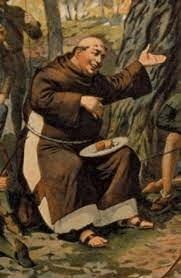
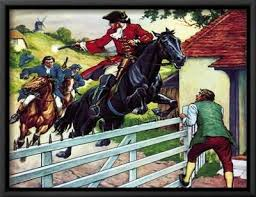
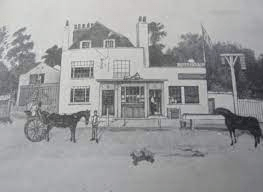
Question 3: Match the pictures with the legends. EXAMPLE:

Sir Lancelot is part of the King Arthur legend.
Now … Your turn


Picture 1 is Friar Tuck
Picture 2 is Black Bess


Picture 3 is the sword Excalibur
Picture 4 is Maid Marion

Picture 5 is the Green Man Pub in London
Picture 6 is Sherwood Forest, Nottingham

Picture 7 is Camelot Castle

Creative Time – which character do you like most ? Which one would YOU like to be ? Alternately, tell me about someone from YOUR country’s history.
Write a short story, and feel free to draw and colour. You may make a comic book, if you like. If you can’t draw, no problem, just write.

Vocabulary bank:
brave / cheerful / cruel / dangerous / disrespectful / greedy / honest / intelligent / legendary / loyal / punish / ruler / ubiquitous /
extremely / amazingly / unbelievably
I wish I could be … // In my dream, I would be …

Answers
1 – King Arthur / Robin Hood / Dick Turpin
2 – King Arthur was based on a ruler but probably a Duke, not a King. Dick Turpin was real, while we are still not sure if Robin Hood was real.
3 – Robin Hood / Dick Turpin / King Arthur / Robin Hood / Dick Turpin / Robin Hood
Please Note: All photos are taken from Google Images or free photo sites, and are used for educational purposes only. No copyright infringement or offense is intended. If I have used your photo or image, and you wish me to remove it, just ask. This site is not monetized, I run it on my own dollar. Thank you.
12th May 2022

An activity that combines listening & reading, collecting information, and allows for creative thinking, not to mention introducing students to different cultures and legends.


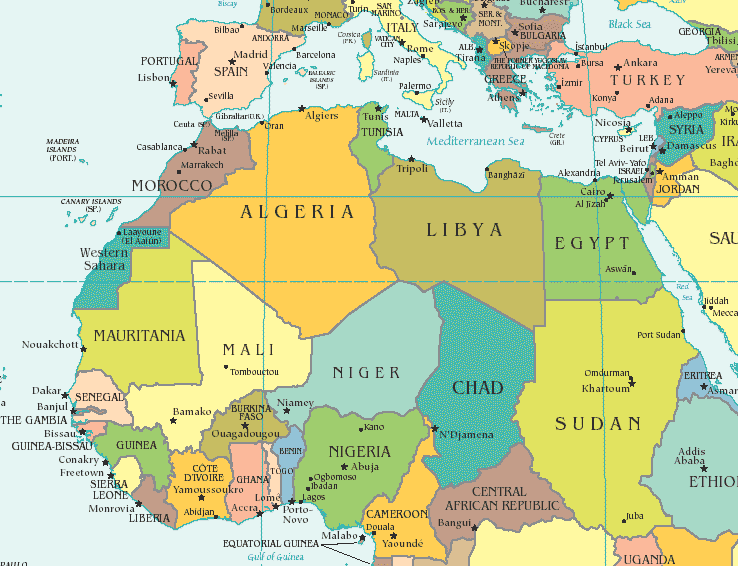
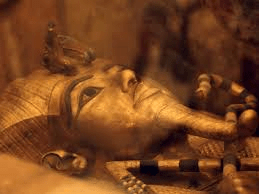
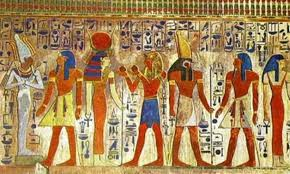
Today we are going to learn about some of the ancient Egyptian gods. First, where is Egypt ? In which continent is Egypt ?

Egypt is in the north – east of Africa.
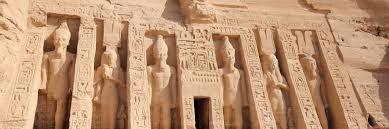
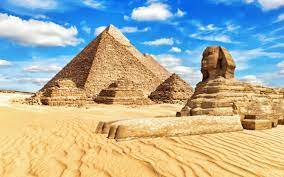
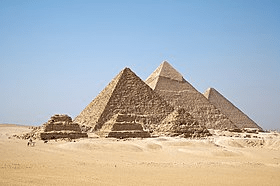
What ancient buildings can you see in Egypt ?
The Pyramids, the largest one was built about 2,500 BC (about 4,500 years ago), and at 481 feet (146.6 metres) was the tallest building for 3,800 years (NOTE 1).
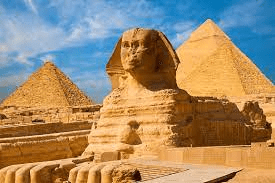
The creature in front is called the Sphinx. What kind of animal is the Sphinx ?

The Sphinx has the face of a woman, the body of a lion and the wings of a bird (maybe a falcon or eagle).
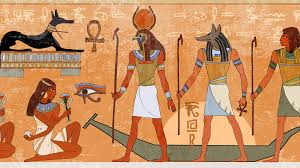
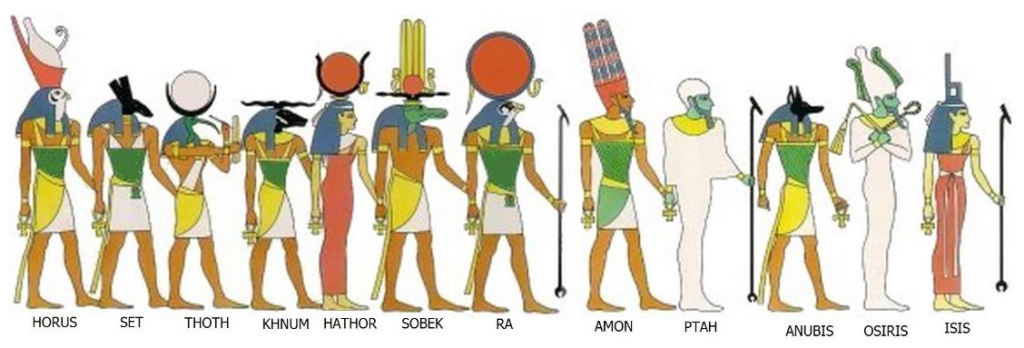
Ancient Egypt was thousands of years ago, from 3150 BC (BCE) to 332 BC (BCE). Animals were very important.
What animals can you see in this picture ?

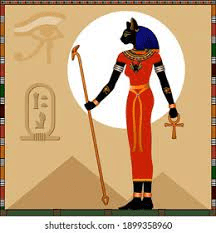
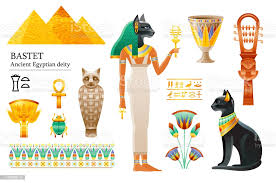
We are going to focus on four Gods:
Thoth // Bastet // Ra // Anubis
Vocabulary
Pyramids

Sphinx

Tomb


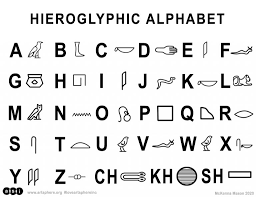
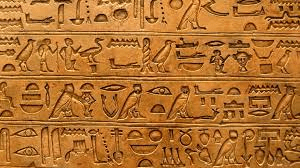
Hieroglyphs


Let’s return to our two gods
Thoth and Bastet
Watch this video, and write down information about the gods.
What animals do they look like ?
What can they do ?
What animal was Bastet ?


Bastet was a cat, and cats were very important in Ancient Egypt. Can you think why ? What do cats like to chase and eat ? Check your answers:
Now … be creative. Invent a God from your country. First, think what animals you have, then what they can do. Don’t forget to tell me why.
Use crayons, colour pencils. If you can’t draw, it’s OK; just write me a magnificent story. Don’t forget to use the amazing adjectives you have been taught.
Would you like some music to help you while you work ?

Note 1: The first buildings to be taller were cathedrals, in England. St Paul’s was in London, then the cathedral in Lincoln became the tallest building in the world.
Note 2: The British Council ‘LearnEnglishKids’ page has some excellent resources and free print-outs.
Please Note: All photos are taken from Google Images or free photo sites, and are used for educational purposes only. No copyright infringement or offense is intended. If I have used your photo or image, and you wish me to remove it, just ask. This site is not monetized, I run it on my own dollar. Thank you.
10th May 2022

Last week I held an IELTS Speaking Test. Only one student hit 7.5 although, in fairness, I was probably on the generous side in awarding the student such an admirable score.

Or, to be precise, learn from their mistakes.
I can break them down into three main areas:
coherence
vocabulary
complex sentences
Kicking off with coherence; it doesn’t matter how fluent you are, unless you answer the question, you will loose marks.
The test allows us to assess your understanding of both question and task. An example: one question was
What is the most popular activity in your country ?
ASIDE: I’ve told students until I’m blue in the face, never repeat, “In (my) country,” but since when do teenage students ever actually listen ?
The question asks for ONE activity; several students talked about two or three. This is not answering the question.
Anyone who’s studied at University will know how imperative it is to follow instructions.
COMIC RELIEF: One student, from a previous test, replied that the most common activity, “In my country,” was brushing teeth, and that foreigners do this every day, but Vietnamese only do this once or twice a week. Said student had to continue for two minutes. Needless to say, there were no flying colours.
More disturbing was the lack of IELTS vocabulary. You have been told time and again what that means, and I can’t keep hitting my head against a brick wall.
And so to work … get out your notebooks (those that actually bother bringing notebooks to class), look up previous lessons and write down:
TEN L-FWs
FIVE less common idioms
FIVE everyday expressions
TEN phrasal verbs
TEN basic collocations
I have taught you these ad infinitum. If you are struggling with this exercise, you will probably only get a 5 for the Lexical Recourses section.
Lastly, the old chestnut, complex sentences.

I had nine students, each with about ten minutes of speaking time. How many complex sentences do you think I heard ?


EXERCISES: Use at least two L-FWs, one idiom and other IELTS elements
(and if you think it’s funny to ask what I mean, after all this time, by ‘IELTS elements’, just get up and leave the class).
Speak for one minute about:
one of your cousins // your favourite gift // sports // your best memory from childhood // best films // problems in your city // typical local food.
Part Two: Critical Thinking
“Oh, teacher, I’m tired and feel lazy.”

Work in teams. Watch the following short clip about the ancient Greek king, Sisyphus:
Characters from Greek and Roman mythology permeate western culture, and references and allusions are ubiquitous.
You may watch the video again, writing down new words. There is a lot of background (in which you may encounter a character from ‘The Avengers’ movies), but the main feature starts around the 4:00 mark.
Your task is to relate this story to modern life. Choose a person you know, or something from your own experience. You may even project your thoughts about the future, once you have left education and joined the workforce.
To assist you, some pertinent L-FWs and idioms:
futile (adj) futility (noun) / absurd / pointless / meaningless / contemptable / repetitive / a metaphor
a total waste of time / flogging a dead horse
sick to the back teeth / day in, day out
cannot make a silk purse out of a sow’s ear
talking until (pronoun) blue in the face / the grind
putting an old head on young shoulders
Look up the meanings yourself. Your teacher won’t be with you to give you the answers in life. Think for yourself.

Please Note: All photos are taken from Google Images or free photo sites, and are used for educational purposes only. No copyright infringement or offense is intended. If I have used your photo or image, and you wish me to remove it, just ask. This site is not monetized, I run it on my own dollar. Thank you.
5th May 2022
A selection of photos found on web searches. No copyright infringement is intended.


Please Note: All photos are taken from Google Images or free photo sites, and are used for educational purposes only. No copyright infringement or offense is intended. If I have used your photo or image, and you wish me to remove it, just ask. This site is not monetized, I run it on my own dollar. Thank you.
5th May 2022

agent nouns
The suffix –ist is used to create an agent noun — a noun that denotes someone or something that does something. Two suffixes more commonly used to create agent nouns are –er and –or, as in worker, bookseller, beginner, visitor, creator, and accelerator.
amelioration
The development of a more favorable meaning for a word. Take, for example, quell. In current usage, banks move to “quell inflation.” Governments issue proclamations to “quell fears”.
In Old English poetry, on the other hand, when a warrior “quelled” his opponent, he killed him.
Semantic amelioration is not as common as semantic deterioration, in which a formerly inoffensive word acquires a negative meaning.
anarthrous
As a grammatical term, it means, “used without the article.”
From ‘Daily Writing Tips’
When commenting on the opening sentence of Dan Brown’s The DaVinci Code, Geoffrey Pullum called it an “anarthrous occupational nominal premodifier.”
Renowned curator Jacques Saunière staggered through the vaulted archway of the museum’s Grand Gallery.
Pullum said that the construction is “reasonable” in a newspaper, but has the “wrong feel and style for a novel.” Had Brown written, “The renowned curator Jacques Sauniére,” the sentence would have escaped criticism.
Commas with appositives
An appositive is a noun or noun element that follows another noun and serves to identify it further. The nouns are said to be “in apposition.”
An appositive phrase usually follows the word it explains or identifies, but it may also precede it.
The term derives from a Latin compound meaning, “to set beside or near.” Nouns in apposition are set beside one another. When one of the nouns simply restates the other one, commas are needed to set it off.
Andrew Johnson, the seventeenth US president, ranks among the three worst presidents of the United States.
The phrase “the seventeenth US president” is just another way of saying “Andrew Johnson.” It provides additional information, but leaving it out would not change the meaning of the sentence. The additional information is non-essential, so it is set off with commas.
Take another example:
My English teacher says that Fitzgerald’s novel The Great Gatsby is overrated.
Here, The Great Gatsby is in apposition to novel. Because Fitzgerald wrote more than one novel, the specific title is essential information. It cannot be omitted without obscuring the meaning of the sentence. The teacher does not necessarily think that the author’s other novels are overrated. No commas are needed when the additional information is essential.
In the following sentence the nouns in apposition restate the nouns that precede them. Because the information they provide is non-essential, commas are needed to set them off:
As a team, we send our thoughts and deepest sympathies to Peter’s wife, Jill, and his children, Mark and Hilary.
False Titles
A common type of apposition found principally in journalistic writing is the “false title.” This is a descriptive phrase placed before a noun, but used as if it were a title.
Novelist John le Carré has set himself up as the psycho-analyst of the cold war.—Time
Cellist Joshua Gordon, in the slow movement, showed off his rich, lyrical tone. Buffalo News
This construction is known as “a Time-style adjective” because it’s thought that Time magazine either began the practice or popularized it.
diaeresis
From Wikipedia, the free encyclopedia
The diaeresis diacritic indicates that two adjoining letters that would normally form a digraph and be pronounced as one sound, are instead to be read as separate vowels in two syllables. For example, in the spelling ‘coöperate’, the diaeresis reminds the reader that the word has four syllables co-op-er-ate, not three, ‘*coop-er-ate’. In British English this usage has been considered obsolete for many years, and in US English, although it persisted for longer, it is now considered archaic as well. However, we still see it in words such as naïve.
From Wikipedia, the free encyclopedia
An endonym (from Greek: éndon, ‘inner’ + ónoma, ‘name’; also known as autonym) is a common, internal name for a geographical place, group of people, individual person, language or dialect, meaning that it is used inside that particular place, group, or linguistic community in question; it is their self-designated name for themselves, their homeland, or their language.
For instance, Deutschland is the endonym for the country that is also known by the exonym Germany in English and Allemagne in France
An exonym (from Greek: éxō, ‘outer’ + ónoma, ‘name’; also known as xenonym) is a common, external name for a geographical place, group of people, individual person, language or dialect, meaning that it is used only outside that particular place, group, or linguistic community.[1] Exonyms exist not only for historico-geographical reasons, but also in consideration of difficulties when pronouncing foreign words.[1]
The Premier League, also known exonymously as the English Premier League or the EPL is the top level of the English football league system.

Please Note: All photos are taken from Google Images or free photo sites, and are used for educational purposes only. No copyright infringement or offense is intended. If I have used your photo or image, and you wish me to remove it, just ask. This site is not monetized, I run it on my own dollar. Thank you.
4th May 2022

Let’s kick off with an adjective review. What adjectives have you been taught recently ? I’ll give you a clue with the first letter:
f (means to be cheeky, a little impolite but in a funny way)
u (not usual, someone acting unlike their normal self)
p (very relevant, of interest at this time)
This is a test to see who has been making notes in class, and who has been coasting.

The answers are facetious, uncharacteristically & pertinent. For those that didn’t know, you now have to use them in a sentence. It may be one complex sentence, which would really impress me, or three basic sentences. What are you waiting for ?

Now some vocabulary building:
computer literacy (noun) computer literate (adjective)
flexible / flexibility / flexi-hours
to adapt / adaptability / prospects / standard of living
networking / future skills / essential workplace skills
prosaic [cf with ‘run of the mill’]
cf is Latin for ‘compare’
e.g. is Latin meaning ‘for example’
i.e. is Latin for ‘that is’.
Now … let’s go to work !

Complete the sentences:
If you learn English you will increase your job ____________
Nowadays, most young people are _____________ _________________ . They are able to use programs such as Word, ___________ & ________
When selecting a university, you may have to be ______________ in case you don’t get into your first choice.
Getting a great, well-paying job is essential if you want a high ________________________ .
One student moved to Boston where the temperature can drop to below freezing. He’s really having ________ to the new culture.
My actor friend is busy 24/7, attending parties, setting up meeting, pitching ideas and Tweeting. That guy is constantly ______________ .

Class Game
Split class into two teams.
One team selects an idiom and the other team has to use it, correctly of course, in a sentence.
EXAMPLE:

I would love this guitar, a left-handed Rickenbacker which is a famous American company with a very distinctive look and sound yet, to my dismay, it costs ______________________
Idioms from Semester 2
Another string to (your) bow – a new skill or learning experience
bear with me – please wait a very short time (usually spoken as opposed to written)
bit of a sore point – something that makes you sad or angry
down in the dumps – depressed, unhappy, feeling gloomy
hit the ground running – to start something immediately and with all your energy
like a madhouse – a place or area that is crazy, too noisy, too busy etc
run of the mill – ordinary, typical, normal, usual, boring
up in arms – to be very angry about something, to protest strongly
you take your life in your hands – doing something that is extremely dangerous
Idioms from Semester 1
Which you should all know by heart and be able to reel off at the drop of a hat.
it’s raining cats and dogs
it costs an arm and a leg
piece of cake
I’m burning the candle at both ends
once in a blue moon
pass with flying colours
Remember these old chestnuts ?
without further ado // tricks up your sleeve // ace the test
pass with flying colours // do yourself proud //
you are in the driver seat (or you are in the driving seat) //
occur // inevitably // pertinent
For those who really want to expand their horizons, an extensive collection of idioms, expressions and collocations can be found on this blog: https://thaypaulsnotes.com/2020/08/25/adult-speaking-class-level-3-ielts-english-expressions/
Please Note: All photos are taken from Google Images or free photo sites, and are used for educational purposes only. No copyright infringement or offense is intended. If I have used your photo or image, and you wish me to remove it, just ask. This site is not monetized, I run it on my own dollar. Thank you.
1st May 2022
Here’s a sneak preview of our forthcoming piece, the ‘Berlin Suite’, which will feature keyboards, electronics and experimental sounds, a departure from our previous material.
The suite is an audio representation of this unique and iconic city. The music will feature orchestral effects, reflecting the classical aspect of Berlin, as well as some techno-inspired dance tracks for which Berlin is famous.
The following piece was composed with the Kaiser-Wilhelm-Gedächtniskirche in mind, a church that was partly destroyed in World War II and today is kept as a memorial against war.
Both Niall and I would be very grateful if you could ‘Like’, share and Subscribe as it really helps with the channel. Thank you so much.
23rd April 2022


My Princess requested some extra help with reading and gleaning information from text. Therefore, I prepared this little exercise about a Truly unique musical icon, David Bowie.
The following text is taken from this website: https://www.biography.com/musician/david-bowie
David Bowie was born David Robert Jones in Brixton, South London, England, on January 8, 1947. Bowie’s first hit was the song ‘Space Oddity’ in 1969. The original pop chameleon, Bowie became a fantastical sci-fi character for his breakout Ziggy Stardust album. He later co-wrote ‘Fame’ with Carlos Alomar and John Lennon, which became his first American No. 1 single in 1975. An accomplished actor, Bowie starred in The Man Who Fell to Earth in 1976. He was inducted into the Rock and Roll Hall of Fame in 1996. Shortly after releasing his final album, ‘Black Star’, Bowie died from cancer on January 10, 2016.


Questions
1. When was David Bowie born ?
2. What was his first hit ?
3. What was the name of his breakout album (LP) ?
4. With whom did he co-write ‘Fame’ ?
5. What film did he star in ?
6. When was he inducted into the Rock ‘n’ Roll Hall of Fame ?
7. When did David pass away ?
8. What was his last LP ?

Now … IELTS language
Your turn to be a chameleon. Change this run of the mill passage into a piece of text worthy of an IELTS student.
Today, David Bowie’s music is (everywhere) (but) this wasn’t always the case. When he was (beginning phrasal verb) he was not successful, and he felt (sad – use an idiom). People only heard his music on the radio (rarely – use an idiom). However, by (not giving up) he finally archived fame.
He worked incredibly hard (idiom) and played concerts across the USA. He (idiom) by acting in a big movie in 1976. Unfortunately, the Rock ‘n’ Roll lifestyle was (bad) to his health, so he decided to (idiom), stop his bad habits, and move to Berlin, Germany.
Today, Bowie memorabilia can (idiom); for example, a lock of his hair sells for over £12, 000. That is out of this world !

Please Note: All photos are taken from Google Images or free photo sites, and are used for educational purposes only. No copyright infringement or offense is intended. If I have used your photo or image, and you wish me to remove it, just ask. This site is not monetized, I run it on my own dollar. Thank you.
22nd April 2022

Juliette Greco, actress and singer, suffered a traumatic childhood. Her mother withheld maternal love, claiming that Juliette was conceived without the mother’s consent. The mother, along with Juliette’s sister, were arrested by the Gestapo in World War II, and sent to Ravensbrück concentration camp. After liberation, the mother left Europe for Indochina, leaving Juliette in the care of her former French teacher.
In the immediate post-war years, Juliette frequented the bohemian areas of Paris, meeting such luminaries as Albert Camus & Jean-Paul Sartre, Jean Cocteau and Boris Vian, among others.
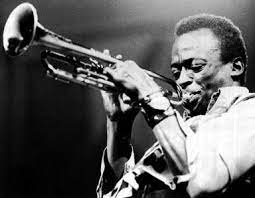
Paris hosted an International Jazz Festival in May 1949, and it was there that Juliette first saw American Jazz trumpeter Miles Davis.

Miles, coming from an affluent African-American family, began playing trumpet at the age of nine. In 1944 he was accepted at the prestigious Institute of Musical Arts (now called Juilliard) but dropped out in order to devote his time to playing, and he got a gig playing with Jazz legend Charlie ‘Bird’ Parker.

In 1949, as part of the Tadd Dameron Quintet, Miles travelled to Paris. He was spellbound by the freedom and respect he encountered, the lack of racial prejudice. Then he met Juliette Greco, and fell totally, head over heels in love.
My close friend and band mate Niall has written a song about this doomed affair, and it has just been uploaded to YouTube:
https://www.youtube.com/watch?v=98AIDUMN_Sc&t=29s&ab_channel=ButterflyDecal
Our style of music could be defined as ‘Post-Rock’ meaning it deviates from a conventional song. Instead, Niall has written a short story which he narrates, and enlivens the track with Jazz music, sound effects and sound bites.
I hope you can find time to listen to the piece and, if so moved, ‘Like’ and ‘Subscribe’. This really helps new channels, so thank you in advance.


Please Note: All photos are taken from Google Images or free photo sites, and are used for educational purposes only. No copyright infringement or offense is intended. If I have used your photo or image, and you wish me to remove it, just ask. This site is not monetized, I run it on my own dollar. Thank you.