A week is a long time in politics … and evidently also in teaching.

Last week I was so impressed by my teenage class. This week, I want to quit, or do anything to find a replacement teacher.

Obviously, I won’t be naming and shaming, but the general pattern should be familiar to teaching of these wonderfully polite, respectful and hard-working students (yes, an example of irony).

The lessons are three hours (which is far too long, in my opinion). The teacher has a set book and must teach the assigned pages, but there is still time for activities, games, warm-ups, anything to break the boredom of sitting and ploughing through seemingly endless, seemingly pointless text.

This class has twenty students, most are willing to participate, but some are committed to seeing out the entire three-hour lesson without saying a word and some will speak… but not in English, just Vietnamese, and theirs is not the most euphonious of tongues. I find it akin to a dozen drunken cats having a fight in a karaoke bar … only worse.

As it was Christmas, I had more activities planned, and wanted to reduce the book work, to focus more on producing English speaking. The first game was a B2B – I’d prepared a number of slides and one student had to sit with her back to the board and ask questions while the other students offer clues; they are not allowed to sat exactly what they see. For example, if they see a cat playing piano, the could say, “An animal like a dog, a pet making music, but not a guitar.

Well, one of the smart-asses just began saying exactly what she saw. It was clear the game was dead in the water, so I moved onto book work.

One exercise was putting life stages in order; same student just shouted out the first thing on the list. Once someone starts destroying the plan, others join in, the pack mentality, the need to express their rebellion. The misnomer that Vietnamese respect teachers is greatly over-stated. As mentioned in other posts, they relish the chance to express their pathetic teenage angst. They will refuse to work, talk over the teacher and break every class rule as a challenge … and there is nothing they want more than to argue with the teacher.

Ultimately, it’s their parent’s money they’re wasting, but, as an old-hand informed me, they know they’ll get some (basically worthless) certificate that says they attended a class – after all, this is a business and got to keep the customer satisfied.

As expected, the rot spread. One student, not graced with fair of face, began eating in class, ostentatiously masticating while trying to out-stare me. Other students just stared at me when I tried to elicit a basic answer.

It was really a case of running down the clock

I’ve taught teenagers at several schools. It a mixed class, naturally, but I feel no hesitation using words like ‘obnoxious’, ‘disrespectful,’ and ‘futile.’

Let’s see if i can do some horse-trading – agree to another class IF I can drop this one. I no longer care about helping this motley collection. Frankly, my dear, I don’t give a damn.

As a Christmas coda, or miracle if you will, I have subsequently been informed that I will not have to ‘teach’ this mob again – tiding of comfort and joy.

Teenage Class Level 3

Sunday 16th December

I really wasn’t looking forward to this: teaching teenagers, on a hot, weekend afternoon can be a nightmare, and the class size had mushroomed from 13 to 20 students. If it was like the Sunday class at another office, or one’s I’d endured at other centres, I’d have to reconsider my future with this company, or even in this profession.

Instead, they turned out be little darlings; motivated, responsive, polite and reasonably quiet. To paraphrase Eagles, teaching teens, “Can be Heaven, can be Hell!”

The early-comers were treated to the ‘Don’t say, “I’m fine,”‘ patter (see a previous post under teaching notes), and they actually warned each other to comply so students, even late-comers, answered with, “I’m good / great / OK.”

I told them I’d introduce them to a new idiom each week. We kicked off with:

hold your horses – meaning be patient, wait, don’t start yet.

First game was just a warm-up; what did they know about London ? This was in the form of a quiz, two teams shouting out the answers to such questions as the British currency, traditional British food, the Queen’s eldest son (Charles, not William), the name of the famous clock in London, what did 007 mean ? etc.

This centre really tries to promote students speaking (in English) as much as possible, so the first group work was plan a day for a friend of mine in HCM City – what would the friend need ?

We elicited a place to stay, food to eat, things to buy, places to visit, nightlife and how to get around.

This lead into showing a video of top attractions in London, for interest but also to boost vocabulary and expose the students to different accents.

The link is here:https://www.youtube.com/watch?v=L0r0VTos_wU&t=20s

I asked the students to listen out for all the adjectives and to notice how they are used, as well as the pronunciation and intonation. For example, we had, “beautiful Queen’s House,” “dazzling Crown Jewels,” “amazing city views,” etc. There was also a lot of new vocabulary and expressions (to keep something at bay). I then asked then to choose which attractions appealed to them (which ones they were interested in, wanted to visit). Finally, we learnt about the Prime Meridian 0 degrees that passes through London.

After the book work, we did activities guessing the personalities and occupations of five of my friends (see next post for photos). The students look at five of my friends and have to deduce (give me an idea) of what my friends are like – inside, not physically. Then they must guess what jobs they do.

I also encouraged forming long sentences using opinion expressions (in my opinion / I feel that / I think / for me … etc)

A great start to the session … let’s hope it continues … watch this space !

Adult Class Level 1, Lessons 1 & 2. Portrait, Landscape, Still Life

19th December 2018

The theme of the first class was portrait galleries – what can be seen there, what a portrait was and what other types of painting / photographs there are.

For review, and as a warm-up exercise, I asked the students what types these paintings were:

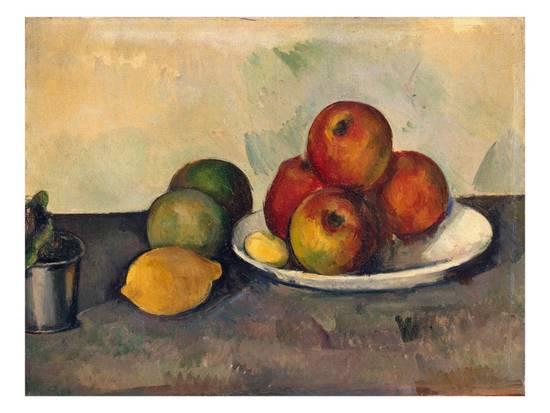
One is a portrait, one a landscape, the last is called a still life.

Still means not moving – for example, if a policeman shouts, “Stand still !” it means do NOT move. So a still life is a painting of objects (usually fruit or flowers).

What do YOU think of these paintings ? There is no ‘right’ answer – just think about them and give your opinion using expressions:

In my opinion ….. For me ….. I think ….. I feel …….

This is a nice class, about 14 students, evenly split between ladies and men. They are motivated and enthusiastic, which makes the teacher’s job much easier (and then some).

Today I introduced some British history; a young lady sneezed and I said, “Bless you.” The reason we say this goes back to the plague.

People who got this disease would die in five days. One sign that a person was getting the plague was sneezing so when a person sneezed, their friends and family would say, “Bless you,” meaning God protect you.

Today, if someone sneezes, we say, “Bless you,” the reply is then, “Thank you,” and the first person then says, “You’re welcome.”

Football was also a subject as tonight’s theme was ‘A Night To Remember’, and many people will remember last Saturday. Vietnam beat Malaysia and won the AFF Championship. The score was 1 – 0 (one – nil)

Other words tonight were bonus (something extra e.g. a Christmas bonus meaning extra money) and present (a gift at birthdays or Christmas / Tet).

Tonight’s pronunciation included telling the time: It’s nine o’clock = it’s ninea clock. Then the date … today is the 19th so we practised the ‘th’ sound.

For music, we listened to Led Zepplin ‘Whole Lotta Love’ (in standard English ‘A whole lot of love’)

https://www.youtube.com/watch?v=HQmmM_qwG4k

The first part of the lesson was book work – a lot of listening (which most students find very difficult), so the second part was totally students producing, practising grammar (past simple) and then asking each other questions, moving around the room, trying to speak to new people.

This helps with speaking and listening skills, as well as the grammar.

Many thanks for my students for helping me with my Tieng Viet, and sorry for continuing to mispronounce their names …. rat xin loi !

Don’t say, “I’m fine.”

I use this as a warmer / ice-breaker with most of my new classes. On, the board, I’ll write:

Do NOT say, “I’m fine.”

The first students arrives and I ask how they are …

“I’m fine,” is, invariably, the response. I point to the board and try to elicit alternative answers.

This is repeated with all new students, and becomes integrated into the lesson. Late-comers (there are always late-comers in Vietnam) are greeted with the same question, and look perplexed when the whole class laughs at them for saying, what they believed to be, the ONLY possible answer.

It seems that from Kindergarten class, Vietnamese students are drilled with:

“How are you ?” “I’m fine.” Maybe an, “I’m fine, thank you,” and it’s left at that.

English is such a rich language which, admittedly, can be daunting for learners – so many ways to say the same thing.

I explain that native-speakers don’t really use “I’m fine.” It’s meaningless and conveys no emotion. If anything, it’s used sarcastically, in fights between partners:

“I’m not going to help you, do it yourself !”

“OK, fine !”

From this point we can start suggesting other responses … and intonations.

“I’m good,” “I’m great,” “I’m over the Moon.”

This leads to how we use so much intonation to express meaning in English.

A less positive reply could be “I’m so-so,” or “I’m OK.” Even there, “I’m OK,” get’s it’s meaning from how it’s pronounced … it can mean good or just so-so depended on paralinguistics (body language, tone of voice, expression).

Then we come to not feeling so great.

“I’m terrible,” “I feel lousy,” “I’m a little under the weather,” (idiom)

So, we have an ice-breaking session and mini lesson featuring pronunciation, intonation, vocabulary and use of idiom. That is rather more than fine.

Terrible Teens – Bad Day at Black Rock

2nd December 

I’ve taught at some of the biggest private centres, and smaller modest schools, at university and public schools. I’ve taught pre-Kindergarten classes, pre-teens, late-teens, business people, professionals, children from modest background, children from privileged backgrounds, gifted students and those with clear learning disabilities. 

I’m happy to take on any challenge and attempt a Pygmalion-style transformation. I’m happy to turn screaming, crying nippers (young children) into model students who can speak the Queen’s English at the drop of a hat (that one takes a bit of time). But I’m not happy when I see I have a teen class … and this was one of the worst.

On the plus side, I was just substituting, so this was a one-off. I wouldn’t have to see any of these students again (they no doubt feel the same about me, but this is MY blog, so I don’t care what THEY feel).

This was similar to other horrendous teen classes; the students don’t want to be there, don’t want to learn and don’t want anyone else to learn. What they do want is to shout, scream, sleep, fight, eat, sleep (again) and show how rebellious and disrespectful they can be, the pack-mentality just reinforcing this behaviour. And there’s always someone who shouts out, “Boring !”.

Actually, it wasn’t as bad as it could have been; one teacher at this centre told me he was once sworn at by a student. That teacher refused to continue the class and walked out.

What I noticed here was a total lack of interest from half the students, while the others were demonstrating how they wouldn’t listen to any instruction e.g. to keep eating when they were told not to, to continue talking, fighting, sleeping on their desks. And it was a large class. It resembled a public school class more than a private centre of high-repute.

I’ve been told that students are terrified of both their Vietnamese teachers, and of their parents. Physical punishment is still used at school and in the home. Being bad at school will not only bring a beating but also bring shame and disgrace. When students have a foreign teacher, it’s a chance to ‘fight back’. Teachers represent authority, and here’s a chance to be a ‘normal’ teen, to be arrogant, rude and obnoxious. Some of them take that chance.

Some methods for dealing with the terrible teens include what I term the ‘Full Metal Jacket’. This involves punishing the whole class for one person’s actions. For example, if student A says, “Boring,” again, you all get extra homework. Hopefully this peer pressure works.

A more productive way is to negotiate with them. If they do the assigned work, they can play games or do activities of their choice. 

Sometimes a teacher just has to pick their battles. No way can I outshout even one student (the Viet, bless their hearts, are not the quietest people on the planet), let alone twenty-five. Ultimately, we are here to help but if they refuse help there is no point wasting time or energy. Instead, identify the students who do want to learn, gather them together and teach them. Do not let the trouble-makers spoil it for the real students.

To end on a high note, this class is an anomaly. Other teachers have commented on how bad it is, how unteachable the students are. I’ve recently taught two other classes of teens and they have been darlings … but that is for another post.

Young learners (ages 4 – 6)

9thDecember

First class with a new post-KG (Kindergarten) class. 21 students and a new, young TA. There was going to be a lot of class management and, as a teacher-friend formerly  said, ‘crowd control’.

I used some illustrations to show basic class rules and the procedure (one black mark for breaking the rules, two black marks and the name is in the book) if they transgress.

Almost immediately, three boys were on the board; shouting and screaming (usual behaviour for a young class).

In this type of class, we usually introduce some new vocabulary and grammar, then drill it for pronunciation and meaning. The students will practice speaking, listening and more speaking … ideally.

The challenge here is to make warm up games fun and get everyone involved. At least the room was quite large, so I was able to hide some flash cards and ask some students to run and find them. These would be words learnt from a previous lesson(s) so the game also serves as a review. At this age, the students like active games, it gets them excited and prevents boredom from sitting in chairs for long periods.

Naturally, not all students can be involved at the same time, especially in running games, so a good plan is to break the class down into smaller groups (maybe four or five students per group). One member from each group can do an activity while the others will, hopefully, encourage them. I name the groups after English football clubs such as Arsenal, Chelsea, Liverpool, Manchester United and Spurs. Manchester United are having more success in my classroom than in the Premier League.

However, getting the students to speak in English was a bit of a problem. Most of them didn’t seem to understand my instructions, or didn’t want to speak. I’ll need to get the TA involved more, translating and giving instructions in Vietnamese.

Not a great success but realistic for a first lesson. I spent some time one-to-one with the students, checking their work and letting them speak to me, repeating what they had learnt.

In such a large group, there will be mixed abilities, motivation and energy. It’s a good idea to have some work sheets prepared for fast finishers. These include new vocabulary  and word searches; they appear as games, but also have pedagogic value, especially if the students work together and ask each other questions in English.

At the end of the lesson, the students should have learnt new vocabulary, grammar and pronunciation … and how I expect them to behave in class. It can be a slow process, but it works.


Young teens (ages 10 – 12)

Thursday 29thNovember 2018

As with Tuesday, the day began with an 8.30 training session in Quan 1, itself preceded by a 45-minute Grabbike ride (though far too much of said ride was sitting in direct sunlight at every red light). This time, however, I was paired with the very wonderful Ms Melinda (Viet-born but educated in Texas) who’s making her teaching debut tonight, so best of British to her.

This is my first young learners’ class, and I’m expecting them to be 10 – 12 years old … but we will see. The ages were right, and the class had only 13 students. The girls seemed sweet and polite, motivated and friendly. And then the first boy arrived; he looked trouble. A heavy-set, thuggish lad who kept coming into then leaving the room. As the class started, three other boys arrived, causing disruption as they loudly greeted each other with hugs and shouts. Reminded me of a similarly-aged class at another top school with pre-teen boys being hard to control, and here there was no TA; instead, a chance to match theory against practice, hope against experience.

I began by eliciting class rules then a good old STB, replacing ‘bus’ with ‘taxi’. What do they know about UK ? A simplified version of Tuesday’s game.

This lead to …

Try the birthday horseshoe game, IF they know the names of the months in English.

Here, one part of the room represents January, the opposite, December. The students must stand in a horse-shoe shape, according to when their birthday falls.

At this level, give more guidance to where students should stand.

Not a complete success. Students seemed to grasp the idea, then some people standing in the summer area said they were born in December – others told them where to stand, so that shows my instructions had to been clear to most. The problem was getting them to stand next to each other, in date order, as opposed to bunching together in one indeterminate mass. In binary terms, a failure, a flop, not a fiasco, it fell flat (but at least I make up for it with alliteration).

This lead to …

A run & write activity. I write incorrect sentences on the board. Split class into teams (they can name them themselves, assign a colour pen to each team), and one member must rewrite the sentence correctly:

What are your name ?

I eats fruit

How old is you ?

What is your hobbies

He like swim

What you do think

There isn’t a chocolate

Why is your friend

It was around this time that the aforementioned student boy 1 (SB1) hurled a plastic bottle, after several outbursts of shouting, at another student. I put his name in the class diary, which, if repeated, could lead to the school phoning his parents. He latter asked if teachers in England have a cane to whip students (apparently they don’t in VN, they just use their fists). I explained it was illegal. However, I have a pen which writes in the diary which alerts the managers who, in turn, alert the parents. The possibility of that had the desired effect. The pen, again, mightier than the fists of a Viet teacher.

On tactic in deflated the young Alpha-male is to give them a modicum of power. That is one possibility, though I prefer a ‘Taming of the Shrew’ approach, try to tame him. Patience and tolerance, with a threat of repercussion seem to work well.

Today’s theme is Free Time. The warm-ups should review previous lessons and lead into the topic.

This lead to …

Word Bomb – Hobbies – what do they do in their free time ?

Listen out for mistakes and encourage full sentences and drill collocations 

(Play sports / do homework / make models / go swimming– note present continuous).

First signs of my patience cracking. Asking the boys their hobbies, I was getting the usual rubbish such as “I like killing with a pen, I like killing with a knife …,” while some other students began (understandably) chatting among themselves. A quick shout for silence and a reprimand to answer seriously worked its charm … and so I commended them for their new replies. 

Check for time – activities up to 45 mins then book work. 

If time, can have students mime an activity and drill full collocation

play piano      play table tennis     listen to music     read a book          go swimming

The boys all like to join in any activity. Some of the girls are the opposite, two being very, very shy, and one of whom appears to be on the verge of bursting into floods.

BOOK WORK

Start by eliciting as much information from the photos.

Then use the Mingle – interview sheet. This will get the class up and active before break time, and after sitting through book work and listening exercises. 

Can also encourage introducing themselves:

Find 3 people who:

Name                                       1                                       2                                    3

Hobby

Play an instrument


Draw or paint


Read books


Watch films


Learn English


Have a pet
What pet ?


“Hi, I’m Anna. Do you like watching TV ?”

Pronunciation – phonemes

ɑ          ɔː         əʊ

Swat the correct phoneme

In teams, read out:     model        disco      show    on    door      go       walk 

Players must swat the correct phoneme

AFTER BREAK

Reading and work books. Check answers as a class to prevent students sitting doing nothing. Use some form of running dictate game.

Pre-teaching:   Match the words with the meanings

describe                        planned, in order, not a mess

imagine                        having to do too many things

typical                          feeling you have too much work

pressure                      normal, usual

organised                    to tell what something looks or like

community                 to think about something

stressed                       the place or area where you live


Classroom Games.

I’ll be using abbreviations throughout these blogs so for clarity, here’s a short run-down of the most common ones:

Back to Board (B2B). Any activity where a student can’t see what is behind them, but has to guess or deduce from clues by the other students. It could be the name of a famous person, or a small YouTube clip. I often show a funny film and drill students how to describe what they see using the subject – verb – object formula. 

Call My Bluff (CMB). Based on the British TV show, students are put into groups and given a list of higher-level words. Each word has three definitions, two false, one true. The students have to read out the word, maybe varying the pronunciation each time, state the type of word (noun, verb etc) and a definition. The other team has to guess the correct answer. This can be a fun way to introduce new vocabulary.

Family Fortunes (FF). This works well with larger classes. Students are put into small groups and given a board and marker. The teacher then asks for four answers to a general question. The students ‘win’ imaginary money for each answer that matches the teacher’s four. Example: I have been to four places in Viet Nam, not counting HCM City. What are those four places ? Other good questions are my four favourite Vietnamese dishes, four things I like (and dislike) in VN and favourite types of films or music.

Snakes and ladders (SNL). Based on the popular children’s board game, ideally, space permitting, I use the floor of the classroom. With markers (NOT permanent markers, mind you), the students mark out a board, a large square. On some squares there is a red dot meaning go back 2 spaces, or a blue square, go forward 1 or 2 squares. One square is ‘haha’ – the player has to return to their original place. In a big enough room, I use students who begin at opposite corners, and have to complete one circuit to win. I ask questions which any one in the team can answer – or you could ask students individually – and then they roll a die. In a smaller room, I just make the game on the whiteboard. This can be very exciting and it’s a good idea to establish the rules first i.e. is it first past the end square OR exact number to finish. This game can sometimes be too popular and become too boisterous.

Stop the bus (STB).  This is a simple question and answer games, used to warm up or wind down classes. The teacher asks a question, the students shout out the answer, but first have to shout, “Stop the bus !” If they answer without the STB, no points are awarded. The game can be slightly varied, using different nouns e.g. Stop the Taxi, Stop the Grabbike or even, with a lively class, make them get up and sing, “Stop in the name of love.”

Word Battleship (WB). I often use this as a warm-up exercise. On the board draw a 4×4 grid, labeled A – D and 1 – 4. Assign different scores to each square on a separate sheet. Ask sixteen questions (can be general knowledge or a review of recent lessons, grammar, vocabulary). If the student gets the answer right, they can choose a square and you write in the number. I usually have 5 as the lowest, then 10, 20, 50 and one 100-pointer. To engage all students, you could ask them questions individually.

Word cards. I got this from an IELTS website. Make a list of recently – learnt words and expressions. The number and complexity will depend on the level of the class, but at least five or six but no more than ten. Print out and cut into individual word units. Put them in a small container. The students are placed in small groups and given the container with words. Each student has to speak on a basic theme using as many words or cards, as possible, within a set time. They can spread the words in front of them and drop them back into the container once they have been uttered.