Adult Class Level 3 Jan 2019: When life gives you lemons, make lemonade.

8th January 2019

This blog site really saved my bacon last night – allow me to explain …

Those who know me know that, as much I love the idea of technology, I know NOTHING about it. People have to show me how my iPhone works, how to access websites, even basics such as how to turn the computer on in the first place ! Then, when I’m on a piece of equipment … it breaks, crashes, gives up the ghost, malfunctions … dies (just last weekend I broke BOTH the office photocopiers – technicians had to be called).

In Greek mythology, there was a King called Midas who asked for a gift – he wanted to be able to turn everything to gold, just by touching it. I seem to have the ‘anti-Midas touch’ – every piece of hardware I touch breaks.

Last night, in the classroom, I wasn’t able to access the class ebook, nor my Powerpoint presentations (ppt) which I was going to use as warm-ups for the class. Fortunately, this blog page opened and I was able to use the IELTS blog for the class. The theme last night became ‘keep clam and carry on.’

So, in case a similar event occurs, here’s tonight’s Adult Class:

When I looked at the work, my heart sank. The text books are not aimed specifically at Vietnamese students, but for all students, possibly mixed-language classes. Subsequently, some of the themes are of limited interest to my students; consequently my class are going to be less than enthralled. I need to jazz up the lesson !

These classes are arranged in blocks of four, the last part of the last lesson being a spoken exam. Therefore, I will allocate the second part of tonight’s class to speaking activities and, to warm up, I’ll have them speak to each other but in the form of a market research survey. Quite simply, I need a new mobile / cell phone.

However, I don’t know which one to buy ..

It is very confusing – I am confused.

I love Apple but … they can be very expensive

In addition, the reviews have been less than favourable:

So I need to do some research, read some online reviews or do some market research.
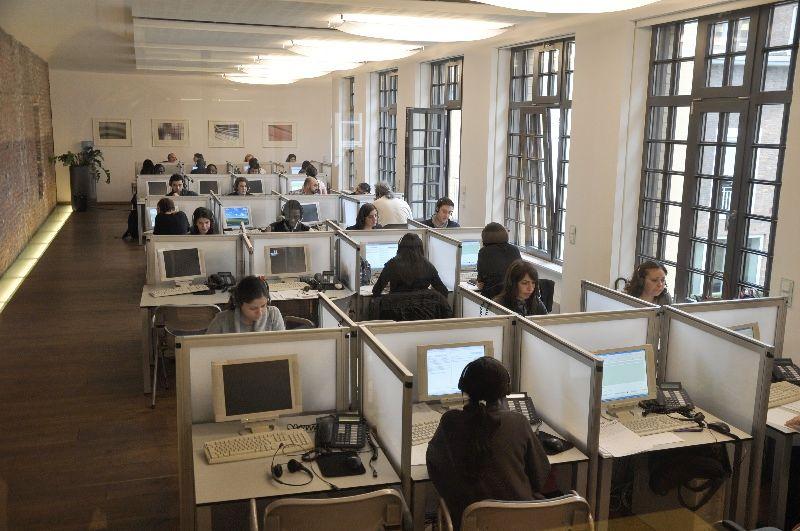

A typical market research office
One of many online review posts.

I need my students to carry out / to conduct a survey for me
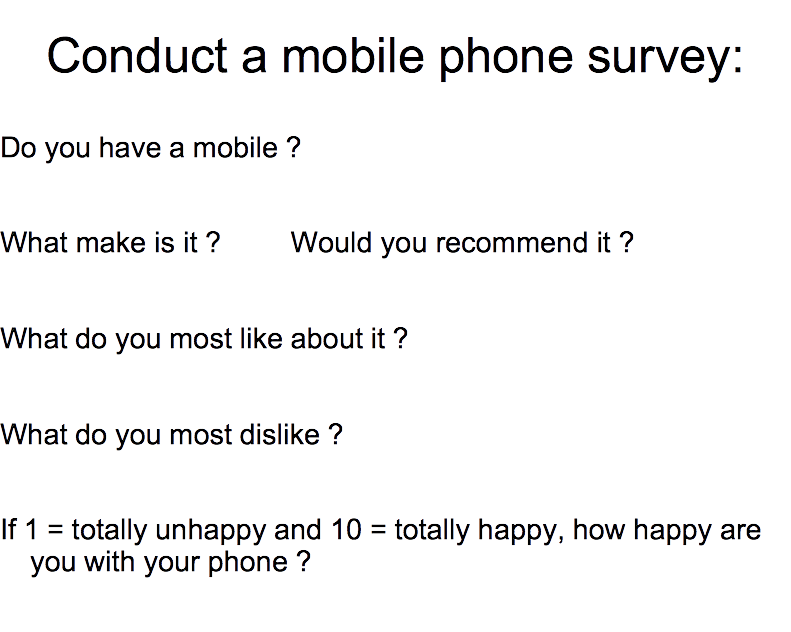

The students will be arranged in small groups. One member will be responsible for gathering the information, then reporting back to me. I shall then collate all the data and display the findings in chart form (which will be beneficial for those who wish to study IELTS later).

After this, I shall do a vocabulary- building exercise – showing some basic words and a ‘better’, higher-level word (a ‘low-frequency’ word as some books term them).

boring mortifing

confusing irritating

embarrassing tedious

exciting bewildering

frustrating exhilarating

Spelling rule:

‘I’ before ‘e’ except after ‘c’

Examples: believe field niece priest achieve

but

receive ceiling receipt deceive

These are exceptions to the rule

This leads into the book work. Many study get confused with the I am / It is structure. For example, some teenagers and university students have wished to proclaim their disapproval of my classes, and have very politely shouted out, “I am boring.” They of course mean to say ‘I am bored’, which causes laughter from those who know the grammar, and a certain satisfaction on my part. Instant karma, baby !

The class will then practise the correct -ed or -ing form of the words, before moving into the reading and listening part of the lesson.

I like to use real-life videos for listening when appropriate. Tonight I’ll show a YouTube clip from Mark Wiens, who is a food enthusiast. In this clip, he tries a typical Vietnamese breakfast, and I want to see how much my class understands. Here, the paralinguistics are important; body language, intonation, word stress

https://www.youtube.com/watch?v=crPVJ3CXs1g

Mark tries what is basically a pretty normal breakfast but he seems to be really enjoying it. Other students have found him very amusing, though feel he was overcharged at 91 000 VND (for two).

After break, I want the students to practise speaking, so I’ve prepared a list of general questions.

Speaking exercise

What did you do on New Year’s Eve ?

What was the last film you saw ? Did you like it ?

How many people live in your house ?

What is hard about learning English ?

How often do you chat online ?

Which social media sites do you use ?

What is your favourite food ?

Do you often eat western food ? Do you sometimes eat fast food ?

What sports do you play ?

What do you feel about shopping ?

What would you most like to buy ?

Do you like living in the city or countryside ?

Have you ever sang karaoke ? 

What country would you like to visit ?

Do any of your family live outside of Vietnam ?

Have you tried Korean or Japanese food ? What did you think ?

This can be arranged in a ‘speed-dating’ format. Students sit facing each other, speak for a few minutes, then move on to the next student. This way, they are able to practise speaking and listening with a variety of people, not just their friends. There is generally some resistance (or even refusal) with adult students to comply, so I encourage them by using non-confrontational words such as ‘suggest‘ or ‘recommend‘. Having said that, last night in my IELTS class I used, “Teacher says ‘stand up’ ” … and half the class actually DID stand up and mingle. Hey – whatever works !

A good game to end is a variation of the British radio show ‘Just a Minute.’ Students are given a subject (for example, HCM City) and must speak for one minute without repetition, hesitation or deviation. This can be done in pairs, and they can time each other on their mobiles. In order to practise for next week’s test, we can discuss what makes a good answer, and how to use discourse markers to link ideas together.

Another ‘trick’ is the use of phrases or words to ‘buy time’ while they think of an answer. This can include:

Let me think ….

How can I put it ?

That’s an interesting question …

Well,

And also repeating, in part, the question but using intonation:

Q: What will you do tonight ?

A: Tonight, I will ….. (go home and study / meet friends)

Then, if time allows, I’ll play the ‘eyewitness’ game. This involves showing some faces (three men followed by five women) for a limited amount of time, then seeing how much they can remember.

Tonight’s objectives will be for students to be able to differentiate between confused / confusing, learn some new vocabulary and be more confident and proficient speaking in longer, more fluent sentences … and to hear how an American ‘foodie’ loves Vietnamese breakfasts.

Please Note: All photos are taken from Google Images or free photo sites, and are used for educational purposes only. No copyright infringement or offense is intended. If I have used your photo or image, and you wish me to remove it, just ask. This site is not monetized, I run it on my own dollar. Thank you.


IELTS 4/5: Speaking Class

7th January 2019

The class will focus on speaking, pronunciation and present simple/continuous grammar. I aim to get the students speaking as much as possible with as many different people as possible. I intend to kick off with a warm-up exercise, something light while late students arrive.

I’ll show some new compound nouns to do with shopping

window

binge

bulk

impulse

dumpster diving

After defining, and demonstrating the pronunciation, I will ask the students to match with the following photos:

Did the lady go out to buy this top or did she decide only when she was in the store ?

And after some binge or impulse shopping, this could be the reaction:

To encourage students to speak, I’ll ask them what they think is happening in the photos, then elicit more and more information. Describe how people look, what they are doing (to link with the present continuous grammar), why they are doing it and how they feel about the types of shopping.

This can be an activity for the whole class to join in, relax the students and let them feel confident to shout out answers. We’ll then turn to working in pairs. I’ll show four slides and ask the pairs to tell me the story:

DISCLAIMER: THIS IS A STOCK PHOTO FROM GOOGLE IMAGES (NOT ONE OF MY STUDENTS !)

I’ll ask two or three pairs, but the basic story is quite straightforward. To make it more relevant to IELTS, we’ll see how we can develop a basic sentence into a more elaborate, interesting one, using adjectives and adverbs.

Many students, when describing a photo, will use pronouns – “She is asleep.” This should be replaced by naming the subject, (a girl) then giving more information (age, clothes, surroundings, appearance etc) and by employing discourse markers to link the ideas into longer, IELTS-friendly sentences.

An example would be: A young girl with long, brown hair is sleeping at her school desk. She appears to be a public school student due to her uniform of white blouse and blue skirt. Furthermore, she sits in an old chair with a thin wooden desk, typical of schools. Additionally, she has a black ribbon in her hair but her face is covered by her arms. It can clearly be seen that other students are also finding it hard to stay awake.

After this activity, we’ll move onto an IELTS-style speaking test. In pairs, preferably new couples, they can act out a Part One test. Here, the examiner will spend four to five minutes asking basic questions of the student, subjects such as where are you from, interests, job, studies, family etc. However, these are just leading questions, there is no interaction.

The examiner will be looking for answers that are relevant, neither too short nor too long, use correct grammar, employ good vocabulary and are given in well-structured sentences.

After this, it’ll be a case of ‘hitting the books‘. Students need to realise that in many cases, a teacher’s hands are tied – we have to teach certain pages or subjects and it can’t always be entertaining or wildly interesting … but we can try. One reason why teaching is so exhausting is that the class depends on the energy radiating from the teacher (who may well feel under par) even when we are confronted by bored faces, unmotivated students, loud yawns, mournful sighs and obsessive, repetitive, pleading looks at the clock … which never seems to move.

To end, I may try a ‘Family Fortunes’ (FF) game or eyewitness. I’ll show two slides of faces, give them two minutes then ask them to describe what they have seen, as if giving a report to the police. It’s interesting to see what students find as important. It can also be fun to use a famous person in the ‘line up’; in Vietnam, I use the singer / TV personality Hari Won.

Hari Won

At the end of the lesson, the students should have learnt: new vocabulary, which words are stressed in normal conversation, should feel comfortable using present simple or continuous … and have spent most of the lesson speaking and listening to each other.

Please Note: All photos are taken from Google Images or free photo sites, and are used for educational purposes only. No copyright infringement or offense is intended. If I have used your photo or image, and you wish me to remove it, just ask. This site is not monetized, I run it on my own dollar. Thank you

Adult Class Level 1, Lesson 3: Things that go bump in the night !

Wednesday 2nd January 2019

A typical cliche commentators use about football is that it is a game of two halves. This means that the second half is totally different to what happened in the first. For example, maybe Real Madrid score two goals and dominate the first half, but after the break, Barcelona score three goals and are in control. It is like watching two different games. This was a lesson of two halves !

Before the class, I was talking to one of the students about smoking. He wants to quit, but all his colleagues are smokers. even if he stops, he will still be breathing their smoke. This is known as passive smoking.

Some activities involve the student producing – either speaking or writing. These are active, while reading and listening are passive. Tonight’s lesson, even though I thought the subject would be interesting, was too passive. At break I knew I had to change, had to turn it around, get them active.

The subject, as the heading may suggest, was about ghosts, hauntings and old spooky buildings in the UK.

As a warm up, I showed the following pictures to see if they knew them. Three were fictional (from a book or film, not real people) but one was a famous or rather infamous historical figure:

‘Nosferatu’ silent German film from 1922. Max Schreck is the actor playing Count Orlok, a vampire


Bela Lugosi as Count Dracula in a 1931 film
Christopher Lee as Dracula

Vlad III or Vlad the Impalor or Vlad Dracula (1431 – 1476). Born in Romania, east Europe.


I also showed some buildings, this time three were real, one was a film-set:

Bran Castle in Romania – the ‘Dracula’ castle
Orava Castle in Slovakia. This was used in the ‘Nosferatu’ film. See how it is carved out of the mountain.
This is the fake haunted house. Notice the tombstones and graveyard, with the eerie mist and fog.


The reading focused on two accounts of haunted houses in the UK, one in Dumfries, Scotland, the other in Cumbria, north England. I showed a map so the students could locate the places, and also showed a clip from a program about ghost-hunting, called ‘Most Haunted’.

https://www.youtube.com/watch?v=H1rzTQWr0M0

And then … the computer crashed !

Spooky ? Eerie ? Mysterious ? A ghost ?

I checked the other classes, and they all had perfect wifi – just my class, watching a ghost video – had a crashed computer.

Despite this appropriate non-scripted event, I could tell the students were getting restless. After the reading, there was listening practice and some grammar. More than one student had the heavy-eye syndrome (i.e. was sleeping) which another, younger, student found somewhat hilarious. Time for action.

After break, I boarded four scenarios. What would you do if:

You invited friends out for a meal … then realised you had no money ?

You found a snake under your bed

Your friend was very drunk but wanted to drive home

You were sleeping then woke up in the middle of the night when you heard a strange sound and strange moaning …. ?

This lead to some good, animated discussions. Solutions were to leave a phone with the restaurant manager (as a deposit) then go home and get the money, taking your friend’s keys, phoning a taxi for him or punching him ! A young lady said that any snake found in her room would end up in a cooking pot ! Meanwhile, nobody seemed scarred about strange noises in the night.

Afterwards there was grammar and speaking practice, in small groups or pairs and soon the lesson was over.

I wished them all Happy New Year … and a quiet, peaceful night without ghosts, ghouls or vampires.

IELTS 5 (reading & listening)

31st December 2018

First IELTS class at my new centre, and if you’ve read my previous post, you’ll know my previous experiences with IELTS have been less than glorious. However, I was optimistic about this class; I would only be teaching reading, listening and speaking. No more having to read (often poorly-written) essays about graphs or charts.

One of my first students said she was, “Very excited.” I thought she meant about the lesson – but no, she was excited about New Year’s Eve and what she would be doing after class. Oh well … nevermind.

I thought it would be good to immediately get the students mixing and talking to each other, get them up from their seats, so I prepared a questionnaire. They had to interview different classmates and learn a little about them

Gather information about your classmates

QuestionNameResponse
Why are you studying IELTS ?

Where would you most like to visit and why ?
Would you like to live abroad ?


What is the hardest thing about learning English ?
How do you solve this ?


How often do you use English ?
Do you need English at work ?
Do you write, read or speak English everyday ?


What do you like most about western culture or
countries ?


What idioms do you know ? 
Which are your favourites ?
Do you understand why people use these idioms ?


This lead into the idiom it’s raining cats and dogs which most students had heard (it means raining heavily).

Today’s reading and listening was based on types of housing and areas. I boarded some extra terms:

gritty / industrial

quite / safe / residential

boring / peaceful / suburban

bustling / vibrant / city centre

Which would you apply to these:

All photos are from the UK

New vocabulary introduced included:

apparently – something you believe to be true

conversely – the opposite, on the other hand, however

bear with me – please wait a very short time

Pronunciation focused on dates – the difference between 3rd, 13th and 30th.

Grammar was adjective-noun phrases – such as a stressful journey, a peaceful holiday, delicious food, expensive watch etc.

Nightmare on IELTS Street.

The IELTS exam is becoming increasingly important, as a sign of English proficiency, and as a requirement for working or studying abroad. It is quite academic, and requires a lot of work by the students. From a teacher’s point of view, it can be quite unappealing, as a lot of the work is quite dry; students will get bored and restless, which will manifest itself in their behaviour. I’m not just talking about teenage classes, or younger learners; one of my worst classes EVER was with an adult (so-called) IELTS class

I first encountered IELTS when I was applying for my second job in Sai Gon. This was with a smaller company, centrally located and smartly-designed, which offered IELTS classes. I had to prepare an IELTS lesson and I, of course, had no idea what that entailed. After some online searching, I groped together a vague lesson plan – it was a writing lesson, I believe.

The ‘lesson’ was for two young adults, under the supervision of the office manager. I recall I had to talk about a graph, then guide the students as to how an essay should be written (word count, structure, paragraphs etc).

Naturally, I had no idea how well I performed (because a lot of teaching is a type of performance) and waited for my Grabbike home, thinking that there were other schools to which I could apply. But the next day, I got the call that I was accepted. Obviously, their need for teachers overcame my blatant shortcomings.

The site of my second English centre, opposite the War Museum. The campus has now relocated and the site is a medical centre.

And so to IELTS. I was sent to ‘the best’ public school to teach 45-minutes classes. Public schools in Sai Gon are usually in rooms with no air-conditioning, probably no IT or whiteboard – it’s chalk and dusters – and an average of forty students, most of whom couldn’t care less about English. It was, for them, simply a free lesson, a chance to do their chemistry homework, or play with a Rubik’s Cube, or sleep, or anything save learning English.

It was certainly a mixed bag. Teaching the same lesson to different classes are different lessons. One class was silent as the grave (except one loud-mouth who thought he knew everything and was intent on proving how the Cambridge books were wrong and he knew better). Apparently they were used to the teacher speaking, and they just wrote (pretended to). Not great preparation for the speaking component. Another class of supposedly higher-achievers hated me, and loved showing it. I was lucky if I got five students to even acknowledge my presence in the room, let alone listen to me.

However, the last class of the week was the best. I was able to introduce Camus, Kafka and Rimbaud into the lessons. It made a change from the quotes attributed to Lenin that adorned several classrooms (apparently, “study, study and study,” or “learn, learn, learn.”). And it was one of these quotes from Camus that made to decide to quit this company:

“What am I doing here, wasting my time, destroying my vocal chords and exhausting myself when the vast majority of students couldn’t care less.” The situation was absurd. I want to spend my mornings drinking coffee and reading Camus. I resigned the same day. Merci, Albert.

Some time later, I was working for one of the top centres and was offered an adult IELTS class. Let me do my best to reproduce the scenario.

There were about a dozen students, two over thirty years of age, but the rest teenagers. Oh, crap ! All types were represented here: the one that says his mother sent him and he DOES NOT want to be here, the one that walks into the room, ignores the teacher and begins to sleep on his desk, the one that looks with contempt and hatred at the teacher, deciding that there was nothing I could teach him and he was going to sigh and mutter throughout the lesson. Let us not forget the type that has confused a class room with a social club, and thinks it’s absolutely acceptable that he should carry on a conversation, top-volume, with his neighbour, in Vietnamese (which, as I’ve mentioned elsewhere, is not the most euphonic of tongues). Latecomers are par for the course in Vietnam, barely worth mentioning. And then there was the know-it-all; the student who had studied the grammar book and wanted to ask questions. And more questions. And … yeah, so on and so on.

The ‘Camus’ moment came when, after a lengthy discussion about the placement of adverbs, he informed me that he was going to continue using adverbs as he thought best, and ignore my advice (after all, I only have a distinction in linguistics, have written plays and been published, not to mention possessing a teaching qualification from one of the best teaching schools). I know teachers are supposed to be endowed with infinite patience, but after a long sweaty day, screaming teens, sourly teens, swearing teens, the odd-lunatic, and work-shy TAs, infinity somehow becomes a lot nearer. After three lessons, I requested, then begged, then offered to pay for a replacement teacher. Full credit to the centre, they complied, but it was the final nail, or straw, take your pick. Notice given and by October I was a free man … but after reading Camus, that is a very contentious statement. And now … time for coffee.

Friends (men): Teaching personality adjectives and occupations

28th December 2018

I use this sheet for many classes, usually for personality adjectives, as well as occupations. It’s adapted from a class I took at International House, London.

For higher level classes, you could also use this to illustrate the adage ‘don’t judge a book by its cover.’

The students have to guess the personality of my friends, just by looking at them; their expressions, posture, dress sense, hair style etc. Then they have to try to guess the occupation.

This is a great way to introduce new vocabulary and job titles. Additionally, students can learn that many adjectives are not necessarily positive or negative, for example ‘serious’. Being serious could be very positive (in a professional context) but negative in other situations.

I’ve put some sample adjectives and jobs after the last photo, as well as the answers to their current occupations.

Peter
David
Alex
Victor
Simon

Personality adjectives:

aggressive / arrogant / calm / funny (haha) / funny (crazy) / generous / honest / humorous / kind / mean / modest / polite / quiet / reliable / rude / selfish / serious / thoughtless / trustworthy /

Occupations:

estate agent / plumber / DJ / mechanic / bouncer / surgeon / accountant / actor / cook or chef / Uber or GrabBike driver / insurance agent / bank clerk / detective / businessperson / barista / lawyer / shop manager / unemployed / slacker

IELTS STUDENTS:

Use this as a basic for building complex sentences

EXAMPLE: In my opinion, Peter, who is the first gentleman, has a white-collar job, such as banking, insurance or management. I say this because of the way he’s dressed, a suit and tie. Furthermore, he is extremely well groomed by which I mean his hair is very neat as well as being clean-shaven. He appears very diligent. I’m positive he works hard, sometimes burning the candle at both ends.

TV Trivia: What's My Line? | 50+ World

Peter is unemployed. He has an MA in Business Studies and is currently looking for work, so he is sending out his CV and photo.

David is a DJ

Alex is an actor. He is also a Buddhist so normally has shaven hair. However, he is very big and strong, so he gets cast as gangsters or bad men, despite being very gentle and soft-spoken in real life.

Victor is a self-employed plumber.

Simon is a doctor. He is highly professional and serious, but is seen here on holiday, after a few sangrias (wine cocktails). Someone took a photo with a flash, so his eyes look wide and big.

Adult Class – Level 3 (2)

25th December 2018

Christmas is not such a big holiday in Vietnam. I wasn’t expecting many students, but 13 out of 17 showed up, proving they had nothing better to do, while I was 6000 miles away from the nearest mince pie. And so … to work.

Today’s theme was traffic, road safety and Top Gear ! However, the text book we use is American, and the lesson focused on the American version. I was having none of that ! It was Clarkson, May and Hamster or nothing !

For those who don’t know, Top Gear is a motoring program from the UK that has been broadcasting for decades, and sold all over the world. Many countries make their own version, but you can’t beat the British humour and irreverence of the original. The most famous hosts were Jeremy Clarkson, James May & Richard ‘hamster’ Hammond.

The lesson began with a vocabulary overload – lots of words and phrases associated with driving:

THEME: Traffic

rush hour ring road metro/subway/ U-Bahn/ the Tube congested

blind spot flyover motorway roundabout road rage one-way street

traffic jam chockablock cutting in cut me off hit every red light !

What are the issues facing you when you travel around Sai Gon ?

[what problems do you have]

This is an opinion question, so start your answer with:

In my opinion / In my experience/ For me / I think / I believe / It seems to me

First – think of the positives – Is it easy to travel around ?

Is petrol / gas cheap ? Are there many stations ?

Can anyone attain a driver’s licence ?

What about public transport ? Cheap, reliable ?

Conversely, think of the negatives – time spent travelling.

Accidents 

Costs – insurance, petrol, maintenance

Dangers – pollution

Condition of roads

Is traffic getting worse in HCM ? Why do you think so ? 

What can be done to ease this situation ?

Finally – what is your conclusion.There will probably be both good and bad points. 

What the heck is happening here ?

What do you think will happen to the driver ? In your opinion …

Taking a Viet driving test

The second clip is from When Top Gear (UK) came to Vietnam, in 2008. They had a challenge – to buy a car then drive from HCM City to Hanoi.

What could possibly go wrong ?

This was followed by some dialogue practice:

THEME: Traffic Dialogue 

Ian and Tom are driving to a business meeting.

Examples of how to use the new vocabulary in everyday situations

Ian Look at all this congestion ! It’s chockablock. What’s that idiot doing ?

Tom He’s trying to cut in. The other car’s blocked him. Oh … he’s getting out.

Ian He’s punching the car !Ha, over there, a traffic cop. Now he’s screwed !

Tom Yeah, road rage. Oh, at last, we’re on the move … and stop. What can we do ?

Ian Make the second turning at the roundabout. Take the ring road. 

Tom Cool ! Avoid the rush hour in the city. Wish we were on the motorway.

Ian Yeah, put your foot down get there in next to no time. Why’s it so busy ?

Tom I get it, roadworks. They’re building a new flyover. That should ease traffic.

Sara & Vic are arguing in the car. Sara is driving.

Vic Why did you come this way ? District 7 at the rush hour, are you nuts ?

Sara I thought we could beat the traffic. There’s too many containers in D. 2

Vic Too many cars here and we’ve hit every red light ! Women drivers !

Sara That was sexist ! Anyway, you drive like a madman. Foot down and go !

Vic Cars are for driving, not stopping ! Take that turning, it’s quicker.

Sara That’s a one-way street, Einstein ! I hate back-seat drivers. 

Vic Next time I’m driving. Women are terrible … what are you doing ?

Sara Pulling over. You can get out and walk ! Hope it doesn’t rain. See ya !

There were many new words / phrases so I suggested they apply logic.

For example, driving through busy area at rush hour is not a good idea. Therefore asking someone if they are nuts means ‘are they crazy ?’

Likewise, Einstein is a famous genius, but we use the name ironically in English – if someone does something very silly or stupid, we call them Einstein.

Other new phrases were a no-wake zones (times when people are not allowed to make noise such as boat or car engines) and the difference between attain and obtain – the former meaning to work and achieve, the latter, simply to get. People can study for years and attain a qualification OR go to a store in Bangkok and obtain a fake degree.

And on that bombshell … the blog reaches it’s destination. Safe driving everyone … and Merry Christmas.

Sai Gon: Eating out – Vietnamese style

A quick guide to some local food.

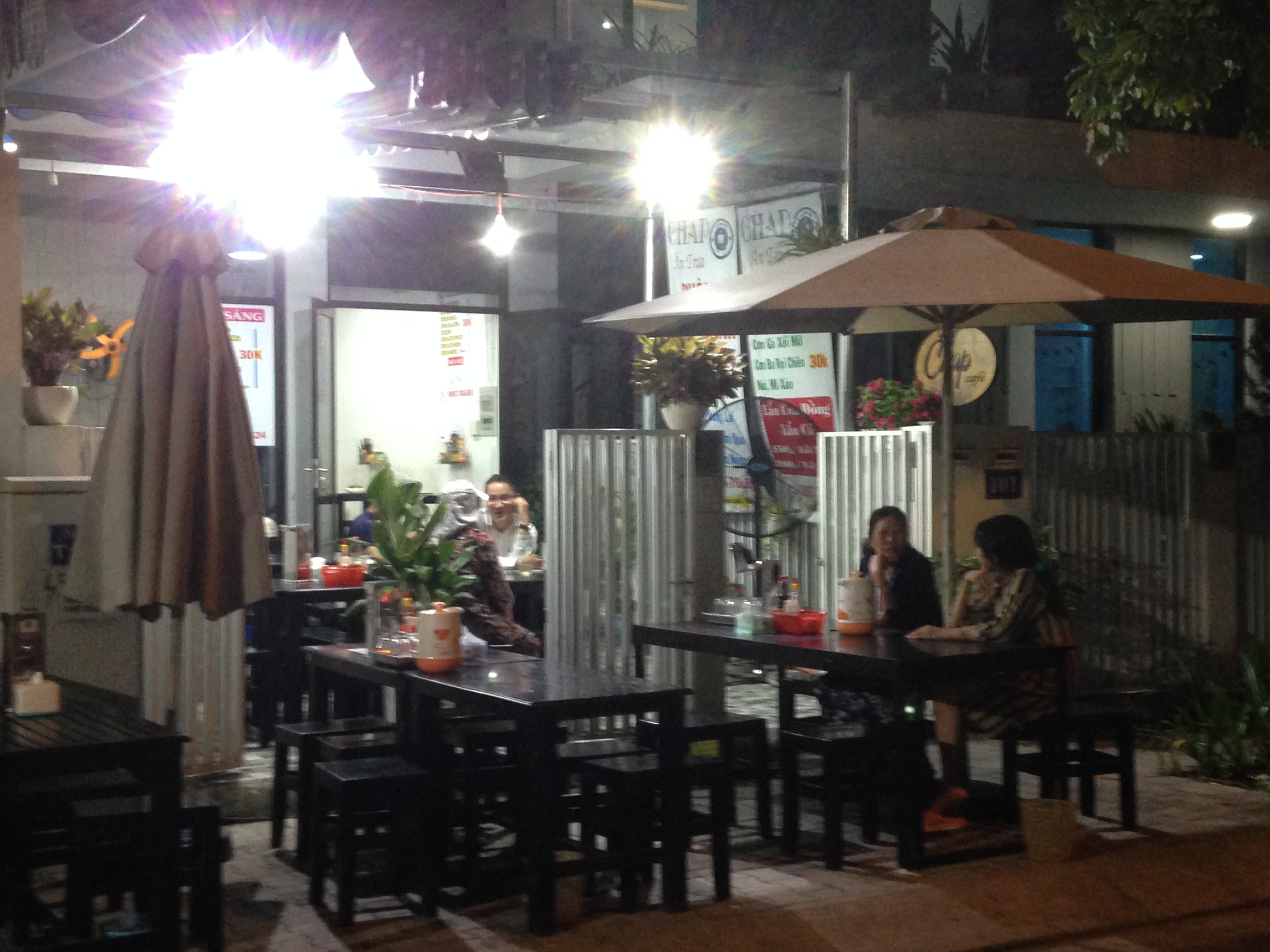
Chap Cafe

A local joint in a side street surrounded by new residential blocks, Chap Cafe has a lunchtime contract to feed workers from a local engineering firm.

This dish is Bang Da Cua (noodle soup with crab meat). As usual in Vietnam, it comes with a plate of herbs and green leaves, banana plant and chilis, lime, and the ubiquitous fish sauce. This cost 35 000 VND (£1.20 / $1.50).

The cafe has a so-so reputation among locals, it’s OK but nothing special. I spiced up my bowl with chili flakes, fresh chilis and plenty of lime juice.

I’ve taught my engineering students about British politeness. They would now classify this cafe as ‘not the best’, nor ‘the most delicious in HCM’.

A week is a long time in politics … and evidently also in teaching.

Last week I was so impressed by my teenage class. This week, I want to quit, or do anything to find a replacement teacher.

Obviously, I won’t be naming and shaming, but the general pattern should be familiar to teaching of these wonderfully polite, respectful and hard-working students (yes, an example of irony).

The lessons are three hours (which is far too long, in my opinion). The teacher has a set book and must teach the assigned pages, but there is still time for activities, games, warm-ups, anything to break the boredom of sitting and ploughing through seemingly endless, seemingly pointless text.

This class has twenty students, most are willing to participate, but some are committed to seeing out the entire three-hour lesson without saying a word and some will speak… but not in English, just Vietnamese, and theirs is not the most euphonious of tongues. I find it akin to a dozen drunken cats having a fight in a karaoke bar … only worse.

As it was Christmas, I had more activities planned, and wanted to reduce the book work, to focus more on producing English speaking. The first game was a B2B – I’d prepared a number of slides and one student had to sit with her back to the board and ask questions while the other students offer clues; they are not allowed to sat exactly what they see. For example, if they see a cat playing piano, the could say, “An animal like a dog, a pet making music, but not a guitar.

Well, one of the smart-asses just began saying exactly what she saw. It was clear the game was dead in the water, so I moved onto book work.

One exercise was putting life stages in order; same student just shouted out the first thing on the list. Once someone starts destroying the plan, others join in, the pack mentality, the need to express their rebellion. The misnomer that Vietnamese respect teachers is greatly over-stated. As mentioned in other posts, they relish the chance to express their pathetic teenage angst. They will refuse to work, talk over the teacher and break every class rule as a challenge … and there is nothing they want more than to argue with the teacher.

Ultimately, it’s their parent’s money they’re wasting, but, as an old-hand informed me, they know they’ll get some (basically worthless) certificate that says they attended a class – after all, this is a business and got to keep the customer satisfied.

As expected, the rot spread. One student, not graced with fair of face, began eating in class, ostentatiously masticating while trying to out-stare me. Other students just stared at me when I tried to elicit a basic answer.

It was really a case of running down the clock

I’ve taught teenagers at several schools. It a mixed class, naturally, but I feel no hesitation using words like ‘obnoxious’, ‘disrespectful,’ and ‘futile.’

Let’s see if i can do some horse-trading – agree to another class IF I can drop this one. I no longer care about helping this motley collection. Frankly, my dear, I don’t give a damn.

As a Christmas coda, or miracle if you will, I have subsequently been informed that I will not have to ‘teach’ this mob again – tiding of comfort and joy.

Teenage Class Level 3

Sunday 16th December

I really wasn’t looking forward to this: teaching teenagers, on a hot, weekend afternoon can be a nightmare, and the class size had mushroomed from 13 to 20 students. If it was like the Sunday class at another office, or one’s I’d endured at other centres, I’d have to reconsider my future with this company, or even in this profession.

Instead, they turned out be little darlings; motivated, responsive, polite and reasonably quiet. To paraphrase Eagles, teaching teens, “Can be Heaven, can be Hell!”

The early-comers were treated to the ‘Don’t say, “I’m fine,”‘ patter (see a previous post under teaching notes), and they actually warned each other to comply so students, even late-comers, answered with, “I’m good / great / OK.”

I told them I’d introduce them to a new idiom each week. We kicked off with:

hold your horses – meaning be patient, wait, don’t start yet.

First game was just a warm-up; what did they know about London ? This was in the form of a quiz, two teams shouting out the answers to such questions as the British currency, traditional British food, the Queen’s eldest son (Charles, not William), the name of the famous clock in London, what did 007 mean ? etc.

This centre really tries to promote students speaking (in English) as much as possible, so the first group work was plan a day for a friend of mine in HCM City – what would the friend need ?

We elicited a place to stay, food to eat, things to buy, places to visit, nightlife and how to get around.

This lead into showing a video of top attractions in London, for interest but also to boost vocabulary and expose the students to different accents.

The link is here:https://www.youtube.com/watch?v=L0r0VTos_wU&t=20s

I asked the students to listen out for all the adjectives and to notice how they are used, as well as the pronunciation and intonation. For example, we had, “beautiful Queen’s House,” “dazzling Crown Jewels,” “amazing city views,” etc. There was also a lot of new vocabulary and expressions (to keep something at bay). I then asked then to choose which attractions appealed to them (which ones they were interested in, wanted to visit). Finally, we learnt about the Prime Meridian 0 degrees that passes through London.

After the book work, we did activities guessing the personalities and occupations of five of my friends (see next post for photos). The students look at five of my friends and have to deduce (give me an idea) of what my friends are like – inside, not physically. Then they must guess what jobs they do.

I also encouraged forming long sentences using opinion expressions (in my opinion / I feel that / I think / for me … etc)

A great start to the session … let’s hope it continues … watch this space !