Carnegie Hall, New York, considered the first classical venue in the ‘New World’
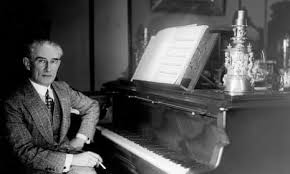
To start, a beautiful piece performed by a beautiful artist. Maurice Ravel’s (France 1875 – 1937) solo piano piece is from 1899.
From France to Spain, a composition by Joaquín Rodrigo (Spain 1901 – 1999). Here, Flamenco legend Paco de Lucía performs this exemplary guitar concerto.
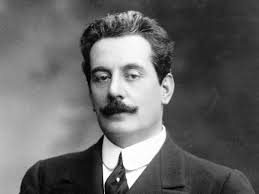
“Let no one sleep” is the translation of ‘Nessun Dorma!‘, an aria from Giacomo Puccini’s (Italy 1858 – 1924) opera ‘Turandot‘. As with Mozart’s Requiem, Turandot was unfinished at the time of the composer’s death.
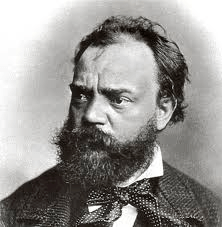
Now we leave Europe, the Old World, with Antonín Dvořák (Czech 1841 – 1904) for the 4th Movement of his 9th Symphony, written in New York, 1893.
Please Note: All photos are taken from Google Images or free photo sites, and are used for educational purposes only. No copyright infringement or offense is intended. If I have used your photo or image, and you wish me to remove it, just ask. This site is not monetized, I run it on my own dollar. Thank you.
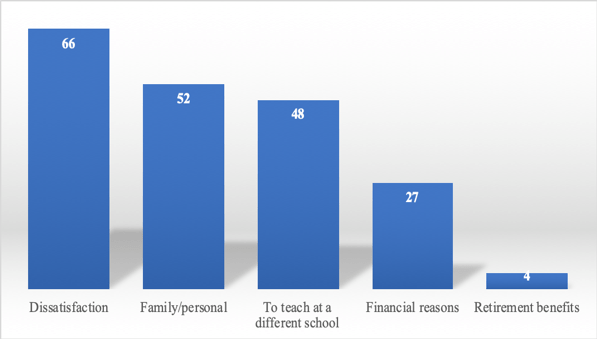
Adapted from Carver-Thomas & Darling-Hammond (2017). Figure displays percentages of teachers reporting each factor as important; teachers were able to select more than one reason, so percentages do not total 100.
Lessons can still be fun and engaging, stimulating and creative.
Last night, I substituted for a class of students, 10-11 years old. One boy arrived over 10 minutes late, and the other students warned me that he was the noisiest.
Within five minutes I had given him a BLACK STARfor disruption and disrespect.
Then I helped him, made him repeat new words, improved his intonation, told him that he was intelligent and could be a good student; I asked him if was going to work now …
“No!”
After two hours, both my much younger TA and I were exhausted. Class management is part of the job but it shouldn’t be the entire job.
I have heard non-teachers tell me that I “must inspire the children.”
Have you ever tired to inspire and motivate people that do not want to be inspired or motivated ? People that turn their heads away when you try to help them, that look at the wall when you talk to them, that whistle during class to block out your voice.
Try inspiring a reluctant, recalcitrant class for two hours … then do it again for another two hours … six days a week … fifty weeks a year … year after year.
I admit my own imperfections, faults and mistakes, but I think the following suggestions are reasonable:
1) Students should only have an accepted first or given name, not named after products, film characters, food, foreign expressions or non-organic items.
2) Students must learn how to behave in the classroom and the school. No running, shouting, screaming, fighting etc.
3) I always appreciate if a teacher has cleaned the board, logged out of the computer and left the room presentable. We do have cleaners, but there is no way they can cover all the rooms in the ten-minute window.
4) I do not appreciate going into a room, finding writing over the boards and equipment, computer just left with all windows open. I have to close their work before I can log into my work. Meanwhile there is a classroom of students with nothing to do, so they will talk, shout, scream etc.
5) Finding old tissues, food wrappers, empty bottles on the teacher’s console and floor is totally unacceptable. I find it disgusting, and an insult.
6) Security guards should provide security. A friend told me that in a different country, a guard began harassing a young TA, stalking her, and saying inappropriate things to her young students.
7) No student should ever be allowed to wear an inappropriate item of clothing, with either offensive text or political images.
8) Vietnamese staff should learn the importance of saying “thank you,” and “sorry.”
So what to do after a terrible day at the office ?
Please Note: All photos are taken from Google Images or free photo sites, and are used for educational purposes only. No copyright infringement or offense is intended. If I have used your photo or image, and you wish me to remove it, just ask. This site is not monetized, I run it on my own dollar. Thank you.
He can speak Japanese however he can’t speak _____
A bird can ______ however a bird can’t _______
A fish can _______ however a fish can’t ______
Please Note: All photos are taken from Google Images or free photo sites, and are used for educational purposes only. No copyright infringement or offense is intended. If I have used your photo or image, and you wish me to remove it, just ask. This site is not monetized, I run it on my own dollar. Thank you.
One of the joys of the past few years has been discovering the work of Ms Alice Sara Ott, a pianist born in 1988 of a German father and Japanese mother.
I have introduced her to some professional musicians of my acquaintance, including pianists, and they unanimously praise her playing, her tone and sensitivity.
Ms Ott, who has been recording since 2009, interprets some quintessential French classics of the late C19th and early C20th on the 2018 CD ‘Nightfall’. Debussy, Ravel & Satie are all represented.
I’d like to share this promotion film, shot in Paris, to accompany the Erik Satie piece ‘Gnossiennes No 1: Lent’:
Please Note: All photos are taken from Google Images or free photo sites, and are used for educational purposes only. No copyright infringement or offense is intended. If I have used your photo or image, and you wish me to remove it, just ask. This site is not monetized, I run it on my own dollar. Thank you.
One of my classes have their speaking test next week therefore, this is their last chance to practise, to demonstrate they know what they need to do to pass with flying colours.
Some tips to assist
An introduction:
That’s a very interesting question
Well, there is so much to say about that subject, where shall I start ?
It’s funny you put that question to me because earlier today I was just thinking about …
Well, that’s a great question
As a young Vietnamese (add your own nationality), I …
Opinion questions:
If you have a question with the following wording:
“What do you think ?”
You can use opinion phrases. We do not want facts, but want to hear if you are able to understand what is required by the question, and if you are able to articulate your thoughts.
In my opinion // From my perspective //personally // In my view / For me // From my point of view
Finally, there will probably be a chance to demonstrate your knowledge of adjectives and adverbs.
You may encounter a question such as:
What qualities are needed to be a good police officer ?
very / extremely / amazingly / unbelievably / quite / rather / undeniably / remarkably / totally / absolutely /
Combine into a complex sentence with discourse markers and relative pronouns and clauses. If possible, paraphrase key words (here I substitute ‘attributes’ for ‘qualities’).
EXAMPLE
A police officer, in my opinion, needs to have many attributes such as being extremely brave and caring although they will also need to be totally healthy as well as being strong and undeniably energetic. Working for the police, which can be a very dangerous job, is not my cup of tea. Having said that, I really admire the honesty and loyalty of these amazing people.
Now … your turn
What qualities are needed to be a … ?
Sports person / Film star / Doctor / Musician / Mother
Yesterday I blogged a database of idioms, collocations and negotiation language. That is just the tip of the iceberg. If you have looked at English-language study books, you will, no doubt, have seen several dictionaries solely devoted to idioms; we use them so often, and there are so many.
For my IELTS students, I have repeatedly taught half a dozen (six) in order for the students to incorporate them into their natural speech … without idiomatic language, you will not break past the 5 score (taken along with grammar, vocabulary and intonation, naturally).
Therefore, for Top Cat students, or anyone looking to learn some more, this blog is for you.
Expressions or idioms
Ring any bells ? // do you remember //
More or less // not exactly but approximately
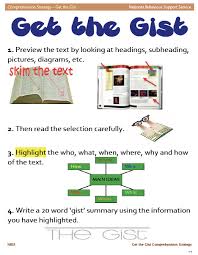
Get the gist // do you understand the main point ?
Right up your street // this is something you will really like
Rabbit, Rabbiting on // UK slang, especially in London … talking too much
Piece of cake // no problem, very easy, sure
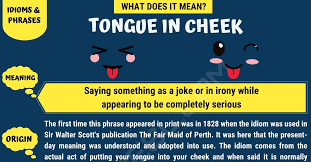
Tongue in cheek // not being serious about something
Now … how you use them:
Student A: Hello, we met last year at Julie’s party.
Student B: Sorry, that doesn’t ring any bells (I don’t remember).
Student A: Are you ready to go ?
Student B: Go where ?
Student C: Cake, food, drink, singing, dancing … ring any bells ?
Student D: Oh, Tony’s birthday party. Sorry, I forgot.
Student A: Are you ready for the test ?
Student B: Yes, more or less.
Student C: I’ll wait for you.
Student D: I won’t be long, I’m more or less finished.
Student A: Do you have to read all the document ?
Student B: No, just to get the gist.
Student A: You should listen to this CD, it’s right up your street.
Student B: Oh, French piano music, I love it. That’s right up my street.
Student A: What did your girlfriend want ?
Student B: She was rabbiting on about something to do with her clothes, I wasn’t really listening.
Teacher A: Hey ! Miss Mary … stop talking. You’re a little rabbit !
Student A: Can you drive me home ?
Student B: Sure, piece of cake.
John’s new business shirt
Student A: Have you seen John’s new shirt ? It’s so elegant.
Student B: Are you serious ? It’s terrible.
Student A: I know ! I was being tongue in cheek.
Now … your turn.
Add the correct idiom [answers at end of blog]
1) Shall we see the new action film ? It sounds ______________
2) Are you still talking ? You are such a __________
3) She said I was the best student but I think she was being ___
4) You said you would bring something … cheese, tomato, garlic bread ____________ ?
5) The IELTS speaking test was a ________ after reading Thay Paul’s blogs (I hope).
6) Student A: Did you understand the project ? Did you ________ of the idea ?
Student B: Well, ______________ but not every single detail.
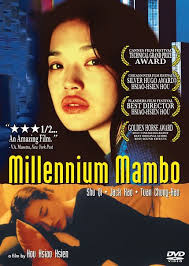
This film, starring Shu Qi looks right up my street.
Right up your street 2. rabbit 3. tongue in cheek 4. ring any bells 5. piece of cake 6. get the gist / more or less.
A database of common UK & USA expressions, phrases and idioms for students who want to learn more, in order to increase their command of and respect for the English language. I have provided my IELTS students with half a dozen (a dozen = 12, therefore half a dozen = 6. Having said that, a ‘baker’s dozen’ = 13 … welcome to English !) idioms, but this blog is aimed at students who are willing to go above the barest minimum.
We kick off (start) with expressions and idioms, as they are tremendous fun, then move on to collocations. How words fit together is a powerful tool in learning English … huge chunks of texts suddenly group themselves into small word blocks, enabling you to predict what will be said (especially useful in listening exercises).
Finally, we wrap up with some negotiation phrases. In the next blog, I’ll give you a chance to use these in sentences, but for now, familiarise yourself with a handful of new expressions … it could be right up your street.
Alice Sara Ott – German-Japanese pianist. I recommended her to a musician friend and he said it was right up his street.
Expressions / idioms
Ring any bells ? // do you remember //
More or less // not exactly but approximately
Get the gist // do you understand the main point ?
Right up your street // this is something you will really like
Rabbiting on // UK slang, especially in London … talking too much
Piece of cake // no problem, very easy, sure
Tongue in cheek // not being serious about something
“I think Donald Trump is the greatest US President …” Do you think President Obama would say this and be serious ?
Keep your hand in // to practise something so you don’t forget how it’s done
Bucket down / raining cats and dogs // raining very heavily
Have a go / give it a bash / give it a shot // to try something
Call it a day // to stop work and go home early
Go ahead // sure, do it
Under one roof // everything in one place
Through thick and thin // together in good times and bad times.
To spill the beans // to tell a secret, or to share some private information
I should cocoa // UK slang, old-fashioned = I really don’t believe it or you
kick-off // A sports expression from football – means to start
tied up / snowed under / rushed off our feet / flat out / up to my eyes // very busy
daylight robbery // much too expensive, very over-priced.
on your bike // go away !
to throw a wobbly // to become angry and shout and curse
Bang up to date // totally modern and new or completed all your work on schedule
otherwise engaged // busy – a polite way of saying ‘go away’
I know where you’re coming from // I understand what you are saying and how you think
to get hold of someone // try to make contact with someone by phone, in person, email etc
speak of the Devil // to talk about something and then they appear
to be into something // to really enjoy or like something or someone
to put something over someone / to pull the pull over someone’s eyes // try to trick or cheat someone
There’ll be Hell to pay // you will be in BIG trouble !
Hell breaks loose // people will be very angry and upset
I’ll give you a bell / a shout // I will call you on the phone
Knock off / to finish work
knock it off // stop doing that !
That’s proper loud // UK slang ‘proper’ meaning very – that’s very loud
Well chuffed // extremely happy
come again ? / You what ? // UK slang for say it again, please
What do you reckon ? // What do you think of something ?
Collocations
To run a business
To conduct / carry out a survey
Can I have a word with you / a quick word
Do you have minute ?
Voting with their feet
Can I put you on hold ? / to be put on hold / Hold the line
A victory for common sense
I’m none the wiser
On the button / on the money
get the hang of it
scraping the barrel
Negotiation Language
I fail to see the relevance
I don’t see how that applies
That’s as maybe
I don’t get/see your point / I think you are missing the point