Theory into practice – it’s all relative (pronouns)

29th May 2020

Earlier this week, I had a teenage group in what could be termed a pre-IELTS class; at the end of this book, they progress to IELTS. That is, as mentioned in the blog for that lesson: https://thaypaulsnotes.com/2020/05/26/adult-speaking-class-level-3-relationships/

a quantum leap (which allowed me to introduce the idea of quantum mechanics into an English class). My centre is a business, so needs to generate revenue which is accomplished by getting as many students as possible. This is especially vital after the enforced lockdown.

Students, teachers practice social distancing on return to school ...
Stock photo from Google, but it depicts social distancing

However, not all students who enter an IELTS class are IELTS material … but that is another matter. I’ve decided to treat this class, which I really enjoy, as an IELTS class. Therefore, I push them to use language and style employed at that level.

To come to the crux of the matter, I set a relative pronoun test in the aforementioned class. Everyone was able to do the lesson, the theory, linking two or three pieces of information into a longer, single complex sentence. For example:

Jumping Jack cash: how young Mick Jagger planned his pension ...

Mick Jagger is in the Rolling Stones. He was born in London.

Mick Jagger, who was born in London, is in the Rolling Stones.

However, during the free practice session, the students reverted back to simple sentences.

Allow me to elucidate … wherever possible, I avoid working directly from the book, or using handouts (although that would save me about 80% of my dwindling energy). Instead, I look at the book, see what subjects are to be covered, and incorporate them into my blog.

Naturally, this only works with ‘top cat’ students, those who are motivated and willing to work (and I’ve noticed, telling students we will not be using the books boosts moral and energy off the chart).

Top Cat - Wikipedia
I’m not allowed to film inside my campus, so here are some top cats 🙂

To return to the case in point; the students can understand the grammar in theory but totally forget it, in practice, and Tuesday’s class afforded ample opportunity to practice. I showed a picture of a young beautiful Asian lady and a young Asian guy … here, see for yourself:


I wanted to the class to be creative, write a backstory for the two characters (the theme of the lesson was relationships), how they know each other, what are their jobs, how they get on together.

The class, which is only small, elected to work together and I was heartened to see Ms X, who normally spends the lesson playing with her phone, taking an active part and volunteering answers.

The upshot was that the beautiful Asian lady was a model, the guy a photographer and both were Japanese. As to be expected, this being a teenage class, someone (you know who you are) said they went to a hotel … but maybe so – in order to do a photo shoot.

From a teaching point of view, I was disappointed that in their speaking, they didn’t apply relative pronouns, enough adjectives or adverbs, all points that will be addressed in the next lesson … and covered in my next blog.

May a say a heartfelt THANK YOU to everyone who visits my site and scrolls through the posts.

Young Learners, Level 4: Be creative !

1st May 2019

Everybody Up 4, Unit 6, Lesson 1

By this stage, the students are able to form basic sentences, though they need constant encouragement to develop speaking skills, as well as being told to write down new words and expressions … and then USE them.

The lesson should involve all skills, and allow the students some active sections, to break the monotony of sitting for two hours. New vocabulary should be introduced and recent lessons should be revisited and revised. Today’s theme is ‘be creative’ so we’ll start with:

Warm up: Word Bomb (mind map)

Board ‘Free Time’ and ask the students what they do for fun, making them speak in sentences, not just shouting out single words. We can develop this by asking secondary questions for example, ‘I play football,’ ‘Where do you play ? With whom do you play ? Are you in a team, or play with friends ?’

Pre-teaching: New vocabulary

Today we have six flash cards, all in the present simple (e.g. sing songs, write stories). The class repeat the text and I check for pronunciation and meaning.

Activity: What do my friends do ?

Around the room, I stick six sheets of paper, each with a single word:

Fashion / Art / Music / Cinema / Models / writing

I then show a single Powerpoint Slide with six of my ‘friends’ and ask the students to match the friend to the activity. I will board the six names on two sides of the whiteboard and the students, divided into two teams, have to match them. My ‘friends’:

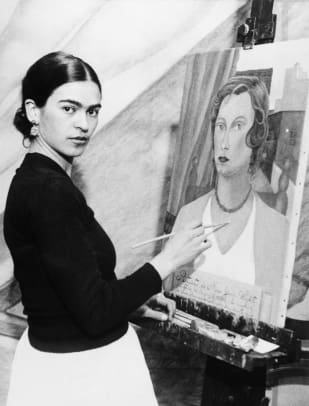
My friends are: Nicky, Ian, Stella, Bill, John & Frida.

After the students have guessed, I’ll show the following pictures:

Nicky likes music. He sings songs
Ian likes model trains. He makes models.
Stella likes fashion. She designs clothes
Bill likes writing. He writes stories.
John loves cinema. He makes movies.
Frida enjoys art. She paints pictures.

Next, a chance for the students to get up and mingle, so I’ve prepared a questionnaire, utilising a lot of past tense verbs:

Student Questionnaire 

NAME:

What did you do on December 31st ?


What was the last film you saw ? Was it good ? Did you enjoy it ?


Do you like painting or drawing ? Do you go to museums ?


Have you ever lost anything ? What was it ?


We can listen to some answers, and the class can correct any errors in grammar. This will also help the students speak to each other in English, so that not all communication goes through the teacher.

Next up: Student description

In a previous lesson, the class learnt about basic adjectives to describe appearance. I will therefore choose a student and describe the physical characteristics, e.g. this student has long straight hair, is not very tall, and wears black glasses. I will choose some students and give them a student to describe, while promoting the value ‘be polite‘.

Video time: listening & new vocabulary

In our first class, we watched a kids’ guide to London and I boarded the following:

I reckon / huge / a little bit / brilliant

The students were told to ALWAYS have a notebook and pen handy, and to write down new words. However, this is not a common practice in Vietnam, so they have to be told … and retold.

Today’s video will be a short clip from a kids’ parade in the USA: https://www.youtube.com/watch?v=llEAqex8qM4

We only need show the first minute, but the students can be asked to identify various creative activities that they see. Then it’s time for some action !

Board Slap

I’ll stick three of today’s six flash cards on the cards and select three students. They’ll be given a swat, and they have to run to the board and swat or slap the card they like best, saying, “I like … movies, painting etc.” This leads into:

Thay Student.

One of the top students plays the role of teacher. They come to the front and ask students, “Do you like …. songs, models etc ?” Students must answer in a sentence: “Yes, I do,” or “No, I don’t.” Thay Student will follow-up by asking why or why not …”Because it’s ….”

Here we need some good adjectives. To give them a good pool of words, we can have a quick hangman game first, so we have adjectives such as:

boring / exciting / interesting / fun / educational / creative / difficult /

Finally, I like to play a song for the students to listen to and pick out key phrases. Today’s singer is actually Swedish, but she sings in English. https://www.youtube.com/watch?v=upnTg2GPgTM

This is Lykke Li, and we can start the video around the 1-minute mark. The title, and the key phrase is something the class should, by now, be familiar with; ‘a little bit’. It’s also a good lesson in how Standard written English differs from spoken English, as we often swallow the ‘t’ sounds. Have a listen … you don’t need to play the whole song if it’s not your cup of tea … just a little bit.