Classical Music: where to start ? Part 3

22nd March 2026

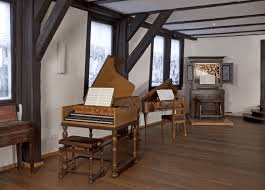
Bachhaus Eisenach, Germany

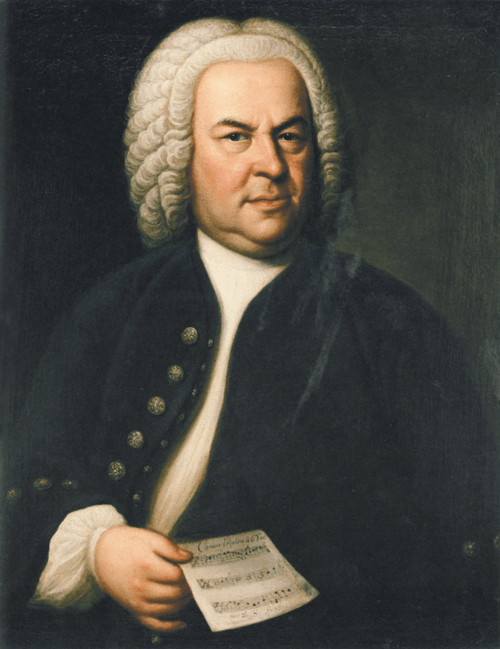
Starting with a titan of Classical Music – Johann Sebastian Bach (Germany 1685 – 1750).
From such a wide and canonical repertoire, I’ve selected something a little different; a sonata extract but played on a traditional Swedish instrument, the nyckelharpa. Andante indicates a moderate tempo, a walking pace.

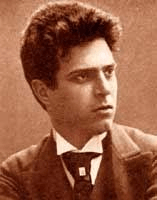
The next selection is the Intermezzo from Cavalleria Rusticana, a one-act opera, a contrast to Wagner’s gargantuan musical dramas. Pietro Mascagni (Italy 1863 – 1945) composed this major work in 1890.
Zbigniew Preisner (Poland born 1955) is closely associated with Polish film director Krysztof Kieślowski for whom he composed several soundtracks (notably the ‘Three Colours’ trilogy).
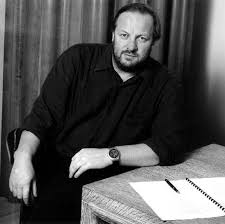
Requiem for my Friend from 1998 is a tribute to the director.

The first time I heard our final selection, I thought it was from a film soundtrack, possibly a Michael Nyman piece. I was therefore very surprised to discover that it was 200 years old.

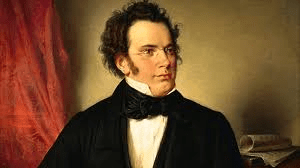
The Piano Trio No. 2 was one of Franz Schubert’s (Germany 1797 – 1828) last compositions. I’ve selected the second movement, another Andante, inspired by a traditional Swedish folk song.
Please Note: All photos are taken from Google Images or free photo sites, and are used for educational purposes only. No copyright infringement or offense is intended. If I have used your photo or image, and you wish me to remove it, just ask. This site is not monetized, I run it on my own dollar. Thank you.
Young Person’s Guide to Music: A Summer School project

5th July 2023

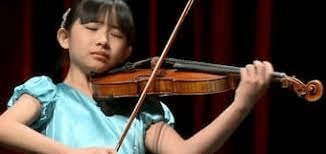
Chloe Chau from Singapore

Miumiu from China

… and from Cambridge in the UK.

We do not have any instruments in our class (yet … later we shall make a xylophone !), but we all have voices and can sing !

Let’s start with a round. This is when some of the class sing a song, then the other students sing the same song BUT one verse later.

Listen to this children’s song called ‘London Burning.’ Listen and then we shall try to sing. Many points to the best singers.

Teacher’s Note: split the class into small groups depending on class size and motivation. Award points for the best performances.

First question – do you know any famous composers ?

M _ _ _ _ _

B _ _ _ _ _ _ _ _

C _ _ _ _ _

B _ _ _

P _ _ _ _ _ _ _

QUESTION RUNAROUND

Teacher’s Note: Keep class in small groups. Select one student per group to run up to the board and place – not slap – their hand on number 1,2 or 3. Blank the screen so the students can’t see the answers !

Question 1: Who wrote this music

1) BlackPink 2) Paganini 3) PinkBlack

Question 2: Is this music for

1) a birth, 2) marriage or 3) death ?

Question 3: Is this music

1) Happy and joking 2) sad 3) very angry

Play from 17:02

Question 4: This music is about a planet – which one ?

1) Venus (love) 2) Jupiter (happiness) 3) Mars (war)

Question 5: This opera is set in which country ? 1) China 2) Australia 3) Spain

Last Question: Classical music is often used in films. Was this music used in a …

1) comedy 2) animation 3) space film ?

How does the music make you feel ?

What adjectives can you use ?

excited, thrilled, scared, nervous, awe-inspired

Now it’s time to learn about the orchestra and the instruments.

The number 4 is very important in music – do you know why ?

What are the four families of instruments ?

What are the four stringed instruments ?

What are the brass instruments ?

What are the percussion instruments ?

BUT … it’s not always perfect. Take a look at these: