Just two more lessons and we have finished the textbook … and then you have the tests.
Don’t worry, let’s have a warm up to prepare for the BIG ONE.
So, Whop bop b-luma b-lop bam bom, let’s Rock ‘n’ Roll
1) FREE TIME: draw a mind map about free time.
2) What is a prodigy ?
3) What do you need to be a prodigy ? I want two answers.
4) Describe one of your classmates. I want appearance and personality … and be polite.
5) What can you see at a Madame Tussauds museum ?
6) Tell me three accessories people wear.
7) What is your favourite colour and why ? How do you feel when you wear this colour ?
8) What do these words mean:
a] Five days in a row b] rural c] try on
9) What is the superlative of
a] big b] famous c] less
10) Tell me three interesting facts about the Amazon Rainforest.
11) Give me synonyms for
a] search b] amazing c] fast
12) What is your favourite type of music. Tell me as much as you can, give examples.
13) “Your eyes are bigger than your stomach.” What does that idiom mean ?
14) Food can taste … give me four adjectives.
15) How can we prevent the flu and being ill ?
16) Tell me where you would most like to visit. Tell me why, how you can get there, what would yo do ?
Remember, tell me more, higher score
Please Note: All photos are taken from Google Images or free photo sites, and are used for educational purposes only. No copyright infringement or offense is intended. If I have used your photo or image, and you wish me to remove it, just ask. This site is not monetized, I run it on my own dollar. Thank you.
How to turn some wonderful writing to a perfect piece of prose!
First, we need to arrange the text into paragraphs
Paragraph 1 – introduction
Paragraph 2 – first idea (what Princess L likes doing)
Paragraph 3 – second idea (what she wants to do in the future)
Paragraph 4 – conclusion (a short ending)
Second, we need to correct the grammar and alter any mistakes.
So, without any further ado … get to work!
Today, I introduce and tell you about what I like to do and my favorite job in the future. I like to play the piano and read comic books because is helps me relax and when I do this I’m over the moon. My favorite song to play the piano is baby shark and happy birthday song. But I want to play proud of you song however is very difficult. I always play the piano with my sister and my cousin.
I can play a lot of song I like because I always practises the piano every day should when I do this song is piece of cake. And in the future I want to be a piano teacher because I want children can play a lot of song like me. Because in my opinion, the piano is a best and easy instruments for everyone want to play. It the end and what you like to do and what job you would like to be in the future. Goodbye!
Please Note: All photos are taken from Google Images or free photo sites, and are used for educational purposes only. No copyright infringement or offense is intended. If I have used your photo or image, and you wish me to remove it, just ask. This site is not monetized, I run it on my own dollar. Thank you.
An exercise for students to use critical thinking, and to practise speaking.
First we shall let the students work in pairs, discussing today’s question:
What’s the problem with your city … and what’s the solution ?
Let’s kick off with some useful vocabulary
pollution
litter
noise
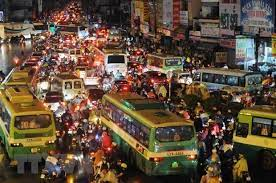
traffic congestion
You may start like this:
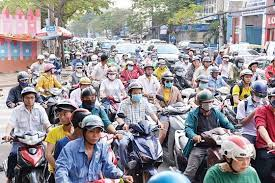
I live in Sai Gon (Ho Chi Minh City). The city is very large and busy, and has many great places. However, it also has many problems.
Then talk about pollution (air and water),
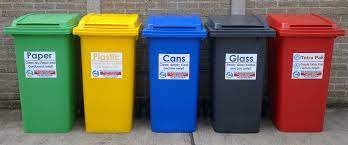
litter (paper, plastic, food, bottles, cans etc)
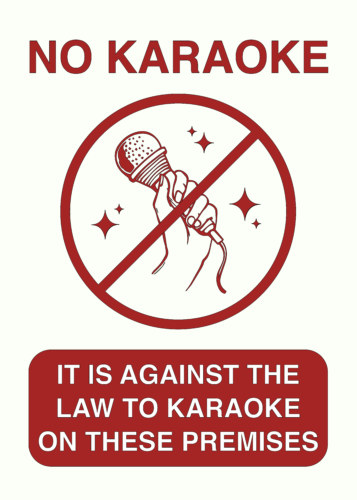
noise (karaoke, motorbikes, street vendors, building work)
traffic (is it fun or safe to drive ?)
Remember to use amazing adjective as well as linking words to give longer, better answers.
Now for some solutions
How can we make rivers cleaner ?
How can we make the roads less congested ?
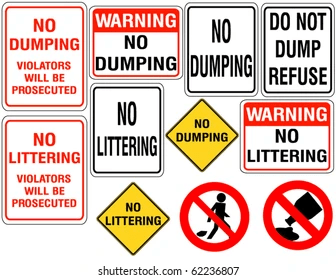
How can we stop people littering ?
How can we reduce noise pollution ?
Please Note: All photos are taken from Google Images or free photo sites, and are used for educational purposes only. No copyright infringement or offense is intended. If I have used your photo or image, and you wish me to remove it, just ask. This site is not monetized, I run it on my own dollar. Thank you.
One of the purposes of teachers asking questions is to give students an opportunity to practise their speaking skills; vocabulary, syntax, intonation etc.
However, many times students, of all levels, will merely answer the question in as few words as possible, and they need to be encouraged to elaborate on their responses.
Teachers are taught to refrain from asking ‘Yes,’ or ‘No,’ answers:
“Did you have a good weekend ?”
“Yes.”
A better option would be:
“What did you do on Saturday ?”
Hopefully this will elicit a more suitable reply.
(Yes, teachers should be prepared for, “Nothing,” “Sleep,” etc … some students simply do not want to learn or work. Teachers have a limited supply of energy and enthusiasm; it should not be wasted.)
And so to work … my young learners have speaking tests soon. Here are some exercises to help boost their scores.
First we need our vocabulary toolbox. Let’s start with some adjectives:
amazing, angry / beautiful, big /clean, clever, cute / dangerous / easy, electric / fantastic, funny / greedy, great, / happy, healthy, huge / important, intelligent / Japanese / kind / lazy / messy / nervous / old, outgoing / popular / quick / rude / sad, selfish, shy, small / talkative, tiny / ugly, unusual / valuable / wealthy / year-long, young
Now some linking words:
also, as well as / because / furthermore / however
Finally, a smattering of expressions and idioms:
in my opinion / it costs an arm and a leg / let’s dive in / more than likely / over the moon.
Let’s dive in ! Work in pairs and ask each other the following questions:
Tell me about your house or apartment
(where is it, how many rooms, what does their room look like, what colour is it, what toys do they have, do they have pets ?etc)
Does this look like your room ?
Tell me about your school
(Name of the school and address, their favourite subjects and teachers, why do they like them, their friends, what do they do at break time, do they play sports or music ? etc)
Does this look like your school ?
Tell me about food you love and food that you hate
Tell me about a film you love
Where would you most like to visit ?
What job would you like to do. What job would you hate ?
Please Note: All photos are taken from Google Images or free photo sites, and are used for educational purposes only. No copyright infringement or offense is intended. If I have used your photo or image, and you wish me to remove it, just ask. This site is not monetized, I run it on my own dollar. Thank you.
A writing exercise to help build narrative. We shall use signpost language, paragraphs, amazing adjectives, adverbs and linking words, as well as some new expressions.
I shall tell you about last Sunday – it was terrible and here’s why.
The plan of my day:
6.50 Book Grab on my iPhone and leave for work.
7.40 – 9.40 Young Learners class, level 1 (24 students)
10.10 Arrive home
10.11am – 2.30pm Wedding party across the street
10.30 – 12.00 Prepare work online
5.00pm – 9.30pm Another wedding party but much louder, more karaoke singers
6.00 Go for coffee
BUT 11.30pm Barcelona win 1- 0 so ‘All’s well that ends well.’
So what were the problems ?
“Hey, where is my bike ? I am late for work !”
I only have one class; I hope they are nice and quiet. OK, they are screaming, loudly ! But now I can go home and relax. Wait a moment …
A wedding party with singing and drinking and karaoke … for four hours ! No problems, I will wear headphones, listen to my music and prepare my work online.
I give up ! This is never going to happen. However, after 2.30pm it starts to be quiet. I can work, read and at 4.45 I started to sleep … until at 5.00:
These gentlemen do not sing beautifully, they sound like cats having a fight. I decide to go out to a quiet coffee bar. The server is very friendly … but then a man walks in …
My dreadful day was nearly over. At 11.30 I watch TV and see …
Yes, my team Barcelona are playing. I am blown away by how good they are and I am over the moon because they win the game. All’s well that ends well.
NOW … your turn
Write about Mr Paul’s terrible day.
TIPS
Use a short introduction, then a new paragraph for each new event.
Use signpost language (first, next, then, afterwards, finally).
The story is in the past so you have to use simple past (Verb 2). Noun & verb agreement (he is, he was)
End with a short conclusion.
Use new adjectives and synonyms (terrible, awful, dreadful, horrendous).
I insist that you use at least one new expression (over the moon, blown away, all’s well that ends well).
Let me kick start you:
Last Sunday was absolutely dreadful.
First, I booked Grab on my iPhone but he was extremely slow and late. My manager was …
now you finish my day
Good luck with my bad day
Please Note: All photos are taken from Google Images or free photo sites, and are used for educational purposes only. No copyright infringement or offense is intended. If I have used your photo or image, and you wish me to remove it, just ask. This site is not monetized, I run it on my own dollar. Thank you.
We have a project to write about our city or town. How has it changed ?
Remember, when we write about the past we use Verb 2 (simple past) but when we write about today, we use Verb 1 (simple present).
Word Bank:
In the past there was or In the past there were …
There wasn’t … or There weren’t …
These days there is or These days there are …
Today or Nowadays …
Example: In the past, the city was called Sài Gòn. Today, the city is called Ho Chi Minh City.
Let’s set the scene – we need some old time music.
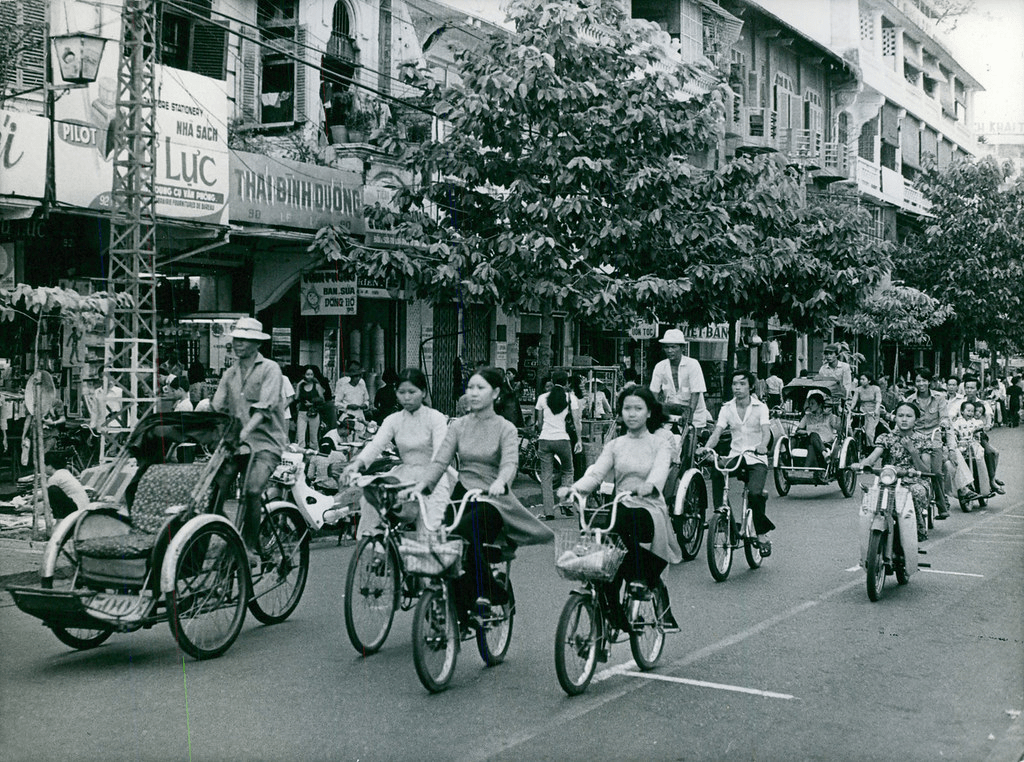
To help you, compare and contrast these photos. First, we have the General Post Office in Quận 1 (District 1, downtown or city centre).
Post offices were mainly for sending letters. Do people send letters these days ?
If people could not write, what did they do ?
Today, the Post Office has many shops inside, and many tourists visit to take photos.
How about street life ?
Sài Gòn 1960s (above), and Ho Chi Minh City today
Of course, Sài Gòn is famous for street food.
Some food is traditional, but nowadays there are a lot of fast food restaurants.
Finally, we need some modern music. Do you know this song ? The video was filmed in Quận 7
Please Note: All photos are taken from Google Images or free photo sites, and are used for educational purposes only. No copyright infringement or offense is intended. If I have used your photo or image, and you wish me to remove it, just ask. This site is not monetized, I run it on my own dollar. Thank you.
Don’t take my word for it; here are some stills from a Korean film:
The film is ‘House of Hummingbird’ from 2019
So, do you want to be a house-owner or a housemaid ?
Roll up your sleeves, put your nose to the grindstone, burn the midnight oil, burn the candle at both ends, turn over a new leaf, hit the books, get down to it.
At every opportunity, read, speak, write English. Then, after you graduate, you can party !
Please Note: All photos are taken from Google Images or free photo sites, and are used for educational purposes only. No copyright infringement or offense is intended. If I have used your photo or image, and you wish me to remove it, just ask. This site is not monetized, I run it on my own dollar. Thank you.
Last night, my wonderful co-teacher, Ms H, was speaking about a student in our class who has really blossomed. The student used to be very shy and speak in a barely-audible whisper; now the student is a Top Cat.
Ms H referred to the transition mistakenly as, “In a nutshell,” when the correct expression is to ‘come out of his or her shell.’ Thus, today’s blog will focus on the use of the word ‘shell’ in common phrases.
a word in your shell-like
This means that someone wants to speak to you about something serious. Ears are shaped a little like shells, so here ‘shell-like’ comes from ‘shell-like ear.’ We often hear this on UK TV police dramas when an inspector wants to speak to a suspect.
The phrase is used by people in positions of power, so don’t use this when speaking to your manager or parents !
coming out of her shell
If someone is very quiet or shy, they are said to be ‘in their shell’, like a tortoise. When someone starts to be more sociable, speaking more, showing their potential, we say they are ‘coming out of their shell.’
ghost in the shell
A phrase taken from ‘ghost in the machine’. The French philosopher Rene Descartes wrote about the separation between the mind and the physical body. The mind is not physical, but could be compared to a ghost.
Basically, it is the difference between the mind and the body even though they co-exist.
Ghost in the shell refers to what is the true essence of a person, what someone is really like, no matter how they look.
Today, the phrase is linked to the Japanese manga series, cyberpunk and video games. The main character has a robotic body but still has enough of her brain (mind) to be her real self.
in a nutshell
When you have a lot of information to tell, but not much time, you just say the main points. The idea is that there is not much space inside a nutshell, so only the most important things can be included.
A popular range of computer books use this idiom, as well as this title below:
People may be interested in astronomy but may be put off by the maths and equations. This book will explain all the important facts in a way that is understandable.
The phrase is an alternative for ‘to cut a long story short,’ or ‘long story short.’
shell of his former self
In the classic Martin Scorsese film ‘Raging Bull’, Robert De Niro plays a boxer who changes from a powerful athlete into an overweight nightclub owner.
When someone changes so dramatically, we say they are ‘a shell of their former self,’ and yes, De Niro really did gain all the extra weight to play this role.
shell out
This means to pay for something, usually something unexpected and unwanted, for example:
“My laptop broke. I had to shell out £200 to get it fixed.”
shell shock or shellshock
A term used to describe the psychological effects on soldiers during the First World War, with constant bombs or shells exploding. Many soldiers suffered serious mental problems.
Today the phrase has been replaced by PTSD (post-traumatic stress disorder).
shell voicing
In music, chords are formed by playing two or more notes simultaneously. In shell voicing, often used in Jazz or Math Rock, only three notes are played: the root (or first), the 3rd and the 7th.
Let’s take the C Major scale
C D E F G A B
The root, or first note is C, the 3rd is E and the 7th is B. To play a Cmaj7 chord, the C, E & B are played together.
walking on eggshells
Being very careful about what you say or do, in case you make someone angry or sad.
“Our manager was in a bad mood. We were walking on eggshells all day.”
Please Note: All photos are taken from Google Images or free photo sites, and are used for educational purposes only. No copyright infringement or offense is intended. If I have used your photo or image, and you wish me to remove it, just ask. This site is not monetized, I run it on my own dollar. Thank you.
Last night I was speaking with my wonderful TA about boosting her IELTS score. Our lesson used the Greek hero Achilles. Furthermore, we had both been standing more or less for four hours. I gave her two expressions then realised they were connected – Achilles heel and my dogs are barking. Therefore, here’s a quick list of foot-related expressions.
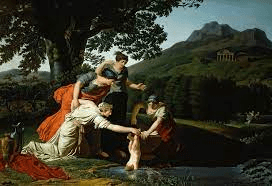
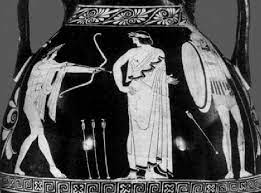
Achilles heel – this hero was invincible because his mother immersed him in a special river, as shown in the painting. However, she held her son by the heel so the water didn’t touch the boy’s skin. This was his one weak spot, and he was killed by Paris who shot an arrow into Achilles’ heel.
In everyday English, an Achilles heel refers to a person’s weak point, or flaw.
John’s vocabulary was excellent but his pronunciation was his Achilles heel.
This means John knew many words, but his pronunciation was so bad, he would lose points in a speaking test.
My dogs are barking – this mean your feet are very sore or hurting. Bob Dylan uses the expression in his song ‘Summer Days’
My dogs are barking, there must be someone around My dogs are barking, there must be someone around I got my hammer ringin’, pretty baby, but the nails ain’t goin’ down
copyright Bob Dylan 2001
To foot the bill – means to pay for something, or all of something.
We went out drinking but I had to foot the bill !
To put your foot in your mouth – means to say something that you shouldn’t have said – maybe you tell a secret, or you hurt somebody or get somebody in trouble.
Tony said the man was very stupid but he didn’t know he was talking about her husband ! He really put his foot in his mouth.
Foot and mouth disease – this is a very serious disease affecting cows, pigs and sheep. We can also use it to speak about a person who always puts his or her foot in their mouths.
Shelia can’t keep her mouth shut, she always says the wrong thing. She has foot and mouth disease.
To stand on your own two feet – means to be independent, not to need anybody’s help.
It’s time you stood on your own two feet, young man.
To toe the line – to do as you are told, to follow orders, or to follow the rules.
You better start toeing the line, mister, or look for a new job !
You won’t have a foot to stand on – you have no rights, or evidence to help you. You have no chance. Sometimes you may hear you won’t have a leg to stand on.
Without photo evidence or a witness, you won’t have a foot to stand on.
Two left feet – refers to someone who can’t dance.
No, I can’t dance, I have two left feet.
Footloose and fancy free – a person who is not in a relationship, so they can go out and meet new people. Someone who is ‘single and loving it.’
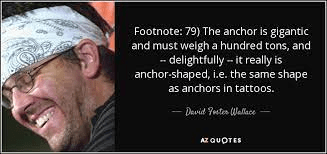
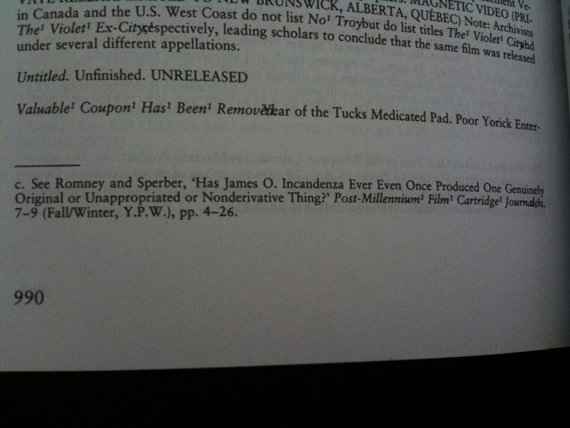
Footnotes – information or explanatory notes at the bottom of the page in academic books. The fiction author, David Foster Wallace was famous for using footnotes in his novels.
Legless – slang for being totally drunk.
You should have seen Peter last night – he was absolutely legless !
To have a hollow leg – someone who can drink a lot of alcohol but doesn’t get drunk, or appear to be drunk.
That’s her 7th beer and she looks fine. She must have a hollow leg.
To be a heel – this is now old-fashioned, but it means to be a bad person, to cheat people or be unfair.
He tricked the man out of $100. What a heel !
Please Note: All photos are taken from Google Images or free photo sites, and are used for educational purposes only. No copyright infringement or offense is intended. If I have used your photo or image, and you wish me to remove it, just ask. This site is not monetized, I run it on my own dollar. Thank you.
Last week I held an IELTS Speaking Test. Only one student hit 7.5 although, in fairness, I was probably on the generous side in awarding the student such an admirable score.
Or, to be precise, learn from their mistakes.
I can break them down into three main areas:
coherence
vocabulary
complex sentences
Kicking off with coherence; it doesn’t matter how fluent you are, unless you answer the question, you will loose marks.
The test allows us to assess your understanding of both question and task. An example: one question was
What is the most popular activity in your country ?
ASIDE: I’ve told students until I’m blue in the face, never repeat, “In (my) country,” but since when do teenage students ever actually listen ?
The question asks for ONE activity; several students talked about two or three. This is not answering the question.
Anyone who’s studied at University will know how imperative it is to follow instructions.
COMIC RELIEF: One student, from a previous test, replied that the most common activity, “In my country,” was brushing teeth, and that foreigners do this every day, but Vietnamese only do this once or twice a week. Said student had to continue for two minutes. Needless to say, there were no flying colours.
More disturbing was the lack of IELTS vocabulary. You have been told time and again what that means, and I can’t keep hitting my head against a brick wall.
And so to work … get out your notebooks (those that actually bother bringing notebooks to class), look up previous lessons and write down:
TEN L-FWs
FIVE less common idioms
FIVE everyday expressions
TEN phrasal verbs
TEN basic collocations
I have taught you these ad infinitum. If you are struggling with this exercise, you will probably only get a 5 for the Lexical Recourses section.
Lastly, the old chestnut, complex sentences.
I had nine students, each with about ten minutes of speaking time. How many complex sentences do you think I heard ?
Yes, Steve …
That’s right … ZERO
EXERCISES: Use at least two L-FWs, one idiom and other IELTS elements
(and if you think it’s funny to ask what I mean, after all this time, by ‘IELTS elements’, just get up and leave the class).
Speak for one minute about:
one of your cousins // your favourite gift // sports // your best memory from childhood // best films // problems in your city // typical local food.
Part Two: Critical Thinking
“Oh, teacher, I’m tired and feel lazy.”
Work in teams. Watch the following short clip about the ancient Greek king, Sisyphus:
Characters from Greek and Roman mythology permeate western culture, and references and allusions are ubiquitous.
You may watch the video again, writing down new words. There is a lot of background (in which you may encounter a character from ‘The Avengers’ movies), but the main feature starts around the 4:00 mark.
Your task is to relate this story to modern life. Choose a person you know, or something from your own experience. You may even project your thoughts about the future, once you have left education and joined the workforce.
talking until (pronoun) blue in the face / the grind
putting an old head on young shoulders
Look up the meanings yourself. Your teacher won’t be with you to give you the answers in life. Think for yourself.
Athene, Goddess of wisdom
Please Note: All photos are taken from Google Images or free photo sites, and are used for educational purposes only. No copyright infringement or offense is intended. If I have used your photo or image, and you wish me to remove it, just ask. This site is not monetized, I run it on my own dollar. Thank you.
























































 Thay Paul's Notes