Teenage Class: The Truth is Out There.

Saturday 12th January 2019

The theme of the lesson is ‘trust and truth,’ and is split between reading and listening in the first half, followed by a speaking section in the second.

It’s also my first time with this class as their permanent teacher, so getting off to a good start is paramount. This means having fun and creating a conducive learning atmosphere but also stating class rules and stating the consequences for breaking said dictums.

I’ll start with a STB game. Students will probably be arriving up to fifteen minutes late, so they won’t miss any new work, while those who manage to arrive on time aren’t left waiting around. The game can be used to review recently-learnt vocabulary (in the last lesson I see they encountered such phrases as ‘off the beaten path’, ‘culture shock’ & ‘left to your own devices.’

We can then talk about different cultures. I’ll show a little of this YouTube clip (it has English subtitles which is great for my students, and the speaker is from USA so he has a different accent to mine).

https://www.youtube.com/watch?v=kHnQKvU8OiA&t=547s

Following this, I’ll show my Friends (men) sheet (I’ll put the link below). This will lead into the lesson, the theme of trust and trustworthiness. I’ll introduce the students to my ‘friends’ (yes, they are just five random photos from Google) and ask them which ones they would trust and why. They will also meet ‘Simon’ who will feature in the second part of the lesson.

https://thaypaulsnotes.com/2018/12/28/friends-men-teaching-sheet/

We’ll then move onto the Truth or False game. Here, I board three things I have done, or achieved. Two are false but one is true. The students have to ask me questions to determine the correct answer. Tomorrow the three will be:

I worked for Apple in Sweden

I have riden an elephant in Thailand

I have fluent Vietnamese, but I speak with a Huế accent

I speak a little Swedish so that could convince them that the first is true. However, my knowledge of all things tech is pitiful, so they could easily see through that. Similarly, by asking me a basic question in Vietnamese, they will, within microseconds detect the fib. The answer, therefore is:

The students can then copy the activity in small groups, while I monitor that students are speaking English (which is the whole point of any speaking activity). I will them introduce them to the phrase ‘call my bluff‘, for example, if I claim to be fluent in Vietnamese but I can’t understand anything they say … they have called my bluff. This will segue into the next game, ‘Call My Bluff.’

For this game, I prepare some A4 sheets with a number of words on with three definitions. One team will read out the word and different people will read out a definition. The opposing side has to guess the correct meaning (and new words can be recycled next lesson in a warm up exercise). For example we have:

obnoxious 1) (adjective) a very unpleasant person 2) (noun) a gas that becomes liquid at 50 degrees C. 3) (noun) a small village without a church.

mindset 1) (noun) a tool designed by scientists to analyse personality 2) (noun) a system of rules to allow students to memorise lots of information 3) (noun) a set of attitudes held by someone or a group of people.

Other words can include demeanour, troglodyte (everyone loves that word), superfluous, salient, volatile, anomaly

After this, it will be time for book work, up to break. After the interval, it’ll be more speaking. I’ll show them the picture of Simon again and say he’s coming to HCM City next week and wants some advice: where to stay, what to do, where to shop, what to eat, how to get around, what to do at night etc. The students have to plan a day for him including breakfast, going to a tourist attraction, shopping, using local transport and a night time activity.

I will give them some information about Simon, for example, he loves trying local food, is interested in history, wants to buy typical souvenirs and enjoys a beer or two at night. However, he is on a limited budget which will affect where he stays, where he goes to eat and how he travels around the city.

Activities like this help students to think critically in a second language and leads into the main exercise in the text book.

In the last twenty to thirty minutes, we need to wind down and do more activities or games after the reading and book activities. In keeping with the theme of truth, I can show some slides and ask are they true or false, eliciting as much information as possible. They include:


Loch Ness Monster
Spring-heeled Jack from Victorian England.
Elvis once flew in his private jet to a different state just to get this peanut butter and banana sandwich.

Fairies at the bottom of a garden. Conan Doyle, the creator of Sherlock Holmes, believed in this photo.


Another end game will be with collocations – showing a list of words and asking them which ones collocate, for example an email – you can send it / open it / redirect it / delete it etc. Or maybe just a simple general knowledge quiz or hangman or a B2B.


Adult Class Level 3 Jan 2019: When life gives you lemons, make lemonade.

8th January 2019

This blog site really saved my bacon last night – allow me to explain …

Those who know me know that, as much I love the idea of technology, I know NOTHING about it. People have to show me how my iPhone works, how to access websites, even basics such as how to turn the computer on in the first place ! Then, when I’m on a piece of equipment … it breaks, crashes, gives up the ghost, malfunctions … dies (just last weekend I broke BOTH the office photocopiers – technicians had to be called).

In Greek mythology, there was a King called Midas who asked for a gift – he wanted to be able to turn everything to gold, just by touching it. I seem to have the ‘anti-Midas touch’ – every piece of hardware I touch breaks.

Last night, in the classroom, I wasn’t able to access the class ebook, nor my Powerpoint presentations (ppt) which I was going to use as warm-ups for the class. Fortunately, this blog page opened and I was able to use the IELTS blog for the class. The theme last night became ‘keep clam and carry on.’

So, in case a similar event occurs, here’s tonight’s Adult Class:

When I looked at the work, my heart sank. The text books are not aimed specifically at Vietnamese students, but for all students, possibly mixed-language classes. Subsequently, some of the themes are of limited interest to my students; consequently my class are going to be less than enthralled. I need to jazz up the lesson !

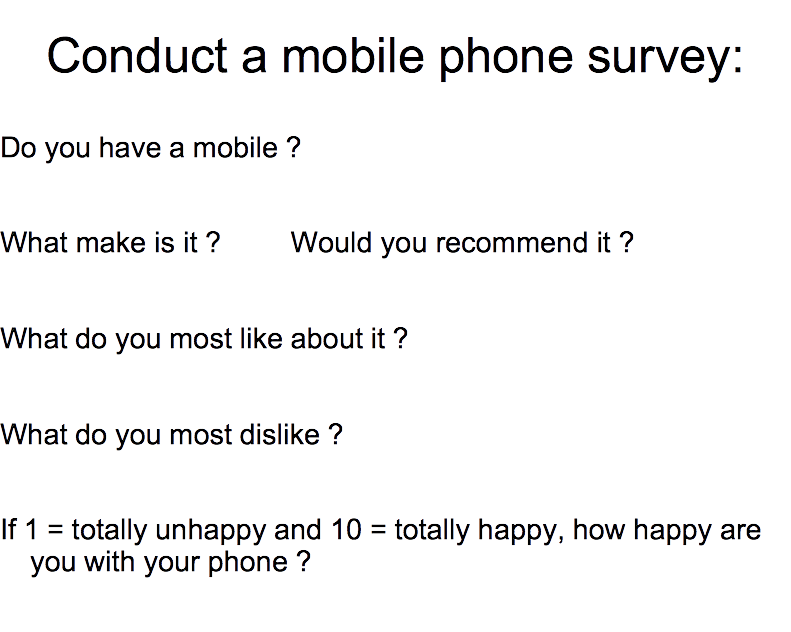
These classes are arranged in blocks of four, the last part of the last lesson being a spoken exam. Therefore, I will allocate the second part of tonight’s class to speaking activities and, to warm up, I’ll have them speak to each other but in the form of a market research survey. Quite simply, I need a new mobile / cell phone.

However, I don’t know which one to buy ..

It is very confusing – I am confused.

I love Apple but … they can be very expensive

In addition, the reviews have been less than favourable:

So I need to do some research, read some online reviews or do some market research.

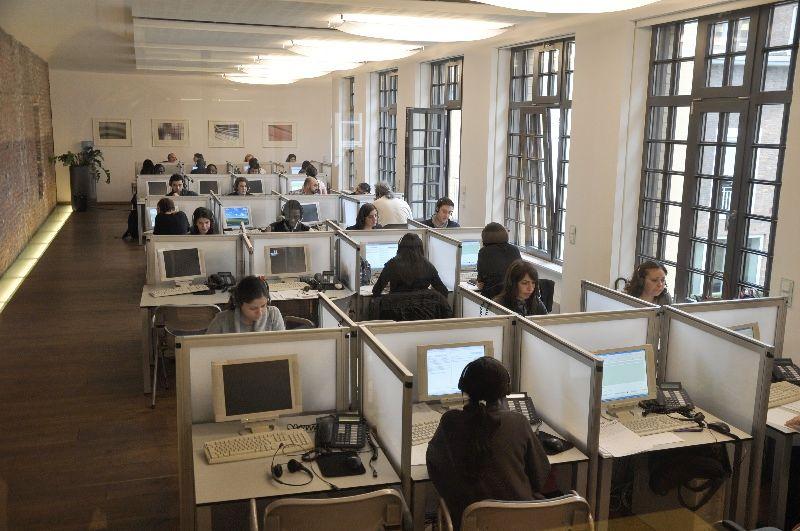
A typical market research office
One of many online review posts.

I need my students to carry out / to conduct a survey for me


The students will be arranged in small groups. One member will be responsible for gathering the information, then reporting back to me. I shall then collate all the data and display the findings in chart form (which will be beneficial for those who wish to study IELTS later).

After this, I shall do a vocabulary- building exercise – showing some basic words and a ‘better’, higher-level word (a ‘low-frequency’ word as some books term them).

boring mortifing

confusing irritating

embarrassing tedious

exciting bewildering

frustrating exhilarating

Spelling rule:

‘I’ before ‘e’ except after ‘c’

Examples: believe field niece priest achieve

but

receive ceiling receipt deceive

These are exceptions to the rule

This leads into the book work. Many study get confused with the I am / It is structure. For example, some teenagers and university students have wished to proclaim their disapproval of my classes, and have very politely shouted out, “I am boring.” They of course mean to say ‘I am bored’, which causes laughter from those who know the grammar, and a certain satisfaction on my part. Instant karma, baby !

The class will then practise the correct -ed or -ing form of the words, before moving into the reading and listening part of the lesson.

I like to use real-life videos for listening when appropriate. Tonight I’ll show a YouTube clip from Mark Wiens, who is a food enthusiast. In this clip, he tries a typical Vietnamese breakfast, and I want to see how much my class understands. Here, the paralinguistics are important; body language, intonation, word stress

https://www.youtube.com/watch?v=crPVJ3CXs1g

Mark tries what is basically a pretty normal breakfast but he seems to be really enjoying it. Other students have found him very amusing, though feel he was overcharged at 91 000 VND (for two).

After break, I want the students to practise speaking, so I’ve prepared a list of general questions.

Speaking exercise

What did you do on New Year’s Eve ?

What was the last film you saw ? Did you like it ?

How many people live in your house ?

What is hard about learning English ?

How often do you chat online ?

Which social media sites do you use ?

What is your favourite food ?

Do you often eat western food ? Do you sometimes eat fast food ?

What sports do you play ?

What do you feel about shopping ?

What would you most like to buy ?

Do you like living in the city or countryside ?

Have you ever sang karaoke ? 

What country would you like to visit ?

Do any of your family live outside of Vietnam ?

Have you tried Korean or Japanese food ? What did you think ?

This can be arranged in a ‘speed-dating’ format. Students sit facing each other, speak for a few minutes, then move on to the next student. This way, they are able to practise speaking and listening with a variety of people, not just their friends. There is generally some resistance (or even refusal) with adult students to comply, so I encourage them by using non-confrontational words such as ‘suggest‘ or ‘recommend‘. Having said that, last night in my IELTS class I used, “Teacher says ‘stand up’ ” … and half the class actually DID stand up and mingle. Hey – whatever works !

A good game to end is a variation of the British radio show ‘Just a Minute.’ Students are given a subject (for example, HCM City) and must speak for one minute without repetition, hesitation or deviation. This can be done in pairs, and they can time each other on their mobiles. In order to practise for next week’s test, we can discuss what makes a good answer, and how to use discourse markers to link ideas together.

Another ‘trick’ is the use of phrases or words to ‘buy time’ while they think of an answer. This can include:

Let me think ….

How can I put it ?

That’s an interesting question …

Well,

And also repeating, in part, the question but using intonation:

Q: What will you do tonight ?

A: Tonight, I will ….. (go home and study / meet friends)

Then, if time allows, I’ll play the ‘eyewitness’ game. This involves showing some faces (three men followed by five women) for a limited amount of time, then seeing how much they can remember.

Tonight’s objectives will be for students to be able to differentiate between confused / confusing, learn some new vocabulary and be more confident and proficient speaking in longer, more fluent sentences … and to hear how an American ‘foodie’ loves Vietnamese breakfasts.

Please Note: All photos are taken from Google Images or free photo sites, and are used for educational purposes only. No copyright infringement or offense is intended. If I have used your photo or image, and you wish me to remove it, just ask. This site is not monetized, I run it on my own dollar. Thank you.

Classroom Games.

I’ll be using abbreviations throughout these blogs so for clarity, here’s a short run-down of the most common ones:

Back to Board (B2B). Any activity where a student can’t see what is behind them, but has to guess or deduce from clues by the other students. It could be the name of a famous person, or a small YouTube clip. I often show a funny film and drill students how to describe what they see using the subject – verb – object formula. 

Call My Bluff (CMB). Based on the British TV show, students are put into groups and given a list of higher-level words. Each word has three definitions, two false, one true. The students have to read out the word, maybe varying the pronunciation each time, state the type of word (noun, verb etc) and a definition. The other team has to guess the correct answer. This can be a fun way to introduce new vocabulary.

Family Fortunes (FF). This works well with larger classes. Students are put into small groups and given a board and marker. The teacher then asks for four answers to a general question. The students ‘win’ imaginary money for each answer that matches the teacher’s four. Example: I have been to four places in Viet Nam, not counting HCM City. What are those four places ? Other good questions are my four favourite Vietnamese dishes, four things I like (and dislike) in VN and favourite types of films or music.

Snakes and ladders (SNL). Based on the popular children’s board game, ideally, space permitting, I use the floor of the classroom. With markers (NOT permanent markers, mind you), the students mark out a board, a large square. On some squares there is a red dot meaning go back 2 spaces, or a blue square, go forward 1 or 2 squares. One square is ‘haha’ – the player has to return to their original place. In a big enough room, I use students who begin at opposite corners, and have to complete one circuit to win. I ask questions which any one in the team can answer – or you could ask students individually – and then they roll a die. In a smaller room, I just make the game on the whiteboard. This can be very exciting and it’s a good idea to establish the rules first i.e. is it first past the end square OR exact number to finish. This game can sometimes be too popular and become too boisterous.

Stop the bus (STB).  This is a simple question and answer games, used to warm up or wind down classes. The teacher asks a question, the students shout out the answer, but first have to shout, “Stop the bus !” If they answer without the STB, no points are awarded. The game can be slightly varied, using different nouns e.g. Stop the Taxi, Stop the Grabbike or even, with a lively class, make them get up and sing, “Stop in the name of love.”

Word Battleship (WB). I often use this as a warm-up exercise. On the board draw a 4×4 grid, labeled A – D and 1 – 4. Assign different scores to each square on a separate sheet. Ask sixteen questions (can be general knowledge or a review of recent lessons, grammar, vocabulary). If the student gets the answer right, they can choose a square and you write in the number. I usually have 5 as the lowest, then 10, 20, 50 and one 100-pointer. To engage all students, you could ask them questions individually.

Word cards. I got this from an IELTS website. Make a list of recently – learnt words and expressions. The number and complexity will depend on the level of the class, but at least five or six but no more than ten. Print out and cut into individual word units. Put them in a small container. The students are placed in small groups and given the container with words. Each student has to speak on a basic theme using as many words or cards, as possible, within a set time. They can spread the words in front of them and drop them back into the container once they have been uttered.