IELTS: The story so far. Vocabulary review and speaking tips

7th July 2020

LUYỆN THI IELTS TẠI HẢI PHÒNG - huyenielts

Before we get too far ahead of ourselves, time to take stock and make sure the students have absorbed the information and are au fait (French for well informed, know the point) with the vocabulary so far. With that in mind, here’s a quick warm up. Replace the high frequency words with low-frequency ones, then use your newly-acquired discourse markers to construct longer sentences.

Let’s kick off with some common or garden IELTS subjects:

What do you do in your free time ?

I drink coffee with my friends. There are many coffee shops in my hometown

Will Chinese Drink Coffee over Tea?

School keeps me very busy, but if I can find some time for myself, I enjoy hanging out with my friends in coffee shops, which are ubiquitous in Sai Gon.

TIP: The question here is about free time, so don’t just talk about coffee shops – mention at least two other different activities – even if you DON’T do them, just talk about them !

Example, playing music, watching films, listening to music, sports, shopping, helping family, reading – thing you enjoy NOT to do with studying or work

Now … Your Turn: [tips at the end]

Remember, you should be able to speak in complex sentences with a low-frequency word or two, some idiomatic language, contractions and discourse markers, all spiced up with a liberal sprinkling of adverbs and adjectives. Furthermore, try to introduce the answer, rather than stating it outright.

I don’t like English grammar. I am boring with it.

A lot more people go to China than Viet Nam.

She forgets everything.

Thai food is good.

I think Barcelona will beat Real Madrid on Sunday

I like to go to cinema and go to shopping and go my friend house and sleep.

I don’t go out now. It rains all day.

The examiner asks you a question but you didn’t understand

What ?

I didn’t hear you.

Errrrrr, I don’t know

OK, yes I like it

The examiner asks you a question but you need time to think of an answer.

UUuhhhmmmmmm.

Hahhahahahaha

I don’t know.

Yes.

Tell me about your city

It very dirty.

I was born here. I love it.

We can do many things here.

Has many traffic jam. Yes. people nice.

Do you like to eat ?

Of course !

No

Yes. I eat with my family. I eat with my friends at school. I eat after school. I eat at night with my family

IELTS Speaking Tips: Introduction & Interview | St George ...

Things to do (and not to do) on the IELTS test day, and the days ...

Words and expression to use, tips, phrases and idiomatic language.

Low – frequency words

Boring: tedious // forgetful: absent-minded //

expensive: sky high // what will happen: predict // everywhere: ubiquitous.

Could you repeat that, please // I’m sorry, I didn’t catch that // Would you mind rephrasing the question

In my opinion // From my perspective // For me //

Let me think // How can I put it // Well, that’s an interesting question

Allow me to explain // By which I mean //

As well as // furthermore // additionally // on the other hand // having said that // however // although // despite that

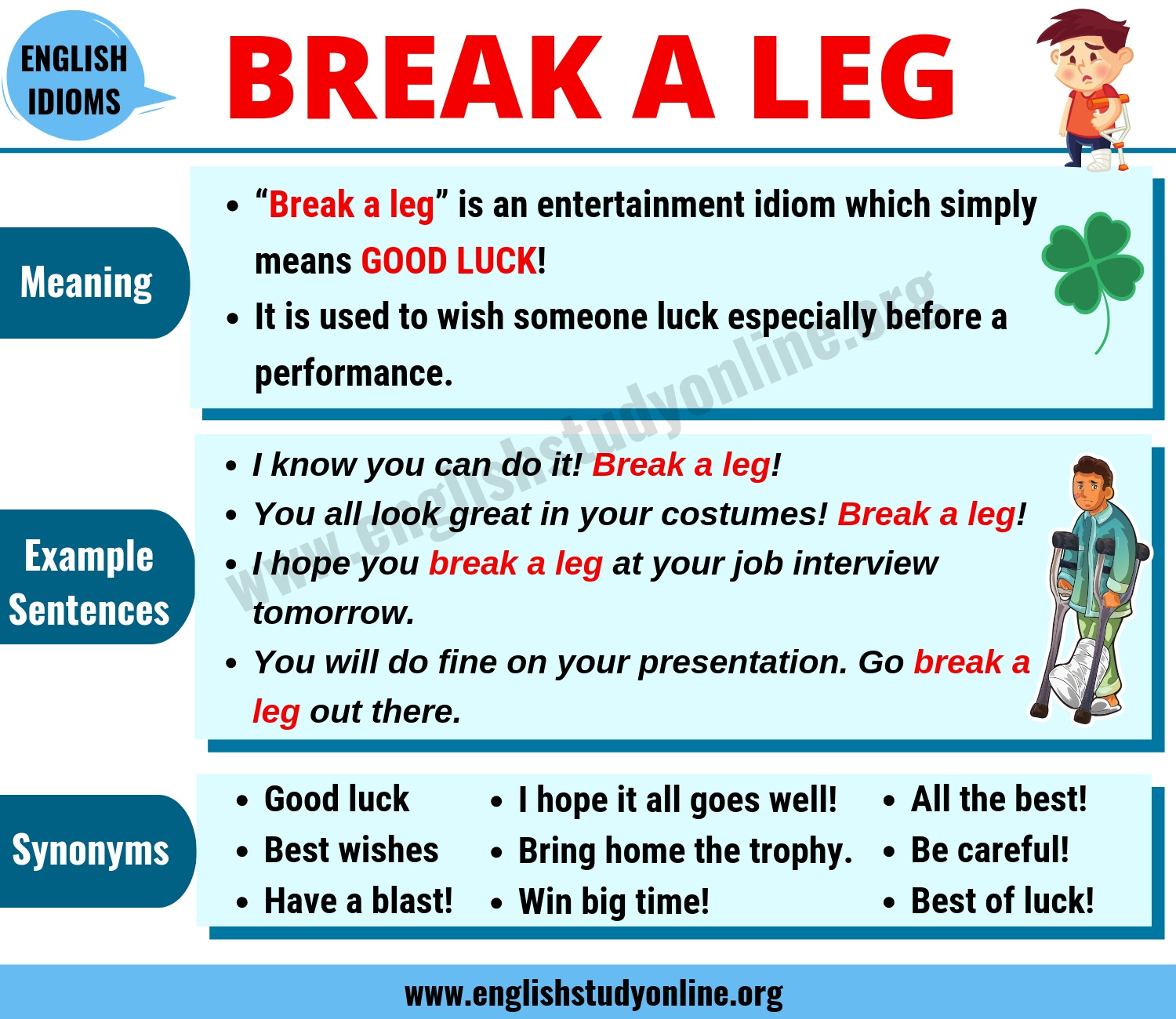
It’s raining cats and dogs // It costs an arm and a leg // piece of cake // I’m burning the candle at both ends

Relative pronouns – who / which / where / whose

Thai Blends Greenbelt 3 Cinema - Home | Facebook

One of my favourite things to do, if I have some spare time, is to hang out with my closest friends and just catch up on our news, maybe hit a mall because they are air-conditioned and have a wide array of amenities such as shops, cafes and, if I may say, bathroom facilities, as well as services like ATM machines and free wifi. My closest friends are Sheila, who is from India and studies here in Sai Gon, and Kerry, who is a gorgeous Thai lady. As we all come from different countries, there can be issues; allow me to explain. We have to communicate in English, however Kerry is just starting her studies, so we have to use Google translate frequently. Having said that, it’s such tremendous fun to be with my best friends. It helps me forget about the pressure and stress of work.


11 Things You Should Know About Thai Culture
Keep studying !

IELTS: use adverbs frequently, correctly and confidently

3rd July 2020

IELTS students need to know an incredibly wide array of adverbs so, with that in mind, here’s an exercise which can be easily adapted as a team game. Complete the sentences with suitable adverbs. Piece of cake, right ?

Use a thesaurus and dictionary to boost your vocabulary.

Asian University Life Concept Group Young Asian College Students ...

Word Fill

Adverbs of manner & ‘but’, ‘so’ and ‘even though’

(Fast or quickly – both can be used as adverbs, fast more for speed, quickly for time e.g. the animal runs fast and eats quickly.)

Note: ‘well’, ‘fast’ and ‘hard’ are irregular adverbs of manner.

Use a positive adverb for (+) and a negative one for (-)

Example: She sings (+) beautifully but plays piano (-) terribly.

It is raining (-) heavily so I will bring an umbrella

UK weather forecast: London | London Evening Standard
WELCOME TO LONDON

I will go along with you ……I am not really hungry

……….I am not hungry, I will go with you to KFC

Grabbike is cheap …..they drive so (-). 

She failed her test ……..she studied (+)

Do I look like Batman ? Then why are you speaking so …..(-)

Christian Bale says Heath Ledger 'ruined my plans' for Batman and ...
Batman has amazingly good hearing … but not all teachers have so SPEAK UP !

We have learnt many idioms ….that is just the tip of the iceberg.

He loves music …much ….he sings (-).

She never eats the food ………she works there.

……..she speaks English very (+), she is afraid to speak to westerners.

Rosé (BLACKPINK) confessed that she used to be a terrible singer ...
She sang terribly even though she loves music

IELTS: It’s all relative – relative clause practice

1st July 2020

As I continuously tell my students, being able to form complex sentences, and then say them fluently, is key to passing IELTS.

One way to make longer sentences, as well as introducing subordinate clauses, is to become a master of …

Relative Pronouns

Academic Calendar & Bulletin - AUW | AUW

This lady, who wants to work in Australia, is studying hard for her IELTS.

who For people: This is the man who sold me the fake Rolex ! 

which For things: We tried fish and chips which is delicious.

where For places: Let’s go to the shop where we saw the great bargains.

Whose Possessive: That’s the singer whose record we heard last night.

The Italian car, whose driver was young, won the race.

Young Tasmanian racing driver Alex Peroni on track for European ...

Exercises

We arrived at a nice beach ______ we could swim and lie in the sun.

A man ______ mobile phone was ringing did not know what to do.

The patient, ______ had a serious disease, was taken to hospital immediately.

Smithsfield is a small village ______ people live a quiet life.

The boy ____ sister is in my class was in the bank at that time.

I know a person ____ can speak seven languages.

We visited the church _____ is in the middle of the square.

It is a protected area of land _____ you can see a lot of interesting wildlife.

This dress is made of silk, _____ is a very expensive and delicate material.

A police officer, _____ car was parked at the next corner, stopped and arrested them.

Silent Era : Progressive Silent Film List

Go that extra mile – extra practice

IELTS, which can be very challenging, tends to be rather formulaic by which I mean it follows a pattern. Students can pretty much predict, with a fair degree of certainty, the type of subjects they will be expected to encounter.

With that in mind, try making complex sentences about these people:

Is this what the west is really like?' How it felt to leave China ...

Name: Ms Chen // Age: 19 // From: China // Lives: London // Studies: Business.

Ms Chen, who is studying Business in London, is 19 and originally from China.

Originally from China, Ms Chen, who is 19, is currently living in London, studying Business.

NOW … YOUR TURN

Meet The 42 Most Popular Men On JSwipe – The Forward

Name: Adam // Age: 24 // From: Israel // Lives: New York // Job: Writer for a magazine and blogger

Afbeeldingsresultaat voor t-ara boram kpop wiki

Name: Boran // Age: 34 // From: South Korea // Likes: drawing manga // Job: singer, rapper and dancer

Close Up Cool Young Black Guy Listening To Music With Headphones ...

Name: David // Age: 28 // From: Leicester, UK // Passion: Music // Plans: To live in LA and record a CD

IELTS: Complex sentences – it’s not that complicated.

24th May 2020

Portrait of a confused asian girl standing | Free Photo

Following another speaking test, I’ve noticed that my students are still speaking simple sentences and thereby losing marks, whereas with a little work, not to mention a little, or a lot, of practice, this omission can be redressed.

Therefore today’s blog, in it’s entirety, will be devoted to the forming of longer, complex sentences, altering sentence structure and general tips to improve not just speaking, but writing as well.

As you should have noticed the above two paragraphs, rather like this third one, employ several clauses, that is, parts of a sentence to give extra information without the need of a full stop, serving as examples of how this can be achieved.

You will, no doubt, experience a feeling of triumph once you have mastered this technique which, I admit, does require some new thinking and extra effort on your part but will, without a shadow of a doubt, enable you to attain the score for which you are aiming.

And now, without further ado, let’s kick off. First, a warm-up. Of today’s three highlighted expressions, which would you use for:

1 When you are certain or 100% sure about something

2 To start immediately, with no more interruptions

3 Great happiness when you have achieved or won something

Answers at end of blog

Here are some standard IELTS-type questions, followed by a typical answer and then, by way of comparison, an extended response to demonstrate improvements.

1 Tell me about your hometown 2 How often do you go online ?

3 What jobs will be important in your country in the future ?

4 Tell me about a time you received good news

An average answer, which would probably result in a middle score, around 4 – 5 would be, to take one example, (Number 2):

I go online every day because I need the internet to help me study. I use the internet to check new words in English. I go online for information for my school.

black-girl-at-laptop-378x382 - GSDM

What do you notice about this ? Firstly, what are the mistakes ?

The candidate answers the question immediately, with no introduction. This is not necessarily wrong, but a sentence leading into the response will make for a longer answer.

The second sentence is not directly relevant to the question, though it is acceptable for providing more information. I advise students to be careful, in case they start deviating from the subject.

Lastly, the third sentence just repeats what has already been said, even using the same phrase “I go online“, and then explaining the reason for using the internet NOT how often it is used.

Here’s a different way of answering.

Well, that’s interesting because I have internet access at school, at home and on my phone so I would say I’m absolutely online every day. How much time I spend online varies from day to day, but I am probably online about three hours every day, sometimes more if I have a project or if I’m playing a cool game.

See how this answer only uses two sentences , but is much superior. Let’s break down how it earns points.

Initially, we have a short introduction and the question is answered directly in the first, extended sentence.

Secondly, the first sentence includes a list of three, so this is a chance to practise speech rhythm (one, two and three) – remember, you get points by HOW you say something as well as what you say.

Thirdly, the answer uses three everyday adverbs (highlighted). ‘so‘ can also be used as an adverb, but here it is a conjunction (a word such as ‘and’, ‘but’, etc).

Additionally, the sentences employs an expression, “from day to day,” which examiners like to hear, as it shows familiarity with figurative language.

Lastly, the candidate explains what the reasons for being online, and how it affects the time spent on the internet.

Now … your turn Try to answer the same question, following this pattern.

Now … let’s move on. Question 1, my hometown.

Vietnam Student Tour, Vietnam Student Trip, Vietnam Student Holidays.

This time, I will give you facts and you arrange in an answer.

My hometown is Da Nang. Fifth largest city in Viet Nam. Is in Central Vietnam. Near historic town Hoi An. Important port. Many tourists. Has a cable car and a dragon bridge. Famous for its beach.

Dragon Bridge in Da Nang - Attraction in Da Nang, Vietnam - Justgola
Dragon Bridge at Da Nang

Thank you for letting me introduce to you my hometown which is Da Nang, one of the biggest cities in Vietnam, although it is much smaller than Ha Noi or Sai Gon. My hometown is in the middle … in central Viet Nam, I mean, sorry, and had many tourists. They come to see many things such as the Dragon Bridge, go on the cable car or for swimming. Also, Da Nang is very near many famous places such as Hoi An. As it is on the coast, my hometown is also a busy port.

Check for

Introduction

Information in first sentence

Discourse marker ‘ although

Correcting a mistake in line 3

A list of three items in lines 4 and 5

Change of sentence structure in the last line: instead of saying, “My hometown is also a busy port because it is on the coast,” I started with the end of that sentence (it is on the coast) and replaced ‘because’ with ‘as’ (though because would also be all right to use).

To practise:

Rearrange these sentences, starting with the section in italics.

The London Tube needs repairing because it is so old.

Many people have to stay home because of COVID 19

We must buy vegetables because Jenny doesn’t eat meat.

Colin is now studying in Boston because he got an 8.5 in his IELTS test.

Meet the Five Harvard Students Who Testified in the Admissions Trial

Answers at end of blog

Answers:

1 = without a shadow of a doubt

2 = without further ado

3 = feeling of triumph

Because it is so old the London Tube needs repairing.

As it is so old, the London Tube needs repairing.

As the London Tube is so old, it needs repairing (notice how the pronoun ‘it’ moves).

Due to / Because of COVID 19, many people have to stay home.

Because Jenny doesn’t eat meat, we must buy vegetables.

As he got an 8.5 in his IELTS test, Colin is now studying in Boston.

Diversity and Inclusion: Colleges with the most diverse student bodies
Keep studying

IELTS Mindset: Preparing for the speaking test.

14th May 2020

As usual, I use bold font to highlight words, expressions and idioms that students can learn and then use in their everyday speech. Remember, some expressions are only used in some situations, but an IELTS instructor will always notice an attempt to use a wider variety of English.

Những lầm tưởng về IELTS Speaking - AMERICAN STUDY

Next week, one of my IELTS classes has their speaking test therefore this blog will help, I sincerely hope, to prepare them, and enable them to achieve a commendable result.

With that in mind, tonight’s class will just be practice, practice and … more practice.

I try to relax my students by telling them that passing IELTS is easy (that normally gets their attention). I have to elaborate; IELTS is easy because they

TELL YOU WHAT THEY WANT TO HEAR

Namely, vocabulary, grammar, pronunciation and para linguistics (body language, eye contact, stress, intonation, rhythm) and fluency (the ability to speak without overlong pauses) as well as answering the question relevantly.

Let’s break that down:

Vocabulary: low-frequency words // idioms // expressions //

Structure: complex sentences employing discourse markers and clauses

Let’s kick off with complex sentences. Here’s a link to a previous blog regarding just that subject; there are a number of exercises for students to practise:

https://thaypaulsnotes.com/2020/04/30/ielets-mindset-complex-sentences/

Now some tips on using various expressions and phrases to introduce and close your speech. Again, this is from a previous blog (IELTS 12th May 2020):

https://thaypaulsnotes.com/2020/05/12/ielts-quick-fire-talking/

The above blog gives an example of answering a question about laptops, then allows students to compose their own response on subjects of their choice.

Finally, here are some expressions that can be used to ‘spice up’ a student’s talk as they are all everyday phrases though some will be UK-specific as they are part of the common culture:

Not my cup of tea = a polite way of saying you don’t like something.

I can take it or leave it = have no strong feelings about something.

I’m really into it = like or love something very much.

It does what it says on the tin = something that does the job, no more, no less (this is from a UK TV commercial).

Does exactly what it says on the tin - Story behind the logo

Vocabulary game:

To pracise using low-frequency words, put students in teams, giving each team a set of IELTS words (or phrases, idioms). They have a set time, maybe a minute, to use as many as they can, speaking about any subject they choose.

Some students may prefer to be given a set topic, so choose typical general subjects such as shopping, food, their city or country, free time etc.

Words and expressions are:

ubiquitous // somewhat // not my cup of tea // significant or significantly // I can take it or leave it // exhausting // challenging // miserable // having said that // I’m keen on // all in all // consequently // allow me to explain // eventually // thrilling // put up with

Vocabulary booster

Find low-frequency words for these adjectives:

boring // repetitive // tiring // interesting // relaxing

Break A Leg: What Does "Break A Leg" Mean? | Useful Example ...

IELTS: Vocabulary activities

24 April 2020

Quiz Night – Call My Bluff

BBC Two - Call My Bluff

This is based on an old British TV show. A team (ideally of three) will be given a word – in the first example, it will be ‘jeopardy’. Each member reads out a definition; depending on the ability of the students, they may be able to embellish, and use intonation to add colour to their presentations. They may also use examples such as ‘Jeopardy, if you have seen a Vietnam war film, you will remember seeing a small, open-top green car. They were used all over Vietnam. These are called, jeopardies. One day, I hope to drive a jeopardy.’

The teacher can adapt this principle to review recent vocabulary.

Team A

Jeopardy

1 In danger, danger of losing or failing

2 A small car used by the army

3 A bird in Australia that can speak fluent English

Contestants

1 People who order food in a restaurant but run away without paying

2 Large vehicles for carrying heavy goods 

3 People who enter a competition, or take part.

Maximum

1 A lady with more than six children

2 The most amount of something

3 A type of sports outfit used in cycling

In the form of

1 Looking like something, in the shape of something

2 Something made of glass or metal

3 Paperwork needed to get a US visa

Team B

Reduce

1 To do something again

2 To make less of something

3 To use glass, plastic, paper again and again

Actual

1 Real, a fact

2 A person who works in theatre or cinema

3 A person who works with a company’s money and finances

Smart

1 A painting of a happy person

2 Very clever or intelligent

3 A small cake made in the UK

except the last one

1 Only the last one

2 Everyone but not the last one

3 To have to start a game over again

Internet Survey

This activity is designed to get the students talking to each other, and encouraging them to elicit more information from their classmates. 

7 tips to prepare Students & Graduates for an online video ...

The questions could be copied onto a sheet, printed out then distributed to the class, so they can walk around and talk to as many people as feasible.

Before the activity, board some key phrases to help:

What did you buy online, which website did you use, how long did it take to arrive ?

Were you happy with the purchase ? Why or why not ?

What websites would you recommend for university work or borrowing books ?

Can you trust Wikipedia …?

Question // Name // Answer

How often do you go online ?
Do you use the internet for work and/or study ? How ?
What social media sites do you use regularly ? How often ?
Have you ever bought or sold anything online ?
What is good about the internet ? What is the worst ?

Desert survival

Lost in the Desert | From the sand dunes of Mui Ne, Vietnam ...

I learnt this at International House, London, as part of the CELTA course, and I use it frequently.

The concept is to introduce phrases and expressions by which students can exchange opinions. Students are placed in small groups and have to decide upon five items. After, they must discuss with other groups their choices. If there are any differences in opinion, the teams must negotiate until the whole class agrees on five items.

First, go through the items, then drill the negotiation phrases.

You need to select five items below to help you survive in the desert.

Factors to consider:

food, drink, heat, cold, injuries, attracting attention, wildlife

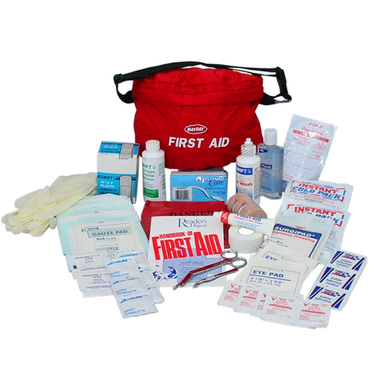
First aid kit // matches // rope // knife // compass 

cigarettes // blankets // barrel of water

flare gun // torch

magnifying glass // Beatles CD // make-up set // dried food 

English grammar study book

Angry Birds game // air rifle // sun block

Negotiation language

I see your point but … that’s interesting, however …

I’m not sure about that //  I can’t go along with that 

I don’t feel that is entirely right // I fail to see the merits of …

I respectfully disagree // I find your contention somewhat flawed

Your case (argument) is not without value, but …

Have you fully considered the implications of your decision ?