Last week, I asked a typical warm up question, “What did you do today ?”
Remember, when we ask questions we are just giving you a chance to show off and practice your English, so be creative. However, even if you can’t think on your feet, you can make even the most prosaic day more interesting. Allow me to demonstrate:
Today I met my friend and we went to see a movie. After that we had coffee and had some street food.
OK, we can easily make that more appropriate for IELTS.
Firstly, an introduction. Then … details, tell me about the film, about your friend, about the coffee shop and about the food … there is SO MUCH to talk about. Write a longer answer, I’ll give you three minutes.
EXAMPLE
I didn’t go to school (work) today so I had some free time
I met my friend Nancy who I have known for over five years
I had a date with my friend who is from USA
We were at the mall and decided to take in a movie
We were in the mood for a film
We had our heart set on seeing ‘Parasite’ which is Korean film that has won many awards
After, we needed some coffee so we headed for the nearest coffee shop, which was Highlands Coffee. The prices are sky-high however the coffee is delicious. Additionally, there is free Wi-fi.
Later on, we grabbed some coffee at one of the ubiquitous coffee shops. I had a large cappuccino which cost an arm and a leg, however it really woke me up.
It was late, so we felt quite hungry. There is a lot of affordable and delicious street food. I had some chicken and rice and my friend, who is vegetarian, had rice, eggs and salad.
After the movie, we were hungry but the food at the mall is not very exciting and the prices are sky-high, so we went for some street food which is ubiquitous in this city.
Now … you turn
What will you do on your next free day ?
Remember … this is future tense and you can express the uncertainty in your answer.
Target language:
I’d love to … / I’m planning to / I have my heart set on … /
I’m not absolutely sure yet, but I plan to … / I wish that I could …
I’ll probably … / I keep telling myself that I will finally …
Use at least one of the above expressions.
Use relative pronouns to give more information.
See if you can add an idiom (or two).
EXAMPLE
I really need a free day because I’ve been burning the candle at both ends this week.
I’m not absolutely sure yet, but I plan to meet up with some friends and just hang out. We have all been so busy, we haven’t seen each other for ages. (for a long time).
As you may know, I’m a vegetarian. However, all my friends love fast food especially burgers and fries. We often go to Lotteria which, I believe, started in Japan, and now they are ubiquitous in Sai Gon and easily seen with their bright red stores and big white ‘L’ logo. Despite not eating meat, I can order a fish burger but, in my opinion, the food is not exactly mouth-watering and the service can be rather slow.
Afterwards, I’ll probably go home as I have my heart set on playing a new computer game that my friend, Tony, lent me. Tony, who is actually from Ha Noi, is a real computer geek, he loves gaming, maybe too much. As for me, I get a little bored after an hour so then it’s time to put my nose to the grindstone and hit the books (study) again. “The roots of education are bitter, but the fruit is sweet.” That quote, from the Greek philosopher Aristotle, inspires me to work harder, even if sometimes the work is quite tedious.
Enjoy your free day
For my students with a speaking test soon … Best of British !
Words and expression to use, tips, phrases and idiomatic language
Recap: to pass IELTS with flying colours, you will needs to demonstrate a command of everyday English, the ability to express it with stress and intonation, as well as being able to link your ideas with appropriate discourse markers.
I need to hear nouns described by interesting adjectives, verbs intensified by adverbs and conversation enlivened by low-frequency vocabulary.
Piece of cake, right ?
Low – frequency words (LFW)
Boring: tedious // forgetful: absent-minded // expensive: sky high // what will happen: predict // everywhere: ubiquitous.
Activity 1: Make sentences using the above five LFW
Introduce your answer by:
Let me think // How can I put it // Well, that’s an interesting question
Useful expressions:
In my opinion // From my perspective // For me // Allow me to explain // By which I mean //
Discourse Markers:
as well as // furthermore // additionally // on the other hand // having said that // however // although // despite that
Activity 2: Give each student a discourse marker and they have to use it in a sentence
EXAMPLE ‘in addition’
I have a busy life; I have to study, work my part-time job and help my family. In addition, I go shopping for my neighbour because he is too old to go out.
NOTE: use of ‘because‘ to explain why you do something … and therefore construct a longer sentence.
Idioms:
It’s raining cats and dogs // It costs an arm and a leg // piece of cake // I’m burning the candle at both ends.
Activity 3: Who can use these idioms correctly ?
Relative pronouns – who / which / where / whose
Activity 4: Use the correct relative pronoun:
We arrived at a nice beach ______ we could swim and lie in the sun.
A man ______ mobile phone was ringing did not know how to switch it off.
The patient, ______ had a serious disease, was taken to hospital immediately.
Smithsfield is a small village ______ people live a quiet life.
This dress is made of silk, _____ is a very expensive and delicate material.
Buying time:
Could you repeat that, please // I’m sorry, I didn’t catch that // Would you mind rephrasing the question
Model answer: What do you do in your free time ?
One of my favourite things to do, if I have some spare time, is to hang out with my closest friends and just catch up on our news, maybe hit a mall because they are air-conditioned and have a wide array of amenities such as shops, cafes and, if I may say, bathroom facilities, as well as services like ATM machines and free wifi. My closest friends are Sheila, who is from Japan and studies here in Sai Gon, and Kerry, who is a gorgeous Thai lady. As we all come from different countries, there can be issues. Allow me to explain; we have to communicate in English, however Kerry is just starting her studies, so we have to use Google translate frequently. Having said that, it’s such tremendous fun to be with my best friends. It helps me forget about the pressure and stress of work.
Use this an a plan – now tell me what YOU do in YOUR free time … DO NOT just copy the above example !
Now … Your turn
Conversation Practice: In pairs or small groups, ask each other these questions. If the answer is too short, ask the person to tell you more, to explain with more details.
Family questions
Ask each other about your families
How many siblings do you have ?
[You can give names, ages, jobs, what and where they study, what they look like, what their personality is like, if you have something or nothing in common with them]
Do you live with your parents and grandparents ?
Do you often meet your cousins ?
Who is the youngest member of your family ?
Who is the oldest ?
Who is your favourite person in your family and why ?
Useful expressions
Can you tell me more ? // In what way ? // Why do you say that ? //
IELTS students need to know an incredibly wide array of adverbs so, with that in mind, here’s an exercise which can be easily adapted as a team game. Complete the sentences with suitable adverbs. Piece of cake, right ?
Use a thesaurus and dictionary to boost your vocabulary.
Word Fill
Adverbs of manner & ‘but’, ‘so’ and ‘even though’
(Fast or quickly – both can be used as adverbs, fast more for speed, quickly for time e.g. the animal runs fast and eats quickly.)
Note: ‘well’, ‘fast’ and ‘hard’ are irregular adverbs of manner.
Use a positive adverb for (+) and a negative one for (-)
Example: She sings (+) beautifully but plays piano (-) terribly.
It is raining (-) heavilyso I will bring an umbrella
WELCOME TO LONDON
I will go along with you ……I am not really hungry
……….I am not hungry, I will go with you to KFC
Grabbike is cheap …..they drive so (-).
She failed her test ……..she studied (+)
Do I look like Batman ? Then why are you speaking so …..(-)
Batman has amazingly good hearing … but not all teachers have so SPEAK UP !
We have learnt many idioms ….that is just the tip of the iceberg.
He loves music …much ….he sings (-).
She never eats the food ………she works there.
……..she speaks English very (+), she is afraid to speak to westerners.
Following another speaking test, I’ve noticed that my students are still speaking simple sentences and thereby losing marks, whereas with a little work, not to mention a little, or a lot, of practice, this omission can be redressed.
Therefore today’s blog, in it’s entirety, will be devoted to the forming of longer, complex sentences, altering sentence structure and general tips to improve not just speaking, but writing as well.
As you should have noticed the above two paragraphs, rather like this third one, employ several clauses, that is, parts of a sentence to give extra information without the need of a full stop, serving as examples of how this can be achieved.
You will, no doubt, experience a feeling of triumph once you have mastered this technique which, I admit, does require some new thinking and extra effort on your part but will, without a shadow of a doubt, enable you to attain the score for which you are aiming.
And now, without further ado, let’s kick off. First, a warm-up. Of today’s three highlighted expressions, which would you use for:
1 When you are certain or 100% sure about something
2 To start immediately, with no more interruptions
3 Great happiness when you have achieved or won something
Answers at end of blog
Here are some standard IELTS-type questions, followed by a typical answer and then, by way of comparison, an extended response to demonstrate improvements.
1 Tell me about your hometown 2 How often do you go online ?
3 What jobs will be important in your country in the future ?
4 Tell me about a time you received good news
An average answer, which would probably result in a middle score, around 4 – 5 would be, to take one example, (Number 2):
I go online every day because I need the internet to help me study. I use the internet to check new words in English. I go online for information for my school.
What do you notice about this ? Firstly, what are the mistakes ?
The candidate answers the question immediately, with no introduction. This is not necessarily wrong, but a sentence leading into the response will make for a longer answer.
The second sentence is not directly relevant to the question, though it is acceptable for providing more information. I advise students to be careful, in case they start deviating from the subject.
Lastly, the third sentence just repeats what has already been said, even using the same phrase “I go online“, and then explaining the reason for using the internet NOT how often it is used.
Here’s a different way of answering.
Well, that’s interesting because I have internet access at school, at home and on my phone so I would say I’m absolutely online every day. How much time I spend online varies from day to day, but I am probably online about three hours every day, sometimes more if I have a project or if I’m playing a cool game.
See how this answer only uses two sentences , but is much superior. Let’s break down how it earns points.
Initially, we have a short introduction and the question is answered directly in the first, extended sentence.
Secondly, the first sentence includes a list of three, so this is a chance to practise speech rhythm (one, two and three) – remember, you get points by HOW you say something as well as what you say.
Thirdly, the answer uses three everyday adverbs (highlighted). ‘so‘ can also be used as an adverb, but here it is a conjunction (a word such as ‘and’, ‘but’, etc).
Additionally, the sentences employs an expression, “from day to day,” which examiners like to hear, as it shows familiarity with figurative language.
Lastly, the candidate explains what the reasons for being online, and how it affects the time spent on the internet.
Now … your turn Try to answer the same question, following this pattern.
Now … let’s move on. Question 1, my hometown.
This time, I will give you facts and you arrange in an answer.
My hometown is Da Nang. Fifth largest city in Viet Nam. Is in Central Vietnam. Near historic town Hoi An. Important port. Many tourists. Has a cable car and a dragon bridge. Famous for its beach.
Dragon Bridge at Da Nang
Thank you for letting me introduce to you my hometown which is Da Nang, one of the biggest cities in Vietnam, although it is much smaller than Ha Noi or Sai Gon. My hometown is in the middle … in central Viet Nam, I mean, sorry, and had many tourists. They come to see many things such as the Dragon Bridge, go on the cable car or for swimming. Also, Da Nang is very near many famous places such as Hoi An. As it is on the coast, my hometown is also a busy port.
Check for
Introduction
Information in first sentence
Discourse marker ‘ although‘
Correcting a mistake in line 3
A list of three items in lines 4 and 5
Change of sentence structure in the last line: instead of saying, “My hometown is also a busy port because it is on the coast,” I started with the end of that sentence (it is on the coast) and replaced ‘because’ with ‘as’ (though because would also be all right to use).
To practise:
Rearrange these sentences, starting with the section in italics.
The London Tube needs repairing because it is so old.
Many people have to stay home because of COVID 19
We must buy vegetables because Jenny doesn’t eat meat.
Colin is now studying in Boston because he got an 8.5 in his IELTS test.
Answers at end of blog
Answers:
1 = without a shadow of a doubt
2 = without further ado
3 = feeling of triumph
Because it is so old the London Tube needs repairing.
As it is so old, the London Tube needs repairing.
As the London Tube is so old, it needs repairing (notice how the pronoun ‘it’ moves).
Due to / Because of COVID 19, many people have to stay home.
Because Jenny doesn’t eat meat, we must buy vegetables.
As he got an 8.5 in his IELTS test, Colin is now studying in Boston.
A chance to practise IELTS-standard speech, answering questions on everyday subjects.
Speaking topics
laptops // holidays // engineering // work // travelling // study
motorbikes // family // living in your town or city //
laptops
Introduction
1stpoint
2ndpoint
anecdote (personal story)
conclusion
This first example is a warm up; you will need to speak a little longer, but this introduces the main points to include.
Laptops are an incredibly useful piece of technology. They can be used for work, hobbies, music and to stay in touch with friends.
I use my laptop every day. I plan lessons and use the internet to search for lesson plans, English language games and interesting video clips to show my students.
Because I live so far from my home country, I find the internet essential. I can maintain contact with friends and family by using: Skype, Facebook, Viber, Instagram … well, there are so many social media sites.
I like Apple; I know there are very expensive, but they seem to work so well. I rarely have a problem with my computer which is great because I know nothing about IT !
There was one issue I had in Vietnam. My plug snapped and I had to buy a new cable. I eventually found a store in District 3. I had to wait 30 minutes but finally a man came with an ‘Apple’ plug … and it was less than half the UK price.
To conclude, laptops are part of my life. I use them every day for work, relaxing and chatting with friends.
Check how many adjectives and adverbs are used. Are you utilising such word types ? If not – do so !
Useful expressions
A strong introduction:
That’s a very interesting question
Well, there is so much to say about that subject, where shall I start ?
It’s funny you put that question to me because earlier today I was just thinking about …
To buy time, or to show the examiner that you have a wide vocabulary but need to check the correct word:
Let me think (about it)
How can I put it … ?
What’s the word … ?
To conclude:
At the end of the day
All in all
To wrap up
Now … your turn. Either in pairs, or at home by yourself, prepare an IELTS standard presentation, using the formula above. Choose from:
Here’s a chance to explain what you’re doing now, then to say what you want to do in the future:
NOW // DISCOURSE MARKER // FUTURE
Currently // however // I plan to
At the moment // although // I would love to
Right now // though // I have my heart set on
EXAMPLE:
Currently I am studying however I plan to work in business.
Now that was a very basic response, no way adequate for an IELTS class, so how to extend it, using L-FWs and idioms.
REMEMBER: always be thinking of a suitable idiom. The subject is study, so we have:
burning the candle at both ends // put my nose to the grindstone // pass with flying colours
So, let’s rock ‘n’ roll !
Currently I am studying at ABC University, which is in District 7, putting my nose to the grindstone in order to pass with flying colours. However I plan to find a job in the business field such as banking or investment in order to buy a modern house as well as supporting my family, who have supported me through my studies.
NOW … YOUR TURN
Make IELTS sentences from these details:
studying English
saving up money
working with a charity
Choose the one you that appeals most to you.
To assist : At the moment, I am working for an animal charity because I detest the horrific treatment of animals althoughI would love other people to share my views
Explaining your answers – give examples and reasons
Some people are cruel to animals: explain – give an example (s) and then your reasons. You will have to use Part III styles introductions because the subject is so broad and general.
Complex sentences, which you will need to get a respectable IELTS score, are actually quite simple to form as they merely require two or more pieces of information in one sentence.
Ms Jane is from Seattle which is the biggest city in Washington state, USA.
We know where Jane is from as well as something about the city of Seattle. Now, we can add more information by saying something about Jane, such as her profession.
Ms Jane, who is a medical students, is from Seattle which is the biggest city in Washington state, USA.
Do you know this actor ?
Mr Bean, who is played by the actor Rowan Atkinson, is extremely popular and tremendously successful, being shown all over the world, not forgetting his appearance at the London Olympics in 2012.
This example has been extended by adding more adverbs and adjectives. We know the actor’s name, how popular he is, as well as learning that he was part of the UK Olympics and when that was.
DON’Tanswer immediately but introduce the answer by repeating or rephrasing the question:
That’s a very interesting question
Well, there is so much to say about that subject, where shall I start ?
It’s funny you put that question to me because earlier today I was just thinking about …
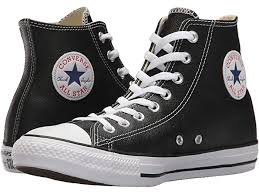
One of my students mentioned that she was saving up for a pair of Converse trainers:
It’s funny you put that question to me because earlier today I was just thinking about what I would buy if I had the money.
I have my heart set on buying a pair of Converse, which is an American company with a star logo, who make very fashionable footwear.
To make the sentence more interesting, as well as complex, I simply stated the country, the logo and what they produce … piece of cake, hey ?
OK, your turn … write a complex sentence about these products. Additionally, practice writing different types of introductions:
LG phone from South Korea
Rolex watch from Switzerland
Playstation 5Honda Airblade, a Japanese company
22nd July 2019
Here are some tips to help you expand your sentences, as well as incorporating language use that IELTS examiners will expect. Also bear in mind that the way you speak, the para-linguistics, is equally important.
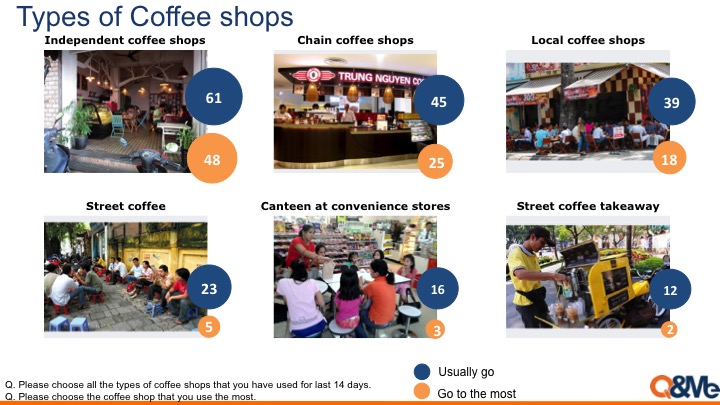
I enjoy coffee (a little / incredibly) because it helps bring people together as well as making our minds become quite active and somewhat excited. Coffee, from my point of view, is essentially useful if we use it in moderation. On the other hand, coffee can be a dreadful waste of money not to mention having a detrimental effect on our health such as insomnia. Despite the negative aspects, coffee makes me feel over the moon!
EXERCISE: Where do you drink coffee ?
Plan –
Introduction: one complex sentence.
Where do you go ? Do you go to many different types ? What do you usually order ?
Why do you go there ? What are the good points ? How often do you visit ? With whom do you go ? How long do you spend there ?
Compare the store with another (price, choice, comfort, amenities).
Are there any negative aspects ? Price, location, crowds, parking etc.
Conclusion: one sentence summary of what you have said.
IF you don’t drink coffee, then you can explain why not, and where you like to go to hang out with friends. Even if you never go out, you can talk about that as it will afford you the opportunity to give reasons and build more complex sentences.
Highlands Coffee, a popular chain in Vietnam.
Practice adjectives by describing this photo.
Increase your word power
Match the basic words with others of similar meaning
For example boring = tedious
interesting attain on time fascinating
forgetful miserable live (I live in) jovial
smart (clever) exhausted
unhappy punctual
happy feasible
possible reside
tired intelligent
get (a qualification) environment
place absent-minded
Interviews
What is your favourite beer ?
Well, I like many beers but my favourite is Czech beer. For example, Pilsner, Budweiser or Staropramen. I think the taste is very good as well as being excellent quality.
Along with Czech beer, I also really like Mexican beer such as Corona or Desperado.
Having said that, these beers can be expensive so sometimes I just drink Vietnamese beer, maybe Saigon Red or 333 because they are much cheaper.
1 Answer the question in a proper sentence
2 Give examples
3 Give reasons
4 What else ?
5 An opposite conjunction (but, however, having said that, on the other hand)
6 What instead ?
Remember to use adverbs and adjectives to make your speech more interesting
Well, I like many beers but my favourite is Czech beer.
For example, Pilsner, Budweiser or Staropramen.
I think the taste is very good as well as being excellent quality.
Along with Czech beer, I also really like Mexican beer such as Corona or Desperado.
Having said that, these beers can be expensive
so sometimes I just drink Vietnamese beer, maybe Saigon Red or 333 because they are much cheaper.
Ask each other some of the following questions:
The interviewer must keep asking questions until the speaker has nothing more to say.
Interviewer can ask, ‘Why do you say that?’, ‘What other reasons?’ ‘Why else ?’
Do you think sports are good ?
What do you like about working for your company ? / Attending your school ?
Do you spend, save or invest your money ?
What films do you like best ? Do you go to the cinema or watch at home ?
I use this sheet for many classes, usually for personality adjectives, as well as occupations. It’s adapted from a class I took at International House, London.
For higher level classes, you could also use this to illustrate the adage ‘don’t judge a book by its cover.’
The students have to guess the personality of my friends, just by looking at them; their expressions, posture, dress sense, hair style etc. Then they have to try to guess the occupation.
This is a great way to introduce new vocabulary and job titles. Additionally, students can learn that many adjectives are not necessarily positive or negative, for example ‘serious’. Being serious could be very positive (in a professional context) but negative in other situations.
I’ve put some sample adjectives and jobs after the last photo, as well as the answers to their current occupations.
estate agent / plumber / DJ / mechanic / bouncer / surgeon / accountant / actor / cook or chef / Uber or GrabBike driver / insurance agent / bank clerk / detective / businessperson / barista / lawyer / shop manager / unemployed / slacker
IELTS STUDENTS:
Use this as a basic for building complex sentences
EXAMPLE: In my opinion, Peter, who is the first gentleman, has a white-collar job, such as banking, insurance or management. I say this because of the way he’s dressed, a suit and tie. Furthermore, he is extremely well groomed by which I mean his hair is very neat as well as being clean-shaven. He appears very diligent. I’m positive he works hard, sometimes burning the candle at both ends.
Peter is unemployed. He has an MA in Business Studies and is currently looking for work, so he is sending out his CV and photo.
David is a DJ
Alex is an actor. He is also a Buddhist so normally has shaven hair. However, he is very big and strong, so he gets cast as gangsters or bad men, despite being very gentle and soft-spoken in real life.
Victor is a self-employed plumber.
Simon is a doctor. He is highly professional and serious, but is seen here on holiday, after a few sangrias (wine cocktails). Someone took a photo with a flash, so his eyes look wide and big.















![Fostering Rescue Dogs at R House in Saigon, Vietnam w/ Geneva, Alex, Thien [EN VERSION] | TÂM SHOW - YouTube](https://thaypaulsnotes.com/wp-content/uploads/2020/12/image.jpeg?w=300)












 Thay Paul's Notes