Young Learners, Level 4: Fun Facts about Space

30th January 2022

New Vocabulary

solar system

planet (Earth, gas giant, rock)

moon (the Moon)

star

asteroid

vacuum

Sol was the Roman God of the Sun. All stars are suns

All the planets are names after Roman Gods, except Uranus who was a Greek God, and Earth which is an English-German word.

The first four planets from the sun are small, and have a rock centre (core).

The outer four are mostly made of gas.

When Voyager gave us the first close-up pictures of Saturn's rings |  Astronomy.com

The rings of Saturn, which look amazing and so beautiful, are just made of dust and ice, with bits of rock.

FUN FACTS:

The speed of sound is 343 metres per second (usually given as 330 m p s)

The speed of light is 299 792 458 metres per second or approximately 300 000 000 m p s or 300 000 km per second.

Sound cannot travel through a vacuum

To demonstrate the last point, show NOT tell. Here’s a good example (start around the 0:24 second mark): An iPhone not making sound in a vacuum.

Space Cadets Quiz

Who was the first man on the moon ?

Buzz Aldrin / Michael Collins / Neil Armstrong

What is the biggest planet ?

Jupiter / Saturn / Mars

The sun is a … ?

planet / star / moon

What is faster ?

light / sound / Ms Bao Tran speaking (just give the name of any talkative students, and then elicit the adjective talkative).

In space, people are … ?

heavier / lighter / weigh the same

The first animal in space was a … ?

monkey / elephant / dog
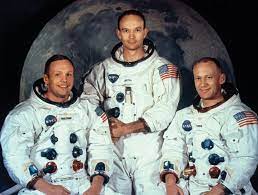
The crew of Apollo 11

Answers: Neil Armstrong / Jupiter / star / light / lighter / dog

The Last one could seem to be a trick question. The answer is Laika, the Russian dog. Fruit flies and then monkeys were first put into rockets but they didn’t go high enough to officially enter space.
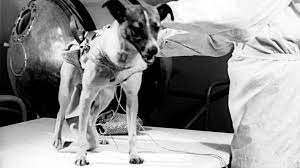
Laika, the Russian space dog

Please Note: All photos are taken from Google Images or free photo sites, and are used for educational purposes only. No copyright infringement or offense is intended. If I have used your photo or image, and you wish me to remove it, just ask. This site is not monetized, I run it on my own dollar. Thank you.
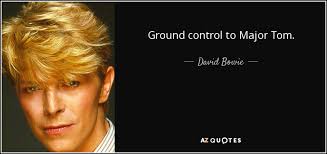
Young Learners, Level 4: “Can you hear me, Major Tom ?”

6th June 2019. Everybody Up 4. Unit 7, Lesson 4

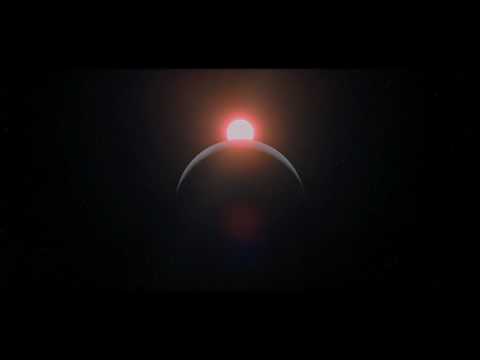
Today’s lesson is a cross-curicumlum class about space, astronauts and basic science. It is a mighty theme and so, to paraphrase Melville, we need a mighty beginning … for cinema fans, there really is no other choice … the opening of Stanley Kubrick’s ‘2001: A Space Odyssey’.

https://www.youtube.com/watch?v=e-QFj59PON4

So what do the students know about the solar system ? I’ll let them tell me, after boarding some key words:

solar system

planet (Earth, gas giant, rock)

moon (the Moon)

star

asteroid

vacuum

I’ll put a flash card of planet Earth on the board, towards the right-hand side. The students can them fill in the gaps … what planets do they know ? How big is the sun relative to the planets ? What exactly is the sun ? Where does light come from in space ? What exists in space ?

FUN FACTS:

The speed of sound is 343 metres per second (usually given as 330 m p s)

The speed of light is 299 792 458 metres per second or

approximately 300 000 000 metres per second or 300 000 km per second.

Sound cannot travel through a vacuum

To demonstrate the last point, show NOT tell; here’s a good example (start around the 0:24 second mark): An iPhone not making sound in a vacuum.

https://www.youtube.com/watch?v=JrU9LouWY18&list=PL97HViQblvdEM3zsauRxnIg1baFTNmsDM&index=26&t=0s

Group work: Would you like to go to space ?

What would be the pros and cons ? In small groups, discuss the question, trying to use some of the recent vocabulary.

Song time: A British classic, and the first hit for David Bowie, an artist with a deep connection with space. This video has lyrics, but how many words can they recognise ? They can shout them out as they hear them.

‘Space Oddity’. Lyrics start around the 0:30 second mark

https://www.youtube.com/watch?v=9_M3uw29U1U

Board any new words or phrases such as ignition / made the grade / peculiar /

Runaround

This is based on the UK children’s show from the 1970. The class will be split into small groups. One member from each has to stand in front of the board. I will read a question and then give three answers. The students have to run to the correct number. They then have three seconds to change their minds.

Who was the first man on the moon ? Buzz Aldrin / Michael Collins / Neil Armstrong

What is the biggest planet ? Jupiter / Saturn / Mars

The sun is a: planet / star / moon

What is faster ? light / sound / Mr Phuc speaking (just give the name of any talkative students).

In space, people are: heavier / lighter / weigh the same ?

The first animal in space was a: monkey / elephant / dog

(Last one could seem to be a trick question. The answer is Laika, the Russian dog. Monkeys were first put into rockets but they didn’t go high enough to officially enter space).

Bookwork. Today there is a fair amount of reading. I’ll use the passages to show a little grammar, introduce the students to adverbs.

The princess was very beautiful (very = adverb, beautiful is an adjective)

Here, the adverb ‘very‘ goes before the adjective. For concept checking (do the students understand and can use this formula ?) some quick questions:

Correct these sentences:

The very student was clever

Laika, the dog, was scared very

Very David talented is

During the reading, I’ll be asking the students to point out the adjectives and adverbs in the short pieces of text.