Yesterday I blogged a database of idioms, collocations and negotiation language. That is just the tip of the iceberg. If you have looked at English-language study books, you will, no doubt, have seen several dictionaries solely devoted to idioms; we use them so often, and there are so many.
For my IELTS students, I have repeatedly taught half a dozen (six) in order for the students to incorporate them into their natural speech … without idiomatic language, you will not break past the 5 score (taken along with grammar, vocabulary and intonation, naturally).
Therefore, for Top Cat students, or anyone looking to learn some more, this blog is for you.
Expressions or idioms
Ring any bells ? // do you remember //
More or less // not exactly but approximately
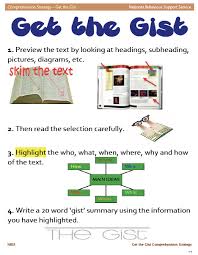
Get the gist // do you understand the main point ?
Right up your street // this is something you will really like
Rabbit, Rabbiting on // UK slang, especially in London … talking too much
Piece of cake // no problem, very easy, sure
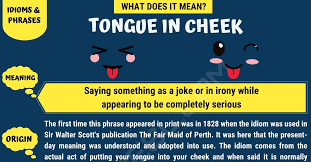
Tongue in cheek // not being serious about something
Now … how you use them:
Student A: Hello, we met last year at Julie’s party.
Student B: Sorry, that doesn’t ring any bells (I don’t remember).
Student A: Are you ready to go ?
Student B: Go where ?
Student C: Cake, food, drink, singing, dancing … ring any bells ?
Student D: Oh, Tony’s birthday party. Sorry, I forgot.
Student A: Are you ready for the test ?
Student B: Yes, more or less.
Student C: I’ll wait for you.
Student D: I won’t be long, I’m more or less finished.
Student A: Do you have to read all the document ?
Student B: No, just to get the gist.
Student A: You should listen to this CD, it’s right up your street.
Student B: Oh, French piano music, I love it. That’s right up my street.
Student A: What did your girlfriend want ?
Student B: She was rabbiting on about something to do with her clothes, I wasn’t really listening.
Teacher A: Hey ! Miss Mary … stop talking. You’re a little rabbit !
Student A: Can you drive me home ?
Student B: Sure, piece of cake.
John’s new business shirt
Student A: Have you seen John’s new shirt ? It’s so elegant.
Student B: Are you serious ? It’s terrible.
Student A: I know ! I was being tongue in cheek.
Now … your turn.
Add the correct idiom [answers at end of blog]
1) Shall we see the new action film ? It sounds ______________
2) Are you still talking ? You are such a __________
3) She said I was the best student but I think she was being ___
4) You said you would bring something … cheese, tomato, garlic bread ____________ ?
5) The IELTS speaking test was a ________ after reading Thay Paul’s blogs (I hope).
6) Student A: Did you understand the project ? Did you ________ of the idea ?
Student B: Well, ______________ but not every single detail.
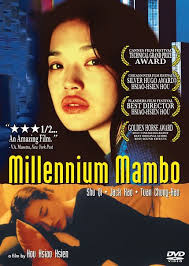
This film, starring Shu Qi looks right up my street.
Right up your street 2. rabbit 3. tongue in cheek 4. ring any bells 5. piece of cake 6. get the gist / more or less.
A database of common UK & USA expressions, phrases and idioms for students who want to learn more, in order to increase their command of and respect for the English language. I have provided my IELTS students with half a dozen (a dozen = 12, therefore half a dozen = 6. Having said that, a ‘baker’s dozen’ = 13 … welcome to English !) idioms, but this blog is aimed at students who are willing to go above the barest minimum.
We kick off (start) with expressions and idioms, as they are tremendous fun, then move on to collocations. How words fit together is a powerful tool in learning English … huge chunks of texts suddenly group themselves into small word blocks, enabling you to predict what will be said (especially useful in listening exercises).
Finally, we wrap up with some negotiation phrases. In the next blog, I’ll give you a chance to use these in sentences, but for now, familiarise yourself with a handful of new expressions … it could be right up your street.
Alice Sara Ott – German-Japanese pianist. I recommended her to a musician friend and he said it was right up his street.
Expressions / idioms
Ring any bells ? // do you remember //
More or less // not exactly but approximately
Get the gist // do you understand the main point ?
Right up your street // this is something you will really like
Rabbiting on // UK slang, especially in London … talking too much
Piece of cake // no problem, very easy, sure
Tongue in cheek // not being serious about something
“I think Donald Trump is the greatest US President …” Do you think President Obama would say this and be serious ?
Keep your hand in // to practise something so you don’t forget how it’s done
Bucket down / raining cats and dogs // raining very heavily
Have a go / give it a bash / give it a shot // to try something
Call it a day // to stop work and go home early
Go ahead // sure, do it
Under one roof // everything in one place
Through thick and thin // together in good times and bad times.
To spill the beans // to tell a secret, or to share some private information
I should cocoa // UK slang, old-fashioned = I really don’t believe it or you
kick-off // A sports expression from football – means to start
tied up / snowed under / rushed off our feet / flat out / up to my eyes // very busy
daylight robbery // much too expensive, very over-priced.
on your bike // go away !
to throw a wobbly // to become angry and shout and curse
Bang up to date // totally modern and new or completed all your work on schedule
otherwise engaged // busy – a polite way of saying ‘go away’
I know where you’re coming from // I understand what you are saying and how you think
to get hold of someone // try to make contact with someone by phone, in person, email etc
speak of the Devil // to talk about something and then they appear
to be into something // to really enjoy or like something or someone
to put something over someone / to pull the pull over someone’s eyes // try to trick or cheat someone
There’ll be Hell to pay // you will be in BIG trouble !
Hell breaks loose // people will be very angry and upset
I’ll give you a bell / a shout // I will call you on the phone
Knock off / to finish work
knock it off // stop doing that !
That’s proper loud // UK slang ‘proper’ meaning very – that’s very loud
Well chuffed // extremely happy
come again ? / You what ? // UK slang for say it again, please
What do you reckon ? // What do you think of something ?
Collocations
To run a business
To conduct / carry out a survey
Can I have a word with you / a quick word
Do you have minute ?
Voting with their feet
Can I put you on hold ? / to be put on hold / Hold the line
A victory for common sense
I’m none the wiser
On the button / on the money
get the hang of it
scraping the barrel
Negotiation Language
I fail to see the relevance
I don’t see how that applies
That’s as maybe
I don’t get/see your point / I think you are missing the point
I’ve spent so much time reading books about classroom activities, looking at websites and blogs only to reject the vast majority as not being suitable for my level of students. Here are a couple of games that have been successful over the years, in different centres and with different ages, though I usually employ them with students aged between 6 and 10. Adapt them as you wish, and have fun.
Word Battleship
This is based on the old paper and pencil game (later upgraded for the electronic and computer age).
A
B
C
D
1
2
3
4
Word Battleship
Board a grid as above (add more cells as required). Put the class into teams.
[I let them choose their own names, and if a student says, ‘Errrrrr,” then that’s the name I give them … additionally, this always gets a laugh]
Ask the teams questions based on previous lessons, general knowledge, whatever suits your class. You could either elicit an answer from the team as a whole, or individual members.
If the student answers correctly, they are allowed to choose a cell, example “C3.” On a separate sheet, have the same grid with scores assigned to each square. In the example that follows, C3 would score 25 points.
The following questions were used to review past tense grammar, as well as forming collocations:
Put the sentences into the past tense (simple past). Say complete sentence.
1 Last week we learn about technology
2 I buy a new iPhone last night.
3 Michael Jackson write many good songs.
4 Oh, no … I do not do my homework !
5 Have they decide what printer to buy ?
6 He see all the ‘Avengers’ films in one day !
7 It’s Friday ! I think today was Wednesday !
8 On holiday, I walk along the beach.
9 My grandmother send me an email.
10 Have you play the new video game ?
Complete the collocation
11 (go) to the cinema [I _______ to the cinema]
12 (play) guitar
13 (take) a photo
14 (chat / go) online
15 (do) voluntary work
16 (make) a decision
A
B
C
D
1
25
50
10
5
2
10
25
100
25
3
50
10
25
5
4
5
25
10
50
Snakes and ladders
Another activity based on a classic game. I first used this in a very energetic class of 9 – 11 year olds and, thanks to the size of the room, I was able to draw a grid on the floor and use students as ‘counters’, to move around the ‘board’.
If that isn’t possible, just board a grid like so:
START
GO FORWARD 2
GO BACK 1
GO FORWARD 1
HA HA BACK TO START
GO BACK 3
FINISH
All you need is a die or dice and different colour board markers. As before, arrange the class in teams, then ask each team a question. The student who answers then throws the die (preferably NOT at the teacher but one thing at a time), and I chart their progress on the board. You can decide whether or not the students need an exact score to land on Finish or not … play it by ear.
[ ‘dice’ is generally accepted for both singular and plural. For English-language learners it’s probably better to use ‘dice’.]
Some lessons can be rather hard-going, too much IELTS listening or speaking practice so, to mix things up, I use some little diversions to cleanse the palate.
[Today, I will not explain every new phrase – look them up yourselves, write them down and USE them and USE them and USE them !]
Therefore, here’s a little activity I used last week. It’s a hit song from the early 1980s, in fact, it was massive ! The song is an example of Synth pop which is pop music played, or predominantly played, on keyboards or synthesisers. Synth pop, which dominated the charts during my teen years, was not really my cup of tea, I was more into jangly guitar bands such as The Beatles, The Byrds and, in the 1980s, we had The Smiths.
Having said that, I really liked this hit by the band Human League who came from Sheffield which is in the north of England. The single was tremendously successful, staying at number 1 for five weeks in the UK as well as reaching the top of the US charts although for just three weeks which is still an amazing achievement.
Without further ado, the activity: What is happening in this video. Secondly, what is the story – can you understand what the man says and then, can you understand the woman’s reply ?
Try answering these questions:
What job did the woman have ?
How long did it take for the women to become a big star ?
Is the man leaving the woman ?
Does the woman still love the man ?
What does the woman want to do ?
And now, the full lyrics:
You were workin’ as a waitress in a cocktail bar When I met you I picked you out, I shook you up and turned you around Turned you into someone new Now five years later on, you’ve got the world at your feet Success has been so easy for you But don’t forget, it’s me who put you where you are now And I can put you back down too
Don’t, don’t you want me? You know I can’t believe it when I hear that you won’t see me Don’t, don’t you want me? You know I don’t believe you when you say that you don’t need me It’s much too late to find You think you’ve changed your mind You’d better change it back or we will both be sorry
Don’t you want me, baby? Don’t you want me? Oh Don’t you want me, baby? Don’t you want me? Oh
I was working as a waitress in a cocktail bar That much is true But even then, I knew I’d find a much better place Either with or without you The five years we have had have been such good times I still love you But now, I think it’s time I live my life on my own I guess it’s just what I must do
Don’t, don’t you want me? You know I can’t believe it when I hear that you won’t see me Don’t, don’t you want me? You know I don’t believe you when you say that you don’t need me It’s much too late to find You think you’ve changed your mind You’d better change it back or we will both be sorry
Don’t you want me, baby? Don’t you want me? Oh Don’t you want me, baby? Don’t you want me? Oh
Don’t you want me, baby? Don’t you want me? Oh Don’t you want me, baby? Don’t you want me? Oh Don’t you want me, baby? Don’t you want me? Oh Don’t you want me, baby? Don’t you want me? Oh Don’t you want me, baby? Don’t you want me? Oh Don’t you want me, baby? Don’t you want me? Oh Don’t you want me, baby?
DISCLAIMER: THIS IS FOR EDUCATIONAL PURPOSES ONLY. THIS BLOG ISN’T MONETISED IN ANY WAY. THE VIDEO AND LYRICS ARE TAKEN FROM THE INTERNET. NO COPYRIGHT VIOLATION IS INTENDED, AND I WILL REMOVE THE BLOG UPON REQUEST WITHOUT PREJUDICE.
THANK YOU TO THE SONGWRITERS, THE BAND AND THE PUBLISHERS
Replace the standard English words with idioms, expressions and low-frequency words
Hello to my Chinese students
Speaking topic:
What do you do in your free time ?
[Suggested answers after photos]
I study at school many days. I study in morning and I study at night. When I have free time I like to meet friends and have coffee. I go to see movie but not very much.
Sometimes me and my friends go swimming. It is cheap. And I very like to read manga comics because I feel funny. Nothing more.
Hello to my Indian students
Well, That’s an interesting question because I actually spend most of my time at school or studying. Most days I’m burning the candle at both ends. Having said that, when I do get free time, which is once in a blue moon, I love to just hang out with my friends, maybe go to coffee shops which are ubiquitous in my city. Although I enjoy movies, I rarely go nowadays.
Occasionally my friends and I go swimming because we don’t need much equipment and it doesn’t cost an arm and a leg. Additionally, I really enjoy reading Manga comics, which are from Japan and are extremely popular, I believe, all over the world.
Hola to my Mexican students
Speaking topic:
What food is popular in your country ?
In my country are many foods, yes, we have pho, banh mi and Banh xeo. Yes. If you come to my country, you should have pho. Yes. Pho is noodles and soup and beef and vegetables. Yes. Also in my country we have banh mi. Do you know banh mi ? Banh mi is, banh mi is bread, yes, with many delicious things. It is cheap. Banh mi is sold on the street. And banh xeo I very like.
IELTS students studying to go to New Zealand
Thank you for the question, because I can introduce you to some mouth-watering dishes from Vietnam. Allow me to mention just two which, in my opinion, are the most popular.
Firstly, we have pho, our national dish. Pho is noodle soup with different types of meat, with the addition of fresh herbs and vegetables. Don’t worry, you can find pho everywhere, it is ubiquitous.
Secondly, and great for a quick snack or food on the move, is banh mi which is … what’s the word ? Sandwich ? Yes, it is like a sandwich, filled with grilled meat, herbs and vegetables. The best thing is the price, which is really affordable. Again, you can pick these up anywhere in Sai Gon and it won’t cost an arm and a leg.
Speaking topic:
What country would you like to visit ?
The country I would like to visit is USA. I want to study in a big city in USA. I have family in USA. I will to stay with family. But I need the good mark in IELTS. I must work more harder. My family live in a big city. They say it is very cold and it is raining many days. In USA I will eat many fast food and I want to be in movies.
It’s funny you put that question to me because just today I was thinking about where I want to study. I have my heart set on studying in the USA as I have some family in Seattle, which is a large city in Washington state. However, to follow my dream, I need a high score in IELTS, so I need to put my nose to the grindstone. May I tell you about Seattle, where I plan to stay ? Unlike Sai Gon, it can be very cold, and it frequently rains cats and dogs,although we also have a rainy season here in Vietnam. Once in the States, I will eat fast food which is mouth-watering. Having said that, I know it is unhealthy, but still delicious. Maybe I will be a movie star ? In USA, anything is possible.
Today, we shall learn the story of Theseus and the Minotaur. This story is over 3 000 old, and comes from the country of Greece. Here is the flag of Greece:
Greece is in Europe. It is a very hot country, and has many stories from history. The capital city is Athens.
Athens, the capital of Greece
Have you ever seen something like this before ?
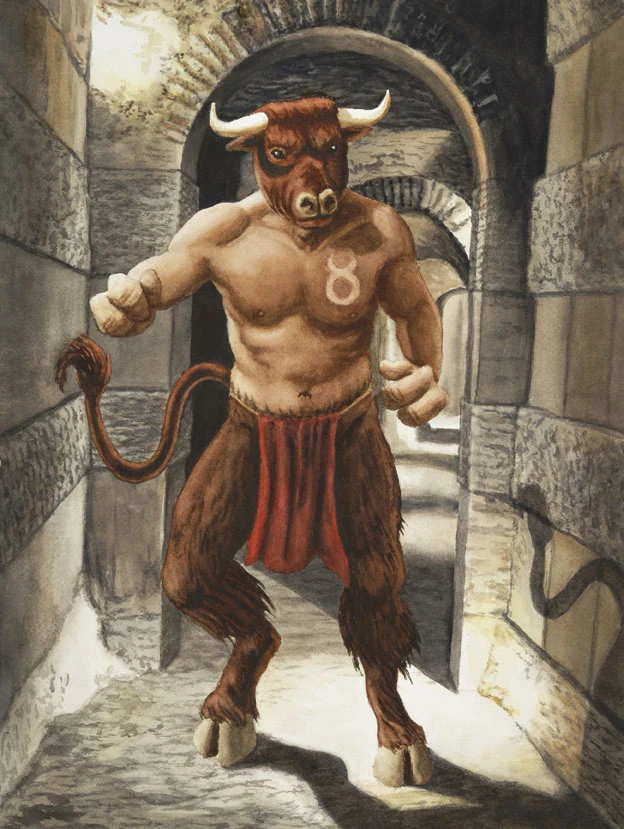
This is the Minotaur, half man, half bull. He was extremely strong, extremely angry and very, very scary. He lived near Greece, on the island of Crete:
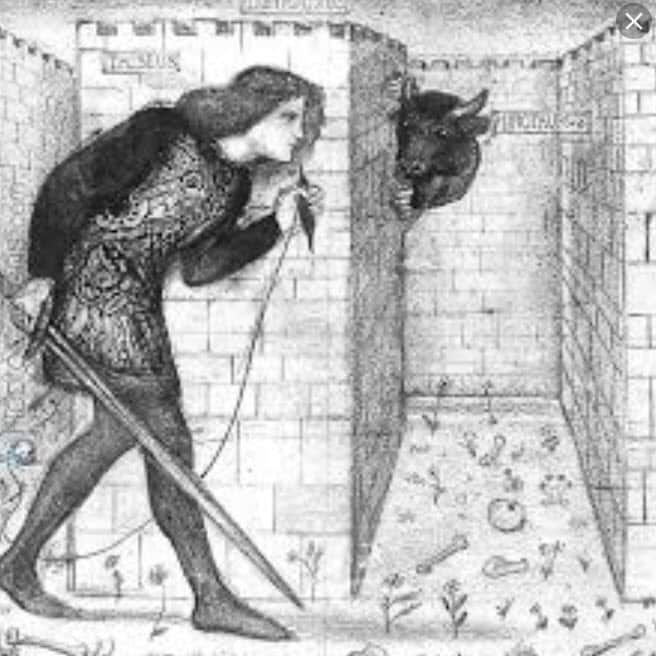
The Minotaur lived underground in a big maze called the labyrinth. Every year, the King of Athens had to send 14 children for the Minotaur to eat. This is a labyrinth, a huge maze. It is very easy to get lost inside a labyrinth.
The king had a son called Theseus. He was a hero. He decided to go and kill the Minotaur.
The King of Crete had a daughter called Ariadne. When she saw Theseus, she decided to help him. She gave Theseus a big ball of string. He tied it to the door of the labyrinth, then used it so he wouldn’t get lost:
Theseus found the Minotaur.
They had a long fight because both Theseus and the Minotaur were very strong. Finally, Theseus won and killed the Minotaur.
Then he returned to Athens with Ariadne. The people were so happy, and Theseus became a hero in Greece.
To pass IELTS with flying colours you need to use low-frequency words, idiomatic language, discourse markers AND speak with natural intonation, stress and rhythm.
This means PRACTICE, PRACTICE & PRACTICE
So, without further ado, complete these idioms:
Once in _______________
Put (my, your etc) _______________ to the ______________
Burn (ing) __________________ at ______________
It’s raining _____________________
It costs ___________________________
Piece ________________
Now use them in a sentence:
A 4star hotel in Singapore _______________________ (very expensive)
Wear boots and a coat; it’s been ____________________ (very bad weather)
He parties all day and night! He can’t ________________ forever. (doing something for too many hours)
She is not academic, she’ll read a book ______________ (hardly ever).
If you are serious about IELTS, you’ll need to _____________________ (start working much harder).
Now – give me an adverb and a low-frequency word
EXAMPLE:
Teaching unmotivated students is terribly tedious.
Thai food is ______________ _______________
(very tasty)
After failing her test, she was _________ _________
(very sad)
Marvel films are _____________ _______________
(very popular)
My poor old grandma is getting ___________ _______
(very forgetful)
Practice saying these for correct intonation
Speaking Practice – use discourse markers to extend your speaking and to link ideas.
Try to use: although / consequently / therefore
Describe something you own which is very important to you.
You should say:
where you got it from
how long you have had it
what you use it for
explain why it is important to you.
You will have to talk about the topic for 1 to 2 minutes.
You have one minute to think about what you’re going to say.
You can make some notes to help you if you wish.
Rounding off questions
Is it valuable in terms of money?
Would it be easy to replace?
This could be a physical object, a memento with sentimental value, or an abstract noun such as health, happiness etc.
Small talk …. Try to talk for as long as possible – then change subjects:
your home town / your favourite holiday / family / favourite hobby / a great place to visit in your city / some terrible things about your city /
































 Thay Paul's Notes