Today, I was very successful at work because I got my salary as well as a bonus (extra money).
When do you get your salary ? When do you get paid ?
Salary = career, professional job – usually once a month
Paid – for a job, can be daily, weekly, monthly – low-income job
Building longer sentences:
I teach at public school which can be extremely tiring because there are many students who, I feel, do not want to learn. Having said that, there are also many wonderfully gifted students who make me feel happy.
Relative pronouns– who (person), which (thing), where (place).
Adverbs– add information – extremely, wonderfully
Opinions– I feel, I believe, in my opinion, from my point of view.
Turn and link – although, despite, however …
VOCABULARY
gifted – talented, skilled- natural talent
You have a gift for …. music, laughter (laugh – larf), accounting, singing
Noun there was laughter NOT there was laugh
For example – we had karaoke – there were many people singing; some were extraordinarily gifted while others were … not so talented ! There was a laugh of smiling and laughter.
Extraordinarily – very special
Now … Your Turn
Tell your neighbour or the class about your job
Where you work
The good things
Anything bad
How do you feel
I went to the office where I work and I had a very busy day. However I think it’s good because I can finish my task. I was really excited and happy because today is the last day of the month so I got my salary and holiday bonus. I want to spend my salary for traveling or on clothes.
GRAMMAR
I can finish subject + modal verb (can, could, might) + main verb
I got my salary I was paid so we use past tense ‘got’.
I want to spent subject + helping verb (want, like, need) + infinite (to + verb)
Today, I went to my company where I met everyone in the office. After, I worked with my customer, who is very pleasant, and we spoke about payment. Later, I went to the bank where I withdrew a little money from the company account. It was an ordinary day but interesting because today is payday !
Moscow – it’s winter and it’s snowing heavily. It must be night time because the streetlights are on. There is nobody on the street, it is deserted (empty).
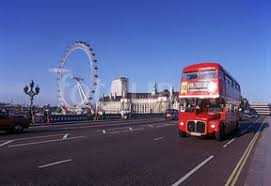
London, on the other hand, is in summer or maybe / possibly spring. The blue sky without a cloud looks very beautiful. There is also a famous red bus, a double-decker. We can also see the London Eye.
Hello, my name is Paul and I’m from London. I’m an English teacher, and I have been in Vietnam for about 2 years. My hobbies are reading books, watching films and listening to music. In Vietnam, I have been to Ha Noi and Hue and I really want to visit Hoi An and Halong Bay.
about: with time. I have been studying English for about 6 months.
really: adverbs I am happy / I am really happy – stronger and more interesting
continuous verbs: I like to read / I like reading / She likes to read
She likes reading
They like watching movies
She likes listening to music
Introduce yourself, and answer the questions:
Name
What is your hometown ?
How long have you lived in your town or city ?
What are your hobbies ?
Where do you want to visit ?
Istanbul, Turkey
present perfect:
sub + have/has + verb 3 (past participle)
I have visited Ha Noi
She has eaten Thai food
We have seen Barcelona play football
She has eaten Thai food
Look out for plurals and 3rdperson verb endings
I like sports / he loves cooking /
I don’t like smoking / She doesn’t like smoking
I like playing computer games/ reading books/ watching films.
He likes playing football / going to the park / studying English
Now it’s time to put the work of previous lesson together in order to come up with more rounded character descriptions.
You can tell me what people are wearing by using adjectives (what we think of the clothes, the size, colour, pattern, material, country of origin).
Additionally, you should have enough vocabulary to tell me what a person looks like (length, type and colour of hair), height, age, what they look like.
Furthermore, I expect you to remember some personality adjectives.
If we put all these together, we have some very detailed descriptions, as well as having the opportunity to use relative pronouns (who, where, which, whose) in order to develop sentence-building which is absolutely essential for IELTS students.
And so, without further ado:
Describing people
What do they look like ? What are they wearing ? What kind of person are they ?
As always, I’ll give you an example of what I want, then it’s your turn:
Billy Office manager 32
Works staff very hard. Never gives pay rises
Buys clothes and electronics. Never gives to charity
Becomes angry after beer. Member of a gym.
Not many close friends. Does not like kids
Billy, who is 32 and an office manager, is a very strict boss. He is very serious and also very mean because he doesn’t give his staff more money. Furthermore, he never gives money to charity so he is selfish.
Although he is only 32, he is almost bald. However, he has a neat beard and moustache. He has brown eyes, and he doesn’t like to smile. Billy stands with his arms across his chest, so he doesn’t look very happy.
He wears a bright and expensive cotton shirt with a white collar, but with red, white and blue stripes. Furthermore, he wears an extremely expensive watch.
In his free time, Billy goes to the gym, and also likes to drink beer. However, after too many beers, he can become aggressive. He is a loner, not having many close friends. He spends his money on himself, buying clothes and gadgets. He has no plans for a family as he doesn’t like children.
NOW … YOUR TURN:
Tell me about Ji-yeon and Kofi
Ji-yeon singer 24. Kind to her musicians. Shares money with band. Gives money to family. Performs free shows. Just drinks 1 beer. Uses Instagram & Twitter. Wants 2 children
Kofi civil engineer 37. Very professional. Buys his team lunch. Helps his brother study. Gives money to UNICEF.
Likes to dance and sing. Meets friends weekly.
Goes jogging and diets. Loves swimming. Loves all children.
To make the lesson come alive, have the students act out scenes or give them a set time to make up sentences containing as many phrasal verbs as possible.
Same as Shakespeare … English is meant to be USED and SPOKEN … not just studied in a dry text book.
So, without further ado:
Phrasal Verbs
Put
the cat out / the fire out / up with it (something unpleasant) / on a happy face
it in your own words / up or shut up ! / it away / it another way
Get
well soon / over it ! / on with it / away with murder / on the bus
stuffed ! (impolite) / with the program (US) / some fresh air
Make
a career move / your move a pig’s ear of something / a wish /
up for lost time / the best of something / fun of someone /
Do
the right thing / away with that old technology / your best /
a funny walk / the dishes / your hair
Bring
it on ! / it to me / “my bow of burning gold” (poem) / about change
it up at the next meeting / a smile to my face / up children well
Take
turns speaking / it up with the manager / up my trousers a little /
a good look at yourself / a hike ! / medicine / a deep breathe
phrasal verbs:
look after/ think about / wear out / give up / grow up / takes after
tell off / look up to / hang up / go for / passed away
Phrasal verbs work like normal verbs, so they can be used in the infinite (look,think), the past tense (I wore out, I looked up to ..) and in continuous (I am hanging up now).
Make sentences using phrasal verbs in:
present tense
past tense
present continuous
Examples
I need to think about that for a while. (present)
He gave up smoking ten years ago (past)
We are looking after our niece today (present continuous)
Phrasal verbs
verb + particle e.g. find + out = find out (learn something)
The verb can be present, past, future or continuous:
I give up
I gave up
I’m finding out about HCM City.
I will (I’ll) find out about the cost.
buy out / up
call off
carry out
give up / away /
CLUE: first identify what tense is being used
They were __________ free samples
The computers are down; we have to ________ the meeting
A soldier has to _______ orders
The company was ______ by a Japanese company
The stocks are very low, we should ________ as many as we can
Don’t ________ on your dream 🙂
Make sentences with these phrasal verbs:
take care of // hold on // move on // take over // think it over
Phrasal verbs:
look after // think about // give up // grow up // takes after // tell off // look up to
Which phrasal verbs fits here ?
She really …………. her father, they are so alike.
I can’t go out, I have to ……….. my nephew.
Mandarin is too hard, I just …………. (past tense verb)
Many Vietnamese ………………. Uncle Ho
I’m not sure which bank is best. Let me ………. it and get back to you.
I had to ………….. my son because he ate all the cakes.
My manager is very immature. He needs to ………… and quickly !
Phrasal verbs
give up / go for / grow up / hang out with / hang up / look after / look up to / tell off / passed away / takes after /think about / wears out
Izzy is talking to Kate on Skype. Izzy can’t go out on Saturday because she has to
____________ (take care of, be responsible for) her little sister, Georgie. Izzy says she’ll __________ (consider) bringing Georgie too. Georgie interrupts, and Izzy has to
_____________ (end the phone/Skype conversation). Georgie’s hamster has ________
(died) and she’s upset. Izzy says she loves her little sister but she __________
(makes her tired).
Meanwhile, Sam is wondering why Izzy doesn’t want to _____________ (spend time with) them. He thinks Izzy should bring Georgie to the cinema, but maybe Izzy won’t ________
(like, agree to) the idea.
Izzy is annoyed because her sister is trying to look like her, but Kate says it’s sweet that Georgie _____________ (respects and admires) her big sister. Izzy disagrees that they are similar; Georgie ______________(is similar to an older relative) her dad, whereas Izzy is more like her mum.
When Georgie asks Izzy to get her a hamster, Izzy gets angry. She tells her sister
to ________ (become an adult). Georgie says their dad will _______(Izzy)_______
(speak angrily to Izzy because she’s done something wrong). In frustration, Izzy says
“I __________ (admit defeat)!”. Fred and Sam take Georgie to look at some kittens, then they all go to the cinema. Georgie is the only one who isn’t scared by the film.
Now – let’s get down
(have a dance and a great time)
What songs can you find that use phrasal verbs ?
Lighten up, it’s the laid-back sound of 70s California
This level of English is for students who live, or plan to live, in English-speaking countries.
I advise my students to learn Standard English, as that will help them to communicate with other non-native speakers. Clarity in both pronunciation and meaning is paramount (of most importance).

However, that is NOT how everyday people speak in everyday situations. Therefore, here’s a set of examples and new vocabulary that you will need. Furthermore, you will feel more confident, using the language and vernacular of those around you.
Dialogue practice
phrasal verbs / collocations / idioms / adverbs
vocabulary:
fond – to like something.
more than likely = very probably, about 90% sure.
sip – to drink a very little.
rival – competitors
A: Hi, how’s it going with you ?
B: It’s going incredibly well today. I want to celebrate. Fancy a beer ?
A: I’m not so fond of beer, I prefer coffee. How does that sound ?
B: Brilliant ! Highlands or Coffee bean ? Which one ? I can’t make up my mind.
A: Is Highlands far ? They are Vietnamese, a rival to the American company.
B: It’s quite far. We ‘ll have to take a taxi. More than likely it will rain.
A: Let’s get a move on before it rains cats and dogs.
B: Too right ! We’ll have to give up getting a taxi once it rains. Let’s go !
At the coffee shop
A: Watch out! The coffee’s incredibly hot. Just sip it. What are you up to now ?
B: Just texting the office. They seem rather busy.
A: You should take a break. Tell them to just do their best.
B: Hold your horses… there ! Finished. Piece of cake.
A: You want some cake ?
B: No, hahaha. ‘Piece of cake’… means no problem. Having said that …
A: Right ! The cakes look amazingly tasty. Shall we … ?
They buy two gloriously large cakes
A: Let’s dive in ! Wow … I must admit, this is remarkably good. How’s yours ?
B: I think it’s too big for me. Let me try some … oh, blimey, that’s awful !
A: Yes, afterwards, we’ll need to work out.
B: A minute on the lips, a lifetime on the hips !
A: Do you have a minute ? I’d like to go over something with you.
B: Sure, what’s on your mind ?
A: Which video do you think is better for the students ? We need to inspire them.
B: This one looks good … oh, hold on … the vocabulary is very difficult … good !
NOW … YOUR TURN
Write a short dialogue scene about planning a holiday
As always, I use these exercise to introduce idioms and expressions, as well as demonstrating how adverbs and adjectives can be used in everyday conversation.
Speaking practice:
Pat Well, I’m exhausted. I need a damn fine cup of coffee and a big piece of pie.
Sam There’s a Highlands over the road, or we can go to Coffee Bean or Milano.
Pat I’d prefer Tran Nguyen but it costs an arm and a leg. Highlands is also incredibly expensive.
Sam But great quality and superb cakes. Come on, I’m starving, I need coffee now !
Pat OK, hold your horses hahaha. After we can meet up with Thay Paul.
Sam Sounds good. Now … shall we have chocolate cake or fruit cake … ?
costs an arm and a leg = very expensive
hold your horses = please be patient and wait
Inside Highlands
Highlands Coffee, a Vietnamese coffee chain
Sam Hi, I’ll have a large cappuccino, please. What do you fancy ?
Pat Tough decision. I’m going for the cheesecake and a slice of blueberry pie.
Sam Oh, me too. Big slice, no, only joking, I have to watch my weight.
Pat I think you look great. Lets also get some chocolate cake and we can share.
Sam Brilliant. Oh, did I show you my recent photos ? Here, on my phone.
Pat Let me see … oh, so funny. Who’s that ? The man next to Niall ?
Sam That’s Jimmy, he’s in Niall’s band. He plays drums and drinks like a fish !
Pat And that’s you, a selfie. You look adorable. Butter wouldn’t melt in your mouth !
A very sweet young lady – butter wouldn’t melt in her mouth
drinks like a fish = drinks a lot of alcohol
Butter wouldn’t melt in your mouth ! = looks very sweet and nice … but can be very naughty
Don’t invite him to your party – he drinks like a fish !
For these exercises, refer to the previous blog (‘Holiday of a Lifetime’). Put class into small groups and assign a city to each one. The groups have to make a presentation, using advertising-style language: hyperbolic adjectives, expressions, phrases. Furthermore, they must really ‘sell’ the holiday, so they can practice their intonation and stress skills.
The blurb contains the selling points, while the practicalities has information. The style should change for these two parts – the teacher can demonstrate.
Students are encourages to add their own information and to make use of classroom facilities such as internet, Google images etc to enhance their presentation.
To make it more competitive, the students have to vote on which holiday sounds most impressive.