A new class, new students, so let’s hit the ground running, get the students mixing, talking to each other and up from their seats. I prepared a questionnaire. They have to interview different classmates and learn a little about them
Gather information about your classmates
Question
Name
Response
Why are you studying IELTS ?
Where would you most like to visit and why ? Would you like to live abroad ?
What is the hardest thing about learning English ? How do you solve this ?
How often do you use English ?
Do you read, write or speak at school or at work ?
What do you most like about western culture or countries ?
What idioms do you know ?
This lead into the idiom it’s raining cats and dogs which most students had heard (it means raining heavily).
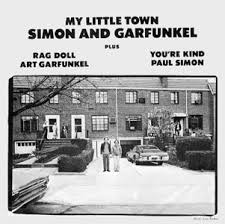
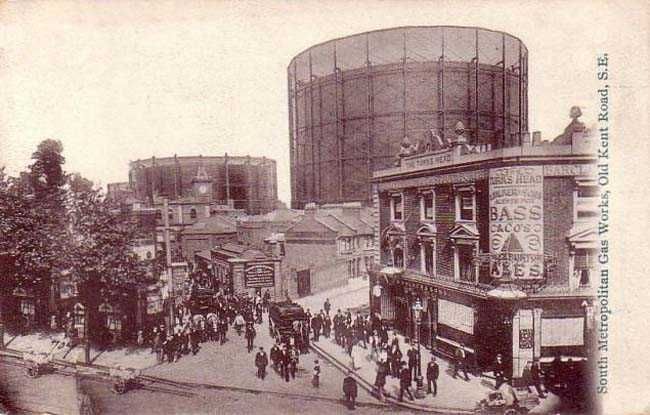
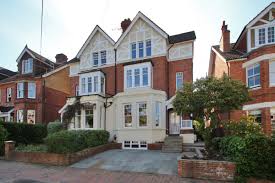
Today’s lesson is based on types of housing and areas; some extra terms:
gritty / industrial
quite / safe / residential
boring / peaceful / suburban
bustling / vibrant / city centre
Which would you apply to these:
All photos are from the UK
Ask each other about your hometown or your neighbourhood.
A collection of clips predominantly featuring western people and their views on Vietnam. I have also added some suggested sequences for pronunciation practice … and so, without further ado …
First time in Viet Nam – First impressions of Viet Nam
A vlog by Divert Living, posted just over two years ago and which has already received more than a million hits:
” … and I asked them, ‘How much is aqua (water) ?’ Aqua’s fifteen thousand, beer’s twenty thousand … of course I’m gonna get the beer, now … it’s just as expensive as the water.”
09:00 – 0913
“Fun fact, Vietnamese cuisine is considered one of the healthiest cuisines in the world … and, to go with the food, the size of the dining tables and chairs are super small.”
This vlog was shot in Ha Noi, so let’s get their take (their opinion, view, experience) on Sai Gon:
What to expect – Saigon or HCMC
Now they travel to my neck of the woods (the area I live in or was brought up in), and they encounter, among many other delights, coconut coffee:
“Wow … that’s so strong, but it’s got a ball of coconut ice-cream in the middle … whoah !”
And the young lady who I believe is Korean adds:
“I wanna try … This is the coffee king … ahhhhhhhh !”
Talking Point:
The young travellers give their views on the environment and cleanliness of District 1 which is the city centre [UK] or downtown area [USA].
To what extent do you agree with them ?
What do Vietnamese students think of the Vlogger’s appraisal of Sai Gon ?
Let’s move on and talk about traffic which is quite a serious issue in Vietnam. Firstly, attending driving school … what can go wrong ? A clip from the world-famous motoring show from the BBC, ‘Top Gear.’
Right from the get go (from the very start) we have some great lines:
“Cheer up … this is gonna be a doodle … [Vietnamese] … it wasn’t !”
01.23 – 01:45
“How the hell … what did you just do ?”
“It was eighteen. Eighteen years old.”
“How did you know ?”
“Did you not bother learning Vietnamese before we came here ?”
“Well, no.”
“You’re screwed, then.”
Time for some food and the ubiqitous Phở My favourite TV chef, Mr Keith Floyd, who sadly passed away in 2009. He came to Asia, and visited Vietnam and now he’s going to tell you about Phở:
A compilation of videos about Viet Nam for use in class. Some clips are made by westerners, other by Vietnamese speaking English. The clips can be used for listening practice, learning vocabulary, pronunciation, or just to learn more about the country.
I agree totally // I agree to an extent // I’m not sure I totally agree // That has not been my experience // She is spot on ! // She is over-simplifying // There’s an element of truth in what she says // She’s talking nonsense !
A database of idioms that my physical classes covered previously as well as new idioms plus a reminder of some low-frequency words that are guaranteed to impress the examiner. Let’s kick off with some vocabulary building:
cf is Latin for ‘compare’ // e.g. is Latin meaning ‘for example’ // i.e. is Latin for ‘that is’.
Now …
Complete the sentences:
If you learn English you will increase your job ____________
Nowadays, most young people are _____________ _________________ . They are able to use programs such as Word, ___________ & ________
When selecting a university, you may have to be ______________ in case you don’t get into your first choice.
Getting a great, well-paying job is essential if you want a high ________________________ .
One student moved to Boston where the temperature can drop to below freezing. He’s really having ________ to the new culture.
My actor friend is busy 24/7, attending parties, setting up meeting, pitching ideas and Tweeting. That guy is constantly ______________ .
Class Game
Split class into two teams. One team selects a word or phrase and the other team has to use it, correctly of course, in a sentence. Bonus points for throwing in any appropriate idioms.
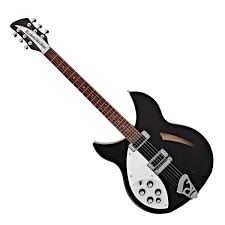
I would love this guitar which is a left-handed Rickenbacker, a famous American company with a very distinctive look and sound, yet, to my dismay, it costs ______________________
Idioms from Semester 2
Another string to (your) bow – a new skill or learning experience
bear with me – please wait a very short time (usually spoken as opposed to written)
bit of a sore point – something that makes you sad or angry
down in the dumps – depressed, unhappy, feeling gloomy
hit the ground running – to start something immediately and with all your energy
like a madhouse – a place or area that is crazy, too noisy, too busy etc
run of the mill – ordinary, typical, normal, usual, boring
up in arms – to be very angry about something, to protest strongly
you take your life in your hands – doing something that is extremely dangerous
Idioms from Semester 1
Which you should all know by heart and be able to reel off at the drop of a hat.
it’s raining cats and dogs
it costs an arm and a leg
piece of cake
I’m burning the candle at both ends
once in a blue moon
pass with flying colours
Extra expressions for Top Cats:
Ring any bells ? // do you remember //
More or less // not exactly but approximately
Get the gist // do you understand the main point ?
Right up your street // this is something you will really like
Rabbit, Rabbiting on // UK slang, especially in London … talking too much
Tongue in cheek // not being serious about something
Keep your hand in // to practise something so you don’t forget how it’s done
Bucket down / raining cats and dogs // raining very heavily
Have a go / give it a bash / give it a shot // to try something
Call it a day // to stop work and go home early
Go ahead // sure, do it
Under one roof // everything in one place
Through thick and thin // together in good times and bad times.
Remember these old chestnuts ?
without further ado // tricks up your sleeve // ace the test
pass with flying colours // do yourself proud //
you are in the driver seat(or you are in the driving seat) //
Regular verbs: just add -‘ed’. However, as you see, in this list only one common verb, ‘want’, is regular.
NOTE: ‘to be’ is different:
I am hungry / You are hungry / She is hungry / We are hungry
Now, practice: In groups of three or four, ask each other questions in order to feel more natural using the past tense. Let’s start simply:
What did you do today ?
Each student takes turns describing their day. Use these photos to help you.
Extra practice:
buy / drink / surf the internet / help parents / cook / do homework
Present tense ——– Past tense
act —— acted
go —- went
learn —— learned OR learnt
play — played
read —– read (pronounced ‘red)
ride —— rode
sleep —– slept
watch —- watched (pronounced ‘watch -t‘)
win —- won
What is the past tense ?
I act in a film. Last week I ______ in a film.
I go to London. Last year I _______________ to London.
I ride an elephant. Last month I ___________ an elephant.
I learn English.
Last Saturday, we ___________ English with Mr Paul.
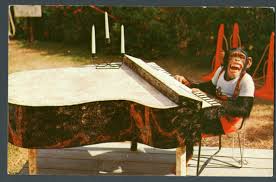
The monkey plays piano.
Last night, the monkey _________ piano.
She reads a book. Last Sunday she _____ a book.
He sleeps all day. Yesterday he _______ all day.
I watch the amazing Spiderman.
Last week I ______ the amazing Spiderman.
Put these verbs into the past tense, then complete the sentences:
want ———
take ———
decide ———
see ——–
buy ——–
think ——–
learn ——–
I —— to stay in bed this morning
She —– great photos with her new iPhoneX
We have —— to go to Thailand for Tet
Last night I —- a great film !
He —- food for Christmas from Harrods.
Tuesday ! I —— today was Wednesday
We —– about past simple in our lesson.
Pronunciation guide
In English, verb can be regular or irregular.
Regular verbs add -ed or -d in the past tense.
EXAMPLE:
I walk to work // I WALKED to work
I play guitar // I PLAYED guitar
She smiles on TV / She SMILED on TV
They dance in T-ara // They DANCED in T-ara
-ed past tense verbs pronunciation
Words have 3 end sounds:
‘t’
‘d
‘id’
If the word ends with:
ch / f / k / p / s / sh / thi – The sound is ‘t’ look = ‘lookt’
t /or / d/ – The sound is ‘id’ visit – ‘visitid’
Other sounds are ‘d’ bang = ‘bangd’
What is the correct pronunciation for these regular verbs ?
Look = Looked // laugh = laughed // end =
beg = / visit = / kiss =
brush = / breath = / love =
Read these sentences:
He cleared up the mess / He rolled up the newspaper / I have visited India
No Homework ! That sounded good / Teacher shouted, ‘No way !’
We all worked hard today / Tom talked so much /
The students played many games and laughed.
They have visited India
She has banged the drum !
Please Note: All photos are taken from Google Images or free photo sites, and are used for educational purposes only. No copyright infringement or offense is intended. If I have used your photo or image, and you wish me to remove it, just ask. This site is not monetized, I run it on my own dollar. Thank you.
We’ve got photographs of men on the moon We’ve got water that is good for us We’ve got coffee that’s instantaneous We’ve got buildings that are very tall We’ve got cigarettes that are low in tar We’ve got policemen can tell us who we are We can reproduce a work of art We’ve got missiles can tear the world apart Good, good, good, good, good, good technology
We’ve got trains that run underground Aeroplanes that fly very fast We’ve got music that is popular We’ve got machines that sound like orchestras We’ve got ability to transplant a heart We’ve got freezers full of body parts We’ve got computers that can find us friends We know roughly when the world will end Good, good, good, good, good, good technology
We’ve got animals with transistors in We’ve got pills that can make you slim We’ve got factories turning frozen chickens out We’ve got ovens that cook in seconds flat We’ve got plastics that are indestructible We’ve got deodorants that make us smell of flowers We’ve got detergents to clean up the sea We’ve got sounds can turn you inside out
Sometimes I wonder what it is all about There’s lots of leisure time to sit and work it out There’s a TV show I’ve got to see Good, good, good, good, good, good technology Good technology
Now, to cut down on ‘Teacher Talking Time’ and to get the class prepared to speak, to use intonation and stress as well as affording them the chance to use their L-FWs and idioms, a little warm up activity.
Firstly, what did you think of the song, with special reference to the lyrics and themes. remember – this song was from the 1980s, before mobile phones and the internet, which are now ubiquitous.
Ask and answer. Speak to many different students.
Elicit answers, interview your fellow students, pump them for information, don’t allow them to get away with a two- or three-word answers
How many hours do you use a computer every day ?
[Ask what the computer is used for, ask for examples, favourite sites, what is the work – play balance ?]
Do you have a smartphone ? If so, what type ?
Have you ever read an e-book ? Which one ?
What are your favourite video games ?
Do you write or read a blog ?
Are you on Instagram or Twitter ? Why or why not ?
When do you post comments online ?
Do you make phone calls or text family and friends ?
Warm Up – In teams, write three animals you would find in the Amazon Rain Forest.
Giant ant-eater
Let’s delve deeper (let’s learn more).
Use comparatives and superlatives:
A jaguar is a big cat BUT not as big as a lion. A lion is not as big as a tiger.
A lion is bigger than a jaguar but a tiger is the biggest.
A capybara is a rodent (like a mouse or rat).
A Capybara
A rat is _______________ than a mouse but a capybara is the ____________ rodent.
What is wrong with this sentence ?
A caiman – a type of alligator.
A caiman is big but an alligator is more big and a crocodile is most big.
A caiman is a reptile – it is _______________ dangerous reptile in the Amazon. Reptiles have thick or scaly skin. They can live in hot weather and salt water.
A frog is amphibian – amphibians need water to live and only have soft delicate skin. They cannot live in salt water (like the sea). If you see frogs or toads, it can mean that the water is good.
Next put these animals in order of danger, first, second and third then write a sentence using a comparative and the superlative
poison dart frog
bullet ant
jaguar
The answers
Number 3: bullet ant
Number 2: jaguar
Number 1: poison dart frog
Did you know ?
A jaguar has ___ _____ powerful bite. A jaguar bite is _____ powerful than a lion.
A bullet ant has _____ _____ painful insect sting. The sting is 30 times ______ painful than a bee sting.
The poison dart frog has different colours. The golden poison dart from is ____ _____ poisonous.
The Santo Angel waterfall is the ___________________ in the world
Answers: South America // 9 // it produces 20% of the world’s oxygen // 3 000 // poison dart frogs, jaguars, snakes, spiders, piranhas // a tucan // largest at 979 metres.
Our plan for the next semester is to develop speaking skills – presentation and delivery – as well as, naturally, increasing vocabulary, colocations, phrases, idioms … in short, the whole nine yards.
New idioms
I don’t want to overburden the class with too many idioms, so these are what we’ll be using over this semester. That means using them repeatedly until they become second nature and the students, of whom I am very fond, will have another string to their bow … oh, heck – ANOTHER idiom !
Another string to (your) bow – a new skill or learning experience
bear with me – please wait a very short time (usually spoken as opposed to written)
bit of a sore point – something that makes you sad or angry
down in the dumps – depressed, unhappy, feeling gloomy
hit the ground running – to start something immediately and with all your energy
like a madhouse – a place or area that is crazy, too noisy, too busy etc
run of the mill – ordinary, typical, normal, usual, boring
up in arms – to be very angry about something, to protest strongly
you take your life in your hands – doing something that is extremely dangerous
NOW … your turn … what idioms fits ?
At breaktimes, all the younglings come pouring out of their classes, screaming their little heads off …
it’s ___________________________________
Students are unhappy about tuition fees
They are _____________
She can speak five languages, do karate and is now learning violin
She has added __________________________
She thought the novel would be extremely exciting.
Unfortunately, for her, it’s just a ___________________ story.
Some areas of downtown are no-go areas.
You really _________________________________________ if you go after dark and alone.
Poor Buster is so funny, yet he always looks _______________________
Oh, dear …
This beautiful young lady seems to be upset about something.
Possibly something the man said is a ______________________ with her ?
We’re going to have a tremendous success with our new product which we shall be launching in Europe, the US and parts of Asia.
We’re really going to ________________________________
Excuse me, I have to take this call _______________________
Part two:
How would you describe these neighbourhoods ? I want full sentences, as complex as you can make them, bursting with idioms, expressions and Low-Frequency Words. Give your opinions – would you like to go there, or even live there ? Explain your rationale.
Manchester, north-west England
Tunbridge Wells, south of London
Birmingham in the British Midlands
Rural Wales
Edinburgh, capital of Scotland, during the festival
Part three:
Practice making complex sentences, with two clauses at least, from these simple sentences.
Example:
Johnny always went to the cinema when he was a child.
As a child, Johnny always went to the cinema.
GRAMMAR NOTE – the first word after the supporting clause has to be the subject.
We always played games when we had Mr Tony as our teacher.
He speaks English well although his written work is rather poor.
The Who were formed in west London in the early 1960s. They are a very famous, influential bands despite never having a Number 1 hit single.
My neighbour only works in a convenience store. She thinks she is a big star. She is constantly taking selfies.
And … to end, let’s start copying some classic movie scenes:
This town (town) is coming like a ghost town All the clubs have been closed down This place (town) is coming like a ghost town Bands won’t play no more Too much fighting on the dance floor
Do you remember the good old days before the ghost town? We danced and sang, and the music played in a de boomtown
This town (town) is coming like a ghost town Why must the youth fight against themselves? Government leaving the youth on the shelf This place (town) is coming like a ghost town No job to be found in this country Can’t go on no more The people getting angry
This town is coming like a ghost town This town is coming like a ghost town This town is coming like a ghost town This town is coming like a ghost town
Songwriters: Jerry Dammers
Exercise 3: What do you know about The Specials. Here’s some facts. Arrange them in the form of an IELTS-standard paragraph.
The Specials were formed in Coventry, in the British Midlands.
Formed in 1977. They had two main singers, Terry Hall and Neville Staple.
Their music is a mix of punk and reggae.
They had a number 1 song in 1980.
‘Ghost Town’ was also a number 1. It was released in 1981. This song is about the recession in the UK. Many people had no work, no money and no hope.
The Specials broke up (disbanded) in 1984 but later reformed. They still perform together.
Next blog will focus on pronunciation. To my classroom students, be prepared for a lot more speaking and practising so, yes ! You DO have to say it again … and again …

















:max_bytes(150000):strip_icc():format(webp)/148307334-58b5f5025f9b5860462d8064.jpg)
:max_bytes(150000):strip_icc():format(webp)/capybaraWC-58b5f50f5f9b5860462d9ab7.JPG)
:max_bytes(150000):strip_icc():format(webp)/blackcaimanGE-58b5f4f95f9b5860462d6d6f.jpg)



















 Thay Paul's Notes