As I constantly inform my students, IELTS is not a typical English class … it is IELTS English by which I mean, students have to demonstrate a command of the language that includes a wide range of vocabulary, the confidence to speak fluently, the correct stress and intonation to keep your listener engaged, the ability to form complex sentences and link them with appropriate discourse markers. Additionally, a knowledge of how English is REALLY spoken, to wit, sounding like the student has been interacting with real native-speakers, not merely repeating verbatim from a text book, is a must.
Piece of cake, no ? (an English idiom – you will need to learn some basic expressions, phrases and idioms to make your spoken language more natural and interesting).
OK, let’s break it down. IELTS requires a lot of work, study and practice. Students that come to my class expecting to kick back and be entertained are in for a shock, and then some. As such, I will not be defining the idioms I employ in this blog, e.g. Piece of cake – YOU will have to look them up yourself.
Don’t worry, young lady, I’m here to help you. Having said that, if you’ve been on a three-month course and you’ve left it to the last week to study … then you will probably fail, and deservedly so. Yes, life in the IELTS lane is tough, it’s dog eat dog (though ‘devour’ would be a more IELTS-friendly word than ‘eat’).
Where to start ?
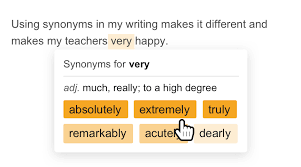
OK, IELTS wants what they term ‘low-frequency’ words. Basically, look at your English; replace any basic adjective or verb or indeed noun, with a ‘better’ word, a word that would be used by the higher-educated native speaker. Your best tool here is a thesaurus of which there are many online, or downloadable for free.
It works thus: Let’s start with a very basic adverb ‘very’. This is too simplistic for IELTS, so type in the word and click enter.
A number of words will appear. As above, the darker-shaded words are what the computer’s algorithm indicate would be more suitable, while giving additional options in lighter shades.
The proof of the pudding is in the eating – so let’s try it: rewrite these sentences using low-frequency words:
I think Bangkok a better destination than Chiang Mai
She bought a cheap bag
The film was good
Stage Two
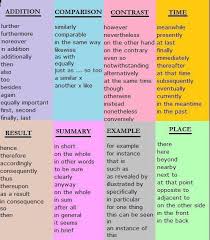
Linking ideas with discourse markers. I give all my students a print-out of common words and expressions that must be consulted and utilised. I hope that all my students take them home and study them religiously. Conversely they may use the paper to line the bottom of a bird cage. In all reality, the majority of students say, ‘Thank you,” have a glance, put said sheet in their bag and forget all about it. Consequently, several weeks later, the students are still resorting to ‘and’, ‘but’ with a possible ‘however’.
You can lead a horse to water but you can’t make the horse drink
Discourse Markers
I recommend my students learn at least two from each section.
Adverbs are incredibly powerful and so easily inserted into everyday text
I worked at another large and prestigious language centre, and had the pleasure of marking some essays by teenagers. From twelve pieces of ‘writing’, I found only ONE adverb.
Adverbs add information and interest to your language, but my students seem to avoid them like the plague. They may deign to insert a ‘very’ to please me … but it doesn’t ! I expect, nay, DEMAND more.
Without further ado
An example. IELTS will give students a very open-ended subject and then expect a well-constructed piece of writing, or fluent, coherent speech upon said subject, with no deviation, hesitation or repetition. It is a chance for the student to perform a solo, to demonstrate how much they have learnt and studied … or otherwise … generally it is ‘otherwise’.
Time for an anecdote. I was teaching one class, and endeavouring to give them ample opportunity to speak and practice English. Nobody spoke. If I selected some students, they would make an appalling act of not having heard the question, or to answer in a single word. Some students even began laughing that teacher was asking the class but nobody was responding. Hilarious … but he who laughs last, laughs longest. I decided this class was a waste of my time (because it WAS a waste of my time) and left them to their fate … CUT TO some weeks later, it’s the day of their speaking test … suddenly, they are running up to me for help, “What should I say ?”, “I don’t know what to do”, “I’m going to fail.” Temptation was to tellthem where to go ( that is an expression that does NOT imply direction !), but I gave them what help I could in the minute I could spare. Needless to say … most of the class were disappointed with their score, and no doubt, upon arrival at the family nest, were met were screams and derision. And no doubt they put the blame squarely where it belongs … on the foreign teacher !
The concluding line was an example of irony. I’m not going to tell you what irony is, look it up for yourself ! Do you want a fish or a fishing rod and knowledge of how to catch your own fish ?
So now, a fairly run-of-the mill IELTS question:
Tell me about your favourite gadget
This piece is, as one would expect, quite lengthy and jam-packed with information and detail. I don’t expect you to write or speak at this level … but I expect you to TRY.
As you read, look out for:
Low-frequency words
adverbs
adjectives
discourse markers
complex sentences (sentences which coney more than one piece of information)
expressions, phrases and idioms
THEN – practice reading aloud. Not just once and, “Teacher, finished,” but again … and again … and again. Yes, this is not entertainment but it WILL help you get the score you want from IELTS
My Kindle
One of my favourite electronic devices is my Kindle, an ebook reader, which is small and light. I always take it with me when I travel; I’d be lost without it.
The Kindle is primarily a way to buy, store and read books in electronic format. At first, I wasn’t convinced; I liked reading real books. However, books take up a lot of space and, at least in the UK, are rather expensive. When I saw what a Kindle can do, and that so many books are free, I was hooked ! I had to get one. I bought my device in 2014 and I’m still using it today.
As mentioned, I use my Kindle for reading. Literature, including poetry, is one of my passions. Instead of going to a shop, I just browse the online store, click and wait for it to download. With reasonable wifi, this can just take a minute or so … then I can start reading. It is no surprise that ebooks are ubiquitous in the UK.
Although I read a lot, the Kindle is more than just an ebook. It has wifi so I can access the internet, can play music, write notes and play games.
The wifi is vital, especially when I travel. I can maintain contact with friends and family, watch YouTube if the hotel TV is less than enthralling, or read travel guides such as Trip Advisor. Naturally, I can also book tickets or make reservations and therefore pay significantly less.
I recently travelled to Thailand to meet some friends. I didn’t want to buy a new SIM card, and my friend only had an old phone, so there was a dilemma; how to stay in touch ? Thanks to my Kindle, I had email access, so we could plan when and where to meet.
I can’t watch Vietnamese TV, due to the language barrier. Consequently, the Kindle plays an even bigger part of my life, as I need some way to relax after toiling away for hours at work.
The choice of books is amazing. In the stores, a single book can cost around £10, but recently I downloaded the entire output of the Russian write Tolstoy for less than £1.50 … incredible !
Kindles come in many shapes and sizes, so before you buy, you need to ascertain how you’ll be using it. For example, do you want a basic ebook reader, just for books, or the latest model with wifi ? This will, naturally, affect the cost. Then you have to decide upon the extras, for example how much storage space do you require, or a super-fast charger or protective case ? All of these bump the price up considerably.
If you’re interested in purchasing one, I have some information for you. I did a quick Google search and saw prices started at under 2 million VND, averaged around 5 million, but some were over 15 million. That, for me, is too extravagant.
In conclusion, my Kindle is very much a part of my life. It accompanies me everywhere. I simply don’t know what I would do without it.
Now … YOUR TURN
Write a piece about YOUR favourite gadget, using the above as a model
Best of British to you
Please Note: All photos are taken from Google Images or free photo sites, and are used for educational purposes only. No copyright infringement or offense is intended. If I have used your photo or image, and you wish me to remove it, just ask. This site is not monetized, I run it on my own dollar. Thank you.
Hello everyone,I welcome you to my blog page, and may I take this opportunity to thank ALL OF YOU who have visited my site. Having nearly 100 visits for a teaching blog is extremely gratifying.
Now, without further ado, let’s jump straight in, “Time waits for no man.”
A famous quote from the English writer Geoffrey Chaucer
First off the bat, a little plug for my friend ‘Pete’ who has an online radio show on Mixcloud. If you’re interested, you can listen here: https://www.mixcloud.com/flatwoundssounds/
The playlist is a mix of Jazz, Blues, Soul, R ‘n’ B & Rock ‘n’ Roll. However, in terms of an English lesson, listen to his narrative between songs. Although Pete lives in Birmingham now (central England), his accent betrays his Kent, (south-England) origins. Listen to how his voice deviates from Standard English.
A Propos (speaking about) of music, my last lesson featured two songs, one Nubian, the other a 50s Rock ‘n’ Roll number:
Nubia is a region that encompasses south Egypt and north Sudan
One of my online students has chosen the English moniker ‘Ivy’; consequently, this song is for her.
Now, time to get down to work. I introduced the class to some expressions; therefore we need to revise and practice:
between you and me // let’s get it over and done with // my hands are tied // off the cuff
I would like to let you go home early but …..
……… I think students have too much homework
Jazz musicians are famous for their spontaneity; they often play ………..
Oh, man ! We have to clear up after the party. Oh, well, ……….
Collocations
collect / raise / undertake / boycott
Charities run campaigns to ……….. money
I’m going to ……….. shops that treat their staff poorly
Scientists need to ……. further research into the Corona Virus
There is little recycling, if any, in Vietnam. We need to ……… awareness of the importance to the planet.
ART
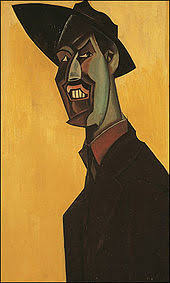
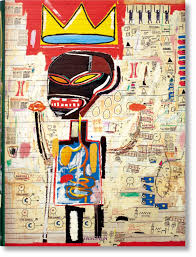
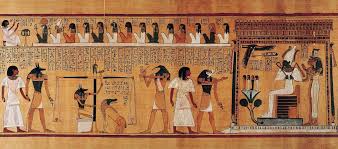
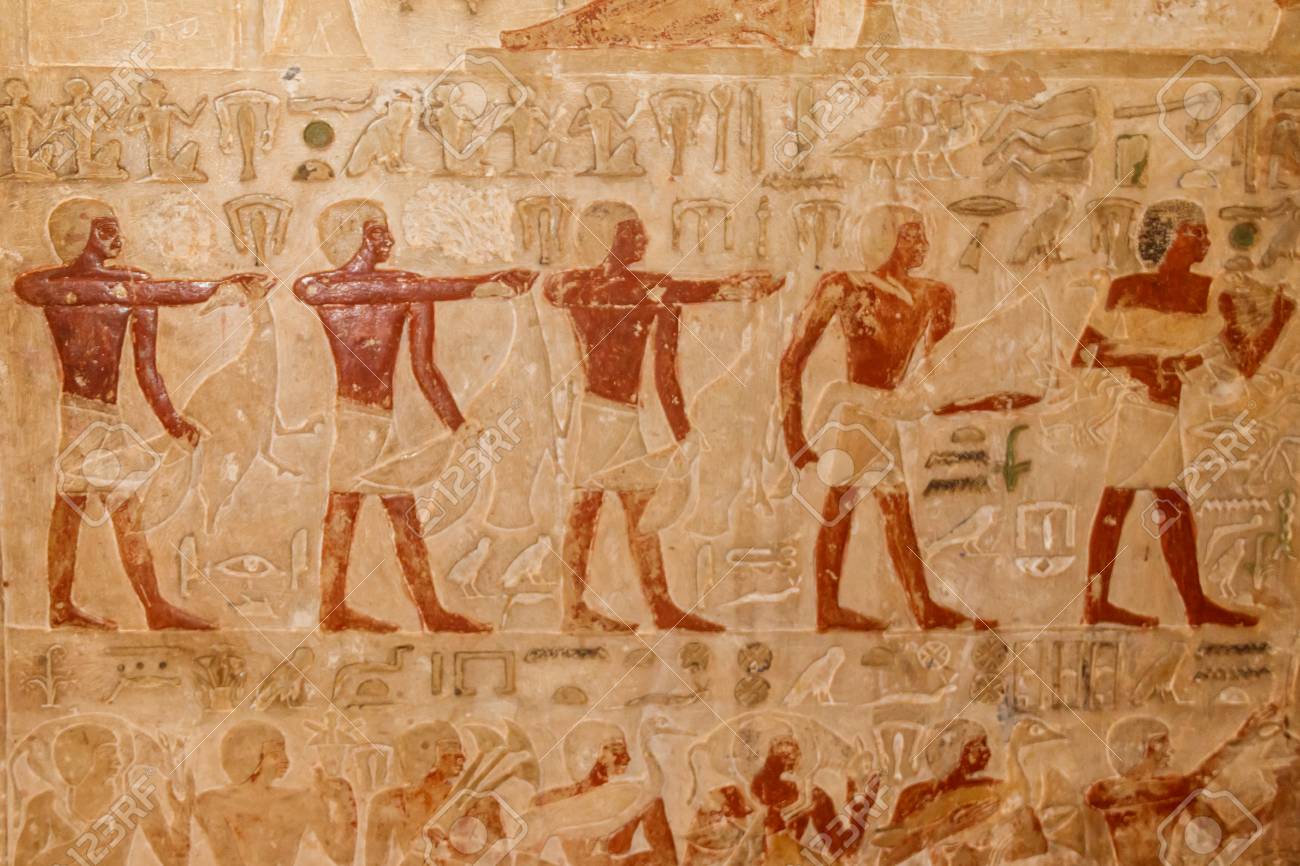
Giving opinions – remember, there is no ‘right’ or ‘wrong’ answer; the exercise is to help you express what YOU feel when you see these works of art.
Expressions:
It’s not my cup of tea // it doesn’t appeal to me // I just don’t get // I see no artistic value // I have no time for it.
OR … positive:
It’s very uplifting // the picture speaks to me // I’m drawn to the image // it is ineffable (unable to be expressed in words) // it transcends language.
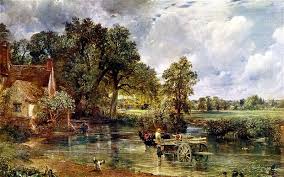
John Constable 1821Wyndham Lewis 1921Jean-Michel Basquet 1980sAncient Egyptian art
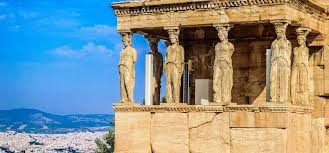
NOW – a curious point … how can a civilisation that can construct these:
only represent the human form like this:
How perfect are the Pyramids ?
“The builders of the Great Pyramid of Khufu aligned the great monument to the cardinal points with an accuracy of better than four minutes of arc, or one-fifteenth of one degree,” Glen Dash, an engineer who studies the Giza pyramids, wrote in a paper published recently in The Journal of Ancient Egyptian Architecture … ” https://www.livescience.com/61799-great-pyramid-near-perfect-alignment.html
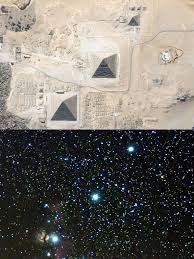
Now, take a look at his ariel view, showing the layout:
At this juncture, let’s take a little diversion, from ancient Egypt to ancient Greece.
The night sky has 88 constellations, many named after characters or creatures from Greek mythology. I’d like to focus on one, the giant hunter Orion. This is his constellation, and is one of the more easier groups to see, especially at this time of year:
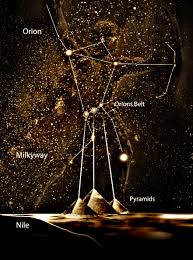
These random stars (which may in fact be many millions of light years apart) were seen by the Greeks thus:
You see the hunter with his bow and arrow, but I wish to draw your attention to the three stars arranged diagonally in the centre, the ‘belt’ of the hunter. Compare those with the arrangement of the Egyptian pyramids:
How would you account for this ? Coincidence or conspiracy ?
Let’s leave the last word to our National Poet, William Shakespeare, with this famous quote from Hamlet:
Object: encourage creative thinking and sentence building.
Vocabulary: expressions related to money
What would you do IF you were a millionaire ?
What would you do IF you were a millionaire for a day ?
Second conditional – this is used for a situation that is not impossible … but not very probable.
If I had a million pounds, I would … (stop working !)
If you had a billion $, you could … (buy an island)
If + Sub + had …, Sub + would / could
If you had unlimited money, what would you do ?
Plan a luxury day
How would you spend a luxury day ?
To develop narrative writing / speaking – use words/phrases such as:
Firstly, initially, I would start, it would kick off with …
secondly, thirdly etc
after that, afterwards, following that, and then …
for a change, as a contrast, for a break, to take a break from all the …
lastly, I’d end up, I’d round the day off with
Example:
To kick off, I would have salmon breakfast at a five-star … no, seven-star hotel. After that, I would go shopping for some suits and ties and then drive around London in a Rolls-Royce car, chauffer-driven, of course.
To take a break from the hustle and bustle, I’d relax at my hotel spa, then go for afternoon tea at another top hotel.
Lastly, I’d round the day off with a helicopter trip around the city and then fly direct to a stadium and go to my VIP (Very Important Person) seat to see one of my favourite bands play live.
Your turn:
You could:
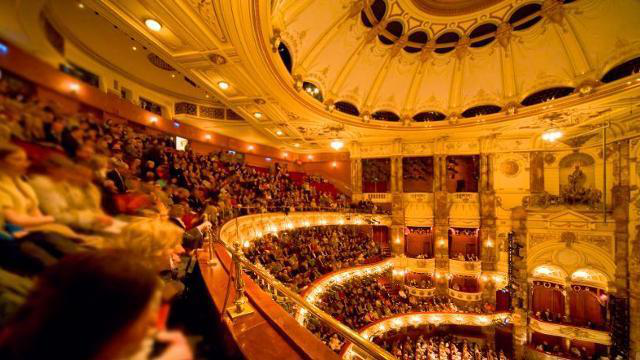
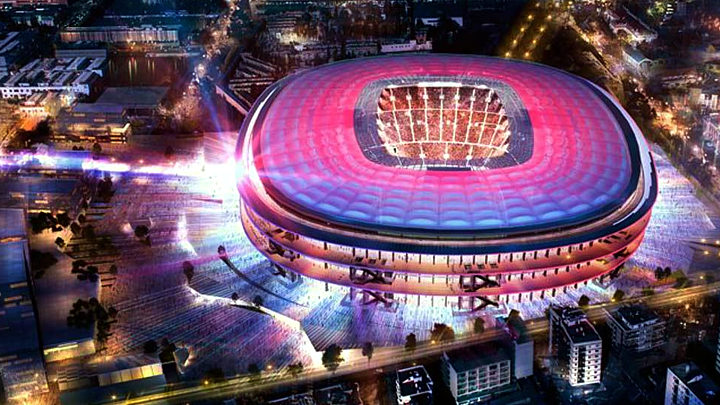
luxury breakfastluxury spa treatmenthorse-carriage rideshoppingluxury yachtAttend a play at a London theatreSee Barcelona play
OR add your own ideas
Where would you go ? What would you do ? What would you buy ?
Expressions connected to money
A ton of money = very much money
Having money to burn = having more money that someone needs
It costs an arm and a leg = something very expensive
Money talks ! = having money can solve many problems
Rolling in it = having so much money (‘it’ refers to money)
Swanky = slang for very expensive or elegant (it’s a swanky restaurant)
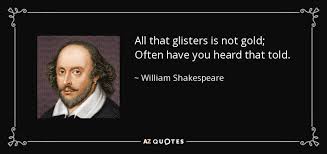
However, as Shakespeare said,
Would money make you happy ?
Can money buy you health, love or happiness … maybe that is for another lesson.
Making the news, across the world, is the continued spread of the Corona Virus.
This is a topic which is affecting millions of people, and having a significant impact on the global economy but of course … health comes first.
I’m writing from Vietnam, where precautions were implemented rapidly. Schools were closed, for example, so my centre is offering online-classes.
I recommend students read as much ‘real-life’ English as possible, not rely solely on the text books, so I was interested by this clip from the BBC, specifically aimed at Vietnamese.
This is a speech by POTUS (President of the United States), Donald Trump. The purpose of this blog is not politics BUT to encourage students to listen to the language and thereby learn new words and expressions: https://www.youtube.com/watch?v=twd60cPH7t0
The clip has Viet subtitles so is a great way to learn expressions, vocabulary as well as HOW native speakers speak … where we put the stress and intonation.
Email example: Mr Fricke wrote an email to enquire about the work progress. Here is a template response:
Subject: regarding your question,
Dear Mr Fricke
Thank you for your recent email of the 11th.
In response to your enquiry, I can inform you that the preliminary designs are
now complete and I would be happy to send them to you by email in PDF format.
If you require further assistance, please do not hesitate to contact me
Yours sincerely
Gavin Smith
Customer Services Officer
HWZ UK
YOUR TURN:
Write an email to Mr Fricke. He wants to know when he can see the final design
Thank him for his email.
Tell him the designs will be finished on 17th November.
How he can receive them (PDF, Word or weblink).
Email writing
Your supervisor needs you to write an email to a client in India,
Ms Agarwal of SAG Engineering.
Convey the following information:
There will be a Skype meeting at 07.00 GMT
The agenda will include expanding into the Indian market
Need to decide to base in Mumbai, Kolkata or New Delhi
What red tape is there ? (Paperwork, forms, licenses)
When will she be able to visit HCM ?
Does she have any special requirements (diet, religion)
Start with a friendly but appropriate greeting and a suitable sign off.
Email practice:
A supplier has sent the wrong parts. Write an email to complain.Again, an example for you:
From : HWZ UK
To : Le Thi Thanh Computers
Subject: Wrong parts
Dear Le Thi Thanh
On 27thFebruary, we ordered ten (10) cables for our Windows-based laptops. Unfortunately, you sent cables for Apple Mac computers.
We would appreciate it if you could send the correct cables as soon as possible. Our staff are unable to work without them.
This is the first time we have had any problem with your company. Until now, you have always given perfect service.
Hope to hear from you very soon
Nguyen Minh Phuc CFO
YOUR TURN
A supplier has sent the wrong textbooks to your office. They sent iPhone 8 and you requested, and paid for, iPhone X workbooks. Write a suitable email … remember … ALWAYS BE POLITE
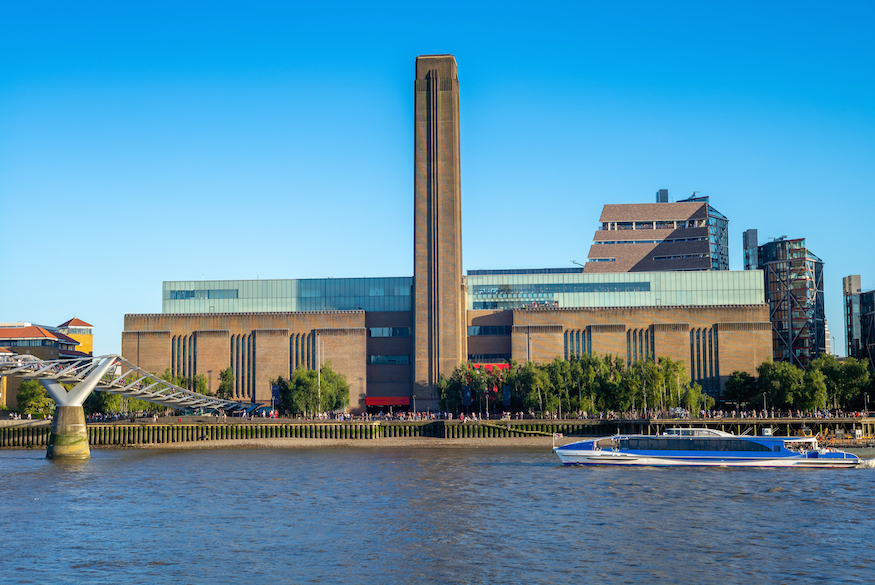
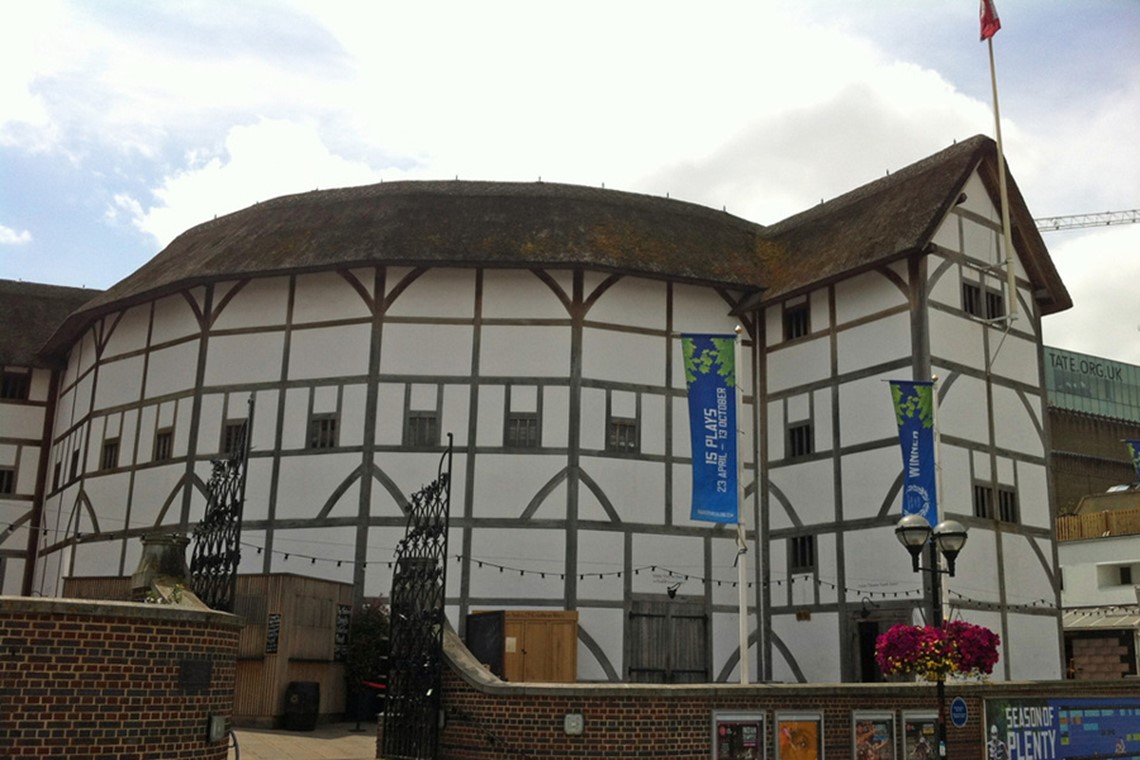
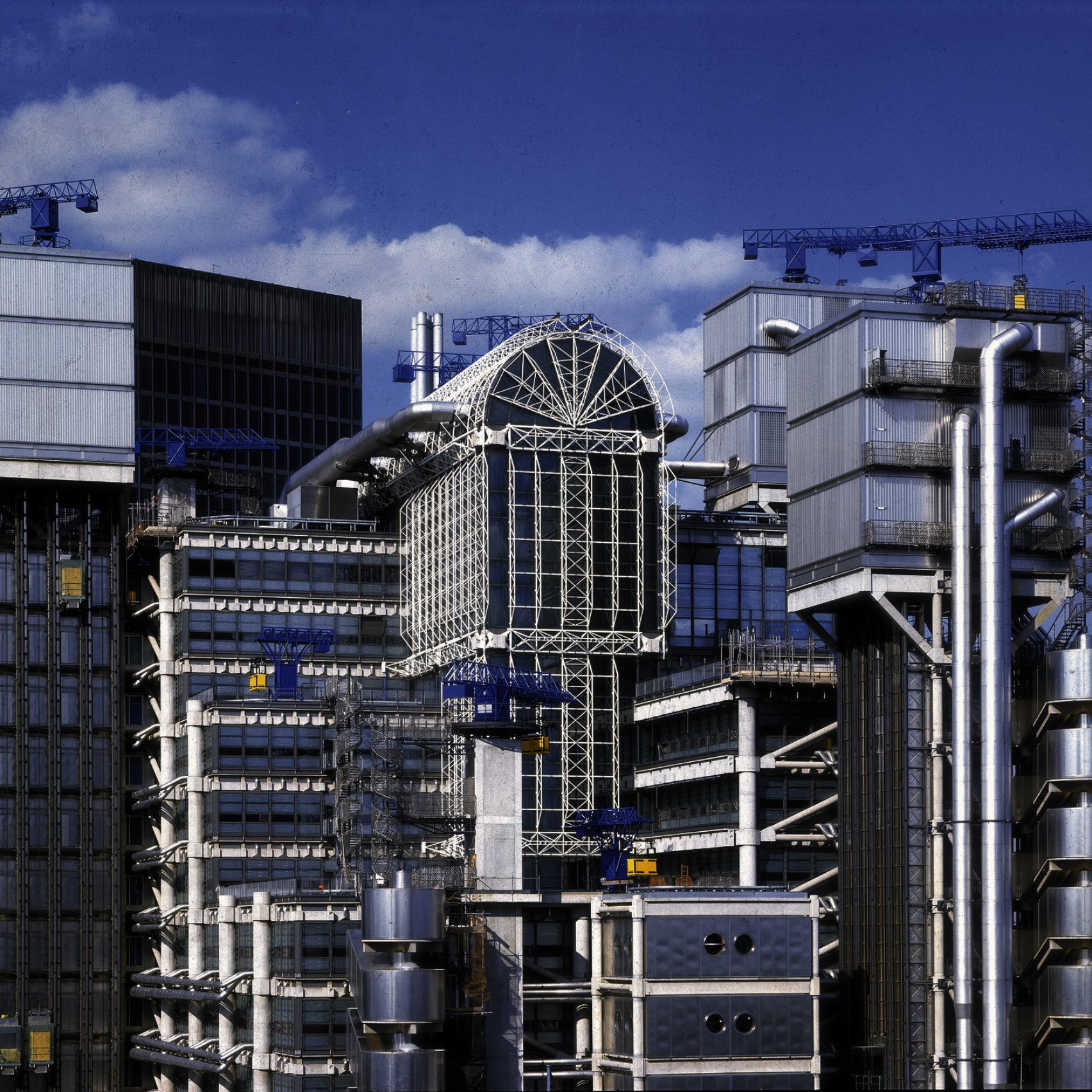
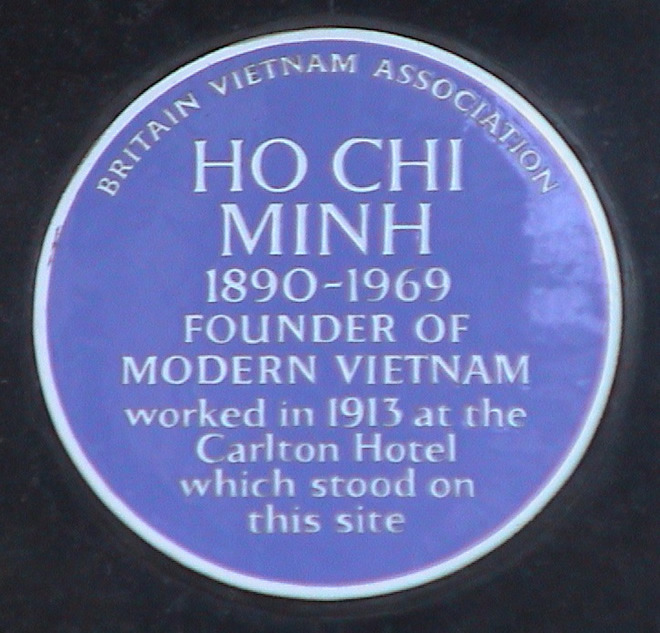
These are photos of real buildings in London. Can you guess what they were / are ?
Can you guess ?
ONE: Tate Modern art gallery – it used to be a power station, hence the large, imposing scale and tall chimney.
TWO: It was the smallest police station; it had a telephone and space for one officer. No longer in service. This is in a corner of Trafalgar Square.
THREE: Shakespeare’s Globe Theatre. This is a reconstruction; the original building burnt down in the C17th.
FOUR: Lloyds Building. Lloyds of London are an insurance company, providing financial services.
FIVE: This is New Zealand House, near Trafalgar Square. The building itself is rather nondescript but, for my Vietnamese students, there is a feature of interest …
SIX: A Blue Plaque stating that Ho Chi Minh once worked at a hotel that stood on this site. There are many Blue Plaques around London saying where famous people lived or worked.
New vocabulary
imposing– powerful or scary-looking. Normally police stations or government buildings
reconstruction– rebuilding (in this example, made to look like the original The Globe Theatre)
nondescript – nothing special, ordinary, plain
stood on this site- a building WAS here but is now gone (demolished / torn down)
England doesn’t really manufacture – our wealth is derived (comes) from services such as banking, finance, insurance and teaching !
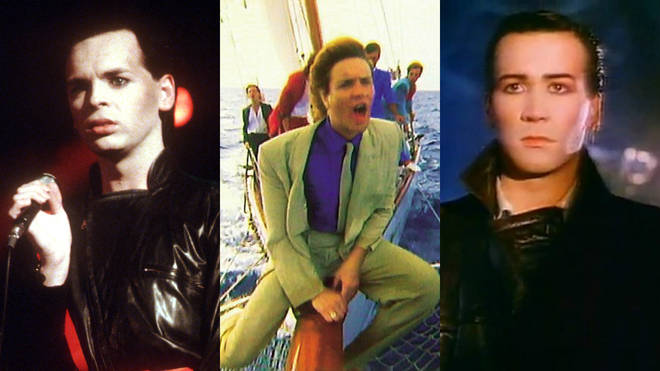
Synth pop
(listening & British pop culture)
Electronic music from the early 1980s. The band is called Human League, the song, a chart-topper (was No. 1 in the music charts), is called ‘Don’t You Want Me.’ What do you think ? Is it up your street (you like it) or not your cup of tea (you don’t like it) ?
Trigger You never know what you’ve got till it’s gone.
Jim Hey ? Yeah, I suppose you’re right there, Trigger.
Trigger I know how much it can hurt. I had a relationship break-up a few years ago. She worked in my council depot. (local government office)
Mike (barman) She was a lady roadsweeper ?
Trigger Oh, no, she was management … real high-flyer … you had to go to her when you wanted a a new broom ! Linda … nice girl, had a funny eye. Never knew if she was looking at me or seeing if the bus was coming. Anyway, she’d heard about this little hotel down Henley-on-Thames (outside London) and she said to me, “How about spending a weekend there ?”
Del-boy (on phone) What sort of money we talking about ? Well, I’ll have to pop down and see you, won’t I, eh ?
Mike Yeah ?
Trigger What ?
Mike What happened ?
Jim Was it a nice weekend ?
Trigger Yeah, at least I thought it was, but she didn’t wanna see me no more after it.
Jim Well, I don’t like to pry, Trig but …
Mike No, no, no … it’s a bit personal.
Del Hang on, Bronco … Trig ! What ‘appened ?
Trigger She got jealous ! I ‘eard later, through friends, that she wanted to go with me.
Jim I’ll have a large scotch, Mike !
What was wrong with the weekend ? What was Trigger’s mistake ?
Do you notice how in parts of London, native speakers drop the ‘h’ so we have “What ‘appened ?” instead of “What happened ?” “I ‘eard, ” instead of “I heard.”
London, my hometown, is a multi-cultural world city. However, there are some problems. For students who live in S.E. Asia, the weather will be awful; grey skies, bitter wind, freezing, depressing rain.
A second factor is money. Unless one has a good job and a good income, London can be a hard place to live.
How does she link her ideas together and keep talking ?
REMEMBER: listening to native speakers in a great way to improve your English. I suggest you only listen to SHORT pieces … maybe just ten or twenty seconds. Write down any new words or phrases. Listen again, then repeat. Speak along with her. Listen to how native-speakers link words and use intonations. Notice how often we use expressions.
Quick thinking
What famous buildings or attractions can you think of in London ?
To help you, here’s a video about Top 10 London Attractions
Which ones appeal to you ? Expand your sentences. Explain why you are interested. Conversely, say which ones don’t appeal to you, again giving your reasons. Try to incorporate these idioms:
Not my cup of tea – a polite way of saying you don’t like something
Right up my street – something that you really like or enjoy
EXAMPLE: I don’t want to go to the ballet, it’s not my cup of tea. However, watching a football game is right up my street.
London, naturally, is a big city and you will probably have to use buses or the Tube (underground trains) at some point. So how to get around ?
Watch the video then explain how someone can travel on public transport in London.
Now, this video is chockablock (full) of new words and expressions. I’ve selected a sample:
about which more later / bank fees on transactions / hang around
get in everybody’s way / money put onto / top-up / cap
pay-as-you-go / stick (as verb) / as long as it’s nice and fresh / escalator
as far as …. concerned / obvious /on no account swipe
you’ve got to / the thing about …… is / particularly weirdos
get charged / get skinned / reasonable / Routemaster
Now, by listening to the video, and using a dictionary, you try to make some sentences using these new words or phrases.
Here are some examples foryou:
On no account tell anybody your PIN number for your bank card.
Prices are so high in central London, you can easily get skinned (pay TOO much).
The thing about the British Museum is that is can get so crowded.
Don’t stand in front of the escalators or you will get in everyone’s way.
Give a summary of ‘getting around’ London by public transport.
What are the ‘dos and don’ts’ ?
How many different kinds of transport is the Oyster valid on ?
Famous Londonders – real and fictional
Who is the most famous detective in literature ? Most of you would probably say Sherlock Holmes … but have you read him ? This is a great site for English learners – literature but in simple, everyday English
I am an English man, so I always drink damn fine tea. In order to make tea I naturally need boiling water. In my house I have an appliance which boils water. It plugs in to the electric and can boil water in just a few minutes. However, it has no other purpose.
Think of something you use everyday – but don’t make it too obvious.
Tuesday morning, alarm set for 5.00 am UK time (12.00 midday in Bangkok), at the Tube before 6.00 for the 90-minute, three-train ride to Heathrow Airport. From there, Thai Airways to Bangkok.
I got the early Tube (London underground trains) because the first line is so busy, and I had a suitcase and a shoulder bag. Luckily, all three trains came within one or two minutes, while most of the journey was quiet (apart from some idiots playing videos on their phones out loud). Hard to concentrate on my book (‘Notes From Underground’ by Dostoevsky). By the time of the flight, I’d read a third of it.
Repacking at the airport, putting the coat in the case, then onto the self-service baggage tag print-out, which I’ve just about mastered by now.
Checked-in, security checked, re-belted and all gadgets back in the bag. A lot of time to kill. A lot of pointless, over-priced shops in which to wander, no intention of buying anything … except coffee.
Eventually time was killed or wasted or passed but ironically enough, not flew; we boarded … and just as the flight to London, this was very cold. Air-con turned up (down ?), no doubt to combat the Corona Virus, but it was like eleven hours in a flying refrigerator. The bathrooms were even colder. Before long, people were sniffing, blowing noses, sneezing. The precautions seemed to be making people ill.
The flight ? We got there, that’s all that counts. Generally, the worst thing about travelling is other passengers. There was a young chap (sturdy, young & healthy, but was stuck down by the sniffles) two seats from me who simply could NOT keep still, and naturally, at one point, the lady (term employed with irony) in front put her chair all the way back.
Next problem – we arrived very early, even ahead of schedule but I couldn’t check in to the hotel until 2.00 pm. More time to kill. I had an over-sized cappuccino at the airport and slowly meandered to the Citylink train. The airport, as the plane, freezing. The train, as the airport, freezing and the BRT (subway) … freezing. Still only 8.30 am. I took an iced Thai tea in a cafe near the hotel and read, still wearing my jumper (a jumper ? In Thailand ?), and the cafe … freezing.
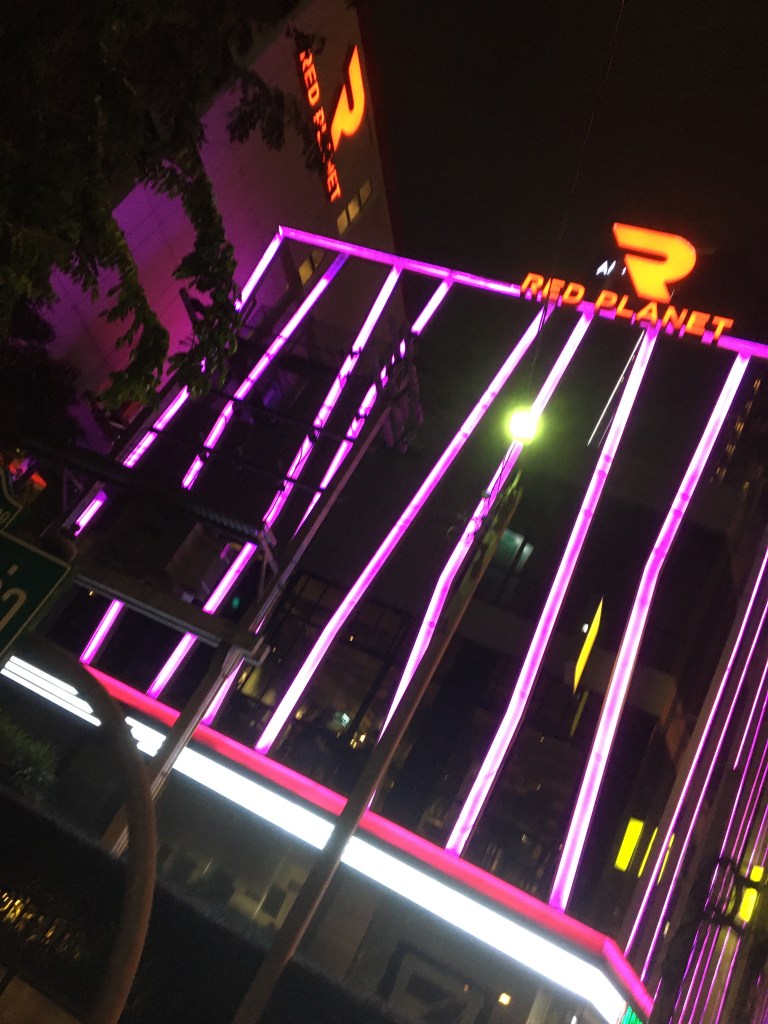
I thought I’d leave my case at the hotel and walk around, head up to a shopping mall until check in time. However the hotel, when I arrived at 9.30 looking like I’d spent eleven hours in a flying refrigerator, found me a room, so a big ‘thank you’ to the staff of the Red Planet.
For those who know Bangkok, I’m staying on Surawong Road, nearest BRT is Chong Nonsi by Silom.
The hotel, by night:
I thought I’d feel better after some lunch, so I took prawn pa-nang curry. In the evening, near the hotel, I went to Jianng’s Healthy Fish Balls where, for 60 THB (£1.47 / $1.90):
Then a walk south on Silom to the Hindu temple, Wat Khaek:
Across the road is a soi (small road off a main road) with lots of street food:
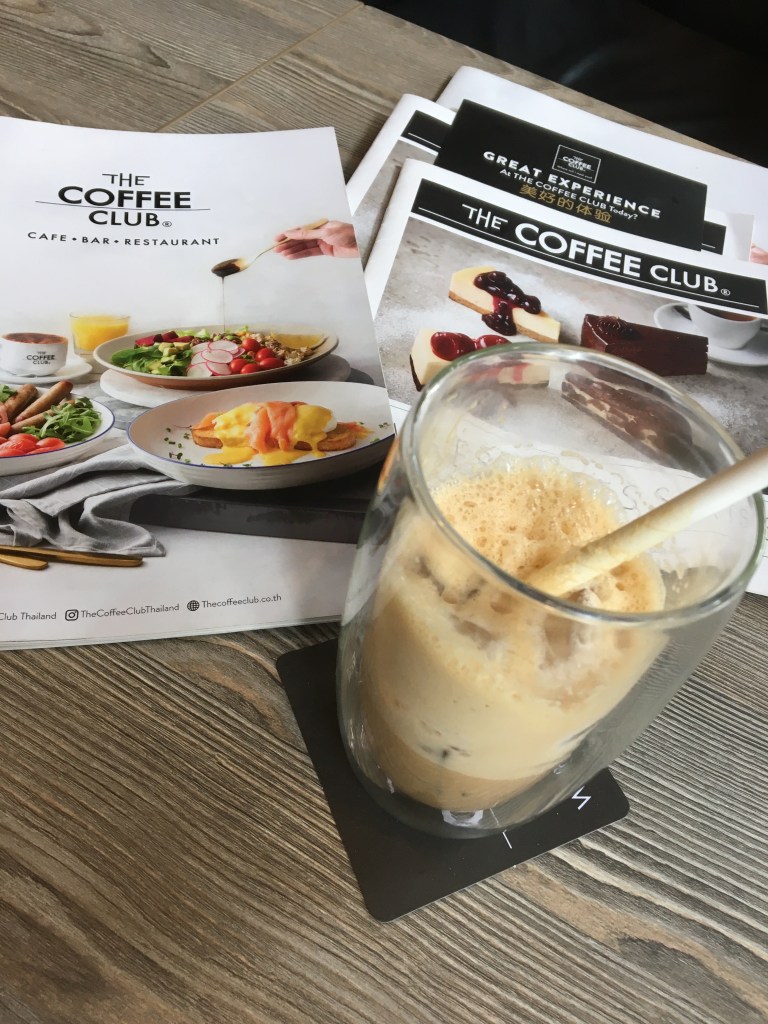
The next morning began with traditional iced Thai coffee at The Coffee Club. 80 THB (£1.96 / $2.53).
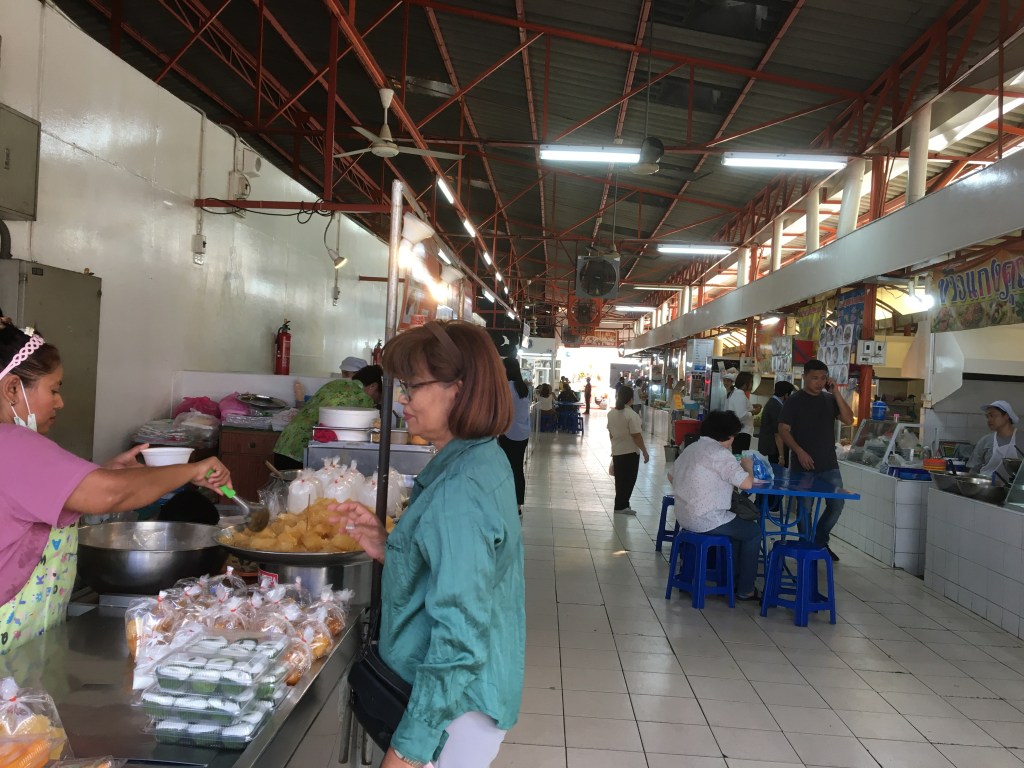
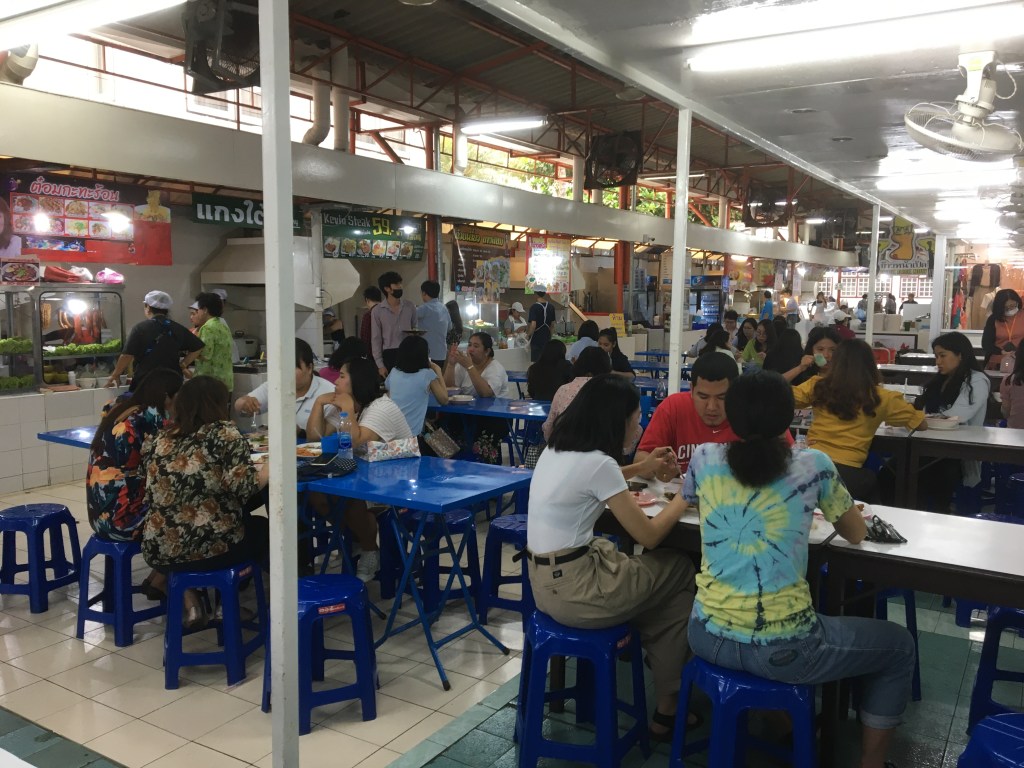
Then a walk up (north) Silom to Lumphini Park. On the way, I spotted a soi (Soi 5) with a street market. Typically, there are food courts. It was still early, so I decided to come back and eat lunch here:
And I only saw two other farangs (foreigners) here.
At the end of Silom is the Metro, giving access to the park. While there, I made a new friend:
And then … “The rain began, the jolly old rain.” Before the rain got too heavy, lunch back at the market at Silom 5
Prawns and noodles 70 THB (£1.72 / $2.21), extra spicy sauce.
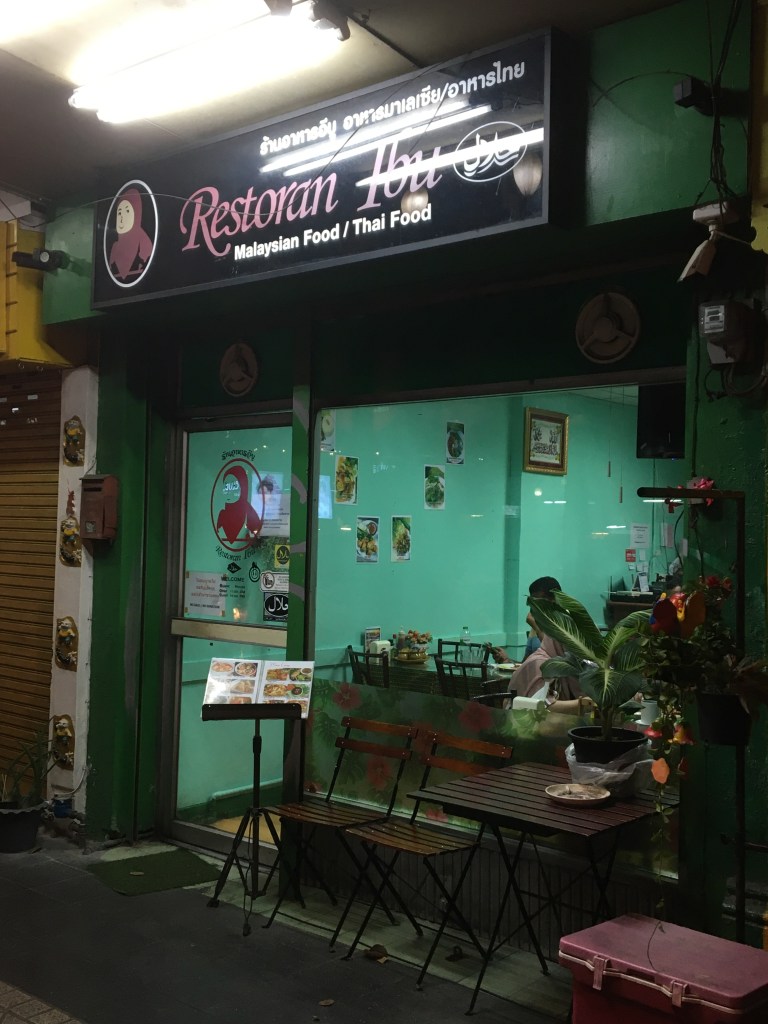
Later, not really hungry but thought I’d take a walk and see what caught my eye. I found Restoran Ibu, near Wat Khaek:
Restoran Ibu on Silom
The food from the menu:
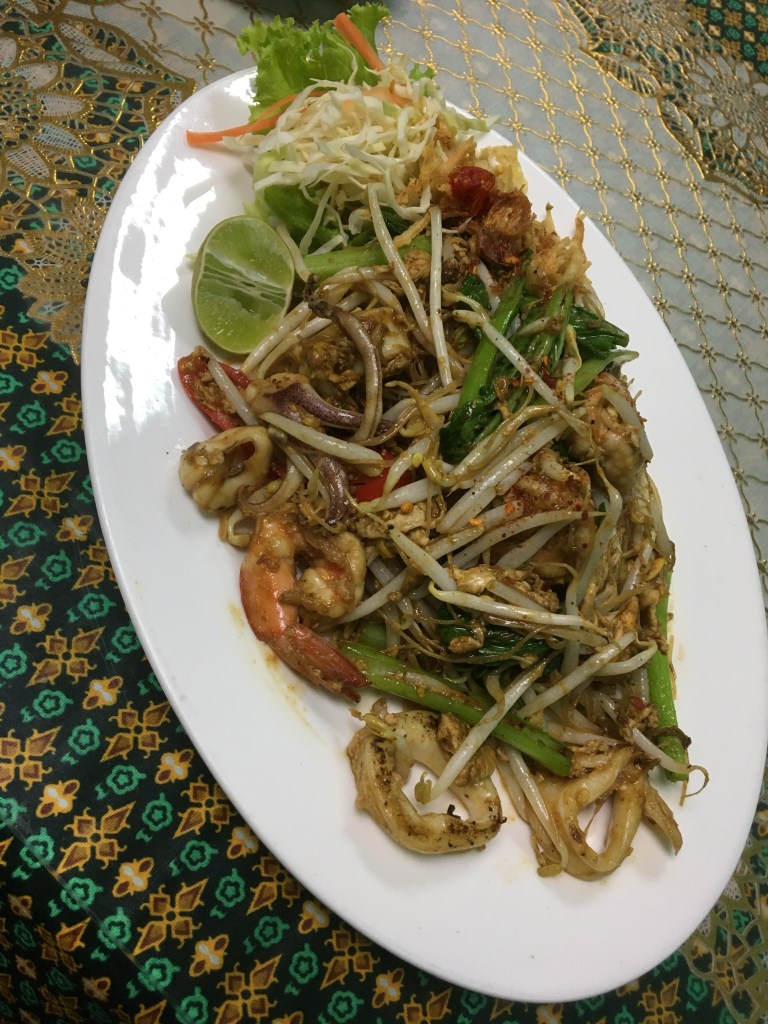
And the reality:
Just as good, I’d say. Ibu fried be hun for 100 THB (£2.46 / $3.16)
That night, the jet lag caught up with me. Couldn’t sleep, with the exception of a catnap around 4.30am, until 6.30 am and then only until 8.00 am. I gave up trying, and went out to read and NOT have any caffeine … instead, at a Cafe Amazon, by the Chong Nonsi BRT, a strawberry smoothie for 65 THB (£1.60 / $2.05)
Tomorrow is the flight back to Viet Nam, which should be painless, a mere 90 minutes, but I’m flying Vietjet and these smaller airlines tend to be low- down on airport take-off slots. Consequently, Vietjet has a reputation for always having delays. The last time I flew Bangkok to Sai Gon, the delay was longer than the flight.
And now, my final afternoon in Bangkok … and just twenty pages to go of my travel reading:
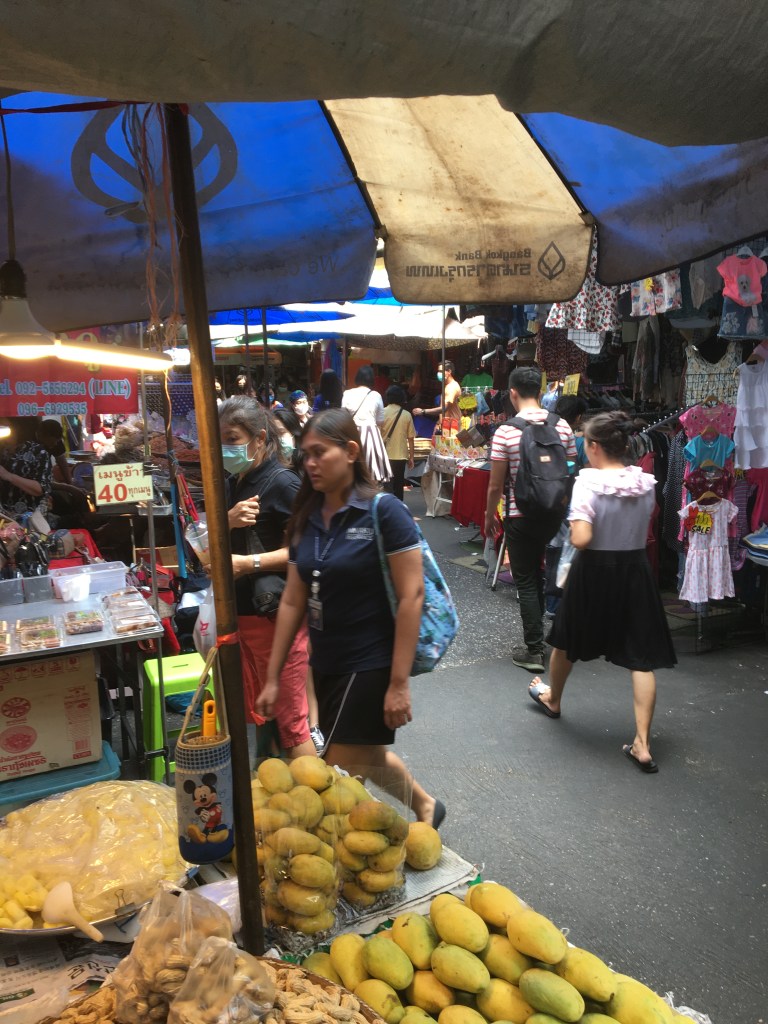
At 13.10, I finished the book, sitting in Lumphini Park. Time to walk back to the hotel, and some more street food – the market at Silom 10:
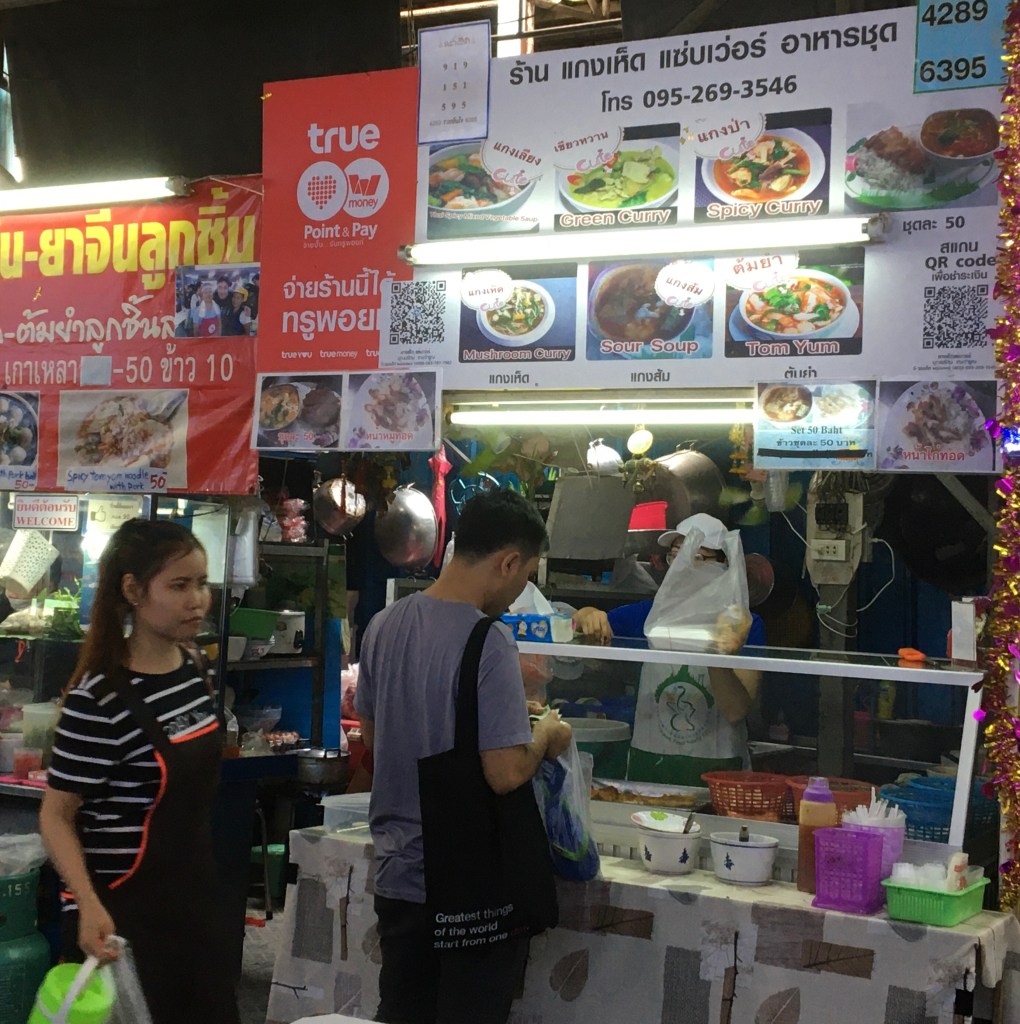
This is the stall I chose, spicy Thai vegetable soup (with prawn):
A mere 50 THB (£1.23 / $1.59)
For my last meal, where else but back to Ibu, this time for something traditionally Thai, prawns in coconut milk:
115 THB (£2.84 / $3.65). The staff are really friendly and I highly recommend this restoran.
And so, back at the hotel blogging. Reading, accomplished, curries – no problem, resting … not so much, but at least I’ll be home tomorrow – Unless Vietjet decide otherwise …
Goodbye from Red Planet
Red Planet – I paid about £75 / $96 for three nights. The rooms are fine for a single budget traveller and come with a fridge, large TV, safe and hair-dryer. The room also takes the three-pin UK plug.
On the downside, the walls are very thin (I can hear the chap in the next room talking and whooping and now he apparently has the hiccups). There is liquid soap, but this is not so good for hair, so bring your own shampoo, comb, also a toothbrush and paste. Being Bangkok, and near a night-time bar area, people come and go at all hours (this is a hotel, after all) and last night, there were doors banging until sunrise.
Room cleaning consists of changing the towels and supplying plenty of bathroom paper. Sheets not changed, but maybe if you ask nicely …
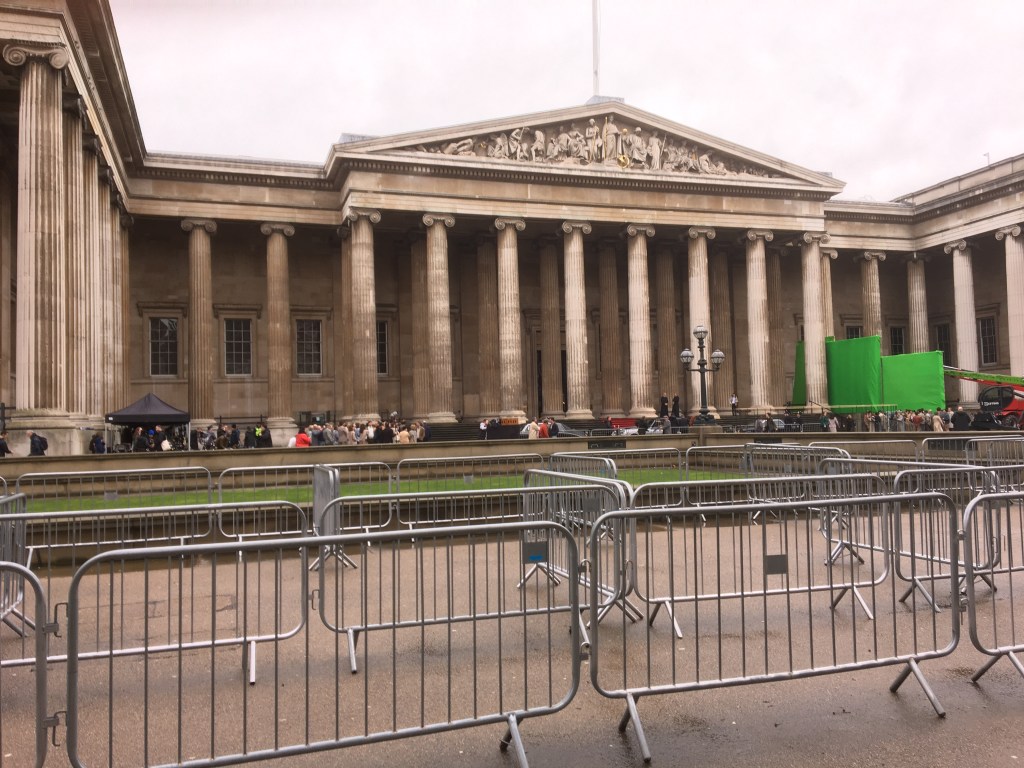
My penultimate day in London; sky grey, wind bitter, prices high and queues at the British Museum, prohibitively long.
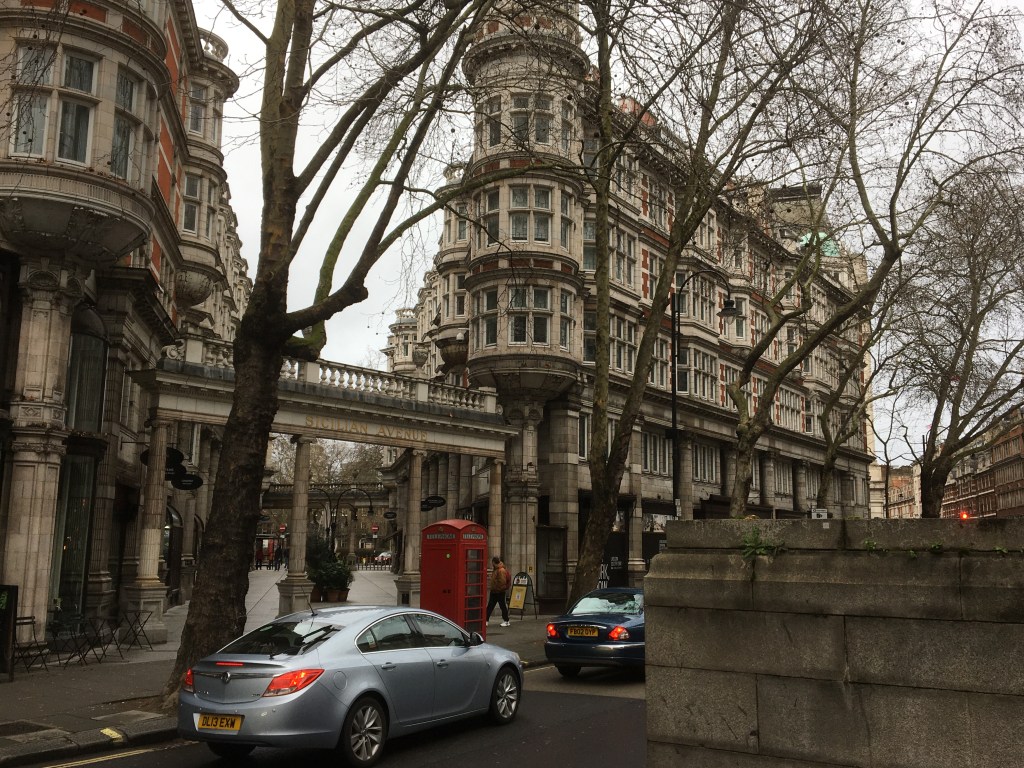
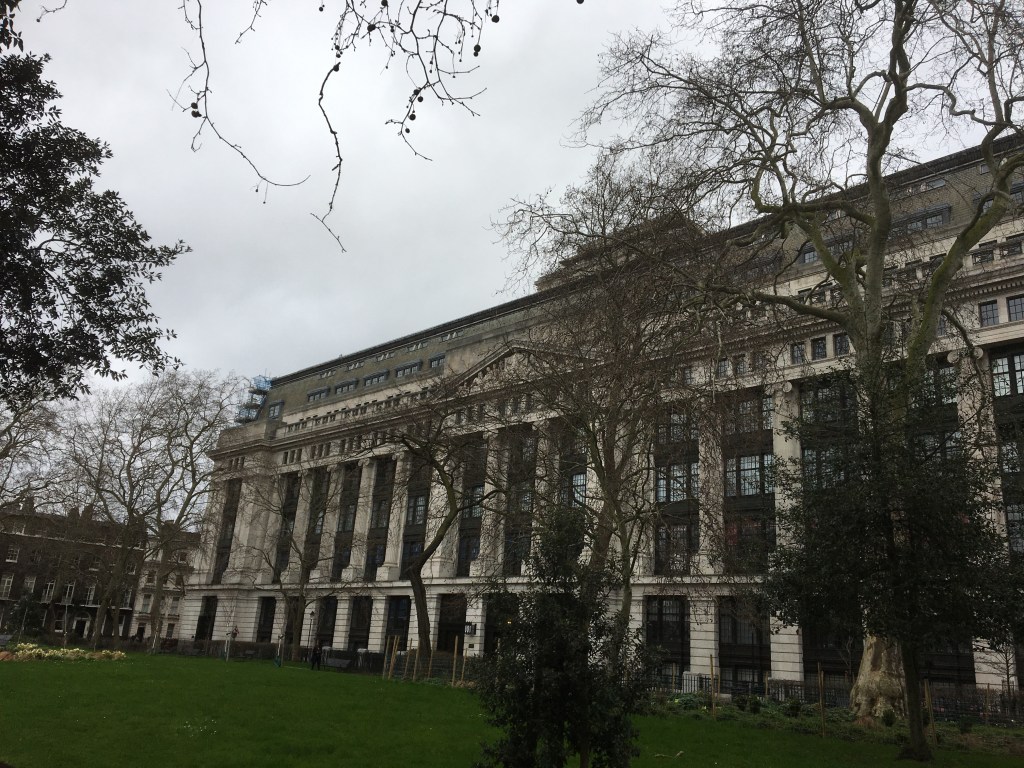
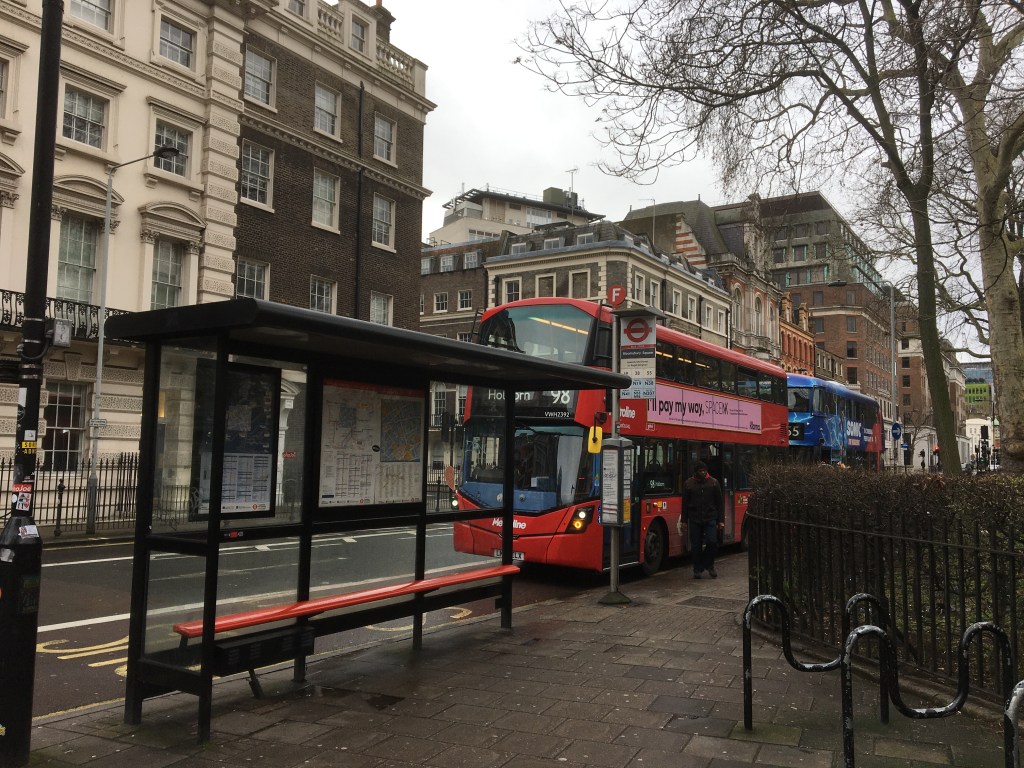
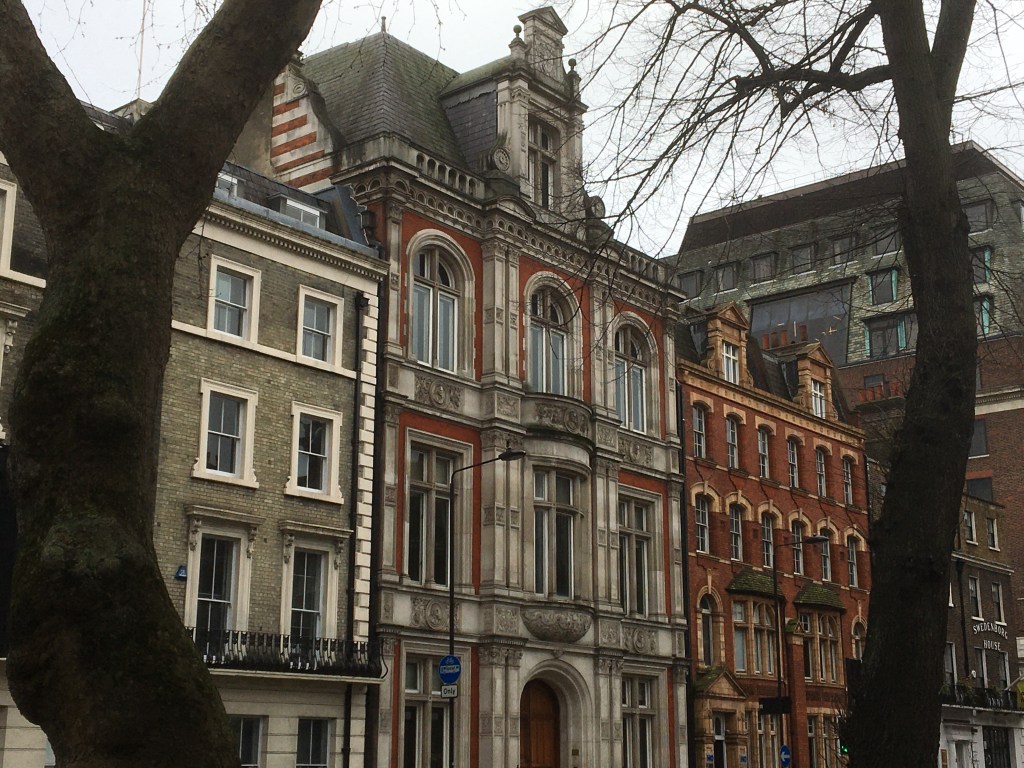
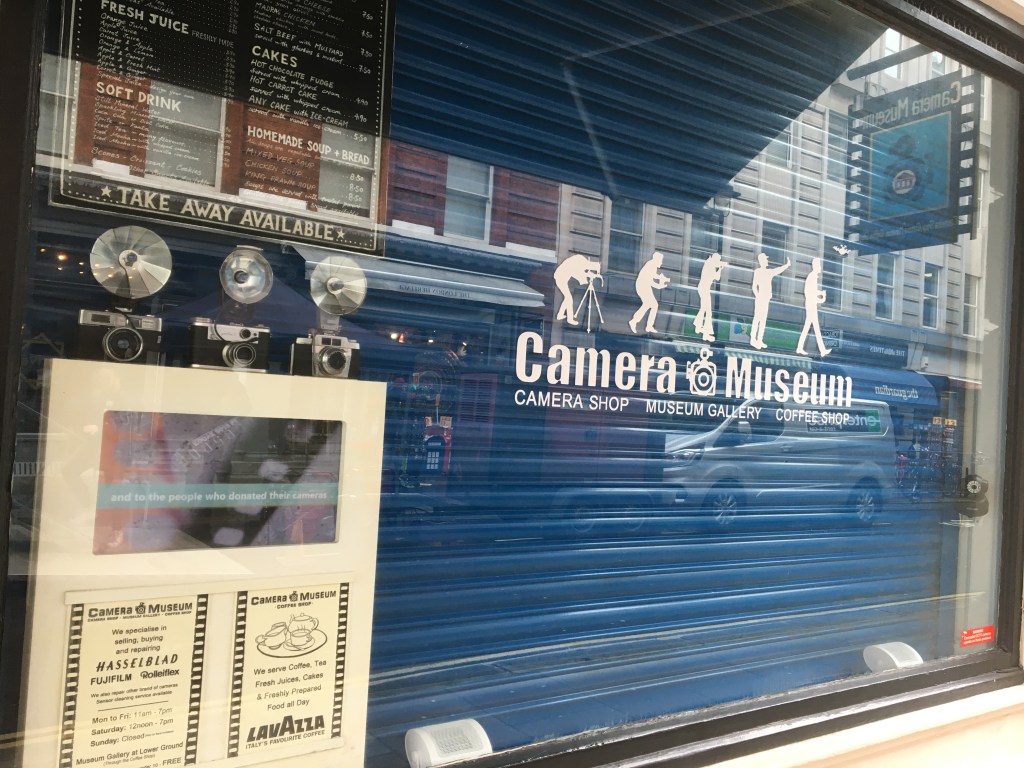
I left east London around 9.00 am and took the Tube straight to Holborn and from there, walked the ten minutes up to the Museum, pausing only to take these snaps:
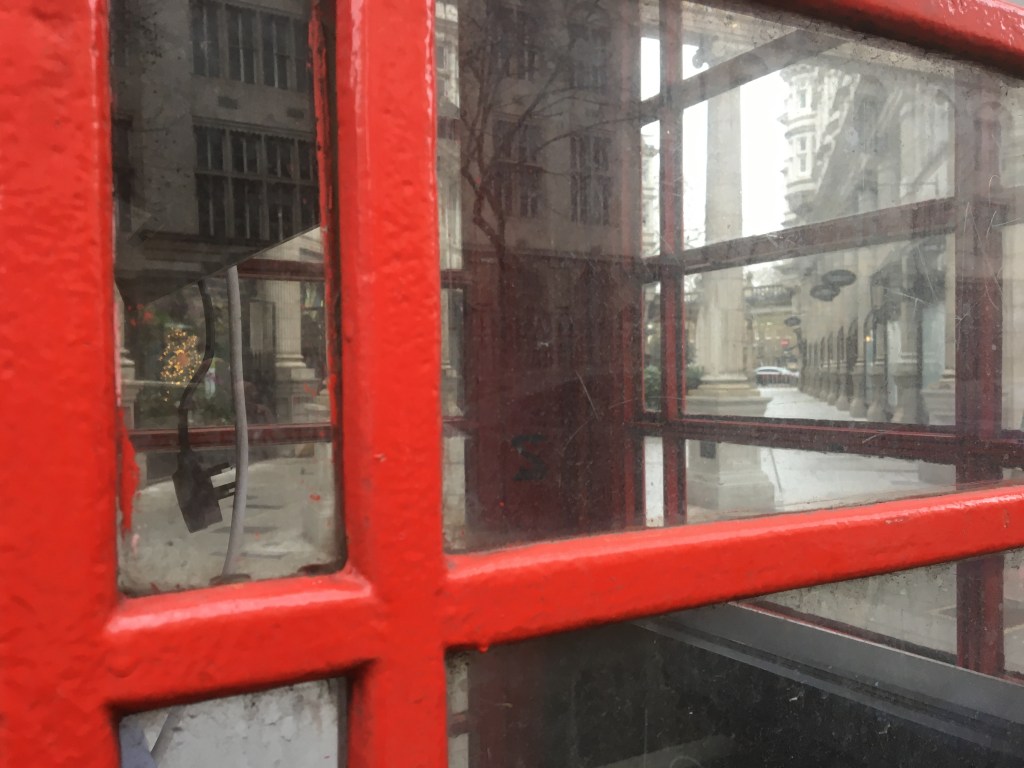
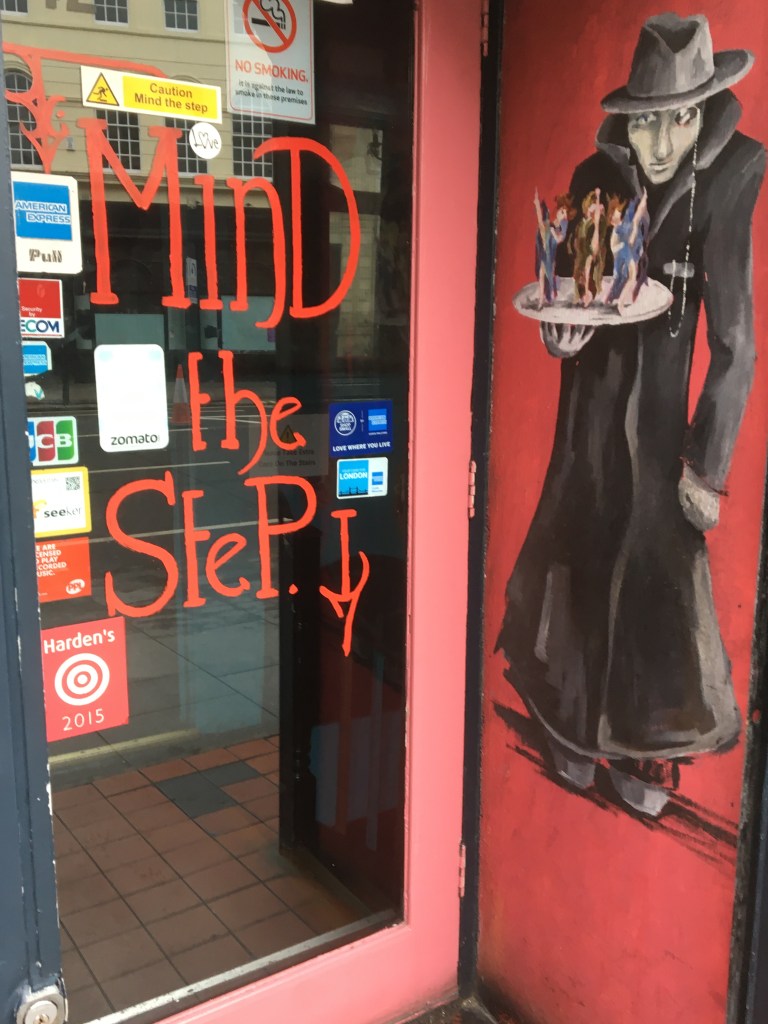
Looking south, towards Holborn Station.An iconic British phone box.Bloombury Ballroom, an art deco building from the 1920sAlways … people wait in the cold for a bus … and then two come at once.Great camera-themed cafe. Naturally, it was closed.Last time I was here, the museum was free; now they charge £1. The British Museum. Usually open at 10.00 am but today delayed due to filming. However, on a Sunday, the queues were so long, I decided to go for coffee and then lunch instead. The choice …
Japanese … ?
Mexican … ?
Chinese … ?
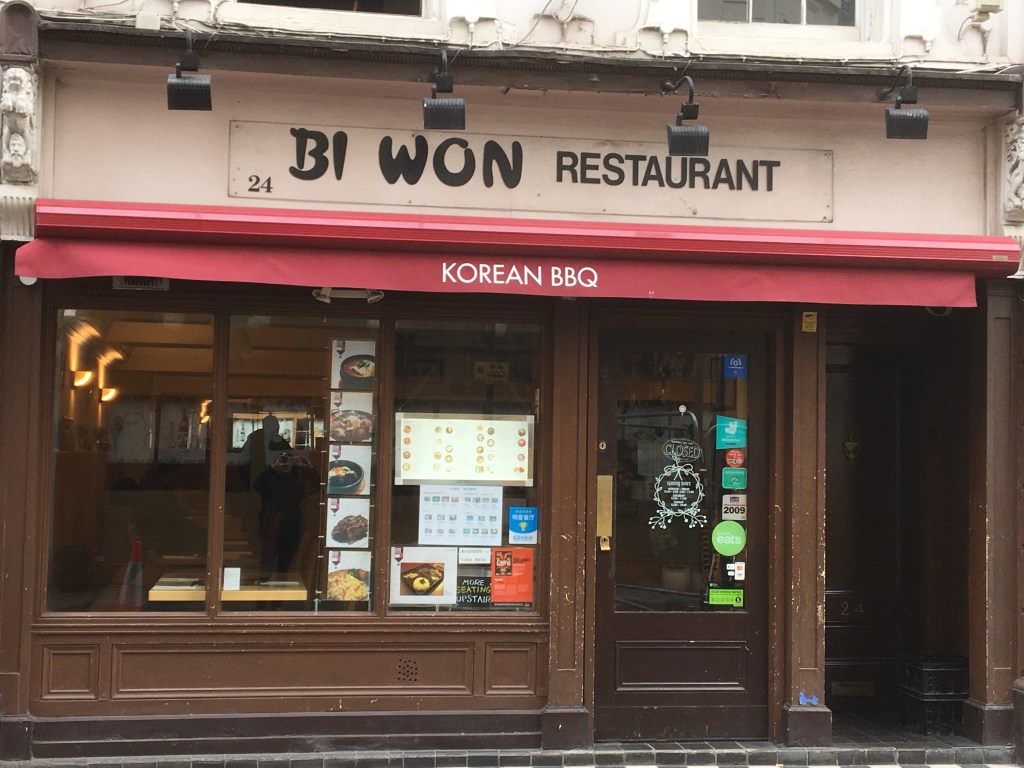
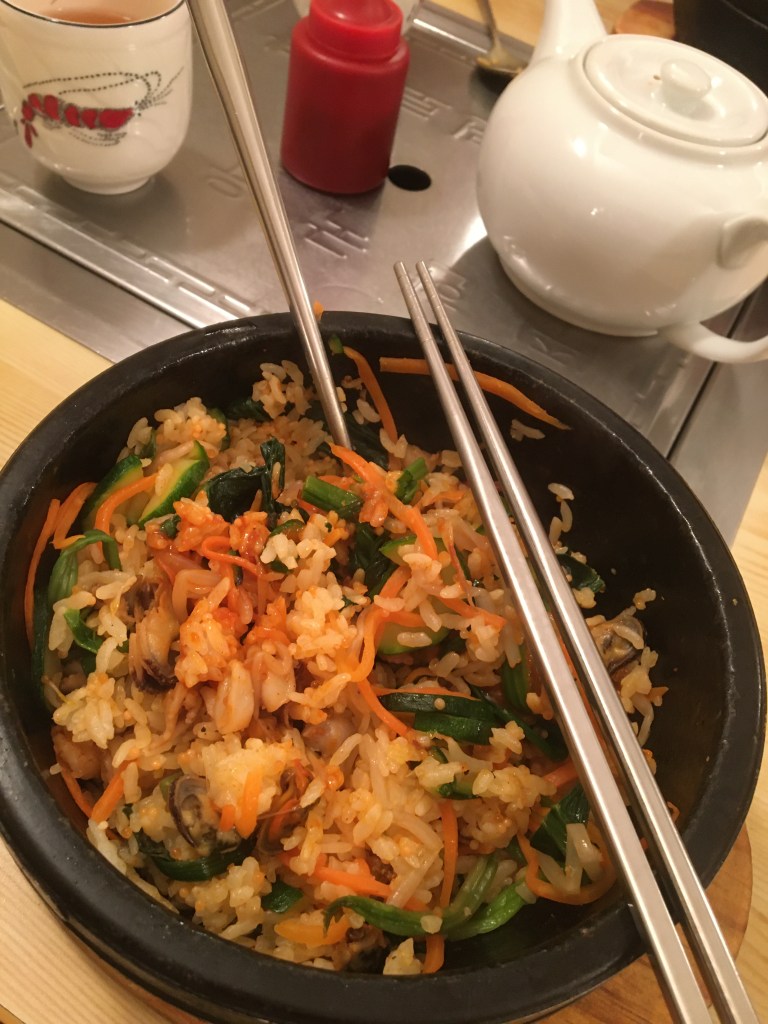
One of my favourite Korean restaurants. I ordered seafood bibimbap with flying fish eggs.
And a final walk around central London. Above what used to be a great cinema bookshop near The Museum …
It ends for me where it began for Dickens; his first success, the ‘Sketches by Boz’. The following day, I had some final business to take care of, and then try to rest. Tuesday was the big flight back to Asia … but that is another blog.























































 Thay Paul's Notes