IELTS: I love it, I hate it, it’s not my cup of tea, it’s OK.

Monday 21st January 2019

Tonight is what we call a ‘mixed bag’; the lesson includes speaking, reading, listening and grammar. It’s Monday; students will be arriving after work, tired, maybe not entirely motivated, maybe not entirely in the mood for a three-hour lesson, maybe committed to watching the clock move it’s intractable hands from 6 to 9. IELTS is a hard course, it requires work, energy, motivation. The teacher’s thankless task is to bring the book alive, motivate the unmotivated and ignore, rise above, the veiled insults and sarcasm that is prevalent in most classes. But, enough, time to put noses to grindstones and upload tonight’s plan.

The first 15 / 20 minutes or so are a French farce of people coming and going, greeting each other, moving chairs, chatting on phones. I do a short warm up exercise, introducing vocabulary or phrases. It provides useful expressions for punctual students, whereas latecomers will not have missed any book work. Tonight it’s going to be common fixed expressions and in which situation they can be used:

This one’s on me Let me think about it    It doesn’t matter Thanks for coming

I don’t believe a word of it  I’ll be with you in a minute As I was saying It was lovely to see you I don’t get the point   I see what you mean

You look great today I’ll be making a move then  Just looking, thanks 

Match the phrase(s) with the situation

You meet an old friend

Compliment someone 

You are asked a question but need time to consider

Someone tells you a story – you think it is false. 

Friends drinking in a pub / bar

You go into a shop but not necessarily to buy anything

A customer arrives but you are busy

You don’t understand what someone is trying to prove

You understand what someone thinks (but not necessarily agree with)

There is a small problem / Someone upsets you but you want to make it OK

To continue with a conversation that was interrupted.

These fixed phrases are so important in making students sound like natural speakers, which will result in higher IELTS scores.

The next section will be expressing likes, dislikes or having no strong feeling either way. A good activity will involve different skills being used, so here I will play three songs, in English naturally, but from different countries, and with different accents. I want to elicit the students’ opinions of the music and how much they can understand. First, the presentation, new vocabulary:

Like: I absolutely love … I’m crazy about … I (really) like I’m into I’m a big fan of … I’m quite keen on I haven’t heard (seen/read) this before, but I think it’s great

No strong opinion: I don’t mind I have mixed feelings about …. It’s OK I don’t really have any strong views / feelings either way

Dislike: I hate I detest I can’t stand I don’t really like I think it’s awful I’m not a big fan of … I’m not that keen on …

Secondly, we could play a ‘word bomb’. In this activity, a generic word is boarded, in this case, ‘music’. The students shout out as many words they can, a word-association game. Once the board is full, or the students have no more ideas, we can expand; types of musical genres, instruments, musical terminology, ways of listening to music, of buying music, musicians, bands, solo artists, people who work in the industry. This type of game is good as there are few ‘wrong’ answers and the speed can encourage shyer students to speak and participate (note comparative of shy can be shier or shyer).

First, from Australia, we have Kylie Minogue. The lyrics start at 00.30

https://www.youtube.com/watch?v=c18441Eh_WE

Secondly, we turn to a Country singer from USA, Mr Hank Williams. The style is markedly different to the previous song.

https://www.youtube.com/watch?v=4WXYjm74WFI

Finally, The Smiths, from the mid 1980s. here, the accent may be difficult, but it is a slow song, and under two minutes in length.

https://www.youtube.com/watch?v=2nxQLJmshak

The students will play the role of examiner and candidate. One will ask questions and the other will be expected to answer in an IELTS-style manner, ie, long sentences, discourse markers, good grammar and syntax, appropriate intonation, eye contact and body language.

I have already given the students tips of ‘buying time’ or filling up ‘dead air’ by employing expressions such as:

That’s a good / interesting question

Let me think …

Well, I would say …

How can I put it … ?

Of course, these mustn’t be over-used. Students will also be encouraged to stretch their vocabulary, and self-check:

Is that the right word ?

By which I mean …

Have I used that in the correct sense ?

After this it’s time to hit the books. As mentioned, the tasks are varied and I want to pace them so that all students feel they have understood before moving on to a new subject. Tonight we also have the three ways of pronouncing the -ed form of regular verbs:

Pronunciation of -ed past tense verbs

Words have 3 end sounds:

‘t’

‘d

‘id’

If the word ends with: 

ch / f / k / p / s / sh / thi The sound is ‘t’ look = ‘lookt’

t /or / d/ The sound is ‘id’ visit – ‘visitid’

Other sounds are ‘d’ bang = ‘bangd’

What is the correct pronunciation for these regular verbs ?

Look = Looked / laugh = laughed / end = 

beg = / visit = kiss = 

brush = / breath = love =

Read these sentences:

He cleared up the mess / He rolled up the newspaper / I have visited Hue

No Homework ! That sounded good / Teacher shouted, ‘No way !’

We all worked hard today / Tom talked so much / The students played many games and laughed till their sides burst.

To end, I like to expose the students to short video clips using a variety of Englishes (as there is so much variance even in the same city with slang, pronunciation, argot, accent, dialect, local words etc). To make it more relevant, I look for a Vietnam-related theme. One of my favourites is this chap, a serious beer enthusiast, who has just discovered a beer from Vietnam, Sai Gon Red.

https://www.youtube.com/watch?v=rKr6Cj-Xr9g

I want the students to hear a different accent from mine (I aim for a standard British variety), learn some new vocabulary and also watch the para-linguistics: the expressions, intonation, body language. As my beer-drinking friend has just discovered, to paraphrase The Smiths, “some beers are better than others.”

Teen Team Project: Tourism in HCM.

20th January 2019

This three-hour lesson was totally devoted to planning, preparing and presenting a project about tourism.

Thailand is very close and there, tourism accounts for 9.4% of their economy, a figure which is expected to rise to 12.8 % by 2028 (source: World Travel & Tourism Council).

https://www.wttc.org/-/media/files/reports/economic-impact-research/countries-2018/thailand2018.pdf

This affords the teacher an opportunity to add other elements to the lesson; in addition to new vocabulary and collocations, we have, in the first two paragraphs, examples of alliteration and quoting sources to make a report more official; an opinion supported by facts.

Alliteration is a poetic devise, using words that begin with the same letter. Source quoting – stating where information is found – is a vital aspect of academic writing, so to learn it before university will be very beneficial. However, it is important to use books, newspapers or websites that are official and respected, as opposed to Wiki sites or blogs.

Tonight, I would focus on presentation skills, vocabulary used in travel promotion, and fixed expressions. The later is a great addition to the students’ repertoire, allowing them to sound more like a native-speaker. We use fixed expressions all the time. So, without further ado, into the notes.

Firstly, as a warmer, we talked about HCM / Sai Gon; what does it have to offer the tourist ?

“Trash, garbage,”

Thank you, Sir, but I don’t think you’re getting the point of the exercise. Walking around the room, various answers were put forth: history, mystery, great food, cheap (dirt cheap as we would say in the UK), interesting buildings, friendly people.

Conversely, what were the problems or issues that were keeping tourists away ? Traffic was an immediate response, pollution, petty crime, scams. Perhaps the biggest problem is simply lack of knowledge. When most westerners hear about Vietnam, they think about war, boat people, refugees … the unspeakably horrific photo of Kim Phuc, running away from a burning village. So what could be done to encourage tourism ? That was the project.

I wanted to illustrate the difference between a scam and petty crime. The latter includes bag-snatching and pickpocketing, the former is tricking people out of money, for example fake taxis, over-charging, giving people incorrect change etc. We then watched a short video, highlighting some issues, as well as listening to English being spoken by some young Vietnamese. A good way to learn is to check for mistakes. What grammar or pronunciations errors can you find here?

https://www.youtube.com/watch?v=-j0FfVIKJnw

At one stage, the presenter is walking past a group of tourists, some of whom wave to the camera and make various gestures. This allowed me to introduce a neologism, a new word or phrase that has evolved out of modern technology: photo-bombing. Here is a famous example of the British actor Benedict Cumberbatch with the rock group U2:

Now was a chance for some new vocabulary, words and phrases associated with holidays and travel.

breathtaking / stunning/ sensational / incredible / remarkable/ exclusive / inspiring / spectacular /

once in a lifetime experience/ never to be forgotten / unbeatable prices

book now to avoid disappointment/ best decision you’ll ever make

Structure: To begin with / furthermore … additionally / the fact is … / therefore

As an Example, I showed a short file about London:

VISIT LONDON TODAY !

SEE

Buckingham Palace Tower Bridge

British Museum Wembley Stadium

Shops, parks, theatres, restaurants

London – one of the world’s GREAT cities

A holiday of a lifetime ! Book early !

Mr Paul Tours – visit our website mrpaultours@ukonline.co.vn for more information.

From this, I made a short presentation:

Now is the perfect time to visit London, England’s glorious capital. The weather is perfect for walking, so you can enjoy the lush parks, world-famous museums and incredible, unbelievable shops. There is something for everyone … and more ! Like sports ? Go to one of the many Premier League football games. Love shopping ? Everything is here – shop till you drop ! Adore culture – soak up hundreds of years of history.

Flights from TSN airport daily. Seven-day all-inclusive package tour starting from only 50m VND ! All transfers and transport included. Air-conditioned mini bus with Vietnamese-speaking guide.

So what makes a good presentation ?

Volume – not too loud, but not too soft.

Intonation – sound enthusiastic, but again, not overly so. If you sound bored, the listeners will be.

Pace – not too fast, or too slow

Eye contact – look at the audience, engage with them but don’t stare at anyone.

Walk around – this can be energising, but too much will be distracting.

Stick to the point. Avoid repetition or deviating from the subject.

Keep slides simple and basic; too much text and the audience will be too busy reading to listen to you (I got that tip from a former student, a marketing executive).

Gestures, and body language. Look professional and people will take you seriously. Open hand signs indicate honesty. Cross-armed seems hostile.

And then it was time for the teacher to pipe down (stop talking) and let the students work. Most classes have mixed abilities, confidence levels, introverts and extroverts. I wanted each of the four groups to have at least one confident student, so I asked some of the students quietly, explaining my rationale, and they agreed (one deferred, but promised to move next class … right, Ms Uyen ?)

I gave them a set time, after which they had to present. Then came the issue of who would go first; here’s where a pack of playing cards comes in handy. I picked an Ace, 2, 3 & 4 and let the students choose. You can’t argue with the cards !

The work was very impressive, some groups quoted their source material, others had very gifted public speakers. We’ll build on this in the next lesson, when they can practise using fixed expressions and travel adjectives (and the accompanying intonation).

A special thanks must go to my TA, the wonderful Ms Vy, who assisted and co-taught with me. I’ll be writing about my experience with TAs at various schools … but that is for another day.


Young Teens: A funny thing happened to me …

17th January 2019

Tonight’s class has fourteen students, mostly girls (“made of sugar and spice and all things nice,”) and four young lads, one of whom demonstrates slight Hulk-like tendencies (i.e. gets angry at the slightest provocation and starts lifting chairs as if to hurl them through several walls). Simple classroom management has to be employed here; the lads are NOT allowed to sit next to each other. Of course, at this age the boys categorically will NOT sit next to any girl (just wait a year or two until those hormones kick in!) so I have to locate them around the room. It can be dis-illutioning for a teacher to allocate so much time to controlling a class as opposed to teaching them, but such are the realities. C’est la vie.

The theme of the lesson is how to tell an anecdote, but to begin (and to wait for the inevitable latecomers), we’ll do some quick warm-up games. I’ll also be able to recycle work form other lessons (which justifies the time spent making slides / Powerpoint Presentations etc).

We’ll begin with a quiz; I’ll show four famous buildings and ask the students to identify them and tell me as much as they can about them:


After, I will point to some (previously-boarded) numbers and ask how to pronounce them, numbers such as:

2019

10, 000

£35.99p

$10.33

Friday the 13th

I’ll show them that amounts (e.g. £35.99p are often said as simply 35 99, rather than saying ‘pounds and pence.’

For a more active game, help them burn off some energy, I’ll do a ‘run & write.’ In their previous lesson, they learnt past continuous. For this game, the class can be kept in two teams (a bit of competition adds to the excitement, even if there are no prizes at all), one team has a red marker, the other, a blue. I will say a sentence using simple past, they have to write it on the board, using past continuous. For example:

Last night I slept = Last night I was sleeping

Then the whole team has to shout out the sentence. It could get somewhat noisy and impossible to monitor, but it creates freedom for everyone to speak (they are not being listened to individually) and gets the whole class involved, and a noisy engaged class is far preferable to one slouching, sighing and sleeping.

We will then move into the topic area, combining story-telling with pronunciation and accents. I have a great clip of the magnificent Irish actor, Peter O’Toole being interviewed by the fast-talking USA TV host David Letterman. The students can compare the two accents, see which one they understand easier. The clip is below:

Letterman asks O’Toole if he has a story about a fellow actor, Richard Harris. Instead of a rather pedestrian, “Let me see …,” O’Toole, cigarette in hand, responds, “Oh, I’ll shuffle through my memory,” before proceeding to tell said story (this occurs at 0:32 – 3:33).

I extend the activity by asking the students to mimic / copy O’Toole’s voice and elocution. Obviously, I don’t condone smoking at all, but students have had great fun sitting crossed legged, imaginary cigarette held aloft, and repeating, “Oh, I’ll shuffle through my memory.”

The serious aspect here is to demonstrate the rhythms and stresses in English – the elongated “oh,” as he thinks, the focus on the verb, “shuffle’, the linking of “through my,” and the final stressed but downwards – intonations of “memory.” A lot of work covered in just six words. Good value for your teaching bucks !

We’ll then move into a personal anecdote of mine. I’ll create a slide and give a leading narrative using tonight’s key language:

For one thing

As I discovered last year

As you can imagine

In fact …

like the time …

Thanks to ..

People are very interested in stars as I discovered last year when I was in

I saw a very large

Outside a large

in the centre of the city. As you can imagine, I was curious. There were a lot of people there, in fact many were extremely …….

Why were they there, for whom were they waiting ? This was like the time I was in London and many film stars were going into a cinema. I waited … but nothing happened. I was thinking of going, but thanks to some screaming and shouting, I stayed. To my surprise, I saw the world-famous Hollywood movie star …

I felt very lucky. Actually, it was very exciting I just wish I had my phone with me.

The students will then turn to book work, some listening and then creating their own anecdote. Here, I will probably have to help, give ideas. Most students spent too long thinking about ideas and therefore not producing any work. I have found it better to give them a limited choice and then make them start the work.

(In my first year, at my first centre, the students had to write a short story about a boy and girl going to the cinema. I checked all the pupil’s progress, only to find one student had done nothing, all lesson, because he couldn’t think of names for his protagonists. At the end of the semester, I was asked for my recommendation; should he be allowed to progress to the next level ? Absolutely not (it was the only honest answer) CUT TO angry parents, wagging of fingers and pulling of student out of school. Good riddance to bad rubbish, as we say.)

Today we also have some speaking practice and a quick lesson about British culture, in which they will listen and read about the author Daniel Defoe. This will be a chance to elicit how much they know about British literary characters. It could be surprising; they may know Oliver Twist, or Alice (Wonderland). Who knows … some may even have heard of Robinson Crusoe … we shall see. This will then lead into famous writers from Vietnam. I think the most famous is The Tale of Kieu’ by Nguyen Du.

Very famous Vietnamese poem and I highly recommend giving it a read.

Please Note: All photos are taken from Google Images or free photo sites, and are used for educational purposes only. No copyright infringement or offense is intended. If I have used your photo or image, and you wish me to remove it, just ask. This site is not monetized, I run it on my own dollar. Thank you.

Adult Class Level 3: Manners, etiquette and culture shock

Tuesday 15th January

Tonight is the last lesson of the four-week block, so will culminate in an oral test: I will listen to all the students individually for three minutes or so, then give a grade and some brief feedback.

The bookwork covers vocabulary, speaking and pronunciation, so that’s a great opportunity to prepare the students for the speaking review.

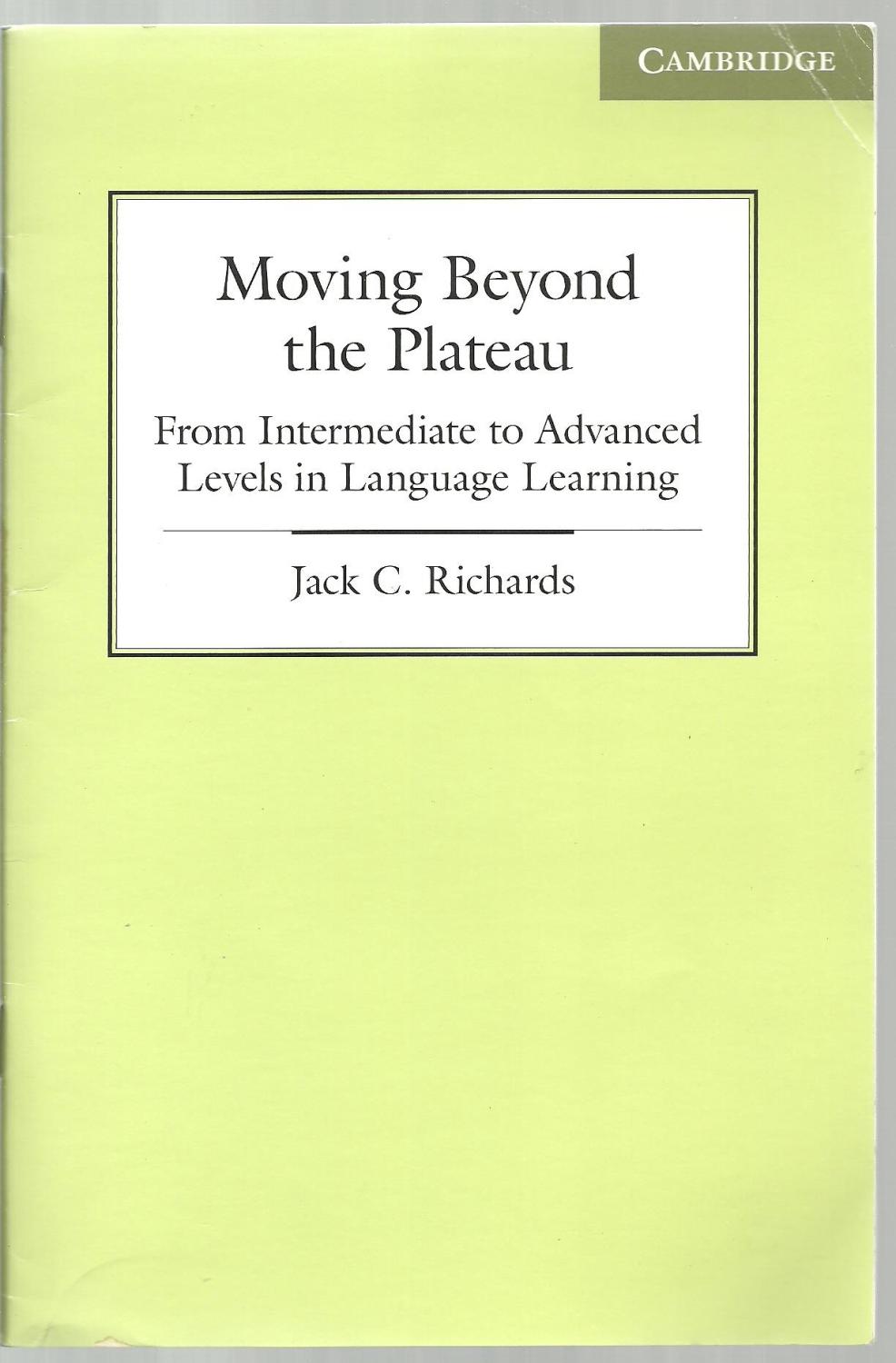
I’ve just finished a short booklet about how intermediate learners can move up to advanced levels:

The book advocates teaching / learning collocations (which I always teach) and ‘chunks’ of language, or frequently used expressions.

Collocations are words that always go together, for example take a photo (not do a photo, make a photo), jump on a bus, grab a bite to eat, make your mind up etc.

This can be so helpful to an English-language learner, as the words form one unit – ‘take a photo’ is ONE unit, not three separate words. This can really help in reading – instead of seeing a mass of words, patterns will emerge, almost like breaking a code. With practice, students will be able to predict a sentence / phrase just by its opening word/s.

Frequently used phrases are beneficial to make speakers sound more natural (and that should be the aim, in order to progress to a higher level of proficiency), and they are so common, they can be used in everyday situations. On p. 18, Richards quotes some common expressions:

This one’s on me It was lovely to see you I’ll be making a move then

I see what you mean Thanks for coming Let me think about it

I don’t believe a word of it Just looking, thanks It doesn’t matter

I don’t get the point I’ll be with you in a minute You look great today

As I was saying

We’ll talk about how and where these expressions can be used, then do some exercises, role-playing. Classic CELTA-style method: present then do controlled practice (the third stage is produce – to see if the students are able to use the phrases with correct intonation and in the correct situation).

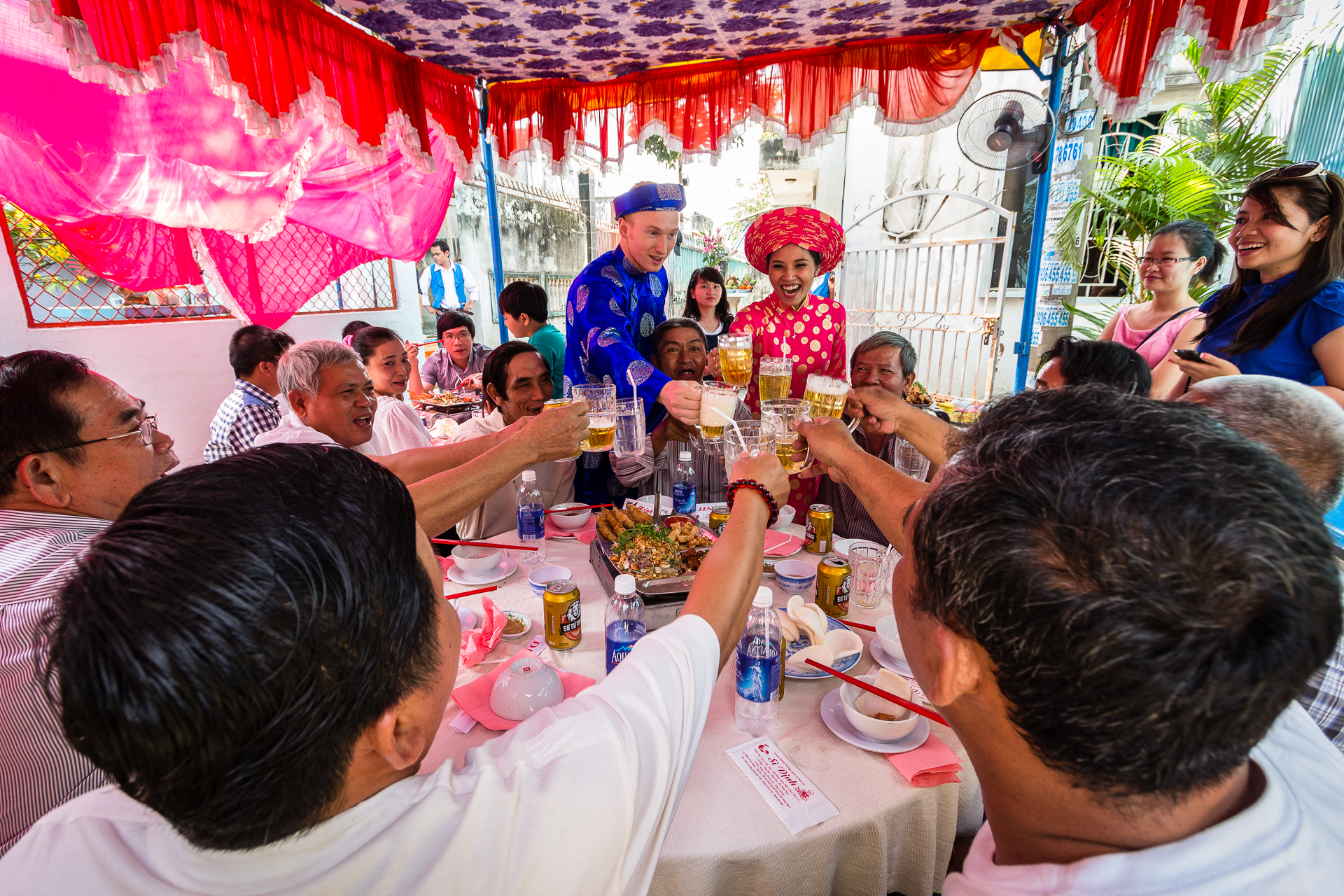
Friends are having drinks in a pub / bar

You go into a shop but not necessarily to buy anything

A customer arrives but you are busy

You meet an old friend

Compliment someone

You don’t understand what someone is trying to prove

You understand what someone thinks (but not necessarily agree with)

Someone tells you a story – you think it is false.

You are asked a question but need time to consider

There is a small problem / Someone upsets you but you want to make it OK

To continue with a conversation that was interrupted. 

Then the students will work in pairs to produce simple conversations, for example: Oh, it’s late, I’m tired / I’ll be making a move then (I will leave).

I’ll then introduce a visual activity, as it’s good to vary the tasks; something I learnt from Eisenstein’s film theory (Sergi Eisenstein, Soviet filmmaker, NOT Albert Einstein, physicist), the ‘Montage of Attractions.’ This is basically having lots of different things following each other, linked together, to maintain interest and constant stimulation. More of this in other posts as it is especially applicable to young learners.

I’ll show a slide of various activities and ask which are acceptable, polite, impolite, illegal. This comes under the umbrella heading of culture shock – different customs, different countries. For example, this friendly gesture in the UK is impolite in Vietnam:

SONY DSC

This, I falsely believed, was the universal sign for ‘good luck’ so, during tests, I (being polite and friendly), wished my students (usually young learners), ‘good luck’. No one took the time to tell me it didn’t mean that in Vietnam; it is, in fact, a representation of female genitalia. Whoops ! What message my students took from my inadvertent gesture is a matter of speculation. Here are some other social no-nos:

Totally acceptable in the west, but an insult in Thailand where hands must be pointed down. My US friends also tell me that they use two fingers, so if the taxi drives past, they can keep one finger up to represent their feelings. We would never do that in Britain … well, almost never.
Street micturition – a ubiquitous sight in Vietnam.
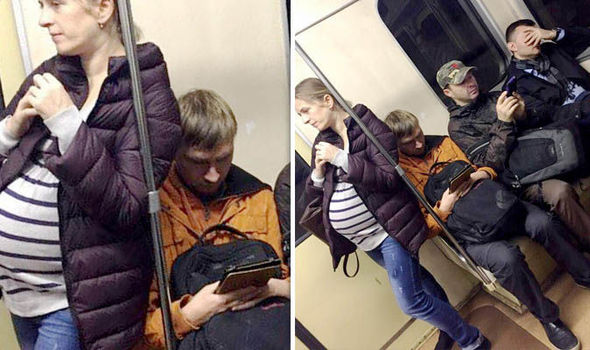
Pregnant woman stands while three men sit.

Lastly, I will conduct a simplified version of last night’s lesson. I show photos of my bad day (it was one of those days). I’ll board some details, times and events, show some photos and ask the students to make sentences, pushing them to employ adjectives, adverbs and discourse markers. The full activity can be found on last night’s IELTS notes

https://thaypaulsnotes.com/2019/01/14/ielts-lesson-3-may-the-force-be-with-you/

Before a test, most students find it hard to concentrate on learning new material, so I’ll use the 90 minutes to encourage as much speaking as possible. Hopefully, they’ll be more prepared for the oral test and will do themselves proud.

IELTS: Lesson 3 – ‘May the force be with you.’

Monday 14th January 2019

Tonight’s lesson focuses on reading and listening, quite passive activities so, to offset this, I’ll do some warm up exercises that will be (hopefully) relevant, interesting and stimulating.

The first exercise needs to be quite light and easy. Students arrive at various times and I don’t want the task interrupted, nor have to keep explaining for latecomers. At the same time, it is not fair that those who are punctual should have some unproductive ‘downtime’.

Yesterday was ‘one of those days’ – nothing seemed to go right but I’ll take my own advise and try to turn the lemons into lemonade: I’ll use it as a learning exercise.

I’ll board some information and then show the students a slide of various pictures and see if they can construct an interesting, flowing narrative. Later in the lesson, I’ll have a task where they have to build longer sentences utilising discourse markers, adjectives and adverbs, so this will give me a general view of their capabilities.

The narrative: 6.50 leave for work 7.40 – 9.40 Young Learners class (21 students) 10.10 arrive home 10.11 – 14.30 wedding party across the street 10.30 – 12.00 prepare work online 17.00 – 21.30 another wedding party but much louder, more drunken karaoke singers 18.00 go for coffee BUT 23.30 Tottenham Vs Manchester United (0 – 1) so ‘All’s well that ends well.’

Vocabulary: cancellation / hyper-active / irritating / excruciating /connection / deafening / anti-smoking / culture shock / a real handful / “A plague on both your houses !”


After, we’ll do a sentence-building exercise. I’ll show how to turn a basic sentence into something more elaborate:

Make longer, more interesting sentences:

I like music but I don’t like karaoke.

Although I love both listening to and playing music, I absolutely detest karaoke because I hear it so frequently in my neighbourhood and I find it abhorrent.

Expand these basic sentences:

I have been to Paris but not Berlin.

She liked the film so she read the book.

His girlfriend asked him to stop playing video games but he didn’t listen and she left him.

The last exercise will lead into the book work, (where students have to look at pictures of various people, some world famous, other not so) and attempt to deduce the reason for their fame. I’ll show six photos of famous Vietnamese, from history, sports and the arts. The students should be warmed up by now and be willing to discuss with partners or in groups who the people are, why they are famous, dates, any information.

Non-Vietnamese may not know many but they may be surprised by the last (a clue there) photo; they may know her without knowing it.

This should stimulate some good discussion especially in a mixed-age class. The first four are historical figures, and it’s fairly obvious what kind of person the fifth man is, and why he’s famous. The last figure could stump the students, but if they look at her, maybe they can guess what field she’s in; the way she looks, the manner in which she holds her head.

The answers are:

Võ Nguyên Giáp (General who defeated the French in 1954) Trung Sisters (defeated the Chinese around 40 AD / CE) Lê Lợi ( 15th C emperor) Võ Thị Sáu (Student activist against the French) Hoang Xuan Vinh (First Vietnamese to win Gold at the Olympics)
Ngô Thanh Vân (Model & actress – she was in ‘The Last Jedi’)

Veronica Ngo is Gunner Paige in THE LAST JEDI.
(Ngô Thanh Vân)

NOTE: Võ Thị Sáu could be a controversial figure and living in Vietnam, one has to be sensitive and delicate about certain subjects. I include her because she is a famous Vietnamese woman, with streets named after her.

Tonight’s reading exercise is practising scanning or skimming through a text, to help develop speed reading, finding pertinent information in a limited amount of time. There will be a block of text and students are given 90 seconds or 2 minutes to find the answers to some questions.

The secret is, of course, to read the questions first then just look for the answers, skimming over unnecessary text, in the same way as a listening test requires reading the questions, only listening for those answers.

After break, the lesson changes gear into listening. Many students find this the hardest part, and each track may need to be played several times. I usually play the entire text once through, then repeat but in short segments.

The last half-hour needs to be a ‘wind-down’ section. As they have focused on reading and listening, the activities should be active and fun. A general knowledge test can be entertaining, the class put into groups and points awarded. Depending on the mood of the class, we could try a B2B game – one student has to guess either a famous person or describe a photo or video clip from clues given by the team-mates. A time limit could be set to make it more dramatic.

It is good to see the students leave smiling and exhilarated from the games as opposed to shoulders hunched and shattered expressions from a grammar-overload. The students, like the Force, awaken !


Teenage Class: The Truth is Out There.

Saturday 12th January 2019

The theme of the lesson is ‘trust and truth,’ and is split between reading and listening in the first half, followed by a speaking section in the second.

It’s also my first time with this class as their permanent teacher, so getting off to a good start is paramount. This means having fun and creating a conducive learning atmosphere but also stating class rules and stating the consequences for breaking said dictums.

I’ll start with a STB game. Students will probably be arriving up to fifteen minutes late, so they won’t miss any new work, while those who manage to arrive on time aren’t left waiting around. The game can be used to review recently-learnt vocabulary (in the last lesson I see they encountered such phrases as ‘off the beaten path’, ‘culture shock’ & ‘left to your own devices.’

We can then talk about different cultures. I’ll show a little of this YouTube clip (it has English subtitles which is great for my students, and the speaker is from USA so he has a different accent to mine).

https://www.youtube.com/watch?v=kHnQKvU8OiA&t=547s

Following this, I’ll show my Friends (men) sheet (I’ll put the link below). This will lead into the lesson, the theme of trust and trustworthiness. I’ll introduce the students to my ‘friends’ (yes, they are just five random photos from Google) and ask them which ones they would trust and why. They will also meet ‘Simon’ who will feature in the second part of the lesson.

https://thaypaulsnotes.com/2018/12/28/friends-men-teaching-sheet/

We’ll then move onto the Truth or False game. Here, I board three things I have done, or achieved. Two are false but one is true. The students have to ask me questions to determine the correct answer. Tomorrow the three will be:

I worked for Apple in Sweden

I have riden an elephant in Thailand

I have fluent Vietnamese, but I speak with a Huế accent

I speak a little Swedish so that could convince them that the first is true. However, my knowledge of all things tech is pitiful, so they could easily see through that. Similarly, by asking me a basic question in Vietnamese, they will, within microseconds detect the fib. The answer, therefore is:

The students can then copy the activity in small groups, while I monitor that students are speaking English (which is the whole point of any speaking activity). I will them introduce them to the phrase ‘call my bluff‘, for example, if I claim to be fluent in Vietnamese but I can’t understand anything they say … they have called my bluff. This will segue into the next game, ‘Call My Bluff.’

For this game, I prepare some A4 sheets with a number of words on with three definitions. One team will read out the word and different people will read out a definition. The opposing side has to guess the correct meaning (and new words can be recycled next lesson in a warm up exercise). For example we have:

obnoxious 1) (adjective) a very unpleasant person 2) (noun) a gas that becomes liquid at 50 degrees C. 3) (noun) a small village without a church.

mindset 1) (noun) a tool designed by scientists to analyse personality 2) (noun) a system of rules to allow students to memorise lots of information 3) (noun) a set of attitudes held by someone or a group of people.

Other words can include demeanour, troglodyte (everyone loves that word), superfluous, salient, volatile, anomaly

After this, it will be time for book work, up to break. After the interval, it’ll be more speaking. I’ll show them the picture of Simon again and say he’s coming to HCM City next week and wants some advice: where to stay, what to do, where to shop, what to eat, how to get around, what to do at night etc. The students have to plan a day for him including breakfast, going to a tourist attraction, shopping, using local transport and a night time activity.

I will give them some information about Simon, for example, he loves trying local food, is interested in history, wants to buy typical souvenirs and enjoys a beer or two at night. However, he is on a limited budget which will affect where he stays, where he goes to eat and how he travels around the city.

Activities like this help students to think critically in a second language and leads into the main exercise in the text book.

In the last twenty to thirty minutes, we need to wind down and do more activities or games after the reading and book activities. In keeping with the theme of truth, I can show some slides and ask are they true or false, eliciting as much information as possible. They include:

Loch Ness Monster
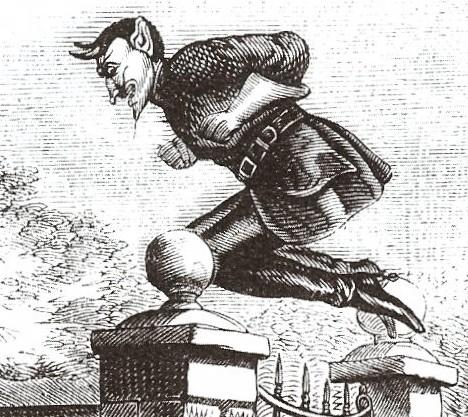
Spring-heeled Jack from Victorian England.
Elvis once flew in his private jet to a different state just to get this peanut butter and banana sandwich.

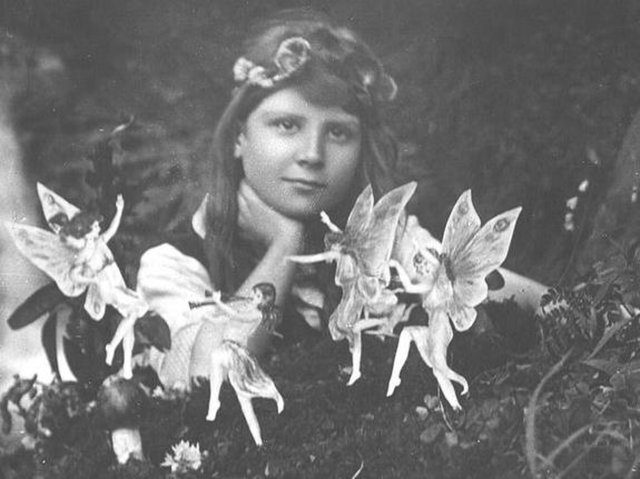
Fairies at the bottom of a garden. Conan Doyle, the creator of Sherlock Holmes, believed in this photo.


Another end game will be with collocations – showing a list of words and asking them which ones collocate, for example an email – you can send it / open it / redirect it / delete it etc. Or maybe just a simple general knowledge quiz or hangman or a B2B.

New Teen Class: Once bitten … twice bitten ?

Saturday 12th January

I vowed NEVER to teach teens again after my last experience(s) at this centre: I covered one class at a different centre and, apart from two or three students, it was a total nightmare, while my own class was a wonderful teen-spirit bitches brew of arrogance, attitude confrontation and contempt.

However, in the spirit of ‘Keep calm and carry on’ or getting back on the horse that has just thrown (and kicked) you, I agreed to a new teenage class. I have already met this class; I substituted one night for them and I was dreading it. However, they were delightful, only one ‘difficult’ student and that person piped down after the first period. One of the students even came up to me afterwards and apologised for her class’s behaviour and disrespect … so sweet.

With the ‘Friends’ exercise (pictures of five men and students have to guess their personality and occupation), the subtext is ‘don’t judge a book by its cover.’ This could be adapted or paraphrased as ‘don’t judge a class by its (text) book.’ At my old centre, I reviewed a book before my first lesson with a small class. The subject was 3-D printing, quite complicated … and then I met the class. Of the seven ‘students’, one was special needs (and that student was a darling, a pleasure to meet), two were quiet, one almost to the point of a personality disorder, and the remainder simply tried to out-do each other in stupidity and disruption to the class. I used to start each lesson with the imputation that having pen and paper to hand could be beneficial. They would learn new words and would remember them much easier if they wrote them down. At the end of one lesson, I checked. One student had produced this after two hours:

Notes … or note … taken by a former student from a two-hour lesson. One word: ‘hut.’

I desperately hope this class is better. There are eighteen students, ranging from twelve years old to fifteen years old. That three-year gap can be a chasm at this age.

Their book is quite high level and features many TED talks, which can be difficult to follow for English-learners due to the speed of delivery and range of vocabulary.

These classes are three-hour long, so I need to find many games, activities and opportunities for inter-action, as a balance to the book work which may be rather dry for some students.

I have two young classes in the morning, then this evening class. It makes the day very long, but at least I only have one class Sunday morning, and Tet Holiday is coming soon. On the way home, I may well stop off the Grabbike to pick up some beer. Will it be to celebrate a great lesson or to drown my sorrows ? Either way … beer will be consumed (and Manchester United take on Tottenham, their first real challenge under the new manager).

The lesson plan with activities will follow.

Adult Class Level 3 Jan 2019: When life gives you lemons, make lemonade.

8th January 2019

This blog site really saved my bacon last night – allow me to explain …

Those who know me know that, as much I love the idea of technology, I know NOTHING about it. People have to show me how my iPhone works, how to access websites, even basics such as how to turn the computer on in the first place ! Then, when I’m on a piece of equipment … it breaks, crashes, gives up the ghost, malfunctions … dies (just last weekend I broke BOTH the office photocopiers – technicians had to be called).

In Greek mythology, there was a King called Midas who asked for a gift – he wanted to be able to turn everything to gold, just by touching it. I seem to have the ‘anti-Midas touch’ – every piece of hardware I touch breaks.

Last night, in the classroom, I wasn’t able to access the class ebook, nor my Powerpoint presentations (ppt) which I was going to use as warm-ups for the class. Fortunately, this blog page opened and I was able to use the IELTS blog for the class. The theme last night became ‘keep clam and carry on.’

So, in case a similar event occurs, here’s tonight’s Adult Class:

When I looked at the work, my heart sank. The text books are not aimed specifically at Vietnamese students, but for all students, possibly mixed-language classes. Subsequently, some of the themes are of limited interest to my students; consequently my class are going to be less than enthralled. I need to jazz up the lesson !

These classes are arranged in blocks of four, the last part of the last lesson being a spoken exam. Therefore, I will allocate the second part of tonight’s class to speaking activities and, to warm up, I’ll have them speak to each other but in the form of a market research survey. Quite simply, I need a new mobile / cell phone.

However, I don’t know which one to buy ..

It is very confusing – I am confused.

I love Apple but … they can be very expensive

In addition, the reviews have been less than favourable:

So I need to do some research, read some online reviews or do some market research.

A typical market research office
One of many online review posts.

I need my students to carry out / to conduct a survey for me


The students will be arranged in small groups. One member will be responsible for gathering the information, then reporting back to me. I shall then collate all the data and display the findings in chart form (which will be beneficial for those who wish to study IELTS later).

After this, I shall do a vocabulary- building exercise – showing some basic words and a ‘better’, higher-level word (a ‘low-frequency’ word as some books term them).

boring mortifing

confusing irritating

embarrassing tedious

exciting bewildering

frustrating exhilarating

Spelling rule:

‘I’ before ‘e’ except after ‘c’

Examples: believe field niece priest achieve

but

receive ceiling receipt deceive

These are exceptions to the rule

This leads into the book work. Many study get confused with the I am / It is structure. For example, some teenagers and university students have wished to proclaim their disapproval of my classes, and have very politely shouted out, “I am boring.” They of course mean to say ‘I am bored’, which causes laughter from those who know the grammar, and a certain satisfaction on my part. Instant karma, baby !

The class will then practise the correct -ed or -ing form of the words, before moving into the reading and listening part of the lesson.

I like to use real-life videos for listening when appropriate. Tonight I’ll show a YouTube clip from Mark Wiens, who is a food enthusiast. In this clip, he tries a typical Vietnamese breakfast, and I want to see how much my class understands. Here, the paralinguistics are important; body language, intonation, word stress

https://www.youtube.com/watch?v=crPVJ3CXs1g

Mark tries what is basically a pretty normal breakfast but he seems to be really enjoying it. Other students have found him very amusing, though feel he was overcharged at 91 000 VND (for two).

After break, I want the students to practise speaking, so I’ve prepared a list of general questions.

Speaking exercise

What did you do on New Year’s Eve ?

What was the last film you saw ? Did you like it ?

How many people live in your house ?

What is hard about learning English ?

How often do you chat online ?

Which social media sites do you use ?

What is your favourite food ?

Do you often eat western food ? Do you sometimes eat fast food ?

What sports do you play ?

What do you feel about shopping ?

What would you most like to buy ?

Do you like living in the city or countryside ?

Have you ever sang karaoke ? 

What country would you like to visit ?

Do any of your family live outside of Vietnam ?

Have you tried Korean or Japanese food ? What did you think ?

This can be arranged in a ‘speed-dating’ format. Students sit facing each other, speak for a few minutes, then move on to the next student. This way, they are able to practise speaking and listening with a variety of people, not just their friends. There is generally some resistance (or even refusal) with adult students to comply, so I encourage them by using non-confrontational words such as ‘suggest‘ or ‘recommend‘. Having said that, last night in my IELTS class I used, “Teacher says ‘stand up’ ” … and half the class actually DID stand up and mingle. Hey – whatever works !

A good game to end is a variation of the British radio show ‘Just a Minute.’ Students are given a subject (for example, HCM City) and must speak for one minute without repetition, hesitation or deviation. This can be done in pairs, and they can time each other on their mobiles. In order to practise for next week’s test, we can discuss what makes a good answer, and how to use discourse markers to link ideas together.

Another ‘trick’ is the use of phrases or words to ‘buy time’ while they think of an answer. This can include:

Let me think ….

How can I put it ?

That’s an interesting question …

Well,

And also repeating, in part, the question but using intonation:

Q: What will you do tonight ?

A: Tonight, I will ….. (go home and study / meet friends)

Then, if time allows, I’ll play the ‘eyewitness’ game. This involves showing some faces (three men followed by five women) for a limited amount of time, then seeing how much they can remember.

Tonight’s objectives will be for students to be able to differentiate between confused / confusing, learn some new vocabulary and be more confident and proficient speaking in longer, more fluent sentences … and to hear how an American ‘foodie’ loves Vietnamese breakfasts.

Please Note: All photos are taken from Google Images or free photo sites, and are used for educational purposes only. No copyright infringement or offense is intended. If I have used your photo or image, and you wish me to remove it, just ask. This site is not monetized, I run it on my own dollar. Thank you.

IELTS 4/5: Speaking Class

7th January 2019

The class will focus on speaking, pronunciation and present simple/continuous grammar. I aim to get the students speaking as much as possible with as many different people as possible. I intend to kick off with a warm-up exercise, something light while late students arrive.

I’ll show some new compound nouns to do with shopping

window

binge

bulk

impulse

dumpster diving

After defining, and demonstrating the pronunciation, I will ask the students to match with the following photos:

Did the lady go out to buy this top or did she decide only when she was in the store ?

And after some binge or impulse shopping, this could be the reaction:

To encourage students to speak, I’ll ask them what they think is happening in the photos, then elicit more and more information. Describe how people look, what they are doing (to link with the present continuous grammar), why they are doing it and how they feel about the types of shopping.

This can be an activity for the whole class to join in, relax the students and let them feel confident to shout out answers. We’ll then turn to working in pairs. I’ll show four slides and ask the pairs to tell me the story:

DISCLAIMER: THIS IS A STOCK PHOTO FROM GOOGLE IMAGES (NOT ONE OF MY STUDENTS !)

I’ll ask two or three pairs, but the basic story is quite straightforward. To make it more relevant to IELTS, we’ll see how we can develop a basic sentence into a more elaborate, interesting one, using adjectives and adverbs.

Many students, when describing a photo, will use pronouns – “She is asleep.” This should be replaced by naming the subject, (a girl) then giving more information (age, clothes, surroundings, appearance etc) and by employing discourse markers to link the ideas into longer, IELTS-friendly sentences.

An example would be: A young girl with long, brown hair is sleeping at her school desk. She appears to be a public school student due to her uniform of white blouse and blue skirt. Furthermore, she sits in an old chair with a thin wooden desk, typical of schools. Additionally, she has a black ribbon in her hair but her face is covered by her arms. It can clearly be seen that other students are also finding it hard to stay awake.

After this activity, we’ll move onto an IELTS-style speaking test. In pairs, preferably new couples, they can act out a Part One test. Here, the examiner will spend four to five minutes asking basic questions of the student, subjects such as where are you from, interests, job, studies, family etc. However, these are just leading questions, there is no interaction.

The examiner will be looking for answers that are relevant, neither too short nor too long, use correct grammar, employ good vocabulary and are given in well-structured sentences.

After this, it’ll be a case of ‘hitting the books‘. Students need to realise that in many cases, a teacher’s hands are tied – we have to teach certain pages or subjects and it can’t always be entertaining or wildly interesting … but we can try. One reason why teaching is so exhausting is that the class depends on the energy radiating from the teacher (who may well feel under par) even when we are confronted by bored faces, unmotivated students, loud yawns, mournful sighs and obsessive, repetitive, pleading looks at the clock … which never seems to move.

To end, I may try a ‘Family Fortunes’ (FF) game or eyewitness. I’ll show two slides of faces, give them two minutes then ask them to describe what they have seen, as if giving a report to the police. It’s interesting to see what students find as important. It can also be fun to use a famous person in the ‘line up’; in Vietnam, I use the singer / TV personality Hari Won.

Hari Won

At the end of the lesson, the students should have learnt: new vocabulary, which words are stressed in normal conversation, should feel comfortable using present simple or continuous … and have spent most of the lesson speaking and listening to each other.

Please Note: All photos are taken from Google Images or free photo sites, and are used for educational purposes only. No copyright infringement or offense is intended. If I have used your photo or image, and you wish me to remove it, just ask. This site is not monetized, I run it on my own dollar. Thank you

Adult Class Level 1, Lesson 3: Things that go bump in the night !

Wednesday 2nd January 2019

A typical cliche commentators use about football is that it is a game of two halves. This means that the second half is totally different to what happened in the first. For example, maybe Real Madrid score two goals and dominate the first half, but after the break, Barcelona score three goals and are in control. It is like watching two different games. This was a lesson of two halves !

Before the class, I was talking to one of the students about smoking. He wants to quit, but all his colleagues are smokers. even if he stops, he will still be breathing their smoke. This is known as passive smoking.

Some activities involve the student producing – either speaking or writing. These are active, while reading and listening are passive. Tonight’s lesson, even though I thought the subject would be interesting, was too passive. At break I knew I had to change, had to turn it around, get them active.

The subject, as the heading may suggest, was about ghosts, hauntings and old spooky buildings in the UK.

As a warm up, I showed the following pictures to see if they knew them. Three were fictional (from a book or film, not real people) but one was a famous or rather infamous historical figure:

‘Nosferatu’ silent German film from 1922. Max Schreck is the actor playing Count Orlok, a vampire


Bela Lugosi as Count Dracula in a 1931 film
Christopher Lee as Dracula

Vlad III or Vlad the Impalor or Vlad Dracula (1431 – 1476). Born in Romania, east Europe.


I also showed some buildings, this time three were real, one was a film-set:

Bran Castle in Romania – the ‘Dracula’ castle
Orava Castle in Slovakia. This was used in the ‘Nosferatu’ film. See how it is carved out of the mountain.
This is the fake haunted house. Notice the tombstones and graveyard, with the eerie mist and fog.


The reading focused on two accounts of haunted houses in the UK, one in Dumfries, Scotland, the other in Cumbria, north England. I showed a map so the students could locate the places, and also showed a clip from a program about ghost-hunting, called ‘Most Haunted’.

https://www.youtube.com/watch?v=H1rzTQWr0M0

And then … the computer crashed !

Spooky ? Eerie ? Mysterious ? A ghost ?

I checked the other classes, and they all had perfect wifi – just my class, watching a ghost video – had a crashed computer.

Despite this appropriate non-scripted event, I could tell the students were getting restless. After the reading, there was listening practice and some grammar. More than one student had the heavy-eye syndrome (i.e. was sleeping) which another, younger, student found somewhat hilarious. Time for action.

After break, I boarded four scenarios. What would you do if:

You invited friends out for a meal … then realised you had no money ?

You found a snake under your bed

Your friend was very drunk but wanted to drive home

You were sleeping then woke up in the middle of the night when you heard a strange sound and strange moaning …. ?

This lead to some good, animated discussions. Solutions were to leave a phone with the restaurant manager (as a deposit) then go home and get the money, taking your friend’s keys, phoning a taxi for him or punching him ! A young lady said that any snake found in her room would end up in a cooking pot ! Meanwhile, nobody seemed scarred about strange noises in the night.

Afterwards there was grammar and speaking practice, in small groups or pairs and soon the lesson was over.

I wished them all Happy New Year … and a quiet, peaceful night without ghosts, ghouls or vampires.