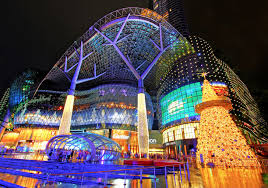
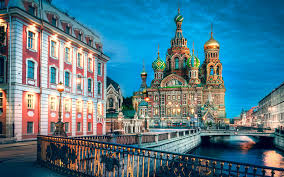
Fjord in Norway, north EuropeShopping mall in SingaporeDisneyland, USASt Petersburg, Russia
Name
Which site do you want to visit most
Why ?
What is the weather like there (use adverbs)
What can you do there ?
What could be a problem ?
I would like to visit all the sites. However, if I have to choose one, I will visit St Petersburg in Russia.
St Petersburg is a very beautiful city, with many amazing buildings. The city is very famous, and I have read about it in many books.
I think the weather is quite hot in summer, and also it stays very light, even at night. However, it can be extremely cold in winter.
St Petersburg has so many museums and galleries. I want to see all of them. Also it would be fun to walk around and take many photos.
I don’t speak Russian so that could be a problem if people can’t speak English. Also, it may be extremely cold, so I will need a lot of thick clothes. Finally, I will need to buy some Russian money.
A major problem for students is pronunciation and also, in some classes, it can be rather tricky to get the students talking. Obviously, many learners are scared of mispronouncing and ‘losing face’ by their mistake.
This activity helps with both issues.
Arrange the class in small groups and hand each member an card. The students have to read out the information, while the other write down what they hear. Many of my students feel that work is something to be done as quickly as possible, but that will not work in this situation.
Instead, the other team members will need to check what is being said. This encourages slow, clear and careful pronunciation. To assist, use expressions such as:
Can you speak slower, please.
Would you mind speaking slower, please.
How do you spell that ?
Could you repeat that, please.
Sorry, I didn’t catch the phone number.
Let me confirm …
Is that ‘b’ as in blue or ‘p’ as in pink ?
Teachers: adapt to suit the level of your class. Add email address, specific requests etc
NB: all images are taken from Google searches, (including ‘royalty-free images’) and the information is purely fictitious. As I have readers from around the world, I wish to reflect this diversity in the photos.
These blogs are for education use, and are not monetised. No copyright infringement or personal offense is intended at all.
If I have included your image, please accept my sincere apologies, and I shall remove the picture.
A compendium of classroom activities, warm up games and reviews.
Firstly, let’s get rid of this despicable habit of teaching younglings “How are you ?” “I’m fine.”
NO ONE says “I’m fine,” in the real world !
In my class, we get down and get funky. When I ask my group how they are, they reply:https://youtu.be/U5TqIdff_DQ
What better way to start a Sunday morning class ?
One purpose is to encourage writing; a senior Vietnamese official explained to me that Vietnamese customers are not used to writing. In my own experience, I have seen how hard it is to make the class, regardless of age, write down new words. It can take up to ten minutes to get the whole class to write down as little as five words. They have to find paper, pen etc, then they look bewildered at the task presented to them … they will often write down one, maybe one and a half words, then simply stop.
Therefore, I want to get them used to writing from an early age. To facilitate this, allocate a specific time when the lesson stops and the class have to write down new words.
From the Chinese film ‘Not One Less’ Dir Zhang Yimou, 1999 and starring a young, non-professional actor Wei Minzhi
I’ve found that using hand gestures can serve an a mnemonic; allow me to illustrate. I put my thumb up, I then hold my palm up, finally I put my thumb down. This has been used to help students build a sentence with a positive verb, a negative one and an advanced discourse marker.
This helps the younglings remember how to produce a sentence such as:
I can swim however, I can’t fly
The sentence introduces younglings to a contraction (can not = can’t) as well as a higher level discourse marker (or connector) ‘however’ (instead of merely using ‘but’). Furthermore, I drill the STRESS on the negative ‘can’t‘.
So, what vocabulary do they know ?
Thank you for your question. At this stage, they know many animals, basic body parts (finger, thumb, hand etc), about twenty adjectives, and basic verbs.
Additionally, they are able to form basic sentences.
It’s now time to move into present continuous, from “I drink” to “I am drinking.” We shall start by celebrating Mid Autumn Festival, a major holiday in Viet Nam. Here’s a song which uses the continuous “singing,” as well as new vocabulary such as “holiday,” and “lantern.” https://www.youtube.com/watch?v=JTWwgI17kTs
It is correct to capitalise the ‘m’ in moon IF we are referring to our Moon. We only have one, let’s not upset it (yes, I know it’s a popular question, ‘How many moons does Earth have ?’ and the answer seems to increase every year due to space debris both natural and man-made, not to mention that now some scientists think Earth actually DOES have two … but this is Level 2, let’s not confuse the poor blighters too much).
And now, without further ado …
Warm up games: If possible, make these team games as friendly competition makes the activities more engaging.
Teacher Says – this is great because it is kinetic, and helps to pass the opening minutes while students are arriving.
Word Bomb or Mind Map – board a simple word (e.g. animals), younglings have to shout out answers. Could try colours, body parts, food, clothes depending on class ability.
Magic Bag – I open my bag and ask “What’s in my bag ?” Class has to shout out (or write) possible items I would have in a school bag. This reviews vocabulary from a previous book. As an extension, when they see the item, they have to describe it with two or three adjectives.
Screen Test (based on a children’s TV show from the 70s) – show a short video clip, just a minute or so. Then ask questions. For example, in the Mid Autumn Festival Song, we could ask:
What is the first word we see ?
How many windows does the house have ?
How many lanterns were orange ?
What lantern did the boy hold ? A star, a fish or a doll ?
What colour dress does the girl wear ?
How many dancing moon cakes were there ?
Bonus Question: Can you name 4 different lantern shapes ?
Run and Write – any game that involves the younglings leaving their seats and writing on the board. One version is to have students write a word that begins with ‘a’, then ‘b’ … and so on. Just one person at a time (to avoid possible accidents … I only have limited space in my classroom).
Memory Recall – choose 4 – 6 students and give them a flashcard from a previous lesson. Today, we could use feelings (sad, happy, hungry, thirsty, hot & cold). Younglings stand at the front of the class and hold their card up. Class shout out the words. Then the younglings hide the cards behind their backs and change the order in which they are standing. Now I ask, for example, “What does Ms Linh have ?”
Pair work talking – this is vital in breaking the teacher- student dynamic; we need to promote more student to student interaction, but making this work is a slow train coming. Arrange class in pairs and make them ask each other basic questions. At this age (my class is in the 7 – 9 age range), it may be difficult to get boys talking to girls … at 17 – 19 it may be impossible getting boys to STOP talking to, or trying to impress, girls … but that is a different story.
Subjects could include:
How are you ? (to which the answer must not be “I’m fine.”
What animals do you like ?
What is your favourite colour ?
Do you have a brother or sister ? How many ?
What food do you like ? Can you swim ? Can you play piano ?
Hope this helps. Feel free to leave any comments or suggestions.
A lesson for all ages and all levels, just adapt to suit your students’ ability. First, show the photos and try to elicit what the buildings are for, or their original function.
For Speaking Level 3 or IELTS-standard students, they can explain their reasons and use target language, adjectives, adverbs and LFW (low-frequency words). Furthermore, it shows students a different aspect of London (it’s not just Big Ben, London Eye and Tower Bridge).
Now, without further ado, the photos:
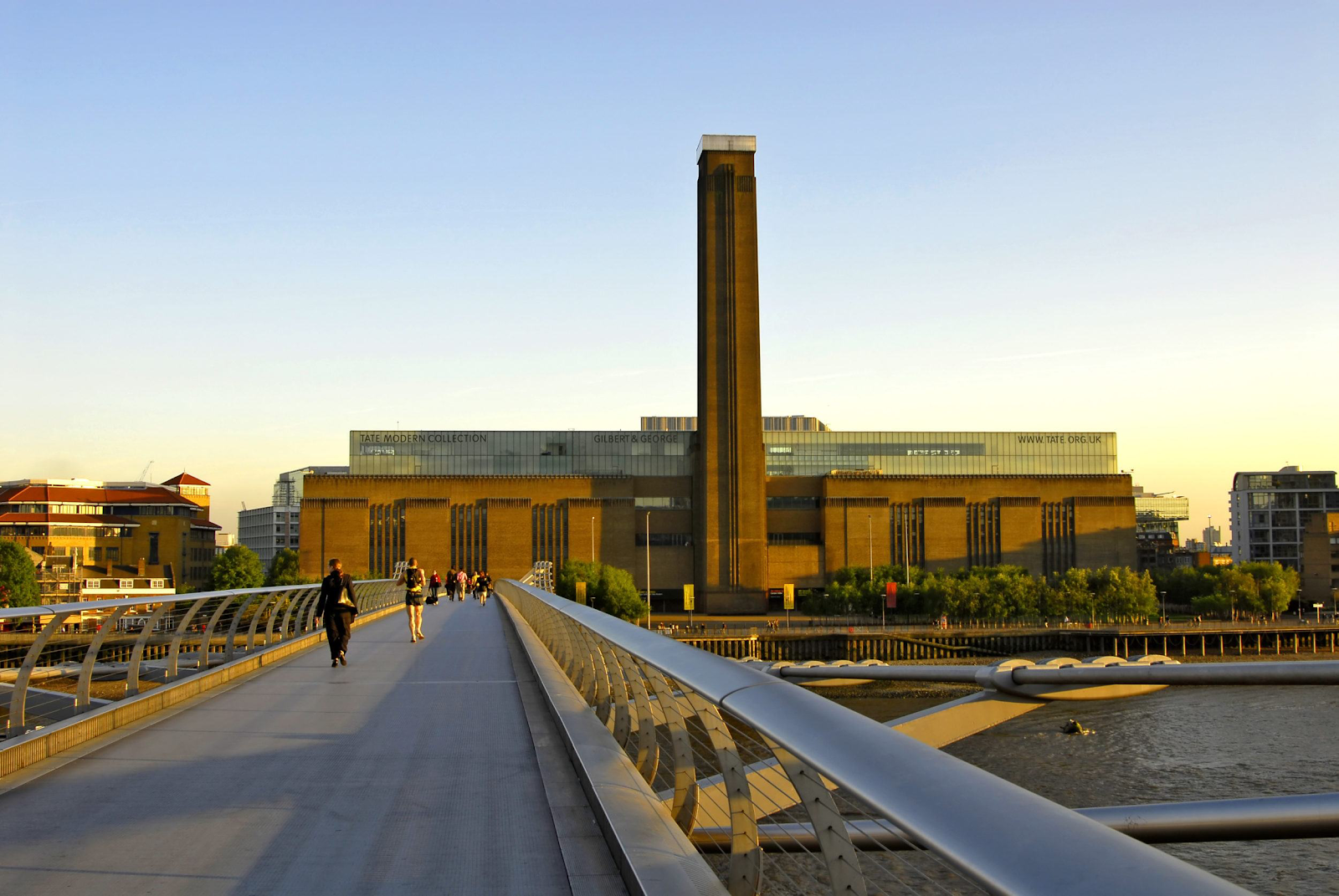
Tate Modern
Was built 1947 – 1963 to be used as a power station (designed by Sir Giles Gilbert Scott who also designed Battersea Power Station and the iconic red phone boxes).
Gallery opened in 2000 by the Queen
Shows British and international art
One of the largest museums in the world
in 2018, there were 5.8 million visitors
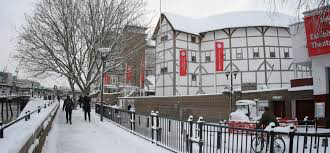
Globe Theatre
Was built 1599, burnt down 1613.
Rebuilt and opened in 1997
Has plays by Shakespeare, as well as modern plays.
Has 857 seats and 700 standing spaces. People who stand are known as ‘groundlings.’
“To be or not to be,” is from Hamlet.
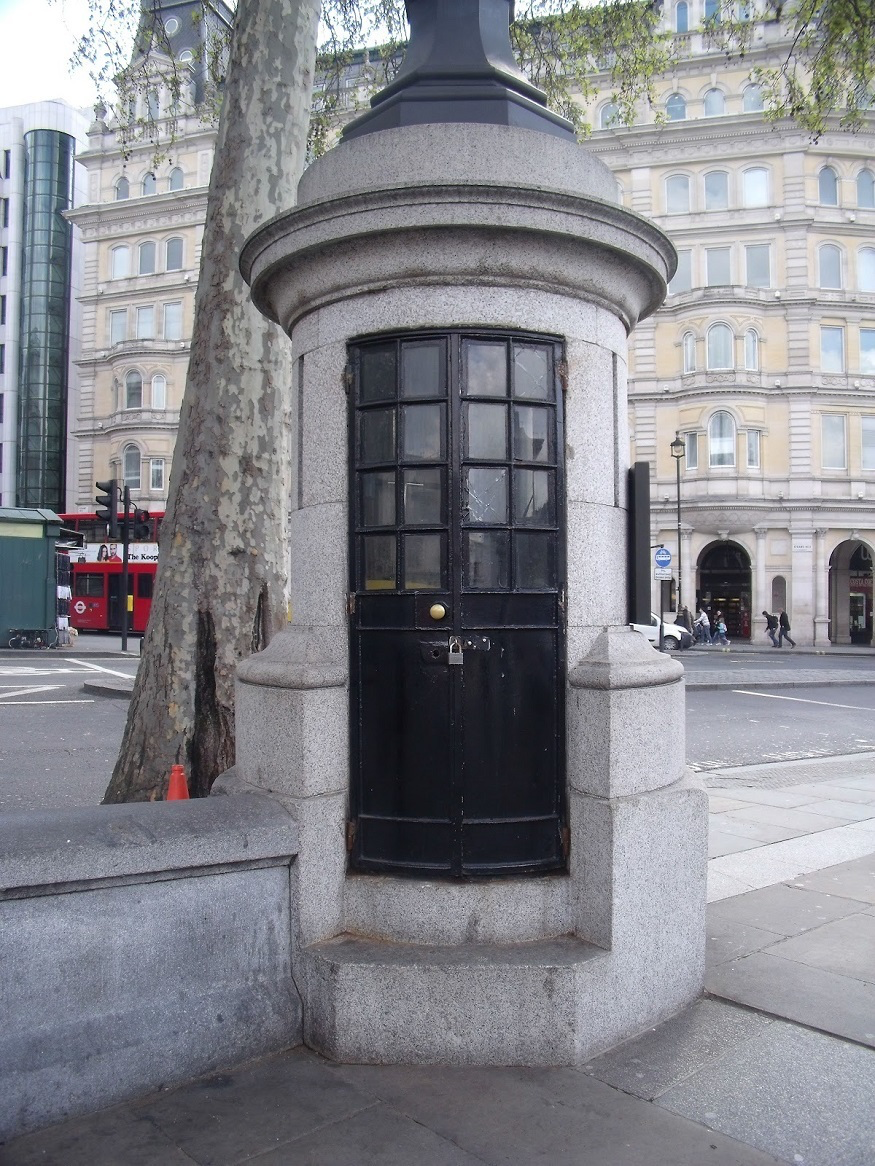
Police Station
Was built in the 1920s
Only big enough for two people
Has a telephone inside
Made from an old lamppost
Now used for storing brooms
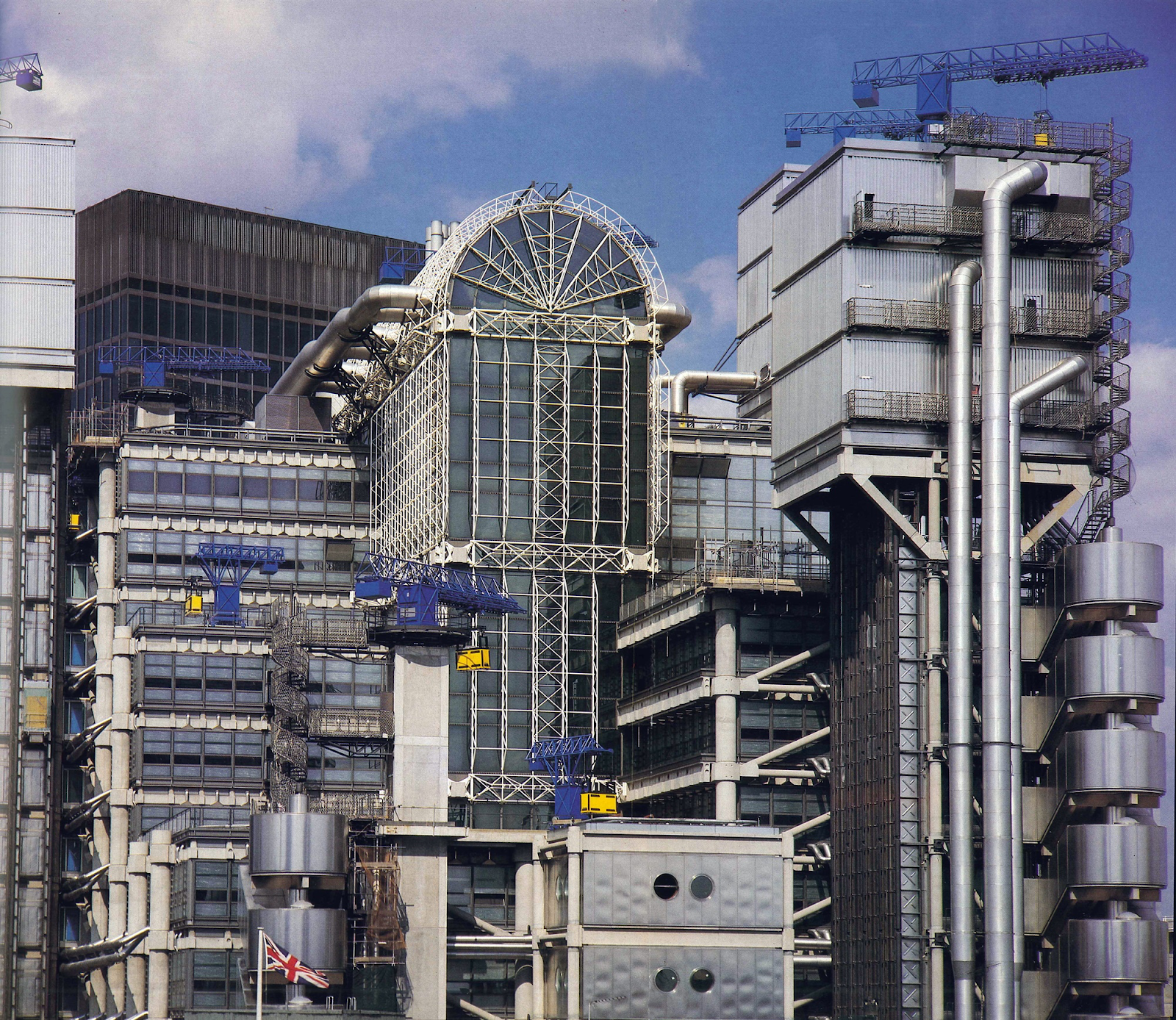
Lloyd’s Building
Completed in 1986
Architect was Richard Rogers
Lloyds are a world famous insurance company.
The lifts are on the outside to make more space inside.
It is 95.1 m tall or 312 ft.
New Zealand House
The building was opened by the Queen in 1963
It is the only tall building in the area.
The House has 18 floors.
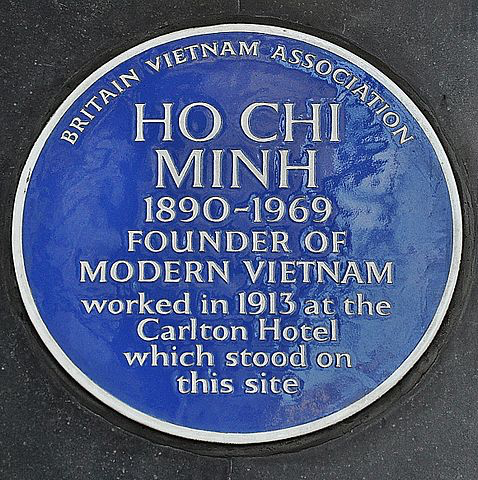
However … there is something very special for Vietnamese … can you see the blue circle ?
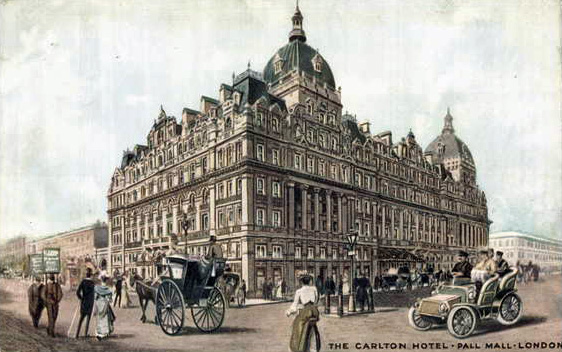
There used to be the Carlton Hotel here, but is was destroyed in World War II
Ho Chi Minh worked in the kitchen at the hotel
The old Carlton Hotel where Ho Chi Minh once worked
Activities
Young Learners
Stick fact sheets around the classroom. Students, in groups, have to collect information about basic facts such as when the building was opened, and an interesting fact, then present to the class.
Adult Speaking Classes
Elicit uses of bulidings, then ask them if there are any similar buildings in their city. What interesting buildings would they show tourists ? A student has to describe one of the buildings and the other have to guess which one.
IELTS
Students are assigned a building and they have to make a presentation of up to two-minutes in length (to practise for the speaking test). They may be allowed to use the internet for additional information but they are NOT allowed to merely read verbatim from Wikipedia !
As this is an IELTS exercise, we are looking for;
Good, strong introduction
Creative use of adverbs + adjectives
Low-frequency words
Opinion phrases
Idiomatic language
Anecdote or a personal review, giving reasons for their thoughts
It’s not to my particular taste / / I have my heart set on visiting / a unique experience (now add an adverb) / a truly unique experience / a magnet for tourists /
To pass IELTS with flying colours you need to use low-frequency words, idiomatic language, discourse markers AND speak with natural intonation, stress and rhythm.
This means PRACTICE, PRACTICE & PRACTICE
So, without further ado, complete these idioms:
Once in _______________
Put (my, your etc) _______________ to the ______________
Burn (ing) __________________ at ______________
It’s raining _____________________
It costs ___________________________
Piece ________________
Now use them in a sentence:
A 4star hotel in Singapore _______________________ (very expensive)
Wear boots and a coat; it’s been ____________________ (very bad weather)
He parties all day and night! He can’t ________________ forever. (doing something for too many hours)
She is not academic, she’ll read a book ______________ (hardly ever).
If you are serious about IELTS, you’ll need to _____________________ (start working much harder).
Now – give me an adverb and a low-frequency word
EXAMPLE:
Teaching unmotivated students is terribly tedious.
Thai food is ______________ _______________
(very tasty)
After failing her test, she was _________ _________
(very sad)
Marvel films are _____________ _______________
(very popular)
My poor old grandma is getting ___________ _______
(very forgetful)
Practice saying these for correct intonation
Speaking Practice – use discourse markers to extend your speaking and to link ideas.
Try to use: although / consequently / therefore
Describe something you own which is very important to you.
You should say:
where you got it from
how long you have had it
what you use it for
explain why it is important to you.
You will have to talk about the topic for 1 to 2 minutes.
You have one minute to think about what you’re going to say.
You can make some notes to help you if you wish.
Rounding off questions
Is it valuable in terms of money?
Would it be easy to replace?
This could be a physical object, a memento with sentimental value, or an abstract noun such as health, happiness etc.
Small talk …. Try to talk for as long as possible – then change subjects:
your home town / your favourite holiday / family / favourite hobby / a great place to visit in your city / some terrible things about your city /
Some sample questions to help get a class speaking to each other IN ENGLISH, and prepared to do some work. I use these with students aged about 9 – 12, at lower-intermediate level.
We start with a survey where the students have to walk around, speaking to each other and trying to …
Find 3 people who:
Name // 1 // 2 // 3 //
Hobby
Play an instrument
Draw or paint
Read books
Watch films
Learn English
Have a pet What pet ?
For advanced students, encourage them to probe for more information – what books are read, what instrument(s) are played, etc.
Speaking exercise
This can be done in pairs, small groups or as a class survey.
What was the last film you saw ? Did you like it ?
How many people live in your house ?
What is hard about learning English ?
How often do you chat online ?
Which social media sites do you use ?
What is your favourite food ?
Do you often eat western food ? Do you sometimes eat fast food ?
Have you tried Korean or Japanese food ? What did you think ?
Working in pairs or small groups, gather information about these countries, then make a presentation. Add something about yourself ;would you like to visit these countries ? Why ? What would you do there ? What would you eat and buy ?
Capital cities
Brasilia (Brasil) Seoul (South Korea)
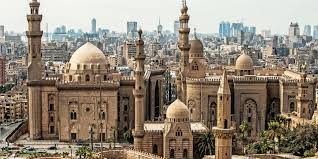
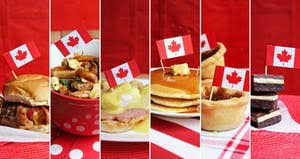
Ottawa (Canada) Egypt (Cairo)
Seoul, South Korea
Population
Brasil 183 888 841 // South Korea 51 047 000
Canada 37 000 000 // Egypt 97 055 000
Brasilia
Language
Brasil – Portuguese // South Korea – Korean
Canada – English & French // Egypt – Arabic (EgyptianArabic)
IELTS students need to know an incredibly wide array of adverbs so, with that in mind, here’s an exercise which can be easily adapted as a team game. Complete the sentences with suitable adverbs. Piece of cake, right ?
Use a thesaurus and dictionary to boost your vocabulary.
Word Fill
Adverbs of manner & ‘but’, ‘so’ and ‘even though’
(Fast or quickly – both can be used as adverbs, fast more for speed, quickly for time e.g. the animal runs fast and eats quickly.)
Note: ‘well’, ‘fast’ and ‘hard’ are irregular adverbs of manner.
Use a positive adverb for (+) and a negative one for (-)
Example: She sings (+) beautifully but plays piano (-) terribly.
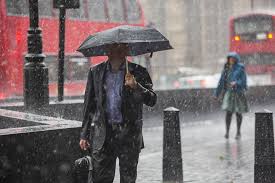
It is raining (-) heavilyso I will bring an umbrella
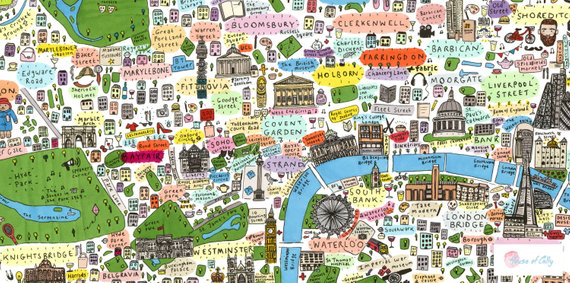
WELCOME TO LONDON
I will go along with you ……I am not really hungry
……….I am not hungry, I will go with you to KFC
Grabbike is cheap …..they drive so (-).
She failed her test ……..she studied (+)
Do I look like Batman ? Then why are you speaking so …..(-)
Batman has amazingly good hearing … but not all teachers have so SPEAK UP !
We have learnt many idioms ….that is just the tip of the iceberg.
He loves music …much ….he sings (-).
She never eats the food ………she works there.
……..she speaks English very (+), she is afraid to speak to westerners.
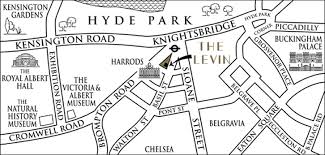
You are standing outside the Palace, at the corner of Birdcage Walk. You want to get to (go to) Victoria Station.
Excuse me, how do I get to Victoria Station ?
Walk straight down Buckingham Palace Road. Walk across the street and you can’t miss it (you will see it easily).
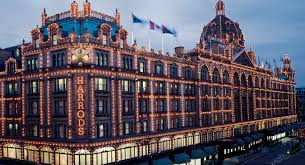
You are outside the front door of Harrods and want to visit the Royal Albert Hall
WELCOME TO LEYTONSTONE
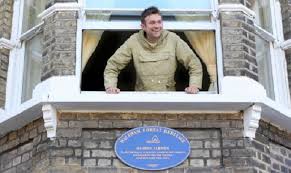
Leytonstone is an area in east London, and was the birthplace of the film director Alfred Hitchcock, footballer David Beckham and singer Damon Albarn of the band Blur.
Damon Albarn showing where he lived in Leytonstone
Next, asking for local directions:
Sorry to bother (disturb) you, but I’m looking for a pub. Is there one near here ?
Yes, there is one quite close, ‘The Birkbeck Tavern’, maybe five or ten minutes’ walk away. Turn left until you come to Bridge Street. Turn left again, and keep walking, past the park, until you reach the bridge. Cross over, and Bob’s your uncle (there you are). It’s on the corner, you can’t miss it.
NOW: A local map
You are in LISTER ROAD (at the bottom) and want to get to GROVE ROAD.
Take turns asking each other questions.
The red circle with a blue band is the symbol for an underground station, which we call ‘The Tube.’ Here is Leytonstone Tube:
Plan a day
What would you like to do, where would you like to visit ?
Things to consider:
Time / lunch / travelling around / a variety of activities

































 Thay Paul's Notes