A collection of clips predominantly featuring western people and their views on Vietnam. I have also added some suggested sequences for pronunciation practice … and so, without further ado …
First time in Viet Nam – First impressions of Viet Nam
A vlog by Divert Living, posted just over two years ago and which has already received more than a million hits:
” … and I asked them, ‘How much is aqua (water) ?’ Aqua’s fifteen thousand, beer’s twenty thousand … of course I’m gonna get the beer, now … it’s just as expensive as the water.”
09:00 – 0913
“Fun fact, Vietnamese cuisine is considered one of the healthiest cuisines in the world … and, to go with the food, the size of the dining tables and chairs are super small.”
This vlog was shot in Ha Noi, so let’s get their take (their opinion, view, experience) on Sai Gon:
What to expect – Saigon or HCMC
Now they travel to my neck of the woods (the area I live in or was brought up in), and they encounter, among many other delights, coconut coffee:
“Wow … that’s so strong, but it’s got a ball of coconut ice-cream in the middle … whoah !”
And the young lady who I believe is Korean adds:
“I wanna try … This is the coffee king … ahhhhhhhh !”
Talking Point:
The young travellers give their views on the environment and cleanliness of District 1 which is the city centre [UK] or downtown area [USA].
To what extent do you agree with them ?
What do Vietnamese students think of the Vlogger’s appraisal of Sai Gon ?
Let’s move on and talk about traffic which is quite a serious issue in Vietnam. Firstly, attending driving school … what can go wrong ? A clip from the world-famous motoring show from the BBC, ‘Top Gear.’
Right from the get go (from the very start) we have some great lines:
“Cheer up … this is gonna be a doodle … [Vietnamese] … it wasn’t !”
01.23 – 01:45
“How the hell … what did you just do ?”
“It was eighteen. Eighteen years old.”
“How did you know ?”
“Did you not bother learning Vietnamese before we came here ?”
“Well, no.”
“You’re screwed, then.”
Time for some food and the ubiqitous Phở My favourite TV chef, Mr Keith Floyd, who sadly passed away in 2009. He came to Asia, and visited Vietnam and now he’s going to tell you about Phở:
Regular verbs: just add -‘ed’. However, as you see, in this list only one common verb, ‘want’, is regular.
NOTE: ‘to be’ is different:
I am hungry / You are hungry / She is hungry / We are hungry
Now, practice: In groups of three or four, ask each other questions in order to feel more natural using the past tense. Let’s start simply:
What did you do today ?
Each student takes turns describing their day. Use these photos to help you.
Extra practice:
buy / drink / surf the internet / help parents / cook / do homework
Present tense ——– Past tense
act —— acted
go —- went
learn —— learned OR learnt
play — played
read —– read (pronounced ‘red)
ride —— rode
sleep —– slept
watch —- watched (pronounced ‘watch -t‘)
win —- won
What is the past tense ?
I act in a film. Last week I ______ in a film.
I go to London. Last year I _______________ to London.
I ride an elephant. Last month I ___________ an elephant.
I learn English.
Last Saturday, we ___________ English with Mr Paul.
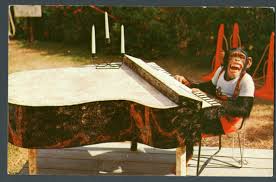
The monkey plays piano.
Last night, the monkey _________ piano.
She reads a book. Last Sunday she _____ a book.
He sleeps all day. Yesterday he _______ all day.
I watch the amazing Spiderman.
Last week I ______ the amazing Spiderman.
Put these verbs into the past tense, then complete the sentences:
want ———
take ———
decide ———
see ——–
buy ——–
think ——–
learn ——–
I —— to stay in bed this morning
She —– great photos with her new iPhoneX
We have —— to go to Thailand for Tet
Last night I —- a great film !
He —- food for Christmas from Harrods.
Tuesday ! I —— today was Wednesday
We —– about past simple in our lesson.
Pronunciation guide
In English, verb can be regular or irregular.
Regular verbs add -ed or -d in the past tense.
EXAMPLE:
I walk to work // I WALKED to work
I play guitar // I PLAYED guitar
She smiles on TV / She SMILED on TV
They dance in T-ara // They DANCED in T-ara
-ed past tense verbs pronunciation
Words have 3 end sounds:
‘t’
‘d
‘id’
If the word ends with:
ch / f / k / p / s / sh / thi – The sound is ‘t’ look = ‘lookt’
t /or / d/ – The sound is ‘id’ visit – ‘visitid’
Other sounds are ‘d’ bang = ‘bangd’
What is the correct pronunciation for these regular verbs ?
Look = Looked // laugh = laughed // end =
beg = / visit = / kiss =
brush = / breath = / love =
Read these sentences:
He cleared up the mess / He rolled up the newspaper / I have visited India
No Homework ! That sounded good / Teacher shouted, ‘No way !’
We all worked hard today / Tom talked so much /
The students played many games and laughed.
They have visited India
She has banged the drum !
Please Note: All photos are taken from Google Images or free photo sites, and are used for educational purposes only. No copyright infringement or offense is intended. If I have used your photo or image, and you wish me to remove it, just ask. This site is not monetized, I run it on my own dollar. Thank you.
We’ve got photographs of men on the moon We’ve got water that is good for us We’ve got coffee that’s instantaneous We’ve got buildings that are very tall We’ve got cigarettes that are low in tar We’ve got policemen can tell us who we are We can reproduce a work of art We’ve got missiles can tear the world apart Good, good, good, good, good, good technology
We’ve got trains that run underground Aeroplanes that fly very fast We’ve got music that is popular We’ve got machines that sound like orchestras We’ve got ability to transplant a heart We’ve got freezers full of body parts We’ve got computers that can find us friends We know roughly when the world will end Good, good, good, good, good, good technology
We’ve got animals with transistors in We’ve got pills that can make you slim We’ve got factories turning frozen chickens out We’ve got ovens that cook in seconds flat We’ve got plastics that are indestructible We’ve got deodorants that make us smell of flowers We’ve got detergents to clean up the sea We’ve got sounds can turn you inside out
Sometimes I wonder what it is all about There’s lots of leisure time to sit and work it out There’s a TV show I’ve got to see Good, good, good, good, good, good technology Good technology
Now, to cut down on ‘Teacher Talking Time’ and to get the class prepared to speak, to use intonation and stress as well as affording them the chance to use their L-FWs and idioms, a little warm up activity.
Firstly, what did you think of the song, with special reference to the lyrics and themes. remember – this song was from the 1980s, before mobile phones and the internet, which are now ubiquitous.
Ask and answer. Speak to many different students.
Elicit answers, interview your fellow students, pump them for information, don’t allow them to get away with a two- or three-word answers
How many hours do you use a computer every day ?
[Ask what the computer is used for, ask for examples, favourite sites, what is the work – play balance ?]
Do you have a smartphone ? If so, what type ?
Have you ever read an e-book ? Which one ?
What are your favourite video games ?
Do you write or read a blog ?
Are you on Instagram or Twitter ? Why or why not ?
When do you post comments online ?
Do you make phone calls or text family and friends ?
Sometimes students arrive at class after a long day, bereft of energy and motivation. In such situations, it’s best to hit the ground running, get them talking and ready for a lesson. This needs to be done before they pull out their mobiles and start concentrating on their cyberlife … after which time, they are lost to reality.
Therefore, before they can hit that ‘Post’ button, pair them up and make them ask each other various questions, demanding that the answers be as complex as possible, incorporating big words (‘Low-Frequency Words’), discourse markers and relative pronouns, along with appropriate expressions.
Example: Where would you most like to visit ?
Bad answer: Nowhere. Bad answer: New York.
Better answer:
Introduce your answer THEN state the location THEN explain why.
Ah, that’s an interesting question because I really need a holiday. However travelling now is not a good idea because of the COVID 19 which is an extremely serious pandemic. So, I have to think about after, when it is safe to go on holiday.
I have always wanted to visit Singapore, because it looks so clean and modern and, not forgetting, so many shopping malls. I love shopping, it is my passion. I would buy so many things such as clothes, makeup and presents for my family.
IELTS students should be able to add a number of idiomatic language to really spice up their presentation. I would expect to hear:
cost(s) an arm and a leg / prices (can be \ are) sky high / mouth-watering / world famous / ubiquitous / pristine / that’s a bit of a sore point (because we CAN’T travel) / such a wide array / shop till (I \ you) drop / overwhelming / spoilt for choice / retail therapy
Remember … there are some affordable shopping areas in Singapore although they tend to be away from the city centre but well worth a visit.
NOW … your turn
Questionnaire / Discussion
What kind of music do you like ? (do you play or listen ?)
Can you name any plays by Shakespeare ? (if not what writer do you like ?)
What time do you usually get up ? (weekdays and weekends)
How do you relax ? (do you have time or do you study, have family, work overtime ?)
Can you play a musical instrument ? (would you like to ? Why ?)
What skill(s) would you like to acquire ? (be creative here – what stops you learning ?)
What is the best thing about Sai Gon ? (or YOUR city)
However, this is not a one-way street. The person asking is expected to make small talk, to elicit – to encourage – the speaker to open up and expand on their answers.
Use small talk phrases such as:
Really ? That’s interesting // Tell me more // Why do you say that ? // Oh, me too // What do (did) you like best // Where is that (exactly) ? // I’ve heard about that // I haven’t heard about that, can you explain // Why do you say that ? // Oh, I get it // I’m not sure I follow.
And if your partner is stonewalling you (not talking), here’s a great idiom:
A major problem for students is pronunciation and also, in some classes, it can be rather tricky to get the students talking. Obviously, many learners are scared of mispronouncing and ‘losing face’ by their mistake.
This activity helps with both issues.
Arrange the class in small groups and hand each member an card. The students have to read out the information, while the other write down what they hear. Many of my students feel that work is something to be done as quickly as possible, but that will not work in this situation.
Instead, the other team members will need to check what is being said. This encourages slow, clear and careful pronunciation. To assist, use expressions such as:
Can you speak slower, please.
Would you mind speaking slower, please.
How do you spell that ?
Could you repeat that, please.
Sorry, I didn’t catch the phone number.
Let me confirm …
Is that ‘b’ as in blue or ‘p’ as in pink ?
Teachers: adapt to suit the level of your class. Add email address, specific requests etc
NB: all images are taken from Google searches, (including ‘royalty-free images’) and the information is purely fictitious. As I have readers from around the world, I wish to reflect this diversity in the photos.
These blogs are for education use, and are not monetised. No copyright infringement or personal offense is intended at all.
If I have included your image, please accept my sincere apologies, and I shall remove the picture.
Yesterday I blogged a database of idioms, collocations and negotiation language. That is just the tip of the iceberg. If you have looked at English-language study books, you will, no doubt, have seen several dictionaries solely devoted to idioms; we use them so often, and there are so many.
For my IELTS students, I have repeatedly taught half a dozen (six) in order for the students to incorporate them into their natural speech … without idiomatic language, you will not break past the 5 score (taken along with grammar, vocabulary and intonation, naturally).
Therefore, for Top Cat students, or anyone looking to learn some more, this blog is for you.
Expressions or idioms
Ring any bells ? // do you remember //
More or less // not exactly but approximately
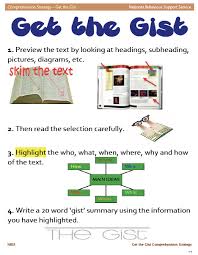
Get the gist // do you understand the main point ?
Right up your street // this is something you will really like
Rabbit, Rabbiting on // UK slang, especially in London … talking too much
Piece of cake // no problem, very easy, sure
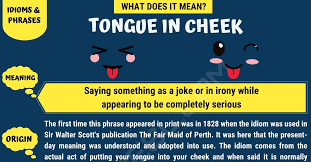
Tongue in cheek // not being serious about something
Now … how you use them:
Student A: Hello, we met last year at Julie’s party.
Student B: Sorry, that doesn’t ring any bells (I don’t remember).
Student A: Are you ready to go ?
Student B: Go where ?
Student C: Cake, food, drink, singing, dancing … ring any bells ?
Student D: Oh, Tony’s birthday party. Sorry, I forgot.
Student A: Are you ready for the test ?
Student B: Yes, more or less.
Student C: I’ll wait for you.
Student D: I won’t be long, I’m more or less finished.
Student A: Do you have to read all the document ?
Student B: No, just to get the gist.
Student A: You should listen to this CD, it’s right up your street.
Student B: Oh, French piano music, I love it. That’s right up my street.
Student A: What did your girlfriend want ?
Student B: She was rabbiting on about something to do with her clothes, I wasn’t really listening.
Teacher A: Hey ! Miss Mary … stop talking. You’re a little rabbit !
Student A: Can you drive me home ?
Student B: Sure, piece of cake.
John’s new business shirt
Student A: Have you seen John’s new shirt ? It’s so elegant.
Student B: Are you serious ? It’s terrible.
Student A: I know ! I was being tongue in cheek.
Now … your turn.
Add the correct idiom [answers at end of blog]
1) Shall we see the new action film ? It sounds ______________
2) Are you still talking ? You are such a __________
3) She said I was the best student but I think she was being ___
4) You said you would bring something … cheese, tomato, garlic bread ____________ ?
5) The IELTS speaking test was a ________ after reading Thay Paul’s blogs (I hope).
6) Student A: Did you understand the project ? Did you ________ of the idea ?
Student B: Well, ______________ but not every single detail.
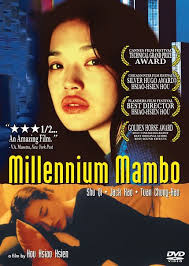
This film, starring Shu Qi looks right up my street.
Right up your street 2. rabbit 3. tongue in cheek 4. ring any bells 5. piece of cake 6. get the gist / more or less.
To pass IELTS with flying colours you need to use low-frequency words, idiomatic language, discourse markers AND speak with natural intonation, stress and rhythm.
This means PRACTICE, PRACTICE & PRACTICE
So, without further ado, complete these idioms:
Once in _______________
Put (my, your etc) _______________ to the ______________
Burn (ing) __________________ at ______________
It’s raining _____________________
It costs ___________________________
Piece ________________
Now use them in a sentence:
A 4star hotel in Singapore _______________________ (very expensive)
Wear boots and a coat; it’s been ____________________ (very bad weather)
He parties all day and night! He can’t ________________ forever. (doing something for too many hours)
She is not academic, she’ll read a book ______________ (hardly ever).
If you are serious about IELTS, you’ll need to _____________________ (start working much harder).
Now – give me an adverb and a low-frequency word
EXAMPLE:
Teaching unmotivated students is terribly tedious.
Thai food is ______________ _______________
(very tasty)
After failing her test, she was _________ _________
(very sad)
Marvel films are _____________ _______________
(very popular)
My poor old grandma is getting ___________ _______
(very forgetful)
Practice saying these for correct intonation
Speaking Practice – use discourse markers to extend your speaking and to link ideas.
Try to use: although / consequently / therefore
Describe something you own which is very important to you.
You should say:
where you got it from
how long you have had it
what you use it for
explain why it is important to you.
You will have to talk about the topic for 1 to 2 minutes.
You have one minute to think about what you’re going to say.
You can make some notes to help you if you wish.
Rounding off questions
Is it valuable in terms of money?
Would it be easy to replace?
This could be a physical object, a memento with sentimental value, or an abstract noun such as health, happiness etc.
Small talk …. Try to talk for as long as possible – then change subjects:
your home town / your favourite holiday / family / favourite hobby / a great place to visit in your city / some terrible things about your city /
A chance to review recent adjectives, and to practise constructing longer, more detailed sentences. There are some repeated words and phrases along with some new ones.
Look at my friends – tell me what you think about them ?
What kind of people are they ? What jobs do they have ? Why do you think so ?
Personality adjectives
postive
kind / sweet / generous / nice / reliable / hard-working / friendly / dependable / life and soul (of the party) / compassionate / a good sport / trustworthy / honest / solid as a rock
negative
arrogant / unkind / nasty / mean (1 nasty, 2 not generous) / unfriendly / unreliable / aloof / pompous / bossy ( tell people what to do) / awkward / /difficult / hard to please / thick as a brick (very stupid) / obsequious / lazy /a screw loose (little crazy)
This level of English is for students who live, or plan to live, in English-speaking countries.
I advise my students to learn Standard English, as that will help them to communicate with other non-native speakers. Clarity in both pronunciation and meaning is paramount (of most importance).
However, that is NOT how everyday people speak in everyday situations. Therefore, here’s a set of examples and new vocabulary that you will need. Furthermore, you will feel more confident, using the language and vernacular of those around you.
Dialogue practice
phrasal verbs / collocations / idioms / adverbs
vocabulary:
fond – to like something.
more than likely = very probably, about 90% sure.
sip – to drink a very little.
rival – competitors
A: Hi, how’s it going with you ?
B: It’s going incredibly well today. I want to celebrate. Fancy a beer ?
A: I’m not so fond of beer, I prefer coffee. How does that sound ?
B: Brilliant ! Highlands or Coffee bean ? Which one ? I can’t make up my mind.
A: Is Highlands far ? They are Vietnamese, a rival to the American company.
B: It’s quite far. We ‘ll have to take a taxi. More than likely it will rain.
A: Let’s get a move on before it rains cats and dogs.
B: Too right ! We’ll have to give up getting a taxi once it rains. Let’s go !
At the coffee shop
A: Watch out! The coffee’s incredibly hot. Just sip it. What are you up to now ?
B: Just texting the office. They seem rather busy.
A: You should take a break. Tell them to just do their best.
B: Hold your horses… there ! Finished. Piece of cake.
A: You want some cake ?
B: No, hahaha. ‘Piece of cake’… means no problem. Having said that …
A: Right ! The cakes look amazingly tasty. Shall we … ?
They buy two gloriously large cakes
A: Let’s dive in ! Wow … I must admit, this is remarkably good. How’s yours ?
B: I think it’s too big for me. Let me try some … oh, blimey, that’s awful !
A: Yes, afterwards, we’ll need to work out.
B: A minute on the lips, a lifetime on the hips !
A: Do you have a minute ? I’d like to go over something with you.
B: Sure, what’s on your mind ?
A: Which video do you think is better for the students ? We need to inspire them.
B: This one looks good … oh, hold on … the vocabulary is very difficult … good !
NOW … YOUR TURN
Write a short dialogue scene about planning a holiday






































 Thay Paul's Notes