Have students repeat until their grammar is perfect. Make games, see who can conjugate the verbs clearest and quickest.
Now … practice:
First let’s use an adjective:
happy / sad / lucky / hard-working / lazy
Let’s start with the adjective ‘happy’
I am happy // I’m happy
you are happy // you’re _______
he _____ \
she ______ \
it _______\
Mr John ______ \
we ____ \
they ______
The verb ‘to have’
I have
you have
he has
she has
it has
Ms Jane has
we have
they have
Now … practice:
Let’s use some common nouns
sister (or twin sister) / piano / dog / new book
I have a ____
you ____ ______
he ___ _________
she ___ _______
Ms Jane ____ _______
we ____ ______
they ____ _______
OK, Snoopy, enough is enough … but we have just started; more blogs to follow.
Please Note: All photos are taken from Google Images or free photo sites, and are used for educational purposes only. No copyright infringement or offense is intended. If I have used your photo or image, and you wish me to remove it, just ask. This site is not monetized, I run it on my own dollar. Thank you.
I have a red and black marker system for class management: the red is a happy face, awarded for leading the students in repeating class rules, for interesting and imaginative answers, for exceptional work.
The black is for breaking the class rules, disrespect, noise etc. Two or three Black Stars result in the student being sent to Student Care.
Today I will introduce a new star:
the Blue Star
which will be given to students who speak too much, too loudly, or for interrupting the teacher.
Should a student get three Blue Stars, they will have to conjugate ten verbs during breaktime or for homework.
To kick off, conjugate these verbs:
allow // become // believe // change // create //
decide // follow // grow // help // leave // make
pass // provide // remember // return // show
spend // suggest // tell // think // walk // work
To everything, there is a season.
A time to play, and a time to work.
A time to talk, and a time to listen.
Please Note: All photos are taken from Google Images or free photo sites, and are used for educational purposes only. No copyright infringement or offense is intended. If I have used your photo or image, and you wish me to remove it, just ask. This site is not monetized, I run it on my own dollar. Thank you.
Can you see how the verb ‘have’ changes ?Sometimes we use ‘have’, sometimes we use ‘has’.
I have you have he has she has Mr John has we have // they have
Tôi có / bạn có /  anh ấy có /
Cô bé có  / Ông John có
chúng ta có  / họ có
Now … your turn. We will use beach items, food and clothes.
First, at the beach …
I have a beach ball and I have an ice cream.
You ___ a beach ball and you ____ an ice cream.
He ___ a beach ball and he ____ an ice cream.
She ___ a beach ball and she ____ an ice cream.
Mr John ___ a beach ball and Mr John (he) ____ an ice cream.
We ___ a beach ball and we ____ an ice cream.
They ___ a beach ball and they ____ an ice cream.
NOW .. a new verb … ‘eat’
I eat delicious pizza
He eats a delicious doughnut (donut in USA)
Now … your turn
I eat delicious pizza.
You _____ delicious pizza.
He ____ delicious pizza.
She ____ delicious pizza.
Mr John _____ delicious pizza.
We _____ delicious pizza.
They _____ delicious pizza.
NOW .. a new verb … ‘wear’
I wear a blue shirt and I wear a colourful tie.
She wears a blue police uniform and she wears a black hat.
Now … your turn
I wear a school uniform.
You ____ a school uniform.
He ____ a school uniform.
She ____ a school uniform.
Mr John ____ a school uniform.
We _____ a school uniform.
They _____ a school uniform.
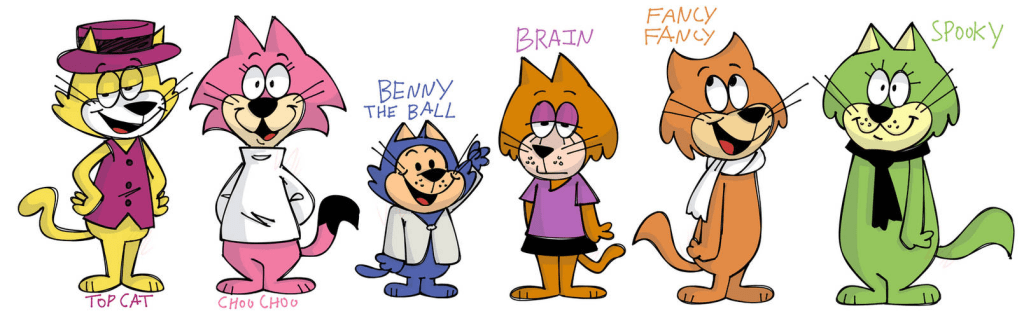
Now … for Top Cats – tell me about these pictures:
Please Note: All photos are taken from Google Images or free photo sites, and are used for educational purposes only. No copyright infringement or offense is intended. If I have used your photo or image, and you wish me to remove it, just ask. This site is not monetized, I run it on my own dollar. Thank you.
At Tet, Daddy sings karaoke. The music is very l____ and t______ and Mummy was f_______ .
At Tet, I visit my grandparents. They gave me l_____ money, and we all had f___ .
Mummy makes a lot of tr________, d________ food.
Many families walk at Tet holiday. The women wear the tr_______ dress called an a__ d____ . The dress is very c_______ and they look b________ .
My uncle comes to visit. He is a doctor, so he is very i___________ . However, he tells jokes and is f______ .
Our class captain is called Lily. She is very i______ so she is a Top Cat. She tells the boys to be quiet when they are l_____ . Lily shouts at t_____ students.
Now … let’s test your grammar.
Change these sentences from present tense (verb 1) to the past tense (verb 2).
EXAMPLE: I (go) to visit my best friend.
I went to visit my best friend.
My family (visit) my grandparents and we (eat) a lot of d_______ food.
My Mummy and my aunts (wear) the tr_______ ao dai. They all (look) so b________ .
Daddy (have) his friends to our house. They (sing) songs for many hours. I (think) it (is) t________ .
Wit my l___ money, I (buy) some c_______ and b_____ flowers for my Mummy. She was so happy, she (cry).
My brother is very in_____________ , he (read) books every day. My sister (play) video games. They had a lot of f___ at Tet.
Last night I (see) a very f____ film, I (laugh) so much. This morning I (go) to school but I (forget) my books. My teacher (is) fu______ .
Top Cats … time for creative writing
Write a short story about your Tet Holiday. Use new adjectives and the past tense (Verb 2).
At Tet I …
Please Note: All photos are taken from Google Images or free photo sites, and are used for educational purposes only. No copyright infringement or offense is intended. If I have used your photo or image, and you wish me to remove it, just ask. This site is not monetized, I run it on my own dollar. Thank you.
Furthermore, she loves to wear Givenchy perfume but I prefer to spend my hard-earned* on Dior.
In the modern parlance, ‘Did you see what I did there ?’ I followed four auxiliary verbs (‘hate,’ ‘love,’ ‘like’ & ‘prefer’) with infinite verbs. I sense that I’ve already lost the interest of 90% of my readers with these grammar terms, but hold your horses and I’ll explain, I’ll ‘cut the crap‘, if you will.
OK, breaks down like this: an auxiliary verb is a ‘helping’ verb; we need more information to understand what the speaker means e.g.
I want … (what do you want ?) // He needs … (what does he need ?) // She loves … // We want … etc
An infinite verb simply means a verb in no tense (past, present or future). It is simply formed thus:
to + base verb
Examples: to eat / to go / to study / to procrastinate
Infinite has no tense, by which I mean it is incorrect to say,
“Last night I to see a film,” (past tense)
“She to go home,” (present) or
“Tomorrow he will to take a test.” (future tense).
We can combine an auxiliaryverb with an infiniteverb, as demonstrated in the heading and subsequent paragraph.
Occasionally, a student may question my use of grammar, or mention that they have been told a different rule, to wit, last night a student informed me that, according to a different teacher, auxiliary verbs such as ‘like,’ ‘love.’ ‘hate,’ HAVE TO BE followed by a continuous verb:
I hate shopping NOT I hate to shop
He loves watching films NOT He loves to watch films
We like drinking wine after work NOT We like to drink wine after work
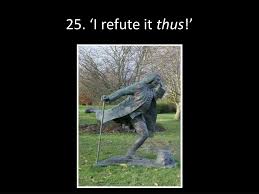
To Quote Dr Johnson:
“I refute it thus,” :
I like to play guitar / I hate to hear karaoke / I love to listen to my friend Pete’s online radio show
We can use hate, like, love and prefer with an –ing form or with a to-infinitive:
I hate to see food being thrown away.
I love going to the cinema.
I prefer listening to the news on radio than watching it on TV.
He prefers not to wear a tie to work.
In American English, the forms with to-infinitive are much more common than the –ing form.
There is a very small difference in meaning between the two forms. The -ing form emphasises the action or experience. The to-infinitive gives more emphasis to the results of the action or event. We often use the –ing form to suggest enjoyment (or lack of it), and the to-infinitive form to express habits or preferences.
So there you have it, straight from the horse’s mouth.
What can we learn from this ? Well, teachers are only human (mostly) and can make mistakes. Teachers who are not native-speakers often teach from books that may simplify grammar and may, inadvertently, be incorrect in their assertions. The books may be outdated; they may even be wrong.
Just because something is written in a book, doesn’t mean it’s true.
Check for yourself, be proactive in your learning; if you have internet access, check reputable websites.
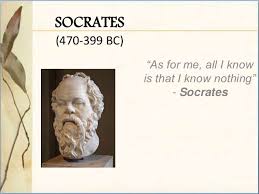
Furthermore even native-speakers can make mistakes and I’ll be the first to admit this (even if I don’t have the wisdom of Socrates, not by a long chalk).
Last night he listened to music and played computer games
irregular verbs – no rules.
Present – Past / Present – Past / Present – Past
I am – I was / begin – began / have – had
eat – ate / go – went / drive – drove
tell – told / hear – heard / catch – caught
buy – bought / write- wrote / see – saw
Listening: How many past tense verbs ?
Yesterday, I went to visit my friend. We played badminton then walked in the park.
After, we ate lunch and drank beer. Later, I bought coffee and wrote some emails.
Corrections: Write in the past tense
I (am) born in London and (arrive) in Viet Nam in 2015. I (work) as teacher in District 1 and 3 but I (want) to work near my home. Last week, my friend (have) a party. She (dance) all night and I (hear) her singing. In the morning, she (catch) a plane and (go) to Thailand.
Make short sentences using modal verb ‘like’ and ‘need’.
to practise // to dance // to study // to shop // to cook // to travel // to shout // to order // to book
I like to dance on Saturday nights
I need to study English
Adding information
Use adjectives (describe the noun) or adverbs (describe the verb)
I saw a man begging
I saw a poor old man desperately begging for money.
We heard a girl playing piano
He likes to walk in the park
She thought the museum was interesting
I hated the film
My cat eats fish.
Adding a reason
I hate coffee because it keeps me awake
I only eat healthy food because
Although I find Burger King very tasty, I avoid eating there because
(I find = I think something is //avoid= keep away from)
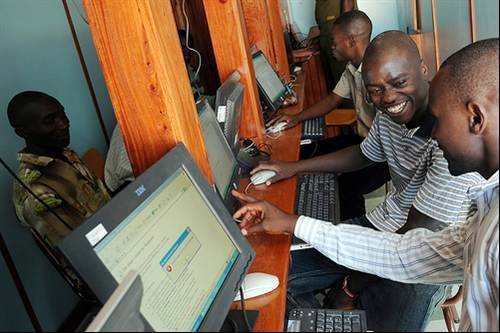
Internet cafes are very convenient but you should be careful because
Solar-powered cyber cafe in Nairobi, Kenya
To disagree:Formal with multiple reasons
Example: You can just use an internet cafe to book your ticket.
I disagree for the following reasons. Firstly,
I disagree for the following reasons. Firstly, I don’t think it’s a good idea to enter my personal data on a public server and secondly, I don’t know who’s watching me.















































 Thay Paul's Notes