Game 1 – say are these adjectives positive (good) or negative (bad) or neutral (neither good nor bad)
Game 2 – make sentences using present continuous and two adjectives
EXAMPLE: She is reading a heavy, interesting book.
I ___ play ___________________ , ______________________ music.
You ___ watch a _______________ , ________________ film.
He ___ talk to a ____________ , _____________ film star.
She _____ study every day because she ___ __________ and ___________.
Ms H ____ smile because she is so _________ and ___________ .
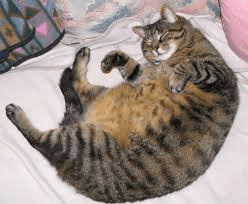
The fat cat ___ not share her food because she is ______ and _________ .
We ___ learn ________ grammar but it is _____________ .
President __ wear a _________ dress. She ____ very _________ .
The boy ___ leave school because he was __________ and _____ to the teacher.
The teacher ___ laugh because the ________ , _________ student was sent home !
Please Note: All photos are taken from Google Images or free photo sites, and are used for educational purposes only. No copyright infringement or offense is intended. If I have used your photo or image, and you wish me to remove it, just ask. This site is not monetized, I run it on my own dollar. Thank you.
I previously linked two tracks, ‘Red Ribbon: A Short Story‘ & ‘Miles et Juliette.’ Today I have the YouTube links for the two remaining instrumental tracks. The full EP listing:
1) Red Ribbon: A Short Story
2) Red Ribbon Suite
3) Swing, Princess, Swing
4) Miles et Juliette
First, track 2, ‘Red Ribbon Suite’ a piece in three distinct movements:
Photography by Niall Keohane & Paul Pacifico
Track 3 is based around a simple guitar pattern, with Niall adding piano, strings and harmonies:
All music written by Keohane & Pacifico.
Production by Niall Keohane.
Copyright ⓒ 2022
Thank you for visiting this blog page. If you like the music, we would really appreciate it if you could give us a ‘Like’, and pass on to your friends. The ‘visits’ and ‘likes’ really help new bands to get attention.
This short blog introduces young learners to adjectives, and how they can start to build longer sentences.
First, let’s start an adjective word bank:
big // small
cute // dangerous
strong // clever
yummy // healthy
plus colours
Game 1:
Who can tell me a colour beginning with the letter y ?
Letter b ? Letter o ? g ? r ? p ? Letter w ?
Game 2:
Tell me an animal begins with the letter d Letter g Letter e Letter s Letter l Letter c Letter w Letter z
Game 3:
What is it ? Tell me about these animals. Use 2 adjectives.
EXAMPLE
It’s a cute white sheep
Now … your turn
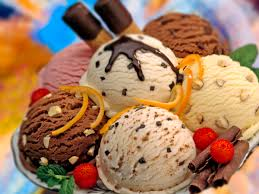
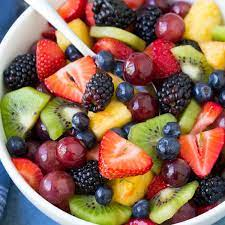
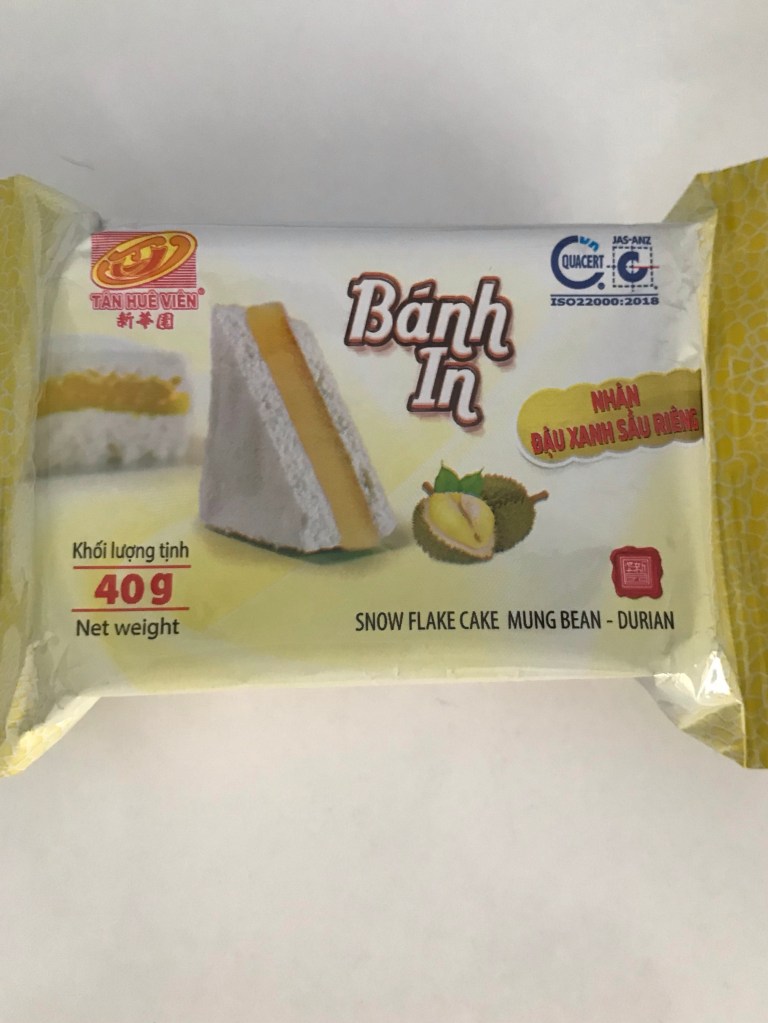
Finally – tell me about the food
Please Note: All photos are taken from Google Images or free photo sites, and are used for educational purposes only. No copyright infringement or offense is intended. If I have used your photo or image, and you wish me to remove it, just ask. This site is not monetized, I run it on my own dollar. Thank you.
Here’s a compilation of video clips that can be used in class for listening skills, observation, collecting information, and for fun.
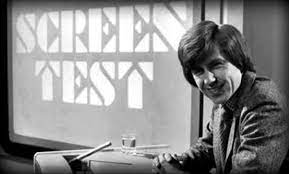
‘Screen Test’ was a children’s TV show on the BBC from 1970 – 1984. A group of children were shown short clips of films, then asked questions about what they had seen.
First up is a clip I’ve used several times, ‘Summer Holiday’ starring Cliff Richard and his backing band The Shadows.
1 Summer Holiday
What colour was the first car behind the bus ?
red // white // blue ?
2. What was the number of the bus ?
9 // 19 // 28 ?
3. What was the road sign at the beginning of the clip ?
London // Berlin // Paris ?
4. How many children wore a hat ?
1 // 2 // no children ?
5. How many men were riding bicycles ?
3 // 4 // 6 ?
6. What did Cliff, the driver, eat ?
a sandwich // a biscuit or cookie // nothing ?
BONUS POINTS – Can anyone sing the song – just two lines
“We’re all going on a summer holiday // we’re all going for a week or two.”
2 World’s tallest buildings
Questions
1) How tall was the Philadelphia City Hall ?
2) Where was the Singer Building ?
3) What year was the Bank of Manhattan Trust finished ?
4) How tall is the Chrysler Builder ?
5) The Empire State Building has two different heights – why ?
6) In what year did Chicago have the tallest building ?
7) What was the first tallest building in Asia ?
8) How tall is the Dubai Creek Tower planned to be ?
foundations of the Dubai Creek Tower
Answers: 1) 167m / 548 ft 2) New York City (NYC) 3) 1930 4) 319m / 1046 ft 5) first is height of building, second is height to the tip. 6) 1973 7) Petronas Tower in Malaysia 8) 1321m / 4351 ft
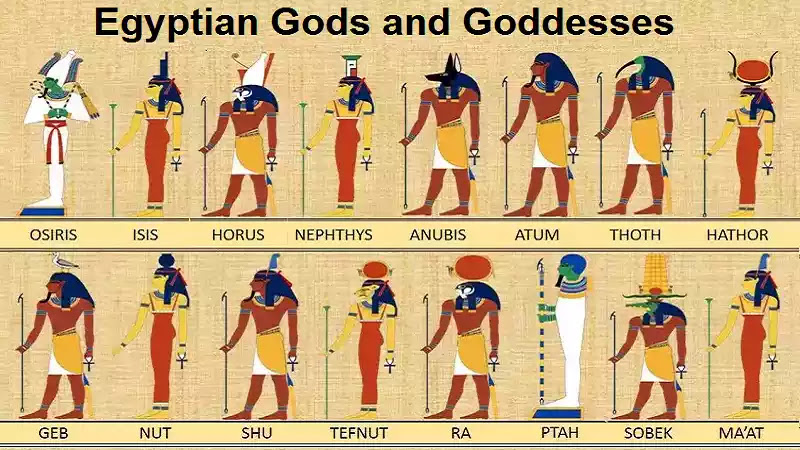
3 Ancient Egyptian Gods
Questions
1) What was the name of the Sun God ?
2) Which God was a writer ?
3) Anubis had the head of which animal ?
4) Would you see Nut in the day or night, and why ?
5) What was the name of the lioness ?
6) What animal was Bastet ?
Answers 1) Ra 2) Thoth 3) a jackal 4) night because she was the star goddess 5) Sekmet 6) a cat
Please Note: All photos are taken from Google Images or free photo sites, and are used for educational purposes only. No copyright infringement or offense is intended. If I have used your photo or image, and you wish me to remove it, just ask. This site is not monetized, I run it on my own dollar. Thank you.
Can a young teen class have better English than an IELTS class ? That is the challenge. Without pushing the students too far, and with realistic expectations, let’s introduce some low-frequency words (L-FW), phrases and idioms.
Furthermore, students will also be expected to speak in longer sentences, using connectives as well as a wide range of adjectives.
The subject of our current unit is very dear to my heart: music. Let’s rock !
First match the new words with the meaning
ubiquitous // over the moon // genre // extremely
kind of or type // to feel very, very happy // everywhere // an adverb that means very, very
Roll up your sleeves and practice: Fill in the gaps using the new words AND your own ideas.
Today, music is ______________ . We can hear music on our _______ and when we go to _______________.
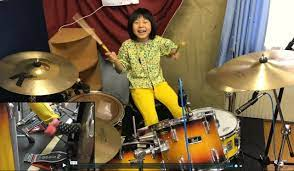
Yoyoka, a Japanese drummer, is ____________ talented. She must ________ many hours, every day to be so skillful.
If I pass my English test with A+, I will be ___________________ . My parents will be so happy, they will _______________.
My favourite _______ of music is ____________ because it makes me feel ___________ and ____________ .
Genres (types) of music:
Jazz / rap / pop / rock / classical / electronic
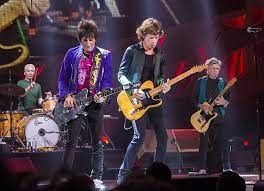
Look at the photos. What genre are they ?
Why do you think so ?
Kraftwerk from Germany
T-ara from South Korea
Chloe Chua from Singapore
Miles Davis from USA
Rolling Stones from the UK
Cassper Nyovest from South Africa
Grammar exercise. Rewrite the following blog post in the Past Tense (verb 2)
EXAMPLE: Yesterday I go to school and I have a speaking test. I do very well and my parents are over the moon.
Yesterday I went to school and I had a speaking test. I did very well and my parents were over the moon.
Now … your turn
Last week I see a concert on TV. The group is Blackpink and they play for 30 minutes. They sing many songs and dance extremely well. It is so exciting I am over the moon. The next day I buy their music and decide to be a pop star too !
Watch this concert and write your own blog using Past Tense (verb 2) as well as adjectives and new words. Let me help you with the start:
This morning I watched a video from T-ara. The band … (what song did they play ? Did they all sing ? What else did they do ?
Did you like the music ? Why or why not ?
Were they alone on stage ? What did they wear ?
How did the audience feel ? Do you wish you were there ?
Please Note: All photos are taken from Google Images or free photo sites, and are used for educational purposes only. No copyright infringement or offense is intended. If I have used your photo or image, and you wish me to remove it, just ask. This site is not monetized, I run it on my own dollar. Thank you.
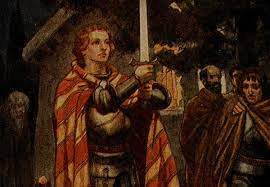
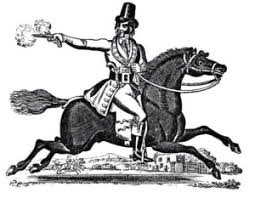
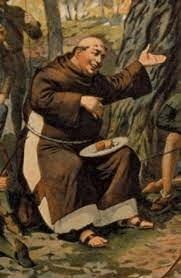
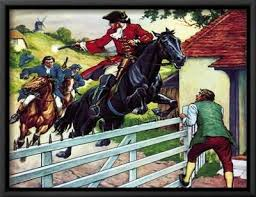
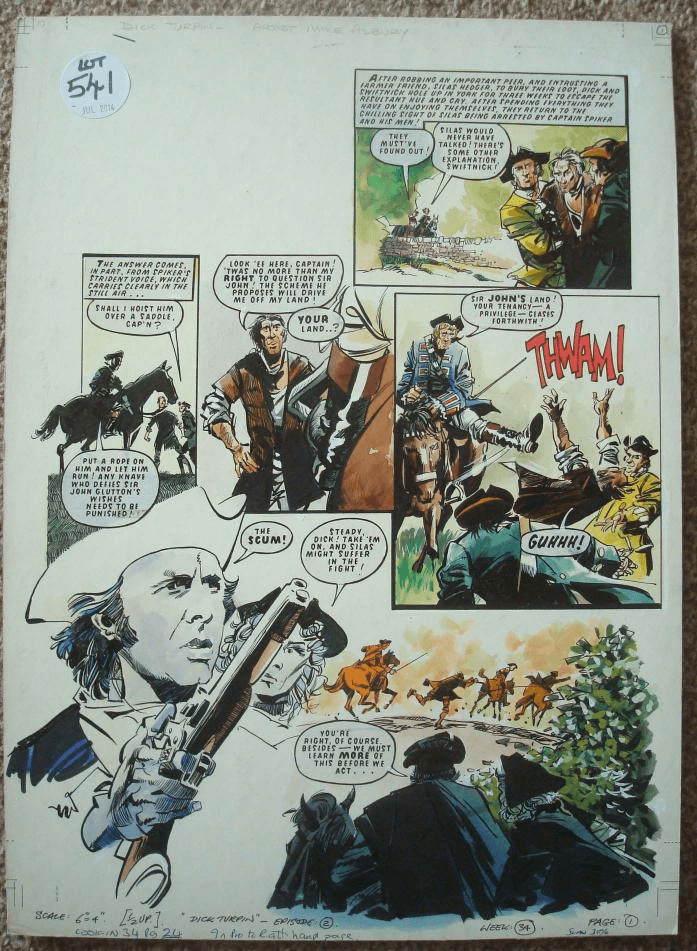
2 – King Arthur was based on a ruler but probably a Duke, not a King. Dick Turpin was real, while we are still not sure if Robin Hood was real.
3 – Robin Hood / Dick Turpin / King Arthur / Robin Hood / Dick Turpin / Robin Hood
Please Note: All photos are taken from Google Images or free photo sites, and are used for educational purposes only. No copyright infringement or offense is intended. If I have used your photo or image, and you wish me to remove it, just ask. This site is not monetized, I run it on my own dollar. Thank you.
An activity that combines listening & reading, collecting information, and allows for creative thinking, not to mention introducing students to different cultures and legends.
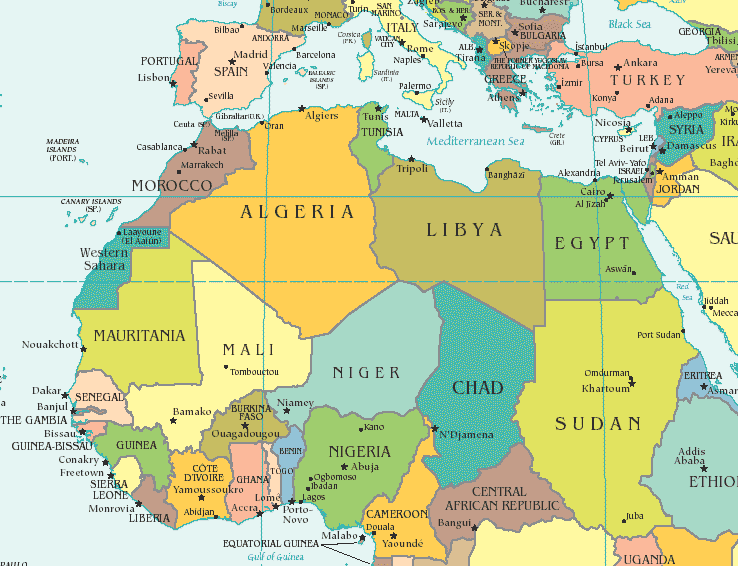
Today we are going to learn about some of the ancient Egyptian gods. First, where is Egypt ? In which continent is Egypt ?
Egypt is in the north – east of Africa.
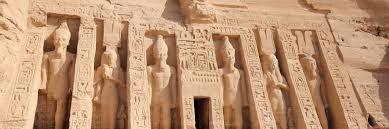
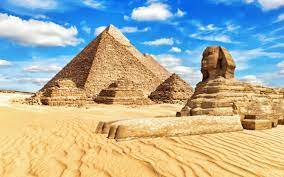
What ancient buildings can you see in Egypt ?
The Pyramids, the largest one was built about 2,500 BC (about 4,500 years ago), and at 481 feet (146.6 metres) was the tallest building for 3,800 years (NOTE 1).
The creature in front is called the Sphinx. What kind of animal is the Sphinx ?
The Sphinx has the face of a woman, the body of a lion and the wings of a bird (maybe a falcon or eagle).
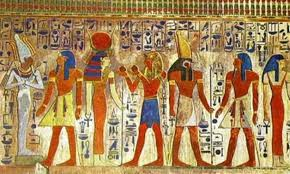
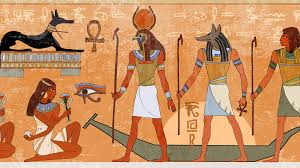
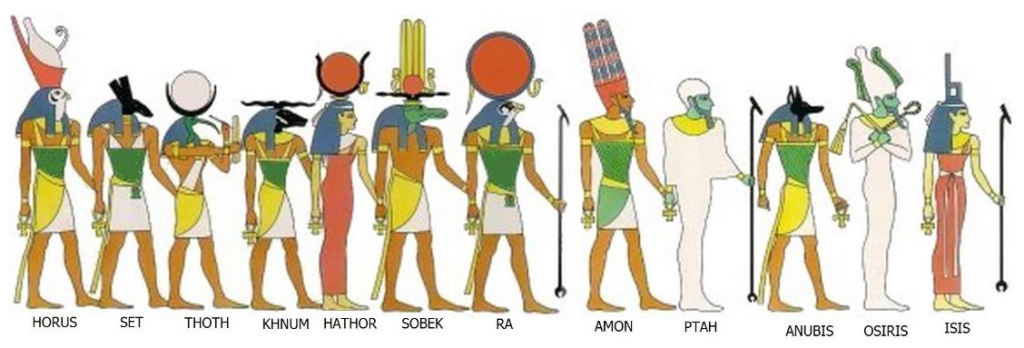
Ancient Egypt was thousands of years ago, from 3150 BC (BCE) to 332 BC (BCE). Animals were very important.
What animals can you see in this picture ?
We are going to focus on four Gods:
Thoth // Bastet // Ra // Anubis
Vocabulary
Pyramids
Sphinx
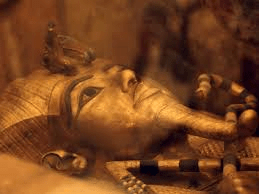
Tomb
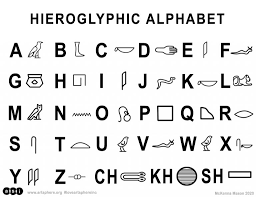
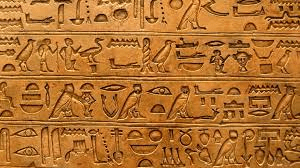
Hieroglyphs
Let’s return to our two gods
Thoth and Bastet
Watch this video, and write down information about the gods.
What animals do they look like ?
What can they do ?
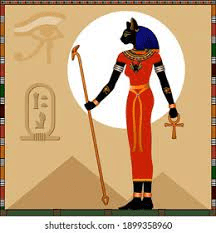
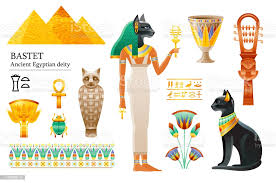
What animal was Bastet ?
Bastet was a cat, and cats were very important in Ancient Egypt. Can you think why ? What do cats like to chase and eat ? Check your answers:
Now … be creative. Invent a God from your country. First, think what animals you have, then what they can do. Don’t forget to tell me why.
Use crayons, colour pencils. If you can’t draw, it’s OK; just write me a magnificent story. Don’t forget to use the amazing adjectives you have been taught.
Would you like some music to help you while you work ?
Bye Bye from Egypt
Note 1: The first buildings to be taller were cathedrals, in England. St Paul’s was in London, then the cathedral in Lincoln became the tallest building in the world.
Note 2: The British Council ‘LearnEnglishKids’ page has some excellent resources and free print-outs.
Please Note: All photos are taken from Google Images or free photo sites, and are used for educational purposes only. No copyright infringement or offense is intended. If I have used your photo or image, and you wish me to remove it, just ask. This site is not monetized, I run it on my own dollar. Thank you.
Last week I held an IELTS Speaking Test. Only one student hit 7.5 although, in fairness, I was probably on the generous side in awarding the student such an admirable score.
Or, to be precise, learn from their mistakes.
I can break them down into three main areas:
coherence
vocabulary
complex sentences
Kicking off with coherence; it doesn’t matter how fluent you are, unless you answer the question, you will loose marks.
The test allows us to assess your understanding of both question and task. An example: one question was
What is the most popular activity in your country ?
ASIDE: I’ve told students until I’m blue in the face, never repeat, “In (my) country,” but since when do teenage students ever actually listen ?
The question asks for ONE activity; several students talked about two or three. This is not answering the question.
Anyone who’s studied at University will know how imperative it is to follow instructions.
COMIC RELIEF: One student, from a previous test, replied that the most common activity, “In my country,” was brushing teeth, and that foreigners do this every day, but Vietnamese only do this once or twice a week. Said student had to continue for two minutes. Needless to say, there were no flying colours.
More disturbing was the lack of IELTS vocabulary. You have been told time and again what that means, and I can’t keep hitting my head against a brick wall.
And so to work … get out your notebooks (those that actually bother bringing notebooks to class), look up previous lessons and write down:
TEN L-FWs
FIVE less common idioms
FIVE everyday expressions
TEN phrasal verbs
TEN basic collocations
I have taught you these ad infinitum. If you are struggling with this exercise, you will probably only get a 5 for the Lexical Recourses section.
Lastly, the old chestnut, complex sentences.
I had nine students, each with about ten minutes of speaking time. How many complex sentences do you think I heard ?
Yes, Steve …
That’s right … ZERO
EXERCISES: Use at least two L-FWs, one idiom and other IELTS elements
(and if you think it’s funny to ask what I mean, after all this time, by ‘IELTS elements’, just get up and leave the class).
Speak for one minute about:
one of your cousins // your favourite gift // sports // your best memory from childhood // best films // problems in your city // typical local food.
Part Two: Critical Thinking
“Oh, teacher, I’m tired and feel lazy.”
Work in teams. Watch the following short clip about the ancient Greek king, Sisyphus:
Characters from Greek and Roman mythology permeate western culture, and references and allusions are ubiquitous.
You may watch the video again, writing down new words. There is a lot of background (in which you may encounter a character from ‘The Avengers’ movies), but the main feature starts around the 4:00 mark.
Your task is to relate this story to modern life. Choose a person you know, or something from your own experience. You may even project your thoughts about the future, once you have left education and joined the workforce.
talking until (pronoun) blue in the face / the grind
putting an old head on young shoulders
Look up the meanings yourself. Your teacher won’t be with you to give you the answers in life. Think for yourself.
Athene, Goddess of wisdom
Please Note: All photos are taken from Google Images or free photo sites, and are used for educational purposes only. No copyright infringement or offense is intended. If I have used your photo or image, and you wish me to remove it, just ask. This site is not monetized, I run it on my own dollar. Thank you.
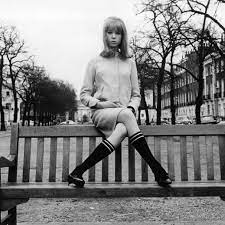
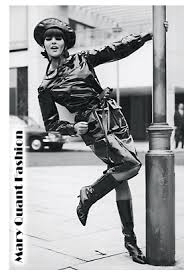
A selection of photos found on web searches. No copyright infringement is intended.
adoreness.com
Model Pattie Boyd from vogue.com
Britt Ekland from outdressing.comImage from elle.com
theatreoffashion.com
time.com
adoreness.com
itsacharminglife.com
Please Note: All photos are taken from Google Images or free photo sites, and are used for educational purposes only. No copyright infringement or offense is intended. If I have used your photo or image, and you wish me to remove it, just ask. This site is not monetized, I run it on my own dollar. Thank you.













































 Thay Paul's Notes