Young Learners, levels 3 & 4. Imagination AND grammar !

17th April 2023

We have talked and written about perfect cities, and used our imagination. Now let’s talk about cities of the future.

(I use Present Simple, Verb 1, not future tense due to the class ability and level)

What do they look like ?

How are they different ?

Look at this picture and then read my description.

In the future the city has many tall buildings called skyscrapers. People live high in the sky. They can see all the city from their apartment.

The city has a lot of shops. The shops are open all day and all night. They sell food, toys and new phones.

My city is very colourful with many beautiful lights at night. Nobody is allowed to smoke and all cars are electric so there is less pollution.

The buildings have shops, hospitals, cinemas, schools and sports centers. People do not need to go outside if it is raining.

Some buildings are old fashioned but most are very modern.

Now … your turn

Write about a future city. Remember to use adjectives:

clean / expensive / futuristic / high / interesting / modern / old fashioned

Check your grammar – I want it to be perfect !

From Fritz Lang’s ‘Metropolis’ 1927

Please Note: All photos are taken from Google Images or free photo sites, and are used for educational purposes only. No copyright infringement or offense is intended. If I have used your photo or image, and you wish me to remove it, just ask. This site is not monetized, I run it on my own dollar. Thank you.
Seahorse Productions: Steppenwolf, Berlin 2014

15th May 2020

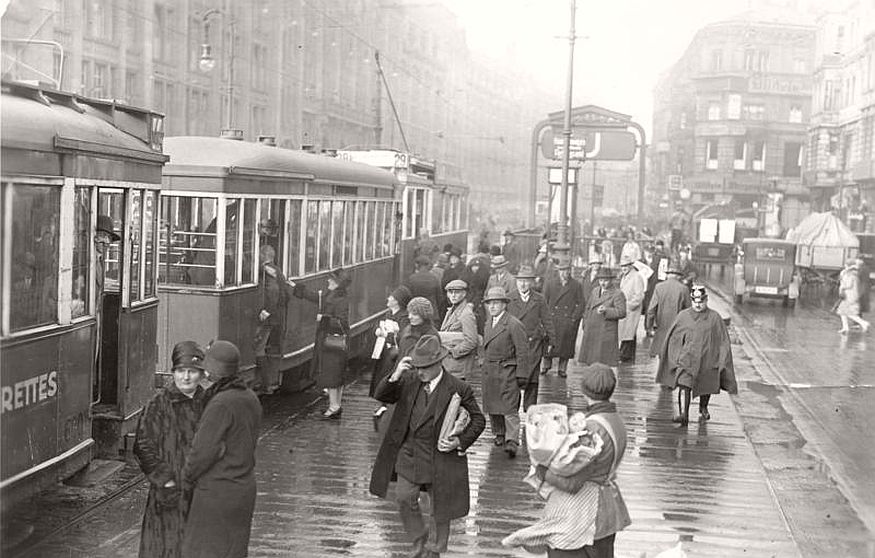
Historic photos of City Life of Berlin during the interwar period ...

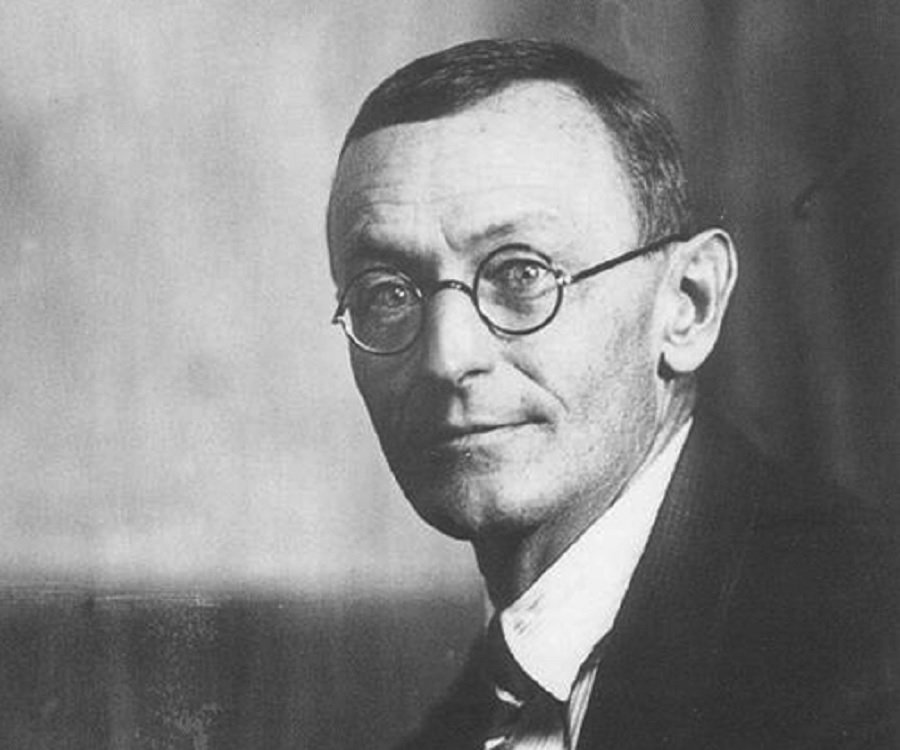
This film, finished in 2014, was shot in 2008 while I was living in Berlin and I attempted to give it a 1920s feel. It’s based on the famous novel by Hermann Hesse:

Quote HERMANN HESSE – MAGGIE EXPLAINS THE WORLD

The novel, which was published in 1927, is a book within a book … a young man finds a diary written by an older man and it is this diary which forms the bulk of the story. As readers, we are free to choose how much to believe of the ‘diary’; is it all true, all fiction, a combination of truth, half-truths and wishes ?

The book certainly has a surreal quality to it, moving from realistic descriptions to a final sequence which seems to resemble a dream or fantasy.

The main character, Harry Haller, refers to himself as a steppenwolf, that is someone who craves human companionship yet is painfully introverted and uncomfortable around people. This dichotomy is central to the book.

Steppenwolf' Hermann Hesse | Cover: Detail of a painting by… | Flickr
A paperback edition of the novel

For the film, I choose areas of Berlin that were more historic and evocative of the 1920s, as well as selecting some ‘modern’ classical composers who were contemporaneous (Martinu from Czech Republic, Hindemith from Germany), along with W.F. Bach (who is mentioned in the book). The film plays out with a melancholy solo guitar piece by the incredible gypsy-guitarist Django Rheinhardt.

I also used colour filters towards the end of the film, as in some silent classics, indicating that the sequences may or may not be ‘real’ … it is up to the viewer to decide.

The film style was heavily influenced by German expressionist cinema of the inter-war years, directors such as Fritz Lang, G.W. Pabst and mostly F.W. Murnau.

Mr Molnar Levente, a Hungarian actor, was in the highly successful ‘Son of Saul’ film, while Mr Martin O’Shea has appeared with Kenneth Branagh and Bill Nighy in the Tom Cruise film ‘Valkarie’.

Ms Willow de la Roche gave, I feel, an amazing performance. I’m so sorry it took so long for the film to finally be cut.

Technical details: I shot the film entirely on Super 8, then had to transfer onto a compatible disk for cutting on a Windows-based laptop. At the time I was moving between Berlin, London and Sweden and furthermore, I had to learn computer editing from scratch.

And now:

LIGHTS

CAMERAS

ACTION

The link: https://www.youtube.com/watch?v=BaPT0X-J2EY