If you are using these in class, the teacher will help you with pronunciation.
Remember: your IELTS score will also depend on how clearly you speak, your rhythm and correct use of intonation and stress. Therefore listen to native-speakers, copy and practice.
Enjoy your drink … this one’s on me
This one’s on me // Let me think about it // It doesn’t matter // Thanks for coming
I don’t believe a word of it // I’ll be with you in a minute // I see what you mean
It was lovely to see you // I don’t get the point // As I was saying
You look great today // I’ll be making a move then // Just looking, thanks
I’ll be making a move then … bye
Match the phrase(s) with the situation
[answers at end of exercise]
Saying goodbye after meeting an old friend
Compliment someone
You are asked a question but need time to consider
Someone tells you a story – you think it is false.
Friends drinking in a pub / bar
You go into a shop but not necessarily to buy anything
A customer arrives but you are busyfor that moment.
You don’t understand what someone is trying to prove
You understand what someone thinks (but not necessarily agree with)
There is a small problem / Someone upsets you but you want to make it OK
To continue with a conversation that was interrupted.
Ms Shu Qi – you look great today !
It was lovely to see you 2. You look great today 3. Let me think about it 4. I don’t believe a word of it 5. This one’s on me [I will pay for this drink] 6. Just looking, thanks 7. I’ll be with you in a minute 8. I don’t get the point 9. I see what you mean 10. It doesn’t matter 11. As I was saying
Expressing likes and dislikes
Like:
I absolutely love … I’m crazy about …
I (really) like I’m into // I’m a big fan of …
I’m quite keen on
I haven’t heard (seen/read) this before, but I think it’s great
No strong opinion:
I have mixed feelings about ….
I don’t really have any strong views / feelings either way
Yesterday I blogged a database of idioms, collocations and negotiation language. That is just the tip of the iceberg. If you have looked at English-language study books, you will, no doubt, have seen several dictionaries solely devoted to idioms; we use them so often, and there are so many.
For my IELTS students, I have repeatedly taught half a dozen (six) in order for the students to incorporate them into their natural speech … without idiomatic language, you will not break past the 5 score (taken along with grammar, vocabulary and intonation, naturally).
Therefore, for Top Cat students, or anyone looking to learn some more, this blog is for you.
Expressions or idioms
Ring any bells ? // do you remember //
More or less // not exactly but approximately
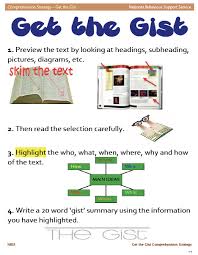
Get the gist // do you understand the main point ?
Right up your street // this is something you will really like
Rabbit, Rabbiting on // UK slang, especially in London … talking too much
Piece of cake // no problem, very easy, sure
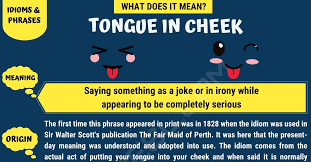
Tongue in cheek // not being serious about something
Now … how you use them:
Student A: Hello, we met last year at Julie’s party.
Student B: Sorry, that doesn’t ring any bells (I don’t remember).
Student A: Are you ready to go ?
Student B: Go where ?
Student C: Cake, food, drink, singing, dancing … ring any bells ?
Student D: Oh, Tony’s birthday party. Sorry, I forgot.
Student A: Are you ready for the test ?
Student B: Yes, more or less.
Student C: I’ll wait for you.
Student D: I won’t be long, I’m more or less finished.
Student A: Do you have to read all the document ?
Student B: No, just to get the gist.
Student A: You should listen to this CD, it’s right up your street.
Student B: Oh, French piano music, I love it. That’s right up my street.
Student A: What did your girlfriend want ?
Student B: She was rabbiting on about something to do with her clothes, I wasn’t really listening.
Teacher A: Hey ! Miss Mary … stop talking. You’re a little rabbit !
Student A: Can you drive me home ?
Student B: Sure, piece of cake.
John’s new business shirt
Student A: Have you seen John’s new shirt ? It’s so elegant.
Student B: Are you serious ? It’s terrible.
Student A: I know ! I was being tongue in cheek.
Now … your turn.
Add the correct idiom [answers at end of blog]
1) Shall we see the new action film ? It sounds ______________
2) Are you still talking ? You are such a __________
3) She said I was the best student but I think she was being ___
4) You said you would bring something … cheese, tomato, garlic bread ____________ ?
5) The IELTS speaking test was a ________ after reading Thay Paul’s blogs (I hope).
6) Student A: Did you understand the project ? Did you ________ of the idea ?
Student B: Well, ______________ but not every single detail.
This film, starring Shu Qi looks right up my street.
Right up your street 2. rabbit 3. tongue in cheek 4. ring any bells 5. piece of cake 6. get the gist / more or less.
Complex sentences, which you will need to get a respectable IELTS score, are actually quite simple to form as they merely require two or more pieces of information in one sentence.
Ms Jane is from Seattle which is the biggest city in Washington state, USA.
We know where Jane is from as well as something about the city of Seattle
Mr Bean, who is played by the actor Rowan Atkinson, is extremely popular and tremendously successful, being shown all over the world, not forgetting his appearance at the London Olympics in 2012.
This example has been extended by adding more adverbs and adjectives. We know the actor’s name, how popular he is, as well as learning that he was part of the UK Olympics and when that was.
Let me give you an example, then set you on your way to practice which, as you know, makes perfect.
A typical IELTS question is:
Tell me about something you want to buy.
I’ve drilled it into my students, some of whom, but by no means all, actually listen to me, to always introduce your answer; never answer directly
DON’T answer immediately but introduce the answer by repeating or rephrasing the question:
That’s a very interesting question
Well, there is so much to say about that subject, where shall I start ?
It’s funny you put that question to me because earlier today I was just thinking about …
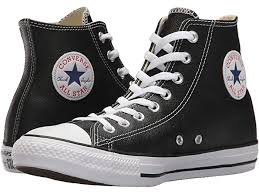
Last week, someone mentioned wanting to buy a pair of Converse trainers so let’s start there:
It’s funny you put that question to me because earlier today I was just thinking about what I would buy if I had the money.
I have my heart set on buying a pair of Converse, which is an American company with a star logo, who make very fashionable footwear.
To make the sentence more interesting, as well as complex, I simply stated the country, the logo and what they produce … piece of cake, hey ?
OK, your turn … write a complex sentence about these products. Additionally, practice writing different types of introductions.
Best of British (good luck !):
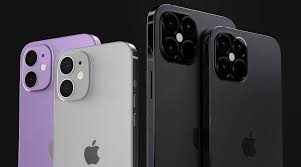
Apple 12 … What can you tell me about Apple ?
Ralph Lauren shirt. Where is the company from, what is their logo. Are they cheap ?
Hey ! Ho ! Let’s Go ! Let’s kick out the jams with some new vocabulary from the last lesson:
disappointed (adj) // dread (verb) // spare a few minutes (phrase) // a drive (noun) // big time ! (US expression, popular culture // popular fiction or literature // prima donna
Take a few minutes to read them … THEN …
Our school is having ________ to use less plastic, as well as encouraging people to recycle.
My sister spends so much time in the bathroom, she is such a _________
If we don’t pass IELTS with at least 7.0, Thay Paul is going to be angry at us _______
Miss Julie didn’t get the job at Apple; she was terribly ______________
I don’t understand this app, can you ________ to help me ?
I was terrified of the speaking test, I was _______ it.
The Harry Potter books, although tremendously successful, are considered ‘popular fiction’. Charles Dickens or Jane Austin, on the other hand, are classified as _____________ .
My student told me about a famous Hemingway story called ‘The Old Man and the Fish’ … I think she got the title wrong … _______________ !
“What do you mean, ‘The Old Man and the FISH ?’ I won the Noble Prize for that book.”
And now, time to put our noses to the grindstone How to get a killer IELTS speaking score … There are four areas to focus on … they are … ?
“You’ve forgotten ?”
OK, take it easy, to recap, we listen for
Fluency – use of discourse markers. WITHOUT A WIDE RANGE OF DISCOURSE MARKERS YOU WILL NOT GET HIGHER THAN A ‘5’.
Lexical resources – big words. Know synonyms and multi-syllable words to impress the examiner. Not to mention, a sprinkling of idioms, phrases, phrasal verbs, the whole nine yards.
Grammar – it’s OK to make a few mistakes, grammatically, but what we want to hear are complex structures – basically, altering the structure of a sentence or including several pieces of by using information in one sentence by using relative pronouns.
Stress and intonation – listen to native speakers and COPY how we speak, when we stress words, when we ‘swallow’ letters, our body language.
We need to hear examples of ALL the above or YOU WILL NOT GET HIGHER THAN A ‘5’. I will be furious if that happens, big time !
Now, look at these idioms:
It’s raining cats and dogs // It costs an arm and a leg // piece of cake // I’m burning the candle at both ends // once in a blue moon // pass with flying colours //
And these words:
Boring: tedious // forgetful: absent-minded // expensive: sky high // what will happen: predict // everywhere: ubiquitous.
How to use these in your responses:
IELTS question: What do you do in your free time ?
Staying at home is boring so I go swimming. I meet friends for coffee. If it’s raining, I like to play video games.
IELTS – style:
For me, staying at home is terribly tedious, so I frequently go swimming. It’s fun, healthy and doesn’t cost an arm and a leg. Sometimes it’s raining cats and dogs so I enjoy playing video games, big time !
IELTS question: Who do you live with ? Notice how we start we a supportive clause
Because I’m still a student, I live at home with my family, that’s my mother, father, younger brother and older sister. My sister is such a prima donna, always in the bathroom, always buying new clothes. Furthermore, she dreads doing housework because she may hurt her nail varnish. She’ll wash up once in a blue moon.
IELTS question: Do you often eat out ?
Well, that’s a great question as I detest cooking. Having said that, I’m extremely lucky because in my neighbourhood, restaurants are ubiquitous, from expensive sea food to affordable street food. I eat crab or lobster once in a blue moon as the prices are sky-high, moreover, I actually prefer simple, mouth-watering street food.
IELTS question: What are your plans for the future ?
Make your own answers, using at least TWO discourse markers, TWO adverbs, TWO low-frequency words AND the idiom given.
TEAM 1: Well, there is so much to say about that subject, where shall I start ? (use ‘nose to the grindstone’).
TEAM 2: It’s funny you put that question to me because earlier today I was just thinking about … (use ‘burn the candle at both ends’).
TEAM 3: As I young Vietnamese, I … (use ‘pass with flying colours’).
You buy a T-shirt from a shop, but when you get home, you see the quality is very bad.
How do you feel ? You feel terribly …
What would you do ?
When you return an item to the shop, what do you need in your country ?
Use this video for help. Listen out for new vocabulary or expressions as well as copying her accent.
Vocabulary
I am sorry to have to say this but …
I’m sorry to say this but I am really quite upset/angry/disappointed
Perhaps there was a misunderstanding but …
There appears to be a problem here …”
I’m sorry but I’d like to make a complaint about …”
Could you help me with …?
PRACTICE
One student is an shop assistant, the other an upset customer.
You have bought a dress but it is very bad quality.
How would you complain ? [Be polite, speak calmly and politely].
How about in this situation:
You go to a restaurant to celebrate a special event. When the bill arrives the amount is much, much more than you expected. It looks like you were charged for extra items you did not order.
What would you do ?
Speaking practice
Try to speak in long sentences. Tell me about something you like – say why you like it, but also something negative. Remember to use good discourse markers.
EXAMPLE:
I love Highland Coffee because I need damn fine coffee every morning and Highlands has a good choice as well as great quality. I can choose all different types of coffee, some hot, some cold, some with added flavour, and they come in different sizes. In addition, the chairs are comfortable, not to mention the free wifi and no-smoking policy. Having said that, it is rather expensive, especially compared with Milano however I feel the extra cost is worth it.
Now … your turn
Subjects – to help you, talk about smartphone // video games // sport // your pet // shopping // cooking // your best friend
Comparatives and superlatives.
Big / bigger / biggest
interesting / more interesting / the most interesting
Blog writing:
Your apartment block is starting a chat-site for working parents. They invite anyone to join who has both a job and children. They ask you to send a photo and give some brief information.
OR
Your apartment block is starting a chat-site for people who want to practise English
Write a short introduction about yourself for a blogpage.
What information do you need to add ? What is unimportant ?
A good introduction is not just beneficial but imperative for an impressive IELTS response. Therefore, this blog will mainly, although not exclusively, focus on a strong opening gambit, an attention-grabbing prologue.
Useful expressions
If you need some time to think, employ one of these ‘time-buying’ expressions:
That’s a very interesting question
Well, there is so much to say about that subject, where shall I start ?
It’s funny you put that question to me because earlier today I was just thinking about …
Let me think …
How can I put it …
Well, I would say …
Quick warm up: What do you do in your free time ?
I meet my friends for coffee
One of my favourite things to do, if I have some spare time, is to hang out with my closest friends
Which answer do you think would impress the examiner ?
Now … your turn
Where would you like to visit in Viet Nam (or your own country) ?
DON’T answer immediately; introduce the answer by repeating or rephrasing the question:
Vietnam has many beautiful places but my choice would be Hoi An.
Vietnam is famous for it’s beautiful beaches, vibrant cities and amazing nature but for me, Hoi An is the one place I would love to explore.
1 Tell me about your hometown
Thank you for letting me introduce to you my hometown which is Da Nang, one of the biggest cities in Vietnam, although it is much smaller than Ha Noi or Sai Gon.
2Talk about a film you like
Talk about cinema or films in general DON’T immediately talk about your favourite film.
Watching films and going to the cinema is one of my passions, so choosing just one film is going to be terribly difficult, not to say impossible. However, if I have to select one film, it would be ‘Lost in Translation’, with Scarlett Johannsson.
3 Do you use computers at work or school ?
Laptops are an incredibly useful piece of technology. They can be used for work, hobbies, music and to stay in touch with friends.
Practice: try forming introductions for these questions
Home
Do you live alone or with friends / family ?
How long have you lived there ?
Is there anything you don’t like about living there ?
What sort of accommodation would you like to like in ?
Shopping
Do you like going shopping for clothes
Is fashion important to you ?
Do you have to wear a uniform at school or work ?
Where do you normally buy your food and why there ?
Free Time
Do you do any sporting activities ?
What do you like to do at weekends ?
What would you change about your daily routine ?
Once in a VERY blue moon by Nanci Griffith
Review … from my recent classes, make sure you have learnt these words and expressions:
once in a blue moon (very rare) // put my nose to the grindstone (work especially hard) // achieve on merit (to get something by working for it) // burn the candle at both ends (work day and night) // give or take (about, approximately) // big time ! (absolutely, totally, very much) // I’ll mull it over (I’ll think about it) //
although // additionally // therefore // moreover // having said that // on the other hand
Rewrite the following using IELTS-language:
English grammar is (adverb) boring and I spend about two hours a day studying grammar. I work all day, and go to evening class and then study. I study all day and night.
I almost never have any free time. If I have free time, I go to drink coffee. Coffee shops are everywhere but in some the prices are not cheap.
My friend Tom never studies. His uncle will give him a job, but I want to deserve my job. Tom is (adverb) lazy. I tell him to try to study grammar, to work very hard / but / he never listens. He thinks video games are very interesting. He (adverb) says he’ll think about it but nothing changes
so the result will be a ‘FAIL’
Coffee shops in Sai Gon are ubiquitous although in some, the prices are sky-high.
Words and expression to use, tips, phrases and idiomatic language
Recap: to pass IELTS with flying colours, you will needs to demonstrate a command of everyday English, the ability to express it with stress and intonation, as well as being able to link your ideas with appropriate discourse markers.
I need to hear nouns described by interesting adjectives, verbs intensified by adverbs and conversation enlivened by low-frequency vocabulary.
Piece of cake, right ?
Low – frequency words (LFW)
Boring: tedious // forgetful: absent-minded // expensive: sky high // what will happen: predict // everywhere: ubiquitous.
Activity 1: Make sentences using the above five LFW
Introduce your answer by:
Let me think // How can I put it // Well, that’s an interesting question
Useful expressions:
In my opinion // From my perspective // For me // Allow me to explain // By which I mean //
Discourse Markers:
as well as // furthermore // additionally // on the other hand // having said that // however // although // despite that
Activity 2: Give each student a discourse marker and they have to use it in a sentence
EXAMPLE ‘in addition’
I have a busy life; I have to study, work my part-time job and help my family. In addition, I go shopping for my neighbour because he is too old to go out.
NOTE: use of ‘because‘ to explain why you do something … and therefore construct a longer sentence.
Idioms:
It’s raining cats and dogs // It costs an arm and a leg // piece of cake // I’m burning the candle at both ends.
Activity 3: Who can use these idioms correctly ?
Relative pronouns – who / which / where / whose
Activity 4: Use the correct relative pronoun:
We arrived at a nice beach ______ we could swim and lie in the sun.
A man ______ mobile phone was ringing did not know how to switch it off.
The patient, ______ had a serious disease, was taken to hospital immediately.
Smithsfield is a small village ______ people live a quiet life.
This dress is made of silk, _____ is a very expensive and delicate material.
Buying time:
Could you repeat that, please // I’m sorry, I didn’t catch that // Would you mind rephrasing the question
Model answer: What do you do in your free time ?
One of my favourite things to do, if I have some spare time, is to hang out with my closest friends and just catch up on our news, maybe hit a mall because they are air-conditioned and have a wide array of amenities such as shops, cafes and, if I may say, bathroom facilities, as well as services like ATM machines and free wifi. My closest friends are Sheila, who is from Japan and studies here in Sai Gon, and Kerry, who is a gorgeous Thai lady. As we all come from different countries, there can be issues. Allow me to explain; we have to communicate in English, however Kerry is just starting her studies, so we have to use Google translate frequently. Having said that, it’s such tremendous fun to be with my best friends. It helps me forget about the pressure and stress of work.
Use this an a plan – now tell me what YOU do in YOUR free time … DO NOT just copy the above example !
Now … Your turn
Conversation Practice: In pairs or small groups, ask each other these questions. If the answer is too short, ask the person to tell you more, to explain with more details.
Family questions
Ask each other about your families
How many siblings do you have ?
[You can give names, ages, jobs, what and where they study, what they look like, what their personality is like, if you have something or nothing in common with them]
Do you live with your parents and grandparents ?
Do you often meet your cousins ?
Who is the youngest member of your family ?
Who is the oldest ?
Who is your favourite person in your family and why ?
Useful expressions
Can you tell me more ? // In what way ? // Why do you say that ? //
Before we get too far ahead of ourselves, time to take stock and make sure the students have absorbed the information and are au fait (French for well informed, know the point) with the vocabulary so far. With that in mind, here’s a quick warm up. Replace the high frequency words with low-frequency ones, then use your newly-acquired discourse markers to construct longer sentences.
Let’s kick off with some common or garden IELTS subjects:
What do you do in your free time ?
I drink coffee with my friends. There are many coffee shops in my hometown
School keeps me very busy, but if I can find some time for myself, I enjoy hanging out with my friends in coffee shops, which are ubiquitous in Sai Gon.
TIP: The question here is about free time, so don’t just talk about coffee shops – mention at least two other different activities – even if you DON’T do them, just talk about them !
Example, playing music, watching films, listening to music, sports, shopping, helping family, reading – thing you enjoy NOT to do with studying or work
Now … Your Turn: [tips at the end]
Remember, you should be able to speak in complex sentences with a low-frequency word or two, some idiomatic language, contractions and discourse markers, all spiced up with a liberal sprinkling of adverbs and adjectives. Furthermore, try to introduce the answer, rather than stating it outright.
I don’t like English grammar. I am boring with it.
A lot more people go to China than Viet Nam.
She forgets everything.
Thai food is good.
I think Barcelona will beat Real Madrid on Sunday
I like to go to cinema and go to shopping and go my friend house and sleep.
I don’t go out now. It rains all day.
The examiner asks you a question but you didn’t understand
What ?
I didn’t hear you.
Errrrrr, I don’t know
OK, yes I like it
The examiner asks you a question but you need time to think of an answer.
UUuhhhmmmmmm.
Hahhahahahaha
I don’t know.
Yes.
Tell me about your city
It very dirty.
I was born here. I love it.
We can do many things here.
Has many traffic jam. Yes. people nice.
Do you like to eat ?
Of course !
No
Yes. I eat with my family. I eat with my friends at school. I eat after school. I eat at night with my family
Words and expression to use, tips, phrases and idiomatic language.
Low – frequency words
Boring: tedious // forgetful: absent-minded //
expensive: sky high // what will happen: predict // everywhere: ubiquitous.
Could you repeat that, please // I’m sorry, I didn’t catch that // Would you mind rephrasing the question
In my opinion // From my perspective // For me //
Let me think // How can I put it // Well, that’s an interesting question
Allow me to explain // By which I mean //
As well as // furthermore // additionally // on the other hand // having said that // however // although // despite that
It’s raining cats and dogs // It costs an arm and a leg // piece of cake // I’m burning the candle at both ends
Relative pronouns – who / which / where / whose
One of my favourite things to do, if I have some spare time, is to hang out with my closest friends and just catch up on our news, maybe hit a mall because they are air-conditioned and have a wide array of amenities such as shops, cafes and, if I may say, bathroom facilities, as well as services like ATM machines and free wifi. My closest friends are Sheila, who is from India and studies here in Sai Gon, and Kerry, who is a gorgeous Thai lady. As we all come from different countries, there can be issues; allow me to explain. We have to communicate in English, however Kerry is just starting her studies, so we have to use Google translate frequently. Having said that, it’s such tremendous fun to be with my best friends. It helps me forget about the pressure and stress of work.
As I continuously tell my students, being able to form complex sentences, and then say them fluently, is key to passing IELTS.
One way to make longer sentences, as well as introducing subordinate clauses, is to become a master of …
Relative Pronouns
This lady, who wants to work in Australia, is studying hard for her IELTS.
who For people: This is the man who sold me the fake Rolex !
which For things: We tried fish and chips which is delicious.
where For places: Let’s go to the shop where we saw the great bargains.
Whose Possessive: That’s the singer whose record we heard last night.
The Italian car, whose driver was young, won the race.
Exercises
We arrived at a nice beach ______ we could swim and lie in the sun.
A man ______ mobile phone was ringing did not know what to do.
The patient, ______ had a serious disease, was taken to hospital immediately.
Smithsfield is a small village ______ people live a quiet life.
The boy ____ sister is in my class was in the bank at that time.
I know a person ____ can speak seven languages.
We visited the church _____ is in the middle of the square.
It is a protected area of land _____ you can see a lot of interesting wildlife.
This dress is made of silk, _____ is a very expensive and delicate material.
A police officer, _____ car was parked at the next corner, stopped and arrested them.
Go that extra mile – extra practice
IELTS, which can be very challenging, tends to be rather formulaicby which I mean it follows a pattern. Students can pretty much predict, with a fair degree of certainty, the type of subjects they will be expected to encounter.
With that in mind, try making complex sentences about these people:
Name: Ms Chen // Age: 19 // From: China // Lives: London // Studies: Business.
Ms Chen, who is studying Business in London, is 19 and originally from China.
Originally from China, Ms Chen, who is 19, is currently living in London, studying Business.
NOW … YOUR TURN
Name: Adam // Age: 24 // From: Israel // Lives: New York // Job: Writer for a magazine and blogger
Name: Boran // Age: 34 // From: South Korea // Likes: drawing manga // Job: singer, rapper and dancer
Name: David // Age: 28 // From: Leicester, UK // Passion: Music // Plans: To live in LA and record a CD
The number of tourists visiting China is … more than those visiting Vietnam
Discourse Markers
Additionally / as well as / furthermore / moreover
Therefore / consequently
On the other hand / having said that / although / despite
Describe this Korean lady using at least two discourse markers.
Expressions / chunking phrases
At the end of the day / Am I pronouncing that correctly ?
Turn a blind ear / it fell on deaf ears
Friends and family / According to …
Same thing, day in, day out / You get what you pay for / a waste of money
How does this man feel about his job ?
Like / Dislike
Like:
I absolutely love … / I’m crazy about … / I (really) like / I’m into / I haven’t heard (seen/read) this before, but I think it’s great / I’m a big fan of … / I’m quite keen on /
No strong opinion:
I don’t mind / I have mixed feelings about …/ It’s OK / I don’t really have any strong views / feelings either way
Dislike:
I hate / I can’t stand / I don’t really like / I think it’s awful / I detest / I’m not a big fan of … / I’m not that keen on …
What do you think of:
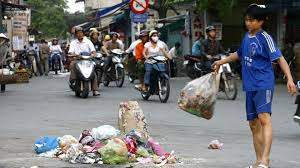
T-ara from South KoreaThe sport cricketLitter, trash, rubbish on the streets
To buy time
Remember … never leave silence; use these time-fillers:
That’s a good / interesting question
Let me think …
Well, I would say …
How can I put it … ?
Sentence building
Use adjectives to describe nouns
adverbs to describe adjectives and verbs – give more information
opinion phrases
linking words to connect positive to positive or positive to negative
reasons why an action is being done
I like coffee
I like coffee so much because it tastes great and makes me wake up although too much will stop me from sleeping at night but, in my opinion, the benefits far out weigh the disadvantages.
Using Relative Clauses
who For people: This is the man who sold me the fake Rolex !
which For things: We tried fish and chips which is delicious.
where For places: Let’s go to the shop where we saw the great bargains.
Whose Possessive: That’s the singer whose record we heard last night.
The car, whose driver was young, won the race.
Exercises
We arrived at a nice beach ______ we could swim and lie in the sun.
A man ______ mobile phone was ringing did not know what to do.
The patient, ______ had a serious disease, was taken to hospital immediately.
Smithsfield is a small village ______ people live a quiet life.
A boy ____ sister is in my class was in the bank at that time.
I know a person ____ can speak seven languages.
We visited the church _____ is in the middle of the square.
It is a protected area of land _____ you can see a lot of interesting wildlife.
This dress is made of silk, _____ is a very expensive and delicate material.
A police officer _____ car was parked at the next corner stopped and arrested them.
Listening Websites: A list with links can be found on this page:






























 Thay Paul's Notes