At Tet, Daddy sings karaoke. The music is very l____ and t______ and Mummy was f_______ .
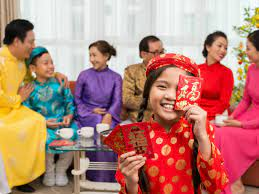
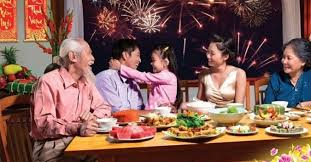
At Tet, I visit my grandparents. They gave me l_____ money, and we all had f___ .
Mummy makes a lot of tr________, d________ food.
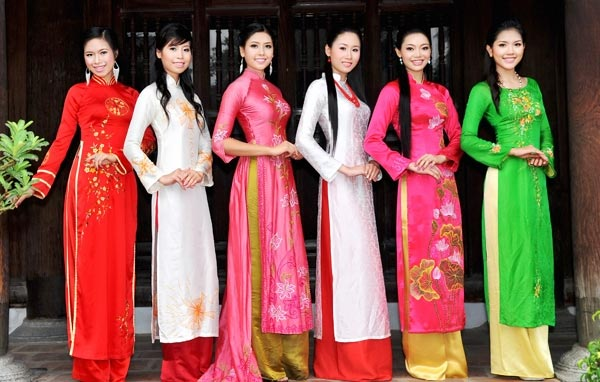
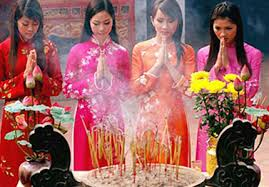
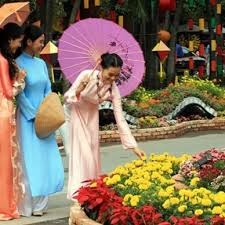
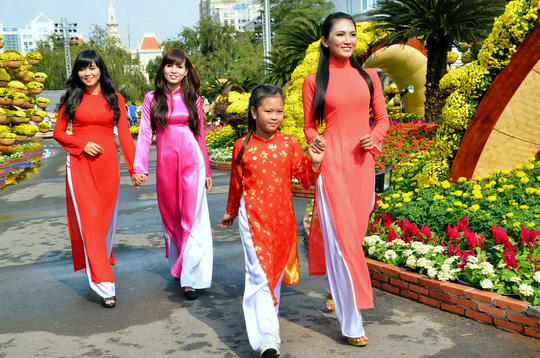
Many families walk at Tet holiday. The women wear the tr_______ dress called an a__ d____ . The dress is very c_______ and they look b________ .
My uncle comes to visit. He is a doctor, so he is very i___________ . However, he tells jokes and is f______ .
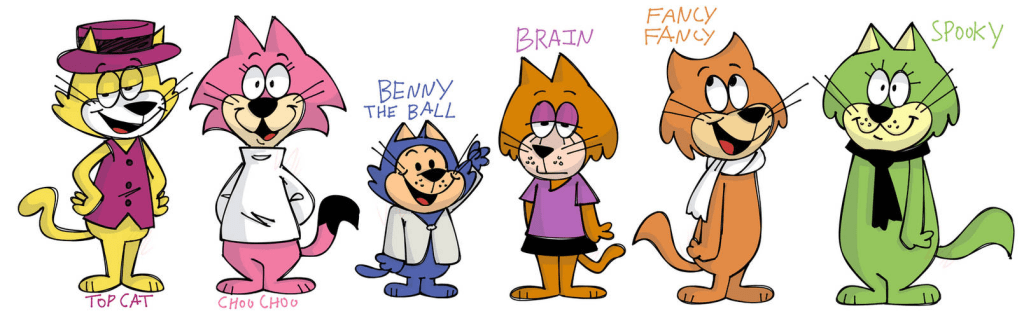
Our class captain is called Lily. She is very i______ so she is a Top Cat. She tells the boys to be quiet when they are l_____ . Lily shouts at t_____ students.
Now … let’s test your grammar.
Change these sentences from present tense (verb 1) to the past tense (verb 2).
EXAMPLE: I (go) to visit my best friend.
I went to visit my best friend.
My family (visit) my grandparents and we (eat) a lot of d_______ food.
My Mummy and my aunts (wear) the tr_______ ao dai. They all (look) so b________ .
Daddy (have) his friends to our house. They (sing) songs for many hours. I (think) it (is) t________ .
Wit my l___ money, I (buy) some c_______ and b_____ flowers for my Mummy. She was so happy, she (cry).
My brother is very in_____________ , he (read) books every day. My sister (play) video games. They had a lot of f___ at Tet.
Last night I (see) a very f____ film, I (laugh) so much. This morning I (go) to school but I (forget) my books. My teacher (is) fu______ .
Top Cats … time for creative writing
Write a short story about your Tet Holiday. Use new adjectives and the past tense (Verb 2).
At Tet I …
Please Note: All photos are taken from Google Images or free photo sites, and are used for educational purposes only. No copyright infringement or offense is intended. If I have used your photo or image, and you wish me to remove it, just ask. This site is not monetized, I run it on my own dollar. Thank you.
I was recently reading a report in an English-language Vietnamese newspaper, bemoaning the lack of tourists.
Tourism accounts for a significant portion of Thailand’s GDP and Vietnam, with beaches, historic towns and cities, should be able to significantly boost their economy by attracting foreign visitors.
To an extant, they do (tourism is increasing). The problem, according to some reports, is the lack of return visitors; people add Vietnam to their bucket list, then never return, a case of, “been there, done that,” whereas many tourists return again and again to Thailand. The following website lists ten common factors that deter or spoil the experience of visiting Viet Nam:
Many are based around petty crime: overcharging, thief, poor service, fraud and bad manners.
I have my own litany of complaints, and then some ! However, the focus today in on one major problem in Vietnam … the (add expletive of choice) NOISE. The following is an extract from VNExpress, an English-language newspaper:
Noise pollution can be said to be a fact of life and a headache in many urban areas, but in Vietnam, it gets taken to levels unheard of.
A study by the Institute of Occupational Health and the Environment of 12 main traffic routes and intersections in Hanoi found the average noise level during the day to be 77.8-78.1 dBA, about 7.8-8.1 dBA higher than the standard. The level is 10-20 dBA higher than normal night-time standards at 65.3-75.7 dBA.
The worse offenders, for my sensitive ears, are street hawkers (motorbike riders who have loudspeakers, and often park outside my window for hours, playing their noise on a loop … sometimes for nearly four hours).
I know, they are just trying make a living and support their families, but if you are constantly woken up at 5:10 am by a guy driving past blaring out that he is selling bread (without stopping for anyone to actually buy said item), or you want to enjoy your balcony and read some Shakespeare, but a knife-grinder is under your window playing a three-sentence phrase over and over … and over, you may have more sympathy for my plight.
Now for the worst offender; Vietnam seems to positively encourage the right for ANYONE to buy a karaoke machine and use it, outdoors, all day, every day. Increasingly, the use of such machines has caused anger, violence and even deaths:
A man in the northern province of Hai Duong was singing karaoke at home earlier this month and his neighbor complained about the noise. He went over to the neighbor’s to express his anger, only to be stabbed to death.
I myself have been driven to near insanity by wedding parties on my free day (five hours of karaoke just across the street) and used all my English insults to get my point across. Pretty damn stupid in retrospect, and the fact that I was a foreigner probably saved me from a severe beating, or worse.
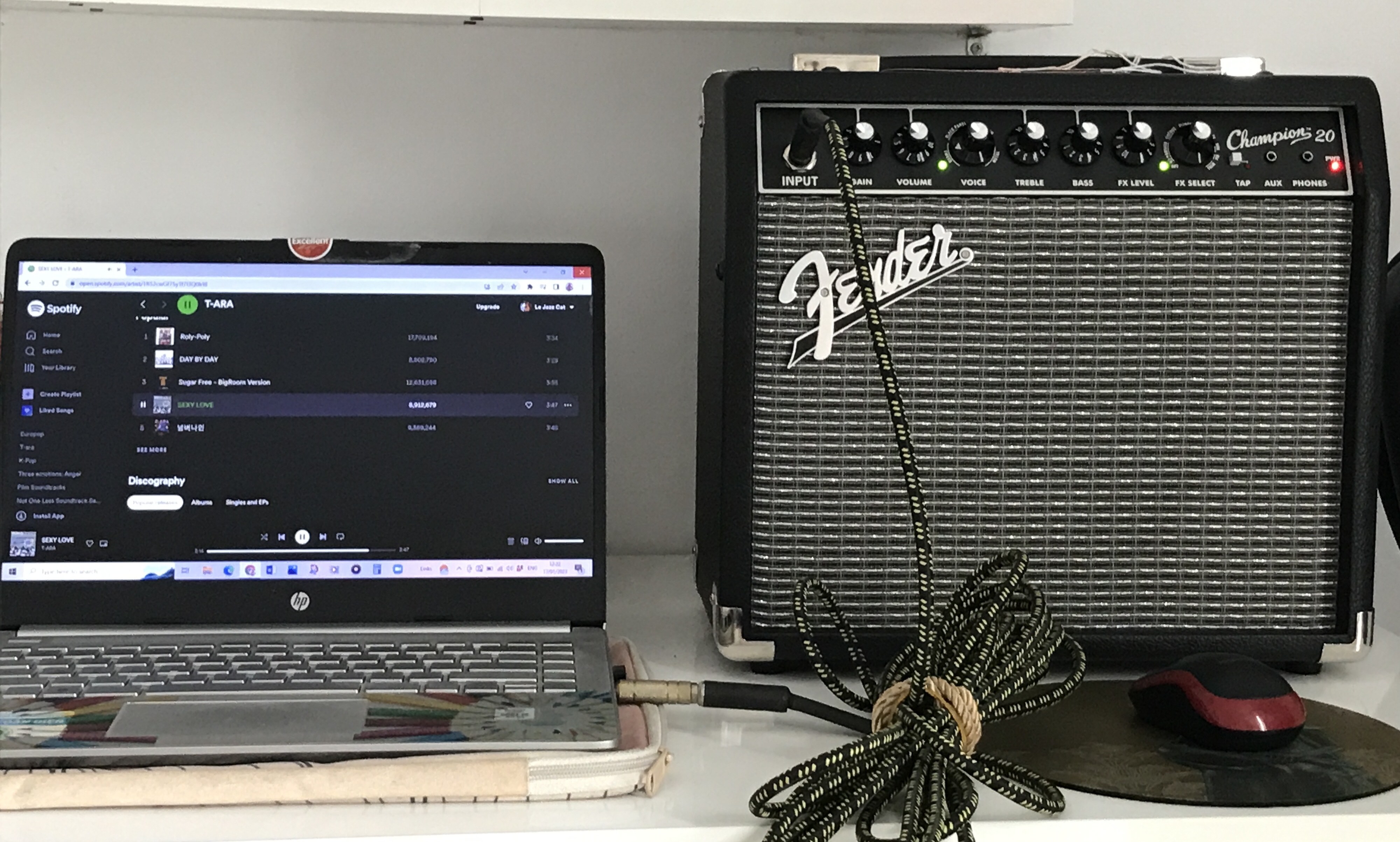
So … intelligence is more powerful than strength. Don’t get mad … get even. I have an electric guitar which, of course, is nigh useless without an amplifier. Hence, I reveal my Fender Champion 20W amp.
The amp has four different setting, a range of built-in effects and a Gain button … to increase noise.
We are approaching Tet Holiday, so we can expect a lot of parties, Karaoke and NOISE.
As you can see, I hooked up my laptop to the speaker today around 11.00 am because … already … some local gentleman and his good lady wife (or sister or whomever) began screaming through a microphone. A lot of these ‘performers’ just copy TV stars and make whooping noises or scream. Take it from me, a Vietnamese with a mic is one of the world’s worst tortures.
So, I chose some pretty inoffensive K-Pop, and covered up the caterwauling from the great beyond.
You can see, the Gain is only set to 4 and the volume was on 2. The switch goes up to 10 ! I also used some delay and reverb. Furthermore, thanks to the internet; YouTube, Spotify plus my own files, I own a LOT of loud music … a LOT. And if that wasn’t bad enough, just wait until you hear me murder ‘Stairway to Heaven’.
The gauntlet is thrown down. After several hours, your voices will crack, you will sleep from that nasty cheap beer but I will only just be warming up. Rock ‘n’ Roll will never die … but don’t take my word for it. Here’s Mr Neil Young
Today you will need pens, pencils, crayons, notebooks and paper.
You are going to tell me about Tet Holiday.
I want to know what you do that is special, what you eat and what you wear.
Do you like Tet ? Explain why … or why not !
First, we need a vocabulary bank. Here are a list of adjectives you should try to use.
Write these words in your notebook next to the meaning in Vietnamese
traditional // lucky // fun // funny
delicious // beautiful // colourful
loud //terrible //
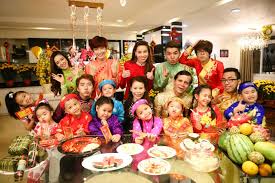
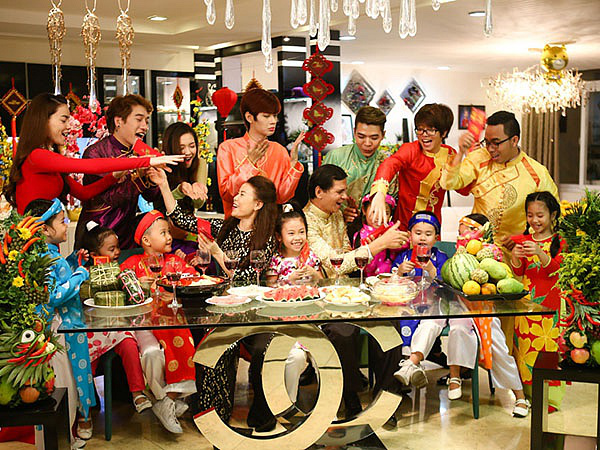
What is happening here ?
What is in the red envelope ?
Tell me about the food.
What are the ladies doing ?
What are the men doing ?
Write and draw about Tet Holiday.
At Tet I … (my family) …
I eat …
I see …
If I have lucky money, I will buy …
My family go to …
My Mummy …
My Daddy …
I like (don’t like) Tet Holiday because …
Please Note: All photos are taken from Google Images or free photo sites, and are used for educational purposes only. No copyright infringement or offense is intended. If I have used your photo or image, and you wish me to remove it, just ask. This site is not monetized, I run it on my own dollar. Thank you.
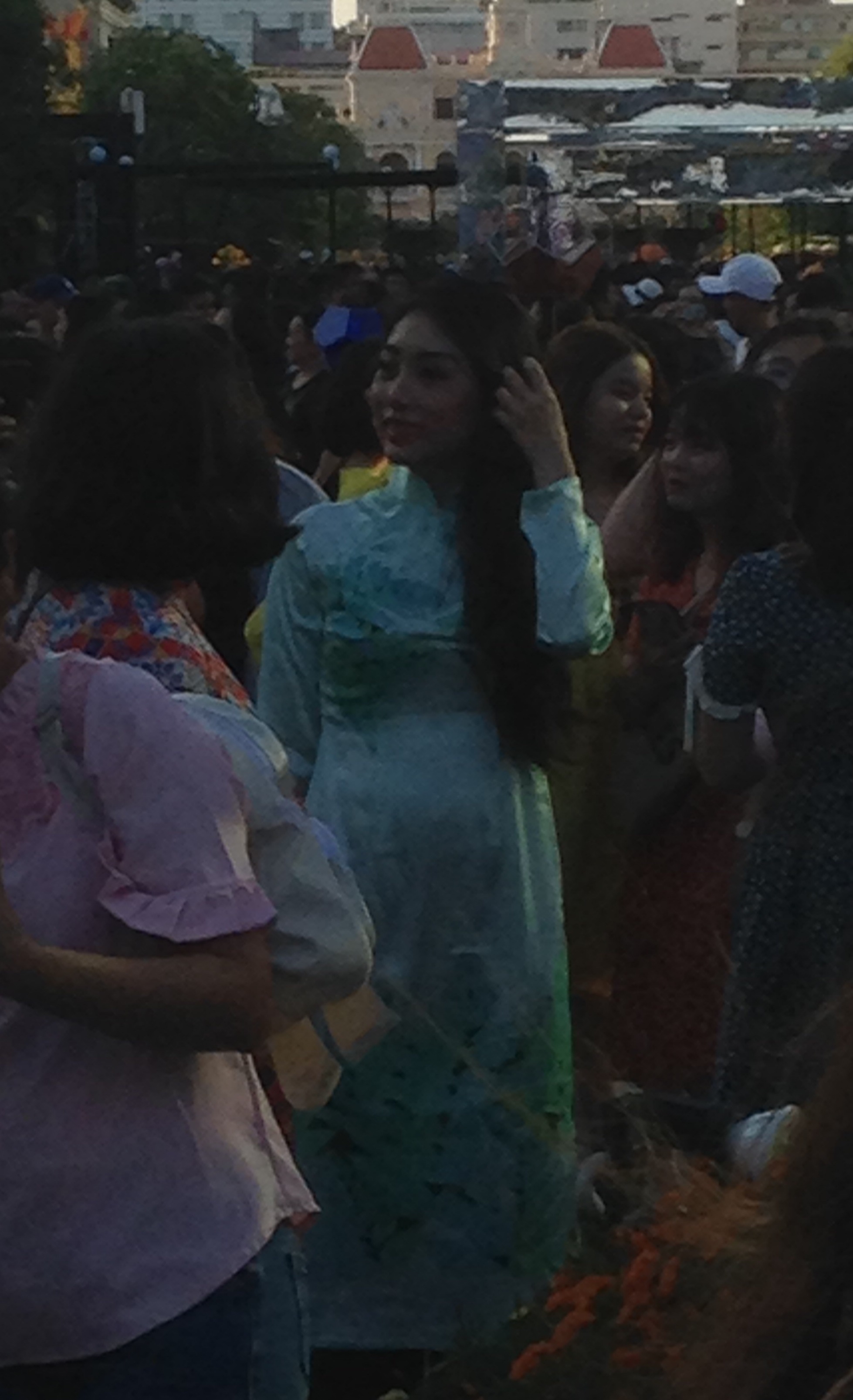
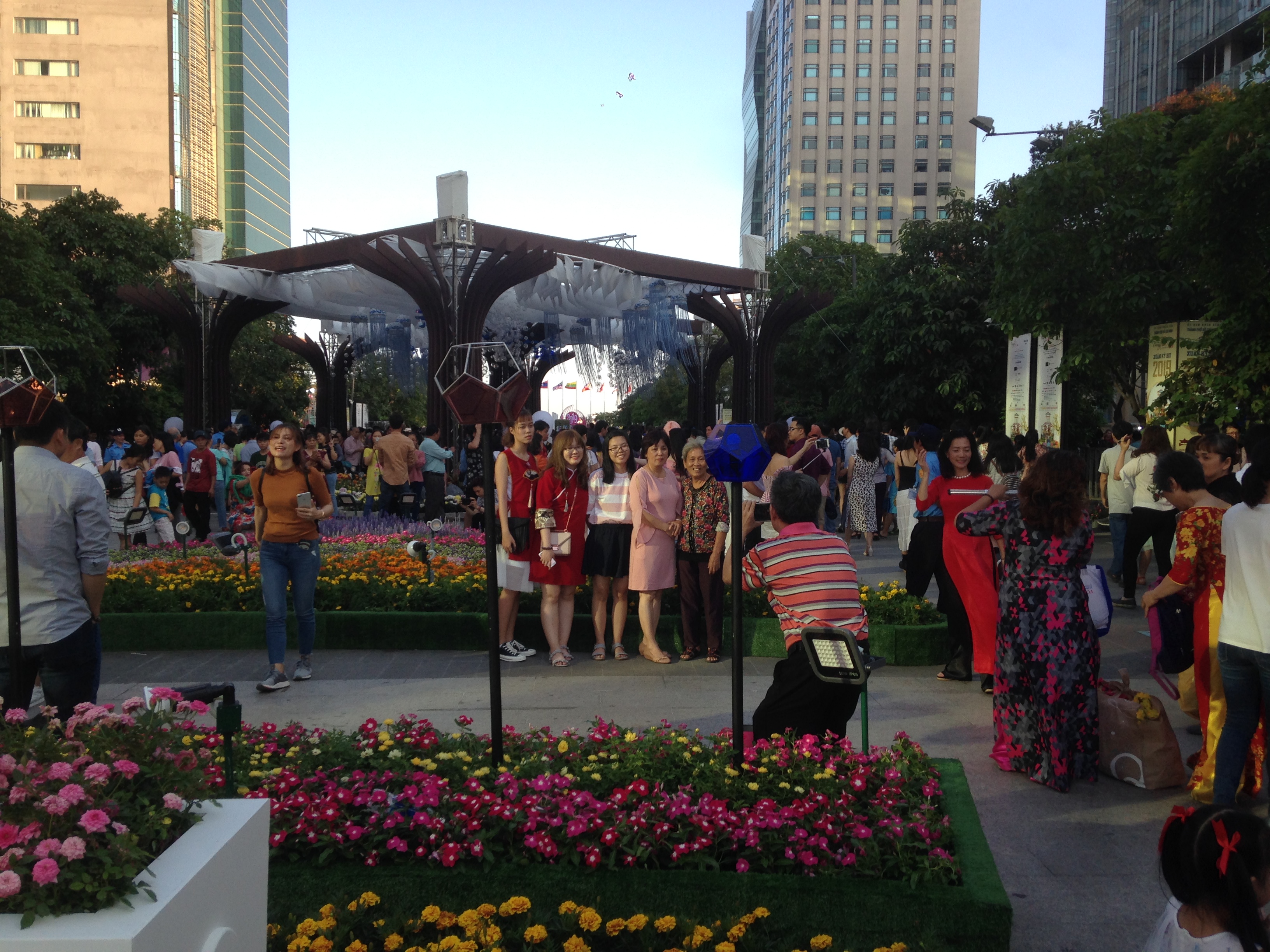
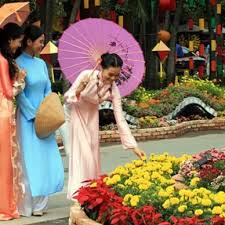
I took this photo on Nguyễn Huệ Street, which is in District 1, during Tet Holiday. As this is the biggest celebration in Viet Nam, the streets are bustling and vibrant, furthermore it is so uplifting seeing happy, smiling people. Many ladies simply adore dressing up in traditional Áo dài, dresses which are made from silk. In my opinion, these two friends look so beautiful although they tell me that their dresses, which cost an arm and a leg, can be terribly hot and uncomfortable. However they only wear them once in a blue moon. They were so happy when I took their photo as it will enable me to share some Vietnamese culture with the world.
A quick recap – we have encountered these words so far in our 1000 mile journey:
lingua franca / genre / obligatory / compulsory / uplifting
enable / bustling / vibrant / generated / derived from / enable / purchase (buy) / devour (eat or consume a lot)
utterly depressing / simply adore
Not forgetting our arsenal of idioms:
it’s raining cats and dogs
it costs an arm and a leg
piece of cake
I’m burning the candle at both ends
once in a blue moon
pass with flying colours
turn over a new leaf
put your nose to the grindstone
bear with me
kick the bucket
NOW … your turn
Write me a short IELTS-style piece (only three or four sentence) about Tet Holiday – what you do, what you eat, special traditions, personal stories … having said that … you have to include:
two idioms // at least two L-FWs // two adverbs // two great adjectives //
use of pronunciation features
Are you ready ? Yes, Sir !
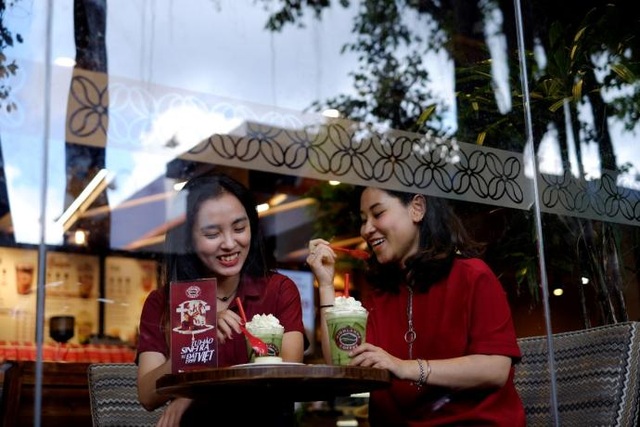
My adorable friend Hanna. Photo by Thay Paul, Ha Noi
Piece of cake, right ?
Quick fire quiz – what idioms could you use for ?
money, cost, prices // working or studying //
changing behaviour or bad habits // no problem
weather // something that happens very rarely
World famous director Jean-Luc Godard
Speaking practice – work in pairs or small groups and ask each other about cinema – but – at IELTS standard. To wit, include:
Types of films you like (genre). Give examples.
Where you go or how you watch movies and why
Favourite actors or directors
REMEMBER – give as much information as you can – complex sentences, L-FWs, idioms; remember to speak fluently with discourse markers and, not forgetting, express your emotions in your voice.
Next Lesson, we shall assist Countess Dương in boosting her vocabulary, as well as focusing on listening to native speakers and endeavouring to imitate their speech patterns:
As a guest in Vietnam, I am not sure of Vietnamese culture and customs. Work in teams and make a presentation to the class, explaining Tet holiday in terms of food, how it’s prepared, and who is invited to eat. Are there any strange or unusual traditions associated with Tet ?
Standard English:
Watch this video // Have a look at this short clip
UK London slang:
Have a butcher’s at this clip (butcher’s hook = look)
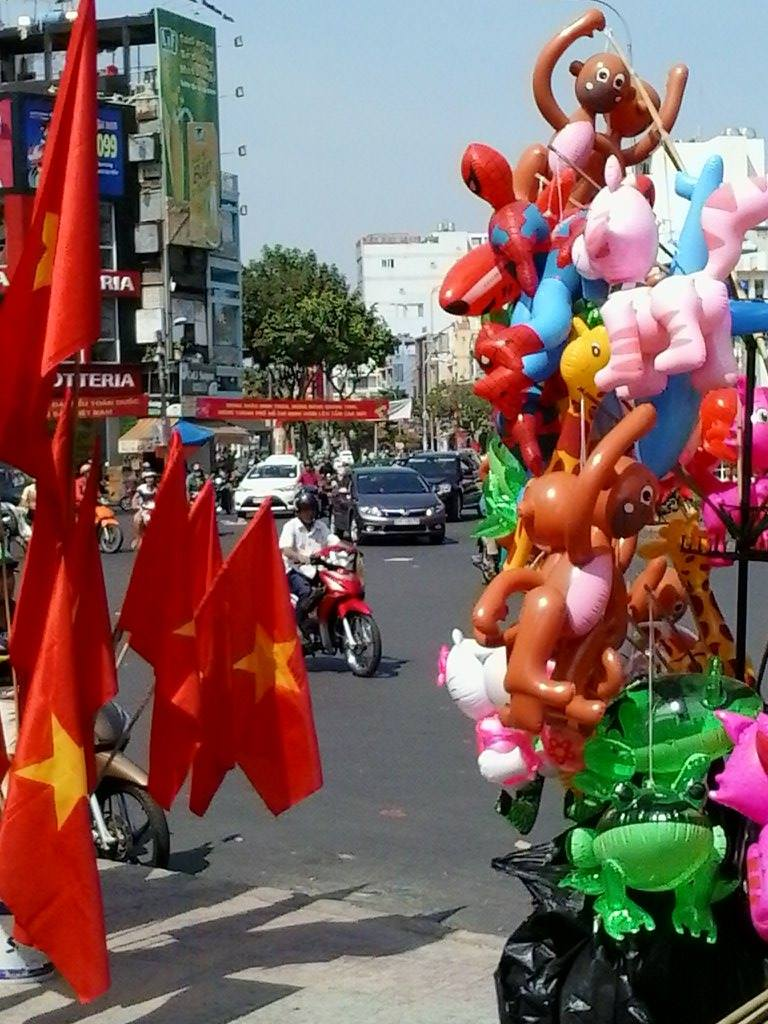
Lunar New Year in Vietnam, the country’s biggest holiday. Shops will be closed all week, if not longer, schools closed (hooray !) and roads can be relatively empty though not necessarily safer.
For the significance of the pig in Asian astrology, this link will provide some information:
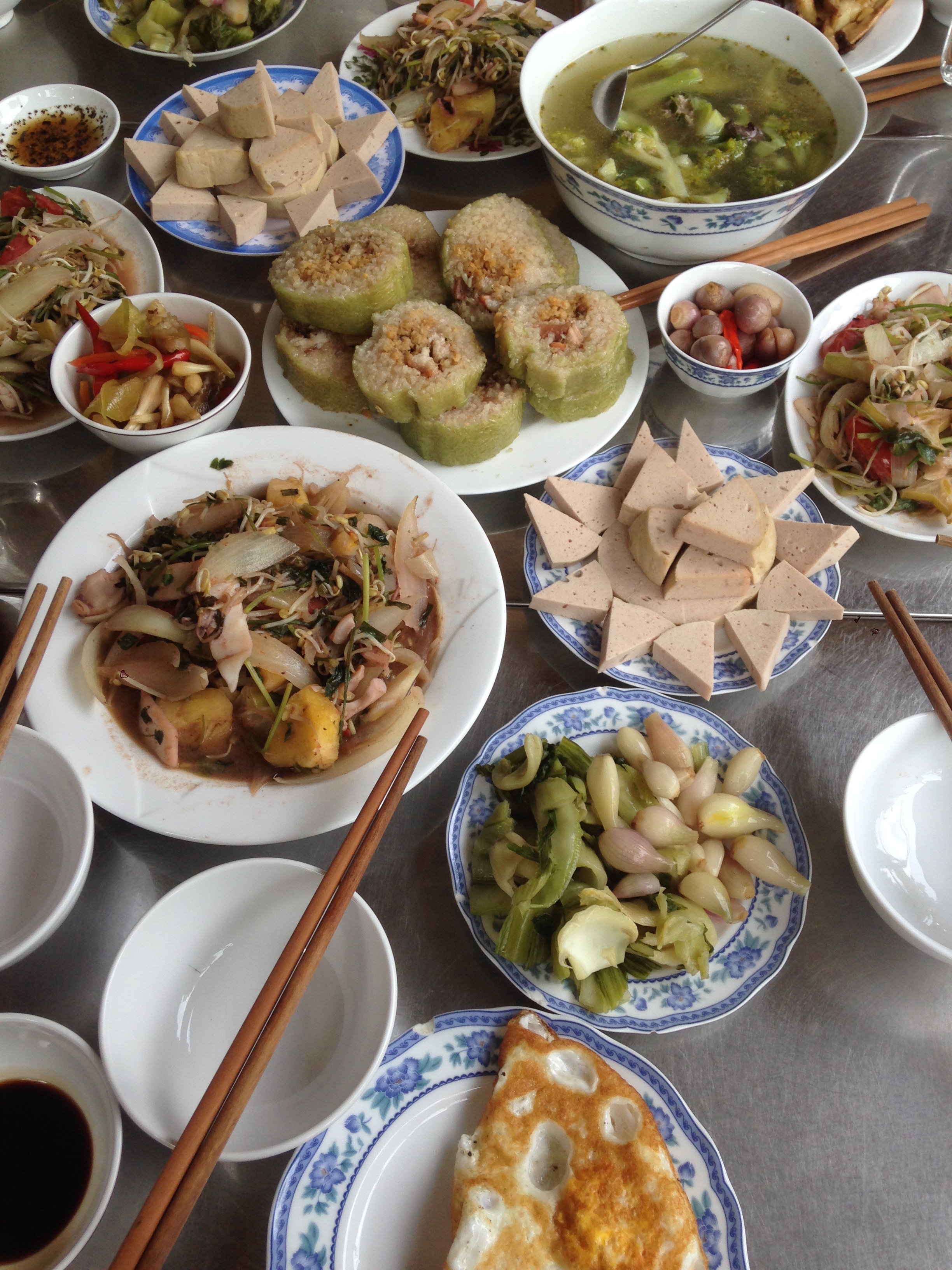
The New Year started on Tuesday and I was lucky enough to be invited to a typical family celebration with four generations of Vietnamese. In a garden on the outskirts of HCM, I was introduced to a grand-uncle, his children and nieces & nephews, their children and grandchildren. Outside we had this spread:
The traditional banh Tet is in the centre (Tet cake made from sticky rice and beans, sometimes with meat, sometimes sweet with banana).
The family very considerately made me eggs as I’m vegetarian. After the food, I took a nap in a hammock then headed back to town.
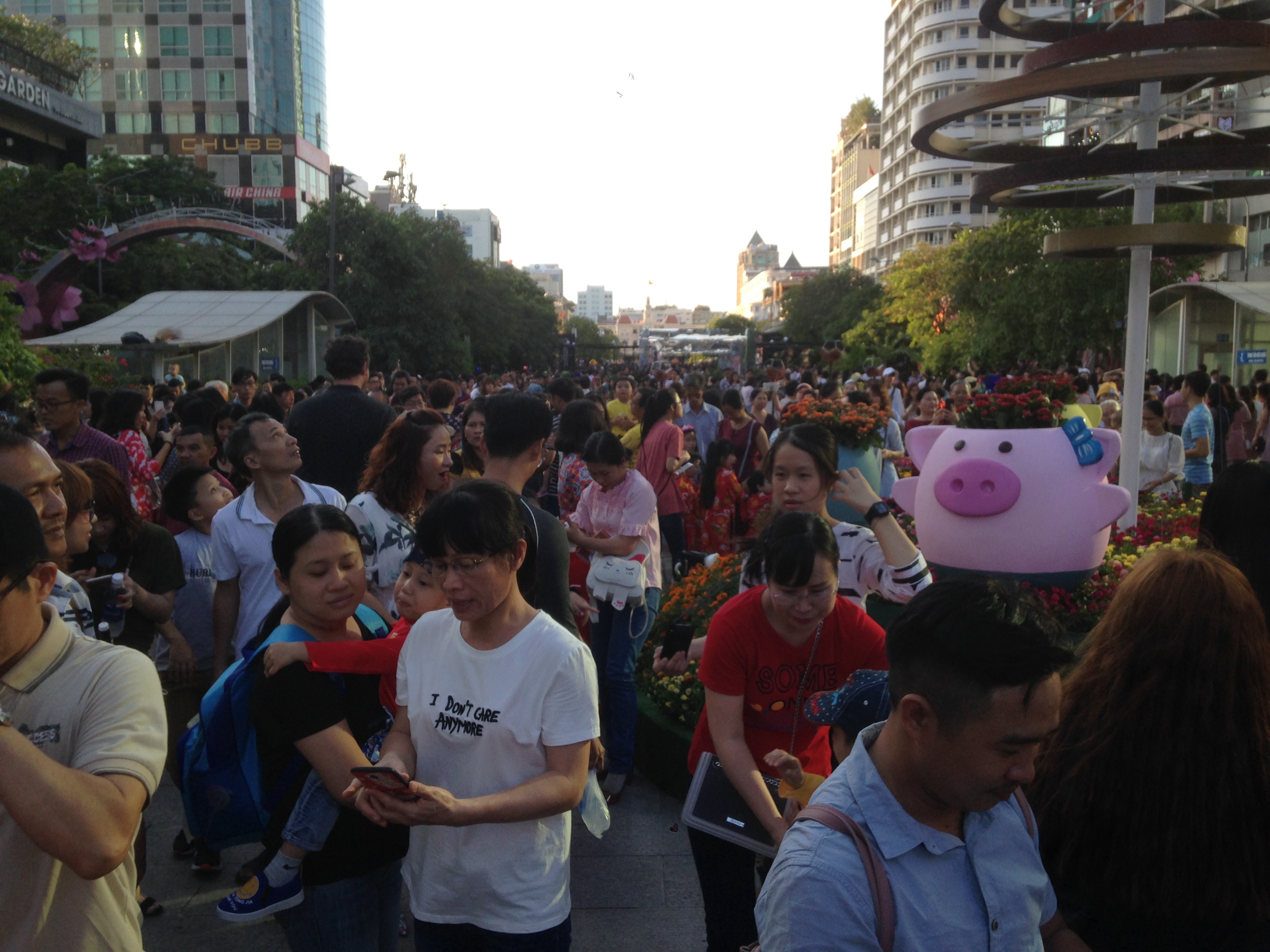
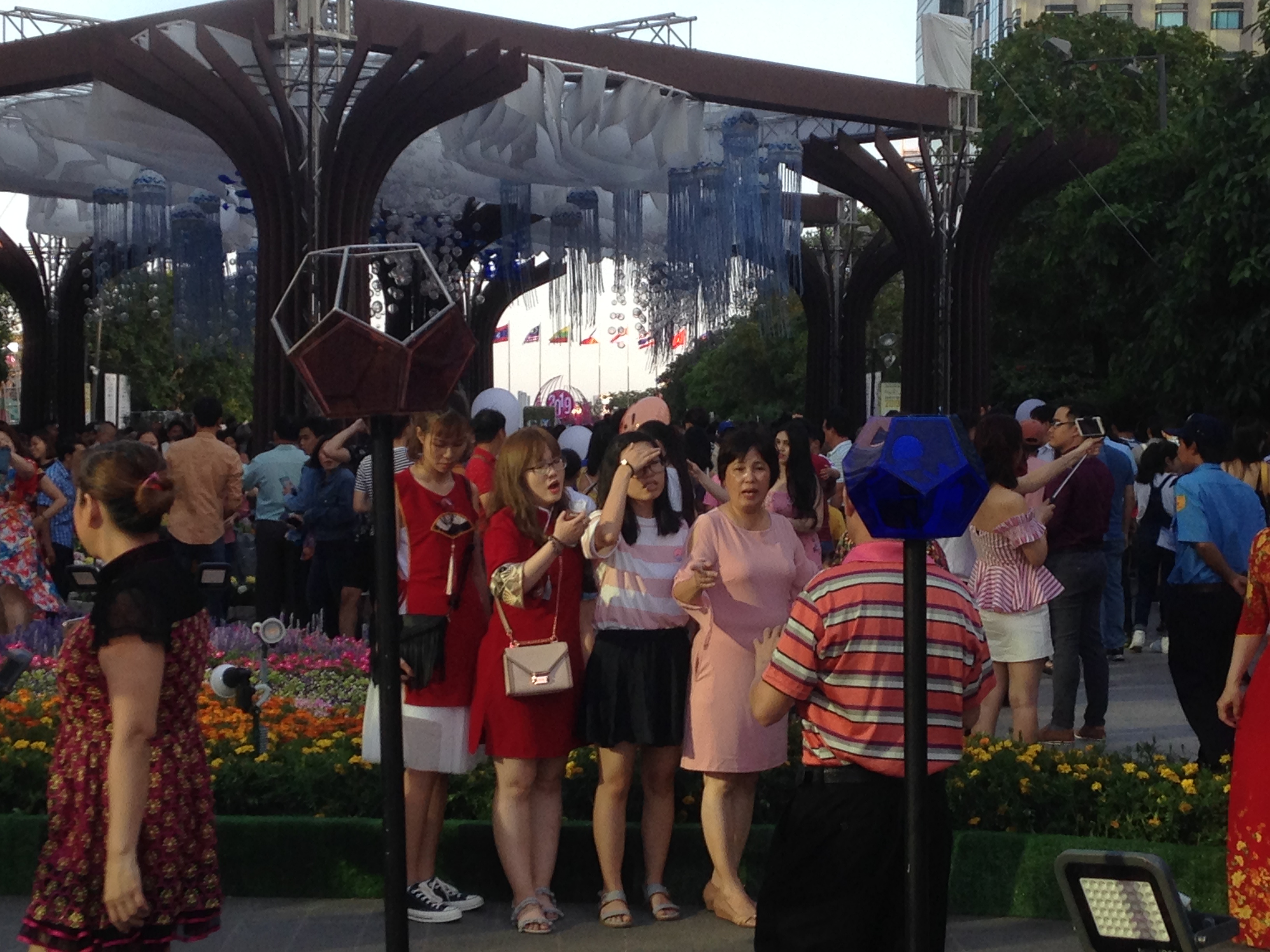
Yesterday, I went to Nguyen Hue walking street. Every year, people go there, admire the flower displays, take photos, people watch, dress up, see and be seen. It gets busier as the sun goes down and can start to feel uncomfortably overcrowded … and just try getting a taxi home.
This photo is from 2016 (Year of the Monkey) but it is so beautiful, I thought it was worth posting. Yes – I asked permission before taking the photo.
However, it is not all wine and roses; there is a downside to Tet. That the shops are closed all week is a minor inconvenience. It is a time of partying, of drinking and some people think nothing of getting on their motorbike and driving afterwards. Crossing the road is daunting anyway, but at Tet it can be suicidal. My first experience was in 2016. I was crossing a street in District 3, a busy, one-way street. Normally, pedestrians walk slowly and the bikes swerve behind or in front of them. Not this time. One driver swerved deliberately to hit me and I had to jump to avoid being struck. That same week, a friend of mine was knocked down by a drunken rider and left with severe bruising on her leg, and was unable to walk properly for weeks.
Then we have the noise. My area is a nightmarish aural atrocity city, wedding parties and open – air karaoke prevalent seemingly all the time.
My Tet began last Saturday – no school, no need to get up at 05.50 BUT … at 06.45 the loud speakers on the street started blaring out a Vietnamese folk song which merged into the monotonous metallic muffled mumblings of the news filtered through loud-speakers and I do mean ‘loud’.
And then the karaoke began, the jolly old karaoke.
Some people in my area seem to think they are responsible for entertaining everyone by cranking up their wretched, impossibly loud, sound system, not to a ‘Spinal Tap’ 11 but to a stadium-filling 111. The … ‘singing’ then begins. Imagine the most obnoxious person you know, the big mouth, the narcissistic know-all. Imagine said person drunk and then given a microphone … welcome to my life. Karaoke isn’t a sprint … it’s a marathon, an all-dayer. One would think that after some hours the novelty would wear off, or at least the vocal chords would give out. Not a chance. The screaming and screeching continues ad nauseam.
I appreciate it’s a holiday and a chance for music and celebration but having to listen to moronic moaning is excruciating. One can forget watching a quiet film or reading a book. Studying Wittgenstein ? Good luck … it ain’t gonna happen.
Crime also rises during this period. I’ve been informed that because many leave to city (to return to their family home) swarms of undesirables come to the city and commit petty theft. Nguyen Hue is a major attraction and therefore a major pick-pocket hotspot. And some of the thieves are terrible – I had a young lady put her hand in my pocket with all the grace and delicacy of a raging hippo. I told a policeman or security guard and he merely nodded. Maybe they were under surveillance … maybe.
Like a lot of holidays, it does tend to drag on too long. However, next week, I’m off to Bangkok to meet up with an old friend, eat some scorching curries and to enjoy a week of traffic lights and road safety. And NO karaoke.
This quote is from the Austrian philosopher Dr Ludwig Wittgenstein (1889 – 1951) who analysed, among other subjects, the philosophy of language. His works are notoriously obtuse, difficult to read, but some pertinent quotes arise from the vague verbosity, and the above is entirely suitable to language learning. Students often feel frustrated by their lack of vocabulary, their inability to fully express their true feelings. As an examiner, I can sense their embarrassment or anger as they vainly search for a suitable word or phrase. It is so tempting to prompt them but … I mustn’t. Empathy but not assistance.
Tonight’s lesson will focus mainly on listening (there will be a practice test) and reading. However, we start with vocabulary, so I have some exercises aimed at expanding their repertoire, and helping them construct longer sentences.
We shall discuss the Wittgenstein quote and, with the early students, start an informal discussion about how they feel when they speak English. This leads into the first exercise, some new vocabulary and a cloze Test (gap-fill).
New vocabulary
ubiquitous everywhere, very common
naïve innocent, inexperienced
stroll a gentle walk, for exercise (collocation: take a stroll)
a bazaar (noun) a permanent, covered market
bizarre (adjective) very strange, unusual
absent-minded extremely forgetful
sky-high, astronomical very expensive, maybe too expensive
messy untidy
laundry / laundromat dirty clothes / a place to wash clothes (collocation: do laundry)
predictable it is possible to guess the answer, people doing the same thing
hawkers
Street _______ are common in Vietnam, and they are _________ in District 1. It is nearly impossible for a westerner to take a ________ without being approached. Some claim to sell Ray Bans or designer sunglasses, but you would have to be extremely ________ to believe they are genuine ! They are all fake, probably made in China. Many people try to _____(collocation) money by selling to tourists especially around Ben Thanh Market, a kind of _______, though this is strictly for tourists as the prices are ____________ !
This will lead into a general talk (hopefully) where the students can practise some of the new words, and share their experiences.
The next task will be sentence construction. IELTS expects reasonably long and well-constructed sentences. I’ll start with some examples and then give them three themes on which to work.
Sentence building
Use adjectives to describe nouns
adverbs to describe adjectives and verbs – give more information
opinion phrases
linking words to connect positive to positive or positive to negative
reasons why an action is being done
EXAMPLE:
I like coffee
I like coffee so much because it tastes great and makes me wake up although too much will stop me from sleeping at night but, in my opinion, the benefits far out weigh the disadvantages.
Teaching
I taught a brother & sister; the sister was a bit of a handful always chatting or texting during class. In complete contrast, the brother was a really good student as well as being a young gentleman. I felt he was an ideal student.
Try these:
Living in HCM
Free time
Working and studying.
Finally, there will be some work on suffixes. I’ll focus on ‘ment’ and ‘ness’
‘ment’ or ‘ness’ ?
adjectives = ‘ness’ / verb = ‘ment’
1 The ……. of the court was that he serve five years. JUDGE
2 Hilary couldn’t contain her ……… EXCITE
3 I was amazed at the new iPhone’s ….. LIGHT
4 Getting 95% is a great ……… ACHIEVE
5 Fainting is like losing ………. CONSCIOUS
6 Trying to teach some students is sheer ……MAD
In general to be something = ‘ness’: to be light (in weight) = lightness. If you can just use ‘to’ + word then it will be ‘ment’ e.g. to excite = excitement.
But of course … it is not that simple, as Wittgenstein would be quick to point out. As any English – language student realises, English isn’t 100% logical. Most verbs add an -s in the third person, yet one of the most common verbs ‘to be’ is entirely different (I am, you are, he she it is…).
Most verbs (about 75%) simply add -ed to form the past tense, yet many common verbs are irregular and have to be learnt (or learned) separately. Yet, it doesn’t stop there … even with a regular -ed form, the pronunciation will differ depending on the spelling of the verb. As they say in Sai Gon, “Oi troi oi !” So, while ‘ness’ or ‘ment’ are added to adjectives or verbs, exceptions in grammar can arise.
For example, if someone’s expectations are not met, they are said to be disillusioned. Here, the word is used as an adjective but the noun form is disillusionment. Similarly, an area can be described as ‘overdeveloped‘ but again, the noun is ‘overdevelopment.’
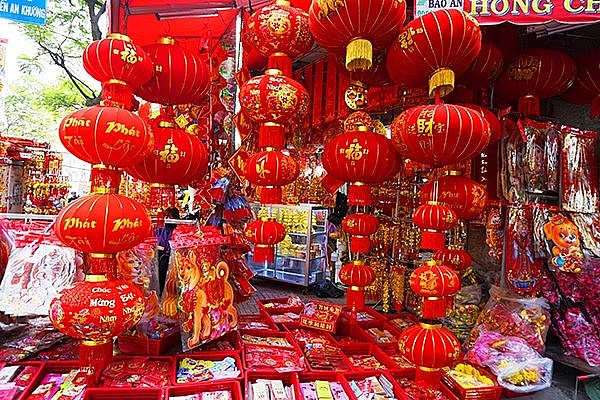
In the last stages of the class, energy is waning so we need to close the books and find an activity. As it is soon Tet Holiday in Viet Nam, I can show some pictures and ask the students to describe what is happening.
Speaking and vocabulary practice: Tet Traditions
Jim asks Duc to explain Tet holiday to him
Duc Well first, we give lucky money. This is for children in our family.
Jim I see. What about neighbours ?
Duc Neighbours too if you are friendly with them.
Jim How much do you give ? 1 000 VND ? 1 Million VND ?
Duc Oh, no, not that much, no way ! Typically between 20 000 and 50 000.
Jim OK, I get it. Now, tell me about the Tet cake. I love sweet cakes.
Duc This is made from sticky rice, green bean and pork. Sounds delicious ?
Jim No ! It sounds awful ! I like sweet cake with chocolate and cream.
Alf is with Tad drinking coffee on Nguyen Hue Street
Tad Do you like the flowers ? The yellow flowers are from south Vietnam.
Alf So many flowers and so many pretty ladies. What are they wearing ?
Tad That is the ao dai, the traditional dress. It is made from silk.
Alf Do men also wear traditional clothes at Tet ?
Tad Yes, sometimes. If they visit family, men must wear formal clothes.
Alf And what do Vietnamese do when they visit their family ?
Tad The men eat, drink beer and sing. The women cook and work.















 Thay Paul's Notes