When Dante in years was but shy of nine, to his father’s friend he went, celebrating May Day. There seeing a girl he would wish, “be mine.”
But our young poet had no words to say, though strange, new emotions filled the nascent artist’s head. To fall in love, first sight, happened that way.
This delicate, pure angel, clothed in shades of red, of love and pain both, would cause him tears, “Now is my bliss made manifest”, he later said.
Entering into an unknown world, tender feelings, trembling fears Though never a thought of the sacred marriage bed, To her he ventured no word, for nine years.
In Florence, matters of the heart were left, unsaid Our eloquent poet, inexperienced youth, smitten and struck dumb, would later write sweetest words, that any lover read.
‘Behold, a god stronger than I that is come to bear rule over me.” Words he later wrote. Of all Christian virtues, this seraph is the sum.
Upon this paragon of innocence, young Dante would dote But courtly love dictated she proffer not a glance, yet celestial choirs, he did hear, sounding love’s note.
Beatrice was our young angel, Dante made no advance but circled Florence, praying, of Beatrice, just a sight following her sweet footsteps, hoping for just a chance.
He raised the worthy child up to heavenly heights. Her beauty showed her virtue, pale skin, fair hair. Her presence guided both working days and dreaming nights.
Feeling beatific knowing that his love had been there He felt he should bow and kiss the ground, When angels called and myriad flowers filled the air.
Yet he was to hear, a far, sweeter sound When after nine years, he spied his cherished Muse who, upon seeing Dante, did stop and turn around.
White dressed, but Dante saw flowers of all hues she spoke with grace, with ineffable courtesy and charm. Dante saw this providence as something he mustn’t lose.
He wrote all night till fatigue paralysed his arm, then descended into dreams he knew so well. A nebulous figure holding Beatrice, but meaning no harm.
She held a burning object, he would later tell ‘Behold thy heart.” The Vision said, making Beatrice eat Before Paradise is Purgatory, before Purgatory, Infernal Hell.
After this they were destined rarely to ever meet. Dante’s love was pure, and would forever remain chaste. But fond memories of that salutation, on Florentine street.
Marriages were political, not to be made in haste, they married different people and went their separate way But Dante wouldn’t let this inspiration go to waste.
His marriage sailed stormy waters, the ship sailed away to be trapped among the ice. Then Beatrice died. To honour her, sought he, greater words to say.
His Beatrice gone, Dante wouldn’t drift with the tide, but studied and wrote, to proclaim her name, far. His new life where his love need not hide.
So when looking at the firmament, black as tar search for two lights, whose flame shall shine eternal as Dante placed his Beatrice, a wondrous, glowing star.
Berlin showing the TV Tower and Cathedral – Google Images
Part One. Berlin. September 1993
Richard had a romantic view of flying, very much inspired by glamour shots from the Sixties showing immaculate film stars and bejewelled starlets posing next to uniformed stewardesses of the Pan Am or B.O.A.C. line. Therefore he chose a dark-charcoal pin-striped suit for his flight to Berlin. The jacket was taken from him on the plane to be hung up, and when another attendant tried to find the owner, she seemed surprised that he was sitting in economy and not in business. Richard liked that. He had decided that the way to go was with ‘style’.
The co-pilot had already pointed out, as they prepared to make the descent, that anyone familiar with Berlin should be able to follow the roads that led up to the Brandenburg Gate. Richard strained to look out of the window, but could only see cloud. Not matter, he would see it soon enough.
Heathrow had been large and busy and involved queuing and waiting. Tegal, by contrast seemed so much smaller. His bag arrived quickly and after a brief passport check, he walked out into the airport, looked around and saw the smiling face of Chris. They shouted and shock hands. Chris took the bag and they went to wait for the bus in the late summer sun. There was little skyline, Tegal being tucked away in the north-west of the city, but Chris did point to a faint glimmer on the horizon, which, when Richard strained his eyes, turned out to be the Mercedes symbol on the Europa Centre.
They smoked and smiled, Chris almost overflowing with things to say and Richard having so many questions, mainly wanting Chris to explain all the information that he had been sending over the spring and summer.
Chris had told him not to buy any duty-free; it was all cheaper in Berlin. Something about the Vietnamese Mafia. A lot of talk about Cafe Kinski and squat bars. A list of character names; Marina, Ross, Claudia, Simon, Luke.
The bus arrived and Chris showed how to punch the ticket to validate it, (deciding not to risk travelling black for so long a journey). They drove to Kurt-Schumacher- Platz U-Bahn station, most of the bus alighting for their connections. The station was typical of many in Berlin, dark, dirty, dusty, one platform with trains arriving either side and, seemingly, everybody smoking. Chris pointed out the initial differences; there would rarely be a ticket office, but ticket vending machines. The trains were indicated by their end stops, not by direction, there were no ticket barriers, so, Richard surmised, people could travel without tickets ?
“Yeah, but they do have plain clothes inspectors who issue on-the-spot fines. If you get enough of them, you have to officially apologise to the Minister of Transport.”
“What ?”
“All true. I was speaking to someone in Kinski, I’ll take you there tonight, and she was saying that when she lived in the DDR, that’s the old East Germany, standing for Deutsche Democratic Republic, the ‘Democratic’ bit being an example of German humour, and more of that oxymoron later, she bunked the fare and got caught so many times, that she had to go to some office and formally say sorry. Now, I’ve only been here a few months, but I’ve realised that the German bureaucratic system is a master-work of incomprehensibility. You know those pictures by, Eischer, is it ?”
“All those staircases that appear to go down, but when you follow them, they end up back where they started ?”
“Spot on, yeah, like that, only, more so, I tell you, it’s put a whole new perspective on Kafka, not that I’ve read him, but can really dig him, now. No wonder, I’m living it.”
“So what was the emergency you first wrote about ?”
“Yeah, I’ll tell you tonight. Here’s our train. We get off at FriedrichStrasse, the old border station.”
The train was very basic, with wooden bench seats and no frills. It looked to Richard like a do-it-yourself construction. There were a number of small, unobtrusive adverts periodically displayed, and it gave Richard a sense of travelling back in time. While other metro systems were upgrading, getting lighter and brighter for the new millennium, still several years away, Berlin’s appeared to be frozen in the Cold War era, and Richard, in his suit, tried to exude a façade of cool British agent sent behind the Curtain on a top secret mission, which would naturally involve smuggling a Russian beauty to safety.
The train was too loud for easy conversation, so there were exchanges of glances and laughs. The other passengers were mainly dressed very casually, many unshaven men, women without make-up, some punk types, some pensioners with giant laundry-type bags, some school boys and a girl with a Walkman who caught Richard’s eye. She also got out at Freidrichstrasse, but was soon lost in the crowd. Richard would remember her as the first woman in Berlin whom he liked, but who disappeared out of his life without ever entering it.
Friedrich Strasse was a maze of subterranean corridors, stairs and tunnels at several levels. Richard doubted he ever would have emerged without Chris acting Virgil to his Dante. To get to the over ground S-Bahn, they had to exit to street level and enter the main building. Once above ground, Chris made straight for a group of Oriental men, none taller than 5ft 2, and asked for something. One of the men went away and returned with a carrier-bag from which he pulled out a carton of West cigarettes. Chris handed over a coin and received two packets. He gave a formal nod goodbye and they moved on.
“There, the Vietnamese Mafia. They sell cigarettes half-price.”
“Good deal. Isn’t that illegal ?”
“Probably.“
“How do you know where to find them ?”
“Oh, they’re always there. You’ll find them all over, same patch, same prices. It’s very well organised.”
“But, and forgive me if I’m being slow, but if they are always in the same place, wouldn’t the Police know where to find them ?’
“Oh, yes.”
“And they don’t get caught ?”
“Hummm … don’t know. Maybe one or two, but, it’s … well, it’s Berlin. Black market cigarettes, squatters, unofficial free public transport, girls that actually come up and speak to you.”
“They do ?”
“You can count on it. You’ve gonna like it here.”
“I’m going to love it here.”
They rode the S-Bahn the two stops to Alexanderplatz and it seemed as if all the sights were pretty much concentrated in that small section of Berlin. Under Den Linden, the main thoroughfare of the east could be seen in between streaks of blurred buildings. Chris listed the sights, various churches, a cathedral, a synagogue.
At Alex they changed to the U5, descending several levels and twisting past corridors that all showed signs of continual or imminent or imperative renovation. From there, just four short stops before they got out at Rathaus Friedrichshain.
“You see that this station is tiled blue, the others are orange, so it’s a sign to get out. It’s not like London, with the station’s name everywhere, here it’s just once, centre of the platform, so it’s easy to get lost or confused. Come on, let’s go.”
Chris showed Richard the correct exit of the four to use and they emerged half way down Karl Marx Allee, a long, straight, busy road leading from Alexanderplatz straight to Moscow, or so it seemed.
Either side of this wide street were identical examples of Stalinist architecture. The buildings were a uniform height, five or six stories tall, with lines of windows comprised of two long, oblong panes below two small square panes, white frames between, giving the effect of rows and rows of Christian crosses or war graves.
This particular area was somewhat grandiose, with two towers, green domed on white columns standing either side of the Allee. Where Chris and Richard came out, there was a large concreted area, with a department store and some stone steps, low and regal, leading up to a columned area. The pattern was repeated on the south side, giving symmetry, order and a certain overblown pomposity that Richard could already sense was somewhat incongruous to the actual character of the area.
Chris took Richard along the Allee to a small colonnade next to a bank. On top on the columns were some figures whose characteristics had eroded with time, and a large clock that was fixed on five minutes past eight. Richard noted that there seemed to be clocks everywhere.
They cut through the columns and up the side road that led to Rigaer Str. Behind the columns were residential blocks, car parks and a small shop or two. They got to the top, Chris indicating the squat bar opposite, then turned right and walked to the swing doors with the painted street name and number. Richard paused a little at the shop window, with its mysterious display and impenetrable nets, looked at Chris, who looked back and gave a tiny nod. Richard nodded back, as if all necessary information had been communicated. Chris appreciated having someone who was on the same wavelength as him, because despite the benefits and excitements of his new town, he had also been very lonely.
Richard saw the painted street-sign and let out an exclamation. Chris opened the door for him, then pointed out the post-box with Holtzengraff in a top corner compartment and Pearson sellotaped underneath it. Things were becoming clearer.
The first signs were positive; the hall was bright and airy, a room appeared straight ahead and the kitchen to the right. It had large windows, though the only view was the blank wall and the dustbins down below. They went into the main room, fair sized with a high ceiling and another large window. In the corner was a large tiled object, with a flute leading into the ceiling. There were various pieces of wood on the floor and some small implements like screwdrivers and a hacksaw.
“Oh, yeah. The Ofen.” Chris explained in a dismissive tone, knowing that Richard would be as mystified as he had been by this mediaeval-looking contraption.
“Ah, of course,” said Richard, playing along, “the Ofen.”
“It’s really good. Get some good heat out of it. Save money on heating.”
“Ah, I see.”
“You don’t do you ?”
“Not at all.”
Chris continued the tour. Before this room, there was a side door for the toilet where Richard saw a minute sink, suitable only for washing one hand at a time, and that behind the toilet, there was a wire meshing through which a storage area could be seen. The fact that he could be using said appliance and have someone behind him enter and rummage around wasn’t very comforting, but when he came out of the toilet and walked into the kitchen, his face dropped even further. He looked around before asking,
“And the bathroom is … ?”
“No bathroom.”
“Shower ?”
“No shower.”
“Then where do you … wash ?”
Chris pulled the expression that Richard knew well, an exaggerated smile, display of teeth and an intake of breath that produced a high-pitch whine.
“Never mind. Let’s have a drink.”
Chris had bought some provisions and they ate rolls with cheese, tomatoes, salami, beer and Quark. Chris pre-emptied Richard’s question.
“Don’t even ask,” he began, referring to the Quark, a white semi-solid substance like cream cheese, or yoghurt, or crème fraiche, “ comes in all sorts of flavours, most of them, true, being the same. I can’t get no answer as to what it is and believe me, I’ve asked, it just … is. Prost! Cheers!”
After lunch, they went sight-seeing, talking non-stop, walking to the U-Bahn, Chris explaining that Rathaus, which he pronounced ‘rat-house’ meant town hall, and that he’d also learnt another German word, ‘Smuck’ which meant jewellery. If all German words were so ridiculous, he’d have the language down in no time.
They took the U5 back to Alex, and got out, planning to walk to the Brandenburg Gate. They decided, first of all, to go up the TV Tower, so bought tickets and went to queue for the lift. At the top, Chris showed him the Gate, from up high, still a mere dot. Then he pointed out his area, and the twin towers were visible. The buildings seen from the S-Bahn lay before them as well as the sights slightly more to the west, the Angel on the Siegersauler, the Reichtstag, the S-Bahn snaking its way to Zoo.
They continued on foot past the Cathedral and the Zeughaus, the statue of Fredrik the Great on horseback and the Opera House, all down to the Gate.
Brandenburg Gate was one of the few sights known to the two back in London and it was impressive while still being a little anti-climatic. More interesting were the rows of souvenir sellers all of whom seemed to be of Indian origin, all carrying trays full of DDR items: watches, hats with the hammer and sickle insignia, belt buckles, also with the symbol, badges, stamps, coins, model Trabants, gas-masks, binoculars and similar items.
Chris suggested they go for a drink and walked back towards Alex, passing the Russian embassy with a large bust of Lenin dumped unceremoniously on the front grass. They crossed the Friedrichstrasse intersection, Chris pointing the way towards Checkpoint Charlie, then on to a small beer garden just before the Opera. Chris went to get two beers and Richard sat and looked around. A few tables away sat a young blonde girl, wearing only a yellow vest and denim shorts, writing postcards and drinking a large beer. There was something so very right about that image and he was going to smile at her when she looked up, but, unfortunately, she never did.
Just after Chris returned, and they were on their second gulp, there was a commotion from the main road. A man who appeared to be in his early fifties and wearing a white shirt, open to the chest, was marching along, screaming in German, trailed by his very embarrassed and much smaller wife, who desperately tried to calm and quiet him. It was all nonsense to Richard who was quite enjoying the scene, until the man began raising his arm in the Nazi salute and the word ‘Hitler’ could be clearly discerned, loudly and frequently. The wife used both hands to pull the arm down, but it was a losing battle, and the man carried on, marching away until the street sounds obliterated him.
The awkwardness pervaded the whole café, a smile or two, a distant laugh, but mostly an uncomfortable silence. Richard and Chris just dismissed it as a random lunatic and London wasn’t short of those, either.
At this point, the blonde girl looked up, but it didn’t seem appropriate now to smile.
Berlin Rigaer Strasse, Friedrichshain. Google Images
Part One. Berlin. Spring – Summer 1993
The flat situation was solved by the combined efforts of the German girls. Marina knew a woman through an ex-boyfriend who had a shop near where Claudia lived. Claudia had been in touch with her and was monitoring a flat she owned in a different Bezirk (district) of Berlin. It was actually free immediately and Claudia negotiated a fair rent, provided the landlady, a Frau Holtzengraff, could also get an ‘under-the-table’ gratuity.
Five days after arriving in Berlin, Marina was helping Chris move to his new permanent base in the eastern Bezirk of Friedrichshain.
She told him about the costs, but didn’t pry into how much he actually had with him, expecting him to be able to cover the first few weeks. Although she earned a modest amount, Ross had a good wage and her parents were comfortably off, so she had never really known what is was like to be without money or financial aid. Therefore she had no conception that Chris may really be in difficulty.
They were met on the street outside Rigaer Strasse 16 by the stocky figure of Fr Holtzengraff, a middle-aged woman wrapped in a thick, fake-fur coat, despite the late spring weather, and an unsuccessful blonde hair-dye job.
Rigaer 16 was painted in white across the two large wooden swing doors that opened for vehicles. The right hand one also had a conventional inward-opening door. They walked in and the first dozen or so paces were under cover, making it hard to see the names on the post-boxes fixed to the right-hand wall.
The flat was on the fourth floor, through a courtyard that was small and oblong, framed by three sides of the house and a large intimidating blank wall. A door in the far corner of the yard led to the stairs . Marina kept a smile, but was clearly seeing the flat for the first time and trying to remain optimistic. Chris, meanwhile, was amazed. Here was a real artist’s flat, a place where he could read and write and compose and get German girls to pose nude for him.
Marina talked in German and then asked Chris for the first month’s rent. He could just about cover it, but it would leave him with almost nothing. He got a receipt and there was more German, Marina nodding and interjecting, “Ja, ja, alles klar,” – yes, yes, everything’s all right.
“Then Claudia will help with the other.” Chris nodded, not at all sure what the other was, but knowing that now was not the time for schoolboy humour. The keys were handed over, directions given to the U-Bahn and shops, and then Fr Holtzengraff gave Marina a hug and left. Chris put it down to Marina’s personality, that everybody who met her would be compelled to hug her within minutes.
Marina had to work that afternoon, so she left him, making sure he knew the tram or Strassebahn that would take him to his work in Prenzlauer Berg, the next Bezirk to the north-west. He watched her drive off and then he was alone. He noticed a kind of shop next door. The paintwork was faded but still reasonably clean. There was a glass door, with a heavy net curtain behind it and a main window, also netted, but along the window-shelf were a strange collection of miscellaneous items: an old football boot, a ceramic tiger, some kind of metal-working implement, an old fob-style watch, a plastic gnome or elf. Chris looked at the display and tried the door, but it was closed.
He looked up and down the street. It terminated at the western end in a roundabout, close to the tram stop. Diagonally across the street was a squatted building. Some punks were carrying empty beer crates out. Opposite him was another squat house, the whole front daubed in slogans and banners. Several similar buildings led off to the eastern end, which seemingly went on into infinity.
Chris tested the street keys, then the letterbox, or Brief Kaste key. Then he went upstairs to unpack, before making his first solo trip to work.
Luke was another Englishman working at the studio, very much a ‘what you see is what you get’ bloke. He had a London accent and laughed, loudly, at his own jokes, which was helpful as his jokes were generally not particularly funny. His skin showed that he had had more than a few drinks in his time and had probably tried several different drugs, several times. He worked next to Chris and took it upon himself to act as guide to Berlin. He told Chris that he could get paid on the Friday if he asked in time. He was, in fact, full of very useful and pertinent information and friendly, but was also very full of himself, and Chris found him a little overbearing.
Not too pushy, however, that Chris would refuse the offer of a beer after work. He mentioned that his funds were low, but Luke dismissed it, saying that it could be his shout next time.
Several beers later, Chris staggered onto the Strassebahn to get home and it wasn’t until he was walking along Rigaer Str that he realised that he had forgotten to buy a ticket, but he hadn’t been checked and had therefore saved a DM or two.
His rent was paid for the month, and he hadn’t spent anything getting drunk or getting back home. Berlin was going to be cheaper than he imagined. He continued to feel that way until a week later, when Fr Holtzengraff accompanied by a very mean-looking Herr Holtzengraff, pounded on his door, then opened it, catching him in just T-shirt and boxers and demanded, in gruff, blood-curdling German, “Geld!” which he recognised as ‘money’. Waving the receipt had no effect and it was only after chanting, “Claudia, ja. Marina, ja, kein problem” that they turned to leave, amidst finger wagging and black looks of a ‘this is your one and only chance’ complexion.
After they had left, he smoked the last cigarette in the box and walked into the kitchen, burning off nervous energy, as he promptly turned and walked back into the main room, trying to calm his nerves. After he had smoked down to the filter, he got some paper and wrote to Richard.
One of the biggest stumbling blocks for my Asian students is copying the speech patterns of English, how our voices rise and fall, how we pause for effect then stress key words, augmented by body language and facial expressions.
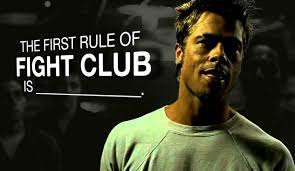
Best way to improve is to copy so, without further ado, some classic film lines.
Let’s dive in !
First up, ‘The Italian Job’, a British film from 1969 starring Michael Caine, who is still working today, an actor from south London: https://www.youtube.com/watch?v=8g_GeQR8fJo
“You’re only supposed to blow the bloody doors off !”
Now, let’s cross the pond (the Atlantic Ocean) and go Stateside, with Tom Cruise being yelled at (shouted at) by Jack Nicholson who you may remember from a previous video. The clip is from ‘A Few Good Men,’ a 1992 drama: https://www.youtube.com/watch?v=5j2F4VcBmeo
This can be for two students or teams: Start at 0:13 – 0:19
“Oh my gosh, I think I’ve just come up with the best theory … teenage life sucks !”
Now for a personal favourite, the inimitable Peter O’Toole an actor I had the pleasure of seeing, and briefly meeting, back in my London days. Here, Peter is on a talk show, explaining about a long, arduous flight from Japan to the USA: https://www.youtube.com/watch?v=JuhHThAaymQ
I heartily recommend watching the whole clip, however our section starts at 2:21
“Coming from Japan, one indeed stops at lots of places … Hawaii and all over … and it coincided, our stopping, with the cocktail hour … everywhere we went, it was cocktail hour … and one doesn’t want to be discourteous …”
Finally, my favourite TV chef (after Keith Floyd, obviously) is the beautiful Ching-He Huang
The whole clip is under two minutes. Here are some selections, in order of appearance.
“From street food to fine dining, Hong Kong is the place that has some of the best food on the planet. Every time I come my absolute favourite thing to do is eat.”
“So this is the pineapple bun, this is the moment I’ve been waiting for, it’s flakey and it’s sweet … it’s really good.”
“It’s small and punchy … just like you !”
“The sweetness of the prawns … eeerrrrrrrr !”
“This is some serious woking !”
The last phrase shows how we can play with English; a wok is a traditional Chinese frying pan. Here, Ching uses the noun (wok) to form a verb (woking), which is non-standard, in fact, it isn’t in any of the online dictionaries I searched. Having said that, most native-English speakers watching the show will know what she means.
If you are unsure, Ching is saying that the restaurant is extremely busy, there is a lot of high-energy cooking going on (woks are associated with high-temperature, very quick dishes).
It still came as a surprise to Claudia that she should have an English boyfriend, whom she had met in her home town of Berlin. Not only that, but they would work, and live, together. And be happy.
She and Marina had been friends for years, probably because they were so different. While Marina was collected and inoffensive, Claudia was spontaneous and blunt, speaking first, unapologetic for any hurt she may have unwittingly caused.
Marina’s sensuality came as something of a surprise, slowly revealing itself through an accumulation of subtle nuances, Claudia’s was full-on and immediate. Her wavy hair, dyed jet black, hung on her shoulders, which were usually bare, exposing a dark bra strap. The loose white T-shirts were low cut and several large pendants or necklaces swayed enticingly around her neck. The jeans were always tight, the bare feet displaying freshly painted toenails, blood red. She gave the impression that her clothes had just been slung on, and generally that is what happened, but the clothes had been carefully selected for maximum effect beforehand.
As students, Marina and Claudia had thought of travelling to London to improve their limited English. Claudia hadn’t liked the city and when she met a fellow German girl at their hostel who was going on to Ireland, she had decided to join her. Marina stayed alone, spending her days in museums and galleries and learning English. When they met again, in Berlin, they would converse in English to practise, Marina in a mannered, polite, formal way, Claudia in a rough drawl, littered with expressions and vernacular.
Neither had yet started on a career path, but earned money in various ways, Marina working in shops or waitressing, Claudia in various offices, filing and photocopying. A customer at a bar where Marina was working told about a film studio that was employing people to paint film cells for animation movies, Marina passed it on to Claudia and she went to work there part time, preferring to spilt her jobs, to divide the boredom as she put it. There she met Simon, a law student from Hampshire, taking the ‘year off’ before settling down to a lifetime of briefs and suits, who had the flat in Ackerstrasse. The two seemed to have nothing in common, yet within six weeks, Claudia had packed up and moved from her western flat in Schöneberg to go slumming in the east ‘where the Proles are’ as she charmingly explained.
Simon of course was crazy about the flat, which was ludicrously cheap by his standards and so atmospheric, and even more ecstatic about Claudia who was surprisingly low maintenance. She was, he told his friends in letters home, ‘amazingly laid-back and mellow’.
Chris would have agreed with this description. She took him to a local bar and spoke to him freely, as if they were old friends, not two people who had only met that day. He still couldn’t believe that this woman was going to let him stay in her flat for a week, it was an offer of help so beyond his experience. It also helped take his mind off Marina, who was clearly going to be with Ross for some time.
Chris got two beers from the bar, Claudia saying it would be good practice for his German, and they clinked and drank from the bottle. He carefully brought up Ross, without expressing an opinion. He hoped to gauge her opinion.
“He’s a fucking nacker.”
Chris laughed and knew that it was going to be all right between them. After a few beers he started forming ideas about how their relationship would develop, but when she spent time talking about Simon and how he was extending his sabbatical so as to stay longer in Berlin, he got the hint.
She told him not to get too drunk, because she had arranged for him to start work tomorrow.
“What, no interview ?”
“No ! Can you hold a brush ?”
“Never tried. Think so.”
“Well, then. I told them you were an art major.”
“What ? “
“Haha, look at you. It’s nothing, easy work. Idiot work, just that it’s in a studio so it sounds cool.”
“What time do I start ? Nine ? Nine-Thirty ?”
“What time do you want to start ?”
“Is this even a real job ?”
“ ‘Course. You go in when you want, work for as long as you want, leave. Get paid by the hour, so you can choose.”
“Hey ! Not really what I’m used to in London.”
“I’m going in about ten-thirty, eleven-thirty, one … you know ? You can come with me.”
“So that means we have time for another drink ?”
“There’s always time for another drink.”
And Chris thought that here was another wonderful woman who would never be his.
Unlike Richard, who had left University more or less spontaneously, Chris had planned his gap year.
He had travelled so many times to London from the Midlands to see concerts and films, or just to savour the atmosphere of a city, that he thought he should live there for a year. He knew about the crowds, the rudeness of people, the near impossibility of making friends not to mention the astronomical cost of everything, but was prepared for this and welcomed the experience, before returning to complete the degree and then to embark on a brilliant career.
He explained this to Richard one Tuesday night in a small, quiet pub they liked near Soho Square. They had decided that it being only a Tuesday, they needed a drink. Debbie was going to join them, but cancelled and although Charlotte did come, she left after fifteen minutes, a fact that Richard vocally blamed Chris for. Chris took full responsibility.
So they were left to themselves and compared notes on their studies and on the whole student experience, both of them expressing severe disappointment and boredom. Both of them had had images of idealised college life, inspired by books and films and they, in their separate campuses, were having an increasingly difficult time reconciling fantasy with reality.
They simultaneously decided to end that conversation and broadened the topic from student life to life in general.
Their tastes in the arts, seemed to be so similar that Richard wondered if Chris was just agreeing to be polite.
Chris kept checking his watch and even ran outside, just to check the name of the pub.
“She’ll be here, soon,” he said, but didn’t elaborate.
And then Melanie arrived. For many years after, Richard was still unsure as to the extent of the relationship between her and Chris.
At that first meeting, she seemed to be just an old friend of his from the Midlands, in town for a few days, but over subsequent meetings, all in pubs or on the way to pubs, he detected that there may have been something deeper. Her manner of speaking to and about Chris showed a certain familiarity. The mocking tone and disparaging comments which alternated with sometimes quite embarrassing compliments, seemed to border on the obsessive.
A further clue may have been the fact that she was transferring to London to complete her art history course, stating that it was the obvious move, with all the galleries and resources in the capital. Richard couldn’t be certain, but he thought he saw Chris shudder upon hearing this news. She had already found a place to stay, a place which sounded far better than where either Chris or Richard lived and there was the implicit offer that Chris could move in, but that point hung in the air, unresolved.
Despite her seeming openness, and slightly forced affability, Melanie exuded an air of confidence that veered uncomfortably close to arrogance, especially when the subject of conversation was the arts.
She apparently had seen all the films worth seeing (in her irreproachable opinion), all the exhibitions worth attending, and read all the latest books worthy of her time.
She also continually caressed her short, dyed-blonde hair, as if hunting a stray hair that was causing her irritation, continually talking or drinking or gesticulating. But there was no doubt that there was something very attractive about her and Richard found her very friendly, if a little talkative.
He mentioned this to Chris when they were momentarily alone.
“She’s nice. Can certainly talk.”
“Oh, you noticed. Yes, she has opinions. Whole bloody manifestos. Don’t start her on art, there’s no off-switch. She suddenly turns into back-of-book blurb.”
Richard laughed at this reference to their work, then added, quickly,
“Quite cute, too. You and her … ?”
“She’s like a tap,” was all Chris allowed, obtusely. “Runs hot and cold.”
Before Richard could ask further, Melanie returned and more drinks were ordered and the night blurred into drinking, walking and tube tunnels that seemed to go on forever.
Melanie became such a regular drinking partner that by January, it was taken as read that she would be joining them whenever she was free, which was at least twice a week. The three went to films together, generally those selected by Melanie, the occasional museum and once or twice, money permitting, an Indian restaurant. Chris noticed that when she came to the Fordham’s staff drinks, her presence seemed to deter others from speaking to them, so he tried to discourage her, to little effect.
By this time, there had been changes at Fordham’s. Angela and Debbie had both moved on to jobs in publishing, Simon and Ben had simply moved on. Derek, a full timer from Transport was now acting head of Technical and as Richard had requested a department change, he was also relocated to Chris’ section. Work now played a very poor second to ever increasing jokes.
Richard would develop a serious limp every time persistence customers demanded that he go and check the shelves for them. Chris would pretend to be a customer and stand between a genuine shopper and the shelves, blocking their view, whilst keeping a serious, searching look on his face and continuously shifting position to maintain the blockade. They would both try on new accents, a favourite being an invention of Richard, The Cockney, who would appear only when a pompously aristocratic customer demanded attention. The Cockney would normally open procedures by a friendly
“Yes, Squire, what can I do ya for ?” then loudly asking another member of staff to take over as he, “was dying for a slash.” The Cockney would often interrupt transactions, shouting across the shop floor to passing staff, “go git a cut-a-teee, there’s a luv.” which even Chris found somewhat impenetrable. However, Chris was intent not to be outdone, and on one occasion, he came into the staff room, one lunchtime, while Richard was massaging Charlotte. He didn’t have time to pass comment, as he was accosted by the most senior member of staff, an ex-public school type, wanting to know if Chris was, “the vending boy ?”
Gilbert, always dressed in blazer and tie, was having trouble getting a cup of tea. Without a flinch, Chris studied the machine and slowly drew his hand to his chin and nodded.
“I see. Forgive the question, Sir, but did you by any chance use a coin of foreign denomination ?”
“Certainly not.”
“No French Franc ? It’s easily done. You may answer without prejudice.”
“No, I used two ten-pence coins.”
“Twisted or in any way deformed ?”
“Not that I was able to ascertain.”
“Ah, ‘able to ascertain’, I see, I see. I don’t have my tools with me. They’re in the van. OK, you stay here, you stay right here and I’ll be back promptly.”
With that, Chris left, taking his coffee in the second floor staff room. He kept a low profile all afternoon as he realised that Gilbert must, at some point, emerge, and would, he predicted, not appreciate the humour.
One Saturday, Ed brought in two fez hats and dared Richard and Chris to wear them, all day. Without hesitation, they both put them on, with earnest ceremony, and won the dare. There was a tricky moment, when Chris had to deal with an irate customer who wanted to return a book, but had no receipt, and something of an Egyptian stand-off occurred, neither side backing down, until the customer threw the book into a pile and fled the shop, cursing.
There was widespread applause and laughter. Ed stood open-mouthed, and had some difficulty in asking,
“How … how did you do it ? I would have cracked up. Oh, that’s it, you’re the main man, I swear.”
General sounds of concurrence.
“You were so calm, I thought he was going to hit you. When he threw the book. And with the hat on.” Admiration from Sophie, a new girl in Biology.
“It was because I had the hat on. It’s impossible to be angry at someone in a Fez.”
“Really ?” asked Sophie, as if it were a piece of received wisdom that had so far eluded her.
“You saw for yourself,” said Richard, gesturing to the invincible Chris.
Their department became the place to hang out, not least because Chris always brought in a small radio for live football commentary. Every Saturday, Dave from the main desk in General Fiction would pass by around ten to six, and hang out and chat while the scores came in. The rest of the week, he wouldn’t even acknowledge them.
“Our fair-weather friend,” pointed out Richard as he saw Dave coming up the escalators on cue. This time he knew about the fez incident as seemed keen to discuss it. It had been telegraphed all around the shop and everyone was impressed. Everyone, except the manager who summoned Chris to his office the following Monday and gave him an official warning. Chris observed the order of the fez by not mentioning that Richard had also sported the hat, a fact that entitled him to free drinks that night, after they decided that it was only Monday and therefore cause enough for a session.
As spring came, Richard knew that his time was nearing its end, unless he were to be made full time. As that didn’t seem to be in the offing, he began looking around for other jobs and finally got accepted as assistant manager in a small classical record shop in the City. He had a genuine love of Classical music and that along with his experience and ability to improvise quick, impressive answers, got him the position. His happiness was tempered when it was revealed to him that the other candidates couldn’t tell their arias from their Elgars.
The timing coincided with a new, permanent manager in Technical. Nigel was in his late twenties but could well have been late forties in both appearance and mentality. He had been the manager of a bookshop in the Home Counties and acted as if he were manager of the entire Fordham’s, sometimes even referring to himself as Floor Manager, a post that simply didn’t exist.
Naturally, his style clashed with Richard, who was on his last week, and Chris, who had been happy drifting, not being told what to do. He also asked for a transfer, but with his disciplinary record, it was never going to happen. And then the incident occurred that forced the hand of the management and, indirectly, the course of their lives for the next few years.
It was a Wednesday morning in London in spring, which meant it looked like a black and white film. The sky was grey, the roads were grey, the buildings were grey, the people looked grey. There was a light, persistence drizzle outside, constant and irritating.
Richard and Chris were talking about the film that Melanie had dragged them to.
“She knew who the D.P. was … I didn’t even know what the D.P. was,” said Chris.
“What a turkey. I don’t care how many festivals it won. Megabore.”
Their review was interrupted by a stern-looking customer who dripped onto the desk and looked over his glasses at them with a look of disdain and impatience. Without any introduction, he shouted out the name of a certain book, as if expecting it to be there waiting for him. Chris rose to the occasion.
Adopting a similar expression as the middle-aged man, he walked slowly, yet purposefully out from behind the desk, somewhat in the manner of a somnambulist forced to obey an inner command. He didn’t change his expression once as he told the man, in such a close repetition of his own voice that it startled Richard, to, “Follow me.”
Chris went to the nearest bookshelf and scanned first one, then another and another shelf. Slowly shaking his head, he progressed to the reverse of the unit and repeated his performance. Then onto another unit. And another, all the time, the unwitting victim trailing him and seeming to actually grow in confidence that the book would soon be discovered.
Minutes passed and Chris had covered half of the shop floor and was now busy on the second, but increasing his pace, knowing that timing is all important. Then, without a word, he disappeared down the escalators, never looking back. The man was visibly perturbed and unable to decide what to do, when he suddenly made a dash for the escalators and ran after Chris.
Richard moved over to the window, but couldn’t believe it when he saw Chris on the street below, closely followed by the hapless chap, walking over the side street and into a neighbouring bookstore. Some minutes later, Chris came out and, seeing Richard in the window, gave a thumbs up sign, which slowly sank as he saw Nigel behind Richard’s back.
Several hours later, in their usual pub, Chris explained what had happened in the manager’s office. It had been quick and painless. His pay check was already made out in cash, along with his paperwork. From that moment on, he was free to seek other employment.
“I’ll ask at Warren’s,” said Richard, referring to the new company he was to work for, “but it’s only a small shop. Maybe there’s other branches.”
“Yeah, thanks. I have to find something. I’ve got my rent covered this week, but next week could be troublesome. This,” tapping the pay pocket in his chest pocket, “isn’t going to last long, especially the way you drink.”
As reward for such an impressive joke, Richard insisted on paying, but Chris was having a hard time maintaining the good humour. Richard noticed this, after Chris had gotten up to use the toilet and the way was blocked by a young lady who was kneeling on the floor, showing a crowded table some photos.
“It’s OK, darling, just climb over my legs.” she instructed, and he did so without comment. Not even a subtle wink. Richard thought of a possibility and when Chris returned, he borrowed some change to make a call. He returned, smiling.
“Right, it’s not much, but it’s something.”
“What ?” asked Chris, without enthusiasm.
“Better than nothing. A place to start, Pay the rent, anyway.”
“What are you talking about ?”
“I’ve got you an interview tomorrow at Howard’s. I used to work there, before Fordham’s, so I called the manager and he’ll see you, two-thirty tomorrow. Ask for Mr …”
“Howard ?”
“Sealey. You’ll like him, he’s a character. Bit of a sergeant-major type and sometimes, to be honest, a bit whiffy. But he owns four stores, so good for him.”
Richard went on to tell about the job, how it would be quite hard, never a chance to sit down and about the type of produce and client.
“You’ll be dealing with Earls and Barons and minor members of the Royal Family.”
“Really ?”
“Oh, yeah. Awfully nice, actually. Charming. Be that as it may, most people are quite polite but you will get those who’ll treat you like shit. You’ll learn humility.”
“And the money ?”
“Yeah, it’s not great, but you get lunch and leftovers. Two-thirty tomorrow. Don’t wear the fez.”
“Thanks. Good advice. Now, I appear to have a fistful of dollars. What shall we drink ?”
The first time Chris met Richard, he was asked for a urine sample. From that moment, their lives began to follow a totally unexpected trajectory.
Richard was impressed by Chris’ ability to remain calm and unflustered, while Chris was relieved to find someone who not only shared his sense of humour, but seemingly surpassed it. The meeting, Chris punned, was a watershed; Richard was literally taking the piss.
Chris had just started working at Fordham Books & Tapes, the company name itself being just one of the many anomalies that he was to encounter. The shop hadn’t ordered any audio tapes for years and was aggressively but unsuccessfully trying to rid the shelves of those dust-gathering relics with ‘two-for-one’ sales, ‘three-for-a-fiver’ sales and so forth.
On his first day, after a brief form-filling introduction by one of the company secretaries, Chris was given the low down on how things really were by Angela, his department head. Her manner, like her clothes and general mien, was down-to-earth, homely (he didn’t want to say ‘frumpy’).
The store was likened to an eastern bloc country, an endless, impenetrable labyrinth whose sole purpose was to confuse and depress. Whatever book the customer wanted would be here, but the exact whereabouts was anybody’s guess. It would never be found, that was everybody’s experience.
Angela went on to joke that not only the Minotaur, but dodos and Japanese soldiers could be encountered amongst the endless miles of shelving. She rather over-did the analogy, Chris felt, but at least she was friendly. The other two men working there had formed their own select clique, and greeted him, one by a half-hearted, “All right ?”, the other with a somewhat begrudging nod of the head.
The first day was confused uncertainty, not being able to discern staff from customer and not being exactly sure what he was supposed to be doing. While Angela unpacked boxes, priced books, checked invoices, Ben and Simon sat and talked, read books and drank coffee. They explained it was pointless learning the names of new staff, as the turnover was so high, nobody could keep up.
Angela suggested he familiarise himself with the stock, so Chris walked around, wondering what use his Physics course would be in the Technical Department which covered such diverse subjects as ergonomics, DIY, Geography and concrete. A whole wall unit, shelf upon shelf, about concrete.
As he was trying to create the barest semblance of appearing to know what the job entailed, Chris saw a tall, dark-haired man approach Angela. He appeared to be asking for something, then began making a buzzing, humming sound, miming the use of the desired apparatus.
“Yes, I know what a Hoover is.”
“I didn’t want to imply that because you’re a woman, you would automatically be au fait with items of domestic usage.”
“Well, I don’t have it.”
“Have what ?”
Angela merely went back to work and the young man, obviously staff from a different department, moved over to speak with Ben or Simon. Chris had made a point of not learning their individual names.
Three times a day there was a collection from all the cash desks. Two members of staff received metal boxes where bank notes were deposited and brought them down to the basement office.
On the fifth morning of his new job, Chris was behind the till with Ben and Simon, it being Angela’s free day. At the approximate time, two staff appeared for collection and Chris recognised the man who had asked for the Hoover. He handed the box over which the man passed to his colleague, then consulted a clipboard, eyebrows furrowed.
“Ah, yes … you must be … Chris. Good morning, I’m Richard. Would you be so kind as to fill this ?” He handed Chris a specimen jar, then continued, “and I have heard all the jokes before: no you do not have to fill it up to the top, yes, you may take a wee while and so on. There’s a good chap, take it to the manager when you’re done. Problem ? You have been … I don’t believe it. You weren’t told, were you ? I really must have a word with Doris, that’s twice this month. Puts me in a somewhat delicate … Awfully sorry, but it’s company policy to carry out random drug checks. All in the contract. Don’t worry, it happens once, twice, at most.”
Just then the act was spoilt as Ben couldn’t contain his laughter. “You should of seen your face. Looked like you were gonna shit yourself.”
“Then he could have given a shit sample,” added his sidekick.
“Now, now chaps, ladies present and all that, keep it clean. Sorry, Chris. You played along well. You’re a good sport.”
“You really had me there. I was worried because I’ve just been and didn’t think I could go again.”
“He got me with Arabic lessons,” said Simon. Richard elaborated,
“Yeah that was a good one. I pretended that the staff had to attend mandatory Arabic lessons once a week.”
“He was so convincing, giving it all, “Oh, it ain’t much, just a few phrases, ‘please’ and ‘thank you’ and counting and ‘no we do not stock it but would be happy to order it for you.’ Bastard.”
Just then Debbie, the poor young lady struggling with all the metal boxes, suggested that they get back to work.
“Why ?” asked Richard, “this is Fordham’s B and T. Nihil fiendo factus. Nothing can be done, roughly translated, the Fordham’s motto and you’d do well to learn it. How’s it working out, so far ?”
“Could be worse. I didn’t expect to be in Technical. Not what I studied.”
“Let me guess. Physical Education degree ?”
Chris was slightly shorter than Richard who was close to six foot, had large, blue eyes, a straight, slightly pointed nose, light brown hair and a very slight build.
“Home economics.”
“Very good. You’ve heard about the Friday drinks ? No, I’m serious now, right ?” He appealed to Debbie who, while being quite attractive and pleasant, didn’t seem the joking sort. She nodded, adding that Chris should come.
Just before Seven that evening, Chris found himself next to Richard in a local bar. They clinked their beer glasses.
“Didn’t think you’d be a beer drinker, “ said Chris, “thought you’d order a strawberry daiquiri.”
“I had one for lunch.” Richard introduced Chris to the staff that had turned up. Chris tried to catch Debbie’s eye, see if there was any possibility of a work romance, but the outlook wasn’t encouraging.
Richard gave some background, a mixture of fact and gossip and, Chris suspected, fabrication when the truth seemed to lack a certain bite, and he appreciated the effort.
At the moment, there were four inter-departmental romances going on. Ben in technical was seeing a girl called Geri in economics, a situation that Richard loved, but no one else seemed to notice. The pompous head of history was seeing the lovely new Spanish girl who was having a mock war with a young man in Education who was Catalan, who in turn was seeing a much older women in Sociology. Finally, Ed in sports was engaged to Nicola in General Fiction.
Chris and Richard spoke about work. Chris couldn’t believe how lax the shop was. An Italian girl who worked in children’s interjected that at Fordham’s, “You can do work or not do any work and it doesn’t matter.” Richard could only nod in agreement at the sage reflection.
Chris spoke about his first week. He gave his opinion of Angela, very nice, obviously gay (erroneous) and Ben and Simon, obviously idiots (irrefutable.) They all joined in with horror stories about customers.
“Have you noticed,” asked Ed, “that they all say, ‘I’m looking for a book,’ then shut up, as if I have to guess which one ?”
“I always say, ‘ you’re looking for a book ? You’ve come to the right place,’ and they laugh,” said Nicola.
“I always say ‘You’ve come to the wrong place,’ but they don’t laugh,” Richard responded. Chris already had a story:
“One customer looked all around and then asked, ‘Where are the books ?’ Have you seen my department ? Books everywhere, even hanging from the ceiling”
“So what did you say ?” a girl from drama asked.
“I said that I wasn’t altogether certain, but that they must be around here somewhere.”
Later, Richard and Chris learnt that they had two things in common. They were both physics students and they both loved a drink. They were the last of the staff to leave and then it was just to find an ATM and another pub.
The next day, the busy Saturday, they learnt another fact: they could both work with dreadful hangovers.
A step up in the musical education of my younglings. After teaching them to say … to scream, “I feel good,” a la James Brown (because I cannot stand the pre-programmed, “I’m fine,”) we’re moving on to one of my favourite bands: The Smiths. This song has a reference to clothing albeit in rather high-level English. However, the motivated students, with repetition, can absorb so much and really boost their vocabulary. So, without further ado … The Smiths with ‘This Charming Man’ : https://www.youtube.com/watch?v=cJRP3LRcUFg
The lines in question start at 0:45 – 0:51
“I would go out tonight but I haven’t got a stitch to wear.”
This means that the singer doesn’t has any nice clothes to go out or has no money to buy new clothes
Play the song and the younglings have to shout out every time they hear the lyrics.
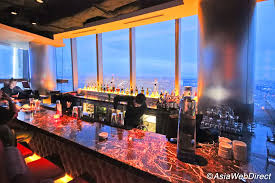
Which adjectives could describe the four types of area ?
NEXT UP:
Speaking exercise – imagine you live in the first picture. Describe the neighbourhood and your life. However, when you get a high-paying job, you want to take out a mortgage and move to the second picture. Describe that neighbourhood.
NEXT UP:
Introducing and expanding your answer
Do you like coffee ?
I like many drinks however coffee is my favourite because it tastes great and makes me wake up although too much will stop me from sleeping at night but, in my opinion, the benefits far out weigh the disadvantages.
NB (Latin – nota bene = note well, please read, important information)
I didn’t answer immediately but introduced the question.
Use of discourse markers to extend the answer
Saying something positive and negative about the subject
This was all one sentence – a complex sentence which you will need to start using in order to pass IELTS with flying colours
Try these:
Living in HCM
Free time
Working and studying.
New vocabulary
ubiquitous everywhere, very common
naïve innocent, inexperienced
stroll a gentle walk, for exercise (collocation: take a stroll)
a bazaar (noun) a permanent, covered market
bizarre (adjective) very strange, unusual
absent-minded extremely forgetful
sky-high, astronomical very expensive, maybe too expensive
predictable it is possible to guess the answer, people doing the same thing
hawkers
Street _______ are common in Vietnam, and they are _________ in District 1. It is nearly impossible for a westerner to take a ________ without being approached. Some claim to sell Ray Bans or designer sunglasses, but you would have to be extremely ________ to believe they are genuine ! They are all fake, probably made in China. Many people try to _____(collocation) money by selling to tourists especially around Ben Thanh Market, a kind of _______, though this is strictly for tourists as the prices are ____________ !
Pronunciation Practice
First time in Viet Nam – First impressions of Viet Nam
A vlog by Divert Living, posted just over two years ago and which has already received more than a million hits:
[American English accent]
Try 04:44 – 04:53
” … and I asked them, ‘How much is aqua (water) ?’ Aqua’s fifteen thousand, beer’s twenty thousand … of course I’m gonna get the beer, now … it’s just as expensive as the water.”
09:00 – 0913
“Fun fact, Vietnamese cuisine is considered one of the healthiest cuisines in the world … and, to go with the food, the size of the dining tables and chairs are super small.”








 Thay Paul's Notes