General Notes about my English lessons and life in Viet Nam.
Author: Thay Paul's notes
London-born English teacher, now living and working in Sai Gon, Viet Nam.
I want to use this site to post lesson notes, extra work, helpful links as well as general notes about my time in SE Asia and Viet Nam. I also want to give real classroom experiences and how to deal with real classes of noisy, unmotivated and resistant students. Additionally, I'll be posting links to films, publishing plays and stories, and introducing friends who work in the arts.
eat western food cook traditional Vietnamese food ?
Today, I went to have a hair cut
(Men = barber / Women = stylist, Both = hairdresser)
Traditional UK barbers for men with red and white poleLadies hair salon
I went to a local (in the area / near / close) hairdresser. After, we went shopping and while there, we bought special beer from Czech Republic – it is my favourite, and also some junk food.
SONG:
To help you with the ‘fre’ pronunciation, here’s a song from one of my favourite bands, REM. It’s called ‘What’s the frequency, Kenneth ?’
a screw loose // solid as a rock // tough cookie // life and soul
Extending vocabulary – personality types
Computer geek / nerd / social misfit
hunk / fit / health freak
Family man / new man / sensitive
boffin / egghead / professional man
Lazy / work-shy / good for nothing
workaholic / married to his job
arty / cool dude / beatnik
useless layabout / waste of space
slackers / drop-outs / cool guys / high school kids
There may be good and bad things about all of these. What do you think they are ?
Which type would you like to marry or which type do you think you are ?
REMEMBER– use expressions of opinion
“In my experience…” “As far as I’m concerned…”
“In my opinion…” “Personally, I think…”
“I believe that…” “It seems to me …”
Please Note: All photos are taken from Google Images or free photo sites, and are used for educational purposes only. No copyright infringement or offense is intended. If I have used your photo or image, and you wish me to remove it, just ask. This site is not monetized, I run it on my own dollar. Thank you.
We had a number of blogs devoted to idioms, so now it’s time to practice using them as part of your everyday English. Not only will IELTS students earn points, but every student will feel closer to English, and sound more like a REAL native-speaker. You can only learn so much from text books …
So, without further ado, a range of dialogues for you to practice:
Dialogue 1
Hello, how’s it going ?
Great, thanks. What have you been up to ?
Oh, same old, same old. Nothing new. Are you busy ?
A little.
Do you want a hand ? (Dya wanna hand)
That would be wonderful. Can you take over for a moment ?
Absolutely !
I’ll be right back. I need to print out some documents.
Dialogue 2
What shall I get on with ?
I just need you to finish off the progress reports.
Oh, piece of cake ! (pieceacake)
You’re an angel.
I know…hahaha.
Dialogue 3
Hello, do you have a minute ?
Sure, what do you need ?
Could we have a little chat ?
OK, let’s go to my office. Have a seat. Now, what’s on your mind?
I’d like an increase in our budget. We desperately need a new photocopier.
Unfortunately, those things cost an arm and a leg. What is the exact price ?
I’ll find out and get back to you. We may have some money in our budget.
Dialogue 4
How’s the new girl ? Are you showing her the ropes?
She seems to be OK but I still need to keep an eye on her. Are we having a meeting later ?
No, it’s been called off.
Ok, back to work. I need to finish off some expense sheets.
Yes, time is money.
See you later.
Dialogue5
What were you doing last night ? I tried to call.
I was watching TV. Was it important ?
We were having a party. I wanted you to come.
Your parties are such fun ! What did you do ?
We were all looking online for bargains. Anna bought some great shoes.
She’s always talking about buying shoes.
I was looking at the clothes from London. So stylish.
Dialogue6
Did you see the email from the Manager ?
Oh, that old windbag ! He was talking so much.
Yes, even his emails go on forever hahahah.
Did you bring your raincoat ? It was raining all night.
I know – it was raining cats and dogs.
They were thinking about calling off the meeting because of the rain.
Yes, maybe the traffic will be chockablock.
Dialogue7
Oh, do you know how to use this Zoom program ?
Yes, it’s very easy. It’s a piece of cake! Have you met Jane’s new boyfriend ?
He seems a real loser. As far as I’m concerned, she can do much better.
What does he do ?
Nothing, the work-shy layabout. I believe he wants her money.
In my experience, guys without jobs are hopeless. A waste of space !
How did she meet him ? She’s such a workaholic ! At the gym ?
Well, not at the gym, he’s no hunk ! It’s obvious to me it won’t last.
I’m convinced it’ll soon be over. She needs a good solid as a rock guy.
Last week, I showed my class how to speak, and think, in longer sentences. I chose a basic question as an example:
Where do you want to visit in Vietnam ?
I showed them a plan:
Introduction / First good point / second good point / something bad / conclusion.
I choose Hoi An
Introduction: DON’T answer immediately but introduce the answer by repeating or rephrasing the question:
Vietnam has many beautiful places but my choice would be Hoi An.
First Good Point:
Firstly, Hoi An is a historical city with a wonderful Japanese bridge and lovely old shops. At night, the shops use romantic lanterns.
Second Good Point:
Hoi An is close to Da Nang, so I can fly there easily and quickly. There are many things to see and do in the local area.
Now, something negative
However, Hoi An is very small and can be extremely crowded in summer. Maybe it will be difficult to find a hotel or a table at a good restaurant.
Conclusion
In my opinion, Hoi An is a very special place to visitbecause it is a town of Vietnamese culture.
How to build sentences:
Use adjectives to describe nouns (beautiful, historic, romantic)
adverbs to describe adjectives and verbs – give more information (very, easily)
opinion phrases (in my opinion)
linking words to connect positive to positive or positive to negative – discourse markers (however)
reasons why an action is being done (because)
Now – your turn: Where do you want to visit ? This can be in Vietnam or anywhere.
SECONDEXAMPLE:
I like coffee
I like coffee so much because it tastes great and makes me wake up although too much will stop me from sleeping at night but, in my opinion, the benefits far outweigh the disadvantages.
Work experience
I teach a brother and sister; the sister is a bit of a handful always chatting or texting during class. In complete contrast, the brother is a really good student as well as being a young gentleman. I feel he is an ideal student.
Now – your turn. Try these:
Living in Sai Gon or in your city
Free time
Working and studying.
Sentence building – becoming fluent and coherent
Use
adverbs
adjectives
opinions phrases
linking words
new vocabulary
EXAMPLE: I like coffee
Ask
how MUCH do you like it (adverbs) ?
What kind of coffee (adjectives) ?
What do you think about this ? (opinions)
WHY do you like it (give reasons)
interesting words, phrases, idioms
I really enjoy hot milky coffee because it helps bring people together as well as making our minds become quite active and somewhat excited. Coffee, in my point of view, is essentially useful if we use it in moderation. On the other hand coffee can be a dreadful waste of money as well as having a detrimental effect on our health. Despite the negative aspects, coffee makes me feel over the moon!
Here’s a quick blog for a class I’m covering tomorrow. As a warm up and review, I’ll play this music as the students enter the class: https://www.youtube.com/watch?v=fHWhebFt_r0
The video has a lot of new words, so I will pause the clip and board new words. Following the video, I’ll ask these questions. Being a large class, the students can work in teams, maybe each team having the name of an animal (that should be fun for Team Monkey).
Which big cat has spots, which has stripes ? Why do they have patterns ?
What is the name of the line that goes around the middle of the Earth ?
Rain forests has two things … what ?
What fruit can you find ?
What animals live at the top of trees ?
Is Vietnam in the tropics ?
BONUS POINTS:
Why are rain forests important ?
They absorb carbon dioxide and release oxygen
They are home to lots of different wildlife
They produce water and rainfall for the planet
Moving on rapidly – Adverbs
Give me a sentence for these photos:
EXAMPLE:
The jaguar runs quickly // The jaguar with black spots, runs very quickly
KaraokeA slothReading in a library ssshhhhhhh …Buster Keaton doesn’t stand in a very safe place
How do I follow that !
The remainder of the lesson is given over to reading, the theme being a music recital, so I can lead in by asking who play an instrument (then explaining that my long nails on my left hand are for playing guitar, not for scaring students).
Make short sentences using modal verb ‘like’ and ‘need’.
to practise // to dance // to study // to shop // to cook // to travel // to shout // to order // to book
I like to dance on Saturday nights
I need to study English
Adding information
Use adjectives (describe the noun) or adverbs (describe the verb)
I saw a man begging
I saw a poor old man desperately begging for money.
We heard a girl playing piano
He likes to walk in the park
She thought the museum was interesting
I hated the film
My cat eats fish.
Adding a reason
I hate coffee because it keeps me awake
I only eat healthy food because
Although I find Burger King very tasty, I avoid eating there because
(I find = I think something is //avoid= keep away from)
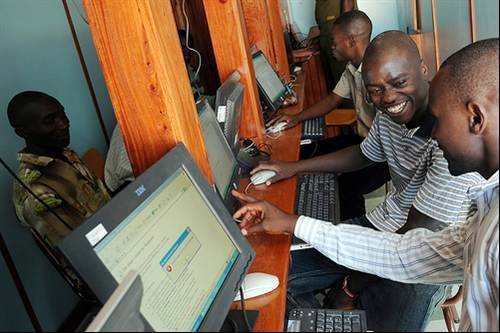
Internet cafes are very convenient but you should be careful because
Solar-powered cyber cafe in Nairobi, Kenya
To disagree:Formal with multiple reasons
Example: You can just use an internet cafe to book your ticket.
I disagree for the following reasons. Firstly,
I disagree for the following reasons. Firstly, I don’t think it’s a good idea to enter my personal data on a public server and secondly, I don’t know who’s watching me.
We’ve had two previous posts chockablock with idioms. Now, when push comes to shove, can you use them in your everyday English. Remember, those studying for IELTS will get extra points by demonstrating a knowledge of idiomatic language … so pull your finger out and put your nose to the grindstone.
This is an extended dialogue sequence. Practice the idioms and intonation and stress. You may wish to try short sections first, before attempting the whole exercise.
Hello, how’s your day been ?
Oh, so-so. And you ? Did you finish off the reports ?
Yes, more or less.
You better make sure they’re finished. You know what the Director’s like.
I know. If things aren’t done, all hell breaks loose !
Better keep on his good side. What else do you need to do ?
File some invoices, send off some emails and I need to get hold of Anna in HR.
I think she’s off sick today.
That’s a pity. Did you finish the wages ?
Yes, piece of cake ! Now I’m going through all the bank statements for the last quarter.
Not cooking the books I hope. Are we still going out tonight ?
Oh, sorry, I can’t know. Something’s come up.
What ? I thought you wanted to see the film. Johnny Depp’s in it.
I know, but I have to work late. Why don’t you ask the Director ? He’s really into cinema.
I don’t think so !
Why not ? He’s such a charming man.
Well, I beg to differ. He’s an old windbag and he drinks like a fish !
Mr Johnny Depp
My manager drinks like a fish
A charming manWriting false numbers – cooking the booksTalk, talk, talk … what an old windbag !
A sample of different speaking situations to help you practice:
Past simple
Idioms
Picture description
Going to a bank
Coffee shops
Talking about your children
Easter in UK
Simple Past
To kick off, two friends, Kim & Lyn are catching up, asking what they have done recently.
Kim Good evening, how are you ?
Lyn Very well, thank you. Long time no see.
Kim Yes, I’ve been out and about.
Lyn Really ? What did you do ?
Kim Well, I found agreat restaurant in District 1. I went there with Peter and Jenny. We tried food from England.
Lyn Yes, I heard about it. I got an email from Mary. What did you eat ?
Kim We ate roast beef and potatoes, and drank lots of hot, sweet tea.
Lyn Wonderful! Did you try the beer ?
Kim You know beer’s not my cup of tea !
Lyn How about Peter ?
Kim Oh, my goodness, he drank so much. He nearly fell over. What he didn’t drink, Jenny finished off.
Lyn I didn’t know she drank.
Kim She drinks like a fish. I spoke to Mary as well. She went to Thailand and brought back some gifts. The children loved them.
Lyn She is very sweet. I began to write her an email but then Peter phoned me. Would you like some tea ?
Kim Oh, now you are like an Englishperson.
Lyn Certainly !
Idiom: bear with me = wait a little time / a few minutes / a moment
Describe what you see in this photo. Use as many adjectives as you can.
I notice a lack of adjectives and adverbs in my students’ speech; they are able to complete abstract exercises, but I want to hear them incorporate what they’ve learnt into everyday talk, a natural feature. Therefore, the best way is practice … and practice.
Tell me what you see in the above photo. Adjectives can apply to what YOU think of the ladies (beautiful, gorgeous, plain, ugly), their age, origin, size, hair, clothes. However, I want to hear sentences.
Example: The gorgeous young Asian lady with the long black hair, is wearing a cute floral dress
(floral = flower pattern)
Now, verbs … describe their actions
Subject first; do NOT start with ‘She,’ or ‘They.’
Where are they ? What are they doing ? What have they been doing ?
How are they dressed ? How do they look (emotions)
What do you think they are talking about ?
Conversation practice Bank
Two friends are in a coffee shop
Cath This is a great cup of coffee ! Ok, what shall we do next ?
Di I have to run to the bank. I need to deposit some money.
Cath Good idea, I want to use an ATM. I also need to buy some dollars.
Di You can check the exchange rate at my bank. It’s not far, we can walk.
Cath Oh, I love your earrings. They are so cute. Mine are so ordinary !
Di No, yours are sweet. Mine look valuable but they are fake.
Cath Really ? They look amazing. A very unique design.
Di So kind. OK, have you finished your coffee ?
Cath Bear with me … oh, no … it’s started raining cats and dogs !
How many adjectives can you see ?
Speaking practice:
Pam Your daughter is gorgeous. Like an angel. She looks like you.
Uma Yes, but she takes after her father. She is very grumpy when she’s tired or hungry.
Pam My son is usually very good, he sleeps like a log, but now he’s teething.
Uma Ahhh, poor little thing but it will pass. Does he still keep you up at night ?
Pam Well, a little but not too much. I give up reading or watching films.
Uma I get it ! We have a reading group. Sounds good ?
Pam Hmmm … let me think about it and get back to you. OK, I must run … bye.
Speaking practice:
Bea What a day ! It was non-stop. No time to think. I need some coffee
Lyn Here you are. Tell me all about it, from start to finish.
Bea Firstly, I overslept, so I had to jump in the shower and skip breakfast. I was grumpy.
Lyn You ? No, you are always so sweet. Nearly always haha.
Bea Then I nearly got into an accident with some stupid Grabbike man.
Lyn Oh, some are so nice but others are total idiots !
Bea Exactly. Afterwards, my computer crashed at work and my boss yelled at me
Lyn What a terrible day. Now you need some coffee and a big piece of pie.
Speaking practice:
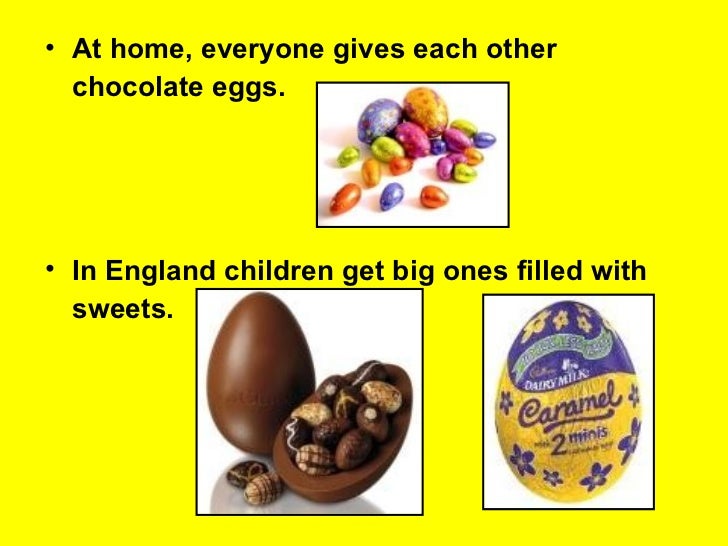
Nina Have you seen this western tradition ? They give chocolate eggs at Easter.
Eva Are you serious ? I adore chocolate. Who gives them ?
Nina Well, parents give to children, husbands give to wives, boyfriends to girlfriends.
Eva I haven’t seen them. Can you tell me about them ?
Nina Sure, it’s a large piece of chocolate shaped like an egg.
Eva I like the sound of that. A giant chocolate egg, sounds like heaven.
Nina That’s only part of it. Inside the egg, there are more chocolates.
Eva Ok, next year I am going to England. I will eat like a pig. A chocolate pig !
Test your idioms, expressions, phrasal verbs and creative writing
The hustle and bustle of everyday life, seen in this photo of Liverpool Street Station in London. People coming and going, jumping on trains, rushing to work, running around like headless chickens.
An everyday scene, with everyday expressions. This article is for you to test your knowledge of idioms, after reading the previous two blogs.
Without further ado …
Don’t just stand there ! Let’s get down to some work
Chop chop, jump to it
Write short sentences, or dialogues, using the following idioms and expressions.
what have you been getting up to ? // raining cats and dogs
chockablock // hold your horses // under the weather // chop chop // vicious circle
// can you follow me ? // a screw loose // not my cup of tea // kick the bucket //
cut and dry // turn over a new leaf // pull your socks up //
as much use as a chocolate teapot // let’s call it a day
You may not know some of the above, so just ask your teacher, or do an online search
Next up, using phrasal verbs
Write sentences using as many of these phrasal verbs as you can:
Phrasal verbs with ‘get’:
get back to studying / get on with work / get down to some work/ I get it ! (idiom) // get on with people /get on in life / get ahead in business /
Phrasal verbs with ‘make’:
make a decision / make your mind up / make a career move / a make-over / make an effort / make or break time / what do you make of it ?
Creative Writing
Scenario One: Two people meet on their first day at an English centre
Scenario Two: A manager has a meeting with a staff member who is always late
ONE
Introduce yourself // Where do they live // Why are they here ? //
What do they like ? // Compare music and films // What they plan to do //
Agree to be friends and study together
TWO
Quick hello // Reason why staff was late today //
Manager is unhappy – wants change // Manager suggests less wages //
Must renegotiate new contract // Staff has problems at work //
Staff apologies, promises to be better
You can decide what the characters are like – are they:

















/iStock_000075908411_Medium-574b74f35f9b58516548a60b.jpg)