I’ve spent so much time reading books about classroom activities, looking at websites and blogs only to reject the vast majority as not being suitable for my level of students. Here are a couple of games that have been successful over the years, in different centres and with different ages, though I usually employ them with students aged between 6 and 10. Adapt them as you wish, and have fun.
Word Battleship
This is based on the old paper and pencil game (later upgraded for the electronic and computer age).
A
B
C
D
1
2
3
4
Word Battleship
Board a grid as above (add more cells as required). Put the class into teams.
[I let them choose their own names, and if a student says, ‘Errrrrr,” then that’s the name I give them … additionally, this always gets a laugh]
Ask the teams questions based on previous lessons, general knowledge, whatever suits your class. You could either elicit an answer from the team as a whole, or individual members.
If the student answers correctly, they are allowed to choose a cell, example “C3.” On a separate sheet, have the same grid with scores assigned to each square. In the example that follows, C3 would score 25 points.
The following questions were used to review past tense grammar, as well as forming collocations:
Put the sentences into the past tense (simple past). Say complete sentence.
1 Last week we learn about technology
2 I buy a new iPhone last night.
3 Michael Jackson write many good songs.
4 Oh, no … I do not do my homework !
5 Have they decide what printer to buy ?
6 He see all the ‘Avengers’ films in one day !
7 It’s Friday ! I think today was Wednesday !
8 On holiday, I walk along the beach.
9 My grandmother send me an email.
10 Have you play the new video game ?
Complete the collocation
11 (go) to the cinema [I _______ to the cinema]
12 (play) guitar
13 (take) a photo
14 (chat / go) online
15 (do) voluntary work
16 (make) a decision
A
B
C
D
1
25
50
10
5
2
10
25
100
25
3
50
10
25
5
4
5
25
10
50
Snakes and ladders
Another activity based on a classic game. I first used this in a very energetic class of 9 – 11 year olds and, thanks to the size of the room, I was able to draw a grid on the floor and use students as ‘counters’, to move around the ‘board’.
If that isn’t possible, just board a grid like so:
START
GO FORWARD 2
GO BACK 1
GO FORWARD 1
HA HA BACK TO START
GO BACK 3
FINISH
All you need is a die or dice and different colour board markers. As before, arrange the class in teams, then ask each team a question. The student who answers then throws the die (preferably NOT at the teacher but one thing at a time), and I chart their progress on the board. You can decide whether or not the students need an exact score to land on Finish or not … play it by ear.
[ ‘dice’ is generally accepted for both singular and plural. For English-language learners it’s probably better to use ‘dice’.]
Some lessons can be rather hard-going, too much IELTS listening or speaking practice so, to mix things up, I use some little diversions to cleanse the palate.
[Today, I will not explain every new phrase – look them up yourselves, write them down and USE them and USE them and USE them !]
Therefore, here’s a little activity I used last week. It’s a hit song from the early 1980s, in fact, it was massive ! The song is an example of Synth pop which is pop music played, or predominantly played, on keyboards or synthesisers. Synth pop, which dominated the charts during my teen years, was not really my cup of tea, I was more into jangly guitar bands such as The Beatles, The Byrds and, in the 1980s, we had The Smiths.
Having said that, I really liked this hit by the band Human League who came from Sheffield which is in the north of England. The single was tremendously successful, staying at number 1 for five weeks in the UK as well as reaching the top of the US charts although for just three weeks which is still an amazing achievement.
Without further ado, the activity: What is happening in this video. Secondly, what is the story – can you understand what the man says and then, can you understand the woman’s reply ?
Try answering these questions:
What job did the woman have ?
How long did it take for the women to become a big star ?
Is the man leaving the woman ?
Does the woman still love the man ?
What does the woman want to do ?
And now, the full lyrics:
You were workin’ as a waitress in a cocktail bar When I met you I picked you out, I shook you up and turned you around Turned you into someone new Now five years later on, you’ve got the world at your feet Success has been so easy for you But don’t forget, it’s me who put you where you are now And I can put you back down too
Don’t, don’t you want me? You know I can’t believe it when I hear that you won’t see me Don’t, don’t you want me? You know I don’t believe you when you say that you don’t need me It’s much too late to find You think you’ve changed your mind You’d better change it back or we will both be sorry
Don’t you want me, baby? Don’t you want me? Oh Don’t you want me, baby? Don’t you want me? Oh
I was working as a waitress in a cocktail bar That much is true But even then, I knew I’d find a much better place Either with or without you The five years we have had have been such good times I still love you But now, I think it’s time I live my life on my own I guess it’s just what I must do
Don’t, don’t you want me? You know I can’t believe it when I hear that you won’t see me Don’t, don’t you want me? You know I don’t believe you when you say that you don’t need me It’s much too late to find You think you’ve changed your mind You’d better change it back or we will both be sorry
Don’t you want me, baby? Don’t you want me? Oh Don’t you want me, baby? Don’t you want me? Oh
Don’t you want me, baby? Don’t you want me? Oh Don’t you want me, baby? Don’t you want me? Oh Don’t you want me, baby? Don’t you want me? Oh Don’t you want me, baby? Don’t you want me? Oh Don’t you want me, baby? Don’t you want me? Oh Don’t you want me, baby? Don’t you want me? Oh Don’t you want me, baby?
DISCLAIMER: THIS IS FOR EDUCATIONAL PURPOSES ONLY. THIS BLOG ISN’T MONETISED IN ANY WAY. THE VIDEO AND LYRICS ARE TAKEN FROM THE INTERNET. NO COPYRIGHT VIOLATION IS INTENDED, AND I WILL REMOVE THE BLOG UPON REQUEST WITHOUT PREJUDICE.
THANK YOU TO THE SONGWRITERS, THE BAND AND THE PUBLISHERS
Today, we shall learn the story of Theseus and the Minotaur. This story is over 3 000 old, and comes from the country of Greece. Here is the flag of Greece:
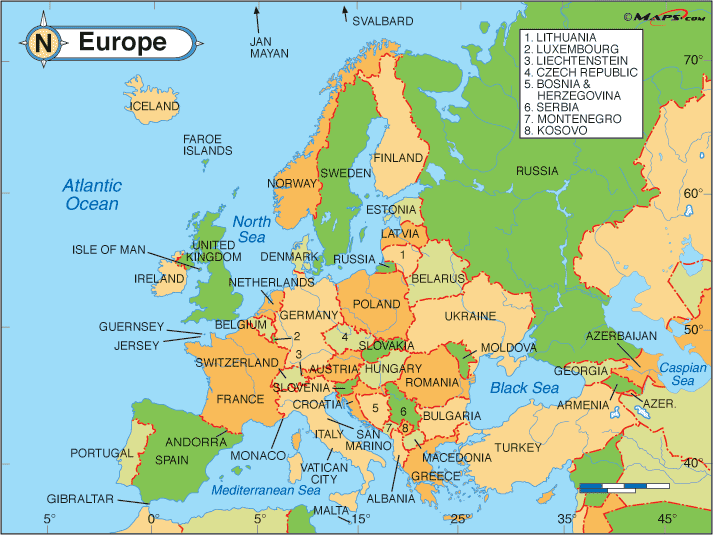
Greece is in Europe. It is a very hot country, and has many stories from history. The capital city is Athens.
Athens, the capital of Greece
Have you ever seen something like this before ?
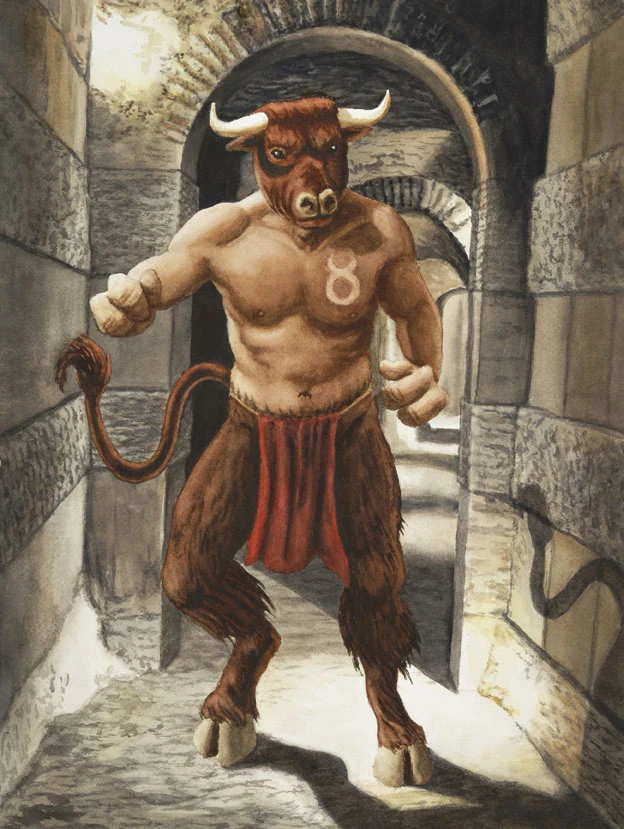
This is the Minotaur, half man, half bull. He was extremely strong, extremely angry and very, very scary. He lived near Greece, on the island of Crete:
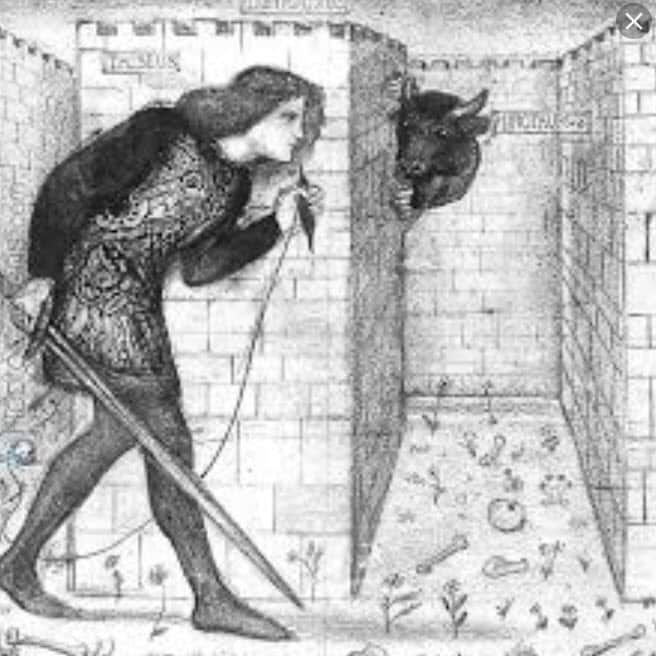
The Minotaur lived underground in a big maze called the labyrinth. Every year, the King of Athens had to send 14 children for the Minotaur to eat. This is a labyrinth, a huge maze. It is very easy to get lost inside a labyrinth.
The king had a son called Theseus. He was a hero. He decided to go and kill the Minotaur.
The King of Crete had a daughter called Ariadne. When she saw Theseus, she decided to help him. She gave Theseus a big ball of string. He tied it to the door of the labyrinth, then used it so he wouldn’t get lost:
Theseus found the Minotaur.
They had a long fight because both Theseus and the Minotaur were very strong. Finally, Theseus won and killed the Minotaur.
Then he returned to Athens with Ariadne. The people were so happy, and Theseus became a hero in Greece.
Some sample questions to help get a class speaking to each other IN ENGLISH, and prepared to do some work. I use these with students aged about 9 – 12, at lower-intermediate level.
We start with a survey where the students have to walk around, speaking to each other and trying to …
Find 3 people who:
Name // 1 // 2 // 3 //
Hobby
Play an instrument
Draw or paint
Read books
Watch films
Learn English
Have a pet What pet ?
For advanced students, encourage them to probe for more information – what books are read, what instrument(s) are played, etc.
Speaking exercise
This can be done in pairs, small groups or as a class survey.
What was the last film you saw ? Did you like it ?
How many people live in your house ?
What is hard about learning English ?
How often do you chat online ?
Which social media sites do you use ?
What is your favourite food ?
Do you often eat western food ? Do you sometimes eat fast food ?
Have you tried Korean or Japanese food ? What did you think ?
Basic friendly conversations used with work colleagues, people we don’t know very well or people we have just met.
Did you see the news on TV last night ?
How long have you worked here ?
The traffic was so bad this morning.
The weather is very cool for this time of year.
Echo questions
A continuation of small talk, we use these to show interest in what someone has just said to us. Here, John speaks to his Vietnamese co-worker Ms Tuyen:
John: I can speak German.
Ms Tuyen: Can you ? (What other languages can you speak ?)
John: Ms Nguyen went to Thailand.
Ms Tuyen: Did she ? (Did she go on holiday or for work ?)
Now … your turn. Add the echo question, then try to ask a follow-up question.
He likes K-pop
We are going to the pagoda later.
Ms Thinh has a new job.
Thay Paul loves T-ara. Does he ?
Keep conversations going:
Talk about:
house prices in your city / favourite hobby / your hometown /
why you have OR don’t have a pet / an interesting program you saw recently
What you want to do in the future.
Small talk language:
I see / Do you really think so ?
That’s a good point / I hadn’t thought of that
Oh, that’s interesting / May I just add something ? /
Oh, where is that exactly ? / Yeah, right ! / Sure / OK
Try some scenarios:
Directions to the city centre (or choose a location in your city).
One student is a tourist, the other is a local
Ask for help. Other must offer as much help; how to get there, the best way, the price, the dangers.
Body language – distance, expression, intonation, eye contact etc
Also back channeling (expressions such as “Oh, right,” “OK, yeah,” “Really, that’s great.”
Music – What do you like ?
I love it / adore it / enjoy it / I hate it / I can’t stand it
Working in pairs or small groups, gather information about these countries, then make a presentation. Add something about yourself ;would you like to visit these countries ? Why ? What would you do there ? What would you eat and buy ?
Capital cities
Brasilia (Brasil) Seoul (South Korea)
Ottawa (Canada) Egypt (Cairo)
Seoul, South Korea
Population
Brasil 183 888 841 // South Korea 51 047 000
Canada 37 000 000 // Egypt 97 055 000
Brasilia
Language
Brasil – Portuguese // South Korea – Korean
Canada – English & French // Egypt – Arabic (EgyptianArabic)
Hey ! Ho ! Let’s Go ! Let’s kick out the jams with some new vocabulary from the last lesson:
disappointed (adj) // dread (verb) // spare a few minutes (phrase) // a drive (noun) // big time ! (US expression, popular culture // popular fiction or literature // prima donna
Take a few minutes to read them … THEN …
Our school is having ________ to use less plastic, as well as encouraging people to recycle.
My sister spends so much time in the bathroom, she is such a _________
If we don’t pass IELTS with at least 7.0, Thay Paul is going to be angry at us _______
Miss Julie didn’t get the job at Apple; she was terribly ______________
I don’t understand this app, can you ________ to help me ?
I was terrified of the speaking test, I was _______ it.
The Harry Potter books, although tremendously successful, are considered ‘popular fiction’. Charles Dickens or Jane Austin, on the other hand, are classified as _____________ .
My student told me about a famous Hemingway story called ‘The Old Man and the Fish’ … I think she got the title wrong … _______________ !
“What do you mean, ‘The Old Man and the FISH ?’ I won the Noble Prize for that book.”
And now, time to put our noses to the grindstone How to get a killer IELTS speaking score … There are four areas to focus on … they are … ?
“You’ve forgotten ?”
OK, take it easy, to recap, we listen for
Fluency – use of discourse markers. WITHOUT A WIDE RANGE OF DISCOURSE MARKERS YOU WILL NOT GET HIGHER THAN A ‘5’.
Lexical resources – big words. Know synonyms and multi-syllable words to impress the examiner. Not to mention, a sprinkling of idioms, phrases, phrasal verbs, the whole nine yards.
Grammar – it’s OK to make a few mistakes, grammatically, but what we want to hear are complex structures – basically, altering the structure of a sentence or including several pieces of by using information in one sentence by using relative pronouns.
Stress and intonation – listen to native speakers and COPY how we speak, when we stress words, when we ‘swallow’ letters, our body language.
We need to hear examples of ALL the above or YOU WILL NOT GET HIGHER THAN A ‘5’. I will be furious if that happens, big time !
Now, look at these idioms:
It’s raining cats and dogs // It costs an arm and a leg // piece of cake // I’m burning the candle at both ends // once in a blue moon // pass with flying colours //
And these words:
Boring: tedious // forgetful: absent-minded // expensive: sky high // what will happen: predict // everywhere: ubiquitous.
How to use these in your responses:
IELTS question: What do you do in your free time ?
Staying at home is boring so I go swimming. I meet friends for coffee. If it’s raining, I like to play video games.
IELTS – style:
For me, staying at home is terribly tedious, so I frequently go swimming. It’s fun, healthy and doesn’t cost an arm and a leg. Sometimes it’s raining cats and dogs so I enjoy playing video games, big time !
IELTS question: Who do you live with ? Notice how we start we a supportive clause
Because I’m still a student, I live at home with my family, that’s my mother, father, younger brother and older sister. My sister is such a prima donna, always in the bathroom, always buying new clothes. Furthermore, she dreads doing housework because she may hurt her nail varnish. She’ll wash up once in a blue moon.
IELTS question: Do you often eat out ?
Well, that’s a great question as I detest cooking. Having said that, I’m extremely lucky because in my neighbourhood, restaurants are ubiquitous, from expensive sea food to affordable street food. I eat crab or lobster once in a blue moon as the prices are sky-high, moreover, I actually prefer simple, mouth-watering street food.
IELTS question: What are your plans for the future ?
Make your own answers, using at least TWO discourse markers, TWO adverbs, TWO low-frequency words AND the idiom given.
TEAM 1: Well, there is so much to say about that subject, where shall I start ? (use ‘nose to the grindstone’).
TEAM 2: It’s funny you put that question to me because earlier today I was just thinking about … (use ‘burn the candle at both ends’).
TEAM 3: As I young Vietnamese, I … (use ‘pass with flying colours’).
If (he/ she / they) had known it was so (expensive, noisy, boring …)
Emma, 19 Backpacker. Likes shopping, dancing, eating street food. She didn’t book ahead and was too tired and hot to walk around looking for a cheap hotel so she had to stay in a four-star hotel and spend nearly all of her money.
Japanese family. Like family activities, souvenirs and quiet nights. They stayed in the noisy backpacker area, with shouting and screaming and drunken karaoke all night.
Young men wanting a ‘Stag Night’ party, here to have a last hurrah ! They chose a quiet town in the Mekong Delta, but there was only one bar and it closed at 8.00 pm.
(a stag night is a wild party for a man before he gets married. There is normally a lot of drinking … and other activities)
Jewish students. They do not eat pork, or shell-fish. Want to see history and temples. Their guide keeps taking them to eat sea-food and pork restaurants because the guide only speaks Vietnamese and Chinese, and the students only speak Hebrew and English.
If these visitors came to your city or town, could you recommend places for them to visit ?
What are your suggestions?
Remember, Emma wants somewhere fun but cheap, the family want someone quiet but close to family attractions, the young men want lots of bars and clubs, while the Jewish students have strict dietary rules.
Now … some more exercises:
I was very hungry but too lazy to cook, so I went out to grab a bite to eat.
I thought I’d try the new restaurant.
I, obviously, ordered pho, (traditional Vietnamese food).
However, after I had eaten
I saw the chef !
If I hadknown the chef was so filthy, I wouldn’t have eaten there !
This is the 3rd conditional.
Something that happened in the past BUT you can’t change it now.
If I had known the film was so bad, I never would have gone !
If he had bought his wife flowers, she wouldn’t have been angry at him
If they had studied English, they would have passed the test.
Finally …
… a true story that my history teacher told me back in London.
My teacher was a somewhat dishevelled gentleman in his mid-30s. Let’s call him Mr Bowditch:
Mr Bowditch, history teacher at an east London school
Mr Bowditch lived in a bedsit, which is basically renting one room in a large house and sharing the kitchen and bathroom with other tenants. His room was not particularly comfortable:
One night, Mr Bowditch was in his room and began to feel a little hungry. He wanted some chocolate so decided to go to the off-license and buy some sweets (an off-licence is a shop that sells basic food and sweets but also alcohol and cigarettes. It used to be open until 11.00pm when most shops would close around 6.00 pm). He decided to buy, among other items, some ‘Fry’s Turkish Delight’ a sort of jelly covered in chocolate:
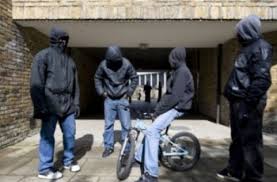
OK, so far so good. However, Mr Bowditch lived in a rather bad part of London, it wasn’t always safe to walk alone at night. Unfortunately, on the way home, Mr Bowditch meet the following young men:
They called out to Mr Bowditch and stopped him walking. They demanded:
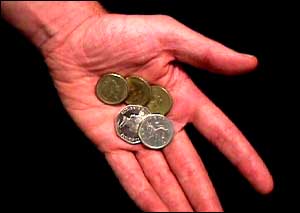
Mr Bowditch had none, as he had just spent his money on sweets (candy). They didn’t believe him and began to search him. He showed them:
That was all he had … a few pounds, about 100 000 VND. The men became very angry and aggressive. Suddenly, they heard a police car siren. The men tried to drag Mr Bowditch into the tunnel, away from the road but he is very tall and stopped them. As the police car got closer, the men ran away. Mr Bowditch has never eaten ‘Fry’s Turkish Delight’ again.
There are several instances of the third conditional in the above story.
If Mr Bowditch had bought sweets on his way home, he wouldn’t have gone out later and been mugged (mugged means being robbed, often with violence or the threat of violence).
If Mr Bowditch had gone to a different shop, he wouldn’t have meet the muggers.
If the police car hadn’t been passing, Mr Bowditch might have been seriously hurt.
If Mr Bowditch hadn’t been so tall, he would have been dragged into the tunnel and maybe beaten or worse.
The structure: the first clause starts with ‘If’ then using a comma before completing the sentence. The first verb can be positive or negative (in the examples, I use ‘had’ and ‘hadn’t’).
We use this to talk about things that DIDN’T happen.
Why the long face ? Someone looks miserable or unhappy.
She can talk the hind legs off a donkey ! Talking non-stop !
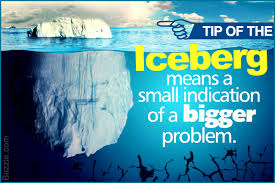
The tip of the iceberg.
Piece of cake No problem, easy, no trouble
Same thing, day in, day out everyday is exactly the same, very boring.
On the lookout looking for something
Cooking the books cheating with the company accounts. Writing false information.
A bright spark someone who is very clever
You’re pulling my leg ! joking but pretending to be serious.
The boot’s on the other foot the situation has changed.
You can’t miss it you will certainly recognise it when you see it, when you are there.
Big time ! (US modern popular culture) Absolutely, totally, very, very much
Brass monkeys it’s extremely, painfully cold
Once in a blue moon something that happens extremely rarely
Bob’s your uncle there you are ! No problem, all fixed ! (UK slang)
Now … your turn
Practice using these saying in everyday conversations … answers, as per usual, at the end of the blog.
1) I love the beach. but I rarely go, just ……………………………….
2) If you’re late for class again, the teacher will be furious …….
3) You look so sad ……………………… ?
4) I’m freezing ! It’s ……………………. in here
5) Seriously ? You can marry three wives in UK ? No, you’re ……..
6) Oh, my job is so tedious, …………………………
7) She wouldn’t shut up ! She ….
8) It’s no problem; I’ll clean your laptop, remove the virsus and Trojans and ………
9) I used to earn more than my wife but she got a big promotion, so now …………. She earns more than me !
10) I need a new pair of shoes. I’m ………………… for some high quality Italian leather.
11) The accountant was sacked. He was ……… but that was not all ! That’s just the …………………… He was also stealing computers and selling them.
12) This lesson was a ………………… for me because I’m such a ……………….
13) I didn’t use ‘you can’t miss it.’ Write your own sentence.
Answers
1) once in a blue moon
2) big time
3) why the long face ?
4) brass monkeys
5) pulling my leg
6) Same thing, day in, day out
7) can/could talk the hind legs off a donkey.
8) Bob’s your uncle
9) the boot’s on the other foot.
10) on the lookout
11) cooking the books / tip of the iceberg
12) piece of cake / bright spark
Well, if you’re such a bright spark, write you own sentences and test your partner.
Please Note: All photos are taken from Google Images or free photo sites, and are used for educational purposes only. No copyright infringement or offense is intended. If I have used your photo or image, and you wish me to remove it, just ask. This site is not monetized, I run it on my own dollar. Thank you.









































 Thay Paul's Notes