Beginners’ English: Past tense exercises

7th July 2020

Grammar: verbs

Good list of 100 verbs in 3 forms at: https://www.linguasorb.com/english/verbs/most-common-verbs/

Learn English Online | British Council

Grammar – verb practice

Let’s start to use more verbs. Here’s the 15 most common:

infinite / present / past / past participle (verb 3)

1 to be am / was / been

are / were / been

2 to have have / had / had

3 to do do did done

4 to say say / said / said

5 to go go / went / gone

6 to get get / got / gotten

7 to make make / made / made

8 to know know /knew / known

9 to think think / thought / thought

10 to take take / took / taken

11 to see see / saw / seen

12 to come come / came / come

13 to want want / wanted / wanted

14 to use use / used / used

15 to find find / found / found

Past Tense Exercise

1. He (walk) to school yesterday.

He WALKED  to school yesterday.


2. They (do) their homework last night.

They ——-  their homework last night.


3. You (are) lazy last week.

You ——- lazy last week.


4. That woman (buy) a new book this morning.

That woman  ——– a new book this morning.


5. The janitor (clean) the blackboard yesterday.

The janitor  ——–  the blackboard yesterday.


6. My mother (cook) food yesterday.

My mother  ——– food yesterday.


7. This morning my teacher (teach) English.

This morning my teacher  ———-  English.


8. I (am) hungry yesterday.

I  ——- hungry yesterday.


9. The gardener (cut) the trees last month.

The gardener ———— the trees last month.


10. She (drink) milk this morning.

She  ——— milk this morning.


11. Last month the man (ride) a horse.

Last month the man ——–  a horse.


12. Sam (go) to Hong Kong last year.

Sam  ——- to Hong Kong last year.


13. The birds (fly) in the sky this morning.

The birds  ——— in the sky this morning.


14. I (know) Tom’s sister last year.

I  ——– Tom’s sister last year.


15. The joiner (make) tables and chairs yesterday.

The joiner  —— tables and chairs yesterday.


16. The farmer (grow) rice last year.

The farmer ——–  rice last year.


17. Two weeks ago the boy (has) a new bicycle.

Two weeks ago the boy  ——- a new bicycle.


18. He (feel) happy yesterday.

He  ——- happy yesterday.


19. We (work) hard last week.

We  ——– hard last week.


20. The students (meet) in the hall last week.

The students  ——– in the hall last week.
Asian female drinking milk stock photo © WONG SZE FEI (szefei ...
She drank milk

Sing On, Cowboy: Head to Old Town Scottsdale to See the Singing ...
He rode a horse and played guitar
Where to Find Girls in Hong Kong (Plus 9 Dating Tips) - Global Seducer
They went to Hong Kong

NOW make short sentences or stories from these exercises.

A. Complete the sentences, put the verb into the correct form, positive or negative. (simple past tense) 

1. It was warm, so I  off my coat. (take)

2. The film wasn’t very good. I  it very much. (enjoy)

3. I knew Sarah was very busy, so I  her. (disturb)

4. I was very tired, so I  to bed early. (go)

5. The bed was very uncomfortable. I  very well. (sleep)

6. Sue wasn’t hungry, so she  anything. (eat)

7. We went to Kate’s house but she  at home. (be)

8. It was a funny situation but nobody  (laugh)

9. The window was open and a bird  into the room. (fly)

10. The hotel wasn’t very expensive. It  very much. (cost)

11. I was in a hurry, so I  time to phone you. (have)

12. It was hard work carrying the bags. They  very heavy. (be)

Slight Hitch after birds tern on the island twitchers | UK | News ...
In this film, many birds flew into a room


B. Complete the exercise with the verbs inside the box. (simple past tense)

buycatchcostdrink
fallhurtsellspend
teachthrowwinwrite

1. Mozart  more than 600 pieces of music. Mozart WROTE more than 600 pieces of music

  1. ‘How did you learn to drive?’ ‘My father ——- me.’ 

    3. We couldn’t afford to keep our car, so we  ——– it. 

    4. I was very thirsty. I  the ——– water very quickly.

    5. Paul and I played tennis yesterday. He’s much better than me, so he ——–

     easily. 

    6. Don ——– down the stairs this morning and  his leg.

    7. Jim  ——– the ball to Sue, who ——–  it.

    8. Ann ——–  a lot of money yesterday. She  ——– a dress. It   ——– 100.

Past Tense

What did you do last night ?

Last night, I listened to music and played computer games.

Regular verbs add -ed:

Verb+ed
For example:
want+ed→ wanted
work+ed→ worked
Verb, ending in –e+d
For example:
dance+d→ danced
live+d→ lived
Verbs, ending in –y: y → i + ed
(* There are exceptions (for example played) )
For example:
cry→ cried
try→ tried
One vowel verb: double the consonant
For example:
stop → stopped
blog → blogged

Good verb list here: https://www.linguasorb.com/english/verbs/most-common-verbs/

Black Young Man Listening Music and Dancing by Stockland on Envato ...
Last night he listened to music and played computer games

irregular verbs – no rules.

Present – Past / Present – Past / Present – Past

I am – I was / begin – began / have – had

eat – ate / go – went / drive – drove

tell – told / hear – heard / catch – caught

buy – bought / write- wrote / see – saw

Listening: How many past tense verbs ?

Yesterday, I went to visit my friend. We played badminton then walked in the park.

After, we ate lunch and drank beer. Later, I bought coffee and wrote some emails.

Corrections: Write in the past tense

I (am) born in London and (arrive) in Viet Nam in 2015. I (work) as teacher in District 1 and 3 but I (want) to work near my home. Last week, my friend (have) a party. She (dance) all night and I (hear) her singing. In the morning, she (catch) a plane and (go) to Thailand.

Chut Thai: Thailand's Beautiful Traditional Dress
Welcome to Thailand

Beginners’ English: The passed is past – pronunciation guide

7th July 2020

Meet Tara Houska, Native American advisor to presidential hopeful ...

A quick blog to help with pronunciation.

In English, verb can be regular or irregular.

Regular verbs add -ed or -d in the past tense.

EXAMPLE:

I walk to work // I WALKED to work

I play guitar // I PLAYED guitar

She smiles on TV / She SMILED on TV

They dance in T-ara // They DANCED in T-ara

T-ara's Hyomin Speaks Proudly Of The Compliment She Got From ITZY ...

-ed past tense verbs pronunciation

Words have 3 end sounds:

‘t’

‘d

‘id’

If the word ends with: 

ch / f / k / p / s / sh / thi – The sound is ‘t’ look = ‘lookt’

t /or / d/ – The sound is ‘id’ visit – ‘visitid’

Other sounds are ‘d’ bang = ‘bangd’

What is the correct pronunciation for these regular verbs ?

Look = Looked / laugh = laughed / end = 

beg = / visit = kiss = 

brush = / breath = love =

Read these sentences:

He cleared up the mess / He rolled up the newspaper / I have visited India

No Homework ! That sounded good / Teacher shouted, ‘No way !’

We all worked hard today / Tom talked so much / 

The students played many games and laughed.

Top 10 Places to visit in India for First Time Traveler
They have visited India

IELTS: use adverbs frequently, correctly and confidently

3rd July 2020

IELTS students need to know an incredibly wide array of adverbs so, with that in mind, here’s an exercise which can be easily adapted as a team game. Complete the sentences with suitable adverbs. Piece of cake, right ?

Use a thesaurus and dictionary to boost your vocabulary.

Asian University Life Concept Group Young Asian College Students ...

Word Fill

Adverbs of manner & ‘but’, ‘so’ and ‘even though’

(Fast or quickly – both can be used as adverbs, fast more for speed, quickly for time e.g. the animal runs fast and eats quickly.)

Note: ‘well’, ‘fast’ and ‘hard’ are irregular adverbs of manner.

Use a positive adverb for (+) and a negative one for (-)

Example: She sings (+) beautifully but plays piano (-) terribly.

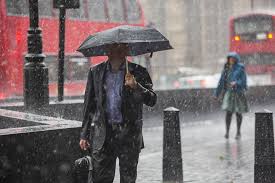
It is raining (-) heavily so I will bring an umbrella

UK weather forecast: London | London Evening Standard
WELCOME TO LONDON

I will go along with you ……I am not really hungry

……….I am not hungry, I will go with you to KFC

Grabbike is cheap …..they drive so (-). 

She failed her test ……..she studied (+)

Do I look like Batman ? Then why are you speaking so …..(-)

Christian Bale says Heath Ledger 'ruined my plans' for Batman and ...
Batman has amazingly good hearing … but not all teachers have so SPEAK UP !

We have learnt many idioms ….that is just the tip of the iceberg.

He loves music …much ….he sings (-).

She never eats the food ………she works there.

……..she speaks English very (+), she is afraid to speak to westerners.

Rosé (BLACKPINK) confessed that she used to be a terrible singer ...
She sang terribly even though she loves music

Beginners’ English: I was reading your blog – Past continuous

2nd July 2020

Past Continuous

15 Clever Old-Fashioned Party Tips We Should Bring Back
Talking, laughing, dancing and drinking

Subject + was / were + verb ing

I was reading a book

You were taking a rest

At the party, we were singing, playing music, eating, drinking, talking and laughing.

USES:

Something was happening in the past

When I came to class, teacher was playing music.

[The teacher was ALREADY playing]

How to Teach Children to Play Guitar

Compare with Past Simple:

When I got to class, teacher played music

[Teacher started playing AFTER I arrived]

Something was happening in the past:

Last night, I was reading the news.

Something that happens all the time OR a long time ago:

They are always shouting at each other [happens all the time].

A Wife Caught Her Husband Boarding a Plane with His Mistress

When he was young, he was always playing piano [a long time ago].

The Piano Boy: This 10-year-old's playing skills will shock you ...

Practice:

When I phoned my friends, they (play)———-Monopoly.

When I phoned my friends, they were playing Monopoly.

  1. Yesterday at six I (prepare)————–dinner.
  2. The kids (play)——in the garden when it suddenly began to rain.
  3. I (practice)———–the guitar when he came home.
  4. We (not / cycle)———all day.
  5. While Alan (work)——–in his room, his friends (swim) ——-in the pool.
  6. I tried to tell them the truth but they (not / listen )————-.
  7. What (you / do)———–yesterday?
  8. Most of the time we (sit)——–in the park.
  9. I (listen)———to the radio while my sister (watch)————-TV.
  10. When I arrived, they (play)————–cards.
  11. We (study)———English yesterday at 4:00 pm .

Beginners’ English: ‘Have to’ or ‘must’ ?

1st July 2020

Two Asian College Girls Doing Stock Footage Video (100% Royalty ...

‘must’ or ‘have to’

‘have’ is a main verb, ‘must’ is a modal auxiliary verb

have can be followed by to + verb, and can be used in different tenses 

e.g. I have to go home

He has to do his homework

I had to write two reports (past tense)

A lot of fear': Asian community a target of racism amid ...
We have to wear a face mask

‘must’ is an auxiliary verb so:

is followed by a main verb

is never used with ‘to’

I must exercise NOT I must to exercise

Why exercise is best medicine | The Guardian Nigeria News ...
They must keep fit, they must exercise

‘have to’

an obligation made by someone else

‘must’

an obligation made by yourself

I have to get a visa to enter China OR not allowed into China

New Entry-Exit Measures Issued for Foreigners Traveling to China ...

I must do more exercise [This is MY choice, not forced.]

Rapid rise in obesity in India: Facts and reasons - Education ...
I must do more exercise … I must do A LOT more exercise. I must stop eating pizza and pasta !

‘have to’

Sub + have to + infinite

POSITIVE: She has to try harder

NEGATIVE: He does not have to work tomorrow

QUESTION: Do you have to be so noisy ?

‘must’

Sub + must + base verb

I must sleep soon

You must go shopping

He must be nicer to his sister

Negative: Students must not (mustn’t) cheat in class

Question: Must we visit your family ?

Exercises: (answers at end of blog)

1. Yesterday I ________ finish my geography project.

 must
 mustn’t
 had to

2. She will ________ wait in line like everyone else.

 must
 have to
 has to

3. All employees ________ on time for work.

 must be
 mustn’t
 have to

4. We ________ forget to take the chicken out of the freezer.

 have to not
 must
 mustn’t

5. If you are under 13 you _____ to get your parents’ permission.

 have
 must
 musn’t

6. Your daughter may ________ try on a few different sizes.

 have to
 had to
 must

7. You _____ get here as soon as you can.

 must
 mustn’t
 have to

8. Do you _____ work next weekend?

 have to
 must
 mustn’t

9. Bicyclists _____ remember to signal when they turn.

 mustn’t
 must
 has to

10. Angela, you _____ leave your clothes all over the floor like this.

 mustn’t
 must
 have to

Not In My House! When You Can't Take the Mess in Your Teenager's Room

ANSWERS

1 had to // 2 had to // 3 must be // 4 mustn’t // 5 have // 6 have to // 7 must // 8 have to // 9 must // mustn’t //

Adult Class Level 2: Recent review – once in a blue moon

28th June 2020

Coffee ~ ologist | Jun ji hyun, Korean actresses, Asian beauty
How often do you drink coffee with a beautiful Korean actress ?

To review recent expressions

once in a blue moon / not as much as I use to / not as much as I’d like to / from time to time / now and then / occasionally / only in my dreams !

How often do you:

Watch foreign films ?

movie 2003] Lover's Concerto 연애소설 - k-dramas & movies - Soompi ...

See your boss smile ?

Dealing with an Angry Boss

Play badminton ?

Rent Badminton Game in Lagos Nigeria - Fontt Enterprises

Hang out with friends ?

Cheerful asian young women sitting in cafe drinking coffee with ...

Go to the movies ?

Movie Theaters for Kids in the San Francisco Bay Area

Get a pay rise ?

On the Job by Anita Bruzzese: 6 Tips to Help You Get a Pay Raise

Linking words:

and / as well as / and also / along with

These link positives or negatives:

I like tea as well as coffee He plays football and also badminton 

Big C is quite cheap and also has a great choice

but / however / having said that / on the other hand

These link positives to negatives / negatives to positives:

Jet Mart is convenient. Having said that, it is (it’s) extremely expensive.

Czech beer is not easy to find in Sai Gon, however it’s fantastic quality.

‘therefore’ is a conclusion word:

Bài Ca Thịt Nướng King BBQ Hari Won - YouTube

King BBQ is outstanding and has a magnificent salad bar. Mr Park is reasonable (so-so) quality, but more expensive. Therefore, we will eat at King BBQ in future.

Theme: coffee in Sai Gon

Beautiful young asian woman drinking coffee in the terrace of a ...
People Drink Coffee On Street At Old Quarter In Hanoi, Vietnam ...

There are so many choices in Sai Gon. Tran Nguyen has the best quality but is very expensive. On the other hand, Milano is incredibly cheap and very convenient however, many people smoke there. Highlands is really popular. Having said that, it is not cheap. Street coffee is extremely cheap but terrible quality !

Listening exercise:

http://esol.britishcouncil.org/content/learners/skills/listening/having-meal-restaurant

Mamma Mia - Italian Restaurant & Bar ở Quận Hoàn Kiếm, Hà Nội ...

Last Friday, I went out for dinner with Claire and Helen. Helen’s got a new job so we went out to celebrate. Claire booked a table for 7.30pm at her favourite Italian restaurant in town. When we arrived, the waiter showed us to our table, gave us some menus and took our drinks order. We were really hungry so we decided to have a starter and a main. We placed our order and chatted for a while. Our garlic bread soon arrived. We were hungry, so it disappeared very quickly! Next, the waiter brought our mains. He said, “Buon Appetito!”, which is Italian for ‘Enjoy your meal!’. Claire and Helen chose pasta and I had pizza. The food was delicious, but I couldn’t manage a dessert! Claire and Helen had some ice cream, but I just had a coffee. I can’t wait to go again!

Young Learners, Level 4: We’re all going on a summer holiday

23rd November 2019 E Up 4 U8 L2 (updated from June 15th 2019)

Warm Up: Summer Holiday and ‘Screen Test’ game. First watch the clip: https://www.youtube.com/watch?v=Xddl8fpf2uA

Class put into groups of three or four. Each team given a name of a European city, such as London, Venice, Barcelona and Paris.

First question – in which countries are your cities ?

Next ‘Screen Test’: The students watch the opening song then have to answer multiple choice questions.

1) What was the road sign at the beginning of the clip ?

London // Berlin // Paris ?

2) What was the number of the bus ?

9 // 19 // 28 ?

3) What colour was the first car behind the bus ?

red // white // blue ?

4) How many children wore a hat ?

1 // 2 // no children

5) How many men were riding bicycles ?

3 // 4 // 6 ?

6) How many women were in the car ?

3 // 4 // 5 ?

BONUS POINTS – Can anyone sing the song – just two lines

“We’re all going on a summer holiday // we’re all going for a week or two.”

Image result for cliff richard driving bus

Last lesson the subject was future tense and activities. Therefore, I shall board some times – this afternoon /  tomorrow / next Monday / next Thursday / next weekend / next month

Under these, I shall write some scrambled nonsense, e.g. ‘who as ees’. The students, placed in teams, have to elect one person to find the corresponding flash card somewhere in the room (‘see a show’) and then say a third-person sentence e.g. “He’s going to see a show this afternoon.’

Information gathering: Class into three or four groups. One member will be going away and the others in the team have to get information from him or her, then present to the class.

Team 1: Going to Phu Quoc island / is going next month / will be staying in a hotel near the beach / will be going swimming / is going with family

Team 2: Going to London / is going next week / is going to see a show / is staying with family / is going with older sister.

Team 3 : Going to Ha Noi / is going next Tuesday / is going on a bus tour / is going to stay in a big hotel / is going with school

Team 4: Going to Dak Lak Province / is going tomorrow / is going to ride an elephant / will stay in a tent / is going with VUS TAs

The selected member will stand at the front of the class with the information sheet. One teammate must run up, ask one question then tell the rest of the team, who will write the information down. Then a different teammate will run up and ask.

Planning a day out

I have a niece and nephew coming to Saigon. The teams have to plan a day for them including what to see and do, how to travel and what to eat. Of course, they need to but some souvenirs, so where are the best places ?

My ‘niece & nephew’.

We shall probably have to board many ideas first. Where do tourists go in HCM ? What is traditional food ? How can they travel ? Do the girls want to take the niece and the boys take the nephew only ?

Hopefully, this will encourage a lot of speaking and ideas and I can show a map of HCM to help.

And if the students are still drawing a blank (or being too lazy to think), this could inspire them: It’s spoken in English, with text, but with Viet accent (can start at 0:20 seconds)

 https://www.youtube.com/watch?v=G0tncoIxT1s

As with all ‘real-world’ videos, the film should be stopped and new words or expressions boarded. The students are later made to write the words down (the majority will simply NOT do any kind of writing unless pressured), and then encouraged to use them where appropriate.

That should easily cover the first hour. After the break, we hit the books, do the workbooks and fast-finishers get an activity sheet, while I can spend at least some time checking the pronunciation and grammar.

Adult Class, Level 3 (class 1): Stereotypes.

19th August 2019. AEF 3B pp. 28 – 29

Review: comparatives and superaltives

Theme: stereotypes

Objectives: increase vocabulary and sentence building skills. Encourage more talking, especially between students, using target language.

Warm up: Just to get the student’s settled in (and to allow for students arriving up to an hour late) and to help them build longer sentences. Compare the following:

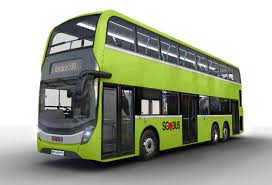
LTA looking at buses with 3rd door at the end, Singapore News - AsiaOne
Image result for bus in sai gon

We have two public transport vehicles, two buses. The first is from Singapore, the second from Sai Gon.

EXAMPLE: The bus from Singapore is cleaner than the Sai Gon bus.

To extend this, using a relative clause:

The first bus, which is from Singapore, is cleaner than the second bus, which is from HCM City.

To further extend, using relative clauses and discourse markers:

The first bus is from Singapore, which is known for its cleanliness, and is the most attractive as well as looking the most modern of the two. Having said that, buses in HCM City, despite being somewhat dirty, are remarkably cheap, just 2 000 VND for students, 6 000 for adults.

Try making complex sentences from these pairs of images:

Image result for winter in scotland
Winter in Scotland
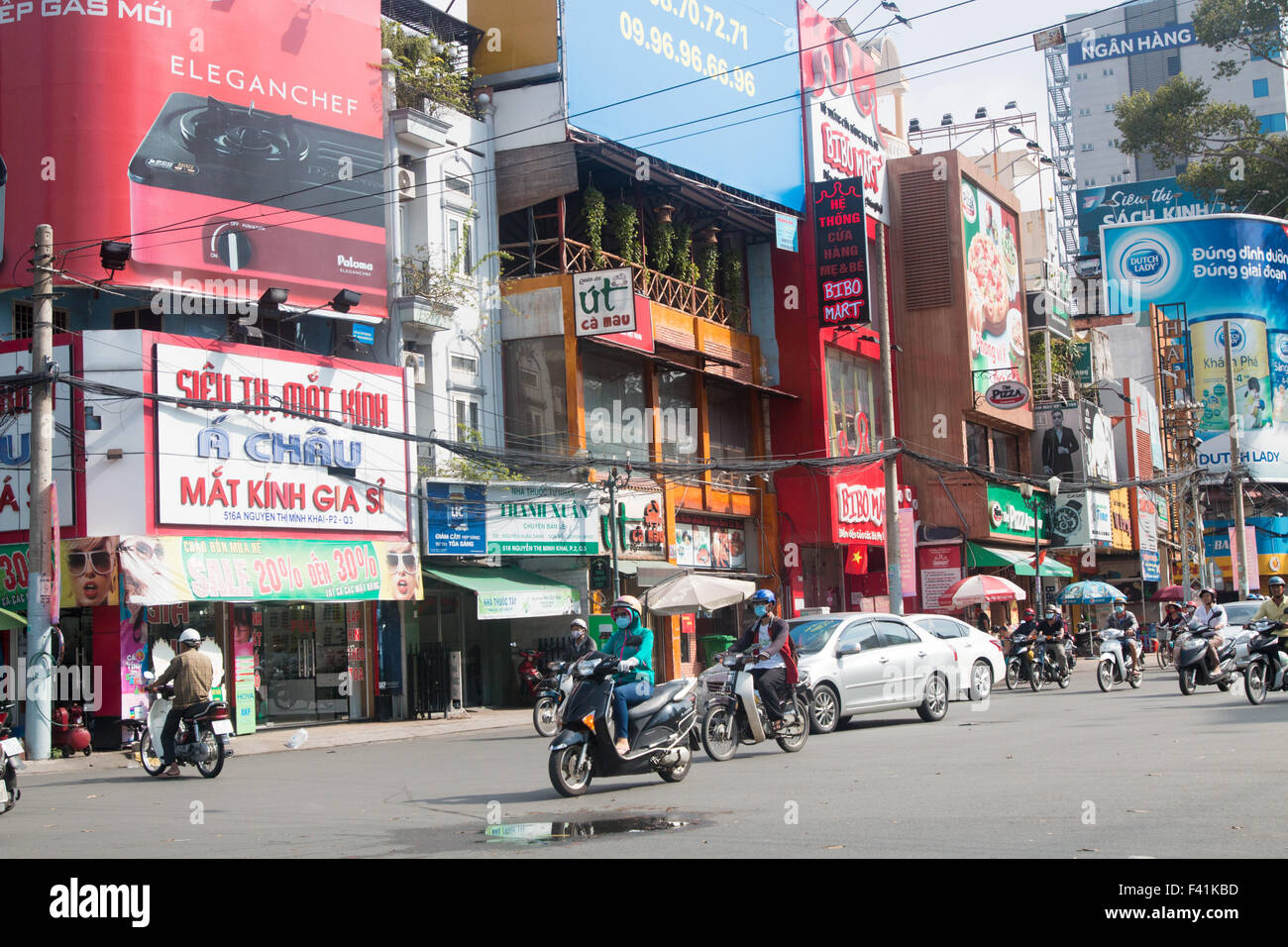
Image result for street scenein hcm city
December on the streets of Sai Gon
Image result for playing chess
Playing chess
Harrods food hall - Ảnh của Harrods, London - Tripadvisor
Harrods food hall
Banh Mi stall - Picture of Saigon Bakery, Can Tho - Tripadvisor
Street food, Sai Gon

Now compare these two songs: The former (first) is British from the 1980s. The band is The Specials, the song is called ‘Stereotypes’, the latter (last) is a modern pop song from Vietnam.

https://www.youtube.com/watch?v=iGxSP98ymw8

https://www.youtube.com/watch?v=Rz4FbACtfd0

And that leads us into tonight’s theme: stereotypes. This means having an idea what people will be like because of where they are from, how they look, how they speak etc.

EXAMPLE: what do you think of this man:

Bob Dylan Arrested, Police Officer Says “That's Not Bob Dylan” | Guffaw in  AZ

What do you think of him – how he looks, how he’s dressed. What job do you think he does – does he even have a job ? Where does he live ? Is he, in fact, homeless and sleeps on the street ?

The answer …

He is music legend and Noble-prize winning writer and poet Bob Dylan

Image result for Bob dylan lp covers

Discuss these stereotypes (noun) and stereotypical (adjective) images:

All Vietnamese men are lazy and constantly smoke
Why are Chinese students so good at maths? | South China Morning Post
All Asian children are excellent at maths
Image result for women shopping
All woman are obsessed (absolutely love) shopping
Image result for fat eating americans
All People from USA are obese (too fat) and talk too much and too loudly
Image result for english people drinking tea
All English people drink tea … ALL the time

To what extent do you agree ?

I agree / I agree 100% / I agree to an extent / There may be some truth there /

I disagree / I totally disagree / That is very unfair / That is offensive /

That’s just a stereotype / I know for a fact that isn’t true !

Try to explain in full sentences giving reasons and using discourse markers.

Quick fire: In groups, discuss; what do you think of when I say:

Made in China

Thailand

People in Hanoi

Apple iPhones

What do you think of this image ? Does it represent the real Vietnam, or is it just to attract tourists ?

Related image
Why is Vietnam so dirty? - Quora

Young Learners, Level 4: Art for art’s sake.

16th May 2019

Everybody Up Unit 6, Lesson 4

We can start with descriptions of people:

Warm up: Student description

In a previous lesson, the class learnt about basic adjectives to describe appearance. I will therefore choose a student and describe the physical characteristics, e.g. this student has long straight hair, is not very tall, and wears black glasses. I will choose some students and give them a student to describe, while promoting the value ‘be polite‘.

To continue the theme of Art and creativity, I will show some artists. The class already met Frida Kahlo but I thinks it’s time they met Dali !

Dali normally get a reaction (especially when we have fun elongating his name as long as possible). It’s also a chance to learn a few new words:

creative / genius / unusual / strange / surreal

The last word maybe a little advanced, but it’s a good way to introduce new words; inside the word is ‘real’ so surreal has something to do with reality … but what ? Here’s a clue:

This is a mixture of reality and fantasy. The students can say which is which … and why does Dali give the elephants tuba faces … is there a reason or is it just crazy ?

I will then expect the student to form basic sentences using these new words, and not forgetting new vocabulary from previous lessons.

Next up, is a scene from the popular Children’s classic, ‘Alice in Wonderland’.

Again, a mix of reality and fantasy. How would the students describe this ? It could be turned into a game … students put into small groups and given boards and markers. Points for the best vocabulary. What is happening ? Also, how to tell a story – an introduction and then mentioning items point by point, linking with appropriate discourse markers. YES ! I’m going to make the students study hard today.

Always good to give a model answer, tell the students what I expect to hear, or WILF as I’ve heard it termed in some schools (What I‘m Looking For).

Now, to continue the theme and introduce some listening and reading skills, a video. This is the singer-songwriter Don McLean with ‘Vincent’, about the artist Vincent Van Gogh:

https://www.youtube.com/watch?v=oxHnRfhDmrk

This version also has the lyrics, as well as various paintings by the artist such as:

Then, with time against us, and a lot to get through, we’ll turn to the book work. They will watch a video which also shows sculpture, mosaic and photographs. The book also mentions Van Gogh, and a sculpture based on the Mad Hatter’s Tea Party from ‘Alice’.

A useful lesson will be the subjectivity of art – it is a chance for the student to think and to give their views, and to try to develop the English skills to express their thoughts. Clearly, this is a perfect opportunity to introduce some fixed expressions to express opinions:

In my opinion …

I feel that …

For me …

And even an idiom – it’s not my cup of tea !

Finally, to wrap up after the spelling tests and writing projects, a little bit of fun. Who better than Dali (or at least a great actor playing Dali) ?

https://www.youtube.com/watch?v=_q1V_xjHhLM

Young Learners, Level 4: Be creative !

1st May 2019

Everybody Up 4, Unit 6, Lesson 1

By this stage, the students are able to form basic sentences, though they need constant encouragement to develop speaking skills, as well as being told to write down new words and expressions … and then USE them.

The lesson should involve all skills, and allow the students some active sections, to break the monotony of sitting for two hours. New vocabulary should be introduced and recent lessons should be revisited and revised. Today’s theme is ‘be creative’ so we’ll start with:

Warm up: Word Bomb (mind map)

Board ‘Free Time’ and ask the students what they do for fun, making them speak in sentences, not just shouting out single words. We can develop this by asking secondary questions for example, ‘I play football,’ ‘Where do you play ? With whom do you play ? Are you in a team, or play with friends ?’

Pre-teaching: New vocabulary

Today we have six flash cards, all in the present simple (e.g. sing songs, write stories). The class repeat the text and I check for pronunciation and meaning.

Activity: What do my friends do ?

Around the room, I stick six sheets of paper, each with a single word:

Fashion / Art / Music / Cinema / Models / writing

I then show a single Powerpoint Slide with six of my ‘friends’ and ask the students to match the friend to the activity. I will board the six names on two sides of the whiteboard and the students, divided into two teams, have to match them. My ‘friends’:

My friends are: Nicky, Ian, Stella, Bill, John & Frida.

After the students have guessed, I’ll show the following pictures:

Nicky likes music. He sings songs
Ian likes model trains. He makes models.
Stella likes fashion. She designs clothes
Bill likes writing. He writes stories.
John loves cinema. He makes movies.
Frida enjoys art. She paints pictures.

Next, a chance for the students to get up and mingle, so I’ve prepared a questionnaire, utilising a lot of past tense verbs:

Student Questionnaire 

NAME:

What did you do on December 31st ?


What was the last film you saw ? Was it good ? Did you enjoy it ?


Do you like painting or drawing ? Do you go to museums ?


Have you ever lost anything ? What was it ?


We can listen to some answers, and the class can correct any errors in grammar. This will also help the students speak to each other in English, so that not all communication goes through the teacher.

Next up: Student description

In a previous lesson, the class learnt about basic adjectives to describe appearance. I will therefore choose a student and describe the physical characteristics, e.g. this student has long straight hair, is not very tall, and wears black glasses. I will choose some students and give them a student to describe, while promoting the value ‘be polite‘.

Video time: listening & new vocabulary

In our first class, we watched a kids’ guide to London and I boarded the following:

I reckon / huge / a little bit / brilliant

The students were told to ALWAYS have a notebook and pen handy, and to write down new words. However, this is not a common practice in Vietnam, so they have to be told … and retold.

Today’s video will be a short clip from a kids’ parade in the USA: https://www.youtube.com/watch?v=llEAqex8qM4

We only need show the first minute, but the students can be asked to identify various creative activities that they see. Then it’s time for some action !

Board Slap

I’ll stick three of today’s six flash cards on the cards and select three students. They’ll be given a swat, and they have to run to the board and swat or slap the card they like best, saying, “I like … movies, painting etc.” This leads into:

Thay Student.

One of the top students plays the role of teacher. They come to the front and ask students, “Do you like …. songs, models etc ?” Students must answer in a sentence: “Yes, I do,” or “No, I don’t.” Thay Student will follow-up by asking why or why not …”Because it’s ….”

Here we need some good adjectives. To give them a good pool of words, we can have a quick hangman game first, so we have adjectives such as:

boring / exciting / interesting / fun / educational / creative / difficult /

Finally, I like to play a song for the students to listen to and pick out key phrases. Today’s singer is actually Swedish, but she sings in English. https://www.youtube.com/watch?v=upnTg2GPgTM

This is Lykke Li, and we can start the video around the 1-minute mark. The title, and the key phrase is something the class should, by now, be familiar with; ‘a little bit’. It’s also a good lesson in how Standard written English differs from spoken English, as we often swallow the ‘t’ sounds. Have a listen … you don’t need to play the whole song if it’s not your cup of tea … just a little bit.