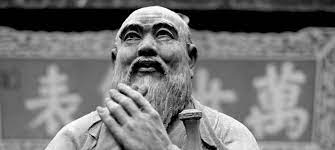
To help my young learners have a better classroom experience, I have to introduce some basic rules, based on the teaching of the Chinese philosopher Confucius (551 BC – 479 BC).
RESPECT
Your parents
Your grandparents
Your teachers
If your teacher asks you to do something, you must not say, “No.”
You will be sent out of the class and the centre will tell your parents.
Sit nicely. Listen to your teacher.
Write down new words.
Do not shout or disturb the class.
I will give you two warnings. On the third warning, you will be sent out of the class and Student Care will tell your parents.
You will then have to bow to your teacher and the class and say sorry.
Education is one of the most important parts of life
“Isn’t it a pleasure to study and practice what you have learned?”
The Analects, Chapter I
From my visit to Ha Noi, 2014.
Students come to this temple, which was built in 1070, to bring good luck and success in exams. The temple, an oasis of calm in the bustling metropolis of the nation’s capital, has been rebuilt and restored several times over the centuries.
Temple of Literature, Ha Noi.Temple of Literature, dedicated to ConfuciusSome of my students in Ha Noi 2014
Happy St Patrick’s Day – St Patrick being the patron saint of Ireland, a country famous for enjoying a drink … and then some ! In Chicago, which is a bustling, vibrant city in USA’s mid-west, the river is coloured green. However, too much
Guiness will give me a bad headache the following morning. I will definitely have a hangover. That means it’s time to stop drinking so much, I need to change my bad habits … which brings us to an idiom for my new class; it’s time to turn over a new leaf.
In this case, a four leaf clover for good luck.
So, we have a new class and they need to start learning language that will help them ace the IELTS test.
Let’s hit the ground running and recap the basic idioms you’ll be using every week, as well as the new vocabulary from last night. Are you ready … ?
Let’s go !
First off the bat, some basic idioms:
it’s raining cats and dogs
it costs an arm and a leg
piece of cake
I’m burning the candle at both ends
once in a blue moon
pass with flying colours
turn over a new leaf
put your nose to the grindstone
These are the basic idioms I introduce, as they can be employed in many situations.
A good introductory blog, with IELTS tips and advise may be accessed here:
Let’s hit the ground running and put it to the test – what idioms would you use ?
Taxis in Sai Gon are very expensive, they _______
I want to get a high score, I want to ______
We can’t go out in the rainy season because it’s always ____________
You need to stop going out every night and missing school. You need to _____________
The test was so easy, it was a __________
She works all day, then studies all night; she’s _________________
I must be more serious about learning Vietnamese. I have to _______
Ms Liêu simply adores Champagne however, because it _____________ , she only drinks it __________________________________.
Last night’s class also generated some additional idioms, expressions and vocabulary, to wit:
bear with me – please wait a very short time
like a madhouse – a place or area that is crazy, too noisy, too busy etc
Kick the bucket – UK idiom, very informal, means to die
My hands are tied – I am obliged to do something, I have no choice
An expression – to kill two birds with one stone – to achieve two different results by doing one action:
“Hey, let’s meet at the coffee shop. We can meet up and work on the project at the same time.”
I also introduced you to borrowed words – vocabulary from other languages. Our first example derived from Italian – lingua franca (a common language)
EXAMPLE:
I am studying English, which is incredibly important, because it is a lingua franca meaning it will enable me to communicate with people from all over the world.
Furthermore, we covered some adjectives to describe various neighbourhoods:
gritty / industrial
quite / safe / residential
boring / peaceful / suburban
bustling / vibrant / city centre
Extra advise – any time you hear a new word or expression:
Finally for Ms Dương, who expressed concerns over the amount of vocabulary one needs to learn, here’s the quote from the Chinese philosopher Lao Tzu (C6thBC) :
To review recent lessons, try these questions – answers at end of blog.
For teachers, you could add these into a computer game, assigning different points based on the difficulty of the question.
A) Name two famous artists
B) If you study hard, you will ______________ a qualification
C) Tell me two kitchen appliances that are useful but not essential
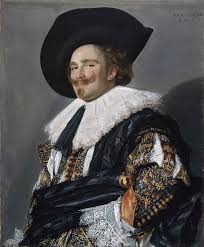
D) What kind of painting is this ?
‘The Laughing Cavalier’ by Franz Hals
E) What two types of electromagnetic radiation can be found in a home ?
F) English Tests can make you (a negative adjective)
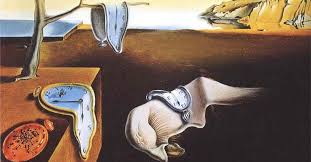
G) Give your view on this work of art:
‘Persistence of Memory’ by Dali
H) Hyper means: i) more than average ii) average iii) less than average. Give two examples.
I) Which is correct i) She loves reading books ii) She loves to read books iii) Both
J) This young lady is in a coffee shop. Such shops are ________ in this city. What big word (low-frequency word) means ‘everywhere’ ?
K) What type of painting is this ?
By the French artist Corot, and if you can’t appreciate the beauty of art, then I feel sorry for you.
L) A student who comes to English class and then refuses to speak English is i) wasting their time ii) wasting their money iii) normal in Vietnam iV) all of the above
M) One small town in Virginia, USA has banned … what … and why ?
N) A great adjective we use when we can’t describe something that we really like.

O) A word meaning ‘to light up’. Can you give an example from Viet Nam ?
P) Mark Zuckerberg growed up in New York, and drop down of Harvard University … correct the two phrasal verbs.
Q) Teaching unmotivated students is boring, t_______ & m_______.
R) A term for someone who wants to be a powerful decision-maker is a ___________________________
S) An idiom meaning one has no choice
T) What type of art is this ? Give two expressions to indicate that you don’t like it
by Jackson Pollack (USA)
U) How often does Thay Paul smile in class ?
V) A nurse will hold a patient’s wrist to check the _______
W) Say this:
The brother bit the sister so the mother beat the brother
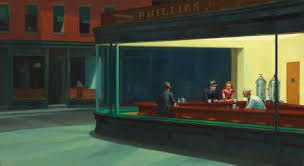
X) Time to think and use your imagination. What feelings does this painting inspire in you ?
‘Nighthawks’ by Edward Hopper
Y) Why are you studying English ? Seriously … why ?
Z) What is the name of this effect ?
A) Picasso, Leonardo, Michelangelo, Renoit, Dali, Munch etc …
B) attain
C) blender, sieve, potato peeler, whisk, egg-timer, meat slicer etc
G) start with ‘In my opinion …’ or ‘As far as I’m concerned …’ etc
H) i) more than: hyper-market, hyperinflation, hyper-sensitive
I) both are correct (check Cambridge Dictionary for confirmation)
J) ubiquitous K) a landscape L) all of the above
M) cell phones and WiFi as they interfere with the radio telescope.
N) ineffable O) illuminate, such as the lanterns in Hoi An.
P) grew up & dropped out of Q) tedious & monotonous
R) a mover and a shaker S) my hands are tied
T) not my cup of tea, I wouldn’t call that art, it leaves me cold, I don’t get it at all etc
U) in this class, NEVER (except at 9.00 pm)
V) pulse
X) [no irony intended … well, maybe a little] ‘Nighthawks’ is often interpreted as showing loneliness, sadness, depression, urban alienation. I could explain more, but nobody in this country gives a hoot about art.
Furthermore, she loves to wear Givenchy perfume but I prefer to spend my hard-earned* on Dior.
In the modern parlance, ‘Did you see what I did there ?’ I followed four auxiliary verbs (‘hate,’ ‘love,’ ‘like’ & ‘prefer’) with infinite verbs. I sense that I’ve already lost the interest of 90% of my readers with these grammar terms, but hold your horses and I’ll explain, I’ll ‘cut the crap‘, if you will.
OK, breaks down like this: an auxiliary verb is a ‘helping’ verb; we need more information to understand what the speaker means e.g.
I want … (what do you want ?) // He needs … (what does he need ?) // She loves … // We want … etc
An infinite verb simply means a verb in no tense (past, present or future). It is simply formed thus:
to + base verb
Examples: to eat / to go / to study / to procrastinate
Infinite has no tense, by which I mean it is incorrect to say,
“Last night I to see a film,” (past tense)
“She to go home,” (present) or
“Tomorrow he will to take a test.” (future tense).
We can combine an auxiliaryverb with an infiniteverb, as demonstrated in the heading and subsequent paragraph.
Occasionally, a student may question my use of grammar, or mention that they have been told a different rule, to wit, last night a student informed me that, according to a different teacher, auxiliary verbs such as ‘like,’ ‘love.’ ‘hate,’ HAVE TO BE followed by a continuous verb:
I hate shopping NOT I hate to shop
He loves watching films NOT He loves to watch films
We like drinking wine after work NOT We like to drink wine after work
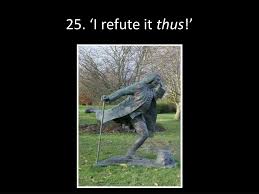
To Quote Dr Johnson:
“I refute it thus,” :
I like to play guitar / I hate to hear karaoke / I love to listen to my friend Pete’s online radio show
We can use hate, like, love and prefer with an –ing form or with a to-infinitive:
I hate to see food being thrown away.
I love going to the cinema.
I prefer listening to the news on radio than watching it on TV.
He prefers not to wear a tie to work.
In American English, the forms with to-infinitive are much more common than the –ing form.
There is a very small difference in meaning between the two forms. The -ing form emphasises the action or experience. The to-infinitive gives more emphasis to the results of the action or event. We often use the –ing form to suggest enjoyment (or lack of it), and the to-infinitive form to express habits or preferences.
So there you have it, straight from the horse’s mouth.
What can we learn from this ? Well, teachers are only human (mostly) and can make mistakes. Teachers who are not native-speakers often teach from books that may simplify grammar and may, inadvertently, be incorrect in their assertions. The books may be outdated; they may even be wrong.
Just because something is written in a book, doesn’t mean it’s true.
Check for yourself, be proactive in your learning; if you have internet access, check reputable websites.
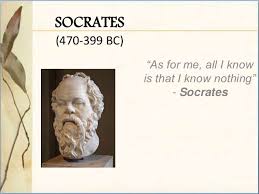
Furthermore even native-speakers can make mistakes and I’ll be the first to admit this (even if I don’t have the wisdom of Socrates, not by a long chalk).
This is the link I’ll be using tonight. Other blogs include genres of art, early C20th surreal art, and finally an introduction to art for younger learners.
Let’s dive in ! To my classroom students, look at the quote from Tracey Ermin … do you recognise any words from last week’s lesson (on electromagnetic waves) ? Did you notice ’emit’ & ‘pulsing’ ? Do you recall what they mean ?
With art, you can be honest and say what you feel – is it not a ‘yes’ or ‘no’ situation. Quite simply, do YOU like the art ? Can you express why ? What does the art say to you ? What feelings does it evoke ?
You don’t have to know anything about art – but it is a useful way to extend your English. Here are some expressions you could use:
“As far as I’m concerned…” // “Speaking for myself…”
“In my opinion…” // “Personally, I think…”
“I’d say that…” // “It really appeals to me …”
I don’t get it at all // It leaves me cold
It’s not my cup of tea // I wouldn’t call that ‘art’.
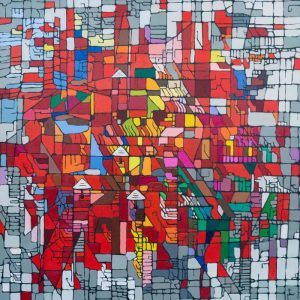
What do you think of these Vietnamese works, as an introduction to unusual art:
‘Happy Market’ by NGUYEN QUY TAMby Thanh Chuong
Finally, a very famous Norwegian painting, which I was lucky enough to see in Oslo:
‘Skrikt’ or ‘The Scream’ by Edvard Munch
How do you respond to this ?
Here’s what sunset looks like in Oslo:
Suddenly, the blood red sky ceases to be abstract and becomes realistic. Hope you can practice using opinion phrases, as well as incorporating new words into your everyday English. Tonight, from the book we had:
The ability to use complex sentences, fluently and naturally, will greatly improve your IELTS score (in both speaking and writing). Therefore here’s a little exercise I used in last night’s class. Test your ability to speak in IELTS-style sentences.
Quite simply, take a basic subject and see how complex you can make it by adding information to every noun.
Good idea. Here is my friend Tony:
Tony is from Liverpool. He is 32. He is a reporter. He works on ‘The Daily Talk’. This is shown on ICB network.
Remember, relative pronouns who / which / where / whose
Tony, who is 32, is from Liverpool, which is famous for football as well as The Beatles. He occupation (or profession) is reporter, working for ‘The Daily News’ which is a show broadcast on the ICB network, which is located in London, where Tony now lives.
You wouldn’t usually include so many clauses, but it is an exercise, similar to a musician practising scales. Ideally, in the speaking test, you will be able to use complex sentences at the drop of a hat.
NOW … YOUR TURN
Make a complex sentence about your hometown.
Sai Gon / Tp HCM
Sai Gon: in southern Viet Nam / largest city in VN / population over nine million / many museums (such as History, War Remnants, Independence Palace) / traditional food (such as Phố) – what is Phố ? What is it served with ?
Traditional Phố for my friend Silk Cords
Next, tell me about someone in your family.
Who is that person ? What relation to you ? Where do they live, what is their profession ? Describe their physical appearance and personality and try to add an anecdote, to make your presentation more personal.
Finally, in last night’s listening practice, there was mention of the Hearst Castle in California:
William Randolph Hearst, who was a very famous newspaper tycoon, lived in this castle, which is in California. Hearst was immortalised in the film ‘Citizen Kane’, a classic movie from 1941 by Orson Welles, who directed and starred in the film which is often cited as being the best film ever made.
New vocabulary and expressions:
Last night’s class produced these:
The weather is Sai Gon is sweltering and terribly humid
monotonous (mono = one) = very tedious
I don’t give a monkey’s = I really don’t care
occupation (better word for job) / profession = need to be qualified such as doctor, nurse, lawyer, pilot, chef etc
most notably = Orson Welles made many films, most notably ‘Citizen Kane’.
Ôi Trời Ơi – OyVey! – Are you kidding me ! Last night’s class was chockablock with new, high-level vocabulary:
Ok, take it easy, let’s break it down. Firstly, you were not expected to learn or remember everything; I told you to … well, you tell me. Try to complete the sentences with the new words. If you need help, the vocabulary box follows the questions, while I’ll put the answers at the end of the blog.
1) I didn’t understand everything, but I got the ________
2) Light and sound travel in ___________
3) X-Rays and microwaves are a form of (type of) __________________
4) For me, trying to pronounce Vietnamese words is a real ____________
5) Can you buy twelve eggs ? Yeah, buy me ______________
6) I don’t understand the Zoom instruction video, there’s so much computer __________
7) One of y tá (nurse) Cam’s duties is to take a patient’s ________ , to measure their heartbeat.
8) They love each other dearly, but they don’t always see __________________
A scene from ‘Who’s Afraid of Virginia Woolfe ?’ with Richard Burton and Elizabeth Taylor who actually were married … twice, in fact.
Tonight’s class will focus on the town of Green Bank, Virginia (which is a southern state in the USA). Green Bank is a very small town. The population in 2019, according to Wikipedia, was 182 yet it has become famous as the town without Wi-Fi. Wireless internet is banned and mobile phones (cell phones USA) are unable to make or receive calls, nor can they send texts. The reason …
the world’s largest fully steerable radio telescope
Telescopes can be used for light or for sound. The above picture shows the radio telescope, which is 485ft tall, at Green Bank. It listens out for sounds from space. You may hear electromagnetic radiation in the class video.
Light and sound travel in waves. A star will emit light waves but electromagnetic radiation can also travel by radio waves. Giant telescopes are situated in areas with low light pollution while radio telescopes need to be in areas without Wi-Fi or mobile telephone, which can cause interference. You may have experienced this on an airplane when you are told to switch off phones during take-off and landing.
And so to work … as a warm up, get a partner or a small group and ask each other the following questions. Remember to encourage each other to speak in longer sentences and give reasons.
Could you live in a town with no Wi-Fi ?
What would you miss most if you had no phone or Wi-Fi ?
How important is your mobile phone to you … why ?
How often do you use Facebook ? Is it essential or fun ?
Do you think you spend too much time on social media ?
If you are with friends and your phone rings, or you get an alert, do you ignore it or stop talking to your friends ?
How to build sentences: explain your answers … ‘because‘ // such as … //
Tell me your experience: ‘For me, mobiles phones are …’ // ‘I couldn’t live without Wi-Fi because …’ // ‘I rely on …’
New vocabulary: essential // imperative // convenient //
It would be like losing an arm // a vital part of my life // I control my Wi-Fi use, it doesn’t control me // prohibitively expensive // I would lose my mind !
Serendipity – I only recently became aware of the Portuguese writer Fernando Pessoa (1888 – 1935) while watching a YouTube video on modernity in literature. The video mentioned some of my favourite writers of the early C20th namely Camus and Kafka, as well as Pessoa.
Despite a lifetime of reading; pulp, poetry, popular, philosophy (OK, enough alliteration) literature and drama, I’m overwhelmed by the amount of authors I haven’t read, authors of whom I’m not even aware. Therefore, when Pessoa was grouped with other authors I’ve read and love, I had to investigate … and what a story. In fact, before one reads Pessoa, one needs to read about him, his lifestyle and writing habits.
Firstly, Pessoa adopted different personalities under which to write. Instead of simply using a pseudonym, Pessoa became these ‘writers’, each one having individual characteristics, and he coined the term heteronym to explain his system. Pessoa wrote poetry under different heteronyms however, his most famous work is ‘The Book of Disquiet’, unpublished for 47 years after the author’s death. This book is credited to the heteronym Bernardo Soares.
The Penguin Classics edition
Not unlike his Czech contemporary Dr Franz Kafka, Pessoa spent his working life in an office, burdened by the drudgery of routine, dreaming of writing yet seeing very little success in his lifetime. More information can be found on these Wikipedia sites:
So, the plot … there isn’t one. The book, nearly 800 pages on my online version, is comprised of various musings, ramblings, sketches, observations, poetry in prose, diary-like entries and endless pathetic fallacy; it seems to be always about to rain, to be raining or has just stopped raining.
The style of the book means that one can just open at random, read in reverse order or return to it after reading other books. Personally, I find that I read maybe ten – fifteen pages at a time, although some pages may just contain a single sentence. It’s like poetry, each section is densely packed with meaning and significance; to race through it would be to miss the view and it’s the journey that has the meaning … not simply reaching the destination.
I just wish to add a couple of extracts that appealed to me.
Entry 84 (p. 148 online version), Pessoa quotes the Holy Roman Emperor, Sigismund (1368 – 1437):
“It is told of Sigismund, King of Rome, that when someone pointed out a grammatical mistake he had made in a speech, he answered, ‘I am King of Rome and above all grammar.’ … Every man who knows how to say what he has to say is, in his own way, King of Rome.”
Entry 269 (p. 387), Pessoa, another vociferous reader, refers to Charles Dickens:
“One of my life’s greatest tragedies is to have already read The Pickwick Papers. (I can’t go back and read them for the first time.)
Coincidentally, I am also working my work through the complete Christmas Stories by Dickens, an author I consider one of life’s greatest pleasures.
Meanwhile, while devoting time to focus on Iranian cinema, I watched the 1990 film ‘Close-Up’ by one of the most famous Iranian directors (possibly the most famous outside of Iran), Abbas Kiarostami (1940 – 2016), a filmmaker who uses Persian poetry in his films, and whose styles employs allegory and symbolism.
‘Close-Up’, often appearing in Best Film polls, notable the Sight & Sound Top 50 films poll of 2012
As with Pessoa, we have a film that doesn’t fit into a neat genre (fiction, documentary, re-enactment). Allow me to explain, and at least with the film, we have a story, if not a plot.
Hossain Sabzian is struggling to make his way, and escapes into cinema, identifying with downtrodden protagonists such as the eponymous ‘Cyclist‘ (1987) by Iranian director Mohsen Makhmalbaf.
On a bus ride, a fellow passenger notices that Sabzian is reading ‘The Cyclist’ screenplay, and asks where she can buy a copy. Sabzian gives the book to her, claiming to be the writer and director Makhmalbaf. From here, Sabzian gets to meet her family, and is invited to their home which he says could be used in a future film.
The pretend director begins examining the house and garden, as if setting up shots. He is almost caught out when he is informed that one of his films has just won a prestigious prize abroad, of which he is ignorant. However Sabzian, thinking very quickly, says that the prize was for the music score, and not down to him. Finally, a reporter friend shows the family a photograph of the real director; the police are called and the imposter is arrested.
This is not fiction; it all really happened.
At this stage, Kiarostami became involved, interviewing Sabzian in prison.
Then, in documentary style, or news reportage, we see the director asking permission for the trial to be filmed, permission which is granted. What differentiates this film is that Kiarostami then got the real-life protagonists to re-enact the situation, from the meeting on the bus to the arrest.
The real Ahankhah family in their home
So, it’s not a documentary per se, as the characters are recreating scenes, knowing how they will play out (of course, there are famous examples of documentaries using recreation or the staging of ‘real’ scenes), it’s not fiction or, as is so often seen, ‘based on a true story’ … it is a true story.
To go back to my earlier point, we have story but no plot that is, no psychological motivation for Sabzian’s deception.
One of the sons claims that the fraud was perpetrated in order to ‘stake out’ the house, see what was worth stealing and how to gain entry. Sabzian strenuously denies this. Conversely, there are no doctors to give an evaluation on Sabzian’s mental health. Is he a criminal, acting delusional, or a person in need of help, caught in a delusion that escaped his control ? The audience, like the judge, can only rely on the facts, what happened, not what could have happened.
Thus, although guilty of deception, Sabzian appears contrite and, having no previous record, is pardoned by the Ahankhah family providing he use this opportunity to change his life and become a productive member of society. The film ends with the real Mohsen Makhmalbaf driving Sabzian back to the house to greet the family and apologise.
I hope you can pardon this heavily condensed synopsis of a very nuanced and rewarding film. ‘Close-Up’ is an absolute ‘must see’ film for cineastes and, like all works of art, requires repeat viewing(s).
If I have inspired anyone to look for Pessoa’s work, or to watch the Kiarostami movie, then I can consider this blog a success.
Thank you all for reading – please stay safe and well
A belated tribute to this English guitar legend whose passing I only recently read. Music fans will know Eric Clapton, Jimmy Page and Jeff Beck, by name if nothing else, but not so many will be aware of Peter Green.
There are many video bios on YouTube and this is a good, short introduction:
In 1966, Eric Clapton was THE guitar hero; graffiti around London proclaimed, ‘Clapton is God.’ When Eric left John Mayall’s Bluesbreakers, the new guitarist would have a near impossible task. Yet Peter Green, Clapton’s replacement, achieved it, with many fans regarding his guitar work, and the subsequent LP, just as good as the iconic predecessor. Some would say better.
1966
1967
During this time, Peter met drummer Mick Fleetwood and bassist John McVie, and when he decided to form his own band, he named it Fleetwood Mac. The group started out as Blues band, but as Peter’s songwriting developed, other musical styles evolved, even English Classical Music ( Vaughan Williams was said to have inspired ‘Oh Well Part 2’).
Peter with B.B. King
However, after such hits as ‘Albatross’, ‘Man of the World,’ and the aforementioned ‘Oh Well’ Peter became increasingly unhappy with the music business, the fame, the money (all of this is covered in the Fleetwood Mac biographies). The situation was compounded with drug use, culminating in the notorious Munich party (not Berlin as mentioned in the otherwise excellent Guitar Historian YouTube video) after which, according to his friends and bandmates, he was never the same.
Peter left the band (which by 1969 was selling more than The Beatles & The Rolling Stones combined) and released a solo LP in 1970, ‘End of the Game.’
The record is a massive departure, being a series of edited jam sessions (the cuts are quite evident in places), and is not recommended as an introduction to his work.
Following the release Peter suffered mental illness, being diagnosed schizophrenic, became a recluse and grew his nails making guitar playing impossible. Finally, he entered a psychiatric hospital and had electroconvulsive therapy the merits of which are still debated.
In the late 1990s, Peter began playing again, and was encouraged to form the Peter Green Splinter Band.
I saw this band in KBs Malmö, Sweden, a venue with a capacity of 750. The club was barely half full. Eric Clapton used to play up to ten nights at London’s Royal Albert Hall, with a capacity of 5,200.
Although it was amazing to see a rock legend, I felt quite depressed, comparing how Peter used to look, how he used to play, how his life could have been very different. As far as I remember, he didn’t even speak during the show, and even stood towards the back of the stage, as if he were the backing guitarist.
Be that as it may, we still have the music from John Mayall and the early Fleetwood Mac years. For an introduction, try this LP.
Some individual songs, on YouTube (at least in my region):