A follow up blog, to help wrap up lessons. At the end of an online class, I asked a question about what was inside a camel’s hump (or humps because camels can have one or two humps).
One young lady was adamant that the answer was water, as her teacher had told her. What do you think ?
What do camels have in their hump(s) ?
Are you ready ?
Hhhmmmmm … let me think.
The answer …
… it’s NOT water. A camel stores fat in the hump(s).
OK, let’s go ! The answers are at the end of the blog.
First question: A snow leopard is a leopard. An Arctic fox is a fox, but what is a killer whale ?
Moving on to cute cats … 2) How do cats talk to each other ? Do they meow ?
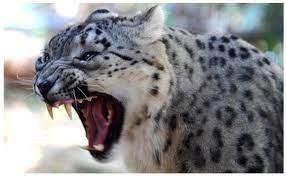
Let’s go back to snow leopards … 3) How loud is a snow leopard’s roar ?
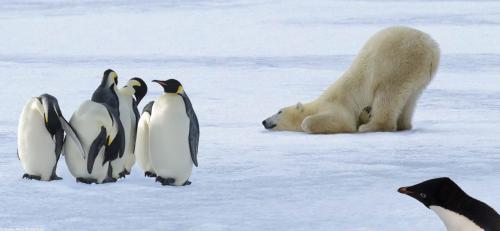
Staying in the snow … 4) What colour is a polar bear ? Do polar bears play or fight with penguins ?
Let’s leave the animal kingdom and turn to history …
5) Where were the first boomerangs found ? Do they always return if you throw them correctly ?
6) How long was the 100 Years War in Europe, fought over who would be king of France ?
Finally, you must be getting hungry, so how about some food ? Want to know if you’re going to be lucky ? Try a Chinese fortune cookie … 7) What country invented the Chinese fortune cookie ?
Made in China ?
The Answers
1) A killer whale is part of the DOLPHIN family. These dolphins actually work together and kill whales, so they were known as ‘whale killers.’
2) By meowing … ? No, cats meow (mostly) to get attention from humans. With other felines, cats use scent and touch, maybe hissing, and body language, but not by meowing.
3) Trick question … a snow leopard CAN’T roar; it can hiss, purr and meow but only makes a non-aggressive sounding ‘chuff’.
4) A polar bear’s skin is black, it is just the fur that is white. Also, polar bears live in the Arctic, the penguins spend their time on ice in the Antarctic, so they only meet in fake pictures.
5) Did you say AUSTRALIA … used by Aborigines ? Boomerangs were invented some time between 25 000 and 50 000 years ago, and used for hunting. The earliest one was found in POLAND, believed to be 20 000 years old. The first boomerangs DID NOT fly back. The Aborigines are thought to have discovered that a boomerang will return if made of curved wood, but these were used for sport, not hunting.
6) The War started in 1337 and finally ended in 1453, so a total of 116 years, although there were long periods of truce and peace.
7) Fortune cookies were invented by the Japanese in the C19th, then became popular in California, USA starting first in either San Francisco or L.A. (it is disputed, but the time period would be 1890 – 1918)
Ready for the lesson, ladies ? Yes, Thay Paul … hey ho, let’s go ! [Ha Noi 2015]
Pedal to the metal, let’s dive in and hit the ground running !
We are licensed to review the previous lesson, a potpourri of quick thinking (thinking on your feet), dropping idioms at the drop of a hat and sentence building by employing as many relative clauses as humanly possible … big time ! Not forgetting the grammar lesson, prepositions, directions and map-reading, differentiating between locating (finding) and labelling (writing on something). Now, without further ado …
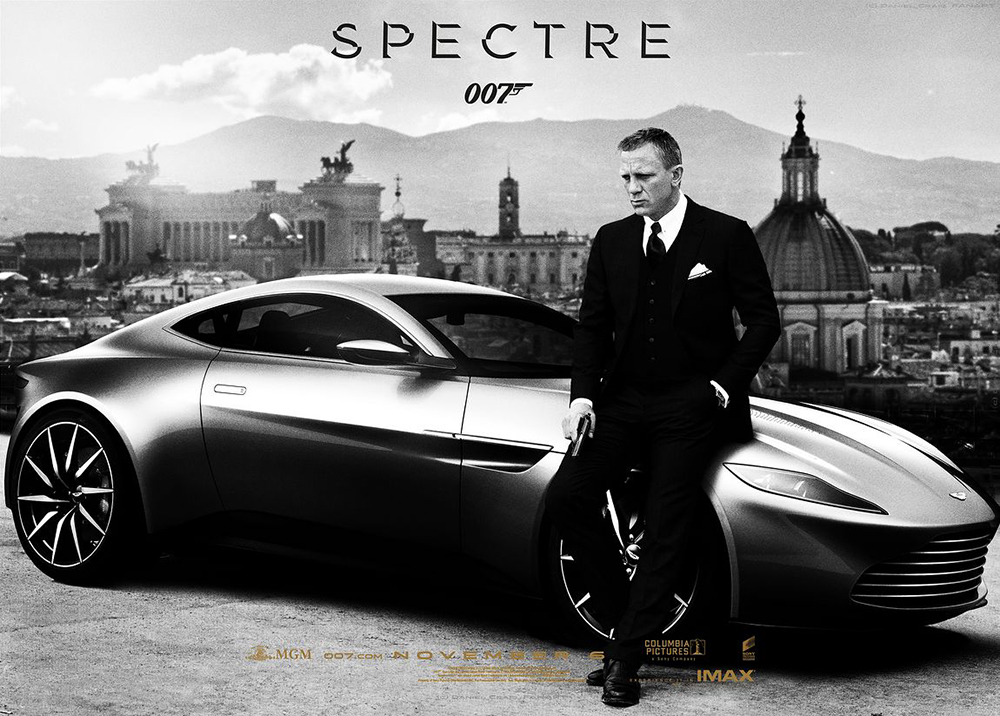
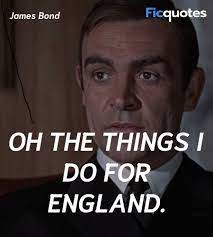
What do you see in the picture ?
Let’s break it down into three sections: the man, the car, the location, then the spatial relation between all three. Piece of cake ? OK, breaks down like this:
The man: Daniel Craig (actor), James Bond (character), tall, blonde, handsome, strong, highly-skilled, well-off (quite rich), talented, licensed to kill, British … what other adjectives ?
The car: expensive, beautiful, full of gadgets, exclusive, cost an arm and a leg, astronomical, Aston Martin DB10, luxury …
The location: Rome … no help here ! What do you know about Rome ?
NOW … YOUR TURN
Make an IELTS-style sentence featuring relative clauses and prepositions of place. You have two minutes … go !
Come, come my students … don’t disappoint me
Thay Paul, can you give us some help, please ?
Oh, you know I will ! OK, how’s this: Daniel Craig, who’s a world-famous British actor, is playing James Bond, a fictional spy who has been in over twenty films. Mr Craig, who is very tall and attractive, is standing in front of an incredibly exclusive Aston Martin DB10, which is an iconic British car, whose price is astronomical. Behind we can see the breathtaking skyline of Rome, which is the capital of Italy, a country famous for style, elegance and luxury.
Oh, piece of cake ! Thanks, Thay Paul.
Teamwork – utilise the internet to gather information. Quite simply, I am at St Paul’s Cathedral and I want to get to Shakespeare’s Globe.
Create a jaw-droppingly brilliant IELTS response telling me about St Paul’s, the Globe and how I can get there on foot.
You have five minutes … go !
Bonus points: What symbols can you identify on the map ? What do they signify ?
Now, time for some retail therapy, and we’re going to take it up a notch.
You will enter at OLI and meet your friend outside of Top Brand. From there, you want to visit The National, then Viking. Afterwards, your friend wants to pop into Books before you meet another friend inside Nortex. Your taxi will pick you up at IDEA.
This time give me directions as well as using relative clauses to explain something about the shops in question … or as much information as you can provide.
Konzerthaus Berlin, on Gendarmenmarkt, in the Mitte district.
photo by Martin O’Shea 2021
Part Five. Berlin. Winter 1994
Chris arrived home a little after three in the morning, being quiet, but not too quiet, hoping that if Richard were awake, he could tell him about the new look Czar Bar and how he had seen Jake, Gaptooth and a new German who looked exactly like David Hockney.
He opened the door to the main room, the light from the hall casting a dramatic beam straight up to Richard, arms sprawled, head at an awkward angle, half undressed, not moving, a quilt partially covering him but not a sound.
Chris’ heart stopped. He immediately sobered up and ran to the body, reaching for the pulse and holding his hand in front of the nostrils. The wrist pulsated, the back of Chris’ hand was chilled by breathe.
He got up and looked in the kitchen, turning on the light without any danger of waking Richard. There, on the table, were seven or eight cans of cheap beer, most of them empty and crushed. Then he looked in the bin, and there were three of four more empties.
Chris walked back into the room and did his best to make Richard comfortable, taking off the one shoe he still wore, his watch, in case he caught himself, and put the quilt fully over him, as the Ofen was going out and the room was getting cold.
He stoked up the Ofen and went to sit in the kitchen, taking one of the remaining beers and calmly drinking until his heart could return to a normal rhythm.
It had stirred up a painful memory, one that had haunted his childhood.
At eight or nine, Chris had found his elder sister on the bathroom floor, vomiting and screaming. Not knowing what to do, he just cried and went to hold her, joining in her screams.
And then he felt her slip away.
He sat with her until his parents came home, who told him that she had eaten too many sweets and was now sleeping, aware that this simply wasn’t true, that something very, very bad had happened, but not knowing why or what, except that he really did know what, but would never know why.
Sitting in his Berlin kitchen, sipping the gassy, tasteless beer, his heart still pounding, Chris was unaware that he was crying.
Richard had seemed so happy. He had been dancing around the flat, not complaining about the sudden drop in temperature which would mean another six months of chopping wood, wearing coats indoors and going into the cellar for briquettes.
He had caused a minor sensation at work, by thanking the staff when they brought him dirty plates and singing along to the radio. He was speaking to Chris about Biberkopf one night at the Ankor.
“It’s always on the same station,” he said of the work radio, ”and they only have about fifty records, which they play in various sequences. There’s a few classics, a few modern hits, and a whole bunch of shit. As for those new Elton John songs, postcards and that bloody cat …”
“That’s not Elton John. I know who you mean and it’s some American asshole.”
“Really ? Well, whatdoyaknow ? Oh, I heard that Crash Test Dummies song, you know the one ? Mmm Mmm Mmm Mmm ? Fucking freaky goddamn lyrics, kids with weird birthmarks, and white hair. Never heard it before, but there was this drunk guy in London who was humming it on the tube, late one night. Actually it’s a really good song. Can’t stop humming it, myself. Oh, and what’s that Bryan Ferry song about Berlin ? Non-stop Berlin ?”
Chris looked puzzled, then understood.
“Oh, I know what you mean and every word is wrong ! Nearly every word. It’s ‘Don’t Stop The Dance’.”
“Think I prefer my version.”
“Me, too. More appropriate.”
And they burst into an impromptu rendition, much to the surprise of the cute, ginger-haired waitress, who clearly wasn’t impressed.
“I was thinking,” began Richard, “we should have a culture night, The Gang. I was looking through Tip at work, (Tip is one of two listing magazines, the other being Zitty. Both cover a two week period and come out alternate weeks. Tip is the glossier of the two) and there are so many concerts going on. Classical concerts and Opera. Looks quite cheap, too.”
Chris leant back, drank some beer and thought. “All right. Yeah. A night at the Opera. Let’s go.”
He got up and went to the magazine rack, taking the copy of Zitty (which was favoured by the alternative scene) and opened it to the music pages.
“Here, the Komische Oper, ‘Strange, or funny Opera’. They perform in German, I think. Yeah. Hey, look … Thursday and, yeah, great, Saturday, Carmen by Bizet. I could dig that.”
“You know Bizet never went to Spain ?”
“Would that be true ?”
“Aye, it would.”
“Well, I say. I’m gonna file that under ‘interesting but also boring facts’.”
“Well, you do what ya gotta do.”
The following Saturday, Monika, Chris, Gabi, Lorelei, Arizona Al and Richard all met in the foyer of the theatre. Arizona was last to arrive, and turned up in knee length purple boots, dark green velvet trousers, an old, brown leather flying jacket, and floppy hat, a thin, wooden instrument strung across his back.
He bounded into the theatre, jumping up the steps. He got quite a few interested and happy looks, and even gave a small performance, singing ‘Ring of Fire’ on his curious contraption.
“Hey, like my dulcimer ? Pretty cool, hey ? I did some busking on the U-Bahn earlier and made enough to pay for my ticket.”
The coat-check girl was also amused by the dulcimer as Arizona handed it to her, along with his hat and slightly effeminate, small shoulder bag.
Richard had the tickets and led them into the auditorium, finding the six seats, and was a little put out that Arizona sat down next to Lorelei, leaving him on the outside.
They all looked around the hall, admiring the décor and the atmosphere. The musicians could be heard tuning up, but were out of sight. Arizona Al lifted himself up, straining to see where the music was coming from, and turning to Richard, asked him,
“Hey, where’s the orchestra ?”
“In the pit.”
Arizona couldn’t contain himself, but jumped up and down in his seat, pounding the arms of the chair and inadvertently bashing into Lorelei.
“Hey, listen up, man, I just asked Richard where the orchestra was, and he said, ‘in the pit’. Orchestra pit ! I never knew what that meant before !”
They all enjoyed the show, Arizona especially, who watched it with a child’s innocence, and Richard was continuously nudged, poked and slapped.
After, they went to a bar in the old Nikolaiviertal, one of the oldest areas of Berlin, recently made over and gentrified, but still retaining a definite charm, due to the river Spree forming the western border, and the imposing, brick, twin-spired Nikolaikirche dominating the cobbled-streets of quaint shops and bars.
Gabi meet a friend, Heike, who worked in stage design and had also seen the new production of Carmen.
Chris said, “Oh, hey, did you know, Bizet, the guy who wrote it, never even went to Spain ? Isn’t that just the craziest ?”
The Gang all found this very interesting, and when Richard turned to look at Chris, he saw him lower his eyes and hastily take a long gulp of beer.
Before Richard left for work on Monday, he met Chris, just back from the studio who informed him,
“Arizona had a great time. Told me he made a connection with Heike.”
“Oh, you mean they got on well ?” asked Richard.
“No, dude, he fucked her. Twice, apparently. Said it was his first … ‘connection’ in Berlin.”
“Ah, yes, he broke his duck.”
“He wants to go out with us, again.”
“I bet he does. We’re not his pimps, you know.”
“You mean procurers ? Never mind. You know what’s opening this week ? Pulp Fiction ! The new Tarantino !”
“Man, I’ve been counting the days, big time.”
“We can all go, Saturday. It’ll be at the Odeon, English version with Kraut text.”
“I have to get to my terrible job now, but you get The Gang onto it. That is your mission, should you choose to accept it.”
Chris saluted, as Richard made his way to the elevated U-Bahn station and waited on the chilly platform for the westbound train.
So Arizona had made his first conquest. Chris had already been with a couple of girls, but, so far, Richard had struck out. But he was waiting. Lorelei had left her boyfriend. Maybe he had played at least some small part in her decision ? She had sent over messages, had come to the Opera and he was sure she was expecting him to sit next to her. At the end of the night, she had kissed him on the cheek, and held his arm. He took all this as a sign that he only had to be patient and the girl he was so in love with would be his.
However, only Arizona, Chris, Monika and Richard made it to the cinema. Gabi wanted to see it in German and Lorelei was going with her.
Again, Richard was next to Arizona in the cinema but, once he realized Lorelei wasn’t coming, due to a choice of languages, he sat back, swigged his beer and waited for the excitement to begin. They had been surprised at the cast: John Travolta ? Bruce Willis ?
But from the opening scenes in the diner, and the title music, they knew they were in for one hell of a ride.
The twist contest took place, Richard digging Arizona in the ribs,
“Hey, this cat can really dance.”
Arizona jumped up and pointed to the T-shirt Tarantino was wearing in the kitchen scene, as he recognized the logo and began telling a story about it, making Richard miss untold lines.
The highlight of the night, however, occurred in the last diner scene. The Samuel L. Jackson character has a wallet embossed with the legend, ‘Bad Motherfucker’. The German translation for this, when it appeared, full screen in a classic Tarantino close-up, was, ‘Böser Schwarzer Mann’ (Angry Black Man.)The entire cinema erupted into spontaneously laughter.
From that point on, they re-enacted lines of dialogue and added new words to their vocabulary.
Every time a customer ordered mayonnaise with chips, Richard let out an, ‘Errrchh, they fuckin’ drown ‘em in that shit, I seen ‘em do it!’, to the total mystery of the east German chef.
One night Richard got a call at work. It was Lorelei. She said that Monika was over at the nearby Café Haller, and was wondering if he wanted to come over, when he’d finished his shift.
He worked at double speed the remainder of the evening.
As clean and fresh as possible after a five hour shift in a hot kitchen, he walked over to the bar where Lorelei had started working. She was finishing up her shift, adding up her dockets, and gave Richard a hug, as he cried out how good it was to see her.
As he looked over, he saw Monika waving from a far table. Next to her was a man in a leather jacket. Lorelei explained that it was ‘only’ Werner, a really nice, harmless customer, who was keeping Monika company and keeping the leeches away. She told him to go sit, and she’d send a beer over, and gave him such a lovely smile and wink.
Monika stood up to hug and kiss Richard and Lorelei came over to sit next to Werner. He appeared to be in his mid thirties and had tight curly hair that looked one moment blonde, the next brown. He had rather protruding eyes and slightly buck teeth, but was very friendly and pleasant, the kind of guy you can always depend on to help move furniture, or pick you up from a distant location.
Richard tried speaking in German, which was improving, but still very basic. Lorelei said that it was cute to hear him, so he continued, as long as possible. At one point, he saw Werner look at him, with the kind of look that said, ‘how can two fucks like us be with two beautiful women like these ?’
Before Richard had finished his first beer, Werner said he had to leave, and Richard shook his hand like he was an old friend.
And then it all went wrong.
Lorelei looked at Richard, smiled and got up as well.
Richard thought that he would be the one, finally, to leave with Lorelei.
Instead, she turned to him and held out her hand. They shook, then she went over to Monika, kissed her goodbye, and left. With Werner.
Richard slumped down, feeling lifeless and humiliated and just plain lost.
“I’m never going to be with Lorelei, am I ?” was his rhetorical question.
Monika slowly shook her head, looking at him with real concern, not knowing what to say, and began to feel both uncomfortable and genuinely hurt, as if she could not only sense, but physically feel his pain.
She offered to drive him home, and suggested they go somewhere to drink in Prenzlauer Berg. He agreed and she almost had to help him out of the bar and into her car.
As they drove, Richard thanked her for everything, and told her that he’d be all right. He asked her to drop him by an U-Bahn station, where there would be an Imbiss open and he could buy some beer. It was better if he were alone, but he told Monika that Chris was at home.
She let him out and he waved her on. He didn’t want her to see him buying as many cans as he could carry.
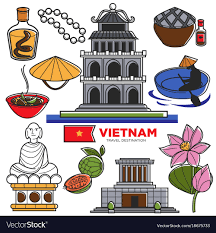
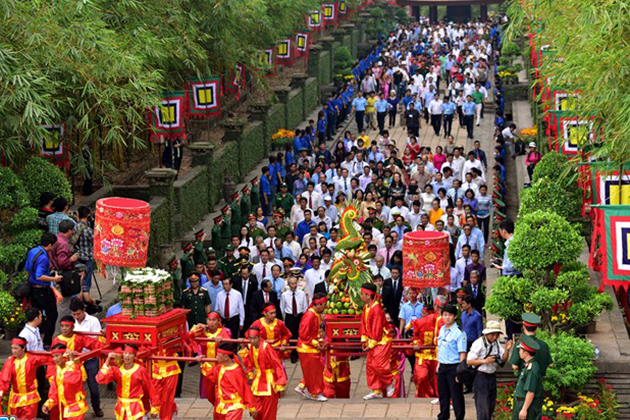
Today is Hung King Festival, a free day in Viet Nam
Hung King Festival (Kings’ Day) Viet Nam (Google Images)
“The holiday is dedicated to the memory of the Hung line of kings who ruled Vietnam as priestly kings for over 2,500 years up until around 250 B.C. These kings are counted as the nation’s ancient founders.” Read more on:
Elaborate (verb) … tell more, expand on your answer
Significant (adj) significance (noun) significantly (adv) … very important or different from the rest. Special, notable.
Simile … to compare something e.g. he drinks like a fish, she eats like a pig, our campus is like a bloody madhouse.
White collar job … professional, desk job or requires mental skills e.g. lawyer, doctor, office worker, teacher
Blue collar job … manual work, although these jobs can also need a professional qualification, and can be extremely well-paid.
Good old boys from Atlanta, Georgia back in the day. Three have blue collar jobs, one is white collar … can you guess which ?
Now, on with the show. Last night was based around the typical IELTS question, “Tell me about your family,” and its derivatives. I tell classes until I’m blue in the face, just saying, “I live with my mum, my dad and my sister,” is not a great IELTS answer, not to mention being tedious in the extreme.
The students mulled it over and came up with the reasonable response that there really was nothing else to say. Au contraire (on the contrary) there is so much to say, and every journey, as my Duchess knows, starts with a single step to wit, a great introduction.
The students, somewhat perplexed, offered:
Well, I don’t know how to give an interesting answer because I just live with my mum, dad and brother …
Even that would qualify as an introduction, but how about:
Allow me to introduce my family to you. Firstly there is …
Here’s where relative clauses really come into their own. Basically, every time you mention a subject, a noun, elaborate; tell the examiner more about said subject.
Hold your horses, Thay Paul. Will you give me an example ? Photo in Manila.
Oh, you know I will. Let’s start with the matriarch, Mommie dearest. You could say:
My mother has a heart of gold …
…then explain why
… she’s always thinking of other people before herself, as well aslistening to all my problems and trying to help me with everything.
On the other hand, your mother may want you to excel at everything …
Although I love her dearly, my mother is what they call a Tiger Mum by which I mean she always makes me study, do homework and learn piano. I really burn the candle at both ends and sometimes it can be too much for me.
Now, let’s turn to pater, Daddy;
My father, on the other hand, is firm but fair …
My father has a white collar job. He works long hours to provide for his family, he really has his nose to the grindstone …
He’s a little loud and on holidays, he loves singing karaoke with his friends, who are all blue collar workers, and hedrinks like a fish.
Now, a borrowed word to describe sister …
My sister, who is younger than me, is such a prima donna, always (doing what ?) …
Conversely:
My sister is so sweet, she’s like a little angel, and she loves playing with our puppywho is just six weeks old.
How about brother ?
My brother really looks out for me, giving me advice and guidance. I totally look up to him.
On the other hand …
My brother is an absolute slacker, lazy beyond belief. He never helps in the house, or cleans his room. He does his homework once in a blue moon, preferring to play stupid computer games instead.
How was that ? Happy now ?
Yes, that’s a great help, Khob khun (khap/ka). Two Thai friends in London.
Now … Your Turn
Last night you encountered these adjectives and occupations:
estate agent / plumber / DJ / mechanic / bouncer / surgeon / accountant / actor / cook or chef / removal man / insurance agent / bank clerk / detective / businessperson / barista / lawyer / slacker shop manager / unemployed /
Exercise 1: Write and then present your own IELTS-style answer to the question, “Tell me who you live with ?” Use new words as well as your own ideas.
Here’s some help, should you require it:
Allow me to introduce my family to you. Firstly there is my mother who … (where is she from OR what is her job OR what is she like, by which I mean physically or in terms of personality ?).
My father, on the other hand, is …
As for my younger sister, I worry about her because she …
Now, let’s mix it up a little … say you live with an aunt, a grandparent, a cousin … impress me; I know you can do it.
Followed by a game. I shall show photos of five of my friends, along with some personality adjectives and occupations. The class simply have to guess my friends’ job and what kind of people they are … and justify their decisions.
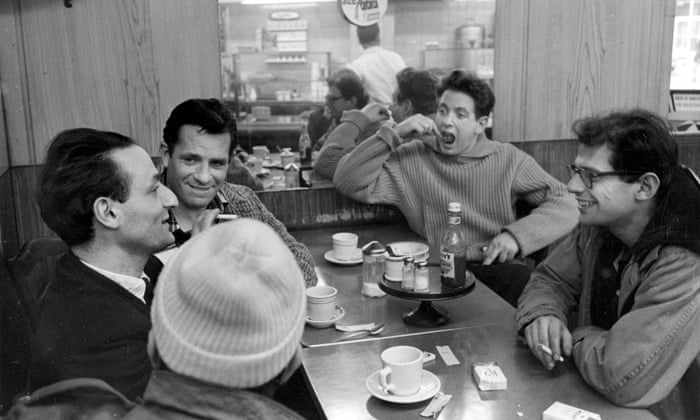
Members of the ‘Beat Generation’ hanging out & chewing the fat in New York, 1950s. Allen Ginsberg, whose poem ‘Howl’ ends this blog, is on the right, smoking a cigarette.
A major issue I encounter with ESL students is pronunciation and associated features such as intonation, stress, rhythm and pacing. Therefore, I decided to select some English-language poems for practice in class, while online students can find a multitude of YouTube videos of poems being recited by professional actors. I shall add some links at the end of the blog.
Now, without further ado, poetry.
Poetry can take many forms, not just writing; poetry in cinema, in dance, in speech … in life.
Let’s take a look at the first poem, ‘Dreams’ from 1922.
Recite the poem slowly and clearly. In the first line, stress ‘fast‘ and ‘dreams‘.
Secondly, listen for the rhyming pattern in lines 2 & 4: ‘die’ rhymes with ‘fly’, while verse 2 rhymes ‘go’ with ‘snow.’
Regarding ‘colour’, which tone of voice to use, decide if this is a positive or negative poem. Discuss in class what you think and give reasons.
Remember, art (painting, cinema, literature etc) is subjective; each person is allowed to have their own opinion. Develop speaking skills to enable you to support your views (give reasons).
Stop all the clocks, cut off the telephone, Prevent the dog from barking with a juicy bone, Silence the pianos and with muffled drum Bring out the coffin, let the mourners come.
Let aeroplanes circle moaning overhead Scribbling on the sky the message ‘He is Dead’. Put crepe bows round the white necks of the public doves, Let the traffic policemen wear black cotton gloves.
He was my North, my South, my East and West, My working week and my Sunday rest, My noon, my midnight, my talk, my song; I thought that love would last forever: I was wrong.
The stars are not wanted now; put out every one, Pack up the moon and dismantle the sun, Pour away the ocean and sweep up the wood; For nothing now can ever come to any good.
A highly emotional rendition, one person expressing their feelings over a loved-one’s death.
Let’s continue with a nonsense poem by Edward Lear from 1876:
Who, or why, or which, or what, Is the Akond of SWAT?
Is he tall or short, or dark or fair? Does he sit on a stool or a sofa or a chair, or SQUAT, The Akond of Swat?
Is he wise or foolish, young or old? Does he drink his soup and his coffee cold, or HOT, The Akond of Swat?
Does he sing or whistle, jabber or talk, And when riding abroad does he gallop or walk or TROT, The Akond of Swat?
Does he wear a turban, a fez, or a hat? Does he sleep on a mattress, a bed, or a mat, or COT, The Akond of Swat?
A great poem to demonstrate rhythm as well as ‘floating opposites’ e.g. young & old, hot & cold, not forgetting synonyms such as talk & jabber. Now, for really advanced beatniks, try the beginning of the famous, indeed infamous, poem ‘Howl’
I saw the best minds of my generation destroyed by madness, starving hysterical naked, dragging themselves through the negro streets at dawn looking for an angry fix, angelheaded hipsters burning for the ancient heavenly connection to the starry dynamo in the machinery of night, who poverty and tatters and hollow-eyed and high sat up smoking in the supernatural darkness of cold-water flats floating across the tops of cities contemplating jazz, …
The poem, along with a recitation by the poet, may be accessed here:
Do you want to join Thay Paul’s class ? “I willl give it my utmost consideration.”
New vocabulary
unique – one of a kind, nothing else like it
imminent – going to happen or start very soon
you get what you pay for (or you pay for what you get) – if you buy something cheap, you get bad quality
to romanticise – to make something ordinary more interesting
to fantasise (fantasize US English) – to wish for something great to happen
use your imagination / give your imagination free reign – it is OK to pretend, to make up a better story
I will give it my utmost consideration – I will think about it very, very carefully (and then say ‘no’).
firstly, secondly, additionally, another point is, on the other hand, however, finally, in conclusion, to sum up, all things considered – all ‘signpost language‘, to help organise your ideas.
Are you ready to rock ?
Miss Ngoc in Sai Gon … hey, ho … let’s go !
I’ll be burning the candle at both ends because my IELTS test is _______________ .
Remember, you don’t have to tell the absolute truth in your speaking test. It’s totally OK to ________________________________ .
I picked up this shirt at Saigon Centre and, yeah, it cost an arm and a leg, but just feel the quality … you ____________________________________ .
We booked a really reasonable room at the beach, but the water was cold, the sheets were stained and there were bugs everywhere. We totally _____________________________________ (use past tense).
Thay Paul, we have a new class of students. They are extremely lazy and unmotivated and only want to play with their phones. Would you like to teach them ? ________________________________________________ .
What did you do last weekend ? “I sleep.” Is that all ? Ah, c’mon, do better, ______________________________________ .
Quick – fire round
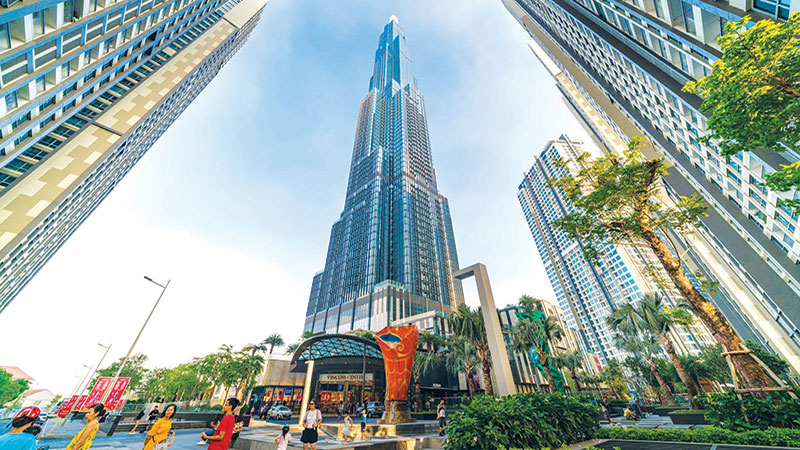
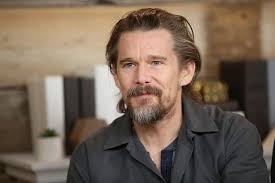
You planned a day out for my friend Ethan. Describe these photos using as many IELTS features as you can:
Highlands Coffee opposite the Rex Hotel 2012
Areas to focus on: being confident about answering the Part II questions, so we shall work on fluency and developing the ability to speak for longer periods without hesitation.
Just a minute
Speak for one minute on:
Food in your country
What you do in your free time
Your family
Holidays in your country (e.g. Tet, Thanksgiving, Christmas etc)
A typical Vietnamese breakfast; pork, noodles, fresh vegetables and noodles.
Objectives:
Encourage students to speak in long, interesting sentences.
Making the use of adjectives and adverbs a natural part of their English
Develop their ability to express themselves, giving reasons (because) and examples (like, such as)
Show them how much fun English can be by the use of idioms (once in a blue moon, it’s raining cats and dogs)
VOCABULARY BANK
Match the word(s) to the meaning
gigantic / enormous __________ everywhere
tiny / petit _____________________on time
delicious / mouth watering ___very rarely
difficult ________________________ yummy / tasty
once in a blue moon ______ big / huge
punctual______________________ clever
intelligent ____________________ hard
ubiquitous ____________________ very small
IDIOMS:
once in a blue moon
piece of cake (very easy, no problem)
it’s raining cats and dogs (very heavy rain)
NOW … practice:
Street food in Vietnam is (everywhere) ___________________ .
The British love fish and chips because it is (yummy)_________________ and _____________________. However, it is not very healthy eat it __________________________________________(very rarely)
The man is (very big) however the lady is (very small)
The young lady is saying hello to the dolphins which are very (clever) __________________ animals.
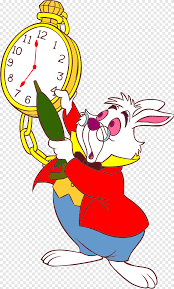
This rabbit is always (on time) _________________
Is it (hard) ____________________ for a gorilla to play drums ? No, it is easy – it’s a piece of cake.
The capital city of Viet Nam is _____________ . It is a large( very busy) city. Motorbikes are (everywhere) ___________________. Street food is cheap and (yummy) __________________________.
However, sometimes it rains very heavily. In this photo, people are (not happy) because ____________________________________.
Adverb practice
always
usually // often // normally
sometimes
rarely
once in a blue moon
never
EXAMPLES:
I always eat fruit because it is extremely healthy
I usually read a book when I drink coffee because I love reading.
I sometimes drive my car to work because it is fun. However, driving in Viet Nam is ________________________.
I rarely go to Singapore because it is extremely expensive.
I only go home to London once in a blue moon because it is so far away
I never smoke because it is extremely unhealthy !
NOW … your turn: tell me what you do and why.
I always … because …
I usually … because …
I sometimes … because …
I rarely … because …
Once in a blue moon I … because …
I never … because …
See you next week
Please Note: All photos are taken from Google Images or free photo sites, and are used for educational purposes only. No copyright infringement or offense is intended. If I have used your photo or image, and you wish me to remove it, just ask. This site is not monetized, I run it on my own dollar. Thank you.
Vietnamese coffee kept warm in a three lions bowls, the lions being a symbol of England. If you love coffee, you’ve come to the right place; coffee shops are _________________ in Sai Gon, and throughout Viet Nam.
Lady Thu stated that she would (try) ___________ to learn more vocabulary.
I expected the students to pass with flying colours, but instead I was very _______________________ by their low scores.
Mr Sang knew every answer, he was really _________________________ last night.
Passing a driving test in Vietnam is easy. _______________________________ .
Those Armani T-shirts are absolutely fake ! At that price, no way are they ____________ .
Street food stalls are ubiquitous in my neighborhood; the food is (tasty) ______________________ and the prices are quite ___________________ .
Mr Lee (adverb) _____________ promised me he would be on time for the meeting.
We also covered some basic introduction phrases which you categorically have to memorise:
Some standard opening lines:
That’s a very interesting question
Well, that’s a great question
Well, there is so much to say about that subject, where shall I start ?
It’s funny you put that question to me because earlier today I was just thinking about …
As a young Vietnamese (add your own nationality), I …
And now, a typical IELTS question: What do you do in your free time ?
Remember the first rule of introductions: never answer the question immediately. Remember the second rule of introductions: never answer the question immediately.
So, how to pass with flying colours ? Ah, c’mon, Man, you should know by now ! OK, breaks down like this. Give me:
A great introduction
An organised speech, point by point (use ‘signpost’ language).
At least one idiom
Several L-FWs
Ideas linked by discourse markers
Appropriate intonation, stress & body language
Thay Paul, can you give us an example, please ?
Sure thing
Well, that’s quite an interesting question because, as a young Vietnamese student, I don’t really have much free time. I have to study all day, then do homework in the evening; I’m really burning the candle at both ends. However, when I have time to myself, I like to hang out with my friends and forget about school.
Firstly we meet in coffee shops, which are ubiquitous in Sai Gon, and talk and laugh. Highlands in my favourite because it has free WiFi as well as being very comfortable although some of the coffee prices are sky-high.
Additionally, I love swimming which, in my opinion, is incredibly healthy, and it doesn’t require much equipment. Subsequently, it doesn’t cost an arm and a leg.
However, my absolute favorite past time is to sing karaoke, which I believe comes from Japan, in a private, sound-proof room. For me, it’s a perfect way to relax and forget all my stress about work, life and my parents !
Piece of cake, right ? 23 / 9 Park, District 1, Sai Gon























 Thay Paul's Notes