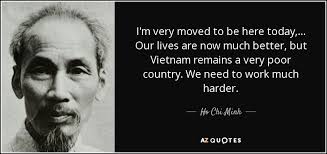
Today is Independence Day in Vietnam, so let’s start with Uncle Ho, Ho Chi Minh (1890 – 1969). He has some very sage advise, especially for Vietnamese students:
“We need to work much harder.”
Don’t take my word for it, listen to Uncle Ho. Now, let’s go back to Ancient China and listen to Master Kong … Kong Fuzi … Latinised as Confucius (551 BC – 479 BC):
Moving forward, and westward, we come to Ancient Greece and the philosophy of Aristotle (384 BC – 322 BC). I think he deserves two quotes n’est-ce pas ?
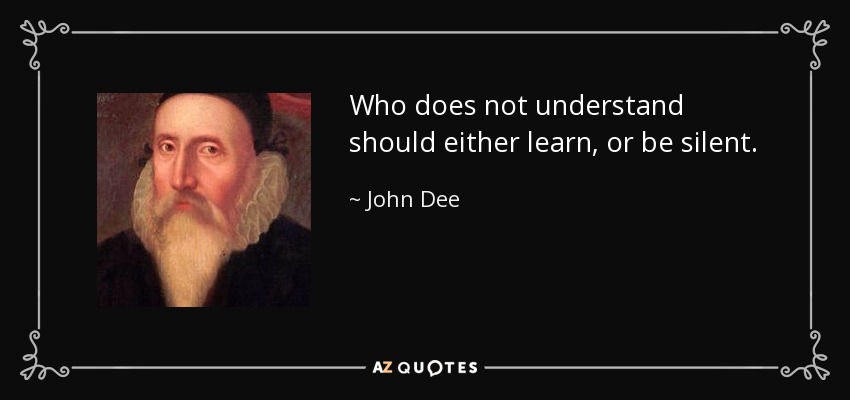
Our inspirational journey takes us my homeland, a “Precious stone set in the silver sea,” (Shakespeare, and more from the Bard, later). The court of Queen Elizabeth, and her adviser and alchemist, the mysterious John Dee (1527 – 1608 or 1609), furthermore, the man credited with coining the phrase “British Empire.”
As promised, something from Shakespeare (1564 – 1616)
I totally agree. The quote is from Henry VI, Part II.
If you are using these in class, the teacher will help you with pronunciation.
Remember: your IELTS score will also depend on how clearly you speak, your rhythm and correct use of intonation and stress. Therefore listen to native-speakers, copy and practice.
Enjoy your drink … this one’s on me
This one’s on me // Let me think about it // It doesn’t matter // Thanks for coming
I don’t believe a word of it // I’ll be with you in a minute // I see what you mean
It was lovely to see you // I don’t get the point // As I was saying
You look great today // I’ll be making a move then // Just looking, thanks
I’ll be making a move then … bye
Match the phrase(s) with the situation
[answers at end of exercise]
Saying goodbye after meeting an old friend
Compliment someone
You are asked a question but need time to consider
Someone tells you a story – you think it is false.
Friends drinking in a pub / bar
You go into a shop but not necessarily to buy anything
A customer arrives but you are busyfor that moment.
You don’t understand what someone is trying to prove
You understand what someone thinks (but not necessarily agree with)
There is a small problem / Someone upsets you but you want to make it OK
To continue with a conversation that was interrupted.
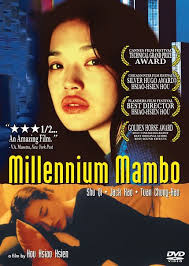
Ms Shu Qi – you look great today !
It was lovely to see you 2. You look great today 3. Let me think about it 4. I don’t believe a word of it 5. This one’s on me [I will pay for this drink] 6. Just looking, thanks 7. I’ll be with you in a minute 8. I don’t get the point 9. I see what you mean 10. It doesn’t matter 11. As I was saying
Expressing likes and dislikes
Like:
I absolutely love … I’m crazy about …
I (really) like I’m into // I’m a big fan of …
I’m quite keen on
I haven’t heard (seen/read) this before, but I think it’s great
No strong opinion:
I have mixed feelings about ….
I don’t really have any strong views / feelings either way
Yesterday I blogged a database of idioms, collocations and negotiation language. That is just the tip of the iceberg. If you have looked at English-language study books, you will, no doubt, have seen several dictionaries solely devoted to idioms; we use them so often, and there are so many.
For my IELTS students, I have repeatedly taught half a dozen (six) in order for the students to incorporate them into their natural speech … without idiomatic language, you will not break past the 5 score (taken along with grammar, vocabulary and intonation, naturally).
Therefore, for Top Cat students, or anyone looking to learn some more, this blog is for you.
Expressions or idioms
Ring any bells ? // do you remember //
More or less // not exactly but approximately
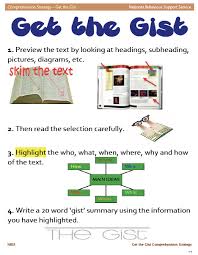
Get the gist // do you understand the main point ?
Right up your street // this is something you will really like
Rabbit, Rabbiting on // UK slang, especially in London … talking too much
Piece of cake // no problem, very easy, sure
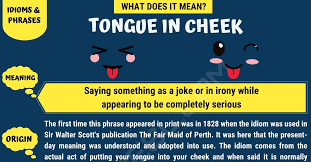
Tongue in cheek // not being serious about something
Now … how you use them:
Student A: Hello, we met last year at Julie’s party.
Student B: Sorry, that doesn’t ring any bells (I don’t remember).
Student A: Are you ready to go ?
Student B: Go where ?
Student C: Cake, food, drink, singing, dancing … ring any bells ?
Student D: Oh, Tony’s birthday party. Sorry, I forgot.
Student A: Are you ready for the test ?
Student B: Yes, more or less.
Student C: I’ll wait for you.
Student D: I won’t be long, I’m more or less finished.
Student A: Do you have to read all the document ?
Student B: No, just to get the gist.
Student A: You should listen to this CD, it’s right up your street.
Student B: Oh, French piano music, I love it. That’s right up my street.
Student A: What did your girlfriend want ?
Student B: She was rabbiting on about something to do with her clothes, I wasn’t really listening.
Teacher A: Hey ! Miss Mary … stop talking. You’re a little rabbit !
Student A: Can you drive me home ?
Student B: Sure, piece of cake.
John’s new business shirt
Student A: Have you seen John’s new shirt ? It’s so elegant.
Student B: Are you serious ? It’s terrible.
Student A: I know ! I was being tongue in cheek.
Now … your turn.
Add the correct idiom [answers at end of blog]
1) Shall we see the new action film ? It sounds ______________
2) Are you still talking ? You are such a __________
3) She said I was the best student but I think she was being ___
4) You said you would bring something … cheese, tomato, garlic bread ____________ ?
5) The IELTS speaking test was a ________ after reading Thay Paul’s blogs (I hope).
6) Student A: Did you understand the project ? Did you ________ of the idea ?
Student B: Well, ______________ but not every single detail.
This film, starring Shu Qi looks right up my street.
Right up your street 2. rabbit 3. tongue in cheek 4. ring any bells 5. piece of cake 6. get the gist / more or less.
I’ve spent so much time reading books about classroom activities, looking at websites and blogs only to reject the vast majority as not being suitable for my level of students. Here are a couple of games that have been successful over the years, in different centres and with different ages, though I usually employ them with students aged between 6 and 10. Adapt them as you wish, and have fun.
Word Battleship
This is based on the old paper and pencil game (later upgraded for the electronic and computer age).
A
B
C
D
1
2
3
4
Word Battleship
Board a grid as above (add more cells as required). Put the class into teams.
[I let them choose their own names, and if a student says, ‘Errrrrr,” then that’s the name I give them … additionally, this always gets a laugh]
Ask the teams questions based on previous lessons, general knowledge, whatever suits your class. You could either elicit an answer from the team as a whole, or individual members.
If the student answers correctly, they are allowed to choose a cell, example “C3.” On a separate sheet, have the same grid with scores assigned to each square. In the example that follows, C3 would score 25 points.
The following questions were used to review past tense grammar, as well as forming collocations:
Put the sentences into the past tense (simple past). Say complete sentence.
1 Last week we learn about technology
2 I buy a new iPhone last night.
3 Michael Jackson write many good songs.
4 Oh, no … I do not do my homework !
5 Have they decide what printer to buy ?
6 He see all the ‘Avengers’ films in one day !
7 It’s Friday ! I think today was Wednesday !
8 On holiday, I walk along the beach.
9 My grandmother send me an email.
10 Have you play the new video game ?
Complete the collocation
11 (go) to the cinema [I _______ to the cinema]
12 (play) guitar
13 (take) a photo
14 (chat / go) online
15 (do) voluntary work
16 (make) a decision
A
B
C
D
1
25
50
10
5
2
10
25
100
25
3
50
10
25
5
4
5
25
10
50
Snakes and ladders
Another activity based on a classic game. I first used this in a very energetic class of 9 – 11 year olds and, thanks to the size of the room, I was able to draw a grid on the floor and use students as ‘counters’, to move around the ‘board’.
If that isn’t possible, just board a grid like so:
START
GO FORWARD 2
GO BACK 1
GO FORWARD 1
HA HA BACK TO START
GO BACK 3
FINISH
All you need is a die or dice and different colour board markers. As before, arrange the class in teams, then ask each team a question. The student who answers then throws the die (preferably NOT at the teacher but one thing at a time), and I chart their progress on the board. You can decide whether or not the students need an exact score to land on Finish or not … play it by ear.
[ ‘dice’ is generally accepted for both singular and plural. For English-language learners it’s probably better to use ‘dice’.]
Today, we shall learn the story of Theseus and the Minotaur. This story is over 3 000 old, and comes from the country of Greece. Here is the flag of Greece:
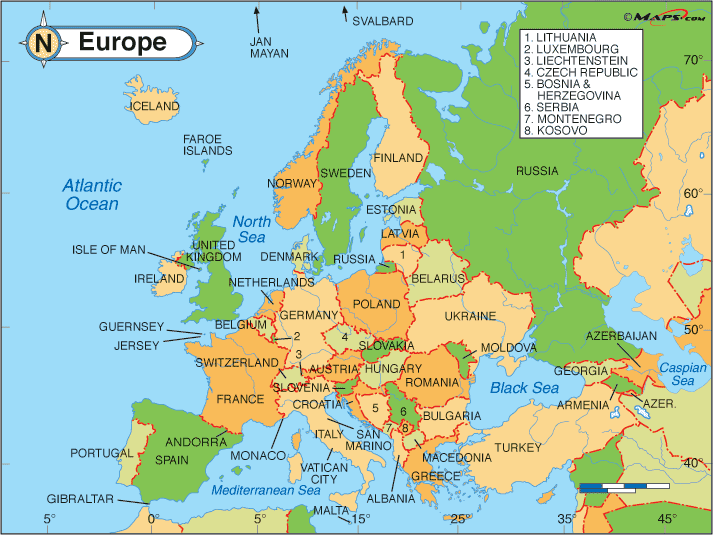
Greece is in Europe. It is a very hot country, and has many stories from history. The capital city is Athens.
Athens, the capital of Greece
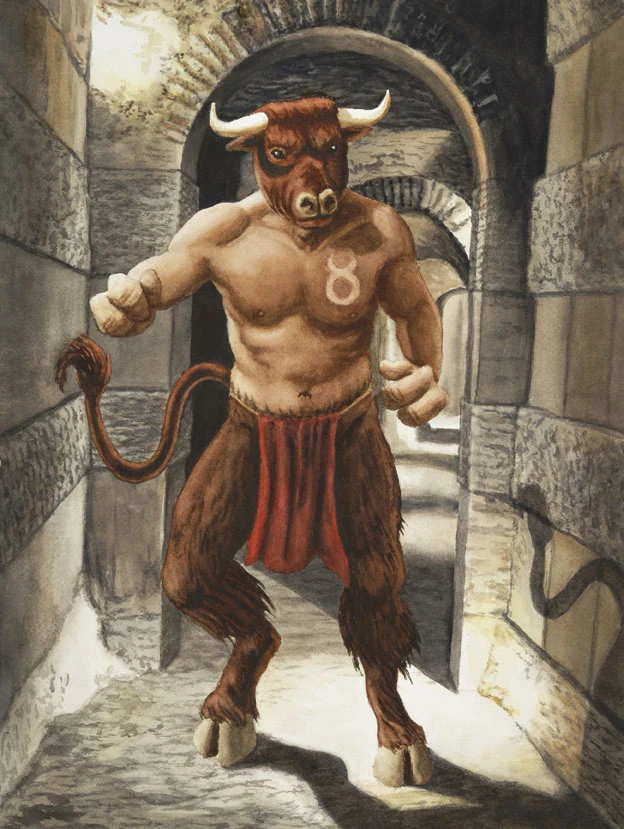
Have you ever seen something like this before ?
This is the Minotaur, half man, half bull. He was extremely strong, extremely angry and very, very scary. He lived near Greece, on the island of Crete:
The Minotaur lived underground in a big maze called the labyrinth. Every year, the King of Athens had to send 14 children for the Minotaur to eat. This is a labyrinth, a huge maze. It is very easy to get lost inside a labyrinth.
The king had a son called Theseus. He was a hero. He decided to go and kill the Minotaur.
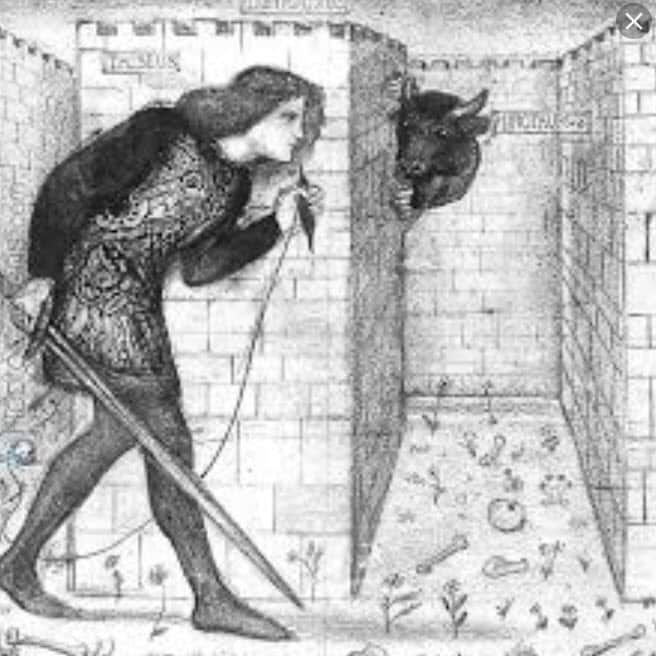
The King of Crete had a daughter called Ariadne. When she saw Theseus, she decided to help him. She gave Theseus a big ball of string. He tied it to the door of the labyrinth, then used it so he wouldn’t get lost:
Theseus found the Minotaur.
They had a long fight because both Theseus and the Minotaur were very strong. Finally, Theseus won and killed the Minotaur.
Then he returned to Athens with Ariadne. The people were so happy, and Theseus became a hero in Greece.
Basic friendly conversations used with work colleagues, people we don’t know very well or people we have just met.
Did you see the news on TV last night ?
How long have you worked here ?
The traffic was so bad this morning.
The weather is very cool for this time of year.
Echo questions
A continuation of small talk, we use these to show interest in what someone has just said to us. Here, John speaks to his Vietnamese co-worker Ms Tuyen:
John: I can speak German.
Ms Tuyen: Can you ? (What other languages can you speak ?)
John: Ms Nguyen went to Thailand.
Ms Tuyen: Did she ? (Did she go on holiday or for work ?)
Now … your turn. Add the echo question, then try to ask a follow-up question.
He likes K-pop
We are going to the pagoda later.
Ms Thinh has a new job.
Thay Paul loves T-ara. Does he ?
Keep conversations going:
Talk about:
house prices in your city / favourite hobby / your hometown /
why you have OR don’t have a pet / an interesting program you saw recently
What you want to do in the future.
Small talk language:
I see / Do you really think so ?
That’s a good point / I hadn’t thought of that
Oh, that’s interesting / May I just add something ? /
Oh, where is that exactly ? / Yeah, right ! / Sure / OK
Try some scenarios:
Directions to the city centre (or choose a location in your city).
One student is a tourist, the other is a local
Ask for help. Other must offer as much help; how to get there, the best way, the price, the dangers.
Body language – distance, expression, intonation, eye contact etc
Also back channeling (expressions such as “Oh, right,” “OK, yeah,” “Really, that’s great.”
Music – What do you like ?
I love it / adore it / enjoy it / I hate it / I can’t stand it


































 Thay Paul's Notes