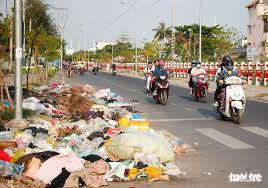
What are the problems … and what are the solutions (the answers) ? For example, in Singapore, if someone litters (throws rubbish on the street), they have to pay a fine, pay money to the police.
Now … your turn:
Write about what you want in YOUR city and why. Use amazing adjectives, and tell me why you would like these things.
Also, tell me what you DO NOT want, and why. How would you punish people who broke rules ?
You may also draw, but do the writing first.
Good luck and have fun !
Please Note: All photos are taken from Google Images or free photo sites, and are used for educational purposes only. No copyright infringement or offense is intended. If I have used your photo or image, and you wish me to remove it, just ask. This site is not monetized, I run it on my own dollar. Thank you.
A mouth-watering selection of local delicacies from street food to bakeries, small restaurants to city centre lunch bars … and a small trip to the beach for good measure.
I’m focusing mainly on food in my local area, Nguyen Duy Trinh Street in Quan (District 2):
Map of Sai Gon (Ho Chi Minh City). As you can see, District 2 is south-east. It is separated from the central District 1 by the Sai Gon river. The area is undergoing a lot of construction, with many new apartment blocks springing up, new restaurants and bars, as well as keeping the traditional shophouses and street food stalls. For a closer view of my area, here is a zoom – in of Nguyen Duy Trinh, the axis of our food tour.
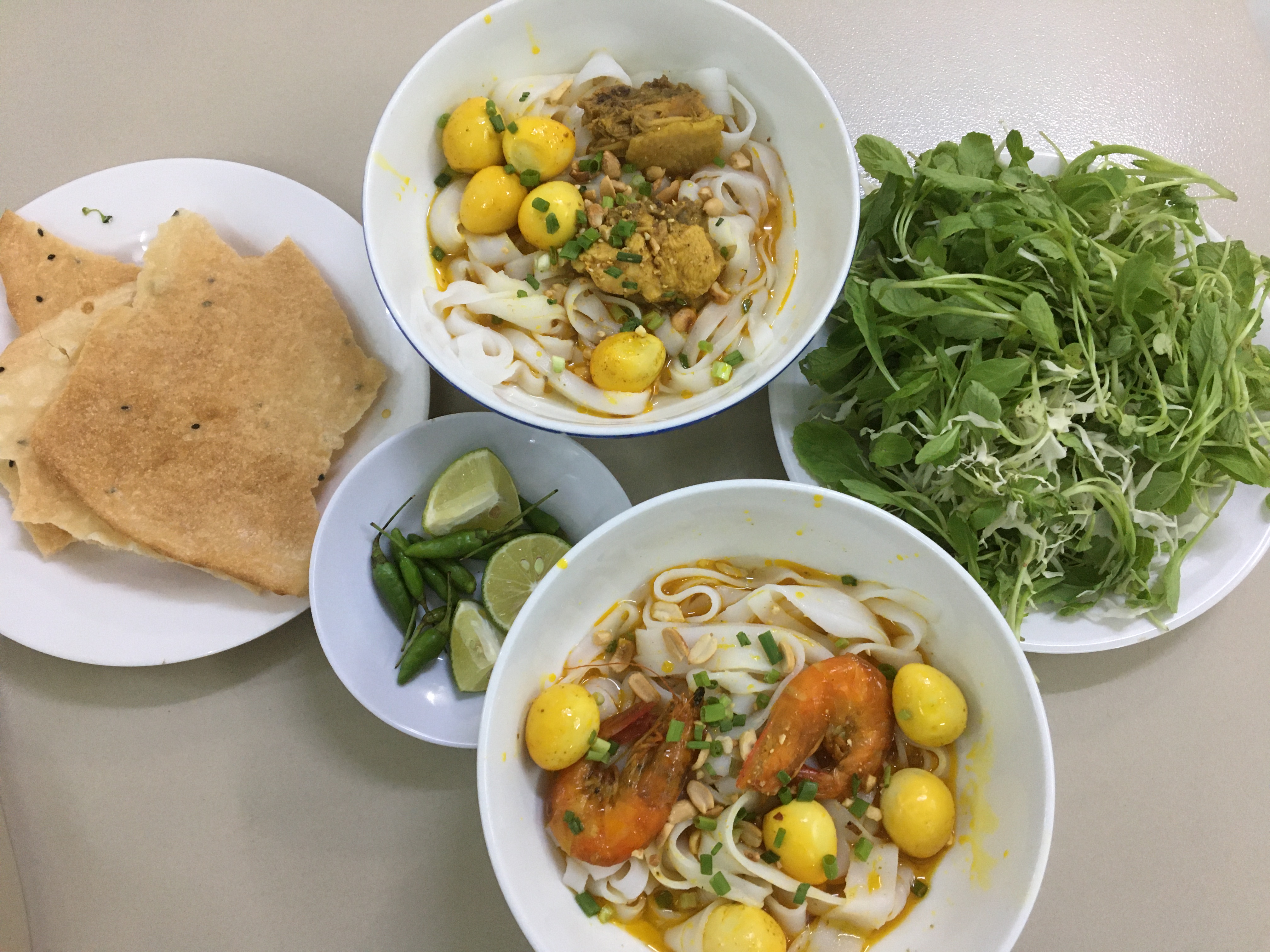
Let’s kick off with a Mi Quang restaurant at 300 Nguyen Duy Trinh. The signature dish is a traditional Vietnamese noodle soup, from central Vietnam. The small amount of soup differentiates it from the ubiquitous pho. Mi Quang comes with shrimp or meat, quail eggs and the usual side dishes of herbs, chilis and lime. Prices range from 35 000 to 45 000 VND (1.18UKP to 1.50 UKP / $1.51 to $1.94.
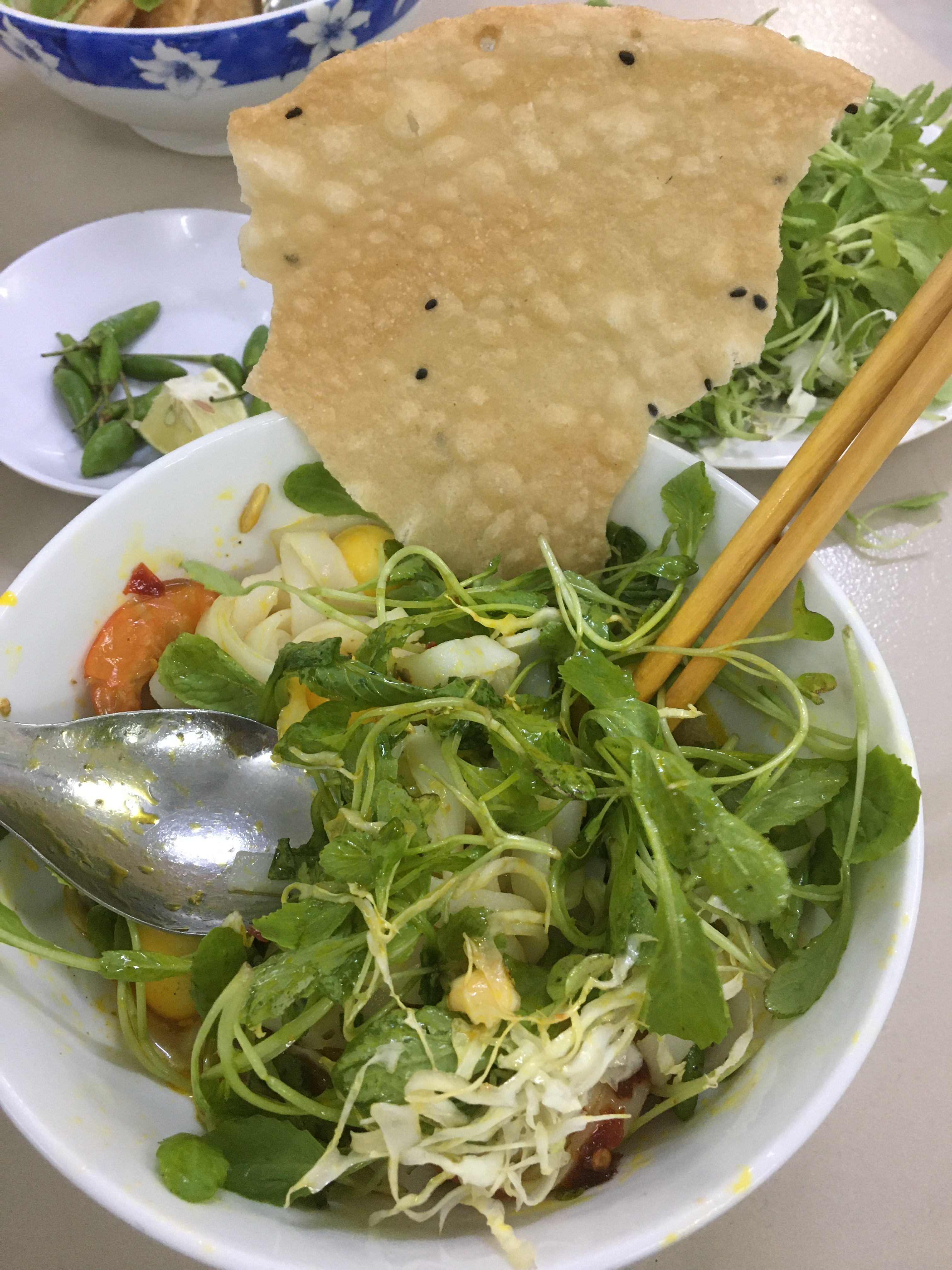
With or without meat. Accompanied by fresh vegetables and herbs, and crispy sesame rice crackers. Notice how thick the noodles are, while the broth is far less than one gets with pho.
And the obligatory condiments blend of fish sauce, dried chilis and chili sauce:
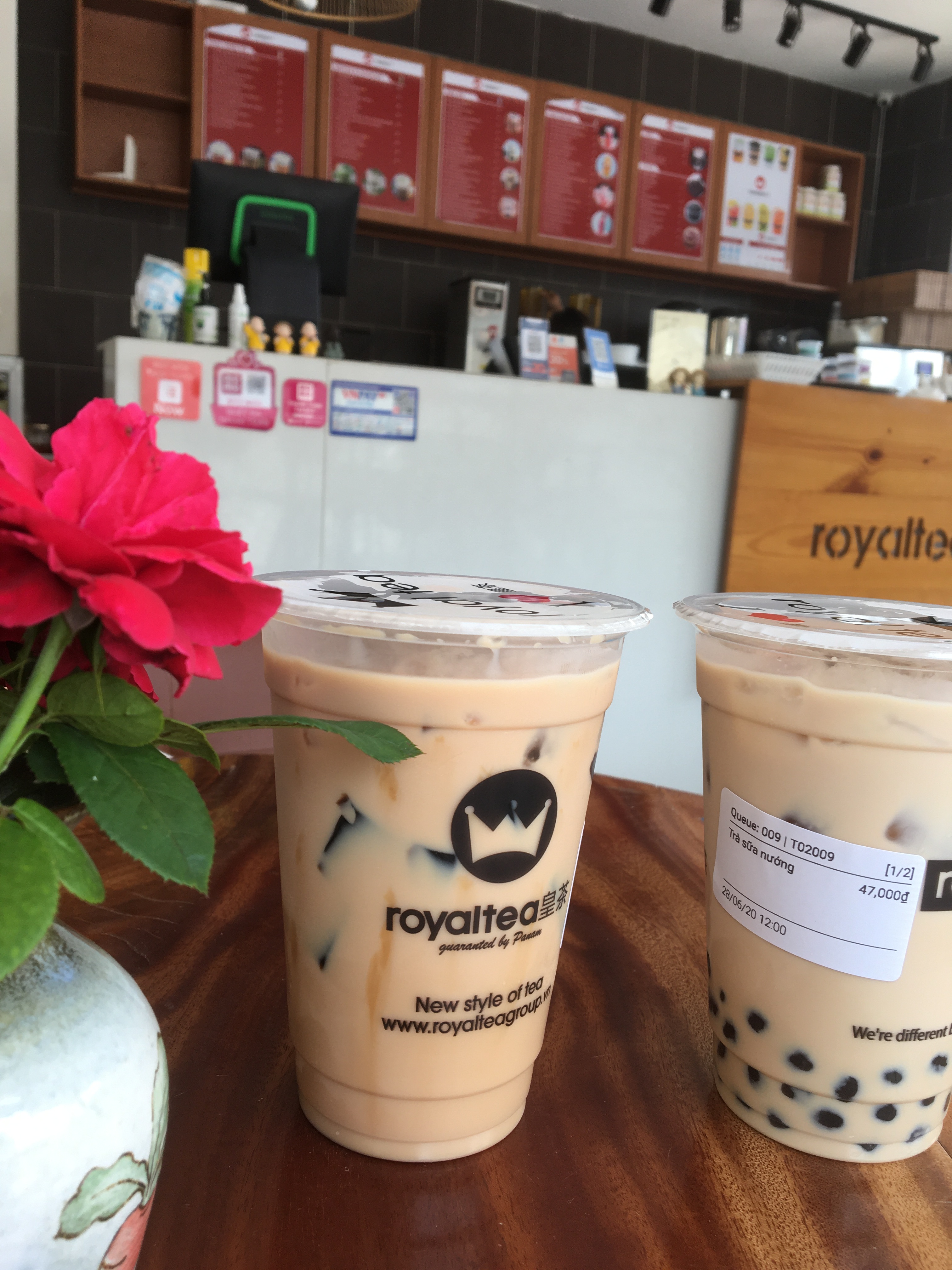
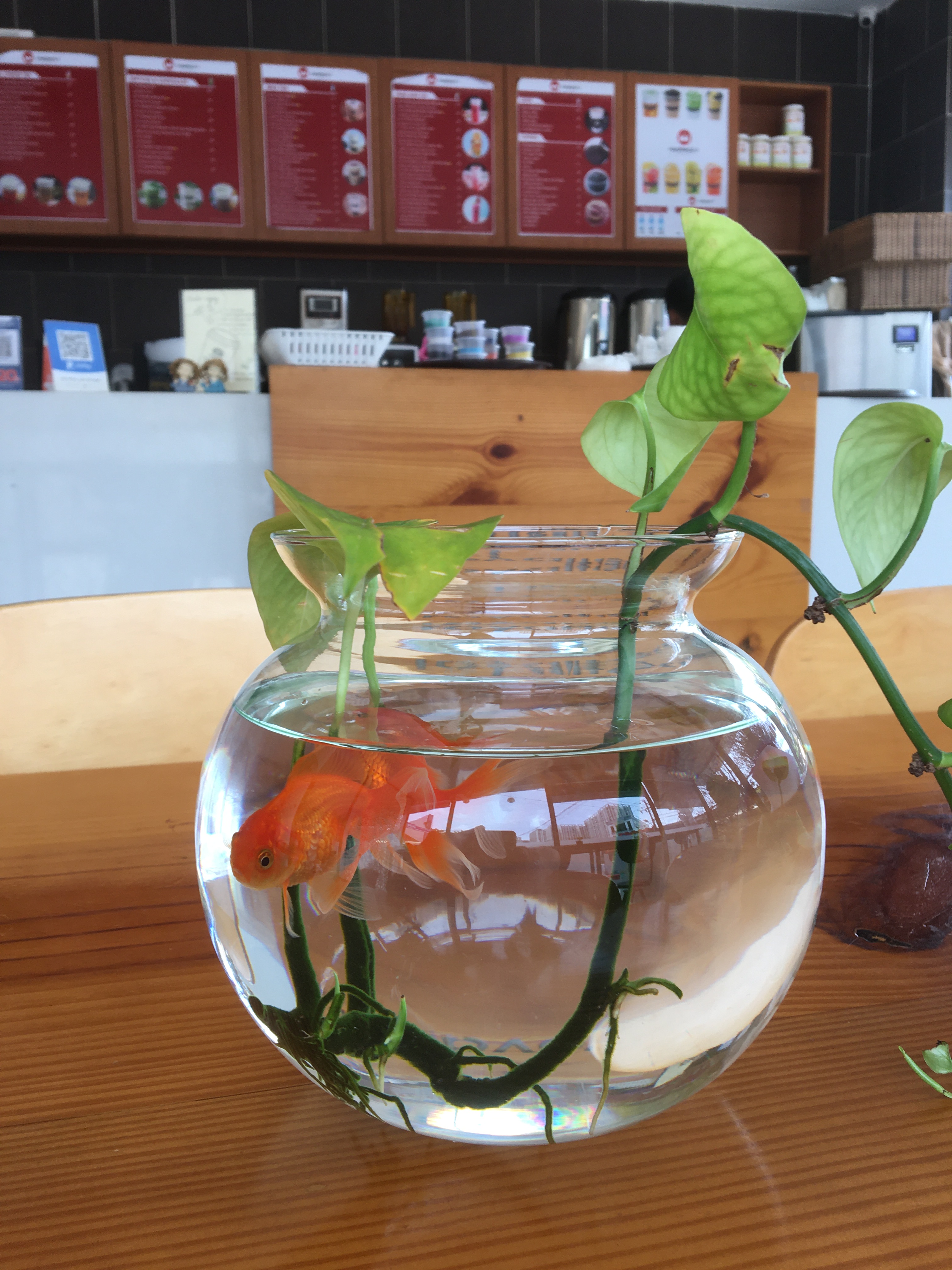
Now for a new bubble tea shop: Royal Tea at 242 Nguyen Duy Trinh. I loved this shop; I went after work, after teaching a great but energy-consuming young learners’ class. It was a typical, humid tropical day, but inside, quiet and peaceful. Soft background music, gentle and friendly staff. Drinks around 50 000 VND ( 1.68 UKP /$2.15). Again, Foody.VN have a review (you may need to hit the ‘translate’ button):
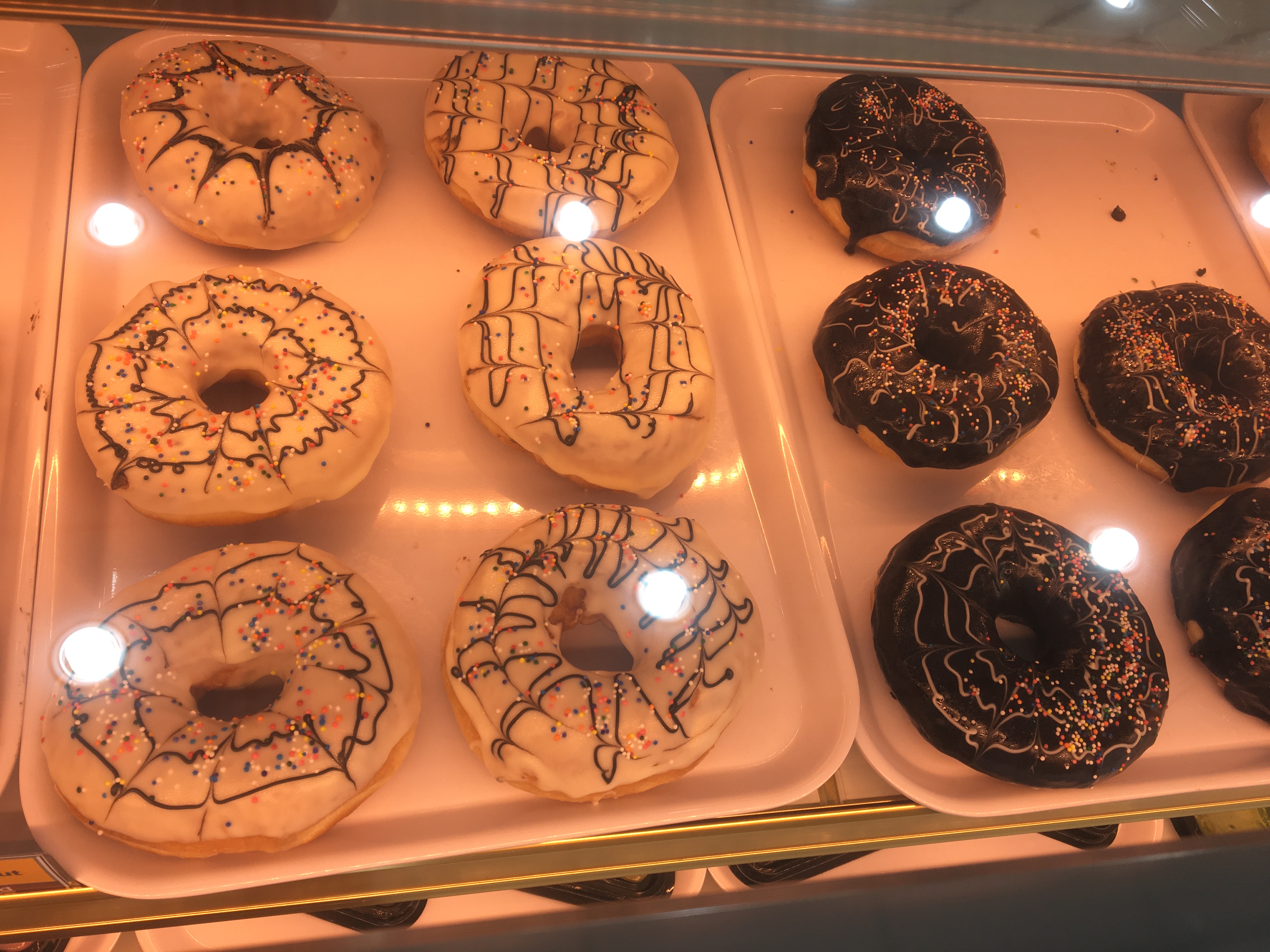
This will certainly be one of my haunts (a place I like to hang out). Now, If you’ve followed my blogs, you know I am a fan of the US TV series ‘Twin Peaks’. The police officers really appreciate damn fine coffee and doughnuts (UK) donuts (USA). So, next stop, moving east on Nguyen Duy Trinh, we come to a new bakery. Great for my donuts fix, terrible for my calorie intake … but just look:
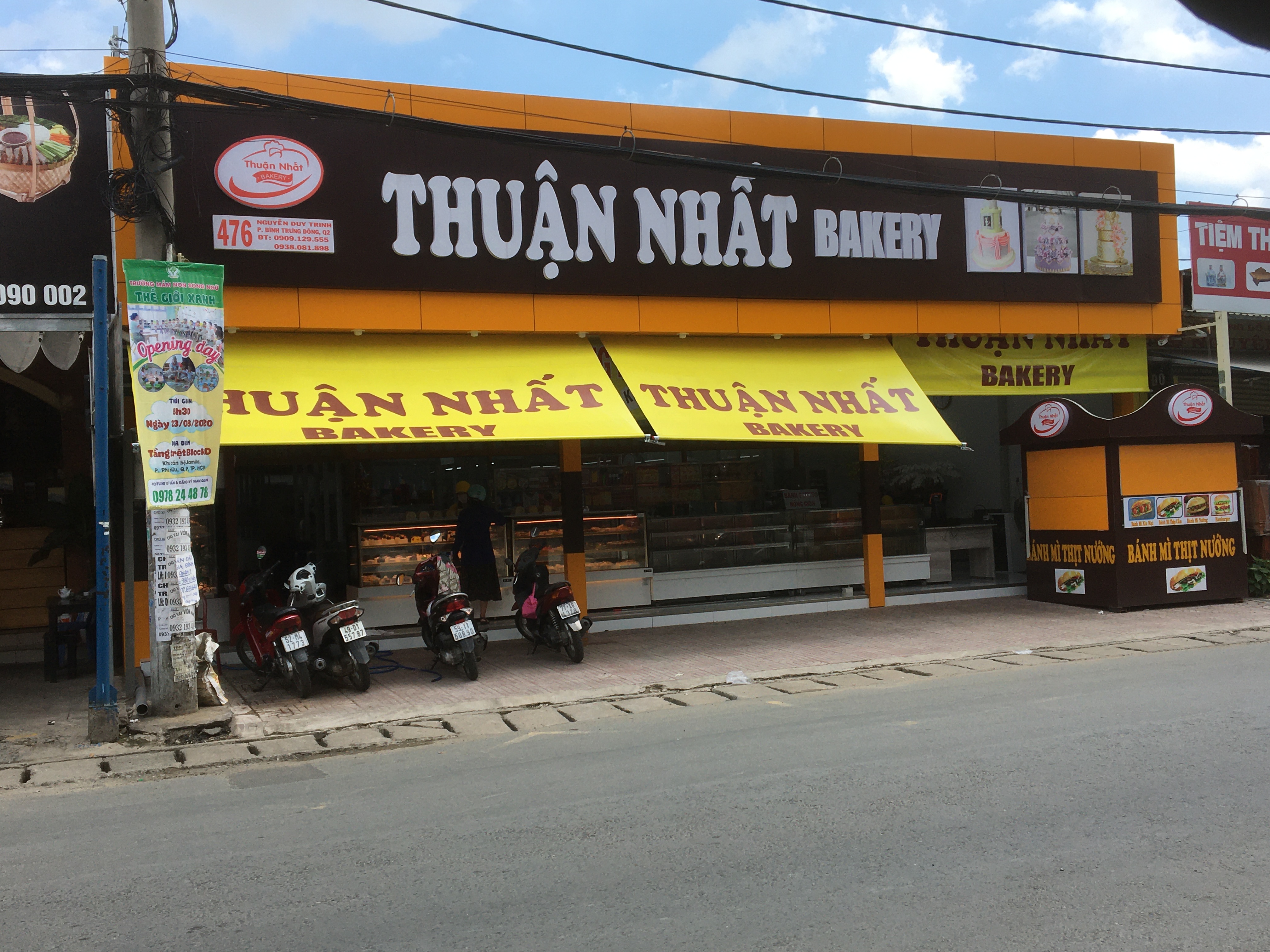
And only 18 000 VND each (60p or 77c). They sell ready-made cakes and individual slices, but the doughnuts were excellent … and dangerous ! Here’s the store front:
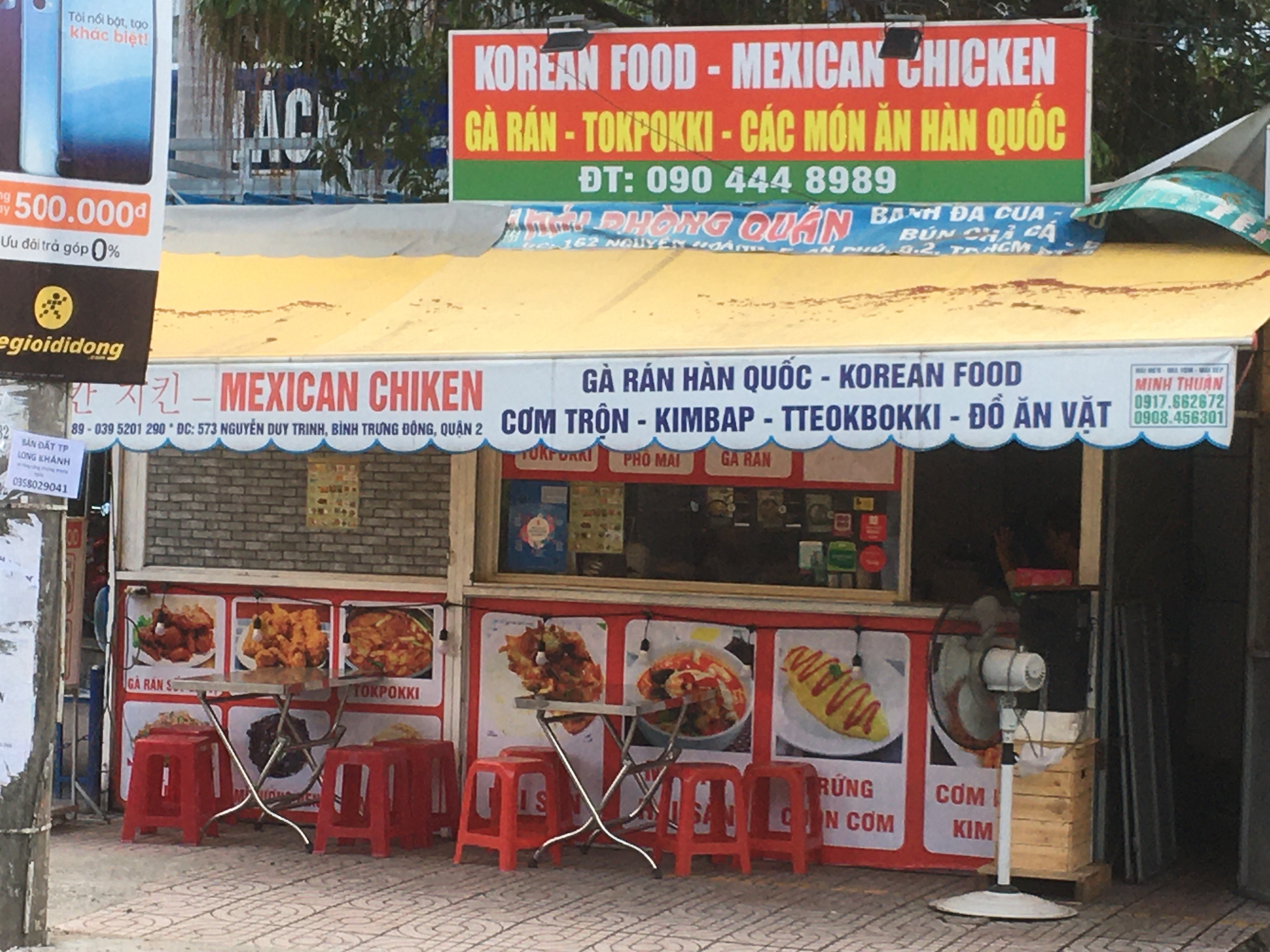
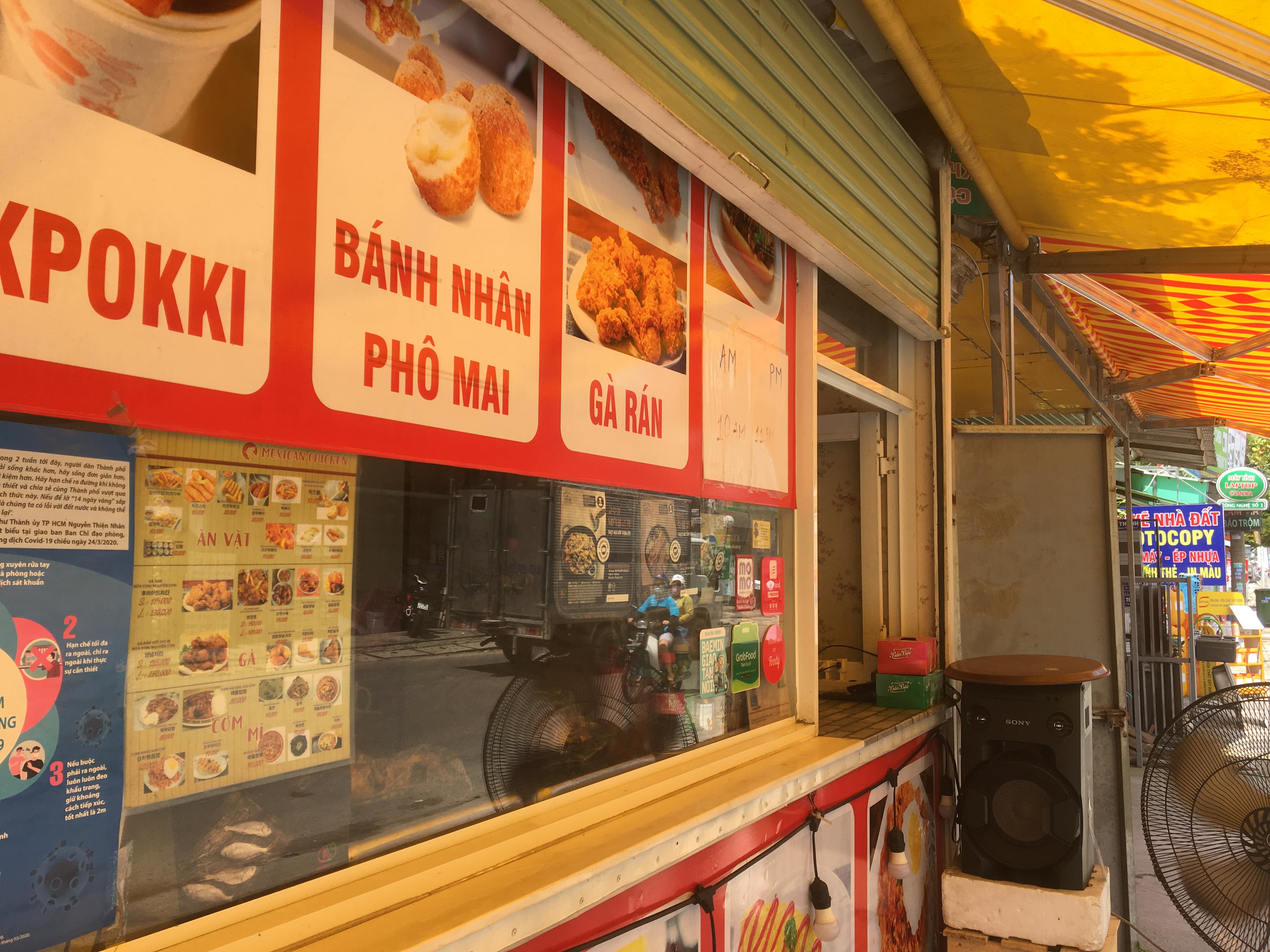
Don’t worry – I have a gym and swimming pool in my apartment, so I can burn off the calories and balance will be restored. Directly opposite is a street food stall, run by a Korean gentleman and his Vietnamese wife. They offer quite an eclectic mix of food:
I was able to use my extensive knowledge of Hangul (Korean) to say ‘Hello,’ and ‘Thank you.’
A little side note; you see how pavements in Sai Gon are really not designed for pedestrians. It can make walking quite arduous, not to say dangerous, certainly not a pleasure.
For sure, it’s heavy on the fast food, deep fried menu, but healthy options are available. I’ll go back for some Korean non-meat items and report later.
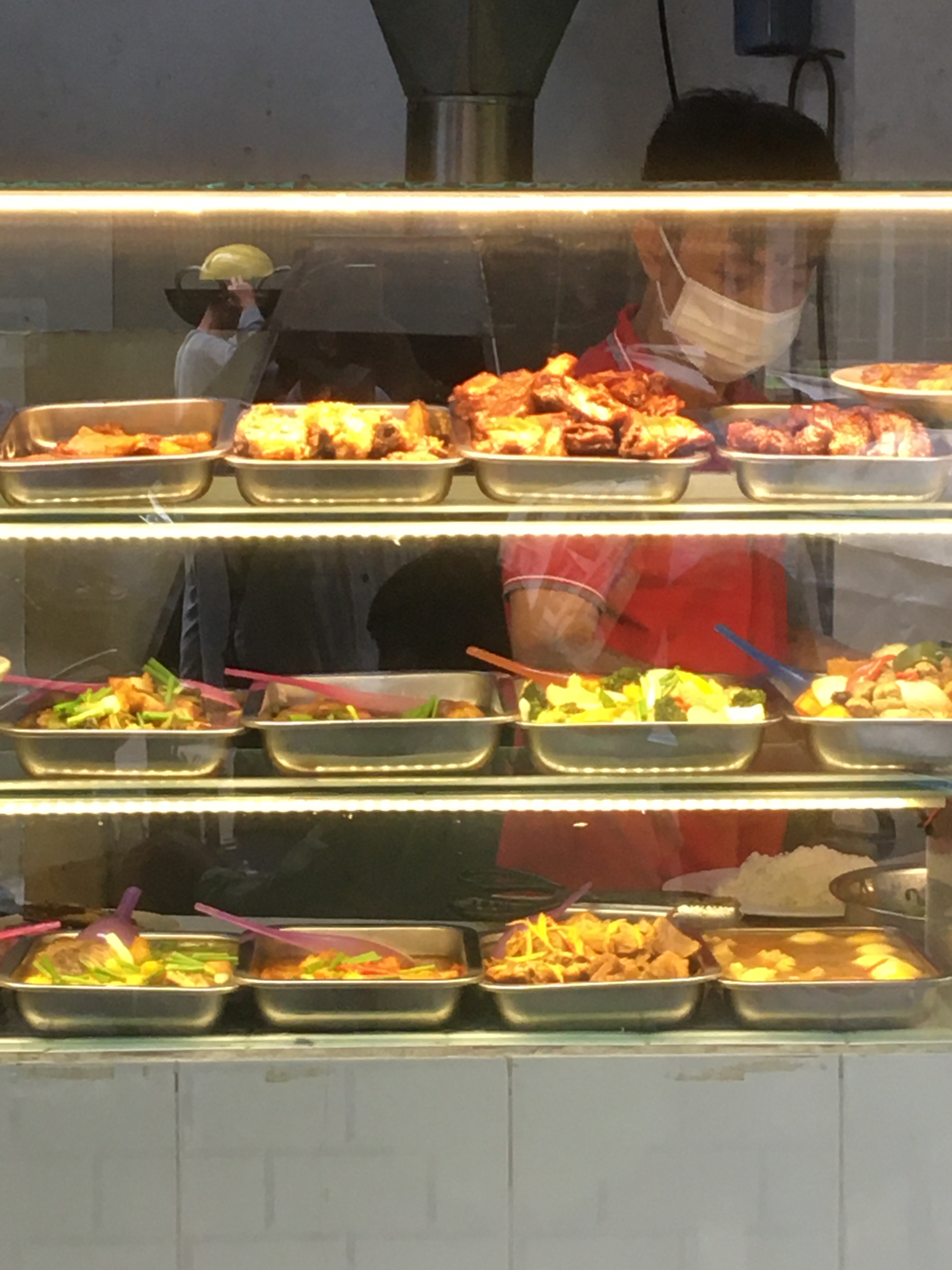
Recently, I had to go into District 1 on business so, as it was lunchtime, I thought I’d hang out with the office workers and go to a ‘point-and-eat’ joint: a ‘point-joint,’ (to coin a new phrase) Here, the food is displayed at the front, so for non-Vietnamese speakers you just, yeah, you guessed it, point … and eat. Service is very quick, though food does tend to be on the cold side. This was one of many in the Ton Duc Thang area of District 1. The centre of the road has been completely torn up, as they plan to construct a new bridge. The restaurant was in a side street:
See, just point and eat.
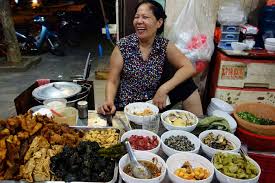
Various meat, fish and tofu dishes.
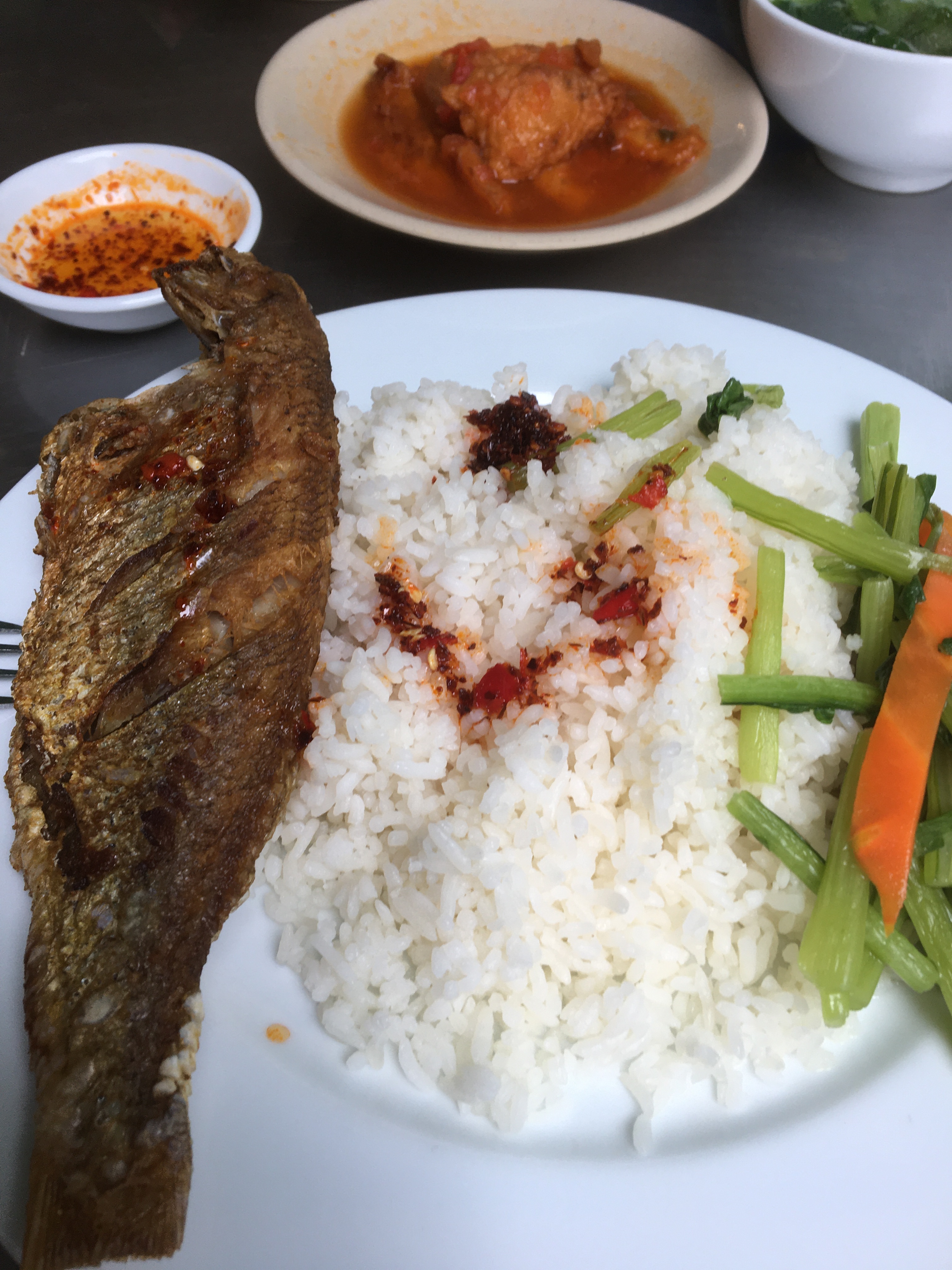
I had fried fish (a lot of de-boning required) and tofu in tomato sauce, served with rice, pickled vegetables and vegetable soup. Word of warning, the soup is often meat broth or contains small pieces of meat, so vegetarians be careful.
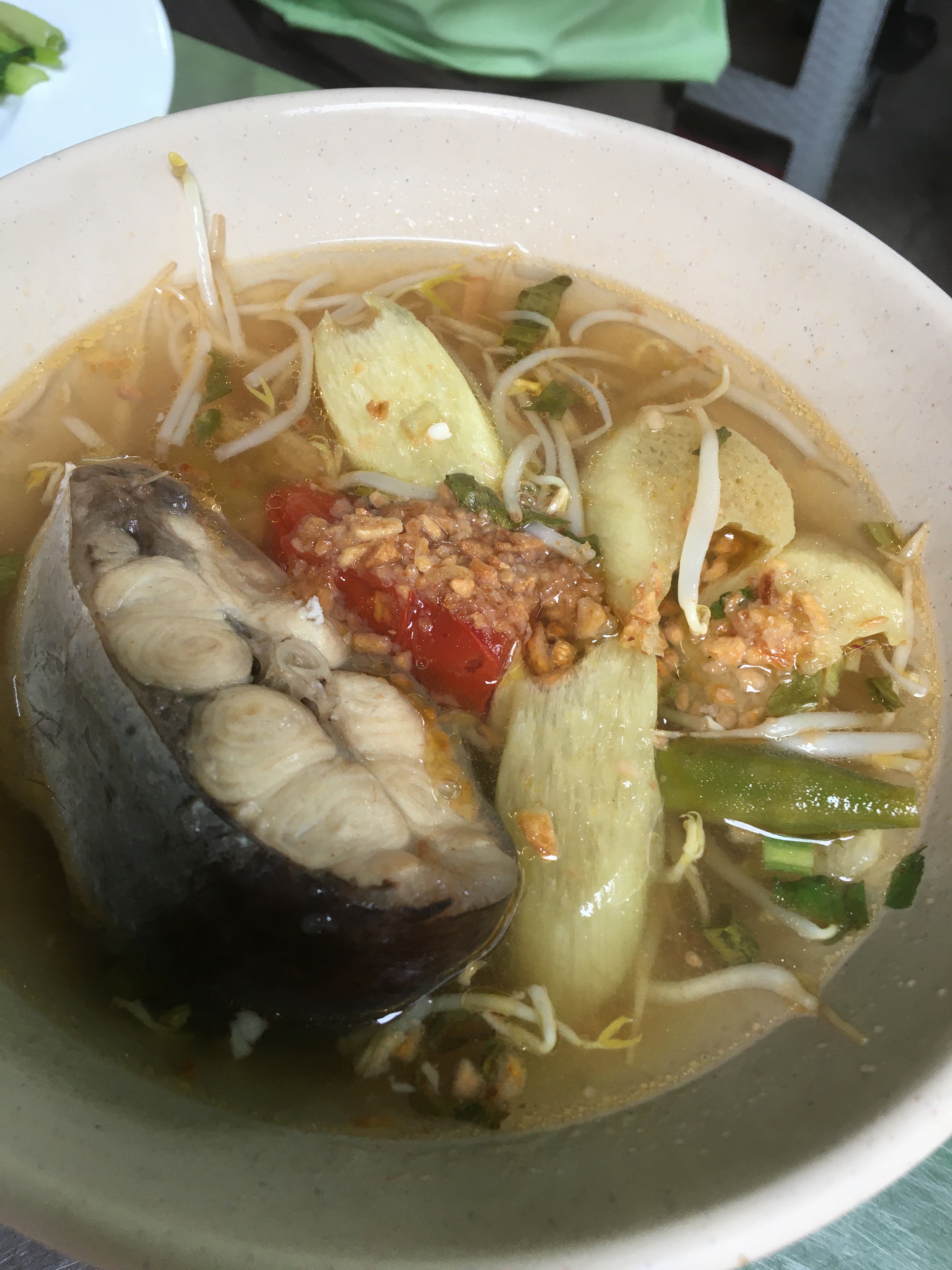
Fish soup, probably a mackerel or similar oily fish.
Finally, after lockdown restriction were lifted, Vietnamese were allowed to travel outside of their hometown. I was invited to a 5-star hotel in Vung Tau, less than two hours drive from Sai Gon.
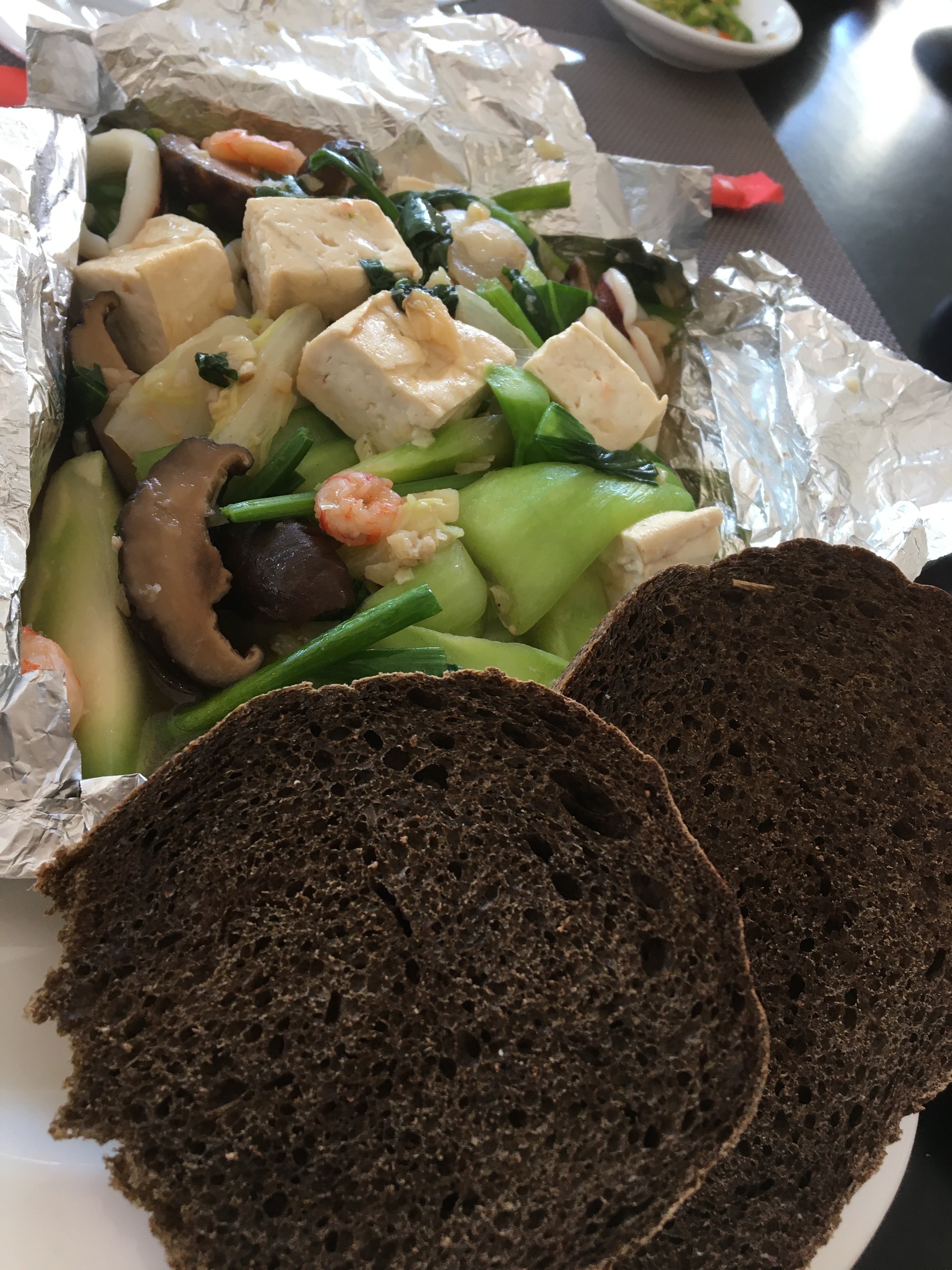
Opposite the hotel was a Russian restaurant, mainly sea food, naturally, as this is a beach resort, but I was able to forego the rice or noodles, and have some western black bread … and it was delicious.
Thank you to everyone for taking the time to read my blog. I hope you found it vaguely interesting. If you have any questions about life in Viet Nam, I’d be happy to (try to) answer them, as best I can.
Furthermore, should you have any questions about English, feel free to ask.
Saturday 15th June. Everybody Up 4, Unit 8 Lessons 1 & 2
My manager is very supportive, and concerned over my welfare; she tells me not to expend too much energy in class, especially on a Saturday when I can have three young learner classes. Imagine 50 – 60 children committed to screaming their heads off for as long and as loudly as possible …. Welcome, as the saying goes, to my life.
Last week I prepared quite a bit of work for this class, including general knowledge based on but not in the text book. Unfortunately, it was a minor holiday in Vietnam, and a lot of the top cat students were away and … it became apparent that my multi-media presentation of classical music and classic film, and using the students to represent the movement of the heavenly bodies was … yeah … a waste of time and energy. Not entirely true … three girls were interested, the rest stared at the floor or the ceiling or the clock, while the boys had a contest, who could be the biggest ignoramus. It was a tight contest; they all won.
So, this week, after a debilitating fever, painfully sore throat and constant sneezing, I’m sticking to the book, and devising activities that will make the students use the target language and the target language only (OK, maybe a few new words for the top cats).
It’s a gross generalisation, but in my experience, so many Vietnamese want to do the work as quickly as possible and then do nothing. This covers students from all my centres, TAs, office staff, public servants, contractors, builders … This may explain why my new apartment has cracks inside and out and why so many tenants have had to retile their floor as the original tiles simply broke leaving inches of dust and debris … but, I digress … and so, without further ado, the lesson plan:
Warm Up: Last lesson the subject was future tense and activities. Therefore, I shall board some times – this afternoon / tomorrow / next Monday / next Thursday / next weekend / next month
Under these, I shall write some scrambled nonsense, e.g. ‘who as ees’. The students, placed in teams, have to elect one person to find the corresponding flash card somewhere in the room (‘see a show’) and then say a third-person sentence e.g. “He’s going to see a show this afternoon.’
Information gathering: Class into four groups. One member will be going away and the others in the team have to get information from him or her, then present to the class.
Team 1: Going to Phu Quoc island / is going next month / will be staying in a hotel near the beach / will be going swimming / is going with family
Team 2: Going to London / is going next week / is going to see a show / is staying with family / is going with older sister.
Team 3 : Going to Ha Noi / is going next Tuesday / is going on a bus tour / is going to stay in a big hotel / is going with school
Team 4: Going to Dak Lak Province / is going tomorrow / is going to ride an elephant / will stay in a tent / is going with VUS TAs
The selected member will stand at the front of the class with the information sheet. One teammate must run up, ask one question then tell the rest of the team, who will write the information down. Then a different teammate will run up and ask.
Planning a day out
I have a niece and nephew coming to Saigon. The teams have to plan a day for them including what to see and do, how to travel and what to eat. Of course, they need to but some souvenirs, so where are the best places ?
My ‘niece & nephew’.
We shall probably have to board many ideas first. Where do tourists go in HCM ? What is traditional food ? How can they travel ? Do the girls want to take the niece and the boys take the nephew only ?
Hopefully, this will encourage a lot of speaking and ideas and I can show a map of HCM to help.
And if the students are still drawing a blank (or being too lazy to think), this could inspire them: It’s spoken in English, with text, but with Viet accent: https://www.youtube.com/watch?v=G0tncoIxT1s
As with all ‘real-world’ videos, the film should be stopped and new words or expressions boarded. The students are later made to write the words down (the majority will simply NOT do any kind of writing unless pressured), and then encouraged to use them where appropriate.
That should easily cover the first hour. After the break, we hit the books, do the workbooks and fast-finishers get an activity sheet, while I can spend at least some time checking the pronunciation and grammar.
This three-hour lesson was totally devoted to planning, preparing and presenting a project about tourism.
Thailand is very close and there, tourism accounts for 9.4% of their economy, a figure which is expected to rise to 12.8 % by 2028 (source: World Travel & Tourism Council).
This affords the teacher an opportunity to add other elements to the lesson; in addition to new vocabulary and collocations, we have, in the first two paragraphs, examples of alliteration and quoting sources to make a report more official; an opinion supported by facts.
Alliteration is a poetic devise, using words that begin with the same letter. Source quoting – stating where information is found – is a vital aspect of academic writing, so to learn it before university will be very beneficial. However, it is important to use books, newspapers or websites that are official and respected, as opposed to Wiki sites or blogs.
Tonight, I would focus on presentation skills, vocabulary used in travel promotion, and fixed expressions. The later is a great addition to the students’ repertoire, allowing them to sound more like a native-speaker. We use fixed expressions all the time. So, without further ado, into the notes.
Firstly, as a warmer, we talked about HCM / Sai Gon; what does it have to offer the tourist ?
“Trash, garbage,”
Thank you, Sir, but I don’t think you’re getting the point of the exercise. Walking around the room, various answers were put forth: history, mystery, great food, cheap (dirt cheap as we would say in the UK), interesting buildings, friendly people.
Conversely, what were the problems or issues that were keeping tourists away ? Traffic was an immediate response, pollution, petty crime, scams. Perhaps the biggest problem is simply lack of knowledge. When most westerners hear about Vietnam, they think about war, boat people, refugees … the unspeakably horrific photo of Kim Phuc, running away from a burning village. So what could be done to encourage tourism ? That was the project.
I wanted to illustrate the difference between a scam and petty crime. The latter includes bag-snatching and pickpocketing, the former is tricking people out of money, for example fake taxis, over-charging, giving people incorrect change etc. We then watched a short video, highlighting some issues, as well as listening to English being spoken by some young Vietnamese. A good way to learn is to check for mistakes. What grammar or pronunciations errors can you find here?
At one stage, the presenter is walking past a group of tourists, some of whom wave to the camera and make various gestures. This allowed me to introduce a neologism, a new word or phrase that has evolved out of modern technology: photo-bombing. Here is a famous example of the British actor Benedict Cumberbatch with the rock group U2:
Now was a chance for some new vocabulary, words and phrases associated with holidays and travel.
Now is the perfect time to visit London, England’s glorious capital. The weather is perfect for walking, so you can enjoy the lush parks, world-famous museums and incredible, unbelievable shops. There is something for everyone … and more ! Like sports ? Go to one of the many Premier League football games. Love shopping ? Everything is here – shop till you drop ! Adore culture – soak up hundreds of years of history.
Flights from TSN airport daily. Seven-day all-inclusive package tour starting from only 50m VND ! All transfers and transport included. Air-conditioned mini bus with Vietnamese-speaking guide.
So what makes a good presentation ?
Volume – not too loud, but not too soft.
Intonation – sound enthusiastic, but again, not overly so. If you sound bored, the listeners will be.
Pace – not too fast, or too slow
Eye contact – look at the audience, engage with them but don’t stare at anyone.
Walk around – this can be energising, but too much will be distracting.
Stick to the point. Avoid repetition or deviating from the subject.
Keep slides simple and basic; too much text and the audience will be too busy reading to listen to you (I got that tip from a former student, a marketing executive).
Gestures, and body language. Look professional and people will take you seriously. Open hand signs indicate honesty. Cross-armed seems hostile.
And then it was time for the teacher to pipe down (stop talking) and let the students work. Most classes have mixed abilities, confidence levels, introverts and extroverts. I wanted each of the four groups to have at least one confident student, so I asked some of the students quietly, explaining my rationale, and they agreed (one deferred, but promised to move next class … right, Ms Uyen ?)
I gave them a set time, after which they had to present. Then came the issue of who would go first; here’s where a pack of playing cards comes in handy. I picked an Ace, 2, 3 & 4 and let the students choose. You can’t argue with the cards !
The work was very impressive, some groups quoted their source material, others had very gifted public speakers. We’ll build on this in the next lesson, when they can practise using fixed expressions and travel adjectives (and the accompanying intonation).
A special thanks must go to my TA, the wonderful Ms Vy, who assisted and co-taught with me. I’ll be writing about my experience with TAs at various schools … but that is for another day.



















 Thay Paul's Notes