One of my classes have their speaking test next week therefore, this is their last chance to practise, to demonstrate they know what they need to do to pass with flying colours.
Some tips to assist
An introduction:
That’s a very interesting question
Well, there is so much to say about that subject, where shall I start ?
It’s funny you put that question to me because earlier today I was just thinking about …
Well, that’s a great question
As a young Vietnamese (add your own nationality), I …
Opinion questions:
If you have a question with the following wording:
“What do you think ?”
You can use opinion phrases. We do not want facts, but want to hear if you are able to understand what is required by the question, and if you are able to articulate your thoughts.
In my opinion // From my perspective //personally // In my view / For me // From my point of view
Finally, there will probably be a chance to demonstrate your knowledge of adjectives and adverbs.
You may encounter a question such as:
What qualities are needed to be a good police officer ?
very / extremely / amazingly / unbelievably / quite / rather / undeniably / remarkably / totally / absolutely /
Combine into a complex sentence with discourse markers and relative pronouns and clauses. If possible, paraphrase key words (here I substitute ‘attributes’ for ‘qualities’).
EXAMPLE
A police officer, in my opinion, needs to have many attributes such as being extremely brave and caring although they will also need to be totally healthy as well as being strong and undeniably energetic. Working for the police, which can be a very dangerous job, is not my cup of tea. Having said that, I really admire the honesty and loyalty of these amazing people.
Now … your turn
What qualities are needed to be a … ?
Sports person / Film star / Doctor / Musician / Mother
I cannot overstate how important it is how IELTS students present their answers. Look the examiner in the eye (but do not stare !), use body language … watch interviews to see how native-speakers use their face, hands and body in everyday conversation.
Try saying the following sentences with the appropriate intonation and stress.
Intonation is how we raise or lower the pitch of our voices to express meaning for example with positive adjectives, our voices become higher, while becoming slower and deeper with negative adjectives.
Stress is how we make some words louder to show they are the important words in the sentence.
Now … practice
Example: Turn off the music – I hate that song !
Turn off the music – I hate that song !
TIPS: decide if the sentence is positive, neutral or negative.
I love this film. I could watch it a hundred times.
My sister is such a prima donna, always taking selfies !
How much did you pay for that shirt ? Are you crazy ?
I’m not going out in this weather ! It’s raining cats and dogs.
Why are you so tired ?
I’ve been up all night studying for IELTS.
Oh, you’ve been burning the candle at both ends.
What the hell do you call this ?
An ‘F’ … what the hell do you call this ?
I’m going to work much harder to pass IELTS, I’m going to put my nose to the grindstone.
Wait a minute, wait a minute … hmmmm, this is a damn fine cup of coffee !
How often does my husband clean the house ? Once in a blue moon.
Now … practice stress
How old are you ? (say this as a general question)
How old are you ? (someone is acting childish)
I don’t believe it (you see someone after a long time – happy)
I don’t believe it (something bad happens – angry)
Some lessons can be rather hard-going, too much IELTS listening or speaking practice so, to mix things up, I use some little diversions to cleanse the palate.
[Today, I will not explain every new phrase – look them up yourselves, write them down and USE them and USE them and USE them !]
Therefore, here’s a little activity I used last week. It’s a hit song from the early 1980s, in fact, it was massive ! The song is an example of Synth pop which is pop music played, or predominantly played, on keyboards or synthesisers. Synth pop, which dominated the charts during my teen years, was not really my cup of tea, I was more into jangly guitar bands such as The Beatles, The Byrds and, in the 1980s, we had The Smiths.
Having said that, I really liked this hit by the band Human League who came from Sheffield which is in the north of England. The single was tremendously successful, staying at number 1 for five weeks in the UK as well as reaching the top of the US charts although for just three weeks which is still an amazing achievement.
Without further ado, the activity: What is happening in this video. Secondly, what is the story – can you understand what the man says and then, can you understand the woman’s reply ?
Try answering these questions:
What job did the woman have ?
How long did it take for the women to become a big star ?
Is the man leaving the woman ?
Does the woman still love the man ?
What does the woman want to do ?
And now, the full lyrics:
You were workin’ as a waitress in a cocktail bar When I met you I picked you out, I shook you up and turned you around Turned you into someone new Now five years later on, you’ve got the world at your feet Success has been so easy for you But don’t forget, it’s me who put you where you are now And I can put you back down too
Don’t, don’t you want me? You know I can’t believe it when I hear that you won’t see me Don’t, don’t you want me? You know I don’t believe you when you say that you don’t need me It’s much too late to find You think you’ve changed your mind You’d better change it back or we will both be sorry
Don’t you want me, baby? Don’t you want me? Oh Don’t you want me, baby? Don’t you want me? Oh
I was working as a waitress in a cocktail bar That much is true But even then, I knew I’d find a much better place Either with or without you The five years we have had have been such good times I still love you But now, I think it’s time I live my life on my own I guess it’s just what I must do
Don’t, don’t you want me? You know I can’t believe it when I hear that you won’t see me Don’t, don’t you want me? You know I don’t believe you when you say that you don’t need me It’s much too late to find You think you’ve changed your mind You’d better change it back or we will both be sorry
Don’t you want me, baby? Don’t you want me? Oh Don’t you want me, baby? Don’t you want me? Oh
Don’t you want me, baby? Don’t you want me? Oh Don’t you want me, baby? Don’t you want me? Oh Don’t you want me, baby? Don’t you want me? Oh Don’t you want me, baby? Don’t you want me? Oh Don’t you want me, baby? Don’t you want me? Oh Don’t you want me, baby? Don’t you want me? Oh Don’t you want me, baby?
DISCLAIMER: THIS IS FOR EDUCATIONAL PURPOSES ONLY. THIS BLOG ISN’T MONETISED IN ANY WAY. THE VIDEO AND LYRICS ARE TAKEN FROM THE INTERNET. NO COPYRIGHT VIOLATION IS INTENDED, AND I WILL REMOVE THE BLOG UPON REQUEST WITHOUT PREJUDICE.
THANK YOU TO THE SONGWRITERS, THE BAND AND THE PUBLISHERS
Replace the standard English words with idioms, expressions and low-frequency words
Hello to my Chinese students
Speaking topic:
What do you do in your free time ?
[Suggested answers after photos]
I study at school many days. I study in morning and I study at night. When I have free time I like to meet friends and have coffee. I go to see movie but not very much.
Sometimes me and my friends go swimming. It is cheap. And I very like to read manga comics because I feel funny. Nothing more.
Hello to my Indian students
Well, That’s an interesting question because I actually spend most of my time at school or studying. Most days I’m burning the candle at both ends. Having said that, when I do get free time, which is once in a blue moon, I love to just hang out with my friends, maybe go to coffee shops which are ubiquitous in my city. Although I enjoy movies, I rarely go nowadays.
Occasionally my friends and I go swimming because we don’t need much equipment and it doesn’t cost an arm and a leg. Additionally, I really enjoy reading Manga comics, which are from Japan and are extremely popular, I believe, all over the world.
Hola to my Mexican students
Speaking topic:
What food is popular in your country ?
In my country are many foods, yes, we have pho, banh mi and Banh xeo. Yes. If you come to my country, you should have pho. Yes. Pho is noodles and soup and beef and vegetables. Yes. Also in my country we have banh mi. Do you know banh mi ? Banh mi is, banh mi is bread, yes, with many delicious things. It is cheap. Banh mi is sold on the street. And banh xeo I very like.
IELTS students studying to go to New Zealand
Thank you for the question, because I can introduce you to some mouth-watering dishes from Vietnam. Allow me to mention just two which, in my opinion, are the most popular.
Firstly, we have pho, our national dish. Pho is noodle soup with different types of meat, with the addition of fresh herbs and vegetables. Don’t worry, you can find pho everywhere, it is ubiquitous.
Secondly, and great for a quick snack or food on the move, is banh mi which is … what’s the word ? Sandwich ? Yes, it is like a sandwich, filled with grilled meat, herbs and vegetables. The best thing is the price, which is really affordable. Again, you can pick these up anywhere in Sai Gon and it won’t cost an arm and a leg.
Speaking topic:
What country would you like to visit ?
The country I would like to visit is USA. I want to study in a big city in USA. I have family in USA. I will to stay with family. But I need the good mark in IELTS. I must work more harder. My family live in a big city. They say it is very cold and it is raining many days. In USA I will eat many fast food and I want to be in movies.
It’s funny you put that question to me because just today I was thinking about where I want to study. I have my heart set on studying in the USA as I have some family in Seattle, which is a large city in Washington state. However, to follow my dream, I need a high score in IELTS, so I need to put my nose to the grindstone. May I tell you about Seattle, where I plan to stay ? Unlike Sai Gon, it can be very cold, and it frequently rains cats and dogs,although we also have a rainy season here in Vietnam. Once in the States, I will eat fast food which is mouth-watering. Having said that, I know it is unhealthy, but still delicious. Maybe I will be a movie star ? In USA, anything is possible.
A compilation of shopping activities to promote longer sentences, idiomatic language and fluency.
Exercise 1: compound nouns
Exercise 2: devil’s advocate
Exercise 3: role-play
Exercise 4: coffee in Saigon
Exercise 1: compound nouns to do with shopping
window shopping
binge shopping
bulk shopping
impulse shopping
dumpster diving
Match the compound noun with the photos:
Did the lady go out to buy this top or did she decide only when she was in the store ?
Vocabulary:
Prices are sky-high / It cost an arm and a leg /
marked down / on sale / discount / what a bargain !
I couldn’t resist it / I simply had to have it / retail therapy
Make sentences using some of the above language.
Talk about shops in your city:
Do people go dumpster diving ? Why or why not ?
Have you ever used retail therapy (buying something to make you feel happy) ?
Have you ever gone out to buy just one thing and come back with many items !
Does your husband/ wife / partner like shopping ?
Exercise 2: Devil’s advocate.
This is to develop argument skills, how to politely disagree with someone.
Example: one student wants to buy a beautiful, luxurious Rolex watch. It really is an outstanding timepiece:
Without doubt, this is a luxury item. The pros …
It is gorgeous and so elegant. I will feel so special wearing it. People will admire and look up to me. They will think I am wealthy and have a great career. I will attract many cute women (or handsome men). I may feel superior to other people who only have cheap watches or nasty fake knock-offs.
Now play Devil’s advocate. Say what are the cons of owning such an item.
Firstly, agree with the first student – it is without question a luxury item. Having said that …
It will attract attention … but maybe from thieves or pickpockets. It is a lot of money, maybe an obscene amount of money when so many people are poor. Can you justify owning such a materialistic item ? Will it make you arrogant ? Will you think you are better than other people BECAUSE of a thing ? Finally … what does it DO ? Fundamentally, it tells the time. My fake Rolex will tell the same time … but it cost $20 NOT $ 5 000 !
Now students’ turn. Similar concept but this time, the latest iPhone:
The iphone 11 (woooooowwwwwwww !)
One student wants to buy it, the other must give reasons why it is not such a good idea.
Useful phrases:
a waste of money / not necessary // a fashion accessory // you can’t afford it //
Exercise 3 Role play game:
Three students will act out working in a department store, a shop with a sale on, and a street market. Other students have a set budget (say £100) and have to buy three items.
They can practice with the following language:
How much is this, please ? // Could you bring the price down for cash ? // Do you take plastic (credit cards) ? // If I smile, can you take off 10% ?
Wow, that’s a bargain ! // Sorry, that’s too much // Is that your best price ?
I’ll take it ! // Wrap it up ! // Let me think about it and come back // Sorry, that’s too much.
The items can be T-shirts, pens, bags, shoes, watches etc and the teacher can print out photos and hand them out.
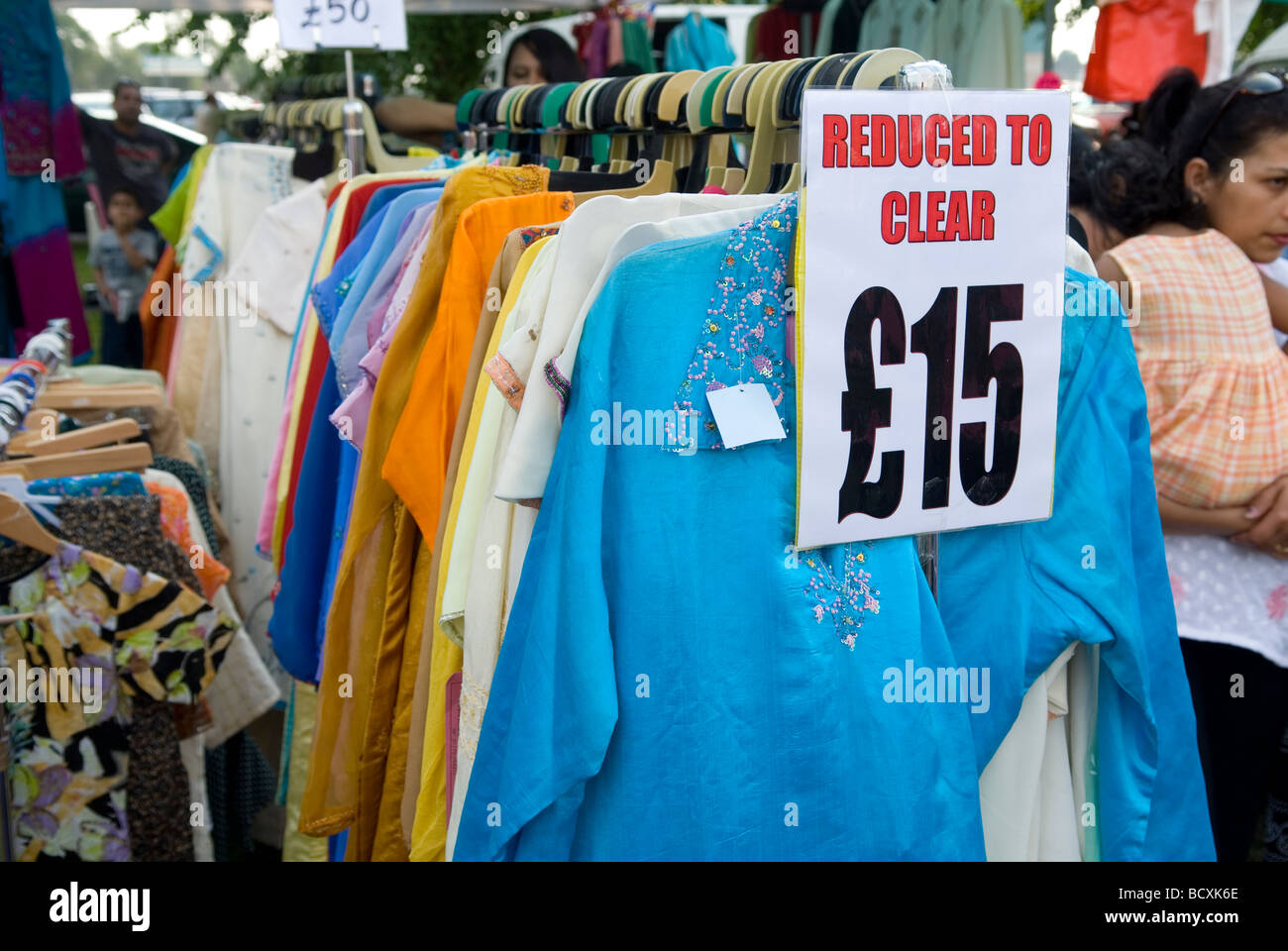
A department store selling expensive designer shirtsLondon street market.
Exercise 4: Coffee in Sai Gon
Describe this picture; use adjectives and opinions.
Highlands Coffee has great coffee, air-con and free wifi. Having said that, the service is a little slow, there are no waiters and the cost is unbelievably expensive !
Vietnam is famous for coffee; coffee shops are ubiquitous. In fact, there are so many, it’s hard to see (difficult to understand) how they stay in business let alone turn a profit.
Be that as it may, let’s use this as a learning opportunity. To practice making longer sentences, and as a warm up exercise, the students can ask each other, “Where do you go for coffee ?”
Tips:
Don’t answer the question directly and immediately; Begin with a short introduction:
Sai Gon has so many coffee shops, some are cheap while others can be quite expensive although they have a wide range of delicious coffee. Personally, I like going to …
Then
Explain:
How MUCH do you like it (adverbs) ?
What kind of coffee (adjectives) ?
What do you think about this ? (opinions)
WHY do you like it (give reasons)
Interesting words, phrases, idioms
Personally, I like Happy Coffee which is an independent shop where I live. I enjoy going there so much because the owner is very friendly and tries to speak English with me. There isn’t a lot of choice, so I order cappuccino with hot, fresh milk. In my opinion, it is good value and tastes delicious. What I like about the shop is the free wifi, the comfortable chairs and the atmosphere. Furthermore, it is usually very quiet and it therefore a good place to read. I love to put my feet up, kick back and sip my damn fine coffee.
IELTS students need to know an incredibly wide array of adverbs so, with that in mind, here’s an exercise which can be easily adapted as a team game. Complete the sentences with suitable adverbs. Piece of cake, right ?
Use a thesaurus and dictionary to boost your vocabulary.
Word Fill
Adverbs of manner & ‘but’, ‘so’ and ‘even though’
(Fast or quickly – both can be used as adverbs, fast more for speed, quickly for time e.g. the animal runs fast and eats quickly.)
Note: ‘well’, ‘fast’ and ‘hard’ are irregular adverbs of manner.
Use a positive adverb for (+) and a negative one for (-)
Example: She sings (+) beautifully but plays piano (-) terribly.
It is raining (-) heavilyso I will bring an umbrella
WELCOME TO LONDON
I will go along with you ……I am not really hungry
……….I am not hungry, I will go with you to KFC
Grabbike is cheap …..they drive so (-).
She failed her test ……..she studied (+)
Do I look like Batman ? Then why are you speaking so …..(-)
Batman has amazingly good hearing … but not all teachers have so SPEAK UP !
We have learnt many idioms ….that is just the tip of the iceberg.
He loves music …much ….he sings (-).
She never eats the food ………she works there.
……..she speaks English very (+), she is afraid to speak to westerners.
Now it’s time to put the work of previous lesson together in order to come up with more rounded character descriptions.
You can tell me what people are wearing by using adjectives (what we think of the clothes, the size, colour, pattern, material, country of origin).
Additionally, you should have enough vocabulary to tell me what a person looks like (length, type and colour of hair), height, age, what they look like.
Furthermore, I expect you to remember some personality adjectives.
If we put all these together, we have some very detailed descriptions, as well as having the opportunity to use relative pronouns (who, where, which, whose) in order to develop sentence-building which is absolutely essential for IELTS students.
And so, without further ado:
Describing people
What do they look like ? What are they wearing ? What kind of person are they ?
As always, I’ll give you an example of what I want, then it’s your turn:
Billy Office manager 32
Works staff very hard. Never gives pay rises
Buys clothes and electronics. Never gives to charity
Becomes angry after beer. Member of a gym.
Not many close friends. Does not like kids
Billy, who is 32 and an office manager, is a very strict boss. He is very serious and also very mean because he doesn’t give his staff more money. Furthermore, he never gives money to charity so he is selfish.
Although he is only 32, he is almost bald. However, he has a neat beard and moustache. He has brown eyes, and he doesn’t like to smile. Billy stands with his arms across his chest, so he doesn’t look very happy.
He wears a bright and expensive cotton shirt with a white collar, but with red, white and blue stripes. Furthermore, he wears an extremely expensive watch.
In his free time, Billy goes to the gym, and also likes to drink beer. However, after too many beers, he can become aggressive. He is a loner, not having many close friends. He spends his money on himself, buying clothes and gadgets. He has no plans for a family as he doesn’t like children.
NOW … YOUR TURN:
Tell me about Ji-yeon and Kofi
Ji-yeon singer 24. Kind to her musicians. Shares money with band. Gives money to family. Performs free shows. Just drinks 1 beer. Uses Instagram & Twitter. Wants 2 children
Kofi civil engineer 37. Very professional. Buys his team lunch. Helps his brother study. Gives money to UNICEF.
Likes to dance and sing. Meets friends weekly.
Goes jogging and diets. Loves swimming. Loves all children.
Read this excerpt from a travel blog. How many adjectives can you see ?
This is my first visit to Turkey. It’s a wonderful place ! The people are friendly and the meals are delicious. Farmers here grow many different crops including many kinds of fruit. They also grow a lot of wheat, and the bread in Turkey is really good. Of course, the geography and climate in different parts of Turkey affect the kind of food farmers can produce in each region. In central Anatolia, the land is almost flat, and the weather is usually warm and dry. It’s a good place to grow crops and to raise animals such as cattle and sheep. High up in the mountains of eastern Turkey, farmers also keep animals as they can’t grow crops. Today, I’m visiting the coast of the Mediterranean Sea in southern Turkey. The weather here is hot and humid, but the fish and seafood are excellent.
features of a place, such as mountains, rivers, forest, desert
air with a lot of water in it
normal weather in a certain area
Turkish food
Welcome to Turkey
Grammar practice: past tense
Tell about your favourite, or more memorable holiday (UK English). You will have to use the past tense. Try to use adverbs and adjectives to describe the vacation (US English).
Activity:
Present a holiday using a mixture of advertising slogans and practical information. Remember:
It’s not what you say, it’s how you say it
Make your voice sound excited, as if this were the best holiday ever !
once in a lifetime experience / never to be forgotten / unbeatable prices
book now to avoid disappointment / best decision you’ll ever make
holidays to suit all budgets , from 7* luxury to backpacking
Structure:
To begin with / furthermore … additionally / the fact is … / therefore
Demonstration with an advert for London:
Now is the perfect time to visit London, England’s glorious capital.
To begin with, the weather is perfect for walking, so you can enjoy the lush parks, world-famous museums and incredible, unbelievable shops.
Furthermore, there is something for everyone … and more ! Like sports ? Go to one of the many Premier League football games. Love shopping ?
The fact is, everything is here – shop till you drop !
Additionally, if you adore culture – soak up hundreds of years of history.
Flights from TSN airport daily. Seven-day all-inclusive package tour starting from only 50m VND ! All transfers and transport included. Air-conditioned mini bus with Vietnamese-speaking guide.
Therefore, don’t delay … book TODAY !
Sell a holiday
Advertising vocabulary and intonation
Prepare a presentation to market / sell a holiday.
New vocabulary:
sensational / once in a lifetime / luxury / all-inclusive / unforgettable experience / mysterious / majestic / breathtaking
book now to avoid disappointment / exhilarating / world-famous
local food / new cultures / visit our website / worth every penny
fun for all the family/ the perfect getaway /
Plan a tour of your city for my friend
My friend Ethan is coming to visit your hometown
It is his first time in your hometown. He likes history, traditional food, and he wants to buy souvenirs.
Think about:
What time to start
What to do first
Where to go (remember the heat OR the rain could be an issue / a problem).
Following another speaking test, I’ve noticed that my students are still speaking simple sentences and thereby losing marks, whereas with a little work, not to mention a little, or a lot, of practice, this omission can be redressed.
Therefore today’s blog, in it’s entirety, will be devoted to the forming of longer, complex sentences, altering sentence structure and general tips to improve not just speaking, but writing as well.
As you should have noticed the above two paragraphs, rather like this third one, employ several clauses, that is, parts of a sentence to give extra information without the need of a full stop, serving as examples of how this can be achieved.
You will, no doubt, experience a feeling of triumph once you have mastered this technique which, I admit, does require some new thinking and extra effort on your part but will, without a shadow of a doubt, enable you to attain the score for which you are aiming.
And now, without further ado, let’s kick off. First, a warm-up. Of today’s three highlighted expressions, which would you use for:
1 When you are certain or 100% sure about something
2 To start immediately, with no more interruptions
3 Great happiness when you have achieved or won something
Answers at end of blog
Here are some standard IELTS-type questions, followed by a typical answer and then, by way of comparison, an extended response to demonstrate improvements.
1 Tell me about your hometown 2 How often do you go online ?
3 What jobs will be important in your country in the future ?
4 Tell me about a time you received good news
An average answer, which would probably result in a middle score, around 4 – 5 would be, to take one example, (Number 2):
I go online every day because I need the internet to help me study. I use the internet to check new words in English. I go online for information for my school.
What do you notice about this ? Firstly, what are the mistakes ?
The candidate answers the question immediately, with no introduction. This is not necessarily wrong, but a sentence leading into the response will make for a longer answer.
The second sentence is not directly relevant to the question, though it is acceptable for providing more information. I advise students to be careful, in case they start deviating from the subject.
Lastly, the third sentence just repeats what has already been said, even using the same phrase “I go online“, and then explaining the reason for using the internet NOT how often it is used.
Here’s a different way of answering.
Well, that’s interesting because I have internet access at school, at home and on my phone so I would say I’m absolutely online every day. How much time I spend online varies from day to day, but I am probably online about three hours every day, sometimes more if I have a project or if I’m playing a cool game.
See how this answer only uses two sentences , but is much superior. Let’s break down how it earns points.
Initially, we have a short introduction and the question is answered directly in the first, extended sentence.
Secondly, the first sentence includes a list of three, so this is a chance to practise speech rhythm (one, two and three) – remember, you get points by HOW you say something as well as what you say.
Thirdly, the answer uses three everyday adverbs (highlighted). ‘so‘ can also be used as an adverb, but here it is a conjunction (a word such as ‘and’, ‘but’, etc).
Additionally, the sentences employs an expression, “from day to day,” which examiners like to hear, as it shows familiarity with figurative language.
Lastly, the candidate explains what the reasons for being online, and how it affects the time spent on the internet.
Now … your turn Try to answer the same question, following this pattern.
Now … let’s move on. Question 1, my hometown.
This time, I will give you facts and you arrange in an answer.
My hometown is Da Nang. Fifth largest city in Viet Nam. Is in Central Vietnam. Near historic town Hoi An. Important port. Many tourists. Has a cable car and a dragon bridge. Famous for its beach.
Dragon Bridge at Da Nang
Thank you for letting me introduce to you my hometown which is Da Nang, one of the biggest cities in Vietnam, although it is much smaller than Ha Noi or Sai Gon. My hometown is in the middle … in central Viet Nam, I mean, sorry, and had many tourists. They come to see many things such as the Dragon Bridge, go on the cable car or for swimming. Also, Da Nang is very near many famous places such as Hoi An. As it is on the coast, my hometown is also a busy port.
Check for
Introduction
Information in first sentence
Discourse marker ‘ although‘
Correcting a mistake in line 3
A list of three items in lines 4 and 5
Change of sentence structure in the last line: instead of saying, “My hometown is also a busy port because it is on the coast,” I started with the end of that sentence (it is on the coast) and replaced ‘because’ with ‘as’ (though because would also be all right to use).
To practise:
Rearrange these sentences, starting with the section in italics.
The London Tube needs repairing because it is so old.
Many people have to stay home because of COVID 19
We must buy vegetables because Jenny doesn’t eat meat.
Colin is now studying in Boston because he got an 8.5 in his IELTS test.
Answers at end of blog
Answers:
1 = without a shadow of a doubt
2 = without further ado
3 = feeling of triumph
Because it is so old the London Tube needs repairing.
As it is so old, the London Tube needs repairing.
As the London Tube is so old, it needs repairing (notice how the pronoun ‘it’ moves).
Due to / Because of COVID 19, many people have to stay home.
Because Jenny doesn’t eat meat, we must buy vegetables.
As he got an 8.5 in his IELTS test, Colin is now studying in Boston.
24th January for 30th January 2020. IELTS Bands 4 – 5.5 Unit 7
Firstly, a big hello to all my readers and followers in India. Yesterday I had over fifty visits from students from the sub-continent and I want you all to know how much I appreciate you taking the time to check out my blog. Thank you so much.
My Indian friends – what is the standard of behaviour in your classrooms ? In my centre, in Sai Gon, Vietnam, we have to employ classroom management (normally reserved for ‘young learners’) to adults. Namely, we have to continually tell the class:
No mobile / cell-phones in the classroom UNLESS it has been sanctioned by the teacher for educational purposes.
No eating, chewing gum, slurping drinks
NO CHATTING WHILE THE TEACHER IS TALKING. THE TEACHER IS HERE TO HELP YOU. FURTHERMORE, IN MOST CULTURES, THIS IS UNBELIEVABLY RUDE AND UNACCEPTABLE.
Take notes, write down new words, practice using them
The teacher is here to help YOU learn. We are not here to entertain you.
These are not MY rules – they are the rules of the centre. If you cannot abide by them, then stop coming to class, stop wasting everyone’s time and money.
Let’s leave the last word to Uncle Ho, bác hồ:
Understand, my Vietnamese classes ? Even Uncle Ho says you,
“need to work much harder.”
And now, without further ado, a warm up exercise to see how much the class has remembered from the last lesson … if anything.
Firstly, complete these phrases and then use them in sentences:
over the ______ // under the ________ // under ________ // more or ________
I’m over the …… because I passed my IELTS test.
Ms Linh is not here, she’s feeling under ………..
The class understood the video, more ……..
So many tests at school, the pupils were under ………
Secondly, what do these words mean, the make a short sentence using them:
I shall try to incorporate some teaching points about India in this blog which, although written before the Lunar New Year (Tet Holiday), is for next week.
The above sentence is an example of the type of English that is expected in order to pass the IELTS exam. As you can plainly see, it isn’t too difficult; I inserted a low-frequency word (‘incorporate‘), used a relative pronoun (‘which‘) in order to make the sentence longer and more fluent, then employed a discourse marker (‘although‘) to link contrasting ideas together in a coherent sentence.
To recap, what you will need to use in both writing and speaking are:
adjectives (but not just the most basic, common ones)
adverbs
low-frequency vocabulary
complex sentences (introduce extra information in supporting clauses)
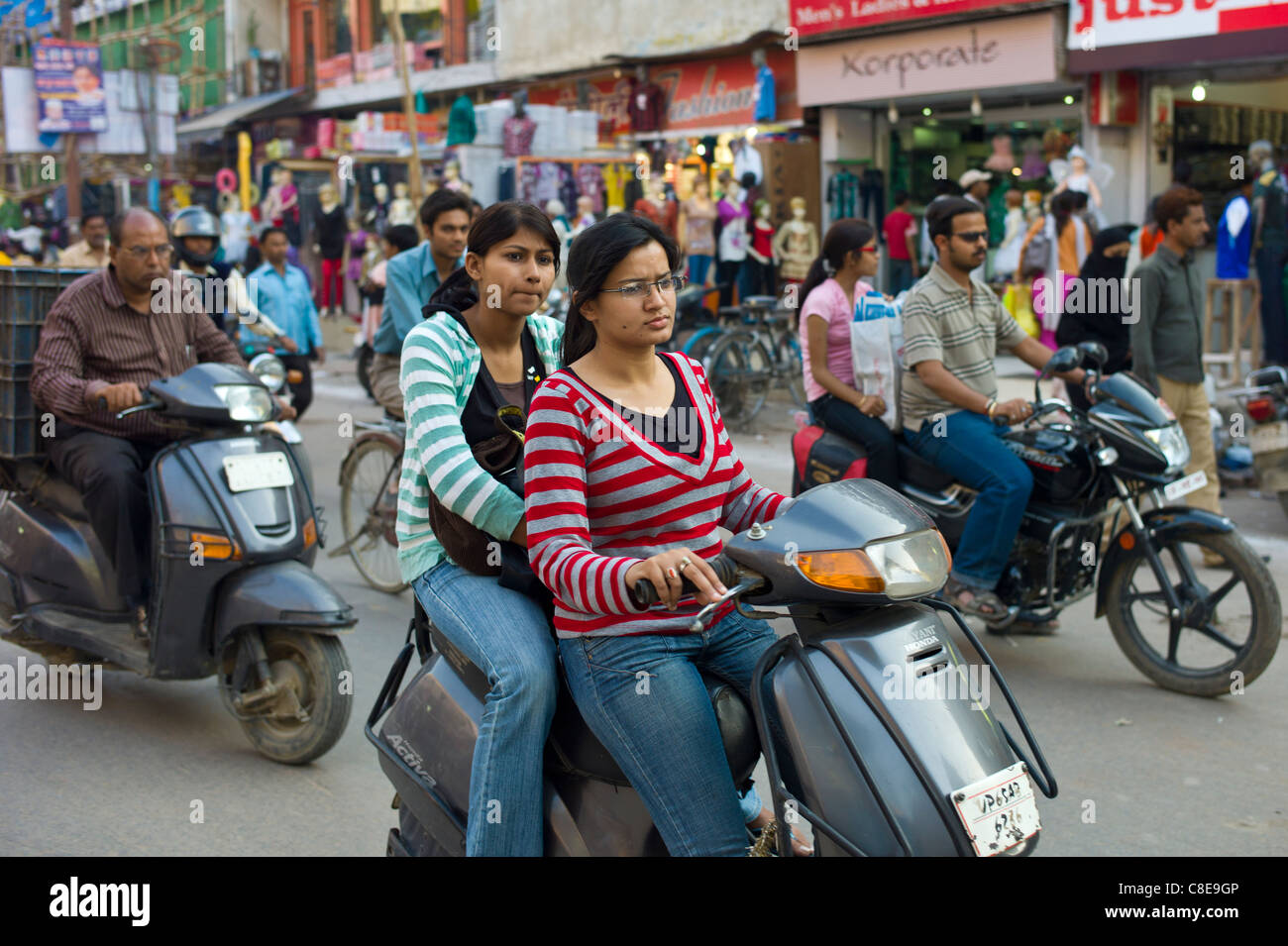
Does this look like YOUR city ? What is similar, what is noticeably different ?
A typical commute to work ?
Vocabulary building and listening
In the real world, most students will not be communicating with English-language teachers, but probably with other non-native speakers, so learning to appreciate and understand English spoken with a ‘new’ accent is an extremely useful skill. Here’s a great video which features a charming young Indian lady teaching new vocabulary: https://www.youtube.com/watch?v=PKUxuD0m5A8
New Vocabulary:
Instead of using ‘very’ + adjective (I am very tired), use a single word:
Try to use ‘sagacious’, ‘exquisite’, ‘colossal’ and ‘spacious’
The classrooms in Block D are ……….. (big)
The furnishings are perfect, they are ……….
Building an underground train network is a ………… undertaking
The old man was ………. People came to him for advise.
This is also a listening skills exercise.
Do you have any problems understanding her ? Why ?
Listen for at least five words you didn’t previously know. In small groups ask each other:
What impressed you ? What disturbed you ? Would you like to go there ? If so, why, if not, why not ?
Here is a chance to practice adjectives, linking words and using the word ‘because’ – giving reasons, supporting your comments.
Famous Indians
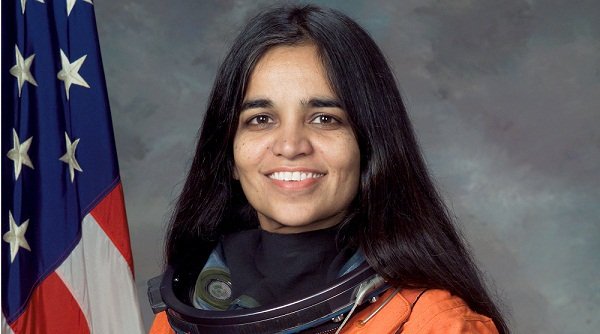
In small groups, you have to make a short presentation about one of these famous Indians:
Mahatma GandhiSiddharta – the Buddha
Kalpana Chawla
The class have five to ten minutes to research information, speed read and extract relevant facts with which to enlighten the class. Simply reading straight from Wikipedia is not permitted.
And now, goodbye from this mysterious, exotic land. Hope to meet you very soon …
















































 Thay Paul's Notes